Edmonton Sun violates the EPS Crime Map Terms of Use

Back in July, the Edmonton Police Service launched its Neighbourhood Crime Mapping site. Like most people I was quite enthusiastic about the site, until I read the terms of use and realized how restrictive they were. Basically you can look at the numbers, but you can’t do anything with them (such as publish them on a blog). The Crime Mapping site is not open data. I emailed back and forth with the EPS, and was told that they wouldn’t be changing the terms of use. And, they haven’t.

That didn’t stop the Edmonton Sun, however. They apparently ignored the terms of use altogether, and published an article on December 20th summarizing a number of statistics from the website:

Some of Edmonton’s roughest neighbourhoods faced markedly fewer crimes in 2009, according to police statistics.

The statistics came through a new crime mapping system launched by Edmonton police last summer.

I had asked for permission to do something similar and was turned down. After reading the Sun article, I emailed the EPS to find out if the terms of use had been changed (despite the text on the website staying the same). Here’s what Acting S/Sgt. John Warden wrote back:

The Edmonton Sun did not have the EPS’ permission to use the information from the Crime Mapping website and the EPS is dealing directly with the Edmonton Sun in relation to this.

I emailed back a couple of follow-up questions, but have not yet received a response. The Edmonton Sun article is still active on the website, so I’m not exactly sure what “dealing directly with the Edmonton Sun” means.

I’m annoyed by this, obviously. Was it an honest mistake? Maybe. Is it a case of a large media organization getting off the hook? Maybe. Will it happen again? Probably. No one reads the fine print, we all know that.

I don’t think the current terms of use is appropriate, and I strongly urge the Edmonton Police Service to change it.

Dog sledding in Yellowknife

Today I went dog sledding with Sharon, Kim, and Shane in Yellowknife! My parents thought it would be a fun northern experience for us, and they were right, it was awesome! Both Kim and I had been dog sledding when we were younger and still living in Inuvik, but I don’t really remember it too well.

Dog Sledding

Beck’s Kennels, run by Grant Beck, currently has over 130 sled dogs and offers a variety of tours. Grant himself is an accomplished dog musher who has won a number of races and other competitions over the years, in North America, the French, Swiss, and Italian Alps, and the Pyrenees in Spain. The dogs are Alaskan Huskies, which look a bit different than the Siberian Huskies you’re probably thinking of. We learned that Siberian Huskies, due to breeding patterns over the years, don’t make the best racing dogs though they are good for hauling things!

Dog SleddingDog Sledding

We went on the Northern Outdoor tour, which lasted roughly two hours:

Head out to our traditional Trapper’s tent next to a secluded lake where you will enjoy hot drinks  and cookies around a crackling woodstove. Drive your own sled team there or just sit back and relax. Experience the thrill of driving a snow machine, and zip around the lake before heading back.

The first step was to dress appropriately! We wore our warmest clothes to the kennels, but ended up changing or putting on more clothes inside. They had parkas, boots, mittens, and all sorts of winter gear for guests to wear. All of us put on a pair of ski pants, and somehow, Shane and I ended up with pink mittens. We were warm though!

Mack & SharonKim & Shane

On the way out to the Trapper’s tent, Shane and I drove while Sharon and Kim sat. We swapped positions on the way back, so each of us got to drive the sled. Though “drive” isn’t really accurate – the dogs knew exactly where to go and didn’t really need any direction from us! Our only job was to step on the brake when instructed to do so by the tour guides who drove snowmobiles.

Dog SleddingSharon

When we got to the Trapper’s tent, we were pretty cold, and were glad to find a wood-burning stove inside. We also had cookies, hot chocolate, and signed the guest book! The cabin had a couple of bunk beds, for overnight guests. After getting warmed up, we headed back outside to drive back to the kennels. Our route back seemed a little less sheltered, and thus much windier and colder!

Dog SleddingDog Sledding

Thanks Mom and Dad for a great gift! I had a ton of fun today! You can see more photos here.

Notes for 12/27/2009

Here are my weekly notes:

Edmonton Notes for 12/26/2009

Merry Christmas Edmonton! Here are my weekly Edmonton notes:

Tough times for Edmonton charities

Times are tough right now if you’re a charitable organization. Here in Edmonton, the outlook is pretty grim for a number of organizations:

Add up the above numbers, and Edmonton charities are short about $3 million. That’s a lot of money. The scary part is that I’m sure there are more than I haven’t been able to find yet.

The two bright spots I’ve seen are Santas Anonymous, which said it would meet the demand this year, and Stuff-A-Bus, which exceeded its goal.

While the news is terrible, it’s not that surprising. Last year donations across Canada dropped 5.3% from 2007 to $8.19 billion, the lowest figure since 2005. I’m sure we’ll see a similar or perhaps larger drop for overall giving in 2009. The fact is, philanthropy is a lagging indicator. This data is from the US but I think it applies to us too:

During the last 40 years, according to data provided by Giving USA, charitable giving fell in real terms (i.e., adjusted for inflation) in years in which the economy was in recession, or in years in which there was a significant stock market dislocation. Giving fell in 1980, 1987, and 1990. The last time the economy contracted was in 2001. That year, according to Giving USA, charitable giving fell 2.3 percent in real terms, after having boomed along with the stock markets and the economy at large in the late 1990s. But while the economy resumed its growth in late 2001, charitable giving slumped in real terms in both 2001 (down 1.4 percent) and 2003 (down 0.2 percent).

It’s a lagging indicator because charitable donations are seen as a luxury. You pay your bills first, then you make a donation. Not everyone sees it that way, of course, but on the whole, that’s the reality.

Hopefully that means local charities will have a better year in 2010.

There’s still time to help this holiday season! Here’s how:

State of the Calgary Twittersphere – November 2009

Welcome to the ninth State of the Calgary Twittersphere, my look at the intersection of Twitter and Calgary. You can see last month’s stats here.

The source of the data this month is the same as last, primarily Twitter Search but also from Twitter directly. If a user has his or her location set to Calgary, Airdrie, Okotoks, Cochrane, Strathmore, or matching lat/long coordinates, they are considered a Calgarian.

For November 2009:

# of local users: 7468 (an increase of 185 from October)

To clarify, that means there were 7468 users who posted at least one tweet in November 2009 with their location set to something that makes them an Calgarian as described above. This number should be treated as a minimum – there are probably many more Calgary users without their location set or that were not captured for some other reason.

Here are the rest of the stats for November 2009:

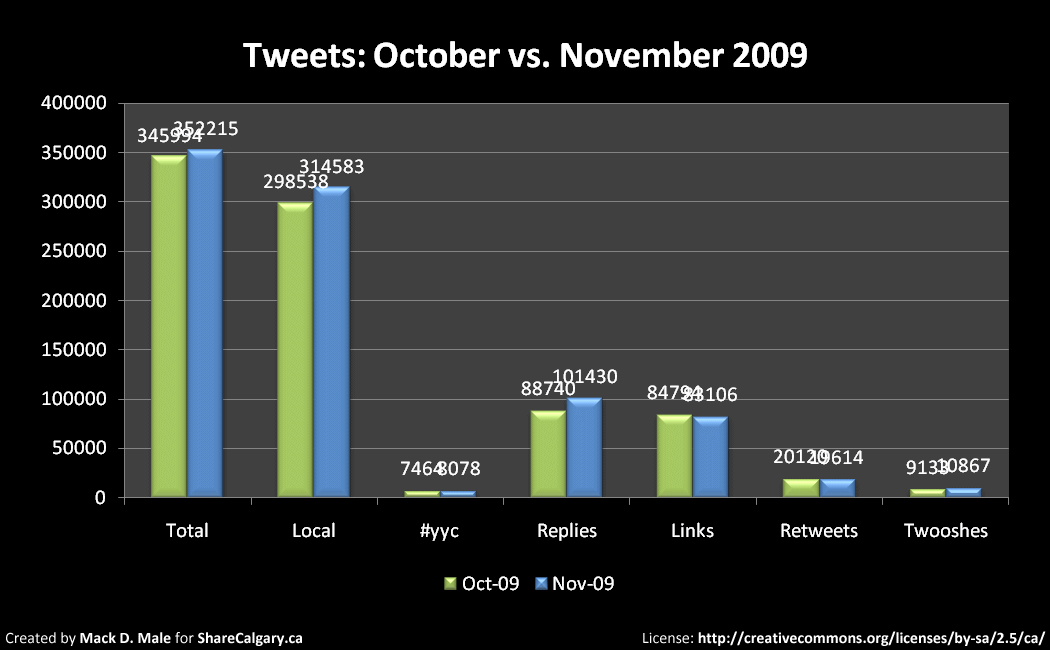
# of tweets by local users: 314583
# of tweets by local users containing #yyc: 8078 (2.6%)
# of tweets by local users that were replies: 101430 (32.2%)
# of tweets by local users containing links: 83106 (26.4%)
# of tweets by local users that were retweets: 19614 (6.2%)
# of tweets by local users that were twooshes: 10867 (3.5%)

I think the retweet number might be a little off, due to the new retweet functionality on Twitter.com, but it’s close. Here are the numbers above in graphic form:

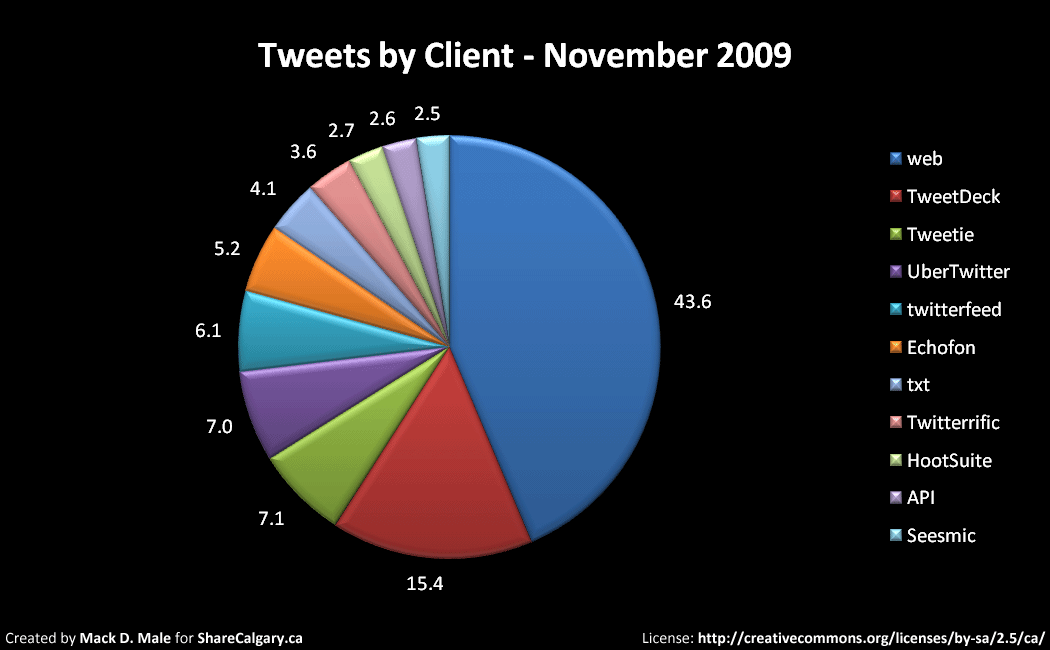
Here are the top clients used by local users for posting updates:

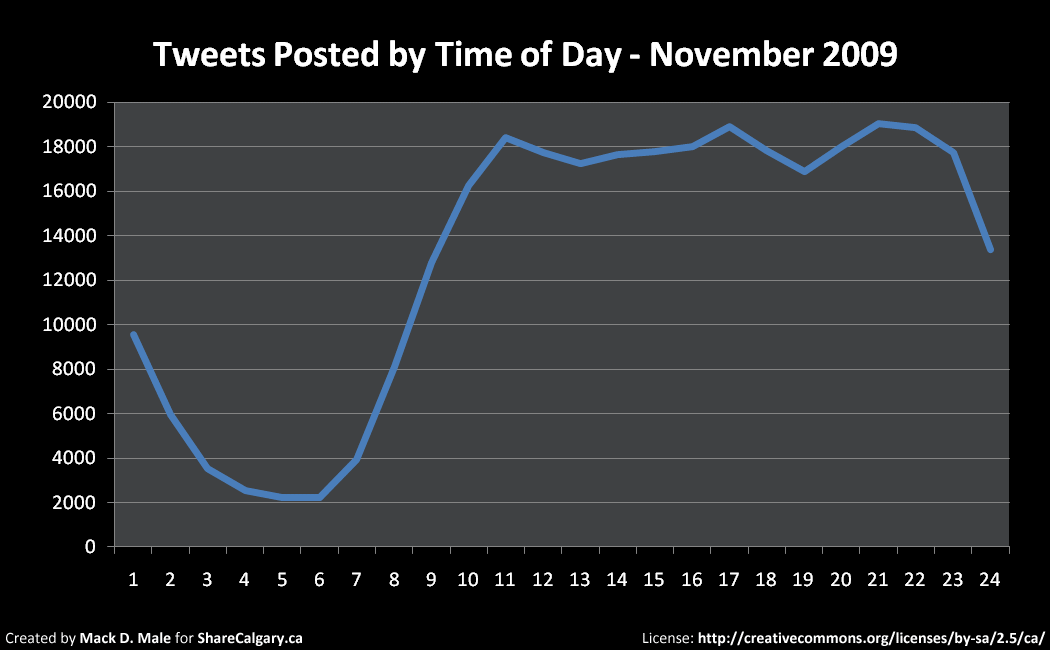
Some other interesting stats for the month:

Final Thoughts

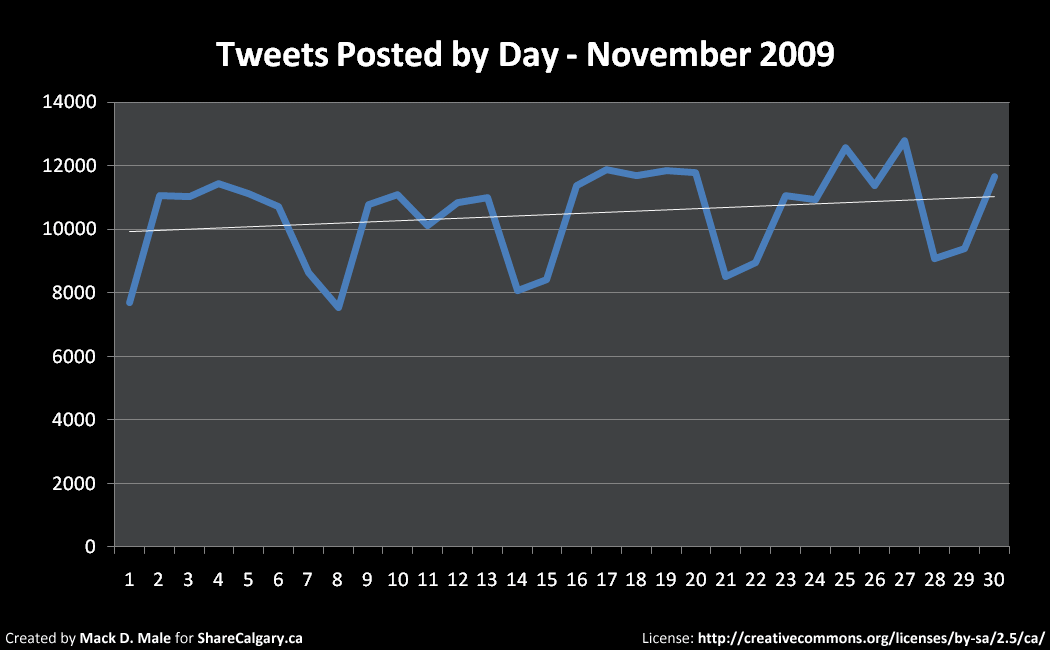
Edmonton is catching up, but Calgary broke the 300,000 tweets in a single month barrier first! There were just 9 days in November with less than 10,000 local tweets posted. This is the second straight month that user growth in Edmonton has been larger too, though not by very much.

Since March, I have identified just over 17,600 local users. The number above, 7468, is how many of them were active in November.

December and 2009 year in review stats are coming soon!

State of the Edmonton Twittersphere – November 2009

Welcome to the eleventh State of the Edmonton Twittersphere, my look at the intersection of Twitter and Edmonton. You can see last month’s stats here.
The source of the data this month is the same as last, primarily Twitter Search but also from Twitter directly. If a user has his or her location set to Edmonton, St. Albert, Sherwood Park, Leduc, Nisku, Stony Plain, Fort Saskatchewan, Beaumont, Spruce Grove, or matching lat/long coordinates, they are considered an Edmontonian.

For November 2009:

# of local users: 5850 (an increase of 219 from October)

To clarify, that means there were 5850 users who posted at least one tweet in November 2009 with their location set to something that makes them an Edmontonian as described above. This number should be treated as a minimum – there are probably many more Edmonton users without their location set.

Here are the rest of the stats for November 2009:

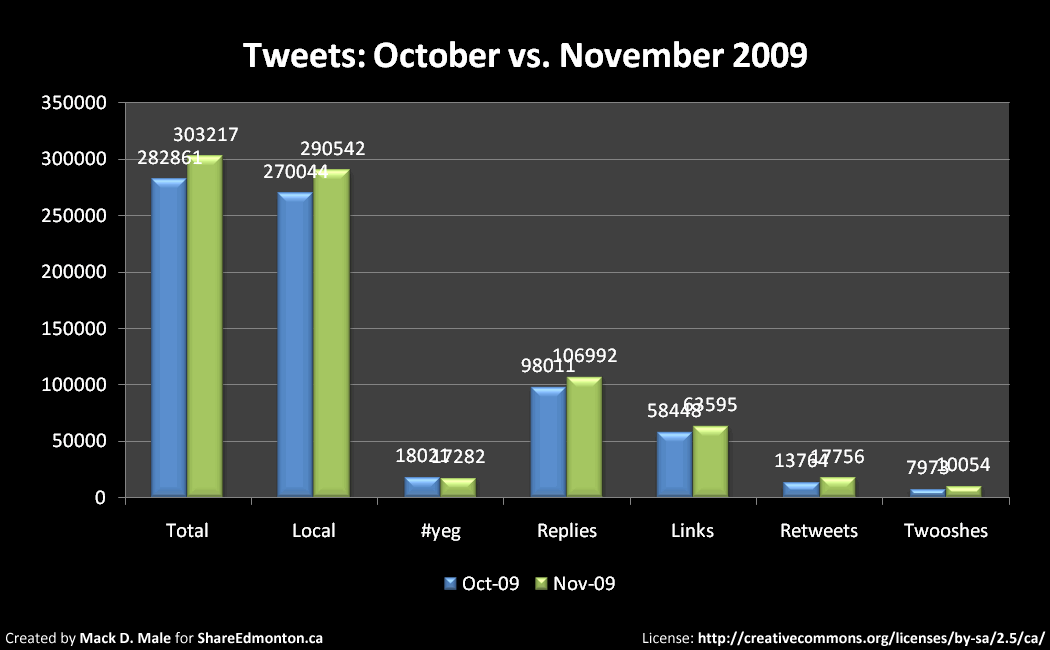
# of tweets by local users: 290542
# of tweets by local users containing #yeg: 17282 (5.9%)
# of tweets by local users that were replies: 106992 (36.8%)
# of tweets by local users containing links: 63595 (21.9%)
# of tweets by local users that were retweets: 17756 (6.1%)
# of tweets by local users that were twooshes: 10054 (3.5%)

I think the retweet number might be a little off, due to the new retweet functionality on Twitter.com, but it’s close. Here are the numbers above in graphic form:

Here are the top clients used by local users for posting updates:

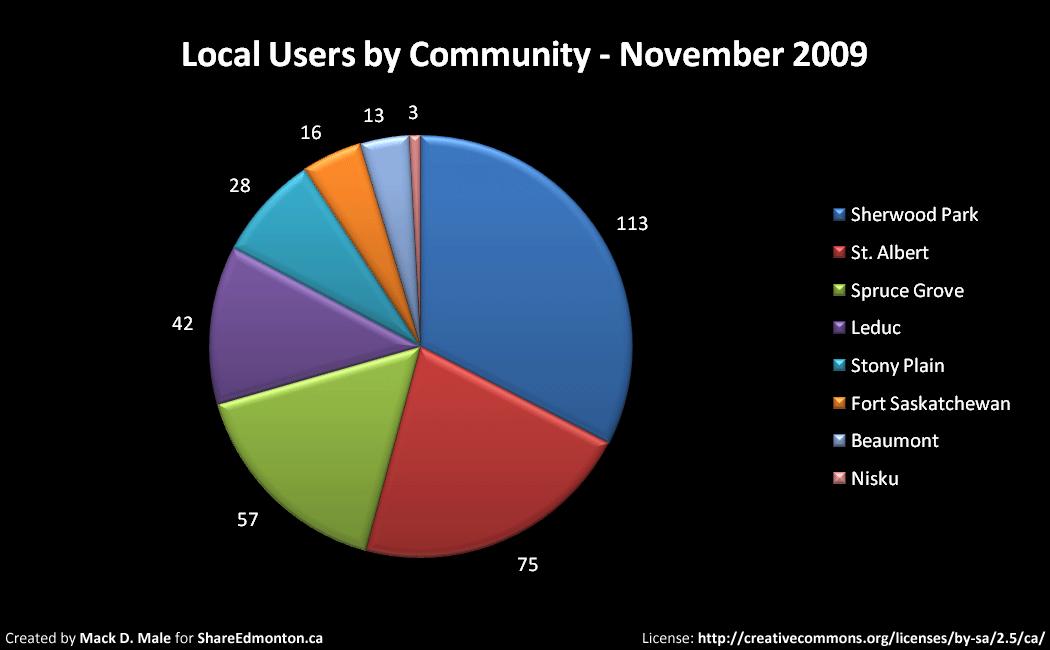
Here are the number of local users by community (besides Edmonton itself) for November:

Keep in mind that is based entirely on the text inside the location field of the user’s profile, and is definitely a minimum. Still, gives you an idea of the breakdown.

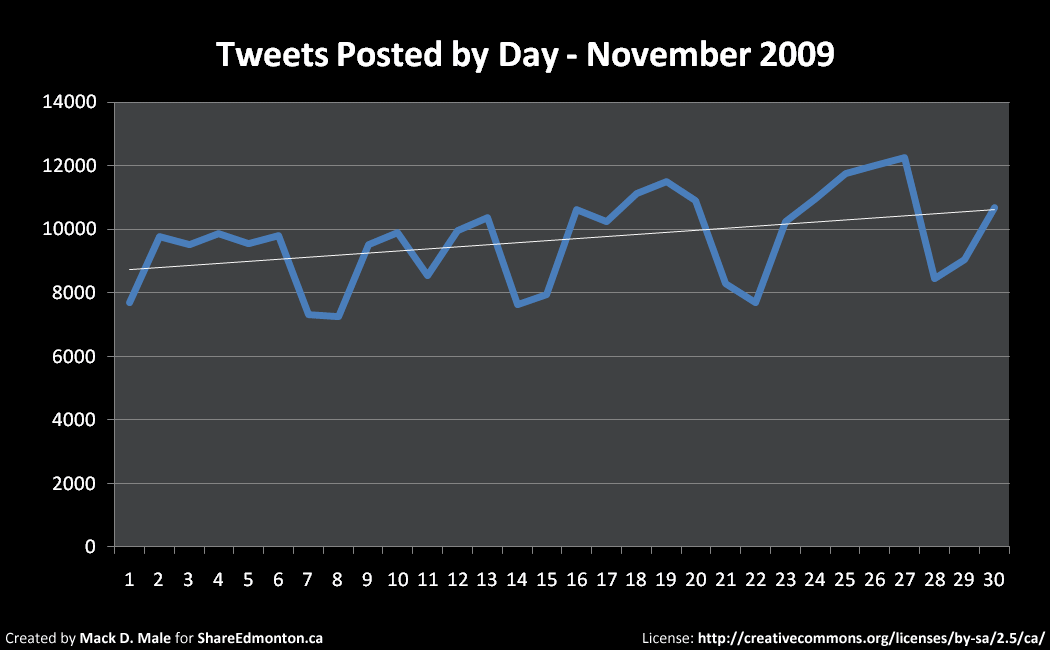
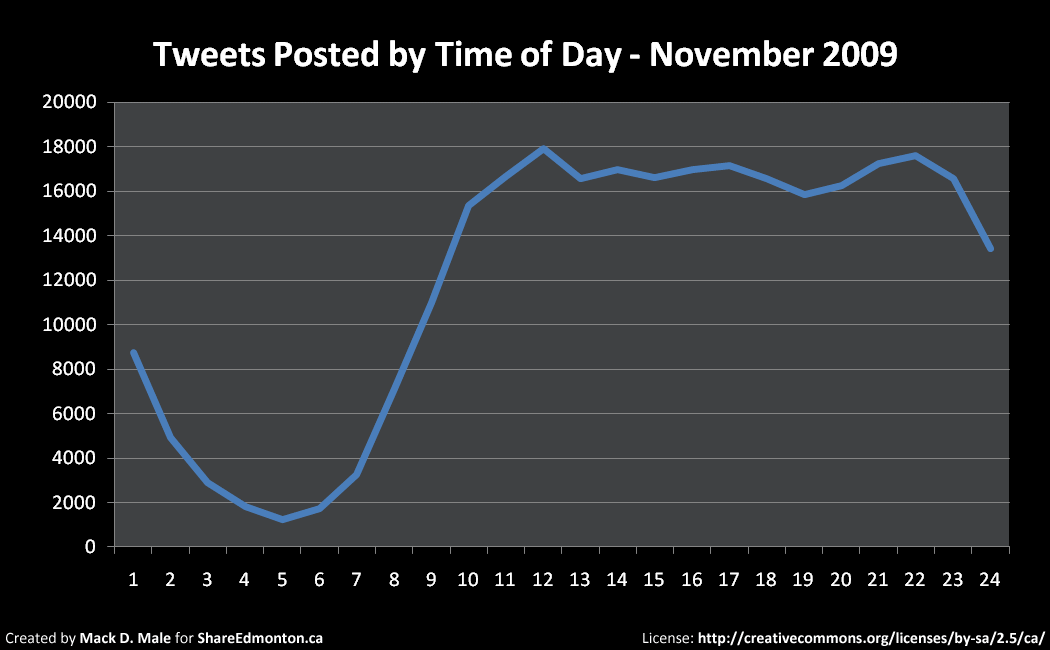
Some other interesting stats for the month:

Final Thoughts

User growth is still increasing, albeit rather slowly. There were only 9 days with less than 9000 tweets this month, and we broke the 12,000 per day mark for the first time.

Since January, I have identified just over 13,500 local users. The number above, 5850, is how many of them were active in November.

Calgary stats are up next, followed by December stats, then 2009 year-in-review stats. Stay tuned!

Notes for 12/20/2009

Here are my weekly notes:

Edmonton Notes for 12/19/2009

Less than a week until Christmas! Here are my weekly Edmonton notes:

Holiday Lights

Recent media links & thoughts

I read a lot about new media, journalism, publishing, news, etc. I always try to think about the things I read from both a global and a local perspective. Here are some thoughts on the things I’ve read recently.

From Jeff Jarvis:

I’m not so sure journalism is storytelling anymore.

Jeff points out that saying “journalism = storytelling” is limiting. Journalism is about more than the story, it’s a process. I agree completely. Data, algorithms, aggregators – all are aspects of journalism. They always have been, of course, but their importance/visibility has been heightened lately, thanks to new tools and technologies.

From paidContent.org:

Time Warner’s CNN is taking a stake in hyperlocal aggregator Outside.in—the latest example of a big media organization making a play in the hyperlocal space.

Smart move, just like MSNBC’s purchase of EveryBlock. And the news today that Google is in talks to buy Yelp. The dollars are starting to flow toward local/hyperlocal news companies. You know how the saying goes: follow the money.

From TechCrunch:

So what really scares me? It’s the rise of cheap, disposable content on a mass scale, force fed to us by the portals and search engines.

From ReadWriteWeb:

In my view both writers and readers of content will need to work harder to get quality content. Right now ‘quantity’ still rules on the Web, ‘quality’ is hard to find.

Lots of others have already discussed the “content farm” issue that made the rounds in the blogosphere last week. My view on it is pretty simple: readers need to become more active. There’s so much information so easily available that you can’t afford to passively consume the news. You have to seek out sources and recommendations. Certainly we’ll get better tools (aggregators, filters, search engines) but I think readers need to make more of an effort. See also: Content farms v. curating farmers.

From Clay Shirky:

…one of the things up for grabs in the current news environment is the nature of authority. In particular, I noted that people trust new classes of aggregators and filters, whether Google or Twitter or Wikipedia (in its ‘breaking news’ mode.)

I called this tendency algorithmic authority.

Fascinating. I think there’s incredible opportunity, both globally and locally, to take advantage of this. Who do you trust for your news? Is it the same people/organizations that you trusted five years ago?

From Unlikely Words:

Ken Auletta from the New Yorker wrote a book about Google, “Googled: The End of the World as We Know It” and before he published it, he cut the last chapter of 25 media maxims.

Now you can read them online. A few of my favorites:

  • Passion Wins
  • Adapt or Die
  • Digital is Different
  • Don’t Ignore the Human Factor

And finally, one of my favorite new tools: Times Skimmer. We need more innovation like that at the local level!