What’s next for Make Something Edmonton?

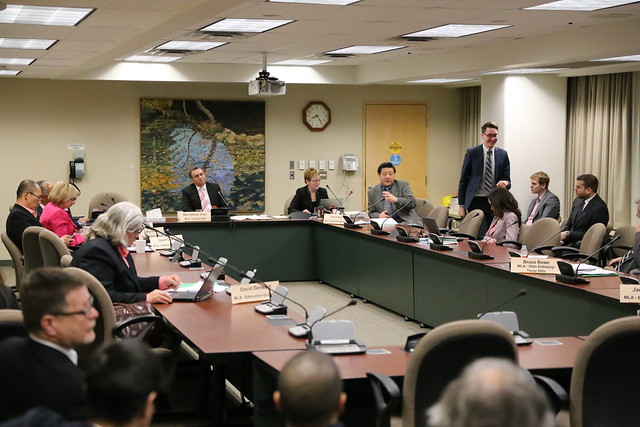
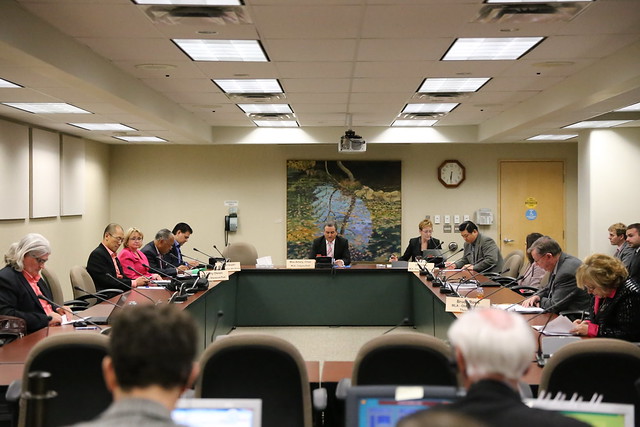
A few weeks ago I attended a discussion hosted by Make Something Edmonton (MSE) at Startup Edmonton. For a few hours on a particularly cold Saturday morning, a handful of former MSE volunteers shared their thoughts on the past year, offering insight into what worked and what didn’t. It was an opportunity to reflect on how MSE has evolved over the last year, and to consider where it should go next. There hadn’t been much communication with volunteers since the final report was produced in September, so many of us were unsure of MSE’s status. It turns out that many things were happening behind the scenes!

Make Something Edmonton Launch Party

Funding Make Something Edmonton

The final report of the City Image & Reputation Task Force was presented to Executive Committee on September 9, 2013. The recommendation that was passed was for EEDC and the task force to work together to:

“operationalize the Make Something Edmonton Initiative, and bring back recommendations to continue implementation of the Make Something Edmonton Initiative, including setting up an agency or other entity, and with a service package developed and funding to be requested for allocation in the 2014 budget.”

In December, a plan for funding MSE was presented to City Council. That plan suggested the following approach:

  • An Executive Director and Operating Budget would be provided through EEDC.
  • A Make Something Edmonton Activation Board would be established to provide strategic direction and implementation support.
  • The Activation Board would be co-chaired by two community leaders, jointly approved by the City Manager and the CEO of EEDC, who would serve a two-year term.
  • A Leadership Group comprised of the City’s Chief Communications Officer, the CEO of EEDC, and the Co-Chairs, would be established.

It also outlined the allotment of a $2 million budget:

  • $500,000 for the City of Edmonton to adopt the MSE brand platform in its marketing & communications
  • $975,000 for MSE through EEDC to fund operations & implementation
  • $525,000 for EEDC to execute targeted external marketing campaigns

That might seem like a large amount, but it pales in comparison to what has been spent on branding in the past.

An Initiative of EEDC

As a result of that plan, MSE now calls EEDC home:

“As of January 1, 2014, Edmonton Economic Development is proud to steward the Make Something Edmonton Initiative, continuing this grassroots organization’s mandate to make Edmonton a hub for building, creating, changing, for making something. An advisory board will soon be established to ensure connectivity with the vibrant creative and entrepreneurial communities and to keep the spirit of the program alive.”

The idea is for MSE to be part of EEDC’s “coordinated incubator strategy”. That’s basically a fancy way of saying that EEDC provides the necessary supports for organizations like TEC Edmonton, Startup Edmonton, and now MSE so that they can focus on their core objectives.

I asked EEDC’s VP of Marketing & Communications Kevin Weidlich about where he sees MSE fitting in. “I think EEDC is responsible for developing the Edmonton brand,” he said, “but we’re not the only ones.” Kevin was excited about the opportunity for MSE to continue on as a community-led initiative, supported by EEDC, and he sees volunteers as critical advocates for the adoption of the MSE brand in other organizations.

New Co-Chairs

MSE’s new co-chairs are John Mahon, former Executive Director of the Edmonton Arts Council, and Tegan Martin-Drysdale, former Co-Chair of Edmonton Next Gen. They take over from outgoing co-chairs Chris LaBossiere and Amy Shostak. Though her title still reads “interim”, Mary Sturgeon has moved to EEDC to remain as MSE’s Executive Director.

Both John and Tegan spoke eloquently at the event a few weeks ago, sharing some thoughts on how MSE fits into the bigger picture. Both stressed the importance of gathering feedback, and listened intently as everyone in attendance shared their viewpoints on what MSE should be focusing on next. They heard opinions on such things as whether to narrow the focus or whether to go after a broad range of Edmontonians, on whether a physical office was important or not, on how they should be engaging volunteers, and on how other local organizations could be encouraged to adopt the brand.

The big task ahead for John & Tegan is to establish the advisory or activation board, and to determine what structure the organization should take. It’s critical that they establish a plan for the next two years, in conjunction with Mary, so that they can bring the right people on board. I know they’re up to the task.

Anecdotes & Projects

While the MSE website remains operational, it hasn’t been updated as frequently as originally intended. One new feature called Anecdotes was added recently, however. With titles like “make something active” for the Edmonton Ski Club and “make something solid” for Waiward Steel, the stories are meant to both educate and inspire:

“Icons of Edmonton are big, small, strong, strange, strangely profitable, and increasingly global. There are thousands of examples of ideas that started here and grew into extraordinary events, social organizations, businesses, festivals, and community projects. Browse through these profiles and read about Edmontonians, their ideas, and what they’ve created. We’re building an inventory. If you have an example of Edmonton-ness in mind, get in touch and we’ll include it.”

There are nearly 20 anecdotes up on the website so far, and I expect we’ll see many more added in the weeks ahead. You may have seen some billboards around town highlighting some of these stories.

Projects continue to be added, and MSE actively promotes them via its Twitter and Facebook pages. At the moment there isn’t much incentive for a project creator to go back on to the website to update its progress, so that’s one area that the website’s functionality could be improved. I understand there was a laundry list of other improvements identified that have yet to come to fruition too.

Make Something Edmonton Launch 2013

Onward!

I was concerned last summer about where MSE would land, so I’m really happy that Make Something Edmonton will continue on as an initiative of EEDC. I think the direction that EEDC is headed is exciting, and I’m sure that MSE will benefit from the new energy and talent they have there. I’m also very happy to see John & Tegan step forward as MSE’s new co-chairs. Both have already given so much to Edmonton, and I know they will be great leaders for the initiative.

Clearly there’s a lot of work still to be done. MSE could reach more people, the essence of the brand could be adopted by more organizations, and project initiators and volunteers could be better and further engaged. I’m optimistic that with its future now certain, MSE can achieve all of that.

Edmonton’s Valley Line LRT moves forward with commitment from the Province

It was the announcement Edmonton was hoping for last Thursday when the Province unveiled its Budget 2014: money for southeast LRT extension to Mill Woods.

Valley Line LRT Funding Announcement

Edmonton’s Valley Line LRT is moving forward after the Province today made a commitment to provide up to $600 million to help finance the project. In a prepared statement, Premier Alison Redford said:

“Alberta is preparing to welcome a million new residents over the next decade, many of whom will be choosing communities like Edmonton as their home. Our Building Alberta Plan is helping municipalities build public transit systems to accommodate growth and make it easier for Albertans of all ages and levels of mobility to get where they need to go.”

In stark contrast to his disappointment last Thursday, Mayor Don Iveson was understandably pleased with today’s result, calling it “a momentous occasion”:

//platform.twitter.com/widgets.js

Today’s announcement was a bit over-the-top in my opinion, with Premier Redford, cabinet ministers, and MLAs arriving at Churchill Station via LRT. I think Mayor Iveson picked up on the pomp as well, joking that he hoped the ministers enjoyed their trip on the LRT.

Valley Line LRT Funding Announcement

It was a good opportunity for Edmontonians to show support for LRT expansion however, with students from City Hall School holding up #yeg4lrt signs at the top of the escalator. There was a sizable crowd gathered and lots and lots of media on hand to capture the event. If you’d like to watch the announcement, you can see the raw footage here.

What the Province has committed to is:

  • up to $250 million under GreenTRIP over three years beginning in 2016-17 upon approval under the second call for GreenTRIP projects,
  • up to $150 million in matching provincial funding if the federal government approves this project under the new Building Canada Fund beginning in 2016-17, and
  • up to $200 million in an interest-free loan to be repaid by the city over 10 years, fully backed by the Alberta Capital Finance Authority (ACFA).

As Mayor Iveson noted today, only $400 million of that is new money. The interest-free $200 million loan is simply a creative way to bridge the gap.

Valley Line LRT Funding Announcement

It is unusual though not unprecedented for the Province to offer interest-free loans to municipalities through the Alberta Capital Finance Authority (ACFA). For instance, a program known as “ME first!” launched in September 2003 and provided interest-free loans to encourage municipalities to achieve energy savings in their operations. It is common for the City to receive loans from ACFA for infrastructure projects, with typical interest rates ranging from 1.6% to 3.3%. Some projects that the City has previously borrowed for include the Whitemud Drive/Quesnell Bridge rehabilitation, the Walter Bridge replacement, and the NAIT LRT line. Any loans would be subject to the Municipal Government Act, which outlines debt limits and other restrictions. Edmonton is well within both the provincial debt limit and its own more strict limits.

Technically the money won’t start flowing until 2016, which perhaps not coincidentally happens to be the pre-election budget. It certainly did feel like a politically motivated announcement today. The Province received immense pressure from Edmontonians after last week’s budget and Mayor Iveson and his colleagues on Council did a good job of harnessing that to their advantage (the mayor even played along with the #SadDonIveson meme).

//platform.twitter.com/widgets.js

As Dave noted today:

//platform.twitter.com/widgets.js

Still, the assurance from the Province means that the City can keep the project moving forward, and that’s a win for Edmonton. We won’t lose a construction season, and the federal funding will likely be received without issue. Mayor Iveson confirmed:

“Knowing that we have a clear pathway to apply for those dollars allows City Council to consider moving ahead to the next step of this journey.”

The mayor thanked Council, our regional neighbours, and the ministers at the Province for working hard to get the deal done.

Valley Line LRT Funding Announcement

I know many people have been working on this for a long time, but I think Mayor Iveson deserves a lot of credit for making this happen. He expressed disappointment and frustration last week, but did not alienate the cabinet ministers he needed to work with to move things forward. He kept the lines of communication open, and clearly said the right things.

Today’s news, while positive for the Valley Line LRT, is not the long-term commitment that the mayor has been seeking, but it is another step in the right direction.

Valley Line LRT

Here’s a look at what the Valley Line LRT will look like from Mill Woods to 102 Avenue downtown (subject to change):

The City’s website has already been updated with details related to the funding:

“Thanks in part to timely commitments by our provincial and federal partners, the Valley Line will remain on schedule for a construction start of 2016, aiming to be open to the public by the end of 2020.”

The next step is a Request for Proposals to shortlist qualified consortia (groups of affiliated companies) that bid on the project. That stage is expected to take three months.

Keep up-to-date on the Valley Line LRT here or sign up for email updates.

Media Monday Edmonton: Update #103

Here’s my latest update on local media stuff:

//platform.twitter.com/widgets.js

Embed from Getty Images

You can follow Edmonton media news on Twitter using the hashtag #yegmedia. For a great overview of the global media landscape, check out Mediagazer.

So, what have I missed? What’s new and interesting in the world of Edmonton media? Let me know!

You can see past Media Monday Edmonton entries here.

Edmonton Notes for 3/9/2014

Here are my weekly Edmonton notes:

Headlines

ATB Financial
A preview of what the High Level Bridge LEDs will look like?

Upcoming Events

Our amazing crew of volunteers who make PKNs in Edmonton happen!
The volunteers behind Pecha Kucha Night in Edmonton! Photo by Warren Fenton

Province to Edmonton’s City Council: “You’ll like the 2014 budget…just kidding!”

Things were looking up for LRT expansion in Edmonton. As recently as a few weeks ago, Mayor Iveson sounded optimistic that the Province was going to provide money for LRT. Other members of City Council had also received positive indications from the Province. But talk is cheap, and the Province didn’t follow through with today’s budget, as Mayor Iveson made clear:

“Not in a position to celebrate anything today at this point. Little bit of disappointment that yesterday’s message and really the message our Council has been consistent about since last year hasn’t quite gotten through yet.”

The Province unveiled its 2014 Budget this afternoon, saying it “delivers the core services Albertans expect, makes strategic investments in innovation to improve the lives of Albertans today and into the future, and strengthens new and existing infrastructure to address the demands of our growing province and economy.” Unfortunately, LRT was not deemed a priority as evidenced by the complete lack of commitment to funding its ongoing expansion in Edmonton and Calgary.

The original GreenTRIP fund of $2 billion, created by the Stelmach government in 2008, has not been increased. MSI funding increased slightly, but not nearly enough to fund the LRT expansion to Mill Woods. Besides, as Mayor Iveson again pointed out today, Edmonton has a need for LRT funding on top of all the things that MSI funding is used for in other municipalities – building libraries, recreation centres, etc. The lack of increase in GreenTRIP funding was especially disappointing to the mayor:

“My interpretation of long-term commitment to GreenTRIP isn’t just saying we’re going to roll out all the money we announced serveral years ago by 2019 and announce this year’s money like its new when its actually money that we’re putting into the NAIT line today because its money that was announced previously.”

He clarified yet again what a long-term commitment would look like:

“For me, a long-term commitment to transit would be an open-ended or ten year commitment to sustained levels of funding for rapid transit expansion in our province.”

The reaction from local leaders was disappointment, as expected. “There’s no new commitment to transit here,” Mayor Iveson said.

//platform.twitter.com/widgets.js

//platform.twitter.com/widgets.js

//platform.twitter.com/widgets.js

//platform.twitter.com/widgets.js

There are two key risks the City faces by not receiving funding for LRT expansion from the Province. The first risk is that we miss yet another construction season, which could add around $65 million to the total cost of the project. The City has a deadline of April 30 to try to get all of the necessary funding in place. If that date isn’t met, then the completion of the Southeast LRT expansion by 2019 is in jeopardy.

The second risk is that the federal funding Edmonton has applied for under the P3 Canada program could be at risk if construction doesn’t begin by the end of 2015. “There is a timeline on the P3 grant,” Mayor Iveson said. “If we were to lose another year, then we would potentially begin to lose some of the federal funding, and then we’d really lose momentum.”

Mayor Don Iveson

But the biggest issue here is that the Province made noise about a long-term commitment to LRT, and simply hasn’t delivered. Mayor Iveson expressed his frustration with this:

“Frankly I received a lot of mixed messages from the Province over the last six to eight weeks, that we’d be happy, that we should manage our expectations, that we’d be satisfied, that we’re asking for too much, and often from the same people, so that is a frustration.”

Still he tried to remain optimistic, adding, “that just tells me that things are fluid still.”

You can listen to Mayor Iveson’s full remarks here:

If there wasn’t already a trust issue between City Council and the Province, there most certainly is now. Conversations can only be considered productive if they actually lead to an outcome that all sides are happy with. If the Province wasn’t prepared to make a commitment now, they should have made that clear to the mayor and the rest of Council.

Asked what he thought about his first provincial budget experience since taking office, Mayor Iveson sighed audibly. “That’s what I think,” he said. Ever the optimist, he said he remained dedicated to working with the Province to find a positive outcome for the city. “I think they’ve figured out in the last 24 hours that we really mean it, this is really important to us.”

You can read more about the Province’s Budget 2014 here.

Recap: Mayor Iveson’s 2014 State of the City Address

Mayor Don Iveson delivered his first State of the City address today in front of an absolutely packed crowd at the Shaw Conference Centre. Hosted by the Edmonton Chamber of Commerce, the State of the City luncheon attracted more than 2200 people including Councillors, MLAs, MPs, as well as business and community leaders, all eager to hear what our new mayor would say. Would he make a statement like Mayor Mandel did (by declaring “no more crap”) in his first address? Would he dump on the Province like Mayor Mandel did (lamenting the treatment of post secondary education in Edmonton) in his last address? Or would he set a completely different tone?

State of the City 2014

Though Mayor Iveson’s speech today may have lacked a lightning rod comment like the infamous “no more crap”, it had its moments. Looking right at Premier Redford, our mayor called for the Province to come to the table on funding for LRT expansion:

“Madam Premier, never has the opportunity and timing to fully build out Edmonton’s LRT network been more worthy of your government’s leadership, commitment and support. Show that you understand the needs of this city in the same way that my Council does. Show Alberta’s capital city that we are worth investing in.”

It was a powerful moment, and the audience erupted into applause after he delivered the words. Without question that part of the speech is what we’ll be talking about years from now.

Mayor Iveson opened and closed his speech recognizing the important role that indigenous peoples have played in Edmonton’s history, and the important role they’ll play in our future.

“Ladies and gentleman, a new, more confident Edmonton has emerged – building upon our rich heritage, leveraging our advantages, and – most importantly – unafraid to challenge ourselves to do even better.”

He noted that Edmonton will host the Truth and Reconciliation Commission of Canada’s national event later this month. “Without recognizing our shared history and learning from it, we have no hope of making change,” he said.

Though he touched on topics like public engagement, roadway maintenance, and the City Centre Airport, Mayor Iveson focused the bulk of his time on ending poverty, the global competitiveness of the region, LRT expansion, and the big city charter.

State of the City 2014

On poverty, Mayor Iveson looks set to keep an election promise, announcing that next week Council will consider his proposal to elevate the existing Poverty Elimination Committee (of which I have been a proud member) to a task force. “Simply managing poverty is not working,” he told the crowd. He called upon everyone in attendance to think about what they could do to “unleash the next generation of entrepreneurs from unlikely circumstances.” Mayor Iveson also recognized the importance of aligning with the Province’s commitment to eliminating child poverty in Alberta.

“Poverty is complex. Its causes are multi-facted, interlinked and anything but straightforward. Many are afraid to tackle it. But I am not.”

Using language that should by now seem familiar, Mayor Iveson next turned his attention to the Edmonton region. “If we want to continue to outperform other city regions in Canada, then we must work together much more effectively – and there can be no delay,” he said. Amalgamation isn’t on the horizon but he recognized that business leaders are frustrated. “For the region to achieve results, we must work together much more effectively on economic development,” he said. Again, the mayor issued a challenge, calling on his fellow mayors to consider the role they play:

“What will you do differently…how will you think differently…are you ready to look ahead and ensure that our region’s ability to compete globally for our mutual long-term benefit is always at the forefront of our deliberations?”

He briefly discussed annexation, saying that “boundary changes are a natural part of these discussions.” Mayor Iveson said that “Edmonton’s future growth must be balanced with a healthy mix of residential and employment areas.”

State of the City 2014

Though his pointed comments to Premier Reford were the most memorable part of Mayor Iveson’s remarks on LRT, he had much more to say. “To remove all doubt,” he told the audience firmly, “this Council unanimously declared LRT expansion as its priority for new infrastructure investment, beginning with the long-awaited Valley Line from Mill Woods to downtown.”

Most of City Council has been saying optimistic things about the Province providing funding for LRT, and Monday’s throne speech certainly sounded like a step in the right direction. We won’t know for sure until tomorrow if anything has changed however, when the budget is released.

The final major topic that Mayor Iveson addressed was the Big City Charter. “Big cities fuel a large part of the province’s economic dynamism,” he said. Citing work underway with the City of Calgary that has led to a closely aligned vision for such a charter, the mayor expressed his hope that discussions with the Province will be productive.

“We have reached the point where Alberta’s big cities have outgrown the one-size-fits-all Municipal Government Act and our collective efforts are better spent focused on a big city charter. What is needed is a real partnership between Alberta’s big cities and the provincial government.”

Unfortunately, I think Mayor Iveson again missed an opportunity to talk about what a big city charter might look like. I certainly applaud the ongoing effort to negotiate a better deal for big cities, but it would be much easier to ask the hundreds of Edmontonians in the room for support if they could understand and talk about it. The big city charter still seems nebulous.

State of the City 2014

Mayor Iveson spoke today with the same confidence and measured delivery that attracted Edmontonians to him during last fall’s election. Will it go down as his most memorable speech? Likely not. But I think he said the right things, in public, to the right people. Most of the folks in the room were already Iveson supporters, so winning them over wasn’t the goal. Instead, he delivered a clear message about what’s important to Edmonton and offered insight into how we should tackle key issues.

“My responsibility, and my Council colleague’s responsibility, is to steer us, focused on an ascendant Edmonton. Great cities emerge when conditions are ripe for unprecedented cooperation, creativity and disruptive change. The cities that embrace this will thrive while cities that are content with today will lag and whither. I will not stand for that in Edmonton. And, given what we hear from Edmontonians every day, neither will you.”

You can read the full text of Mayor Iveson’s remarks here in PDF. You can read my recap of last year’s State of the City here.

Does high speed rail have a future in Alberta?

Last week I attended a public meeting on high speed rail in Alberta (which I typically abbreviate ABHSR). The issue is being considered by the Standing Committee on Alberta’s Economic Future, an all-party committee consisting of 18 MLAs. As part of the process, the committee has now heard from the public in Calgary, Red Deer, and Edmonton, and is encouraging additional written submissions by March 31. I hope at least a few Albertans take them up on that, because their “public” meeting was poorly publicized and required going past three security checkpoints.

Alberta High Speed Rail Public Meeting

Here’s the stimulus provided by the committee on the idea:

  • It could offer service between Edmonton and Calgary (including a stop in Red Deer) with a trip time of one to two hours at speeds of 200-500 km/h.
  • One-way ticket prices have been estimated at between $66 and $142.
  • Capital costs have been estimated at $2.5 to five billion, but could be significantly higher.
  • A route would be chosen and land would be acquired along the route for tracks and stations.
  • Overpasses or underpasses would likely have to be built to accommodate many of the road crossings or, alternatively, bridges above any roads the track would cross could be constructed.

Clearly the idea is intriguing. A hundred bucks to get to Calgary in less time than it would take to drive? Sign me up! Driving is stressful, I could read or do some work on the train, there are lots of positives, for sure. But is Alberta ready? Is this an investment we’re prepared to make now?

There were some interesting viewpoints put forward at the meeting. Some felt the time is right, and that a project like this could allow us to harness the talents of all the smart, creative, and innovative people we have throughout the province. Others expressed concern that our population isn’t big enough to warrant such a project. And still others argued that automated, driverless cars are coming and will make the entire idea irrelevant (as exciting as the work Google and others are doing in this area is, there are significant hurdles still to overcome, so I’m not holding my breath).

Technically, the project sounds feasible. A few speakers talked about Maglev technology that has been deployed in a number of other places, notably in Asia. One speaker, Deryck Webb, said Maglev combined with vacuum tubes was the way to go (what he described sounded very similar to Elon Musk’s Hyperloop). I think the key issues are financial and political, not technical.

Alberta High Speed Rail Public Meeting

The issue last came up in 2009, when a report was issued assessing the potential for service between Calgary and Edmonton. At the time I wrote:

“I personally think if the province is going to be spending money on transit, it should be on city and regional transit. Both Edmonton and Calgary could use the assistance to improve their respective transit systems…”

I still feel that way today. If we’re going to spend a few billion dollars, let’s spend it on LRT first.

This is the message our local leaders are sending to the Province. One of the written submissions the committee has received thus far was from the Edmonton International Airport. President and CEO Tom Ruth wrote the following:

“Given the lack of local networked options in the Edmonton Region, we agree with the position of the City of Edmonton and the Edmonton Economic Development Corporation (EEDC) that the priority should be to ensure there are fully developed networks in advance of HSR; including Light Rapid Transit (LRT) service fully developed within the Edmonton Region, with connectivity to EIA. Until these intra-regional options are fully built out, the utility of HSR is severely limited.”

Maybe high speed rail is in Alberta’s future, but I hope it’s after we have developed the LRT networks in Calgary and Edmonton.

You can see the full transcript of last week’s public meeting here (or in PDF here). You might also be interested in the Reddit thread on the issue. If you’d like to submit something to the committee, send it to economicfuture.committee@assembly.ab.ca. The deadline is March 31, and all submissions and the identities of their authors will be made public.

Media Monday Edmonton: Update #102

Here’s my latest update on local media stuff:

You can follow Edmonton media news on Twitter using the hashtag #yegmedia. For a great overview of the global media landscape, check out Mediagazer.

So, what have I missed? What’s new and interesting in the world of Edmonton media? Let me know!

You can see past Media Monday Edmonton entries here.

Edmonton Notes for 3/2/2014

Here are my weekly Edmonton notes:

Headlines

Precious Treasure
Cool shot titled ‘Precious Treasure’ by Dave Sutherland

Upcoming Events

Edmonton Light
Edmonton Light by Jeff Wallace

Want to solve the space problem for the arts in Edmonton? Stop shaving that yak!

In software development there’s an expression we use to avoid scope creep. “Don’t shave that yak!” we’ll say. It’s shorthand for staying focused and working on solving the problem at hand, not other problems that we might notice along the way. As far as I know the phrase comes from a Ren & Stimpy episode and was coined by Carlin Vieri, a Ph.D. at MIT back in the 90s.

“Yak shaving is what you are doing when you’re doing some stupid, fiddly little task that bears no obvious relationship to what you’re supposed to be working on, but yet a chain of twelve causal relations links what you’re doing to the original meta-task.”

I quite like Seth Godin’s example of yak shaving. This GIF illustrates it well too:

yak shaving

I was chatting with someone in the arts community recently about the Edmonton Downtown Academic & Cultural Centre project, and I remarked, “I just don’t know how we got from ‘arts organizations need space’ to ‘a $1 billion project is the answer’.” But thinking about it later, I realized that I know exactly how we got there. We’re shaving the yak.

It was back in November 2011 that the Mayor’s Arts Visioning Committee released its recommendations for how we could “lift Edmonton to international recognition as a city of the arts by the year 2040.” They followed a public engagement process, learned about the challenges facing the arts in Edmonton, and developed recommendations to try to address them.

One of the challenges identified was space:

“Edmonton artists and arts advocates described a critical need for additional creation, rehearsal, exhibit and performance space. Developing or designating new arts space is paramount to the vision in this report.”

It’s worth noting that this wasn’t a new challenge – The Art of Living identified it in 2008 too. As a result, many of the recommendations dealt with space. The third recommendation was titled “Downtown Arts District and Performance Centre” and was relatively simple:

“The City of Edmonton endorse, in principle, a landmark performing arts centre (PAC) downtown, and designate land for such a development in the city core.”

The report goes on to detail the need and provides background and context. I understand from my conversations with those in the arts community that there is a real need for more space, especially smaller, black-box space that is multi-purpose.

So that’s the problem we’re meant to be solving: a lack of performance and rehearsal space. How did we start shaving the yak? I think it went something like this:

City Council put up $100,000 for the newly created Edmonton Performing Arts Centre Foundation to develop a business case. In developing the business case, the foundation connected with the University of Alberta which expressed a desire to link its music and art & design programs with the downtown arts community. There’s not enough money for all of that, so the vision needed to be made broader. The “revitalize downtown!” mantra evidently worked for others, so the group decides to go after that as part of the vision. To compete with the other big, fancy space known as the arena, a big, fancy space known as the Galleria was designed. In order to pay for that, a commercial office tower was added to the plan, along with a new campus for the University of Alberta. But those projects were deemed unrealistic unless there was a connection to the new Royal Alberta Museum and the LRT.

Before you know it, the group has taken arts out of its name completely, and we’re talking about a $40 million dollar pedway.

Weren’t we supposed to be finding new space for the arts? Stop shaving that yak!