
On the web, page speed matters. If your site takes too long to load, people will go elsewhere. Google proved this by purposefully slowing down its search engine. They found that even just half a second caused fewer searches. Bottom line: users love fast sites!
With that in mind, I decided to look at local media sites – how fast or slow are they? Rather than looking at page load times, I decided to use YSlow to determine the performance of each site. Lots of factors can impact the amount of time a page takes to load (your ISP, the speed of your computer, where you are geographically,etc), but everyone has to download the same amount of data for a web page, so I figured YSlow is a little more fair than a stopwatch.
Here are the fourteen sites I looked at (you can download all the data here):
As you can see, none of the sites received an “A” grade. The only one to receive a B was Only Here for the Food. The grade can be somewhat misleading, however. Here’s what the front page performance for each site looks like:
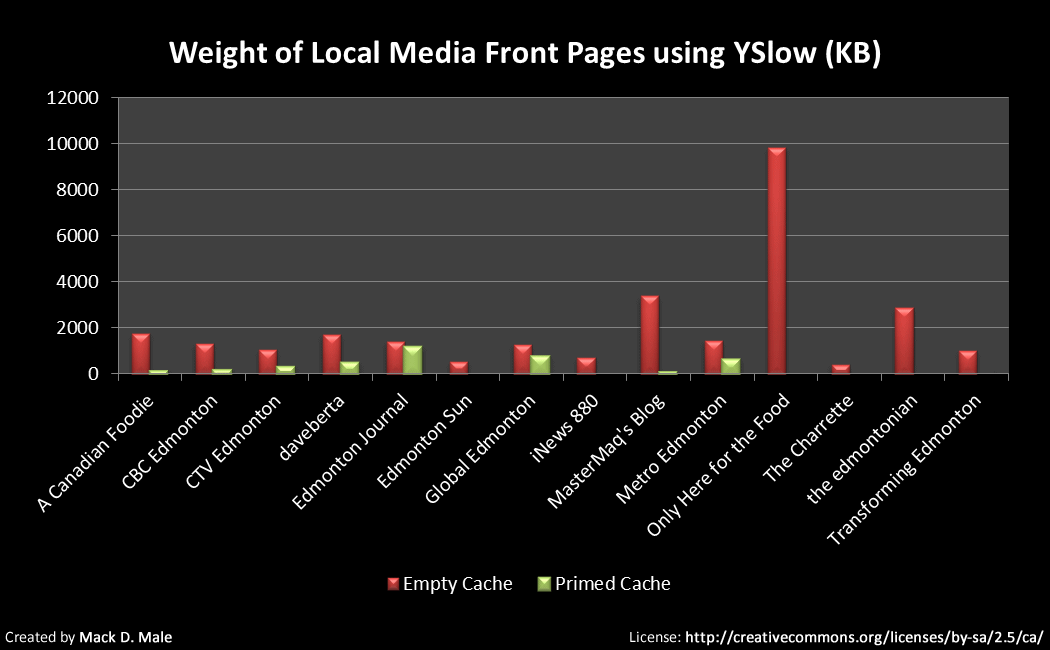
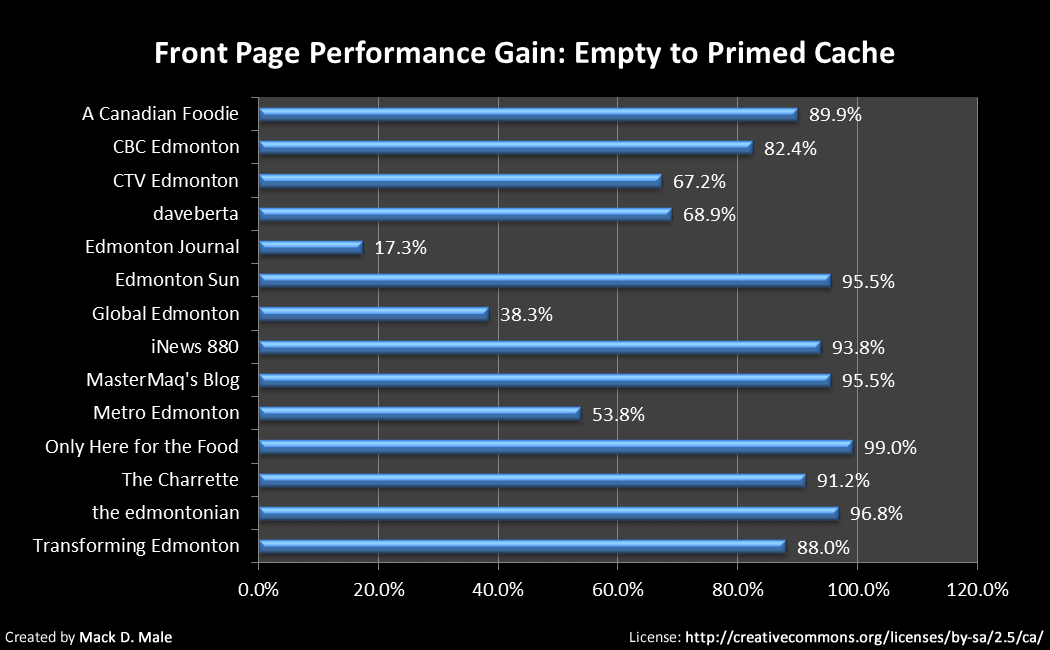
It turns out that Sharon’s blog is the heaviest of them all with an empty cache (the first time you visit the site). This is due to the large number of images she has on her site. In fact, almost all of the weight of the page is due to the images. If you look at the primed cache (subsequent visits to the site) then the Edmonton Journal is the heaviest. The Edmonton Journal has the worst performance improvement going from an empty to a primed cache:
To be fair, I decided I should compare an “article page” on each site as well. With social media in particular, an article page is more likely to be a visitor’s entry point to the site. For this test, I simply clicked on the top article on each site:
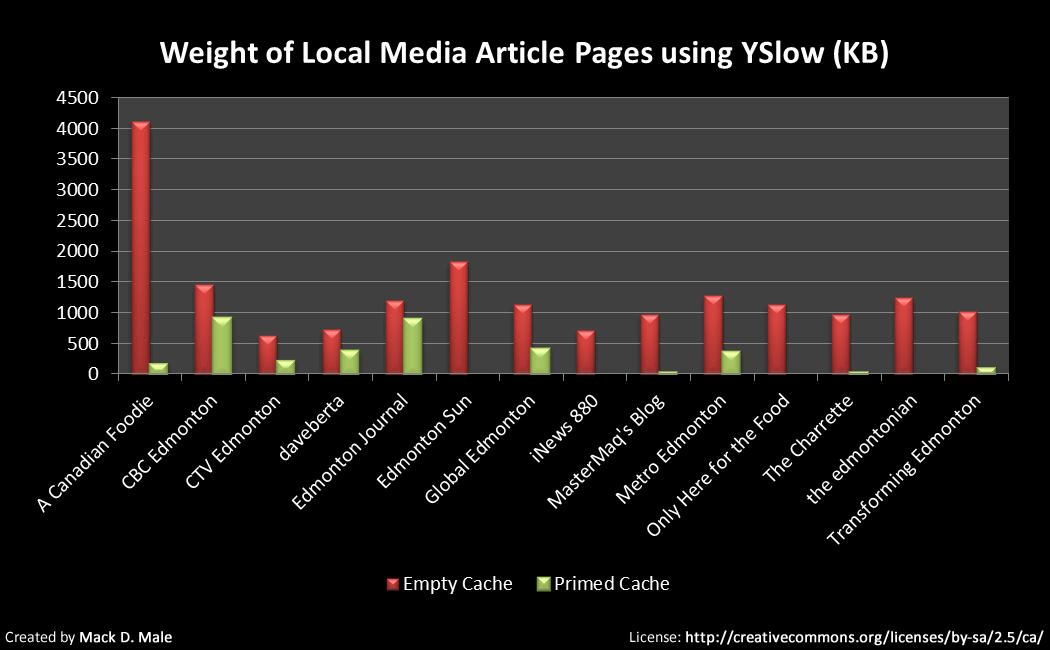
One caveat: I used the second story for iNews 880, because their top story was over 25 MB in size! Evidently they think it is fine to embed full size, uncompressed images.
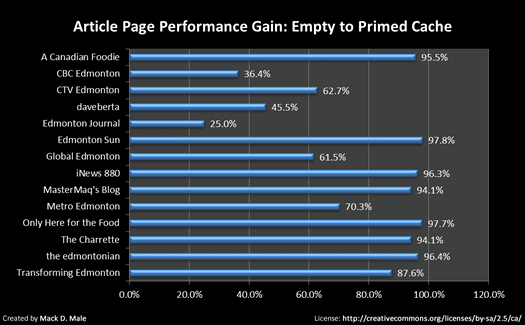
As you can see, Valerie’s blog is the heaviest, again due to the number of pictures she has. Once again, the Edmonton Journal has the worst performance improvement going from an empty to a primed cache:
Final Thoughts
I thought there would be more of a difference between the new and traditional media sites, but there isn’t really. In general the heaviest part of the blogs is images and the heaviest part of the traditional media sites is Javascript, but there are exceptions. On average, the first time you visit the front page of one of these sites you’re going to have to download just over 2 MB. On a 56.6 Kbps dial-up connection, that would take you nearly 5 minutes. On a typical high-speed connection, it’s more like less than 10 seconds.
I think perceived performance is often more important than actual performance, but that’s obviously harder to measure. In my experience, most of these sites load fairly quickly. When I do notice a speed issue, it’s usually because the page I am trying to load has a lot of stuff on it.
Another thing I learned from this exercise is that all of the sites have room for improvement!
What has your experience been like? Which sites do you find slow?
 All
All  I have a love-hate relationship with
  There are lots of great new “little” features coming in Windows Vista, features that you might not hear advertised or that you may not experience right away. One of those features (unless it becomes advertised in stores which would be great) is Windows Performance Rating, a numerical value that
  Now that we’re into 2006, my computer is about six years old. I have upgraded certain components over the years (notably RAM and hard drives) but my original processors are still chugging along – dual Pentium III 600 MHz processors (x86 Family 6 Model 8 for those of you who like details). For the most part my computer is pretty responsive, and I do a good job of clearing up temp files, scanning for spyware and viruses, etc. Certain applications and tasks are starting to be noticeably slower though, which means a new computer is becoming more and more likely. My computer probably is doing things just as fast as a couple years ago, but it seems slower because of all the newer, faster machines I come into contact with. Faster machines that more and more frequently have more than one processor core.
 MasterMaq's Blog
