City Council takes a step in the wrong direction by supporting the Galleria Project

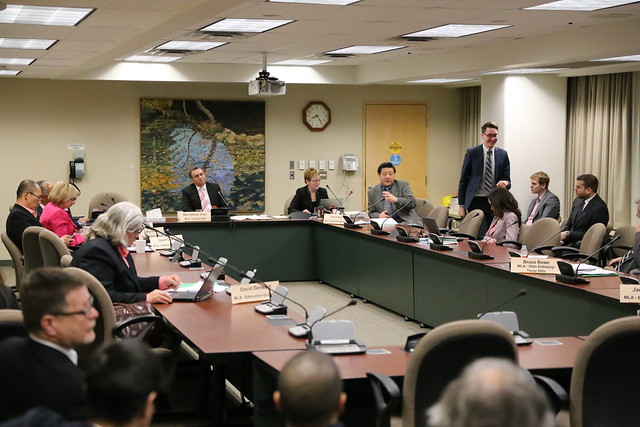
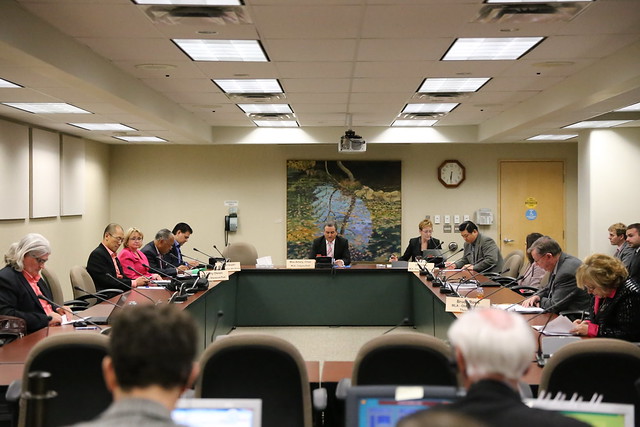
Well it just wouldn’t be a high-profile project without Council doing most of its deliberations in-camera (private) now would it? That’s exactly what Council did again tonight in considering the Galleria Project (items 6.5, 6.6, and 6.7). It’s a worrying trend.

Essentially what Council decided to do was move forward with building the pedway, at an amount of up to $30 million, and that it would purchase the necessary land and relocate the EPSB Maintenance Building at a cost of about $33 million, pending written confirmation from tenants of the project. This doesn’t mean the Galleria Project is a done deal, but it is a significant step in that direction. And I think it’s a step in the wrong direction, at least at this time.

Here’s the motion as passed this evening:

  1. That the Capital Profile number 14-17-5037 in Attachment 2 of the April 15, 2014, of the Sustainable Development report CR_1065, be amended to a total cost of $30 million.
  2. That subject to an agreement to share the total cost of construction for the Pedway, approved by Council, with land owners north of 103A Avenue benefitting from the construction of the Pedway Connection to the Royal Alberta Museum:
    1. the amended Capital Profile number 14-17-5037 to fund the Pedway, be approved, and
    2. a contract with Ledcor Construction in the amount of $4.4 million for the design for the construction of the Pedway, as outlined in the April 15, 2014, Sustainable Development report CR_1065, be approved, and the contract be in form and content acceptable to the City Manager.
  3. That the Galleria Project – Downtown Academic and Cultural Centre be acknowledged as an innovative development opportunity in downtown Edmonton and subject to the City receiving written confirmation of financing and financial commitment for the Galleria Project from the Province of Alberta for the University of Alberta, a major office building tenant, other office building tenants, and retail tenants, that the purchase of land and relocation of the Edmonton Public School Board Maintenance Building and Capital Profile number 14-17-5031, as set out in Attachment 1 of the April 15, 2014, Sustainable Development report CR_1066, be approved.

Wasn’t this project supposed to be mostly paid for by donations? Yet here we are, with the City taking on much of the upfront risk.

Galleria Project

Council decided on all of this after receiving a report full of potential risks. Here are some excerpts from one of the reports that Council considered today on the Galleria Project (emphasis is mine):

  • “The Foundation initially requested financial support for the Galleria roof, but has withdrawn that request given the preliminary state of the project and the absence of a clear design or plan.”
  • “The University of Alberta has confirmed its intention to relocate the School of Music and Department of Art and Design to the site, bringing potentially 5,000 additional staff and students to downtown. This relocation is conditional upon direct, climate controlled connection to the LRT (i.e. an underground pedway connection to Churchill Station).”
  • “On February 18, 2014, as a result of revised cost estimates for the pedway construction and land purchase, the Foundation requested additional funding that reflected the increased cost estimates. In addition, because of the design and construction schedule for the Royal Alberta Museum, the City was asked to fund the pedway design and associated utility relocations immediately. This work cannot be deferred to a later date.”
  • “In order to purchase the School Board property, the City will be responsible for all costs to relocate the School Board Maintenance Building Operations to an alternate site.”
  • “In order to protect for the opportunity to connect both the Royal Alberta Museum, the Galleria, and other new development north of 103 A Avenue directly to Churchill LRT Station, the decision to proceed with the design of the pedway, the commencement of required utility relocations, and commitment to construct the shell under the Museum forecourt must be made now.
  • “The request to the City to contribute towards the construction of a roof over the Galleria has been removed. The Foundation may return with a request for assistance at a later date once more information is available. It is considered premature to consider any additional funding for this component until the project further evolves.”
  • “The business case as developed by the Foundation identifies that the source of funding for the Trust, and in turn for the theatres, is from the revenues generated by the office space and retail leasing on the property. In the event that the revenues are not realized, then while there is no legal obligation for the City to assume the operation of the theatres, there is a risk that the City could be asked to provide financial assistance in order for the theatres to continue to operate.”
  • “It is difficult to define and quantify risks at this time as this project is still at the concept design stage. The Foundation has provided what information it has, but there is not sufficient information available to fully address many of the issues identified for clarification.”
  • “Critical assumptions have been made relative to office and retail lease rates, rate of office space absorption, retail market demand, financing costs, construction costs, fundraising commitments and availability of government grants. Should any of the assumptions made in the business case not be realized, there is a risk that the funding to build, operate and maintain the theatres will not be sufficient to achieve the goal of providing affordable space to the arts community.”
  • “While the Foundation is confident in their ability to secure an anchor tenant for the office tower as well as several additional tenants, no proposed tenants are under contract.”
  • “With several new office towers having recently been announced or underway in the downtown, vacancy rates are expected to rise, and given the existing vacancy within the EPCOR Tower, the ability to secure tenants in a short time frame is considered to be a significant risk.”
  • “Costs for the theatres are difficult to estimate as they are subject to considerable range depending upon the design; however the costs are at the low end of the range of recent theatre construction in Calgary and Toronto.”
  • “The Foundation or Cultural Trust will offset the anticipated net operating loss of the theatres with diverse and dedicated revenue streams from office and retail rental rates from the larger Galleria project. There is no contingent plan contemplated to continue the operations of the theatres if the projected revenues are not realized.”

Nevermind that the original business case called the four new theatres “financially self-sustaining”. Guess not. Or that it declared the project was “feasible” and “sustainable” or that it would “generate significant revenue.” Unless of course the assumptions are wrong. Or worst of all, that the City wouldn’t have to put in much money, because it was a unique “P4” model. Right.

Somehow, after discussing the project behind closed doors, Council was able to look past all of that risk and concern (not to mention the ultimatum about needing to decide today) to support the project. Furthermore, many of them made a point of expressing their support verbally, as if the proponents might see the motion not as a victory but as a loss.

Councillor Henderson called it “a remarkable opportunity for the city.” Councillor Esslinger called it “an exciting project.” Councillor Sohi said it was “a very innovative development opportunity.” Only Councillor Knack spoke partially against the motion, suggesting that it should be compared against other projects up for consideration as part of the next Capital Budget. Mayor Iveson too pointed out that more assurances are needed, but said “it’s entirely appropriate to further explore” the project. He said it’s a “very exciting concept.”

Councillor McKeen made the motion, and used his remarks in part to justify the use of an in-camera session. He essentially asked us to trust Council, to take their word for it that the proponents did their homework. I fully appreciate the sensitivity around confidential information that doesn’t belong to the City, but I fail to see why that means the entire discussion needs to be had in private.

Furthermore, Councillor McKeen said “I think we’re asking a lot of the proponent” and added “we have spent a lot of time on this.” Really? Given the glaring holes in the proposal and self-admission that it is still extremely preliminary, I don’t think Council is asking much of the folks behind the Gallera Project at all. And I certainly don’t think Council has spent “a lot” of time on this project, unless it all happened behind the scenes.

In general I think the land investment by the City is a good thing – I’d rather have the City own it than some speculator or foreign investor who will just leave an ugly and unsafe surface parking lot on it. I think it also makes sense for the City to be a key player in land assembly for big projects. But aside from that, I’m really at a loss for why this should proceed with City funding.

The word most commonly used by Council tonight to describe the project was “innovative”. They all seemed to find the proposed Cultural Trust especially appealing, despite the risk that it may never come to fruition if the anticipated revenues from the office space and retail leasing don’t pan out. Unfortunately no questions were asked about the success of such initiatives in other cities throughout North America. No questions were asked about the likelihood that such a scheme would work here in Edmonton.

Only one question came up about whether the project as proposed would actually meet the needs of the arts community. No one asked why other arts organizations aren’t lining up to support the project, however.

At no point in the brief public discussion tonight did any question come up about the potential impact this project could have on the arena, located directly across 101 Street. This despite the fact that both projects need significant retail leasing to happen in order to succeed, which means they’ll be competing against one another.

Galleria Project

And most importantly, no consideration appeared to be given as to whether or not this is the way we want to build our city. Is moving billion dollar projects around like lego pieces really the way to do it? Shouldn’t there be some concern about how they’ll all work together? Or maybe some sort of bigger vision or plan? At the very least, shouldn’t we understand whether or not we can afford the worst case scenario?

I’m all for building downtown and the positive vision that Council has for Edmonton. I fully appreciate the incredible work that Dianne and Irving Kipnes have done and will continue to do in Edmonton. But I’m finding it incredibly difficult to support the Galleria Project as it has currently been proposed.
City Council approves a new transportation goal and outcomes for The Way Ahead

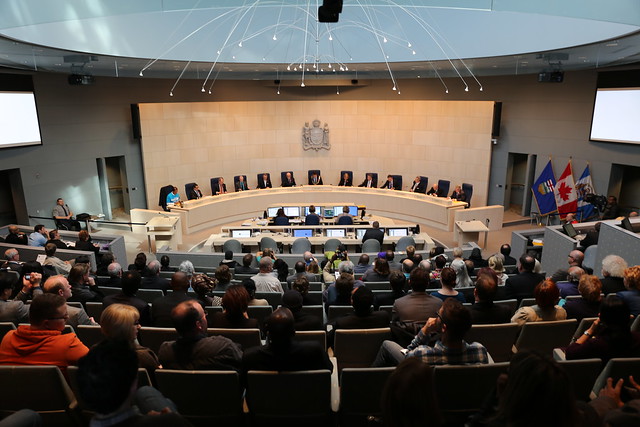
It’s no secret that LRT is City Council’s top infrastructure priority. They have repeatedly stressed the importance of expanding our LRT network, and scored a win recently with the Valley Line. LRT is part of a bigger transformation that Council hopes to realize, which is a shift away from the car-dominated transportation network we have today to a network that offers realistic choice through a range of travel options. At Wednesday’s City Council meeting, they approved a new goal for The Way We Move that makes this transformation clearer.

City Council Swearing In 2013-2017

In November last year, Edmonton’s new City Council took part in a series of strategic planning sessions. In addition to serving as a crash course on the City’s strategy and approach to long-term planning, the sessions were also a way to ensure the new Councillors were on board with the corporate outcomes, measures, and targets for each of the six 10-year goals identified in The Way Ahead. Among the key outcomes of those meetings were a desire by Council to review the goal statement for The Way We Move, as well as a desire to emphasize public engagement within The Ways.

The public engagement action is being handled through a new Council Initiative, and I think we’ll hear much more about that in the weeks ahead. I’m looking forward to it.

The goal for The Way We Move was reviewed and discussed at a couple of subsequent Council meetings, notably January 28 and March 11. Council wanted to stress the use of public transit, but they wanted to make it clear that Edmontonians would have choice. The goal they ultimately settled on reflects both of those desires and has led to a new set of outcomes too.

Current Goal: Shift Edmonton’s Transportation Mode

The current goal statement for The Way We Move is focused on “mode shift”, which is meant to convey that while the majority of Edmontonians get around the city using vehicles today, that should not always be the case. The reasons for needing a shift included changing our urban form to be more sustainable, accessibility, supporting active and healthy lifestyles, reducing the impact on the environment, and attracting business and talent to Edmonton.

Here’s the goal statement that accompanies the goal:

“Modes of transportation shift to “fit” Edmonton’s urban form and enhanced density while supporting the City’s planning, financial and environmental sustainability goals.”

Each goal also has an ‘elaboration’ associated with it. The current one for transportation reads:

“In shifting Edmonton’s transportation modes the City recognizes the importance of mobility shifts to contribute to the achievement of other related goals. To do so suggests the need to transform the mix of transport modes, with emphasis on road use for goods movement and transiting people and transit use for moving people. This goal reflects the need for a more integrated transportation network comprising of heavy rail, light rail, air and ground transport, and recognizes the important contribution that transportation makes to environmental goals.”

While the current wording attempts to connect with the other goals in The Way Ahead, it doesn’t as forcefully make the case for offering alternatives to single-occupant vehicles. The other challenge is that “mode shift” doesn’t mean anything to most of us, and sounds bureaucratic.

Perhaps more importantly, this was the only goal that was presented as if was worth doing solely to achieve the other goals. Surely a shift in how we move around the city should have benefits of its own!

New Goal: Enhance use of public transit and active modes of transportation

The new goal statement reads:

“Enhancing public transit and other alternatives to single-occupant vehicles will provide Edmonton with a well-maintained and integrated transportation network. Increased use of these options will maximize overall transportation system efficiency and support the City’s urban planning, livability, financial, economic and environmental sustainability goals.”

And the new elaboration reads:

“Through this goal, the City recognizes that a transportation system that is designed to support a range of travel options will increase the number of people and the amount of goods that can move efficiently around the city, while supporting the City’s goals for livability, urban form, financial, economic and environmental sustainability. Creating this 21st century sustainable and globally competitive city means offering choice. It will allow Edmontonians of all ages and abilities to safely walk, bike, ride transit, ride-share or drive to the places they need to go. The trade-offs needed to achieve this vision will create an integrated transportation system with greater travel choices for Edmontonians.”

The connection to the other goals is still present in the new wording, but not at the expense of highlighting the desire for alternatives to the car. There’s also the suggestion that trade-offs will need to be made in order to create a system that offers choice – we can’t have it all without making some hard decisions. The new goal is much more approachable now that “mode shift” is gone.

New Outcomes

Alongside this change, Council approved 12 new corporate outcomes, replacing the 20 that had previously been approved. Through their discussions, Council felt the outcomes should be specific and measurable, and provide a clarity of purpose. They wanted to simplify the approach. Here are the 12 outcomes they ended up with:

  1. Edmonton is attractive and compact
  2. The City of Edmonton has sustainable and accessible infrastructure
  3. Edmontonians use public transit and active modes of transportation
  4. Goods and services move efficiently
  5. Edmontonians are connected to the city in which they live, work, and play
  6. Edmontonians use facilities and services that promote healthy living
  7. Edmonton is a safe city
  8. The City of Edmonton’s operations are environmentally sustainable
  9. Edmonton is an environmentally sustainable and resilient city
  10. The City of Edmonton has a resilient financial position
  11. Edmonton has a globally competitive and entrepreneurial business climate
  12. Edmonton Region is a catalyst for industry and business growth

Gone are words like “minimized”, “supports”, or “strives”. The new language seems less open to interpretation, which is a good thing for determining progress. The next step is for Administration to prepare measures and targets based on these outcomes and to update The Way Ahead (there are currently 65 approved measures and 27 approved targets).

Results?

It’s great that Council wanted to strengthen the transportation goal and that they have simplified the outcomes. Most of this strategic planning was completed by previous Councils, so the exercise probably helped to ensure our current Councillors feel a sense of ownership. But the challenge remains: we need to implement the plans and see results. An annual report on progress will go to Council next year, based on the new outcomes, measures, and targets.

Edmonton aspires to eliminate poverty within a generation

More than 100,000 Edmontonians live in poverty – that’s 1 out of every 8 residents. Nearly 30% of those who live in poverty are children. Thousands of Edmontonians are unable to fulfill their true potential in life due to poverty. Furthermore, the cost of poverty to Albertans is estimated to be between $7.1 and $9.5 billion each year. We cannot continue trying to simply manage poverty – we need to invest in ending and preventing it. Can we eliminate poverty in Edmonton within a generation? I think we can.

Poverty Elimination Steering Committee

Over the last year, I’ve been a member of the Poverty Elimination Steering Committee, led by Councillors Henderson and Sohi and the United Way of the Alberta Capital Region. Made up of 26 members, our committee was established in 2012 and initially aligned its work with the United Way’s “Pathways out of Poverty” initiative, as well as the Province’s Poverty Reduction Strategy. The committee’s summary report was presented to City Council on March 3:

“The cost of not responding to poverty now will have enduring intergenerational effects on individuals, families and society. Investing in eliminating poverty today is creating a better future for all Edmontonians. We can end poverty in Edmonton in a generation and build a truly inclusive and vibrant city where prosperity is shared by all. A new conversation along with dynamic and nimble partnerships will bring us successfully to this goal.”

Shifting our approach from charity to investment and transforming the public conversation accordingly were key motives behind our work. I was happy to be able to contribute in a number of ways, including building the website and making poverty a key issue for candidates to consider during last year’s municipal election. Most of all, I was grateful for the opportunity to learn so much about this complex issue from some of the local leaders I most respect and admire.

Over the last couple of months it became clear that a Mayor’s Task Force would be established, so the committee shifted its efforts to identify focus areas for action. Based on community engagement sessions, research conducted, and other input, we identified five areas for the new task force to consider.

“These five Focus Areas for Action are all critical and strategic opportunity areas to advance real change and progress as Edmonton shifts the conversation from one of band aid solutions to comprehensive long-term change towards ending poverty. It is important to note that each focus area is related to, and dependent on, the other. None can be tackled in isolation, and it is essential to avoid creating new silos.”

focus areas for action

All of these areas are important, but I’m particularly interested in transportation. It was eye-opening to see how significant a barrier it can be during the poverty simulation I participated in. I was also surprised to learn throughout my time on the committee that for an increasing number of Albertans, transportation accounts for the greatest portion of monthly expenses, even more than housing. City Council is already very focused on transit and transportation in the city, and I hope they’ll seriously consider the impact of their decisions on poverty as they progress that work.

Our last committee meeting took place a few weeks ago, to finalize the report and prepare to pass the baton to the new task force.

Task Force for the Elimination of Poverty in Edmonton

City Council passed Bylaw 16765 establishing the “Task Force for the Elimination of Poverty in Edmonton” at its March 12 meeting. In his comments about the initiative, Mayor Iveson said:

“I think we are unafraid to dream of a more inclusive Edmonton and though it will take time and a shift in our thinking I really think Edmonton is perhaps one of the best places to show leadership on this, because we are the kind of city that can bring together business, academic experts, people in civil society and leadership, non-governmental organizations, faith communities; that is the Make Something Edmonton piece of this. We can rally the whole community around this the way we have around other complex challenges.”

If you get a chance, listen to the comments Council made about the initiative. Councillor Walters shared a personal story about poverty and talked about how important it is to help all Edmontonians reach their potential. Councillor Henderson and others also spoke passionately about the importance of the work.

The task force’s mandate is to prepare and present to City Council a report on poverty in Edmonton which includes:

  • information on the nature, extent, and causes of poverty within the Edmonton region;
  • a concrete plan for eliminating poverty in Edmonton within a generation;
  • recommendations to Council on how to implement the plan.

The volunteer members of the task force are:

  • Bishop Jane Alexander
  • Justin Archer
  • Jeffrey Bisanz
  • Kate Chisholm
  • Yvonne Chiu
  • Joseph Doucet
  • Sarah Eadie
  • Dr. Louis Francescutti
  • Mark Holmgren
  • Sandra Huculak
  • Eugene Ip
  • Tiffany Linke-Boyko
  • Maria Mayan
  • Carman McNary
  • Janice Melnychuk
  • Zahra Somani

There is also one spot reserved for an aboriginal member (to be selected by Aboriginal Round Table), one spot for a provincial government representative, and one spot for a federal government representative. Councillors Henderson and Sohi will still be involved, and of course Mayor Iveson will co-chair along with Jane Alexander. Additionally, the task force will have the ability to engage others via working groups.

By September, the task force will bring a report back to Council “providing possible amendments to include in the bylaw regarding definitions for ‘poverty’ and ‘generation’.” The bylaw states that the task force will fulfill its mandate by providing its report to Council on or before December 31, 2015.

What’s next?

Just three of the task force members (Yvonne, Mark, and Janice) were also on our Poverty Elimination Steering Committee. I point that out only to express a hope that the task force doesn’t end up repeating work that we’ve already done (in many ways, the committee was repeating work done by other organizations over the years). What’s needed is ownership and action, not more research and report writing. The bylaw does explicity state that “the task force will continue the work of the Edmonton Poverty Elimination Steering Committee” so I’m hopeful that will be the case.

On Thursday, March 20, dozens of Edmontonians will come together at the Shaw Conference Centre for the Mayor’s Symposium on Poverty. It’s an opportunity to review previous work and discuss next steps. I’m looking forward to meeting the members of the new task force and contributing to the direction it will go.

The work to eliminate poverty in Edmonton will not be easy nor will it be quick, but it is important. I want to end with this passage from our committee’s final report:

“We need to shift our focus from charity to investment, from poverty alleviation to poverty elimination, recognizing that social infrastructure is as important as physical infrastructure. We have to be people centred and place-based, seeking made in Edmonton solutions involving Edmontonians.”

Our goal is to end poverty in Edmonton within a generation. How can you help?

Edmonton’s Valley Line LRT moves forward with commitment from the Province

It was the announcement Edmonton was hoping for last Thursday when the Province unveiled its Budget 2014: money for southeast LRT extension to Mill Woods.

Valley Line LRT Funding Announcement

Edmonton’s Valley Line LRT is moving forward after the Province today made a commitment to provide up to $600 million to help finance the project. In a prepared statement, Premier Alison Redford said:

“Alberta is preparing to welcome a million new residents over the next decade, many of whom will be choosing communities like Edmonton as their home. Our Building Alberta Plan is helping municipalities build public transit systems to accommodate growth and make it easier for Albertans of all ages and levels of mobility to get where they need to go.”

In stark contrast to his disappointment last Thursday, Mayor Don Iveson was understandably pleased with today’s result, calling it “a momentous occasion”:

//platform.twitter.com/widgets.js

Today’s announcement was a bit over-the-top in my opinion, with Premier Redford, cabinet ministers, and MLAs arriving at Churchill Station via LRT. I think Mayor Iveson picked up on the pomp as well, joking that he hoped the ministers enjoyed their trip on the LRT.

Valley Line LRT Funding Announcement

It was a good opportunity for Edmontonians to show support for LRT expansion however, with students from City Hall School holding up #yeg4lrt signs at the top of the escalator. There was a sizable crowd gathered and lots and lots of media on hand to capture the event. If you’d like to watch the announcement, you can see the raw footage here.

What the Province has committed to is:

  • up to $250 million under GreenTRIP over three years beginning in 2016-17 upon approval under the second call for GreenTRIP projects,
  • up to $150 million in matching provincial funding if the federal government approves this project under the new Building Canada Fund beginning in 2016-17, and
  • up to $200 million in an interest-free loan to be repaid by the city over 10 years, fully backed by the Alberta Capital Finance Authority (ACFA).

As Mayor Iveson noted today, only $400 million of that is new money. The interest-free $200 million loan is simply a creative way to bridge the gap.

Valley Line LRT Funding Announcement

It is unusual though not unprecedented for the Province to offer interest-free loans to municipalities through the Alberta Capital Finance Authority (ACFA). For instance, a program known as “ME first!” launched in September 2003 and provided interest-free loans to encourage municipalities to achieve energy savings in their operations. It is common for the City to receive loans from ACFA for infrastructure projects, with typical interest rates ranging from 1.6% to 3.3%. Some projects that the City has previously borrowed for include the Whitemud Drive/Quesnell Bridge rehabilitation, the Walter Bridge replacement, and the NAIT LRT line. Any loans would be subject to the Municipal Government Act, which outlines debt limits and other restrictions. Edmonton is well within both the provincial debt limit and its own more strict limits.

Technically the money won’t start flowing until 2016, which perhaps not coincidentally happens to be the pre-election budget. It certainly did feel like a politically motivated announcement today. The Province received immense pressure from Edmontonians after last week’s budget and Mayor Iveson and his colleagues on Council did a good job of harnessing that to their advantage (the mayor even played along with the #SadDonIveson meme).

//platform.twitter.com/widgets.js

As Dave noted today:

//platform.twitter.com/widgets.js

Still, the assurance from the Province means that the City can keep the project moving forward, and that’s a win for Edmonton. We won’t lose a construction season, and the federal funding will likely be received without issue. Mayor Iveson confirmed:

“Knowing that we have a clear pathway to apply for those dollars allows City Council to consider moving ahead to the next step of this journey.”

The mayor thanked Council, our regional neighbours, and the ministers at the Province for working hard to get the deal done.

Valley Line LRT Funding Announcement

I know many people have been working on this for a long time, but I think Mayor Iveson deserves a lot of credit for making this happen. He expressed disappointment and frustration last week, but did not alienate the cabinet ministers he needed to work with to move things forward. He kept the lines of communication open, and clearly said the right things.

Today’s news, while positive for the Valley Line LRT, is not the long-term commitment that the mayor has been seeking, but it is another step in the right direction.

Valley Line LRT

Here’s a look at what the Valley Line LRT will look like from Mill Woods to 102 Avenue downtown (subject to change):

The City’s website has already been updated with details related to the funding:

“Thanks in part to timely commitments by our provincial and federal partners, the Valley Line will remain on schedule for a construction start of 2016, aiming to be open to the public by the end of 2020.”

The next step is a Request for Proposals to shortlist qualified consortia (groups of affiliated companies) that bid on the project. That stage is expected to take three months.

Keep up-to-date on the Valley Line LRT here or sign up for email updates.

Recap: Mayor Iveson’s 2014 State of the City Address

Mayor Don Iveson delivered his first State of the City address today in front of an absolutely packed crowd at the Shaw Conference Centre. Hosted by the Edmonton Chamber of Commerce, the State of the City luncheon attracted more than 2200 people including Councillors, MLAs, MPs, as well as business and community leaders, all eager to hear what our new mayor would say. Would he make a statement like Mayor Mandel did (by declaring “no more crap”) in his first address? Would he dump on the Province like Mayor Mandel did (lamenting the treatment of post secondary education in Edmonton) in his last address? Or would he set a completely different tone?

State of the City 2014

Though Mayor Iveson’s speech today may have lacked a lightning rod comment like the infamous “no more crap”, it had its moments. Looking right at Premier Redford, our mayor called for the Province to come to the table on funding for LRT expansion:

“Madam Premier, never has the opportunity and timing to fully build out Edmonton’s LRT network been more worthy of your government’s leadership, commitment and support. Show that you understand the needs of this city in the same way that my Council does. Show Alberta’s capital city that we are worth investing in.”

It was a powerful moment, and the audience erupted into applause after he delivered the words. Without question that part of the speech is what we’ll be talking about years from now.

Mayor Iveson opened and closed his speech recognizing the important role that indigenous peoples have played in Edmonton’s history, and the important role they’ll play in our future.

“Ladies and gentleman, a new, more confident Edmonton has emerged – building upon our rich heritage, leveraging our advantages, and – most importantly – unafraid to challenge ourselves to do even better.”

He noted that Edmonton will host the Truth and Reconciliation Commission of Canada’s national event later this month. “Without recognizing our shared history and learning from it, we have no hope of making change,” he said.

Though he touched on topics like public engagement, roadway maintenance, and the City Centre Airport, Mayor Iveson focused the bulk of his time on ending poverty, the global competitiveness of the region, LRT expansion, and the big city charter.

State of the City 2014

On poverty, Mayor Iveson looks set to keep an election promise, announcing that next week Council will consider his proposal to elevate the existing Poverty Elimination Committee (of which I have been a proud member) to a task force. “Simply managing poverty is not working,” he told the crowd. He called upon everyone in attendance to think about what they could do to “unleash the next generation of entrepreneurs from unlikely circumstances.” Mayor Iveson also recognized the importance of aligning with the Province’s commitment to eliminating child poverty in Alberta.

“Poverty is complex. Its causes are multi-facted, interlinked and anything but straightforward. Many are afraid to tackle it. But I am not.”

Using language that should by now seem familiar, Mayor Iveson next turned his attention to the Edmonton region. “If we want to continue to outperform other city regions in Canada, then we must work together much more effectively – and there can be no delay,” he said. Amalgamation isn’t on the horizon but he recognized that business leaders are frustrated. “For the region to achieve results, we must work together much more effectively on economic development,” he said. Again, the mayor issued a challenge, calling on his fellow mayors to consider the role they play:

“What will you do differently…how will you think differently…are you ready to look ahead and ensure that our region’s ability to compete globally for our mutual long-term benefit is always at the forefront of our deliberations?”

He briefly discussed annexation, saying that “boundary changes are a natural part of these discussions.” Mayor Iveson said that “Edmonton’s future growth must be balanced with a healthy mix of residential and employment areas.”

State of the City 2014

Though his pointed comments to Premier Reford were the most memorable part of Mayor Iveson’s remarks on LRT, he had much more to say. “To remove all doubt,” he told the audience firmly, “this Council unanimously declared LRT expansion as its priority for new infrastructure investment, beginning with the long-awaited Valley Line from Mill Woods to downtown.”

Most of City Council has been saying optimistic things about the Province providing funding for LRT, and Monday’s throne speech certainly sounded like a step in the right direction. We won’t know for sure until tomorrow if anything has changed however, when the budget is released.

The final major topic that Mayor Iveson addressed was the Big City Charter. “Big cities fuel a large part of the province’s economic dynamism,” he said. Citing work underway with the City of Calgary that has led to a closely aligned vision for such a charter, the mayor expressed his hope that discussions with the Province will be productive.

“We have reached the point where Alberta’s big cities have outgrown the one-size-fits-all Municipal Government Act and our collective efforts are better spent focused on a big city charter. What is needed is a real partnership between Alberta’s big cities and the provincial government.”

Unfortunately, I think Mayor Iveson again missed an opportunity to talk about what a big city charter might look like. I certainly applaud the ongoing effort to negotiate a better deal for big cities, but it would be much easier to ask the hundreds of Edmontonians in the room for support if they could understand and talk about it. The big city charter still seems nebulous.

State of the City 2014

Mayor Iveson spoke today with the same confidence and measured delivery that attracted Edmontonians to him during last fall’s election. Will it go down as his most memorable speech? Likely not. But I think he said the right things, in public, to the right people. Most of the folks in the room were already Iveson supporters, so winning them over wasn’t the goal. Instead, he delivered a clear message about what’s important to Edmonton and offered insight into how we should tackle key issues.

“My responsibility, and my Council colleague’s responsibility, is to steer us, focused on an ascendant Edmonton. Great cities emerge when conditions are ripe for unprecedented cooperation, creativity and disruptive change. The cities that embrace this will thrive while cities that are content with today will lag and whither. I will not stand for that in Edmonton. And, given what we hear from Edmontonians every day, neither will you.”

You can read the full text of Mayor Iveson’s remarks here in PDF. You can read my recap of last year’s State of the City here.

Does high speed rail have a future in Alberta?

Last week I attended a public meeting on high speed rail in Alberta (which I typically abbreviate ABHSR). The issue is being considered by the Standing Committee on Alberta’s Economic Future, an all-party committee consisting of 18 MLAs. As part of the process, the committee has now heard from the public in Calgary, Red Deer, and Edmonton, and is encouraging additional written submissions by March 31. I hope at least a few Albertans take them up on that, because their “public” meeting was poorly publicized and required going past three security checkpoints.

Alberta High Speed Rail Public Meeting

Here’s the stimulus provided by the committee on the idea:

  • It could offer service between Edmonton and Calgary (including a stop in Red Deer) with a trip time of one to two hours at speeds of 200-500 km/h.
  • One-way ticket prices have been estimated at between $66 and $142.
  • Capital costs have been estimated at $2.5 to five billion, but could be significantly higher.
  • A route would be chosen and land would be acquired along the route for tracks and stations.
  • Overpasses or underpasses would likely have to be built to accommodate many of the road crossings or, alternatively, bridges above any roads the track would cross could be constructed.

Clearly the idea is intriguing. A hundred bucks to get to Calgary in less time than it would take to drive? Sign me up! Driving is stressful, I could read or do some work on the train, there are lots of positives, for sure. But is Alberta ready? Is this an investment we’re prepared to make now?

There were some interesting viewpoints put forward at the meeting. Some felt the time is right, and that a project like this could allow us to harness the talents of all the smart, creative, and innovative people we have throughout the province. Others expressed concern that our population isn’t big enough to warrant such a project. And still others argued that automated, driverless cars are coming and will make the entire idea irrelevant (as exciting as the work Google and others are doing in this area is, there are significant hurdles still to overcome, so I’m not holding my breath).

Technically, the project sounds feasible. A few speakers talked about Maglev technology that has been deployed in a number of other places, notably in Asia. One speaker, Deryck Webb, said Maglev combined with vacuum tubes was the way to go (what he described sounded very similar to Elon Musk’s Hyperloop). I think the key issues are financial and political, not technical.

Alberta High Speed Rail Public Meeting

The issue last came up in 2009, when a report was issued assessing the potential for service between Calgary and Edmonton. At the time I wrote:

“I personally think if the province is going to be spending money on transit, it should be on city and regional transit. Both Edmonton and Calgary could use the assistance to improve their respective transit systems…”

I still feel that way today. If we’re going to spend a few billion dollars, let’s spend it on LRT first.

This is the message our local leaders are sending to the Province. One of the written submissions the committee has received thus far was from the Edmonton International Airport. President and CEO Tom Ruth wrote the following:

“Given the lack of local networked options in the Edmonton Region, we agree with the position of the City of Edmonton and the Edmonton Economic Development Corporation (EEDC) that the priority should be to ensure there are fully developed networks in advance of HSR; including Light Rapid Transit (LRT) service fully developed within the Edmonton Region, with connectivity to EIA. Until these intra-regional options are fully built out, the utility of HSR is severely limited.”

Maybe high speed rail is in Alberta’s future, but I hope it’s after we have developed the LRT networks in Calgary and Edmonton.

You can see the full transcript of last week’s public meeting here (or in PDF here). You might also be interested in the Reddit thread on the issue. If you’d like to submit something to the committee, send it to economicfuture.committee@assembly.ab.ca. The deadline is March 31, and all submissions and the identities of their authors will be made public.

A vision for the future of transportation in Alberta

The Province is currently working on a new long-term transportation strategy for Alberta. Over the last two months, public discussions have been held throughout Alberta and in the spring, an online survey will be released.

“This Strategy – which will focus on all forms of transportation, connections and ways to move people and products – provide an overarching vision for Alberta’s transportation system over the next 50 years. It will also help guide government decisions on transportation investments, policies and programs.”

That’s a big challenge. But it’s exciting to consider!

Since I missed the meeting here in Edmonton, I took a look at the feedback form. It includes a number of questions that aim to capture what the public thinks about the strategy. One of the first deals with the proposed vision for the Transportation Strategy for Alberta:

“A world-class transportation system that is safe, sustainable and innovative, and that supports Alberta’s economy and quality of life.”

I suppose there’s nothing wrong with that, but it just seems rather bland, doesn’t it? It’s very expected. And phrases like “world-class” are just meaningless. The proposed vision is also incredibly similar to others. For instance, here is Transport Canada’s vision:

“A transportation system in Canada that is recognized worldwide as safe and secure, efficient and environmentally responsible.”

Needless to say, I’m not a fan of the proposed vision. It doesn’t tell me anything about what transportation in Alberta will look like in the future, especially as you could credibly argue that it reflects the current state of Alberta’s transportation system.

welcome to alberta
Welcome to Alberta by Magalie

What could it be instead? Well let’s consider the context.

The shift from rural to urban has been dramatic in Alberta. According to the 2011 federal census, more than 56% of Albertans now live in population centres larger than 100,000 people in size, and 83% live in urban areas of any size (compared to 81% nationally). We’re an urban province now more than ever. The economic power of cities cannot be ignored.

We know that vehicles are dangerous. According to the World Health Organization, “road traffic injuries are the eighth leading cause of death globally, and the leading cause of death for young people aged 15-29.” Here in Alberta, traffic fatalities have declined significantly from 2007 through 2011, but there are still too many of them. We also know that vehicles have a negative impact on the environment. They contribute to global warming, they contribute to smog, and they take up an incredible amount of land that could otherwise be used more productively.

There are lots of other factors to consider, but I think these are the two most important. Reducing our dependence on vehicles and recognizing the importance of cities should be central any vision of the future of transportation in our province. Unsurprisingly, the two biggest cities in Alberta have already recognized this.

Our neighbours to the south have the Calgary Transportation Plan, which says:

The decisions made today about where and what to build will affect Calgarians for 100 years or more – just as decisions made in the past affect us today. Going forward, the transportation system must perform a wide variety of roles and consider the context of surrounding land uses, be they natural or manufactured. It must provide more choice for Calgarians – realistic choices that are convenient, affordable and attractive. These choices include walking, cycling, transit, high occupancy vehicles (HOV or carpooling) and single-occupant vehicles (SOV).

Here in Edmonton, we have the Transportation Master Plan, The Way We Move. It is even more aggressive:

We are building a 21st century city, shaping an Edmonton that will meet the needs of our diverse and growing urban and regional population. Growing environmental concerns, acknowledgment of the ongoing investment needed to maintain our transportation infrastructure and the rapid growth of our city demand a shift in transportation priority setting. It is a shift from single passenger vehicle use to more public transit; from building outward to a compact urban form. From an auto oriented view of transportation to a more holistic view of an interconnected, multi-modal transportation system where citizens can walk, bike, bus and train efficiently and conveniently to their desired location.

I recognize that Calgary and Edmonton have a completely different context and set of challenges than the rest of the province does, but I think their transportation strategies are informative. Let me also say that I don’t think creating a vision statement is easy. I know a lot of hard work, thought, and difficult discussions are needed to come up with them. That said, I’ll take a stab at it.

Here’s my attempt at crafting a stronger vision for the future of transportation in Alberta:

An innovative and sustainable transportation system that emphasizes high occupancy vehicles and strengthens the global competitiveness of Alberta’s urban areas.

What do you think?

Want to solve the space problem for the arts in Edmonton? Stop shaving that yak!

In software development there’s an expression we use to avoid scope creep. “Don’t shave that yak!” we’ll say. It’s shorthand for staying focused and working on solving the problem at hand, not other problems that we might notice along the way. As far as I know the phrase comes from a Ren & Stimpy episode and was coined by Carlin Vieri, a Ph.D. at MIT back in the 90s.

“Yak shaving is what you are doing when you’re doing some stupid, fiddly little task that bears no obvious relationship to what you’re supposed to be working on, but yet a chain of twelve causal relations links what you’re doing to the original meta-task.”

I quite like Seth Godin’s example of yak shaving. This GIF illustrates it well too:

yak shaving

I was chatting with someone in the arts community recently about the Edmonton Downtown Academic & Cultural Centre project, and I remarked, “I just don’t know how we got from ‘arts organizations need space’ to ‘a $1 billion project is the answer’.” But thinking about it later, I realized that I know exactly how we got there. We’re shaving the yak.

It was back in November 2011 that the Mayor’s Arts Visioning Committee released its recommendations for how we could “lift Edmonton to international recognition as a city of the arts by the year 2040.” They followed a public engagement process, learned about the challenges facing the arts in Edmonton, and developed recommendations to try to address them.

One of the challenges identified was space:

“Edmonton artists and arts advocates described a critical need for additional creation, rehearsal, exhibit and performance space. Developing or designating new arts space is paramount to the vision in this report.”

It’s worth noting that this wasn’t a new challenge – The Art of Living identified it in 2008 too. As a result, many of the recommendations dealt with space. The third recommendation was titled “Downtown Arts District and Performance Centre” and was relatively simple:

“The City of Edmonton endorse, in principle, a landmark performing arts centre (PAC) downtown, and designate land for such a development in the city core.”

The report goes on to detail the need and provides background and context. I understand from my conversations with those in the arts community that there is a real need for more space, especially smaller, black-box space that is multi-purpose.

So that’s the problem we’re meant to be solving: a lack of performance and rehearsal space. How did we start shaving the yak? I think it went something like this:

City Council put up $100,000 for the newly created Edmonton Performing Arts Centre Foundation to develop a business case. In developing the business case, the foundation connected with the University of Alberta which expressed a desire to link its music and art & design programs with the downtown arts community. There’s not enough money for all of that, so the vision needed to be made broader. The “revitalize downtown!” mantra evidently worked for others, so the group decides to go after that as part of the vision. To compete with the other big, fancy space known as the arena, a big, fancy space known as the Galleria was designed. In order to pay for that, a commercial office tower was added to the plan, along with a new campus for the University of Alberta. But those projects were deemed unrealistic unless there was a connection to the new Royal Alberta Museum and the LRT.

Before you know it, the group has taken arts out of its name completely, and we’re talking about a $40 million dollar pedway.

Weren’t we supposed to be finding new space for the arts? Stop shaving that yak!

Another small step forward for Edmonton’s Southeast LRT extension

Prime Minister Stephen Harper today introduced the new Building Canada Plan, “the largest long-term infrastructure plan in Canadian history, providing stable funding for a 10-year period.” The highlight of the new plan is the $14 billion New Building Canada Fund, a potential source of funding for projects like Edmonton’s planned Southeast LRT extension.

valley line lrt

Known as the Valley Line, the Southeast to West LRT extension would run 27 km from Mill Woods to Lewis Farms. The City hopes to construct the expansion in phases, starting with a $1.8 billion leg from Mill Woods Town Centre to 102 Street downtown. The City has already committed $800 million to the project, and now needs the federal and provincial governments to contribute their share.

Despite some opposition, City Council approved the use of a public-private partnership to build the extension, enabling the City to access funding through P3 Canada. In March last year, P3 Canada awarded $250 million toward the project.

Mayor Don Iveson

Though many details about the new Building Canada Fund are still to come, Mayor Don Iveson held a press conference this afternoon to discuss how it might help the City with the LRT expansion. In the ideal case, the City would receive another $150 million for the project, taking the total federal contribution to $400 million. Mayor Iveson said:

“That shows the federal government is seriously committed to investing in transit, maybe to not the level that mayors across the country would like, but it’s an opening to further discussion about the importance of national investment in transit infrastructure.”

Though he praised the efforts of the federal government, he also shared his thoughts on what he’d like to see in the future:

“Long-term, I would like to see a dedicated federal investment in rapid transit, over and above these baseline Building Canada commitments.”

Here’s the audio from Mayor Iveson’s press conference today:

If the City were to receive the funding it hopes to from Building Canada, that would bring the funding gap down to $365 million (the City has $235 million left over from Stelmach’s fund for green transit that mostly went to the North LRT to NAIT). The Government of Alberta needs to come to the table, and Mayor Iveson sounded optimistic that could happen:

“We’ll keep on talking to ministers and MLAs and we’ve been having a lot of those conversations lately and they’re very receptive. They’re working within their own constraints, and their own competing priorities, but I believe they’re trying to find a way.”

I’m much less optimistic. Both Calgary and Edmonton have made it clear that rapid transit is their top priority, but Premier Alison Redford’s government has consistently avoided making any commitments. Sooner or later, the province is going to have to either come to the table on LRT funding, or as David Staples wrote last month, “we need to elect a government that can make it happen.”

If the funding were secured by the spring, construction on the Southeast LRT could begin as early as 2016 with the extension opening by 2020.

EEDC looks to deliver “monumental value” with new energy, identity, and purpose

When Brad Ferguson took over as President & CEO at Edmonton Economic Development Corporation (EEDC) in the summer of 2012, he knew things had to change. Even though Edmonton’s economic growth remained strong, many leaders throughout the city felt that EEDC could be doing more. Even City Council had begun to lose confidence in the organization, with Councillor Caterina going so far as to suggest that EEDC be shut down if its fortunes weren’t turned around. Brad insisted he was fired up and ready to do the work of remaking the organization.

Brad Ferguson

He wasn’t kidding. The organization today has changed dramatically from the one Brad took over. He opened his speech at last week’s 2014 Impact Luncheon with that context:

“I stood at this podium one year ago knowing a lot had to change. Our organization had lost the confidence of City Council and lost relevance with the business community.”

“I can stand here today proud of the work we’ve done and the changes we’ve made in the last twelve months.”

Over the last year EEDC has clarified its purpose and approach, revamped its brand and visual identity, brought in fresh leadership, and has started to dramatically shift the internal culture of the organization.

Edmonton Economic Development is changing the way it does business. “The culture of winning is what we’re building,” Brad said.

New Purpose & Approach

To bring greater focus to the work of the organization, EEDC has clarified its primary objective:

To ensure the Edmonton Region outperforms every major economic jurisdiction in North America consistently over the next 20 years…regardless if the price of oil is $140 or $40.

That’s a big departure from the organization’s previous (though fleeting) goal statement, which was to become one of the world’s top five mid-sized cities by 2030. It’s a shift from aspirational hyperbole to measurable outcomes, from uncertain ROI for stakeholders to an assured local impact.

In the next three years, Edmonton Economic Development needs to transition from “monumental change” to “monumental value” created for the City of Edmonton.

EEDC’s new website and its 2014-2016 Statement of Intent detail how the organization is evolving to deliver greater value and achieve its objectives. Importantly, EEDC’s strategic direction references the City of Edmonton’s plan on economic development known as The Way We Propser. Rather than duplicating effort or taking different approaches, EEDC envisions itself contributing to the City’s efforts in seven ways. “These seven roles can best be accomplished outside the City of Edmonton, and provide Edmonton Economic Development with a platform for delivering significant value to the economic growth strategy for the City of Edmonton.”

It’s remarkable how little EEDC’s structure has changed since it was formed two decades ago. The four separate organizations that came together have always remained highly visible – the Shaw Conference Centre, Edmonton Tourism, the Edmonton Research Park, and Economic Development. The new approach doesn’t completely move away from those historical silos, but it does make a start.

Edmonton Economic Development will be structured as a conglomerate of six divisions, each with their own expectation of performance and accountability.

The six divisions are:

  • Enterprise Edmonton
  • Edmonton Tourism
  • Shaw Conference Centre
  • Build Edmonton
  • Brand Edmonton
  • Corporate Services

Build Edmonton is slated to be approved and established by April, and will take over ownership of the Edmonton Research Park. Corporate Services is an internally-focused division and one of its key goals will be to earn Top Employer awards by 2015.

Brand Edmonton is perhaps the area of the new EEDC that is most in flux. Sometimes mentioned as a division and other times mentioned as a priority, Brand Edmonton will build on the work of Make Something Edmonton to provide brands, campaigns, and plans for building Edmonton’s brand locally and around the world. While the details about how Make Something Edmonton will continue are still being worked out, it’s clear that EEDC will play a significant role in it’s future (for instance, interim executive director Mary Sturgeon has already moved over to EEDC’s offices). It’s a recognition of the fact that EEDC has a key role to play in telling Edmonton’s story.

Priorities and performance measures for each division have been identified and shared publicly in the Statement of Intent, which speaks to both the competitiveness and accountability that Brad is trying to encourage throughout the organization.

Overall, the 2014-2016 period will be defined by “performance” in a way that will forever differentiate the expectation of Edmonton’s economic development organization.

Forget what you think you know about economic development organizations!

New Brand Identity

One of the most visible ways EEDC is changing is of course it’s new brand identity. EEDC last underwent a major change in 2004, when the name Edmonton Economic Development Corporation was announced on May 7. The organization had been known as Economic Development Edmonton prior to that. Then President Allan Scott said the change would “clearly emphasize what we sell: Edmonton.” The following week, EEDC moved into its current offices at the World Trade Centre (they had been at the Shaw Conference Centre before that).

Now EEDC has dropped the word “Corporation” from its public brand. Though officially (on paper) still known as Edmonton Economic Development Corporation, the public-facing brand will simply be Edmonton Economic Development. Much as Apple dropped “Computer” from its name back in 2007 to better reflect its new business strategy, the change at EEDC brings clarity to the organization’s direction. The emphasis is now clearly on economic development, rather than bureaucracy.

More visually, EEDC worked with DDB Edmonton to develop a new logo for the organization and its divisions:

“Our logo reflects Edmonton Economic Development’s vibrant new culture. It is bold, confident and energetic. Its graphic expression tells the story of big ideas transformed into tangible economic progress for Edmonton.”

Here’s the old logo compared with the new one:

EEDC Logo Before & After

Kevin Weidlich, VP of Marketing & Communications at EEDC, told me that “the old look and feel was inconsistent with the direction” that the organization was headed. When he joined in March 2013, he found himself struggling to explain to friends and family what EEDC does. “I realized that lots of energy was focused on ourselves instead of on our clients”, he told me. “Our brand architecture caused that confusion.”

Howard Poon, DDB’s Design Director, had this to say about the new look:

“What we’re doing with this identity is showcasing EEDC’s vibrant new culture, the entrepreneurial spirit. We’re telling the story of how this organization takes big ideas and transforms them into progress for Edmonton. It’s all about energy and momentum.”

The vertical grey line is viewed as the anchor, representing the organization’s established, grounded and trusted team of experts. The green and gold rays are said to be “bursting forth from the anchor” and they represent “the entrepreneurial dreams, ideas, and actions Edmonton Economic Development transforms into reality.” Green and gold are also seen as a nod to Edmonton’s heritage.

Two of EEDC’s divisions have new logos too, Enterprise Edmonton and Edmonton Tourism.

EEDC Logo Before & After

I remarked that the new logos all looked a bit abstract. The DDB design team (which included David Landreth and Adnan Huseinovic) chose that approach because they felt “it better reflects EEDC’s innovative mindset.” Howard said “a literal symbol or icon doesn’t effectively capture the organization’s personality.”

Helene Leggatt, President of DDB Edmonton, spoke positively about working on the project with EEDC. “There seemed to be a unified sense of purpose,” she told me. It can be tricky with multiple stakeholders to get consensus, but she found everyone at EEDC to be really well-aligned. The project took just 10-12 weeks, from start to finish. “They’re pushing more innovative thinking,” she said. “There’s new energy, new focus, and real fire at EEDC.”

Shaw holds the naming rights on the Shaw Conference Centre until 2016, so that logo remains untouched. Though the new EEDC website still highlights just three divisions, other material frequently mentions Build Edmonton and Brand Edmonton too. I think we can expect a logo for Build Edmonton later this year. Brand Edmonton, on the other hand, is currently envisioned as “a new suite of Edmonton Economic Development brands.”

The voice of EEDC is also evolving. The words “leadership”, “entrepreneurship”, “innovation”, and “competitiveness” permeate the language that EEDC now uses to express its mandate. The new brand guidelines say the tone of voice should be smart, inspiring, sincere, confident, and active.

As a result, the work being produced by EEDC now is less corporate and much more confident. Take the vision statement:

Edmonton, Canada’s economic and entrepreneurial powerhouse: A great northern city filled with unlimited entrepreneurship, education and energy that is a beacon toward which people who crave opportunity will come.

You’d be forgiven if the use of the word “powerhouse” surprised you. Elsewhere in the Statement of Intent you’ll find words like “unstoppable” and “scalable”. These words and phrases are used by energetic organizations like Startup Edmonton, not arms-length municipal bodies! That’s the new brand voice in action.

EEDC also launched a new website at IgniteEdmonton.com. The website doesn’t replace Edmonton.com, but it has become the corporate home of the organization. Plans are still being fleshed out, but it is likely that Edmonton.com will become consumer/tourist-focused. I asked Kevin about the choice of the word “ignite” and he said it perfectly captured the new direction of EEDC. Indeed the new brand guidelines use it to describe EEDC as “the spark that ignites success.”

New Energy

If you’re thinking that all EEDC has done is put on a fresh coat of paint, think again. From its divisional structure to its individual employees, EEDC’s internal changes have been significant.

At the 2014 Impact Luncheon Brad noted that 36% of EEDC’s employees have been with the organization less than a year, and 24% are in new roles or are doing things that didn’t previously exist, which means a full two-thirds of the organization is fresh. The organization’s makeup has changed demographically too. Just 12% of EEDC’s employees are baby boomers, while 42% are Generation X and 46% are Generation Y. They have also achieved a 52-48% male-female split.

One of the first new leaders to come on board was D’Arcy Vane, a director of Enterprise Edmonton. In early 2013, he was joined by Glen Vanstone who was previously the Director of Business Innovation at EIA. Kevin Weidlich came on as VP of Marketing & Communications, followed by Maggie Davison just a couple of weeks later as the VP of Tourism.

In April 2013 Derek Hudson joined to take on the role of Chief Operating Officer. In July 2013, Ken Chapman joined as Executive Director of Northern Initiatives. He was previously the Executive Director of the Oil Sands Developers Group, and he brings relationships and experience that EEDC has long lacked.

These are just a few of the new faces at EEDC. As noted, many existing EEDC employees have moved into new roles at the organization too. For instance, Tammy Pidner has taken on the role of Chief Evangelist.

I asked Kevin what the mood was like as a result of all the change. “Many of the new hires have brought skillsets that never existed in the company before,” he said, noting it has increased EEDC’s capacity. He cited Euna Kang, EEDC’s Creative Manager, as someone who has enabled EEDC to do more in-house than ever before.

“The level of excitement in the company now is palpable,” he told me.

Monumental Value?

When I interviewed Brad after he was just a month or so into the job, he already had a clear picture of the direction he wanted EEDC to go. “I want to fundamentally up the value of the organization to the community and to the City of Edmonton,” he said at the time.

The first step in achieving that was revamping the organization. EEDC today is focused, energized, and confident. But change is easier to bring about than increased value is (let alone monumental value). That’s the challenge facing Brad and everyone at EEDC over the next couple of years – translating all of the positive changes of 2012 and 2013 into results.

One of the things EEDC will need to do to find success is avoid distractions. While important, spearheading the work of image and branding for the city has historically been fraught with peril. Likewise, it can be easy to get drawn into the current political hot potato of the day or to start defining economic development too broadly. Focus is one of the most important things that EEDC has found over the last year, and it would be wise not to lose it.

It is often said that culture trumps strategy, but culture is much more difficult to change than strategy is to develop. New divisions, new logos, and new faces – none of these things come easily, and all are important elements of changing the organization’s culture. EEDC recognizes the challenge:

Developing the right corporate culture is a major undertaking that began in August 2012 and is developing into a strategic asset of Edmonton Economic Development that can never be measured on a balance sheet.

Getting the culture right isn’t the only hill to climb. EEDC will need to rebuild confidence in the business community and earn the trust of our new City Council. All of these things will take time and dedication because they require action. Fortunately, taking action appears to be something that the new EEDC is very good at. Brad promised changes, and he delivered.

Edmonton Economic Development’s mission is “to inspire a culture of entrepreneurship, innovation and competitiveness that forever differentiates our city.” If that wasn’t enough to make you a champion, the new energy and approach that Brad has brought to EEDC should be. The next few years are shaping up to be monumentally exciting.