Learning about pulses for #3SkillsYEG

Over the last month, I have been learning about pulses and how to cook with them as part of the #3SkillsYEG challenge. Cooking with pulses seemed like a great topic for me given the suggested theme for February was “Personal Growth & Wellbeing” and that 2016 is the International Year of Pulses.

Pulses

Learning about pulses

It just so happened that the Canadian Association of Foodservice Professionals (CAFP) and the Alberta Pulse Growers (APG) hosted a dinner early in the month called Everything is PULSEible. I was fortunate enough to attend with Sharon, who had been invited to blog about the dinner. It was a great way to both taste and learn more about pulses, though I suppose I didn’t realize just how familiar with them I already was. Here’s an excerpt from Sharon’s post:

“After reading Mark Bittman’s Food Matters more than five years ago (his mission was to encourage more conscious consumption of non-meat proteins), I was inspired to start including more beans and lentils in our diet. In 2011, Julie Van Rosendaal and Sue Duncan’s cookbook, Spilling the Beans, was released, becoming one of our go-to guides for meal inspirations. Now, pulses have just become a part of our regular rotation, both as a meat alternative but also to enhance soups, salads and mains, stretching the meal all while adding nutrients. At this point, our pantry and freezer would feel bare without having some variety of pulses on hand.”

She’s not kidding! Our meals often have beans and I guess I just didn’t think of them as pulses. So what exactly is a pulse? From Pulses.org:

“Pulses are the edible seeds of plants in the legume family. Pulses grow in pods and come in a variety of shapes, sizes and colors. The United Nations Food and Agriculture Organization (FAO) recognizes 11 types of pulses: dry beans, dry broad beans, dry peas, chickpeas, cow peas, pigeon peas, lentils, Bambara beans, vetches, lupins and pulses nes (not elsewhere specified – minor pulses that don’t fall into one of the other categories).”

Canada is one of the leading producers of pulses in the world. In 2011, Canada produced over a third of the world’s lentils and had the largest amount of dry pea production in tonnes. Saskatchewan is the largest pulse producing area in Canada with about 80% of the market, followed by Alberta at 20%, according to Statistics Canada. There are more than 2,300 farms growing pulses here in Alberta, which accounts for about 10% of the province’s crop acres. There’s good reason that the prairies are so good at producing pulses:

“The Canadian prairie soil and climate conditions, research for developing new varieties that resist lodging and disease or have a shorter growing season, agronomic and economic benefits when planted in rotation with other field crops and the growth of processing facilities all contributed.”

Unfortunately it’s not as easy as you might think to locate pulses grown here in Alberta because the packages most often end up with a “product of Canada” label. But as Sharon noted, “Alberta grows a variety of pulses: primarily peas (green, yellow, marrowfat), but also beans (great northern, black, cranberry, pink, small red), lentils (red, green) and chickpeas.”

Cooking with pulses

Pulses are very versatile ingredients and offer some excellent nutritional benefits. Pulses are gluten-free and vegetarian, low in fat and high in protein, and they’re a great source of folate and high in fibre. They’re also relatively cheap, especially when compared with meat. But despite all of those benefits, we don’t eat very many pulses. “A small amount is used by Canadian consumers and has increased over time, but is still relatively low compared to countries where pulses are a dietary staple,” wrote Statistics Canada. Many organizations are working to change that, including the Global Pulse Confederation and of course Alberta Pulse Growers here at home. One of the ways they’re doing that is by developing recipes that show just how easy it is to prepare dishes with pulses.

CAFP Alberta Pulse Dinner

The most surprising dish to me at the Everything is PULSEible dinner was the dessert – Lentil Fudge Pie. “This fudge pie is so delicious, you’ll never guess there’s lentils in it!” They were right. It was very tasty and had I not been told, I’d have never guessed that it contained a red lentil purée. I’m not much of a baker, but I’d be willing to give this a shot.

For a variety of reasons, I ended up doing a lot of the cooking in February. I did my best to use plenty of pulses and I’m happy to report it wasn’t hard! I made dishes in which the recipe called for pulses, like Mushroom Lentil Bourguignon (from Spilling the Beans). I also made some dishes that I simply added pulses to, like Carrot, Spinach and Rice Stew which I added chickpeas to. One of the more interesting dishes I made again tonight so I could take some photos – Curried Lentil Soup.

Curried Lentil Soup

The soup calls for both French green lentils (or dupuy lentils) and chickpeas (garbanzo beans). The lentils are easy to work with – simply rinse them and then add to the pot. I used stock instead of water, and they cooked nicely in about 30 minutes.

Chickpea Butter

The chickpeas take a bit more work as you need to purée them into a butter. I added a can of chickpeas to the food processor along with the garlic, lemon juice, and olive oil and before long I had a nice buttery spread. The last step is to add the chickpea butter to the simmer soup and combine, which gives it a beautiful, rich consistency.

Curried Lentil Soup

The soup is one of Sharon’s favorites, and I have to admit I’m quite fond of it myself. Easy to make, extremely tasty, and pretty healthy too!

Working as Sharon’s sous chef in the past, I don’t think I appreciated just how easy it is to add pulses to a dish. I have a better appreciation for them now, and am happy that our pantry is always stocked with beans and lentils!

Next steps with pulses

To help celebrate the International Year of Pulses, Pulse Canada has teamed up with the American Pulse Association to promote the Pulse Pledge:

“Commit to eating pulses once a week for 10 weeks and join a global food movement! Eating dry peas, lentils, beans and chickpeas helps reduce your carbon footprint – and it’s great for your health. Every 1/2 cup of cooked pulses delivers 9 grams of protein. Get rewarded for eating these miraculous superfoods.”

Pulses once a week? Piece of lentil cake!

I encourage you to give pulses a chance. And as a Learning Champion, I definitely encourage you to check out #3SkillsYEG! The theme for March is Creativity and Expression, and I have decided I will learn how to use my macro camera lens. That’s what I used to take the lentil and soup photos above! You can pick any skill you like, of course, the theme is just to get you going. Be sure to share your learning journey and enter the #3SkillsYEG contest.

I wish you tasty pulses and happy learning!

Media Monday Edmonton: Update #193

Here’s my latest update on local media stuff:

City Glow
City Glow, photo by Dave Sutherland

And here is some slightly less local media stuff:

You can follow Edmonton media news on Twitter using the hashtag #yegmedia. For a great overview of the global media landscape, check out Mediagazer.

So, what have I missed? What’s new and interesting in the world of Edmonton media? Let me know!

You can see past Media Monday Edmonton entries here.

Edmonton Notes for 3/6/2016

Here are my weekly Edmonton notes:

Headlines

State Funeral for Don Getty 014
State Funeral for Don Getty, photo by Premier of Alberta

Upcoming Events

Stairs closed for Mechanized River Valley Access project

Coming up at City Council: March 7-11, 2016

Council is back to Committee meetings next week!

Edmonton City Council

Here’s my look at what Council will be discussing in the week ahead.

Meetings this week

You can always see the latest City Council meetings on ShareEdmonton.

Urban Hens Pilot Evaluation

Last year after a successful pilot, Council approved the bylaw changes required to support urban beekeeping. Will they do the same for urban hens?

From the 35 citizens that applied to the urban hens pilot, 19 sites were formally accepted across the city. Each had to register provincially and had to receive consent from adjacent neighbours. They were managed by “both experienced and inexperienced hen owners” and they received support from the River City Chickens Collective. Here’s how the pilot went:

  • Each site was inspected at the beginning, midpoint, and end of the pilot.
  • “The majority” of sites were compliant, but a few follow-up inspections were required.
  • One site had concerns over the requirements and withdrew.
  • There were 12 citizen complaints across six sites, but all were “investigated promptly” and resolved amicably.
  • There were no complaints related to coyotes or other predatory wildlife, but there was “an increase in nuisance birds, roaming cats, and mice” for some sites.

A formal Urban Hen Keeping Program does not require any bylaw changes, so the Committee can essentially give the go-ahead if they support the idea. Property owners would be required to abide by the guidelines and would need to obtain a development permit under the new urban outdoor farming class. The requirement for neighbour consent would be removed, but participants would need to complete a training course or workshop before being issued a license.

Chickenses
Chickenses, photo by Dave Sutherland

“While the results of the pilot lean favourably towards supporting a program, several pilot outcomes cause some concern from an enforcement perspective,” the report says. For that reason, Administration is recommending a phased implementation in which the number of sites would be capped at 50 over the next two years.

The Edmonton Insight Community survey that was conducted along with the pilot found that 51% of respondents somewhat or strongly agree that raising hens in the city is good for neighbourhoods.

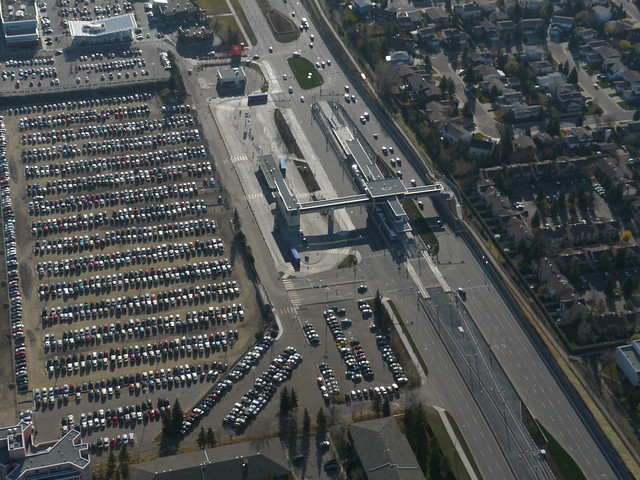
Park & Ride

A report from the Edmonton Transit System Advisory Board identifies short and medium-term options to address the high demand for Park and Ride stalls. Recall that a previous report on Park & Ride at Century Park found that the lot is 85% full by 7am on weekday mornings and that the average weekday utilization of all park & ride sites is 97% at LRT stations and 60-70% at transit centres. The ETSAB report suggests “there is a clear need for an increase in supply” but it also suggests dealing with the price of stalls too. Roughly 87% of all stalls available are provided free of charge, with reserved stalls priced at $42/month (the same since 2010). The existing Park & Ride policy states that up to 18% of stalls at each location can be reserved for paid parking.

The options identified to deal with this include:

  1. Convert a Greater Proportion of Existing Stalls into Paid Reserved Stalls
  2. Increase the Price to Park in Reserved Stalls
  3. Offer Time-Limited, Unreserved Stalls
  4. Seek Alternatives to Increase the Supply of Park and Ride Stalls

The recommendation is for Administration to prepare a subsequent report on “the feasibility, implications and details of implementing” those options. ETSAB “believes that Park and Ride facilities form a critical part of our transportation system” but they feel customers should pay a greater portion of the costs of parking.

Century Park Station & Park and Ride
Century Park Station & Park and Ride, photo by City of Edmonton

A related report deals with the strategy for Park & Ride locations. The current policy (C554) was approved in 2009 and states that park & ride will be located:

  • at selected LRT stations and transit centres served by LRT, premium bus, or express bus services;
  • in areas along or outside of the Inner Ring Road (Yellowhead Trail, 170 Street, Whitemud Drive, and 75 Street/Wayne Gretzky Drive) and preferably at least eight km from Downtown or University of Alberta North Campus; and
  • at sites where more intensive development is not possible or feasible, such as the Transportation Utility Corridor or other major utility rights of way or where such development is not expected to occur in the immediate future.

Administration feels the policy has limitations and should be updated, just not right away. The new Transit Strategy is slated to be complete in 2017 and “is envisioned to encompass all transit-related issues at a high level, including park and ride.” The recommendation is to revisit the park and ride policy at that time.

Urban Balcony Expropriation

Identified as a part of The Quarters Downtown, the “urban balcony” is a triangular piece of land located between Jasper Avenue, 101 Avenue, and 96 Street atop Grierson Hill. The Quraters plan envisions it “as refuge for public gathering, providing and protecting public access to some of the most beautiful views in the City.” Its inclusion in the plan “recognizes the importance of access to the River Valley both in a physical and visual sense.”

urban balcony

In order to build the urban balcony, the City must acquire four properties. Two of those are vacant and undeveloped, and two contain unoccupied apartment buildings “in poor repair.” One is actually “subject to an Alberta Health Services Health Hazard Notice and is unfit for human habitation.” Administration has been negotiating with the owners the properties, but so far they haven’t been successful. As a result, they are recommending that Council approve the commencement of the expropriation process.

Other interesting items

  • A report on the current tax status of urban farmland identifies that although buildings used for farming operations in Edmonton receive an automatic 50% tax exemption, no such provision exists for urban farmland. Council does have the power to set a differential tax rate for farmland.
  • An update on EPS funding shows that in the latter half of 2015 they spent $266,000 on “component rebuild” for Air 1 and Air 2.
  • About 75% of the funding for the Community Energy Transition Strategy was being withheld pending a report on the provincial climate change strategy. Now that the report is available, there’s a recommendation to release the funds. “The conclusion was that the City’s action plan is consistent with provincial policies and directions.” See also the report on Corporate Environmental Targets.
  • Administration has provided a summary of its engagement to date with stakeholders regarding the Blatchford Project and in particular related to “visitable housing” which is “the concept of designing and building homes with basic accessibility features that provide easy access on the main level for everyone, including persons with limited mobility.” The recommendation is to encourage home builders in Blatchford to incorporate visitability principles.

Wrap-up

You can keep track of City Council on Twitter using the #yegcc hashtag, and you can listen to or watch any Council meeting live online. You can read my previous coverage of the 2013-2017 City Council here.

Uber suspends service, TappCar prepares to launch, Alberta seeks transit strategy input

Here’s the latest entry in my Edmonton Etcetera series, in which I share some thoughts on a few topical items in one post. Less than I’d write in a full post on each, but more than I’d include in Edmonton Notes. Have feedback? Let me know!

Uber suspends service in Edmonton

Today the City’s new Vehicle for Hire Bylaw came into effect. It should have been a great day for Uber and its supporters, but unfortunately the company was forced to suspend operations due to being unable to obtain sufficient insurance to meet Provincial regulations. The Province announced its plan for what it calls “ride-for-hire services” yesterday. There are three key areas in which the Province is taking action:

  • “Insurance: by July 1, an interim insurance product that will provide adequate coverage to Uber drivers and their passengers will be in place. The interim insurance framework has been approved by the Superintendent of Insurance.”
  • “Licensing: all ride-for-hire drivers, including Uber, will continue to require Class 4 Driver Licences or better.”
  • “Police Checks: regulations will be amended to require all ride-for-hire drivers to have a police information check conducted by police.”

It’s the July 1 date for insurance that is the big problem. Brian Mason, Minister of Infrastructure and Transportation, tweeted that Uber “has known all along that insurance wouldn’t be ready til summer.” But Uber said it only learned of the timeline yesterday and apparently neither did City Council.

Uber did say that it would continue operating in surrounding communities like St. Albert where there is no approved regulation, which apparently caught Brian Mason by surprise. “I had not been aware that Uber was going to try and deliberately operate against the law,” he told CBC Edmonton. “That concerns me a great deal and we’ll be having some conversations with our officials.” Umm…where exactly has he been for the last year?

TappCar and other PTPs prepare to launch

According to the City, five regional (Metro Airport, Anytime Taxi, Cowboy Taxi, Dollar Cab and a Private Individual) and one commercial (Tapp Car) Private Transportation Providers (PTP) have been granted licenses under the new bylaw. Not much is known yet about the regional PTPs, but TappCar does look rather interesting and has been featured in the media in recent days.

TappCar
Image courtesy of TappCar

TappCar is a local company that promises “a new standard of service…that is convenient, reliable and safe.” They having been working to sign up drivers for their launch.

“TappCar offers an industry-leading mobile app, in addition to phone and web booking. Vehicles are guaranteed to be of comfortable size and quality. Drivers are properly insured and professionally licensed, and each vehicle has a two way camera installed, ensuring every ride is safe.”

You’ll be able to book a car using their app, website, or by calling the dispatch. TappCar is planning to launch mid-March if all goes well.

Provincial Transit Strategy

Today the Province announced it is looking for input on a new transit strategy for Alberta:

“There will be two streams of engagement – urban and rural – and an online public survey, all of which will inform the development of an overall provincial transit strategy and criteria for future funding for municipal transit initiatives and rural bus service.”

For the purposes of the strategy, urban communities are defined as having more than 10,000 residents with rural communities having fewer than 10,000. Clearly there’s a difference between the transit needs of Wetaskiwin with 13,000 people and Edmonton with more than 870,000, however.

Both Calgary and Edmonton have made it very clear that investing in public transit is a key priority. The big cities face unique transportation challenges, and require financial support from the Province to deal with them. Having said that, there are some common trends happening across Alberta, like the fact that young people are increasingly choosing other methods of transportation besides driving.

“In 2014, 67.2 per cent of Albertans age 18 to 24 held any class of Alberta drivers’ licence, down from 70.9 per cent in 2005.”

You can provide input on the strategy here until April 29, 2016.

Edmonton is in the middle of revamping its own Transit Strategy, a process that is expected to wrap up in the middle of 2017. Initial feedback was that Edmontonians want a fast, frequent, and reliable transit network that connects them to major destinations like work, school, and shopping, and that they place a high value on having a safe & secure, easy to use system.