Edmonton’s 2014 Municipal Census goes online

The City of Edmonton is conducting its biennial census this year, and for the first time, you can participate online! The census is an important tool for collecting up-to-date demographic information that is used in decision-making and also for per-capita grants. Completing the census online is optional, so if you do nothing, a census worker will come to your door as in years past.

Here’s how it works. Over the next couple days, every household will be receiving a letter with information on how to complete the census online. That letter will include a PIN that you’ll use to access the online questions. The questions being asked online and in person are the same, except for one extra question that only online respondents will get to answer:

“In the future, what additional channels or sources would your household like added to receive information regarding City services?”

The idea is for the City to get an idea of citizen expectations for getting information out about services. The reason that question is only being asked online is because it requires a written response (presumably it would be too slow for door-to-door collection). If you’re wondering how to answer it, my suggestion would be to write “open data”!

The online census is powered by Dominion Voting Systems, a Denver-based company that sells electronic voting machines (it was founded in Toronto in 2002). Their solution for Canadian municipalities is also being used by Lethbridge this year.

In an effort to help people complete the census online, the City of Edmonton is hosting a series of outreach events over the next couple of weeks:

“The staff will be there offering guidance and support to individuals who wish to complete their census online using computers available at the various venues. Any one who would like information on the online census option, or assistance with completing their census online, are welcome to attend.”

The online portion of the census starts tomorrow, April 10 at 8am and will run until 8pm on April 27. Door-to-door collection will begin on May 10, which will enable workers to avoid visiting any household that has already participated online. Census workers present City-issued identification so you can ensure they are legitimate workers before answering any questions. If you’re interested in being a census worker, you can apply here.

I was disappointed when Council voted last year against adopting online voting, so I’m quite pleased to see the City taking another step in the online direction with this year’s census. I hope it is a success and builds confidence for future online endeavours!

You can see my post on the results of the 2012 Municipal Census here. If you’re curious, here’s Policy C520B, the Municipal Census Policy.

Edmonton announces bid to host the 2022 Commonwealth Games

On Monday, the City of Edmonton announced it will bid to host the Commonwealth Games in 2022. Mayor Iveson had this to say about the news:

“Our city’s successful history as a great event host city started with the 1978 Commonwealth Games. Hosting the games in 2022 will demonstrate to the world how much Edmonton has evolved and reflect the Commonwealth Games Federation’s confidence in our city.”

As recently as a week ago, the Commonwealth Games Federation was concerned about a lack of interest in hosting future Games, potentially due to in-fighting and cost. No city had yet stepped forward, and cities that had previously expressed interest such as Singapore, Birmingham, and even London, all cancelled their plans. Then, at the last minute, Edmonton and Durban, South Africa, stepped forward.

Queen Elizabeth II 1978
Her Majesty Queen Elizabeth II and His Royal Highness the Duke of Edinburgh attend the Commonwealth Games in Edmonton in 1978

When Edmonton hosted the Games in 1978, they were the biggest to date. Forty-six countries participated, sending 1,474 athletes to compete in 128 events across 10 sports. When the Games take place later this year in Glasgow, more than 70 countries are expected to participate, with more than 4,300 athletes competing in nearly 300 events across 17 sports.

Where did this come from?

The announcement seemed to come out of nowhere, but the possibility of Edmonton hosting the Games actually came up in February 2012, shortly after Commonwealth Games Canada decided to pursue another bid. Here’s what Mayor Mandel said at the time:

“I think 1978 (the last Edmonton Games) was a watershed moment for the city, and 2022, almost 45 years later, it would be a nice re-coming out party.”

“It’s a chance to showcase Edmonton. We have great facilities in the city, so I don’t think there would be a huge capital investment with these games other than some expansion. We would obviously have to do some upgrades.”

Big cities bid on major events to diversify their economies, attract tourists, build their reputations, and engage their citizens. Though many cling to a small-town mentality, Edmonton is a big city. Big cities bid on big events.

The 1978 Commonwealth Games were widely viewed as a coming out party for Edmonton, introducing us to the world stage. The City’s 2004 Annual Report reiterated this view:

“The Commonwealth Games [brought] unprecedented attention Edmonton, marking it as a city of international prestige and importance.”

It’s not like Edmonton has been standing still since 1978 either. We followed the Commonwealth Games up with the 1983 Universiade Games. We have hosted World Cup qualifying matches, World Figure Skating Championships, the 2005 World Masters Games, and much more. Perhaps biggest of all, we hosted the 2001 World Championships in Athletics.

The next few years will be especially busy. This year Edmonton is hosting seven games during the FIFA U-20 Women’s World Cup Canada, and next year we’re hosting eleven games during the FIFA Women’s World Cup Canada. Off the pitch, Edmonton is hosting the 2015 and 2016 Canadian Track and Field Championships, the latter of which will serve as the Canadian Olympic Track and Field Trials for athletes looking to compete in the Summer Olympics in Brazil. It’s going to be an exciting few years for sports in our city!

Would the federal government support the bid?

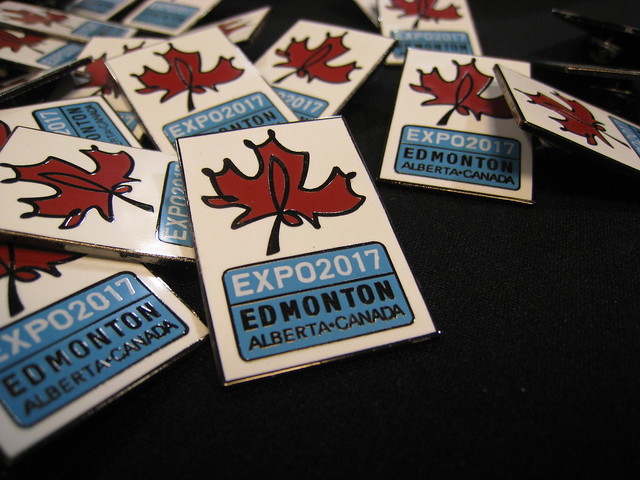
Edmonton’s bid to host EXPO 2017 was brought to a halt in 2010 after the Government of Canada withdrew its support, citing the unknown future costs of security. Mayor Mandel felt the real reason was a lack of support for our city, saying that “when it comes to Edmonton’s growth and ambition, our federal government simply isn’t interested.” He singled out MP Rona Ambrose for failing to build the necessary support in Ottawa for Edmonton’s bid.
Edmonton EXPO 2017 Launch

Do we need federal support for this bid? Financially, it seems unlikely a successful event could be staged without support from the Government of Canada, despite City Manager Simon Farbrother’s optimism that the City and Province could support it themselves. The reality is that hosting the Games is a $1 billion proposition, based on recent costs. Security concerns would also likely be a federal issue.

Would the federal government support this bid? Sport Canada guidelines outline that the federal government can only support two Canadian bids for major games in any decade. It is widely expected that Quebec City will bid to host the Winter Olympics, so Edmonton would be counting on being the second major event host.

Halifax was hoping to bid for the 2014 Commonwealth Games, but they were forced to withdraw their bid over concerns with the budget. It was the first time Canada had withdrawn a bid for a Commonwealth Games event. Edmonton’s bid would need to be rock solid.

What does this mean for LRT?

One of the drivers behind Edmonton’s failed bid to host EXPO 2017 was infrastructure money expansion for LRT. Big events require big money, and it was hoped that part of staging a successful event would mean expanding the transit network. Many Edmontonians were quick to make the connection to LRT after Monday’s announcement too.

It’s true that Edmonton’s LRT first opened in 1978, just months before the Commonwealth Games. But that project is not what took the LRT from conception to reality, nor is it what funded the construction. From Ride of the Century:

“In truth, the visionary planning that laid the foundation for the LRT dated back to the decommissioning of the streetcars in 1951, but it took until the early 1960s for the rapid transit dream to take coherent shape in D.L. MacDonald’s Report on the Present Operating Conditions of the Edmonton Transit System With a View to Determining a Policy for The Future Operation of the System in 1961.”

When the LRT opened on April 22, 1978, at a cost of $64.9 million, it was 7.25 km long with five stations.

LRT

Edmonton hosted the 1978 Commonwealth Games from August 3 to 12. Edmonton Transit had been planning transportation for the Games for two years, even assembling a fleet of 724 buses from Edmonton, Calgary, and Red Deer rolling stock to help meet demand. Their planning paid off.

“Edmonton Transit conveyed almost two million spectators to events over the nine days of the Games, and on August 8, the LRT system set a ridership record of over 69,000 people.”

“The Games were a shining moment for the city, and Edmonton Transit had played its part well passing the gargantuan test with flying colours.”

Just as we needed to continue building LRT with or without EXPO 2017, we need to move forward with LRT expansion whether we host the Games or not. I’d hate to see us tie LRT expansion money to the bid. LRT is our top infrastructure priority, and this event should have no bearing on that.

What does this mean for other infrastructure?

Events like the Commonwealth Games typically leave a physical legacy of facilities in the cities that host them. New sports and recreation facilities built for the Games could serve Edmontonians for years to come.

It is expected that Commonwealth Stadium would once again serve as the venue for the opening and closing ceremonies. It has received numerous upgrades in recent years, and could still receive more. Other facilities that were built for the 1978 Games, like Kinsmen, would likely receive upgrades and could be used. Foote Field was recently upgraded, and a new velodrome adjacent to Peter Hemingway pool has already been in the works. Edmonton had bid to host the 2015 World University Games, and had included a list of facilities as part of that bid that never moved forward. Those plans would likely be dusted off if this bid is successful.

Who is the competition?

In 1978, Edmonton’s competition was Leeds in England, a city with a population of about 200,000 more at the time. Our competition for the 2022 Commonwealth Games is Durban, a South African city of nearly 600,000 in a much larger metro area home to more than 3.4 million people. South Africa has never hosted the Games before, so that likely gives them an edge.

Apparently Durban had previously considered a bid for the 2020 or 2024 Summer Olympics, which suggests to me they are hungry to host another major international event and will be stiff competition. Durban hosted matches in the 2003 ICC Cricket World Cup and was of course one of the host cities for the 2010 FIFA World Cup.

Canada has hosted the Games four times: 1930 in Hamilton, 1954 in Vancouver, 1978 in Edmonton, and 1994 in Victoria. Edinburgh and Auckland are the only cities to have hosted the Games more than once.

Can Edmonton win? City Manager Simon Farbrother is certainly confident:

“We will, yes. We don’t go into these things to come second. Let’s put it that way.”

What’s next?

The cost of bidding had previously been estimated to range from $8 million to $10 million. Edmonton and Durban will work to finalize their bids by March 2015. After that, members of the Commonwealth Games Federation will meet a General Assembly in Auckland, New Zealand to choose a winner on September 2, 2015.

An Edmonton delegation will be travelling to Glasgow this year as official observers to learn best practices. The City has apparently talked with Glasgow officials about the bidding process too.

The City of Edmonton has said it will continue discussions with the Province and will be looking to engage other stakeholders throughout the country to win their support. Of course, Edmontonians will also be invited to get involved, so look forward to those opportunities in the near future.

Some of my favorite gadgets as of March 2014

It’s probably no surprise to you that I love gadgets. I can’t help it, I’m a sucker for a new shiny toy. Some of the gadgets I buy turn out to be underwhelming or less useful than I had hoped, but some quickly become indispensable. This is highly subjective of course, but it seems like more and more of the gadgets I have bought recently are good quality, very useful, and attractive. Am I getting better at picking them, or has the bar just generally been raised?

Here are a few of my current favorites!

Doxie One

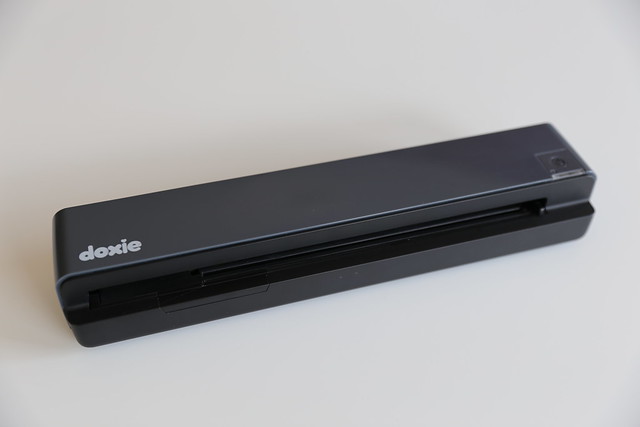
I bought a Doxie One back in November 2012 when I decided I was going to get serious about going paperless. That quest is ongoing, but the Doxie has definitely made a difference! I use it to scan invoices, receipts, business cards, and even handouts from all the different media events I go to. Unlike old school scanners that need to be connected to your computer and have terrible software, the Doxie scans things to an SD card that you can then plug into the computer later. It’s amazing how much of a difference it makes when you can separate those two tasks – scanning feels like less of a chore with the Doxie. The app it comes with is great too, letting you save scans as PDF, images, and other formats straight into OneNote, Dropbox, or wherever you like. Love it!

Logitech Wireless Headset H800

I spend a lot of time on calls for work, via Lync or Skype. I have lost count of the number of USB headsets I’ve had over the years. After the cable on my last one eventually deteriorated, I decided to go wireless. I settled on the Logitech Wireless Headset H800 and could not be happier. It’s sleek and light, produces great quality sound, and supports both a tiny USB dongle and bluetooth, which means I can use it with both my desktop and my mobile devices. The headset charges using a micro USB cable which is handy (because pretty much every other device uses the same cable). Battery life is not amazing, but is more than adequate.

Jabra SPEAK 410

I first used a Jabra SPEAK when I was hosting some meetings at Startup Edmonton. I loved it so much, I decided to go and buy one! When I’m with colleagues or simply don’t want to wear my headset, I’ll use the Jabra. It is absolutely fantastic. It’s small and highly portable, produces great sound, and I love the controls. Answer, hangup, mute, volume – all seamlessly work with Lync and Skype. No software necessary either, just plug it in and away you go!

Bose SoundLink Mini

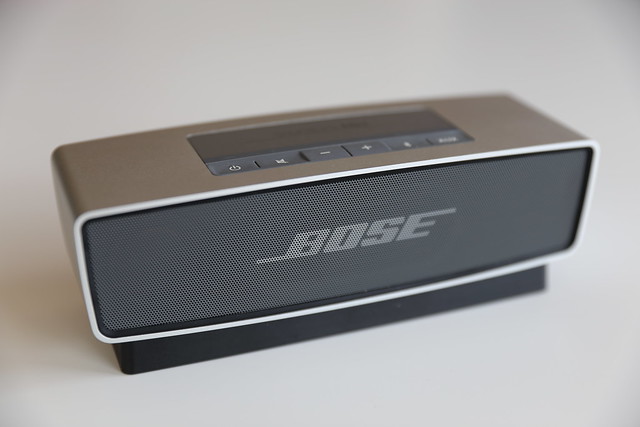
Sharon and I wanted a small speaker for our condo so after looking around at various options, I eventually decided on the Bose SoundLink Mini. It’s a bluetooth speaker and is meant to be portable (though we just leave it on the dock all the time). It produces fantastic sound, so good that I’m now looking to replace my crappy desktop speakers because they sound so bad in comparison. I can pair my Surface and Sharon has paired her phone with the speaker, so either one of us can play music easily. It’s perfect for when we’re cooking or have guests over or just want to have some background tunes.

Logitech Bluetooth Illuminated Wireless Keyboard K810

When I bought my Surface Pro, I decided to get the touch cover (the flat one without physical keys). It works great when I’m on the go, but at home I wanted a keyboard with actual keys to use. I decided on the Logitech Bluetooth Illuminated Keyboard K810. It’s pretty small and connects via bluetooth with the ability to switch between thee devices just by pressing one button. It’s also illuminated, and with a hand proximity sensor, it turns off the backlight to save power when your hands are not near it. Speaking of power, I don’t think I have ever had to charge it. Granted I don’t use it all the time, but still, the battery life is impressive.

Microsoft Sculpt Ergonomic Desktop

Last but not least is the Microsoft Sculpt Ergonomic Desktop. I wasn’t sure if I’d like the ergonomic keyboard and mouse, but this is absolutely the best combo I have ever owned. The mouse is surprisingly comfortable and uses real batteries (I’ve given up on so many mice because the rechargeable batteries all suck). The keyboard is the star though. It’s striking design looks great on my desk and it’s incredibly comfortable. You can see where my hands have rubbed against the cushioned palm rest, but still, it has held up well. My favorite part are the keys – they are more like laptop keys than traditional desktop keyboard keys, with less “throw”. I also love that it comes with a separate number pad, which I never use, meaning it doesn’t clutter up my desk.

I use The Wirecutter quite a bit for reviews, so check it out if you haven’t come across it already. I’m always looking for new gadgets, so who knows what I’ll be using in a year or two. Things are changing so quickly and for the better!

City Council approves a new transportation goal and outcomes for The Way Ahead

It’s no secret that LRT is City Council’s top infrastructure priority. They have repeatedly stressed the importance of expanding our LRT network, and scored a win recently with the Valley Line. LRT is part of a bigger transformation that Council hopes to realize, which is a shift away from the car-dominated transportation network we have today to a network that offers realistic choice through a range of travel options. At Wednesday’s City Council meeting, they approved a new goal for The Way We Move that makes this transformation clearer.

City Council Swearing In 2013-2017

In November last year, Edmonton’s new City Council took part in a series of strategic planning sessions. In addition to serving as a crash course on the City’s strategy and approach to long-term planning, the sessions were also a way to ensure the new Councillors were on board with the corporate outcomes, measures, and targets for each of the six 10-year goals identified in The Way Ahead. Among the key outcomes of those meetings were a desire by Council to review the goal statement for The Way We Move, as well as a desire to emphasize public engagement within The Ways.

The public engagement action is being handled through a new Council Initiative, and I think we’ll hear much more about that in the weeks ahead. I’m looking forward to it.

The goal for The Way We Move was reviewed and discussed at a couple of subsequent Council meetings, notably January 28 and March 11. Council wanted to stress the use of public transit, but they wanted to make it clear that Edmontonians would have choice. The goal they ultimately settled on reflects both of those desires and has led to a new set of outcomes too.

Current Goal: Shift Edmonton’s Transportation Mode

The current goal statement for The Way We Move is focused on “mode shift”, which is meant to convey that while the majority of Edmontonians get around the city using vehicles today, that should not always be the case. The reasons for needing a shift included changing our urban form to be more sustainable, accessibility, supporting active and healthy lifestyles, reducing the impact on the environment, and attracting business and talent to Edmonton.

Here’s the goal statement that accompanies the goal:

“Modes of transportation shift to “fit” Edmonton’s urban form and enhanced density while supporting the City’s planning, financial and environmental sustainability goals.”

Each goal also has an ‘elaboration’ associated with it. The current one for transportation reads:

“In shifting Edmonton’s transportation modes the City recognizes the importance of mobility shifts to contribute to the achievement of other related goals. To do so suggests the need to transform the mix of transport modes, with emphasis on road use for goods movement and transiting people and transit use for moving people. This goal reflects the need for a more integrated transportation network comprising of heavy rail, light rail, air and ground transport, and recognizes the important contribution that transportation makes to environmental goals.”

While the current wording attempts to connect with the other goals in The Way Ahead, it doesn’t as forcefully make the case for offering alternatives to single-occupant vehicles. The other challenge is that “mode shift” doesn’t mean anything to most of us, and sounds bureaucratic.

Perhaps more importantly, this was the only goal that was presented as if was worth doing solely to achieve the other goals. Surely a shift in how we move around the city should have benefits of its own!

New Goal: Enhance use of public transit and active modes of transportation

The new goal statement reads:

“Enhancing public transit and other alternatives to single-occupant vehicles will provide Edmonton with a well-maintained and integrated transportation network. Increased use of these options will maximize overall transportation system efficiency and support the City’s urban planning, livability, financial, economic and environmental sustainability goals.”

And the new elaboration reads:

“Through this goal, the City recognizes that a transportation system that is designed to support a range of travel options will increase the number of people and the amount of goods that can move efficiently around the city, while supporting the City’s goals for livability, urban form, financial, economic and environmental sustainability. Creating this 21st century sustainable and globally competitive city means offering choice. It will allow Edmontonians of all ages and abilities to safely walk, bike, ride transit, ride-share or drive to the places they need to go. The trade-offs needed to achieve this vision will create an integrated transportation system with greater travel choices for Edmontonians.”

The connection to the other goals is still present in the new wording, but not at the expense of highlighting the desire for alternatives to the car. There’s also the suggestion that trade-offs will need to be made in order to create a system that offers choice – we can’t have it all without making some hard decisions. The new goal is much more approachable now that “mode shift” is gone.

New Outcomes

Alongside this change, Council approved 12 new corporate outcomes, replacing the 20 that had previously been approved. Through their discussions, Council felt the outcomes should be specific and measurable, and provide a clarity of purpose. They wanted to simplify the approach. Here are the 12 outcomes they ended up with:

  1. Edmonton is attractive and compact
  2. The City of Edmonton has sustainable and accessible infrastructure
  3. Edmontonians use public transit and active modes of transportation
  4. Goods and services move efficiently
  5. Edmontonians are connected to the city in which they live, work, and play
  6. Edmontonians use facilities and services that promote healthy living
  7. Edmonton is a safe city
  8. The City of Edmonton’s operations are environmentally sustainable
  9. Edmonton is an environmentally sustainable and resilient city
  10. The City of Edmonton has a resilient financial position
  11. Edmonton has a globally competitive and entrepreneurial business climate
  12. Edmonton Region is a catalyst for industry and business growth

Gone are words like “minimized”, “supports”, or “strives”. The new language seems less open to interpretation, which is a good thing for determining progress. The next step is for Administration to prepare measures and targets based on these outcomes and to update The Way Ahead (there are currently 65 approved measures and 27 approved targets).

Results?

It’s great that Council wanted to strengthen the transportation goal and that they have simplified the outcomes. Most of this strategic planning was completed by previous Councils, so the exercise probably helped to ensure our current Councillors feel a sense of ownership. But the challenge remains: we need to implement the plans and see results. An annual report on progress will go to Council next year, based on the new outcomes, measures, and targets.

Coming up in April: Mayor’s Celebration of the Arts & Eat Alberta

I’m helping to organize a couple of events coming up in April that I wanted to tell you about. Tickets are going quickly for both events!

Eat Alberta

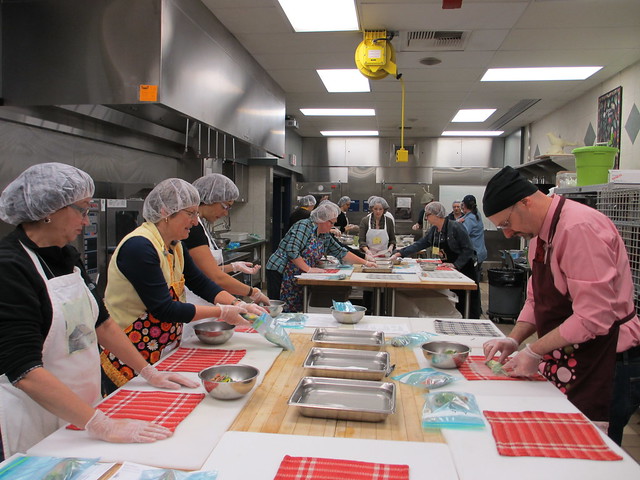
This is our fourth year for Eat Alberta, a one-day, workshop-style conference with a mix of hands on learning, food tastings, and demonstrations or presentations that focus on Alberta foods. The event takes place on April 26 in the kitchens at NAIT.

Here’s a video we did during last year’s event:

Tickets went on sale today for $150.00 each. Each ticket includes two plenary sessions, four workshops, breakfast, lunch, and a wine tasting. To ensure an equitable distribution of sessions (and to introduce you to something you might not have picked) we sell ten different tracks. I’m pretty excited about our lineup of sessions and presenters for this year.

Eat Alberta 2012

For more on Eat Alberta and what you can expect, check out Sharon’s post.

Mayor’s Celebration of the Arts

The 27th annual Mayor’s Celebration of the Arts is taking place on April 28 at the Winspear Centre. This year is of course the first event for Mayor Don Iveson. The event celebrates some of the best artistic talents our city has to offer with awards, and is packed full of amazing performances.

Mayor's Celebration of the Arts 2011

You can see the list of nominees for 2014 here. A total of 11 awards will be given out during the evening.

Tickets are on sale now with prices ranging from $15 to $80 depending on where you decide to sit. Each year the event supports a charitable organization in Edmonton, and this year we’re supporting the Music Enrichment Program. Stay tuned for details on the performances.

You can read my recap of last year’s event here. I joined the committee three years ago and I’m thrilled to still be playing a part in the event!

Global’s Woman of Vision has now profiled more than 230 Edmonton-area women doing great things

The 19th annual Global’s Woman of Vision luncheon was held at the Shaw Conference Centre last Friday. The event “celebrates the outstanding accomplishments of Edmonton-area women” and has now recognized over 230 women. I was fortunate enough to attend on a complementary media ticket.

“The consistently sold-out annual awards luncheon is the highlight of the Woman of Vision program, as it pays tribute to the inspirational women featured over the last year. Gold Sponsors give female university students $1,000 bursaries to help them realize their visions and 50 young women receive sponsored tickets to inspire them to consider where their visions may lead them. This emotional, spirit-lifting event is enhanced by words of wisdom from the women of vision themselves.”

The Woman of Vision feature airs on the first Monday of every month on Global Edmonton, produced and hosted by Lesley MacDonald. It was launched on ITV News in 1995, and has won two national broadcasting awards. It’s impressive that the program is still going strong!

Woman of Vision Luncheon

The twelve women recognized this year were:

You can read much more about each of them in the March 2014 issue of Avenue Edmonton magazine, and you can see some of the videos here.

I thought the format of the event was interesting. Each recipient was welcomed on stage to both receive her award, but also to answer a question posed by Lesley. The questions and answers were pre-prepared, but they still offered some additional information on each woman that I really appreciated. It was great to hear the recipients talk about their vision in their own words too.

I was extremely happy to see Kendall and Justine recognized as I think they are doing amazing things with Poppy Barley. The best is absolutely yet to come for their growing company! It was great to see a couple of representatives from our vibrant food community too, with Giselle and Amy. Duchess Bake Shop needs no introduction if you’re in Edmonton, and perhaps not even if you’re elsewhere in the country! I’m a big fan of Amy’s, not only because she still remembers my order at Chicken For Lunch, but because she truly does live her vision of “just be yourself”. She had everyone in the audience laughing!

Woman of Vision Luncheon

In addition to the women of vision, eight young women received bursaries.

“Sponsorships for the Global Woman of Vision Awards Luncheon include the creation of bursaries and awards to assist young women in furthering their education so they can pursue their own visions.”

Sponsors Global, Canadian Western Bank, Stantec, Enbridge, Afinity Life Sciences, Sterling Homes, Groot DermaSurgery, and MacEwan University all provided a bursary. The 2014 bursary recipients were:

  • Lindsay Rankin, Radio & Television Broadcasting, NAIT
  • Brishti Kayastha, Bachelor of Commerce, MacEwan University
  • Miranda Stahn, WISEST, University of Alberta
  • Angelica Prieto, Civil Engineering, University of Alberta
  • Ensaf Almomani, Physiology, University of Alberta
  • Sonic Budac, Architectural Technology, NAIT
  • Stephanie Lim, Medicine, University of Alberta
  • Rowan Sallstrom, Anthropology, MacEwan University

Watch for those women to continue doing interesting and impactful things in the years ahead!

If you’d like to nominate a Woman of Vision from the Edmonton area, you can do so online. Nominations are reviewed every two months by the Global Woman of Vision Advisory Board. You can see more photos from the event here, courtesy of That Just Happened.

Thanks again to Lesley and her team for the opportunity to attend!

Edmonton aspires to eliminate poverty within a generation

More than 100,000 Edmontonians live in poverty – that’s 1 out of every 8 residents. Nearly 30% of those who live in poverty are children. Thousands of Edmontonians are unable to fulfill their true potential in life due to poverty. Furthermore, the cost of poverty to Albertans is estimated to be between $7.1 and $9.5 billion each year. We cannot continue trying to simply manage poverty – we need to invest in ending and preventing it. Can we eliminate poverty in Edmonton within a generation? I think we can.

Poverty Elimination Steering Committee

Over the last year, I’ve been a member of the Poverty Elimination Steering Committee, led by Councillors Henderson and Sohi and the United Way of the Alberta Capital Region. Made up of 26 members, our committee was established in 2012 and initially aligned its work with the United Way’s “Pathways out of Poverty” initiative, as well as the Province’s Poverty Reduction Strategy. The committee’s summary report was presented to City Council on March 3:

“The cost of not responding to poverty now will have enduring intergenerational effects on individuals, families and society. Investing in eliminating poverty today is creating a better future for all Edmontonians. We can end poverty in Edmonton in a generation and build a truly inclusive and vibrant city where prosperity is shared by all. A new conversation along with dynamic and nimble partnerships will bring us successfully to this goal.”

Shifting our approach from charity to investment and transforming the public conversation accordingly were key motives behind our work. I was happy to be able to contribute in a number of ways, including building the website and making poverty a key issue for candidates to consider during last year’s municipal election. Most of all, I was grateful for the opportunity to learn so much about this complex issue from some of the local leaders I most respect and admire.

Over the last couple of months it became clear that a Mayor’s Task Force would be established, so the committee shifted its efforts to identify focus areas for action. Based on community engagement sessions, research conducted, and other input, we identified five areas for the new task force to consider.

“These five Focus Areas for Action are all critical and strategic opportunity areas to advance real change and progress as Edmonton shifts the conversation from one of band aid solutions to comprehensive long-term change towards ending poverty. It is important to note that each focus area is related to, and dependent on, the other. None can be tackled in isolation, and it is essential to avoid creating new silos.”

focus areas for action

All of these areas are important, but I’m particularly interested in transportation. It was eye-opening to see how significant a barrier it can be during the poverty simulation I participated in. I was also surprised to learn throughout my time on the committee that for an increasing number of Albertans, transportation accounts for the greatest portion of monthly expenses, even more than housing. City Council is already very focused on transit and transportation in the city, and I hope they’ll seriously consider the impact of their decisions on poverty as they progress that work.

Our last committee meeting took place a few weeks ago, to finalize the report and prepare to pass the baton to the new task force.

Task Force for the Elimination of Poverty in Edmonton

City Council passed Bylaw 16765 establishing the “Task Force for the Elimination of Poverty in Edmonton” at its March 12 meeting. In his comments about the initiative, Mayor Iveson said:

“I think we are unafraid to dream of a more inclusive Edmonton and though it will take time and a shift in our thinking I really think Edmonton is perhaps one of the best places to show leadership on this, because we are the kind of city that can bring together business, academic experts, people in civil society and leadership, non-governmental organizations, faith communities; that is the Make Something Edmonton piece of this. We can rally the whole community around this the way we have around other complex challenges.”

If you get a chance, listen to the comments Council made about the initiative. Councillor Walters shared a personal story about poverty and talked about how important it is to help all Edmontonians reach their potential. Councillor Henderson and others also spoke passionately about the importance of the work.

The task force’s mandate is to prepare and present to City Council a report on poverty in Edmonton which includes:

  • information on the nature, extent, and causes of poverty within the Edmonton region;
  • a concrete plan for eliminating poverty in Edmonton within a generation;
  • recommendations to Council on how to implement the plan.

The volunteer members of the task force are:

  • Bishop Jane Alexander
  • Justin Archer
  • Jeffrey Bisanz
  • Kate Chisholm
  • Yvonne Chiu
  • Joseph Doucet
  • Sarah Eadie
  • Dr. Louis Francescutti
  • Mark Holmgren
  • Sandra Huculak
  • Eugene Ip
  • Tiffany Linke-Boyko
  • Maria Mayan
  • Carman McNary
  • Janice Melnychuk
  • Zahra Somani

There is also one spot reserved for an aboriginal member (to be selected by Aboriginal Round Table), one spot for a provincial government representative, and one spot for a federal government representative. Councillors Henderson and Sohi will still be involved, and of course Mayor Iveson will co-chair along with Jane Alexander. Additionally, the task force will have the ability to engage others via working groups.

By September, the task force will bring a report back to Council “providing possible amendments to include in the bylaw regarding definitions for ‘poverty’ and ‘generation’.” The bylaw states that the task force will fulfill its mandate by providing its report to Council on or before December 31, 2015.

What’s next?

Just three of the task force members (Yvonne, Mark, and Janice) were also on our Poverty Elimination Steering Committee. I point that out only to express a hope that the task force doesn’t end up repeating work that we’ve already done (in many ways, the committee was repeating work done by other organizations over the years). What’s needed is ownership and action, not more research and report writing. The bylaw does explicity state that “the task force will continue the work of the Edmonton Poverty Elimination Steering Committee” so I’m hopeful that will be the case.

On Thursday, March 20, dozens of Edmontonians will come together at the Shaw Conference Centre for the Mayor’s Symposium on Poverty. It’s an opportunity to review previous work and discuss next steps. I’m looking forward to meeting the members of the new task force and contributing to the direction it will go.

The work to eliminate poverty in Edmonton will not be easy nor will it be quick, but it is important. I want to end with this passage from our committee’s final report:

“We need to shift our focus from charity to investment, from poverty alleviation to poverty elimination, recognizing that social infrastructure is as important as physical infrastructure. We have to be people centred and place-based, seeking made in Edmonton solutions involving Edmontonians.”

Our goal is to end poverty in Edmonton within a generation. How can you help?

What’s next for Make Something Edmonton?

A few weeks ago I attended a discussion hosted by Make Something Edmonton (MSE) at Startup Edmonton. For a few hours on a particularly cold Saturday morning, a handful of former MSE volunteers shared their thoughts on the past year, offering insight into what worked and what didn’t. It was an opportunity to reflect on how MSE has evolved over the last year, and to consider where it should go next. There hadn’t been much communication with volunteers since the final report was produced in September, so many of us were unsure of MSE’s status. It turns out that many things were happening behind the scenes!

Make Something Edmonton Launch Party

Funding Make Something Edmonton

The final report of the City Image & Reputation Task Force was presented to Executive Committee on September 9, 2013. The recommendation that was passed was for EEDC and the task force to work together to:

“operationalize the Make Something Edmonton Initiative, and bring back recommendations to continue implementation of the Make Something Edmonton Initiative, including setting up an agency or other entity, and with a service package developed and funding to be requested for allocation in the 2014 budget.”

In December, a plan for funding MSE was presented to City Council. That plan suggested the following approach:

  • An Executive Director and Operating Budget would be provided through EEDC.
  • A Make Something Edmonton Activation Board would be established to provide strategic direction and implementation support.
  • The Activation Board would be co-chaired by two community leaders, jointly approved by the City Manager and the CEO of EEDC, who would serve a two-year term.
  • A Leadership Group comprised of the City’s Chief Communications Officer, the CEO of EEDC, and the Co-Chairs, would be established.

It also outlined the allotment of a $2 million budget:

  • $500,000 for the City of Edmonton to adopt the MSE brand platform in its marketing & communications
  • $975,000 for MSE through EEDC to fund operations & implementation
  • $525,000 for EEDC to execute targeted external marketing campaigns

That might seem like a large amount, but it pales in comparison to what has been spent on branding in the past.

An Initiative of EEDC

As a result of that plan, MSE now calls EEDC home:

“As of January 1, 2014, Edmonton Economic Development is proud to steward the Make Something Edmonton Initiative, continuing this grassroots organization’s mandate to make Edmonton a hub for building, creating, changing, for making something. An advisory board will soon be established to ensure connectivity with the vibrant creative and entrepreneurial communities and to keep the spirit of the program alive.”

The idea is for MSE to be part of EEDC’s “coordinated incubator strategy”. That’s basically a fancy way of saying that EEDC provides the necessary supports for organizations like TEC Edmonton, Startup Edmonton, and now MSE so that they can focus on their core objectives.

I asked EEDC’s VP of Marketing & Communications Kevin Weidlich about where he sees MSE fitting in. “I think EEDC is responsible for developing the Edmonton brand,” he said, “but we’re not the only ones.” Kevin was excited about the opportunity for MSE to continue on as a community-led initiative, supported by EEDC, and he sees volunteers as critical advocates for the adoption of the MSE brand in other organizations.

New Co-Chairs

MSE’s new co-chairs are John Mahon, former Executive Director of the Edmonton Arts Council, and Tegan Martin-Drysdale, former Co-Chair of Edmonton Next Gen. They take over from outgoing co-chairs Chris LaBossiere and Amy Shostak. Though her title still reads “interim”, Mary Sturgeon has moved to EEDC to remain as MSE’s Executive Director.

Both John and Tegan spoke eloquently at the event a few weeks ago, sharing some thoughts on how MSE fits into the bigger picture. Both stressed the importance of gathering feedback, and listened intently as everyone in attendance shared their viewpoints on what MSE should be focusing on next. They heard opinions on such things as whether to narrow the focus or whether to go after a broad range of Edmontonians, on whether a physical office was important or not, on how they should be engaging volunteers, and on how other local organizations could be encouraged to adopt the brand.

The big task ahead for John & Tegan is to establish the advisory or activation board, and to determine what structure the organization should take. It’s critical that they establish a plan for the next two years, in conjunction with Mary, so that they can bring the right people on board. I know they’re up to the task.

Anecdotes & Projects

While the MSE website remains operational, it hasn’t been updated as frequently as originally intended. One new feature called Anecdotes was added recently, however. With titles like “make something active” for the Edmonton Ski Club and “make something solid” for Waiward Steel, the stories are meant to both educate and inspire:

“Icons of Edmonton are big, small, strong, strange, strangely profitable, and increasingly global. There are thousands of examples of ideas that started here and grew into extraordinary events, social organizations, businesses, festivals, and community projects. Browse through these profiles and read about Edmontonians, their ideas, and what they’ve created. We’re building an inventory. If you have an example of Edmonton-ness in mind, get in touch and we’ll include it.”

There are nearly 20 anecdotes up on the website so far, and I expect we’ll see many more added in the weeks ahead. You may have seen some billboards around town highlighting some of these stories.

Projects continue to be added, and MSE actively promotes them via its Twitter and Facebook pages. At the moment there isn’t much incentive for a project creator to go back on to the website to update its progress, so that’s one area that the website’s functionality could be improved. I understand there was a laundry list of other improvements identified that have yet to come to fruition too.

Make Something Edmonton Launch 2013

Onward!

I was concerned last summer about where MSE would land, so I’m really happy that Make Something Edmonton will continue on as an initiative of EEDC. I think the direction that EEDC is headed is exciting, and I’m sure that MSE will benefit from the new energy and talent they have there. I’m also very happy to see John & Tegan step forward as MSE’s new co-chairs. Both have already given so much to Edmonton, and I know they will be great leaders for the initiative.

Clearly there’s a lot of work still to be done. MSE could reach more people, the essence of the brand could be adopted by more organizations, and project initiators and volunteers could be better and further engaged. I’m optimistic that with its future now certain, MSE can achieve all of that.

Edmonton’s Valley Line LRT moves forward with commitment from the Province

It was the announcement Edmonton was hoping for last Thursday when the Province unveiled its Budget 2014: money for southeast LRT extension to Mill Woods.

Valley Line LRT Funding Announcement

Edmonton’s Valley Line LRT is moving forward after the Province today made a commitment to provide up to $600 million to help finance the project. In a prepared statement, Premier Alison Redford said:

“Alberta is preparing to welcome a million new residents over the next decade, many of whom will be choosing communities like Edmonton as their home. Our Building Alberta Plan is helping municipalities build public transit systems to accommodate growth and make it easier for Albertans of all ages and levels of mobility to get where they need to go.”

In stark contrast to his disappointment last Thursday, Mayor Don Iveson was understandably pleased with today’s result, calling it “a momentous occasion”:

//platform.twitter.com/widgets.js

Today’s announcement was a bit over-the-top in my opinion, with Premier Redford, cabinet ministers, and MLAs arriving at Churchill Station via LRT. I think Mayor Iveson picked up on the pomp as well, joking that he hoped the ministers enjoyed their trip on the LRT.

Valley Line LRT Funding Announcement

It was a good opportunity for Edmontonians to show support for LRT expansion however, with students from City Hall School holding up #yeg4lrt signs at the top of the escalator. There was a sizable crowd gathered and lots and lots of media on hand to capture the event. If you’d like to watch the announcement, you can see the raw footage here.

What the Province has committed to is:

  • up to $250 million under GreenTRIP over three years beginning in 2016-17 upon approval under the second call for GreenTRIP projects,
  • up to $150 million in matching provincial funding if the federal government approves this project under the new Building Canada Fund beginning in 2016-17, and
  • up to $200 million in an interest-free loan to be repaid by the city over 10 years, fully backed by the Alberta Capital Finance Authority (ACFA).

As Mayor Iveson noted today, only $400 million of that is new money. The interest-free $200 million loan is simply a creative way to bridge the gap.

Valley Line LRT Funding Announcement

It is unusual though not unprecedented for the Province to offer interest-free loans to municipalities through the Alberta Capital Finance Authority (ACFA). For instance, a program known as “ME first!” launched in September 2003 and provided interest-free loans to encourage municipalities to achieve energy savings in their operations. It is common for the City to receive loans from ACFA for infrastructure projects, with typical interest rates ranging from 1.6% to 3.3%. Some projects that the City has previously borrowed for include the Whitemud Drive/Quesnell Bridge rehabilitation, the Walter Bridge replacement, and the NAIT LRT line. Any loans would be subject to the Municipal Government Act, which outlines debt limits and other restrictions. Edmonton is well within both the provincial debt limit and its own more strict limits.

Technically the money won’t start flowing until 2016, which perhaps not coincidentally happens to be the pre-election budget. It certainly did feel like a politically motivated announcement today. The Province received immense pressure from Edmontonians after last week’s budget and Mayor Iveson and his colleagues on Council did a good job of harnessing that to their advantage (the mayor even played along with the #SadDonIveson meme).

//platform.twitter.com/widgets.js

As Dave noted today:

//platform.twitter.com/widgets.js

Still, the assurance from the Province means that the City can keep the project moving forward, and that’s a win for Edmonton. We won’t lose a construction season, and the federal funding will likely be received without issue. Mayor Iveson confirmed:

“Knowing that we have a clear pathway to apply for those dollars allows City Council to consider moving ahead to the next step of this journey.”

The mayor thanked Council, our regional neighbours, and the ministers at the Province for working hard to get the deal done.

Valley Line LRT Funding Announcement

I know many people have been working on this for a long time, but I think Mayor Iveson deserves a lot of credit for making this happen. He expressed disappointment and frustration last week, but did not alienate the cabinet ministers he needed to work with to move things forward. He kept the lines of communication open, and clearly said the right things.

Today’s news, while positive for the Valley Line LRT, is not the long-term commitment that the mayor has been seeking, but it is another step in the right direction.

Valley Line LRT

Here’s a look at what the Valley Line LRT will look like from Mill Woods to 102 Avenue downtown (subject to change):

The City’s website has already been updated with details related to the funding:

“Thanks in part to timely commitments by our provincial and federal partners, the Valley Line will remain on schedule for a construction start of 2016, aiming to be open to the public by the end of 2020.”

The next step is a Request for Proposals to shortlist qualified consortia (groups of affiliated companies) that bid on the project. That stage is expected to take three months.

Keep up-to-date on the Valley Line LRT here or sign up for email updates.

OneNote + OneDrive = Awesome

Without good tools to keep me organized, I’d be totally scatterbrained and lost. Well, good tools and an understanding partner who helps me keep on top of things! I have tried a bunch of different tools over the years, but two in particular have become absolutely critical: OneNote and OneDrive. This isn’t a sponsored post, I just want to share two tools that have really made a difference for me. Maybe they’ll have a positive impact on your life too!

OneNote

OneNote has developed into an amazing tool since it was launched over ten years ago. I originally used it locally on my computer to keep track of typed notes. I also had a Tablet PC, so I would use it for handwriting too. OneNote supports more advanced features also, like audio or video notes, photo notes, smart tags, document scanning, screen clippings, and much more.

Here’s an overview of the new OneNote:

I use OneNote many times a day, across most of my devices. I track my computer activity with RescueTime, so I know with certainty that OneNote is consistently in the top five applications by usage. It works on my desktop, my laptop, my Surface, and my phone. I run Windows everywhere, but even if your devices are a bit more varied, OneNote can work for you. There are apps for Android, iPad, and iPhone too. There’s even a web app.

At the moment I have two high level notebooks – one for personal stuff and one for work stuff. When I’m doing research for a blog post, I store everything in OneNote. I’ll even write some of my drafts there. I keep recipes, lists, and ideas in my personal notebook. My work notebook is filled mainly with meeting notes, often captured in ink using my Surface Pro, but I also use it for UI reviews, to keep track of technologies I’m exploring, and a variety of other things.

One of the greatest things about OneNote is the search. The ability to organize notes into sections is handy, and if you use tags you can quickly find any note that has a specific tag. But most of the time I just search. The best part is that OneNote will even search my handwritten notes, without any conversion to text. It’s surprisingly accurate, and it’s this feature that I typically demo to people when I’m showing them OneNote on my Surface. Support for this was added years ago and it still never fails to amaze.

OneDrive

OneDrive is the new name for SkyDrive, which first launched in 2007. It’s kind of like DropBox in that it is a place in the cloud to store your files. You get 7 GB of storage space for free, and it’s pretty easy and expensive to boost that amount.

Here’s an overview of the new OneDrive:

Again, OneDrive works across all of my devices, and again, there are apps for Windows, Mac, Android, iPad, and iPhone. There’s even an Xbox app, which comes in handy when you want to show some photos (which are stored automatically on OneDrive as I take them with my phone).

I put all kinds of stuff in my OneDrive (I’ve got over 47 GB of storage total, 20 GB of which comes from my Office 365 subscription). Everything I scan using my Doxie goes into OneDrive. Documents, presentations, audio recordings, graphics, mind maps, blog post drafts in MarkDown, – you name it, I store it in OneDrive.

Using OneDrive I don’t worry as much about backups (though I still use Backblaze and a few other approaches to do regular backups). Using OneDrive means I rarely have use for USB sticks, because my files are always in sync, across all my devices. OneDrive has completely changed the way I think about file storage, for the better.

The one and only feature I desperately want for OneDrive is co-owned folders, to bring DropBox-like folder sharing to the platform (you can share and collaborate on documents now, but I want to have an entire folder that is kept in sync across multiple OneDrive accounts). The good news is that the co-owner feature is apparently coming very soon.

OneNote & OneDrive are better together

The magic happens when you store your OneNote notebooks on OneDrive. All of the new Microsoft Office apps support logging in with a Microsoft Account, so it makes it super easy to do. I think this approach is probably the default for the phone and tablet apps too.

With OneNote on OneDrive, it doesn’t matter what device I’m using, because my notebooks are kept up-to-date with changes. The sync is completely automatic and fast. So fast actually, that it fits into a 6 second Vine:

I rely on this each and every day, so I’m glad I have never run into a sync problem. I can take some notes at home, walk over to the office, and pick up right where I left off on a completely different computer. I regularly take notes on my phone when I’m at an event, and when I get back to a computer to start blogging about it, I don’t need to worry about where my notes are. They’re always there, ready for me.

These two tools have made a big difference in my life. If you want to give OneDrive a spin, use this referral link and we’ll both get an extra 0.5 GB of storage space for free. If you want to try OneNote, you can download it for free here.