What good are (bike) plans without implementation?

Bike lanes have been in the news again, largely thanks to Mayor Mandel referring to the plans as a “nightmare” on Wednesday. It’s pretty clear that our poor public consultation practices are part of the problem here, but there’s another issue at play. As a city we’re good at talking the talk, but we too often fail at walking the walk.

From The Way Ahead:

In shifting Edmonton’s transportation modes the City recognizes the importance of mobility shifts to contribute to the achievement of other related goals. To do so suggests the need to transform the mix of transport modes, with emphasis on road use for goods movement and transiting people and transit use for moving people.

From The Way We Move’s Strategic Goals:

Public transportation and active transportation are the preferred choice for more people, making it possible for the transportation system to move more people more efficiently in fewer vehicles.

From The Way We Move’s Implementation Plan:

Active transportation includes any form of human-powered transportation, the most common modes being walking and biking. A key direction of The Way We Move is to develop an integrated and sustainable transportation system in Edmonton to enable citizens to shift to these modes.

And then of course there is the Active Transportation Policy which declares, “the City of Edmonton strives to be pedestrian- and bicycle-friendly.”

Our plans and goals and policies all seem to support taking steps to make cycling in Edmonton more common. We know that doing so will help to reduce traffic congestion, preserve our road infrastructure, protect the environment, and make us healthier. Our goal of building 500 km of on-street cycling facilities in the next 10 to 20 years is achievable, and we can be confident it’ll help shift our transportation modes because just as you get more drivers when you add more roads, research suggests you get more cyclists if you add more bike lanes (pdf).

So why does it seem so difficult to make any actual progress?

Isaak Kornelsen Memorial Ride - August 31, 2012

When the 2012-2014 Capital Budget was being discussed, Active Transportation nearly missed out on funding. After lots of public feedback and discussion, Council amended the budget and did include $20 million. Now we get around to actually spending some of that money on cycling – $2 million or less this year – and we once again seem to be forced into the position of having to fight to move things forward. One step forward, two steps backward.

Without question the way the City does public consultation contributed to this mess – there’s a lot of room for improvement. But “poor public consultation” is also a convenient scapegoat for politicians and citizens opposed to the plans. There’s no conspiracy here. The notion of adding bike lanes to our streets didn’t suddenly appear one day out of thin air. These plans have been in the works for years.

All we need to do now is walk the walk.

You can learn more about Cycling in Edmonton here, and note the City is running a survey on the 2013 Bike Routes until February 27.

Two other thoughts:

  • Why wasn’t there any outrage about the loss of parking when the bike parking corrals were put in place over the summer? Was it just because they were temporary?
  • Am I the only one annoyed that we’re spending 10 to 30 times more on a “mechanized access” project for the River Valley that has no clear plan than we are on bike lanes?

My Return to Podcasting: Mack & Cheese

Today I am excited to introduce a new project called Mack & Cheese. It’s a podcast that I’m doing with Graham Hicks, who I’m sure you know from his newspaper days. He’s the “cheese” in our duo, but is it because he’s cheesy or is it because he’s the big cheese? You decide!

His five-times-a-week town-crier style column “Hicks on Six” in the Edmonton Sun and the Edmonton Sun online, was considered Edmonton’s best-read newspaper column.

I approached Graham in the fall with the idea for the podcast and was thrilled when he said he wanted to take part. You can check out the first episode here. We both love talking about current affairs in Edmonton so that’s what you can look forward to on future episodes, though in our intro episode we talk entirely too much about ourselves.

Podcasting in 2004
Me podcasting way back in 2004

For me, this is a return to podcasting. I started podcasting in September 2004 actually. To give you some context, that was just a few months after Facebook initially launched and nearly two years before Twitter existed. My friends and I liked the idea of doing our own radio show, and podcasting gave us a way to do that. We created a site called BlogosphereRadio which was a series of shows that discussed various aspects of blogging. While some of our shows probably sounded like they were created just for our group of friends, some shows attempted to be more professional-sounding. We covered the first ever blog auctions for instance, and we recorded sessions for the Northern Voice conference a couple of years. It was a lot of fun, but it was also a lot of work!

Podcasting in 2004
My usual setup back in the day

So much work as a matter of fact, that I decided I could build some software to make it easier. That led to Podcast Spot, a hosting service that my business partner Dickson and I launched in September 2006 (you check out some of our features here). We had limited success with the effort, and ultimately decided to shut it down in October 2008. Podcasting had lost some of its lustre by that time, and we felt our service had come to a fork in the road. That was kind of the end of my podcasting career, if you could call it that! I look back now and am pretty happy with what we were able to accomplish (we even built some cool things like a real podcasting robot, pictured below). We were ahead of the curve in some areas, but were inexperienced and up against some stiff competition. I learned an incredible amount through the whole experience.

Finished Side View
The Podbot, which we controlled wirelessly!

While I stopped podcasting and put my effort into other projects, I never did lose my interest in it. I still think podcasting is a particularly interesting method of communication, even if it’s not as “big” as we hoped it would become. Some things are best discussed in a blog post, but I think there are plenty of things that podcasting is appropriate for. I’m looking forward to exploring that further with Mack & Cheese.

Here in Edmonton, there are now some really great podcasts to choose from. I have been completely inspired by what Adam and Scott have done with The Unknown Studio (and we use their studio for our recording…thanks guys!). If you aren’t already a regular listener, you should be! There’s also UserCreatedContent, Jay n’ J, Prairie Belles, and Product People that you should check out.

I think there’s a place for what Graham and I want to do, and I hope that some of you find it interesting enough to listen to. If you do take a listen and have some feedback, I’d love to hear it!

Edmonton should introduce online voting

City Council will decide tomorrow whether or not to go ahead with online voting in municipal elections. Executive Committee referred the item back to Council without a recommendation, but Administration’s position is clear. Their recommendation states:

  1. That an internet voting option for the 2013 General Election be approved, subject to the necessary Local Authorities Election Act regulation changes.
  2. That Administration request that Alberta Municipal Affairs make the necessary regulation changes to allow implementation of an internet voting option.
  3. That Administration bring forward amendments to Election Bylaw 15307 to address legislative requirements for internet voting.

You’ve probably heard about the Jellybean Election that was held last year to test the viability of online voting. The feedback from that and other public involvement activities was also clear:

Overall, the responses from those who participated in all of the public involvement processes indicated support for the use of internet voting as another voting option. The responses were qualified with an expectation that the City ensure that the voting option provide auditability, security, reliability, be user friendly and be provided at a reasonable cost.

With a projected cost of $400,000 to implement online voting for the 2013 General Election, I think the City can meet those qualifications. Online voting is a viable option right now, and we should offer it in Edmonton.

Voting Station
Is this the best we can do?

I could write about how pretty much everything can be done online now. We pay our bills, share our thoughts, file our taxes, buy goods and services, look for love, and much, much more, all online. I could write about how Scytl, the company we used for the online voting system in the Jellybean election, “has provided internet voting for elections all over the world including France, Madrid and Halifax.” But I’m not sure any of that would convince you more than this CNN article from 2011:

In all, 80 Canadian cities and towns have experimented with Internet voting in municipal elections. The town of Markham, in Ontario, has offered online ballots in local elections since 2003.

We’re not even close to leading the pack in Canada, let alone the world! Estonia has allowed online voting in its national elections since 2007. Online voting may be new to Edmonton, but its old hat elsewhere.

Read just about any article about online voting and amidst any concern you invariably hear that online voting is the future. The article in the Journal last week was no exception:

While Coun. Karen Leibovici feels online elections are the way of the future, she’s not sure the city can be ready to introduce this approach in less than nine months.

Online voting may be the future, but it’s not futuristic. As this Mashable article discussing online voting in the US says, “Internet voting systems are already being used in elections of consequence” and “widespread online elections will be a reality in the near future.”

Understandably, the most vocal concerns about online voting have to do with security. No system is 100% secure, but generally speaking it’s not the technology that is the weakest link, it’s us. For an eye-opening look at the human side of security, I’d encourage you to read Kevin Mitnick’s book The Art of Deception. In it, “Mitnick explains why all the firewalls and encryption protocols in the world will never be enough to stop a savvy grifter intent on rifling a corporate database or an irate employee determined to crash a system.” Or someone motivated to interfere with an election. If you really want to hack the system, you’ll find a way.

For me the question becomes, is online voting any less secure than offline voting? I don’t think it is. How do you know that that piece of paper you drop into a cardboard box ends up where it should and is counted accurately? How do you know that someone hasn’t interfered with the system somewhere in between you voting and the results being published? You don’t. A technology-based system would still require a certain amount of trust, but unlike with paper-based systems, that trust can be backed up with audit records and digital copies.

No one is suggesting that we get rid of paper-based voting and move entirely online (at least not yet). But adding online voting as an option would make the next election more accessible, and would give us the opportunity to gain some insight and knowledge on how to improve the system in the future.

The corporate outcomes section of the report going to Council states:

Providing voters with secure voting options enhances the democratic process and our citizens’ connection to their community, and supports the goals of the Way We Live.

I can’t say it any better than that. Let’s move forward with online voting in Edmonton.

Edmonton City Council and Katz Group move forward on new downtown arena

Today was the latest episode in the downtown arena saga and it was a weird one. Council received an update from Administration on negotiations with the Katz Group and ultimately voted 10-3 to move forward with an altered deal, though one that still closely resembles the framework that was approved in October 2011. Today is being called a “landmark” day for Edmonton, and supporters of the arena are understandably happy that the project is moving ahead, even though they may not be entirely sure why.

Let’s start with what’s new. The price of the arena has gone up $30 million to $480 million, and that pushes the total cost of the project (including the community rink, land, and other elements) to more than $600 million. The other changes include:

  • The additional $30-million for the arena over the previous framework will be split between the City and the Katz Group
  • The LRT connection, solely funded by the City, has been reduced from $17-million to $7-million
  • Katz Group will pay for the slightly increased costs of the Winter Garden
  • Under the new framework, the City will own the arena and land, and the Katz Group will pay all operating costs and receive all revenues

There are some other changes too, such as a property tax clause that no one seems to understand. But the biggest difference? Congratulations and optimism all around. Speaking to the media afterward, Mayor Mandel declared:

“It’s 100%, a deal is done. All the other stuff is just going through some steps. I’m absolutely totally confident that we will go ahead…”

And here’s the statement from the Katz Group:

“This is a milestone agreement for a world class facility that will drive the ongoing revitalization of downtown Edmonton,” said Daryl Katz, Chair of the Katz Group. "It also helps to ensure the Oilers’ long-term sustainability in Edmonton. This has been a challenging process for all concerned but we are confident we will all look back on the end result with pride and satisfaction at what we have achieved. I want to thank City Council and City Administration for their work on this file. This is a great day for Edmonton and we are excited to get to work on realizing this incredible opportunity.”

You may recall that when the original agreement was passed in October 2011, there was quite a bit of optimism then too. But it wasn’t along the lines of “the deal is done” as much as it was about moving forward. To be fair, it’s not like there was cheering in Council Chambers today, as Paula noted:

“After all the years of negotiations, the vote was greeted by silence — followed by an awkwardly belated round of quiet applause from the Katz Group and their supporters.”

But for Mayor Mandel and Daryl Katz in particular, their comments represent a complete turnaround. Last September, the mayor was “frustrated” and issued a statement calling for “the Katz Group to clarify its full position.” In response, Daryl Katz wrote a letter in October in which he called for “more time and political leadership.” He said negotiations had “gone backwards” and noted there were 15 open issues. In December, the Mayor said “we’ve gone as far as we’re going to go” and said a deal had to be reached within six weeks.

My read of the report suggests fewer than 15 changes were made, but maybe Katz was just grandstanding in his letter. What’s most interesting of course are the things that have not changed.

There’s still $100 million missing from other orders of government (plus another $14 million for the community rink). Mayor Mandel today said he is “very confident” that the province will come to the table for that amount, but no one knows when or how. There’s also no guarantee that that province would approve the proposed downtown CRL (though it seems unlikely they would reject it) nor that the Katz Group will actually invest in the commercial development surrounding the arena (it’s all “subject to commercial viability”).

I don’t see much of a difference between today’s deal and the agreement from October 2011, but apparently it was enough for Mandel and Katz to declare that we’ve crossed the finish line.

So what’s next? Well someone needs to come forward with $114 million, for starters. Given that the City expects construction to start as early as August 2013, getting the remaining funding issues sorted out would seem to be the priority. But perhaps more importantly, this agreement significantly increases the likelihood that Mayor Mandel will decide not to run again in the next election. As Paula noted, that means “a new political game is just beginning.”

I’ll give Don Iveson the last word on today’s proceedings: “I don’t want our city to fight about this anymore. It’s been an open wound in Edmonton.”

Why the City of Edmonton should pay to light up our bridges and landmarks

Who knew that Dave Mowat’s presentation at Pecha Kucha Night 14 back in October would become such a big deal? Maybe he did, but I sure didn’t. It was a great presentation, but we’ve had lots of people come forward with ideas on how to beautify the city, and none of those took off. Furthermore, Dave wasn’t the first one to suggest lighting up the High Level Bridge, something he readily admits. So what made his presentation different?

Pecha Kucha Night

Well for one thing, Dave Mowat is no ordinary citizen (despite how down-to-earth and approachable his bio sounds). He’s the President and CEO of ATB Financial, an organization with assets of about $27.4 billion, making it the largest Alberta-based financial institution. If we brought together a group of the city’s “power brokers” , Dave would probably have a seat at the table. When he picks up the phone to call EPCOR and asks for a couple hundred thousand dollars for his project, he gets it. I couldn’t do that, could you?

That’s one reason why I’m not a big fan of the proposed fundraising campaign. With an estimated cost of anywhere from $400,000 to nearly $2 million, Dave is going to need more than just the $225,000 committed by EPCOR. Gordon Kent reports:

He would like a few corporate sponsors to pay the bulk of the expenses, with 100 to 200 businesses making smaller contributions and 10,000 to 30,000 people donating about $10 each to “buy a diode.”

When he spoke to Executive Committee on January 14, Dave said, “I think a project like this lends itself toward grassroots funding.” We can disguise this as a “community project” by launching such a fundraising campaign, but that feels a bit disingenuous to me. Dave recognizes that selling diodes for $10 isn’t going to pay for the project, but will build awareness. Still, I’m concerned it’ll do more harm than good.

Now don’t get me wrong, I think it is fantastic that Dave and ATB have taken such an active role in driving this forward. I love that he decided to take action with his idea, rather than just talk about it, and I hope he has inspired other businesses and leaders in Edmonton to do the same.

And I think that lighting up our bridges is a great idea. It aligns nicely with our Winter City Strategy, I think it’ll make Edmontonians feel safer and happier crossing the bridge, and it could become our “signature shot” which would be a great thing for tourism, not to mention civic pride.

light it up

There are always going to be naysayers, but it seems to me that most people like the idea of lighting up the High Level Bridge, especially for its 100th anniversary this June. So why would we rely on the private sector to make it happen? If it’s such a good idea, why do we need to raise funds for it?

I think the City of Edmonton should pay for it. Maybe not all of it, but a majority of it. The High Level Bridge is an important piece of municipal infrastructure, it’s an important part of Edmonton’s history, and this project will benefit all Edmontonians.

There’s precedent for this too, as the report that went to Executive Committee noted:

The Langevin Bridge in Calgary was equipped with decorative LED lighting in 2009 at a cost of $370,000. Funding for this project was provided by the Calgary Municipal Land Corporation as part of a revitalization initiative in the East Village. The project included the installation of over 5600 LEDs with roughly the same power consumption of just three Alberta households.

City Manager Simon Farbrother made it clear that Edmonton would not be unique in providing funding to the project. “The reality is that large cities today illuminate themselves at night, and they do it in many ways, and the city has some work to do to catch up in this area.”

We’re spending $2 million this year on Edmonton’s image and brand, and millions more over the next few years. Why not take some of that budget and apply it to a concrete project like this, one that will actually help our brand? Or how about the 1% for Art program? Do you know what 1% of the estimated cost of the Southeast to West LRT expansion is? About $34 million. Considering we spent just 0.08% of the approved 2009-2011 Capital Budget on art, I’d be shocked if we spent anywhere close to that amount along the LRT line. Why not take some of that funding and apply it to the lighting project? It would certainly qualify as a “highly visible” project (and a quick read of policy C458C suggests this is possible).

I recognize that lighting up the High Level Bridge has never been considered in any of the City’s budgets. And I recognize that especially in an election year, this is going to be a tough sell. But I think this is a conversation that needs to take place.

When news first spread that Executive Committee had decided to take a look at contributing to the project, a number of people expressed their displeasure. It was unfortunate that it happened around the same time as YESS announced it could not meet its funding requirements, causing some people to incorrectly link the two. We should help YESS instead of beautifying our city, they said. I think Ryan Jespersen responded to that criticism well:

Along those lines, I wish that Dave had gone to Council and said something like, “this is an important project for Edmonton, and I want to help you make it happen.” Instead, he essentially said “this is a great idea and since we’re both resigned to the fact that spending public money on this can’t ever be a priority, I’m just going to go and fundraise it myself.” Good on him for taking action, but it doesn’t help to shift the conversation in the direction it needs to go. We need to be willing as a city to spend money on projects like this.

So what’s next? Executive Committee directed Administration to come back on March 11 with “a plan, including a budget proposal and a schedule” for the project. It also asked for a report on an integrated program for illuminating other key landmarks, including City Hall and other bridges, and that report should be finished by April 15. In the meantime, I’ve heard that Dave’s fundraising campaign is starting to take shape.

While we’re definitely running out of time to make something happen for June, I’m hopeful that we don’t rush the project. I think the magic happens when we can light up more than just the High Level Bridge. A phased approach is sensible, but it would be nice to have a vision for something larger.

As Councillor Henderson said, “If we’re going to do it, we should do it right.”

Recap: Edmonton’s Economic Impact Luncheon 2013

Today more than 900 local leaders filled Hall D at the Shaw Conference Centre for EEDC’s Economic Impact Luncheon. It was Brad Ferguson’s first luncheon as the new CEO of EEDC (you can read my interview with Brad here). Peter Silverstone, Chair of EEDC’s Board of Directors, told us that Brad wanted to go big with the luncheon this year. I think it’s safe to say he delivered, and not just because of the giant screen that dazzled everyone in attendance.

eedc impact luncheon

The program began with remarks from the Province and City. Minister of Finance Doug Horner was on hand to bring greetings from the provincial government. He sounded positive, declaring that Alberta would remain Canada’s growth leader, but also realistic. “You’ve heard over the past few weeks about the province’s fiscal challenges,” he said. “You’re going to hear more.” Next up was Mayor Stephen Mandel, and he too sounded upbeat, calling Edmonton “the most entrepreneurial city in the country.” Both men talked about the incredible opportunity that Alberta affords.

Brad followed the dignitaries and he brought a more even tone to the event. He delivered EEDC’s Statement of Intent for 2013-2015, which you can download here. The highlights are that EEDC intends to:

  • “Refocus and re-engage the organization” and will “get back into the industry development business.”
  • Become the change they want to see in the marketplace, which means being competitive vs. complacent.
  • “Fundamentally change the value we deliver to the market.”
  • Bring clarity and confidence in the structure of the organization.
  • Redefine stakeholder relationships within the economic development system.

There’s also a section on “being accountable” that reads:

We believe strongly in building a performance-based culture, and will be working throughout 2013 to build a reporting process of transparency and accountability. To build high-performance business units, each division will focus on its objectives, goals, strategies, and measures – a change from the past to a future focused on a new level of predictable performance. 2013 will be a year of transition, new leadership, new processes and new accountabilities.

Of course the big highlight is the new organizational objective:

To ensure Edmonton and the Capital Region outperform every major economic jurisdiction in North America consistently over the next 20 years – no matter if the price of oil is $40 or $140.

That objective is all Brad, and it speaks to his commitment to competitiveness.

Reading through the longer version of the Statement of Intent, it is clear that major change is on the way for EEDC in 2013. The section on EEDC’s divisional approach makes clear that each division, from the Shaw Conference Centre to Edmonton Tourism, must be held accountable and perform well. It also opens the door for one or more of those divisions to leave EEDC, something that has been discussed with growing frequency. “We are organized to maximize operating efficiency, with proactive orientation and resource allocation along with clear exit strategies…” Furthermore, the list of priorities highlights that alignment with the City of Edmonton and an organizational restructuring is on the way. Perhaps EEDC needs to become a leaner organization in order to execute on its new objective (for the record, I believe it does).

EEDC Impact Luncheon 2013

Here’s what Brad said in the press release for today’s luncheon:

“We are upfront and clear in outlining what we are about and what we will do this year,” says Ferguson. “Edmonton is a great northern city with unlimited entrepreneurship, education and energy — we will be a beacon toward which people who crave opportunity will come.”

Far more interesting is what he said during his remarks. Here are a few quotes I made note of:

  • “When the head of EEDC and the Mayor are in sync, great things can happen. When they are disconnected, the city perishes.”
  • “The self-esteem of Edmontonians is just as volatile as the price of oil, and that has to change. Our self-esteem issues must be conquered.”
  • “When the going gets tough, the tough gain market share. Now is our time.”
  • “We need to have less bravado about Alberta and more about our contribution to the country.”
  • “We need to start talking about what the premier isn’t talking about – and that’s a stable revenue framework.”
  • “I can promise you we’ll never fail because we didn’t try hard enough, or because we lost focus.”

Brad talked about why Edmonton is Canada’s economic and entrepreneurial powerhouse, but he also highlighted some of the dark cloud he sees looming. The message was the same one he has been reiterating since he took the job: we cannot be complacent. It wasn’t all so heavy though. Brad also joked about possibly needing to save the Oilers again, and remarked that we may or may not have a new mayor in October (which I don’t think was meant to be funny, even though the crowd nervously chuckled). He finished with a call-to-action: “come build it here.”

The guest speaker was former Suncor Energy CEO Rick George. He shared some thoughts on Alberta and the future we have ahead of us. Though he touched on some of the topics discussed in his book, Sun Rise: Suncor, The Oil Sands And The Future Of Energy, he didn’t get into too many details about the oil sands. He did challenge everyone to look far down the road, echoing Brad’s earlier call for a plan for Alberta. Rick described himself as “a hopeless optimist” and said we need both optimism and imagination to succeed. “Without optimism, there’s little room for contrarianism and the outside-the-box thinking needed to turn the corner,” he said. Everyone in attendance took home a copy of Rick’s book.
I loved the giant screen and the reorientation of the stage at today’s event. As we ate lunch, images and factoids about Edmonton’s past and present danced across the screen. The event was live-streamed, and it sounds like that was a big success. There was a lot of discussion about the event on Twitter too, using the #yegimpact hashtag, and that always makes these things more interesting.

Most of all I enjoyed the refreshing approach that Brad brought to today’s luncheon. Even, measured, realistic, honest. Sure there are plenty of reasons to be optimistic, but that doesn’t mean there aren’t risks. We can’t take our eye off the prize.

Want to compare to years past? You can read my recaps of previous EEDC luncheons here: 2012 Annual Luncheon, 2012 Economic Outlook Luncheon, 2011 Annual Luncheon, 2010 Annual Luncheon, 2010 Economic Outlook Luncheon.

Keep an eye on this URL for speaking notes, video, and other materials from today’s luncheon. Be sure to follow @EEDC and @EEDC_BRAD on Twitter for updates.

State of the Edmonton Twittersphere 2012 – Hashtags & Links

This is the third part in my State of the Edmonton Twittersphere for 2012 – you can read the overview post here (and here is the hashtags & links entry for 2011). As we saw in that entry, local users posted more than 4 million tweets containing links. They also posted nearly 5 million tweets containing hashtags. Let’s take a closer look at what exactly we tweeted about in 2012.

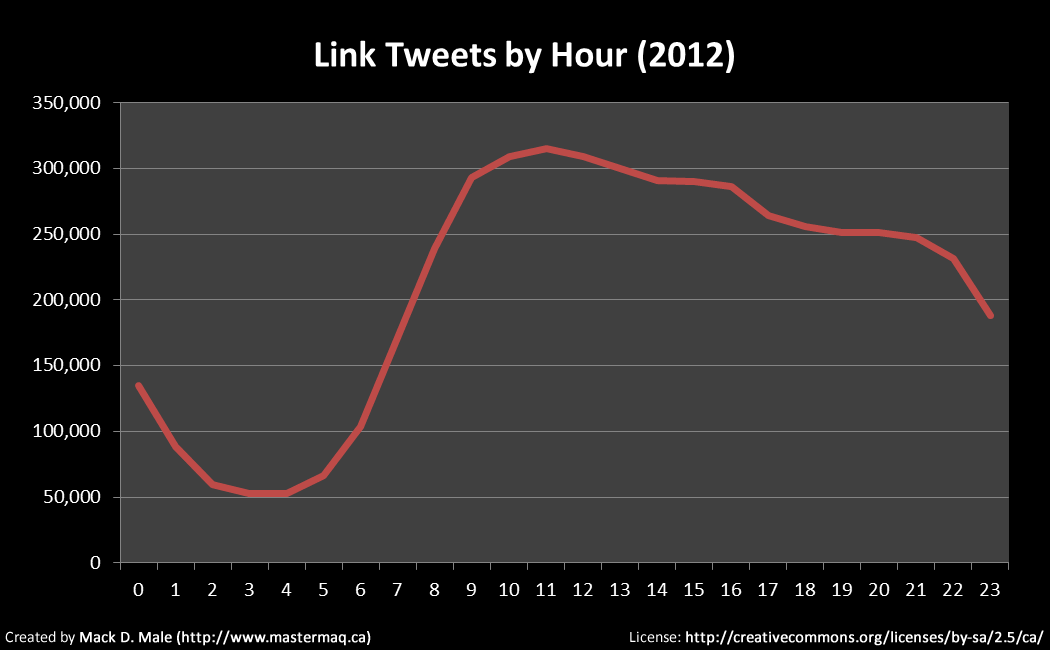
It’s difficult to extract a lot value out of links because everything is trapped behind the t.co wrapper, but I did want to highlight the time of day that links seem to be posted. Recall that the hourly peak for tweet volume in general comes at around 9 PM, whereas for tweets containing links the peak is 11 AM.

Local users used just over 1 million different hashtags in 2012, up from nearly 600,000 in 2011. Hashtags ranged in length from 1 character to 139, excluding the hash, and they were used for just about every purpose you can think of. The average hashtag length was 14 characters.

Here are the top 25 hashtags used by local users in 2012:

  1. #yeg
  2. #ableg
  3. #yegfood
  4. #oilers
  5. #abvote
  6. #edmonton
  7. #ff
  8. #cdnpoli
  9. #yyc
  10. #yegwx
  11. #jobs
  12. #wrp
  13. #nhl
  14. #yegarts
  15. #ualberta
  16. #shpk
  17. #yegtraffic
  18. #yegweather
  19. #yegcc
  20. #yegdt
  21. #yegmusic
  22. #cbc
  23. #stalbert
  24. #yegarena
  25. #fb

Here’s a visualization of the top 100 hashtags excluding #yeg:

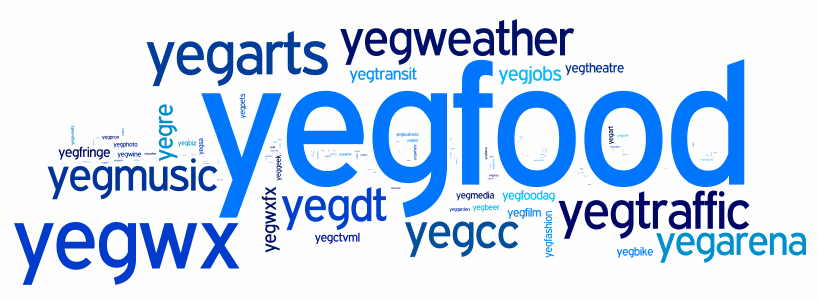
The most popular hashtag of all is still #yeg by a long shot. It was used about 660,000 times by local users which works out to 13.4% of all local tweets containing hashtags. The list above also illustrates the prevalence of #yeg-related hashtags. In 2012, local users used more than 4200 of them, up from 3600 last year. Though half of them were used just once, 44 #yeg-related hashtags were used more than 1000 times each.

Here are the top 25 #yeg-related hashtags:

  1. #yegfood
  2. #yegwx
  3. #yegarts
  4. #yegtraffic
  5. #yegweather
  6. #yegcc
  7. #yegdt
  8. #yegmusic
  9. #yegarena
  10. #yegre
  11. #yegjobs
  12. #yegwxfx
  13. #yegtransit
  14. #yegfringe
  15. #yegtheatre
  16. #yegfoodag
  17. #yegctvml
  18. #yegfilm
  19. #yegbike
  20. #yegfashion
  21. #yegmedia
  22. #yegbeer
  23. #yegpets
  24. #yeggeek
  25. #yegwine

Here’s a visualization of the top 100 #yeg-related hashtags:

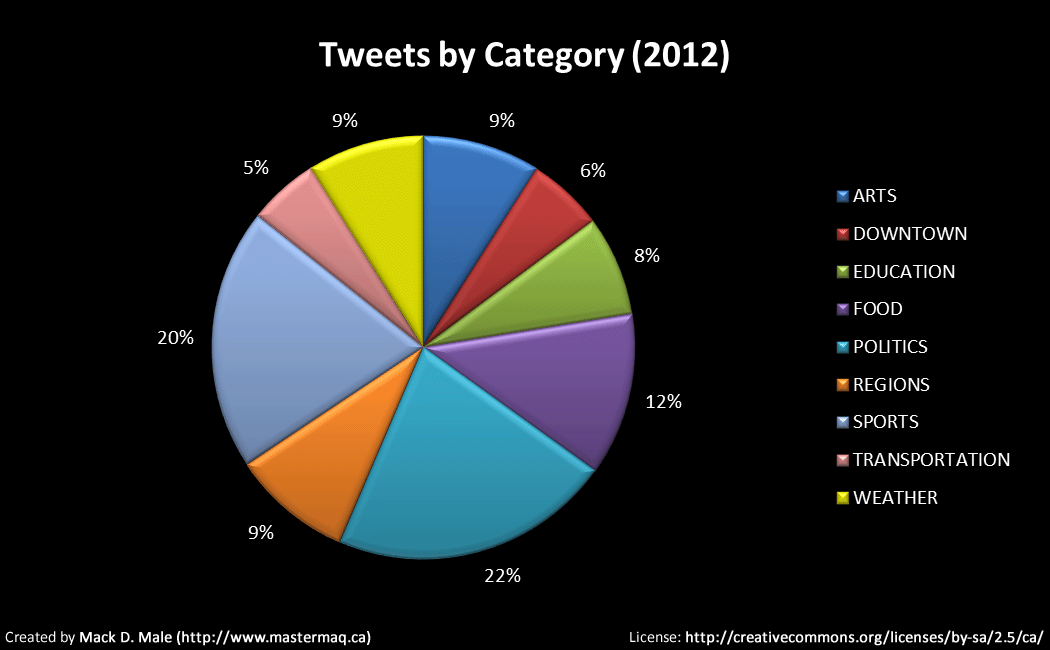
I noticed some trends looking at the top 100 hashtags, so I decided to group some tags into topics or categories. I came up with nine that stood out:

  • Arts – #yegarts, #yegfringe, #yegmusic, #yegtheatre, #yegfilm
  • Downtown – #yegdt, #yegarena
  • Education – #abed, #edtech, #ualberta, #epsb
  • Food – #yegfood, #yegfoodag
  • Politics – #yegcc, #ableg, #cdnpoli, #abpoli, #yegfed
  • Regions – #shpk, #sprucegrove, #stalbert, #fortsask, #strathco, #leduc
  • Sports –#oilers, #nhl, #esks, #cfl, #oilkings
  • Transportation – #yegtraffic, #yegtransit, #yegbike
  • Weather – #yegweather, #yegwx, #yegwxfx

Here’s a breakdown of how those categories relate to one another. You can see that we tweet more about politics and sports than arts and education:

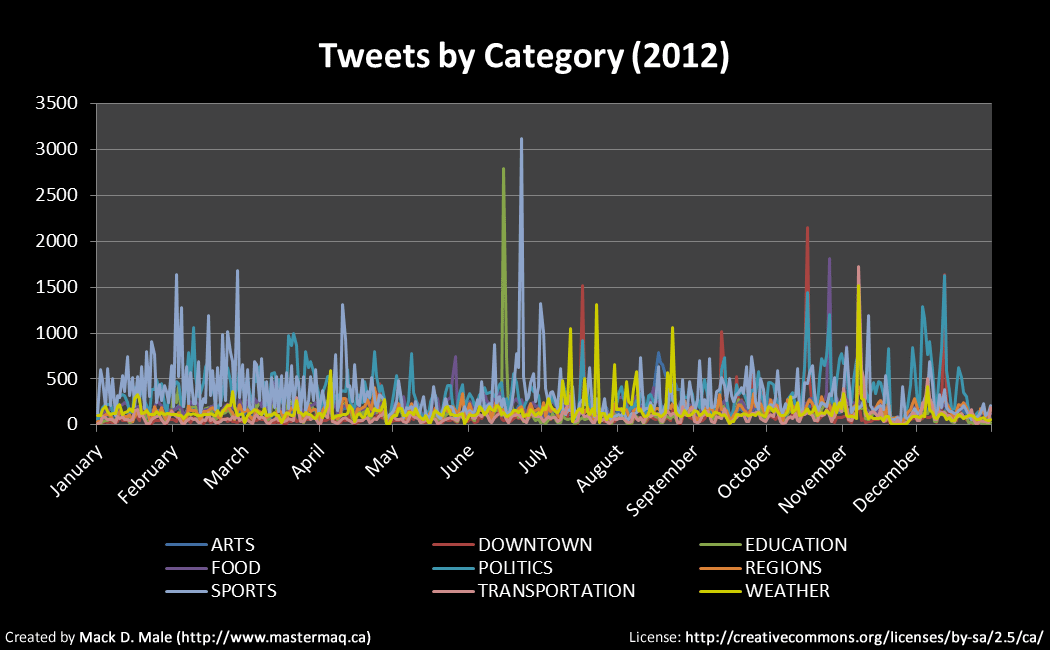
Here’s a look at the frequency of each category over the course of the year. This starts to show some interesting variations over the year, most notably in the summer when we experience our nicest weather and the Fringe Festival is taking place:

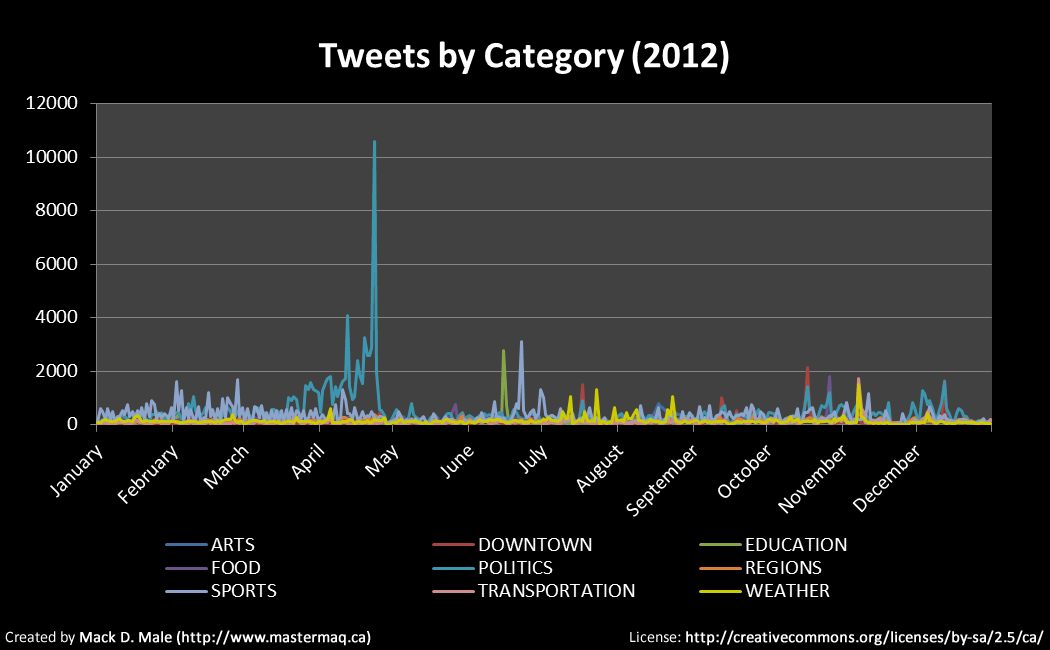
And here’s that same frequency but highlighting the spikes that took place throughout the year:

I’d love to hear your ideas for what those spikes represent, but here are my guesses for a few of them:

  • Sports – April 10, 2012 – This was the day the Oilers won the lottery for the first overall draft pick.
  • Education – June 15, 2012 – This was the day of the HUB Mall shooting.
  • Sports – June 22, 2012 – This was the day the Oilers selected Nail Yakupov first overall at the 2012 NHL Entry Draft.
  • Arts – August 17, 2012 – This was the day after the Fringe started and was the day of the Metallica concert.
  • Downtown – October 17, 2012 – This was the day of the Downtown Arena update (Mandel’s deadline for the Katz Group).
  • Food – October 26, 2012 – This was the day of the public hearing on the Food & Agriculture Strategy.
  • Transportation/Weather – November 7, 2012 – This was the day of our first major snowfall.
  • Politics – December 12, 2012 – This was the day Council voted to re-open negotiations with the Katz Group on the arena.

You might be wondering about the provincial election that took place in April. Well I originally included #abvote in the Politics category, but it skewed the results so dramatically I took it out. Here’s what it the year looks like if you include #abvote:

April 23 was election day, and local users posted more tweets on that day than any other until the snowstorm came along and on November 6 and 7. In addition to those two days, just one other day in 2012 had more tweets than election day and that was December 12 when Council last discussed the arena.

This entry brings my 2012 report to a close. I hope you found it useful – thanks for reading!

2012 in Review

  1. Overview
  2. Users & Clients
  3. Hashtags & Links

State of the Calgary Twittersphere – Hashtags & Links

This is the third part in my State of the Calgary Twittersphere for 2012 – you can read the overview post here. As we saw in that entry, local users posted more than 5 million tweets containing links. They also posted about 5 million tweets containing hashtags. Let’s take a closer look at what exactly they tweeted about in 2012.

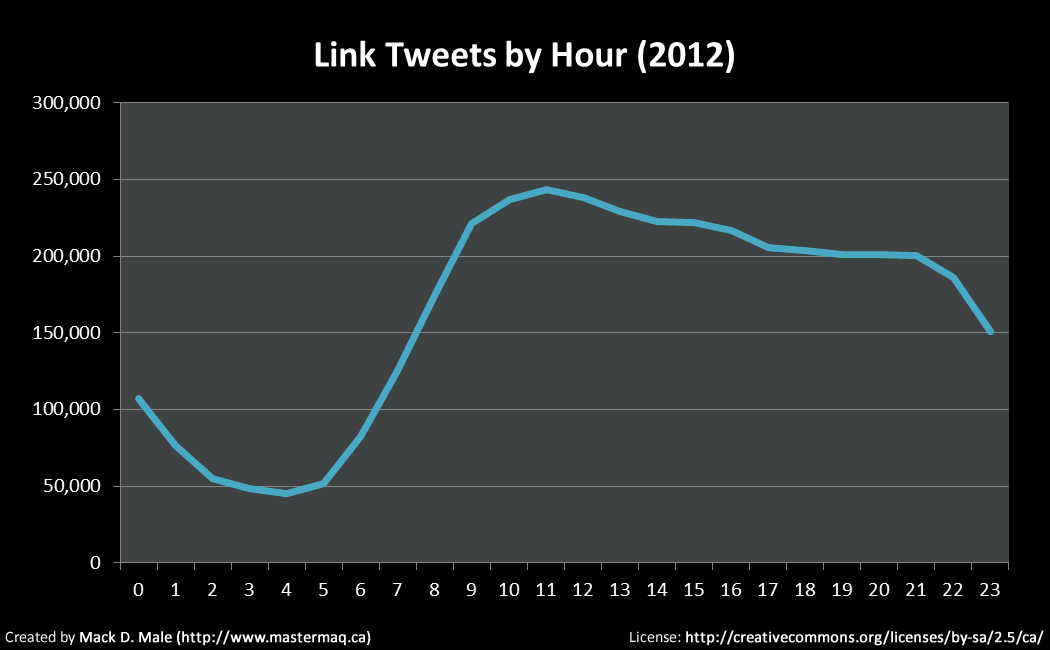
It’s difficult to extract a lot value out of links because everything is trapped behind the t.co wrapper, but I did want to highlight the time of day that links seem to be posted. Recall that the hourly peak for tweet volume in general comes at around 9 PM, whereas for tweets containing links the peak is 11 AM.

Local users used about 1.1 million different hashtags in 2012. Hashtags ranged in length from 1 character to 139, excluding the hash, and they were used for just about every purpose you can think of. The average hashtag length was 14 characters.

Here are the top 25 hashtags used by local users in 2012:

  1. #yyc
  2. #calgary
  3. #abvote
  4. #jobs
  5. #flames
  6. #ableg
  7. #ff
  8. #cdnpoli
  9. #porn
  10. #xxx
  11. #yeg
  12. #job
  13. #stampede100
  14. #wrp
  15. #rent
  16. #yyccc
  17. #win
  18. #oilrigjobs
  19. #nhl
  20. #love
  21. #yycre
  22. #cfl
  23. #canada
  24. #sceneyyc
  25. #giveaway

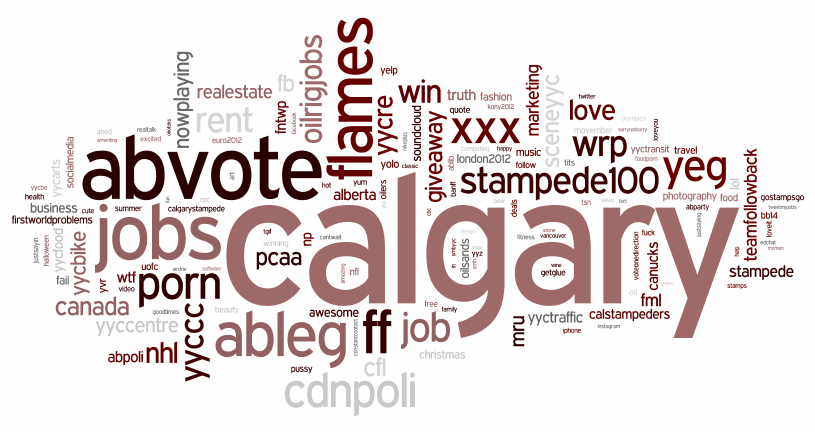
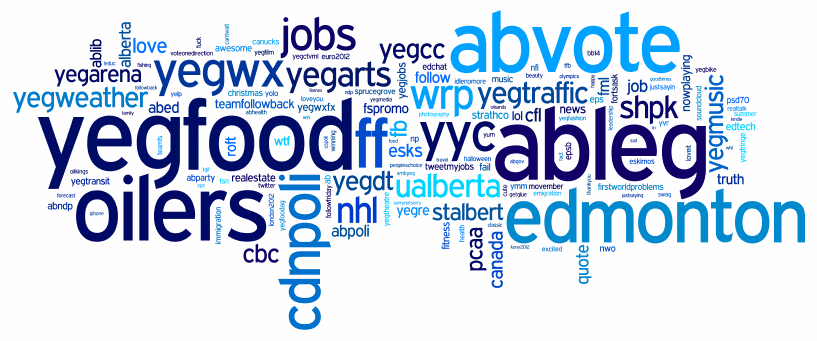
Here’s a visualization of the top 100 hashtags excluding #yyc:

The most popular hashtag of all is still #yyc, followed by #calgary (#yyc is about 6 times more popular than #calgary). In total, #yyc was used about 600,000 times by local users which works out to 11.9% of all local tweets containing hashtags.

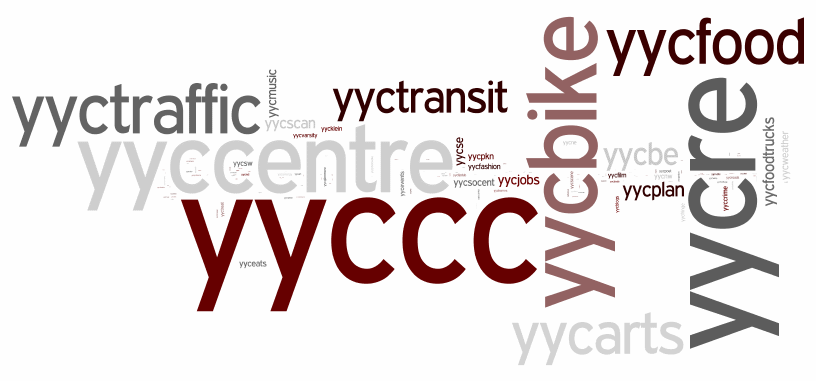
Though not as prevalent in the top 100, local users did use #yyc-related hashtags quite frequently. In total, about 2500 different hashtags were used that start with #yyc. A little more than half of those were used just once, and just 22 were used 1000 times or more.

Here are the top 25 #yyc-related hashtags:

  1. #yyccc
  2. #yycre
  3. #yycbike
  4. #yyccentre
  5. #yyctraffic
  6. #yycfood
  7. #yycarts
  8. #yyctransit
  9. #yycbe
  10. #yycplan
  11. #yycfoodtrucks
  12. #yycscan
  13. #yycjobs
  14. #yycmusic
  15. #yycse
  16. #yycweather
  17. #yycsocent
  18. #yycpkn
  19. #yyceats
  20. #yycfashion
  21. #yycsw
  22. #yycnw
  23. #yyccrime
  24. #yycfilm
  25. #yycklein

Here’s a visualization of the top 100 #yyc-related hashtags:

This entry brings my 2012 report to a close. I hope you found it useful – thanks for reading!

2012 in Review

  1. Overview
  2. Users & Clients
  3. Hashtags & Links

State of the Edmonton Twittersphere 2012 – Users & Clients

This is the second part in my State of the Edmonton Twittersphere for 2012 – you can read the overview post here (and here is the users & clients post for 2011). As we saw in that entry, more than 105,000 local users posted at least one tweet in 2012. Let’s take a closer look at users and the tools they used to post tweets.

While a large number of users posted at least one tweet throughout the year, there are fewer users who post something in any given month. Keeping in mind that November is underrepresented in this chart, we can see that October had the most active users at nearly 52,000, and the trend is very clearly going up.

Again I think it is really interesting to look at this data over the longer term. Here’s a look at the growth in monthly active users since I started tracking data in 2009:

There are a small number of really active users, and a much larger number of less active users. In 2012, the top 100 most active users accounted for about 1.5 million or 8.8% of all local tweets (that’s down from 16% in 2011).

Here are the 25 most active users:

  1. MadMissee
  2. KikkiPlanet
  3. theleanover
  4. rootnl2k
  5. JameyMPhoto
  6. JovanHeer
  7. markyeg
  8. TrevorBoller
  9. Klayoven
  10. CommonSenseSoc
  11. prabhjots5
  12. Leask
  13. canadianglen
  14. edmontonjournal
  15. Walleedj
  16. PetitMonstre77
  17. alannafletcher
  18. AskMartyMisner
  19. ZoomJer
  20. MandaTRT
  21. jmschow
  22. DerrickDodgeYeg
  23. Pokerclack
  24. YEGlifer
  25. scottyos

Here are the 5 most active bots or automated feeds:

  1. EdmontonBizcaf
  2. GCAccess
  3. yegtraffic
  4. EdmCa
  5. yegwx

Combined, the top 30 users accounted for about 4.6% of all local tweets (down from 8.3% last year).

Here are the 25 most active users using #yeg:

  1. ctvedmonton
  2. DerrickDodgeYeg
  3. CBCEdmonton
  4. iNews880
  5. metroedmonton
  6. Edmontonsun
  7. edmontonjournal
  8. JBH8
  9. 1049VirginYEG
  10. RobWilliamsCTV
  11. GlobalEdmonton
  12. JOEFM
  13. lindork
  14. MaddCashFS
  15. 1023nowradio
  16. BTEdmonton
  17. OFSS1969
  18. SpontainRichFS
  19. TrevorBoller
  20. oldstrathcona
  21. KikkiPlanet
  22. EJ_Arts
  23. DebraWard
  24. artrubicon
  25. CommonSenseSoc

Here are the 5 most active bots or automated feeds using #yeg:

  1. EdmCa
  2. yegwx
  3. yegsphere
  4. yegtraffic
  5. hiresuccessjobs

The top 100 most active users using #yeg and related tags accounted for 1.4% of all local tweets, and 25.8% of all #yeg-tagged tweets, down from 30.3% last year.

Here are the 25 most replied to users (by other local users):

  1. KikkiPlanet
  2. JenBanksYEG
  3. JasonGregor
  4. nielson1260
  5. JameyMPhoto
  6. ZoomJer
  7. TrevorBoller
  8. Leask
  9. CommonSenseSoc
  10. britl
  11. YEGlifer
  12. Pokerclack
  13. Wildsau
  14. EdmontonOilers
  15. baconhound
  16. Luzzara
  17. BigAddie
  18. theleanover
  19. dantencer
  20. CopperTopper_85
  21. dstaples
  22. bananaramafoFin
  23. lindork
  24. Kristinnuendo
  25. amvanimere

Those 25 users accounted for 8.3% of all local replies, down from 11.2% last year. The top 100 most replied to local users accounted for 2.7% of all local tweets and 18.7% of all local replies (compared to 24.5% last year).

I think the retweet is one of the most valuable metrics on Twitter. Anyone can post a lot, or gain a lot of followers, but to get retweeted by lots of other people you need to be useful/interesting/funny/inspiring/etc. In the past I have just produced one list of the most retweeted users, but this year I decided to separate individuals from organizations.

Here are the 25 most retweeted non-individual users:

  1. edmontonjournal
  2. ctvedmonton
  3. EdmontonOilers
  4. metroedmonton
  5. CBCEdmonton
  6. GlobalEdmonton
  7. yegtraffic
  8. CityofEdmonton
  9. EdmOilKings
  10. Edmontonsun
  11. edmontonpolice
  12. HopeMission
  13. UAlberta
  14. EdmontonHumane
  15. iNews880
  16. CISNCountry
  17. AvenueEdmonton
  18. cfl_esks
  19. EJ_Extra
  20. oldstrathcona
  21. BlitzEdmonton
  22. TBSonK97
  23. sonic1029
  24. DerrickDodgeYeg
  25. FlyEIA

Here are the 25 most retweeted individual users:

  1. KikkiPlanet
  2. Paulatics
  3. mastermaq
  4. dantencer
  5. JasonGregor
  6. hallsy04
  7. joshclassenCTV
  8. CstPower
  9. ryanjespersen
  10. dstaples
  11. britl
  12. davecournoyer
  13. TrevorBoller
  14. lindork
  15. VassyKapelos
  16. sunterryjones
  17. ebs_14
  18. SBarsbyweather
  19. ChrisTse_
  20. nielson1260
  21. Wildsau
  22. GenePrincipe
  23. JameyMPhoto
  24. etownmickey
  25. bingofuel

A total of 59 users were retweeted by other local users 1000 times or more. Just 7 users were retweeted more than 5000 times, and @KikkiPlanet was the only individual in that group. Just like last year, only @EdmontonJournal was retweeted more than 10,000 times.

I did not keep track of the most followed users this year, primarily because the information is readily available elsewhere. If you want to know who the most followed users in Edmonton are, check out Twopcharts.

Clients

More than 3800 different applications and services were used to post tweets in 2012, up slightly from more than 3100 last year. For the first time since I have been tracking stats, the web is no longer the top dog! Here are the top ten:

  1. Twitter for iPhone
  2. web
  3. Twitter for BlackBerry®
  4. Twitter for Android
  5. TweetDeck
  6. HootSuite
  7. Instagram
  8. Facebook
  9. Tweet Button
  10. Echofon

The top ten clients accounted for 82.9% of all local tweets posted in 2012 (compared to 76.8% last year).

Coming Up

  1. Overview
  2. Users & Clients
  3. Hashtags & Links

State of the Calgary Twittersphere 2012 – Users & Clients

This is the second part in my State of the Calgary Twittersphere for 2012 – you can read the overview post here. As we saw in that entry, more than 105,000 local users posted at least one tweet in 2012. Let’s take a closer look at users and the tools they used to post tweets.

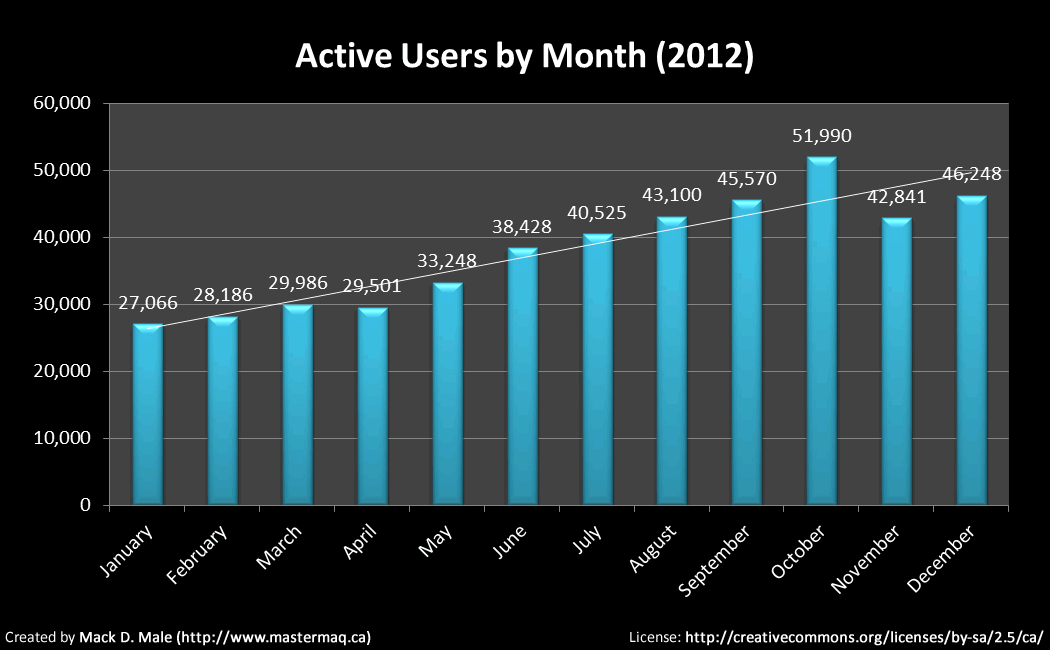
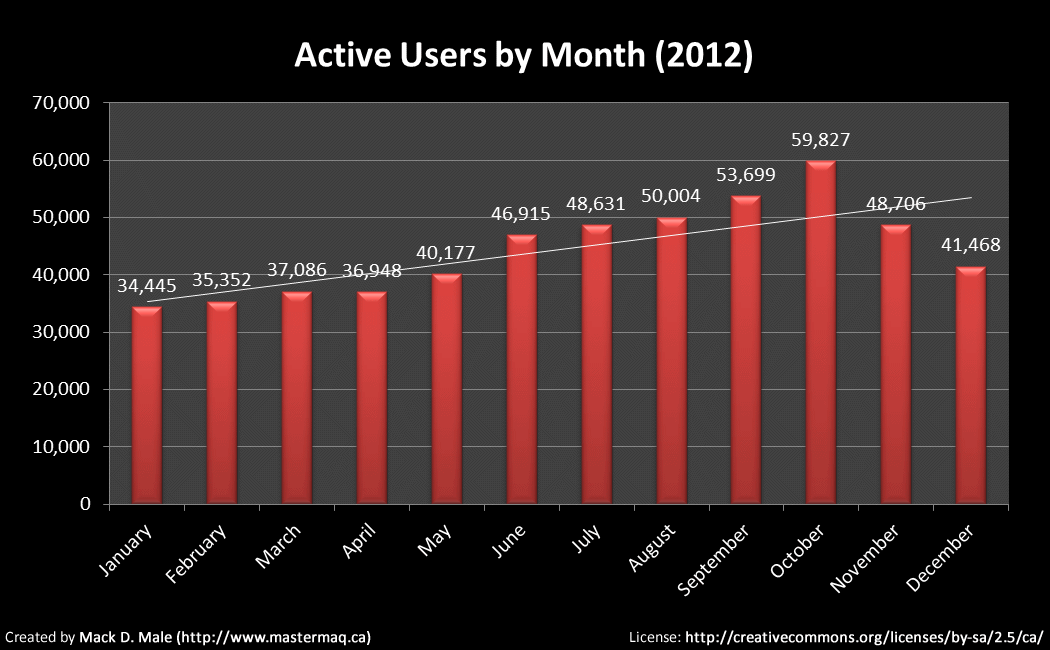
While a large number of users posted at least one tweet throughout the year, there are fewer users who post something in any given month. Keeping in mind that November is underrepresented in this chart, we can see that October had the most active users at nearly 60,000, and the trend is very clearly going up.

There are a small number of really active users, and a much larger number of less active users. In 2012, the top 100 most active users accounted for about 1.7 million or 9.0% of all local tweets.

Here are the 25 most active users:

  1. izzynobre
  2. GeekyLyndsay
  3. twiggy_hot
  4. xoTalim
  5. GeneralTekno
  6. BradWardLive
  7. SarahMcGuireJB
  8. WestJet
  9. TK0N
  10. dead__last
  11. CameraguyRob
  12. longdoglover
  13. RebTheCatSitter
  14. MusicMunchkin
  15. misskatsuragi
  16. a_picazo
  17. YorchCalgarian
  18. annemaccat
  19. TonyCosens
  20. lisawest99
  21. Paradise5551
  22. Wavefronttech
  23. candacemountain
  24. monaSinging
  25. PrimeBane

Here are the 5 most active bots or automated feeds:

  1. Remodelit_RADIO
  2. CalgaryBizcaf
  3. econewsbits
  4. HeraldHeadlines
  5. righelp

Combined, the top 30 users accounted for about 5.1% of all local tweets.

Here are the 25 most active users using #yyc:

  1. annemaccat
  2. ciawesome
  3. CTVCalgary
  4. CalgaryCommute
  5. metrocalgary
  6. calgaryherald
  7. BikeBikeYYC
  8. redgypsee
  9. OpenFileCGY
  10. 660NewsTraffic
  11. CTVMorningYYC
  12. ireneerutema
  13. markusoff
  14. LisaOstrikoff
  15. CalgaryREMAX
  16. 660News
  17. cityofcalgary
  18. knoppolis
  19. GlobalCalgary
  20. daxjustin
  21. collenbe
  22. LoGoDNB
  23. zoeywrites
  24. kahanelaw
  25. VogueCalgary

Here are the 5 most active bots or automated feeds using #yyc:

  1. CgyCa
  2. DailyDealsCGY
  3. mk_it_solutions
  4. Calgary_News
  5. BestDealCalgary

The top 100 most active users using #yyc and related tags accounted for less than 1.0% of all local tweets, and 24.8% of all #yyc-tagged tweets.

Here are the 25 most replied to users (by other local users):

  1. nenshi
  2. calgarytransit
  3. X929
  4. Fan960Steinberg
  5. antipretty_yyc
  6. lonnietaylor
  7. NHLFlames
  8. Eves1
  9. danellew
  10. Diegirl
  11. lubeyisms
  12. annemaccat
  13. maniacalmom
  14. CassieNeil
  15. DarciBrianne
  16. MisterYYC
  17. myownbiggestfan
  18. dinnerwithjulie
  19. buzzbishop
  20. WestJet
  21. WeebDaCat
  22. lisawest99
  23. doglover100
  24. redgypsee
  25. fan960walker

Those 25 users accounted for 7.2% of all local replies. The top 100 most replied to local users accounted for 1.5% of all local tweets and 15.2% of all local replies.

I think the retweet is one of the most valuable metrics on Twitter. Anyone can post a lot, or gain a lot of followers, but to get retweeted by lots of other people you need to be useful/interesting/funny/inspiring/etc.

Here are the 25 most retweeted non-individual users:

  1. calgaryherald
  2. CBCCalgary
  3. CTVCalgary
  4. metrocalgary
  5. cityofcalgary
  6. NHLFlames
  7. 660News
  8. GlobalCalgary
  9. AvenueMagazine
  10. ciawesome
  11. calgarysun
  12. calstampeders
  13. calgarytransit
  14. CalgaryPoker
  15. X929
  16. WestJet
  17. VolunteerCal
  18. calgarypolice
  19. calgarystampede
  20. downtowncalgary
  21. OpenFileCGY
  22. CTVMorningYYC
  23. calgary
  24. Calgary_News
  25. BikeBikeYYC

Here are the 25 most retweeted individual users:

  1. nenshi
  2. markusoff
  3. buzzbishop
  4. mikesbloggity
  5. ericfrancis
  6. DonBraid
  7. MisterYYC
  8. lonnietaylor
  9. Crackmacs
  10. dansgoodside
  11. LisaOstrikoff
  12. dinnerwithjulie
  13. TheoFleury14
  14. codyincalgary
  15. espyexperience
  16. ctvtoddgallant
  17. Fan960Steinberg
  18. sunrickbell
  19. CoryBMorgan
  20. paul_dunphy
  21. daxjustin
  22. socialgrrrl
  23. jayemkayem
  24. theturner
  25. a_picazo

A total of 44 users were retweeted by other local users 1000 times or more. Just 5 users were retweeted more than 5000 times, and @nenshi was the only individual in that group. Just @calgaryherald was retweeted more than 10,000 times.

I did not keep track of the most followed users this year, primarily because the information is readily available elsewhere. If you want to know who the most followed users in Calgary are, check out Twopcharts.

Clients

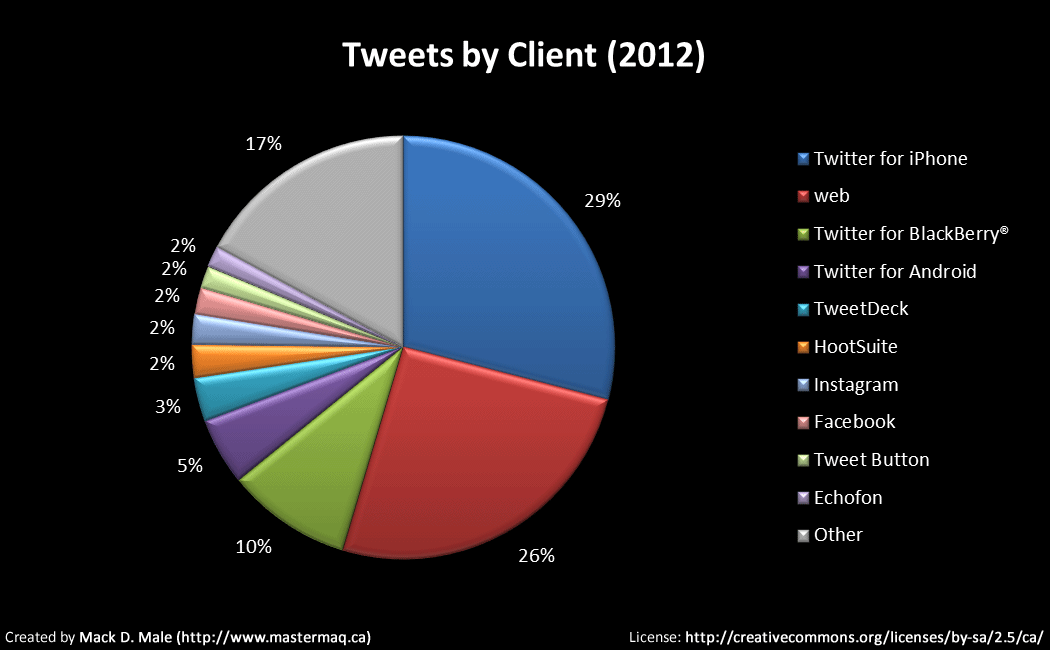
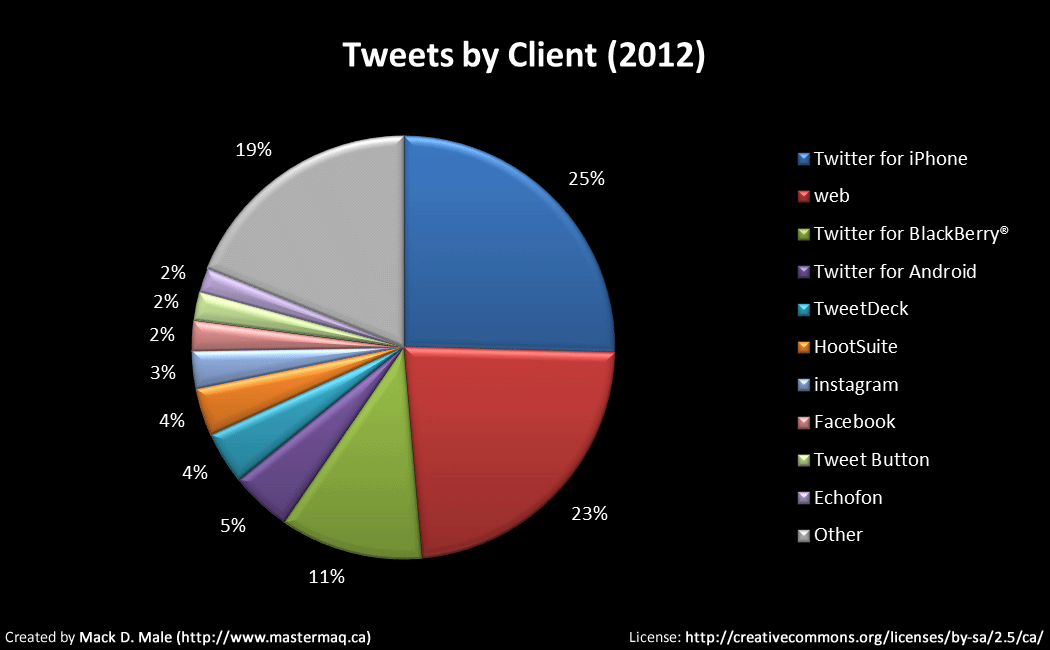
More than 4200 different applications and services were used to post tweets in 2012. For the first time since I have been tracking stats, the web is no longer the top dog! Here are the top ten:

  1. Twitter for iPhone
  2. web
  3. Twitter for BlackBerry®
  4. Twitter for Android
  5. TweetDeck
  6. HootSuite
  7. Instagram
  8. Facebook
  9. Tweet Button
  10. Echofon

The top ten clients accounted for 81.1% of all local tweets posted in 2012.

Coming Up

  1. Overview
  2. Users & Clients
  3. Hashtags & Links