Pecha Kucha Night: Edmonton #11

pkn11Edmonton’s eleventh Pecha Kucha Night was held last night at the Myer Horowitz Theatre on the University of Alberta campus (if you’re new to Pecha Kucha, read this). More than 600 people attended the event which featured ten presentations on a variety of topics. As usual, attendees were asked if this was their first ever Pecha Kucha Night and most of the hands in the audience shot up. It’s great that Edmonton NextGen continues to reach new people, but I do wonder where everyone else has gone and if they ever come back!

In order of appearance, these were the presenters at PKN11:

  1. Jeremy Derksen, Adventure Writer
  2. Chris Samuel, Lawyer/ Starcraft Enthusiast
  3. Ryan Saunders, PhD Candidate in Mechanical Engineering and Co-Founder of ABCampusTec
  4. David Papp, Technology Advisor
  5. Darren Wagner, PhD Student, University of York
  6. Wendy Caplan & Wade Kelly, Educators
  7. Larry Retzlaff, Senior Planner, City of Edmonton
  8. Joshua Le, Business Student, University of Alberta
  9. Jeff Senger & Paul Cabaj, Co-Founders of SPARK
  10. Karen Unland, Journalism Educator and Consultant

The range of topics certainly seemed a lot broader than at PKNs past, with everything from Starcraft to Raw Denim. Generally I think the themed evenings work better, though I suppose there are hits and misses with both approaches. Last night had its share of both.

Pecha Kucha 11 - 27-Edit

Jeremy Derksen kicked things off with a bold statement, saying “Edmonton is a great place to have an adventure.” He argued for the consideration of urban adventure as we build the Edmonton of the future, and pointed out that risk can be healthy. I loved that he touched on graffiti – provide a legitimate space for it, and I think you get rewarded. Chris Samuel was up next with his introduction to Starcraft and the world of competitive gameplay as a sport. He taught us that there are official leagues, commentators, heroes, and everything else that you might expect with other professional sports. His highly entertaining presentation probably had the most tweeted phrase of the evening, apparently adlibbed on the fly: “Nerds come in all shapes and sizes.” Ryan Saunders gave a nice introduction to ABCampusTec, though the presentation was basically just a commercial for the organization. I really wanted to like David Papp’s presentation – he did a phenomenal job of bringing energy and passion to the stage – but I personally found it difficult to get past the fact that he was basically saying “look at how much traffic my site got” for 20 slides. I was also looking for the social media experiment, but it never came. Darren Wagner closed out the first half of the show with perhaps the most controversial presentation of the evening, a look at “nature’s naughty bits” though it was more of a historical look at how human societies have displayed genitalia.

Pecha Kucha 11 - 137 Pecha Kucha 11 - 172 Pecha Kucha 11 - 218 Pecha Kucha 11 - 275 Pecha Kucha 11 - 296

In a change from past events, door prizes were given out right before the break (Sharon suggested it may have been so that the winners were more likely to still be in attendance). If the opening presentations didn’t entertain you, Ryan Jespersen most certainly did. He was responsible for handing out the prizes, but of course, he had fun with it. He’s totally at home with a microphone in his hand – there’s a reason this has become his segment at PKN. I think @squiish said it best: “Ryan, you made door prizes pleasurable for the losers too.”

Pecha Kucha 11 - 360

While the Myer Horowitz is a great venue, it doesn’t work so well for drinks. That’s a picture of the one and only one bar at the break. If you were patient enough to get a drink, my guess is that you didn’t have time to drink it before the second half started up again! It was great to see two local beers on offer though, Alley Kat and Wild Rose.

Pecha Kucha Night 11

First up after the break was the duo of Wendy Caplan and Wade Kelly. As soon as they started their presentation – “4000 friends and 140 characters: Redefining our Social Lexicon” – I tweeted that I didn’t want to be preached at about Twitter and how it doesn’t bring people together. While their presentation was an interesting recap of long-forgotten behaviors (like taking film to the store and waiting weeks for it to be developed) I thought it was probably delivered at the wrong event. A large number of people in the audience met and became friends precisely thanks to the new tools and technologies Wendy and Wade were questioning. Larry Retzlaff was up next, to talk about Transit Oriented Development and the guidelines the City is currently developing. Important topic that I hope more Edmontonians get engaged with, and as far as awareness goes I suppose the presentation was a success, but when we’ve had outstanding TOD-as-LEGO presentations in the past, it sort of missed the mark. Joshua Le’s presentation on raw denim was interesting and educational, though it was somewhat similar to David’s – a recap of how far and wide word of his project spread. Jeff Senger and Paul Cabaj were up next, to talk about cooperatives. I learned that 2012 is the International Year of Cooperatives, but unfortunately I didn’t take much else away from the presentation. Karen Unland had the final presentation of the evening, a passionate discussion of what journalism needs now. I thought she did a great job of balancing humor and seriousness to get her message across.

Pecha Kucha 11 - 408 Pecha Kucha 11 - 449 Pecha Kucha 11 - 481 Pecha Kucha 11 - 522 Pecha Kucha 11 - 565

The crowd favorite of the evening was probably Chris Samuel’s really unique presentation on Starcraft. I know I’m curious about the viewing parties that are held at local bars! It seems as though each PKN usually has a particularly memorable quote or phrase. With PKNX, it was “magpie town”. I think Karen’s quote (she had lots of great ones) was probably the winner last night: “French kiss change. Hump change’s leg!” Those were probably my two favorite presentations, though I quite enjoyed Jeremy Derksen’s as well.

Other thoughts: I think NextGen might have set a record last night for starting so close to the advertised time! The Edmonton Journal once again livestreamed the event, but a number of technical issues made it a less than smooth experience for viewers. This PKN was the first in Edmonton to be held at a venue that has already been used – PKN5 was at the Myer Horowitz back in October 2009. The event featured music by DJ Blue Jay and a visual art showcase presented by Timeraiser, coming up on October 15. There’s a great collection of photos by Dave DeGagné, the event’s official photographer, here. You can see my much crappier ones here.

Pecha Kucha 11 - 606

NextGen is currently planning Pecha Kucha Night 12 for February. Keep an eye on @EdmNextGen for updates!

Recap: YEGDT Patio Flash Mob

Yesterday the Downtown Vibrancy Task Force held an event at 105 Street and Jasper Avenue called the Patio Flash Mob. Our “awareness” subcommittee came up with the idea a few weeks ago. What we wanted to do was encourage people to think about downtown a little differently:

Falling leaves. Crisp mornings. But that doesn’t mean the fun stops outdoors as the summer winds down. Stretch that patio season a little longer. Celebrate the vibrancy of downtown Edmonton. A vibrant downtown brings more people, who bring yet more people and more business to the urban core.

The idea was to create a little bit of a spectacle, so we positioned tables and chairs on all four corners of the intersection. It’s a busy intersection, so we knew a lot of folks stuck in cars would see us. Anyone could stop by and have a seat on our “patio” and many did!

Patio Flash Mob

Our thanks to Martin Kerr (in the background there) who provided some excellent music for the patio party. We had some playing cards and sidewalk chalk available for people to play with, but it was great to see what people brought with them!

Patio Flash Mob

We did want it to really feel like a patio, so we engaged some local businesses to help us out. Flirt Cupcakes made some delicious free I LOVE YEGDT-branded cupcakes, and they even offered table service! Transcend Coffee also came down to offer free coffee – given the cooler temperature yesterday, I think everyone really enjoyed that!

Patio Flash Mob

To help build a little buzz, we also created some stencils and used temporary marking paint to put the I LOVE YEGDT logo all over the area. Simple but effective. We also gave out dozens of t-shirts with the logo on the front.

I <3 YEGDT

We didn’t get the turnout we were hoping for, perhaps due to the weather (we need to change this!) or the fact that it was Tuesday evening, but it was still great to see a bunch of people taking advantage of downtown streets and sidewalks.

Stay tuned for more cool stuff from the Downtown Vibrancy Task Force, or if you’re feeling inspired, go and create something awesome for downtown yourself!

See you at What the Truck?! 2 on Friday!

What I remember about 9/11

Leading up to the tenth anniversary of the September 11 attacks I have been thinking about what I remember about that day. It has often been said that 9/11 is among a handful of major events that divide time into “before” and “after”, an event for which everyone remembers where they were and what they were doing when it happened. But already the details are becoming fuzzy for me.

September 2001 was the start of my first year at the University of Alberta. I’m not sure why I thought it was a good idea, but I had a lot of early classes that year. On that particular Tuesday, I had a computer lab at 8am. I had arranged to get a ride to campus with my girlfriend at the time. My Grandma, who I lived with, would drop me off at my girlfriend’s house and her mom would drop us off at the university on her way to work. I remember we were heading north on 50th street just past Whitemud Drive when we first heard on the radio about the two planes crashing into the World Trade Center. I don’t remember the exact time, but it couldn’t have been long after the second plane crashed into the south tower. For some reason, I seem to recall the person on the radio talking about “two small planes”.

By the time I got to my computer lab, it was obvious that they were not small planes and that something big was happening. I don’t remember doing any work in that particular lab, but I do remember sitting toward the back of the room, trying to find out more online. I distinctly remember thinking that the Internet seemed unusually slow that morning. I was probably trying to load CNN or the New York Times – it’s funny to think about it now and realize that Google News didn’t yet exist, not to mention Twitter, Facebook, or any of the other places I frequent for news today.

Not long after that lab, I met up with my girlfriend and we went back to her house. We pretty much sat in front of the TV for the rest of the day, like most people I suspect. I went back to my Grandma’s house around dinner time, and I remember she was doing some painting. I remember thinking it was odd that she wasn’t watching TV, but I suppose by that time the news was starting to get repetitive. It would take days, weeks, and months before we learned more about what happened.

And that’s about all I remember. It’s more than I remember about most other days ten years ago, but somehow less than I think I should remember, if that makes sense. I often wonder if I’d remember more or less if I had tweeted and blogged about it like I would today (passive vs. active media use).

9/11 Exhibit at Newseum

Two years ago, Sharon and I went to Washington, DC on vacation. One of our stops was Newseum. They had a 9/11 exhibit featuring the September 12, 2001 front pages of newspapers from all around the world. They have a similar collection from today.

the edmontonian: statistics

When I received the email from Jeff & Sally informing me that the edmontonian would soon be ending, I was shocked. I didn’t see it coming. Yesterday was the final day, and I’m still sad about it! I know they’ll be back at some point, but the edmontonian itself is no more. I’m glad I got to interview the duo about the decision, but I also wanted to do a tribute post of sorts. Fortunately, I knew right away what it should be – statistics!

The following statistics cover the edmontonian from the very first post on June 15, 2009 up to but not including the announcement on August 29, 2011.

  • Number of posts: 1572
  • Number of words written: 532,595
  • Number of comments: 3865

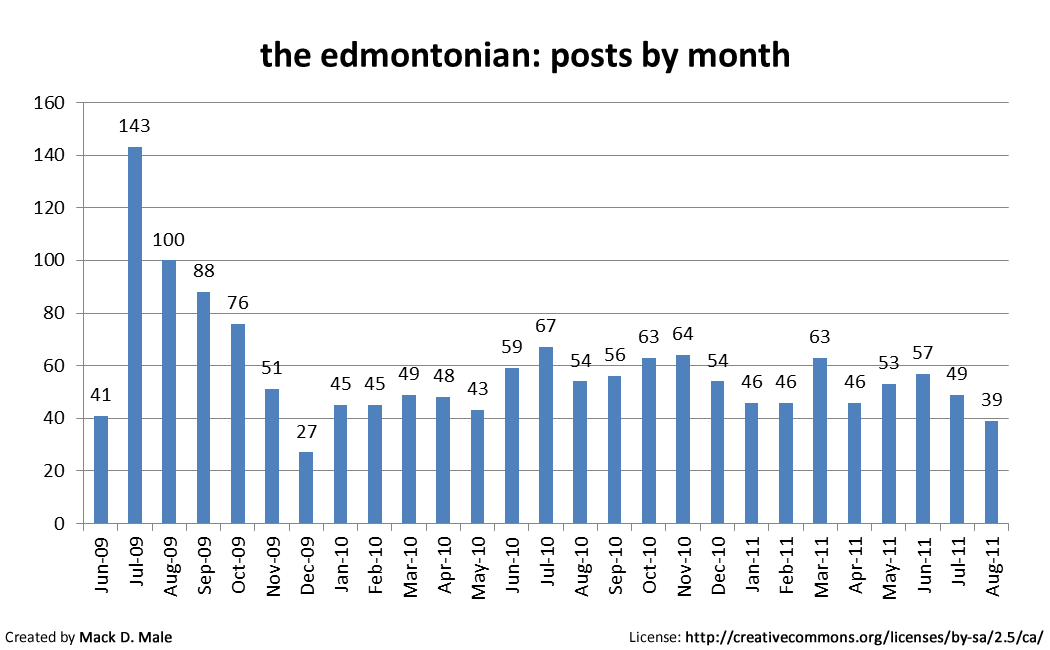
That works out to an average of 2.8 posts per day. Here’s what the breakdown looks like per month:

As you can see they posted slightly more at the beginning and then settled into a steady rhythm. The most posts came in July 2009 (perhaps due to the airport debate) while the fewest came in December 2009. The monthly average was 58.2 posts.

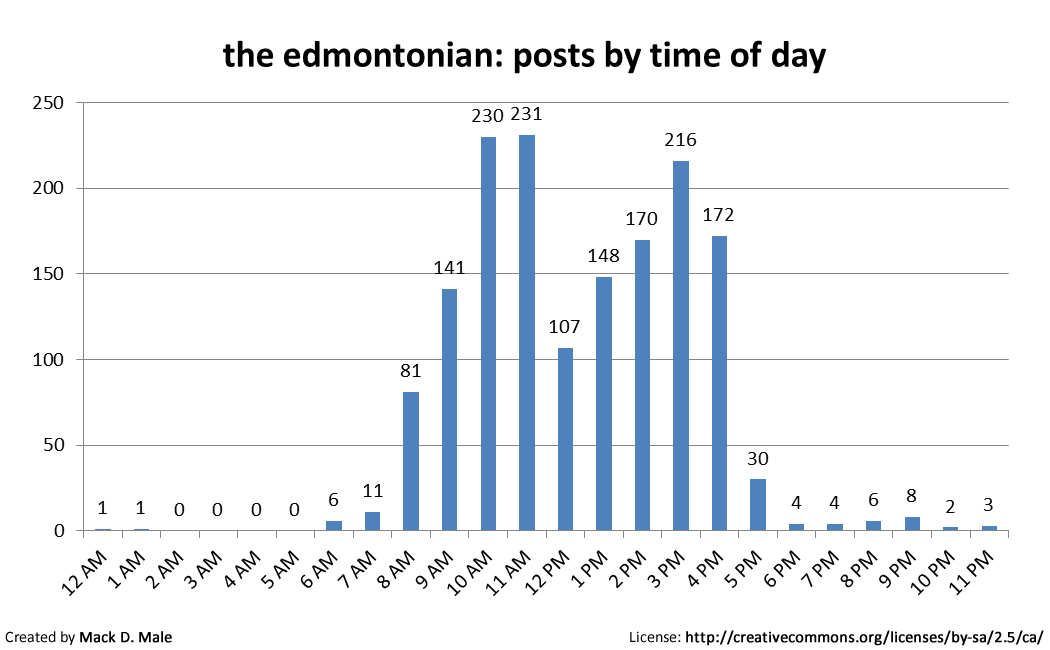
Here’s the breakdown by time of day:

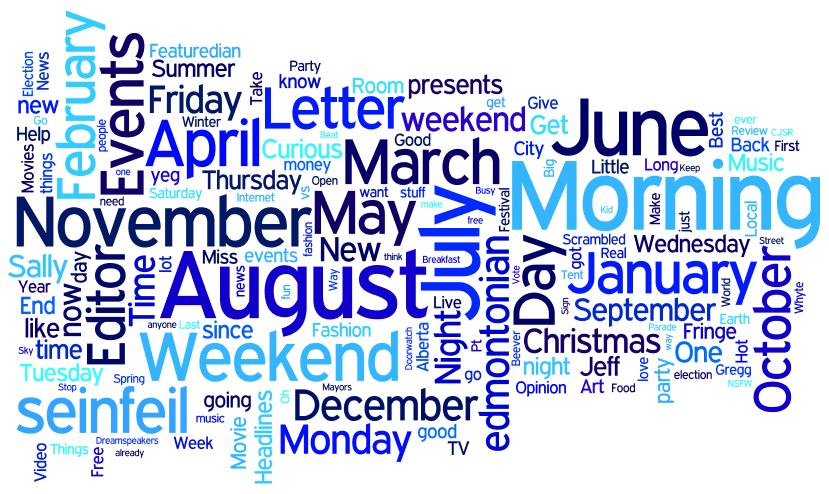
Most entries were posted between 10am and 12pm, with another spike between 3pm and 4pm. A significant number of the edmontonian’s posts were headlines, which Jeff often posted mid-morning, so the graph doesn’t really surprise me. This word cloud shows you just how much of a fixture the headlines were at the edmontonian:

That was generated by including all 1572 post titles. If you remove those two words, you get this word cloud:

I didn’t realize how prominently the time of year was featured until I went through this exercise. It shows up in the tags as well. Very interesting! The average length of a post title was 29 characters or 5 words, with the longest being 30 words (fittingly that post was among the shortest for content, containing only images). This one was also quite long at 28 words.

One of my favorite things about the edmontonian was their willingness to link to other stuff. They linked a lot. In total, they posted 17,416 unique links! Of those, 2217 were links to their own stuff. A significant chunk of the rest went to local media. Here are the domains they linked to more than 100 times:

  • edmontonjournal.com (3170)
  • theedmontonian.com (2217)
  • edmontonsun.com (1551)
  • cbc.ca (983)
  • edmonton.ctv.ca (768)
  • 630ched.com (587)
  • metronews.ca (457)
  • globaltvedmonton.com (349)
  • youtube.com (345)
  • shareedmonton.ca (342)
  • imdb.com (297)
  • yeglive.ca (272)
  • inews880.com (266)
  • seemagazine.com (241)
  • twitter.com (238)
  • vueweekly.com (224)
  • edmonton.ca (204)
  • calgaryherald.com (196)
  • edmontonexaminer.com (191)
  • facebook.com (181)
  • thegatewayonline.ca (168)
  • vancouversun.com (121)
  • en.wikipedia.org (110)

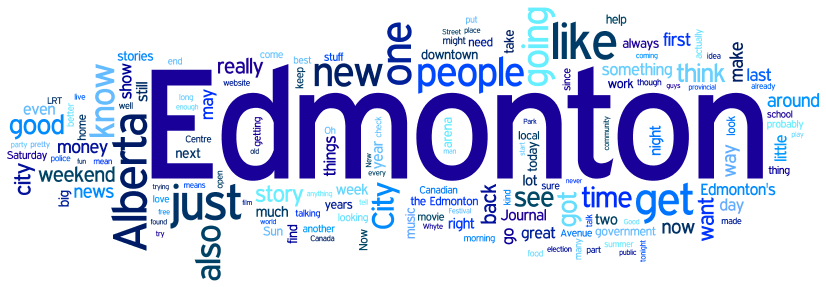
The average length of a post at the edmontonian was 2109 characters or 399 words. The longest was 2135 words. Here’s what a word cloud of all the post content looks like:

All Edmonton, all the time.

Without a doubt, the edmontonian was good at generating a discussion about the things happening in our city. I think it’s safe to say that a lot of that discussion probably took place off the blog (they’ve posted more than 8500 tweets) but I’m still impressed by the number of comments they amassed (an average of 2.5 per post). I would have loved their numbers during my first three years of blogging! This post had the most comments at 96.

These statistics are interesting, but of course they don’t reflect all the passion and hard work that Jeff & Sally have put into the edmontonian over the past three years. They’ve set the bar high for local blogs!

What the Truck?! returns on September 16

After the success of our first event back in June, I don’t think there was any question that we’d do another edition of What the Truck?! at some point in the future. Food trucks have started to gather steam here in Edmonton, and we’d like to see that momentum continue to grow! It was important to us that What the Truck?! not be simply an annual event – we’d like to see food trucks getting together all the time. That’s why we’ve organized our second event for September!

What the Truck?! 2 
Friday, September 16, 2011 from 4pm to 8pm
Abbey Lane Park, 102 Street & Jasper Avenue
RSVP on Facebook

What the Truck?! is a celebration of Edmonton’s food trucks, combining street food with pedestrianism and downtown vibrancy. Join us again for eats and beats in the heart of the city.

We hope What the Truck?! 2 will be bigger and better. We’ve got ten food trucks lined up this time – Drift, Nomad, and Molly’s Eats will be joining the original seven. That means we needed more space, so we’ve moved a few blocks down Jasper Avenue to 102 Street (with help from Responsible Hospitality Edmonton). We’ve arranged to close the street for the event, and we’ll also be filling Abbey Lane Park with picnic tables (with help from Melcor). We’re looking forward to utilizing a space that is pretty empty most of the time!

Abbey Lane Park & 102 Street

Once again there is no admission fee for this event – just bring cash to buy whatever you’d like to eat directly from the trucks! Urban Monks DJ’s Marc and Thomas have agreed to once again share their musical stylings with us. If the first event was any indication, it’ll be a fun time!

We’ll have more details to share over the next few weeks, so stay tuned. In the meantime, please RSVP on Facebook if you can join us, and tell your family, friends, and colleagues! We’re also looking for sponsors, so if you’re interested please let me know. You can see the event on ShareEdmonton here.

Edmonton’s downtown revitalization: now linked to the arena more than ever?

Back in May, the City of Edmonton and the Katz Group agreed on an agreement framework. A month later, City Council asked a number of questions about that agreement, which Administration answered in a report (PDF) that went back to Council on July 20, just before the summer break. Unsurprisingly, a few of those questions were related to the Community Revitalization Levy (CRL). The answer was that Administration would return to Council with more information, including the new CRL boundary, with a target date of August 31.

Today, that date became official, not to mention a whole lot more complicated. Here’s what a media advisory titled “Proposed Downtown CRL could fund revitalization” said:

A vibrant downtown is a key ingredient of a great city. Gary Klassen, General Manager for Sustainable Development, will be available to speak about a report on an option for a boundary for a downtown Community Revitalization Levy which could fund revitalization.

That media conference will take place tomorrow at noon (right in the middle of the I (heart) yegdt BBQ taking place right outside City Hall in Churchill Square). The report itself will be made available at 11am.

The gist of it is this: the City is proposing a larger, downtown-wide CRL to fund not only the arena but also a number of other “catalyst” projects in the downtown (as outlined in the Capital City Downtown Plan). I can’t confirm this just yet, but my understanding is that the proposed CRL is big – as in $320 million big. It’s a smart piece of political maneuvering, when you think about it. How do you get councillors who are opposed to or on the fence about a CRL for the arena to support one? Add in a whole bunch of other stuff they would likely support. It’ll be especially interesting because with the summer break a number of the councillors have no idea this is coming.

I think there are two ways to look at this proposal.

One perspective is that the proposed CRL is a good thing because the catalyst projects will finally receive funding. Projects like the Jasper Avenue New Vision, At-Grade LRT, the High Profile Bikeway System, and the Warehouse Campus Central Park all sound great, but don’t have any funding attached to them. The proposed CRL could be used to fund all of these in addition to the arena. Some projects would certainly benefit as they’d sort of “catch a ride with the arena” and would get their funding without too much added trouble. And since they are all part of the plan to revitalize downtown, the CRL is a good fit. That’s what it was intended for, after all.

The other perspective is that the proposed CRL is a bad thing because it basically holds downtown revitalization hostage. You could see the proposed CRL as a message that either Council agrees to fund the arena, or the other projects don’t receive funding. The 2012-2014 Capital Budget is coming up for discussion later this year, and some of these projects (or elements of them) would have been part of the budget discussions. Now it seems they would just come along with the arena, or….what? It’s not clear what the alternative might be. Additionally, projects funded through the CRL might not actually receive any money for years (a CRL takes time to approve), whereas if they were funded through the budget process they could receive funding as early as January.

Take the Alley of Light project, for instance. It was slated to be up for discussion as part of the Capital Budget, with a line item of $500,000. Now it would fall under the Green & Walkable Downtown catalyst project. In a way this is a good thing – the Alley of Light might receive the funding under the CRL without too much debate. On the other hand, don’t we want Council to be clear about what they’re funding? I want Council to stand up for the Alley of Light, to say that it is absolutely worth the $500,000, and that it will have a positive impact on our downtown. I don’t want it to get funded “under the radar” just because the arena did. Likewise I don’t want the arena to get funded just because we want the other projects.

Not to mention that the proposed CRL is especially risky given that The Quarters CRL is immediately to the east. How likely is it that the required development will take place in both areas to generate enough tax “lift” for the CRL to work?

Ever since the beginning, the Katz Group has made it clear that this project is about downtown revitalization. To them, downtown revitalization doesn’t really happen unless the arena happens. Now with the proposal of a downtown-wide CRL, it seems that the City has bought into that idea wholeheartedly. Next Wednesday, we’ll find out if City Council has as well.

UPDATE: The report is now available. Details: “over the 20 year term of the levy is expected to generate an additional $1.18 billion in new tax dollars (net present value of $600 million) of which $788 million is based on appreciation of the existing assessment base (net present value of $385 million).”

Tracking my activity & sleep with the Fitbit

From the first moment I came across the Fitbit, I wanted one. A gadget to track how active I am and how much I sleep? Sign me up! The FAQ does a good job of describing what the Fitbit Tracker is:

The Fitbit Tracker contains a motion sensor like the ones found in the Nintendo Wii. The Tracker senses your motion in three dimensions and converts this into useful information about your daily activities. The Tracker measures the intensity and duration of your physical activities, calories burned, steps taken, distance traveled, how long it took you to fall asleep, the number of times you woke up throughout the night and how long you were actually asleep vs just lying in bed. You can wear the Tracker loosely in your pocket or clipped to your clothing, even bras.

Sounds great, right? Unfortunately, Fitbit doesn’t allow orders if you live in Canada, so that’s why I had never purchased one. But recently I came across a tweet from a fellow Canadian who said that he had successfully ordered a Fitbit by emailing the company. I gave it a shot, and was very pleased with the service! They took my credit card information over the phone, and a week or so later, my Fitbit arrived.

Fitbit

The Fitbit tracker is pretty small. If I’m wearing shorts or sweat pants around the house, I wear it on the waistband. When I’m wearing jeans, I attach the Fitbit to the small coin pocket. It’s very much a clip-it-and-forget-it kind of gadget. At night I use the provided wristband (which feels like it is really cheaply made but it gets the job done).

By default the Fitbit tracks the number of steps you take, the distance travelled, your “activity score”, and the number of calories you burn. At night you put it into activity mode before you go to sleep (by holding down the one button until the device says “Start”) and then it tracks the amount of time you’re asleep and the number of times you wake up. You can also use the website to track the number of calories you consume, your weight, heart rate, blood pressure, glucose levels, and more. The Fitbit comes with a small USB base station that I leave plugged into my computer. Anytime I come within a few feet of the base station, the Fitbit wirelessly syncs the data up to the website. My only nitpick here is that you need to check the website to see the battery level of the device – it would be better if it could appear on the device itself. On the plus side, it easily lasts over a week without charging.

One of the first things I did was check the number of steps it was recording. I’d count 100 steps and check to see if the Fitbit got it right. The most it was ever off on these tests was two or three steps, so it’s pretty accurate. You can enter stride length and other settings in your profile, but I haven’t bothered.

I started out tracking my food on the website too, but that didn’t last long. I found it too cumbersome to find foods or create new ones to match what I’m eating. I don’t feel any need or desire to count calories, so I guess it’s one area where you get out what you put in! I am tracking weight, body fat %, and body water %, however. I picked up a scale that calculates all of those things for $30, so it’s trivial to step on it in the morning and record the results.

The website is pretty great at visualizing the data it records, and it even lets you compare with other Fitbit users. But they also offer an API. I used the awesome script from here to get all the data via the API into a spreadsheet to create the charts below.

Here are the number of steps recorded for each day since I got the Fitbit:

On average I have been doing 9359 steps per day, just under my goal of 10,000 per day. Of course there are good days and bad days, as you can see!

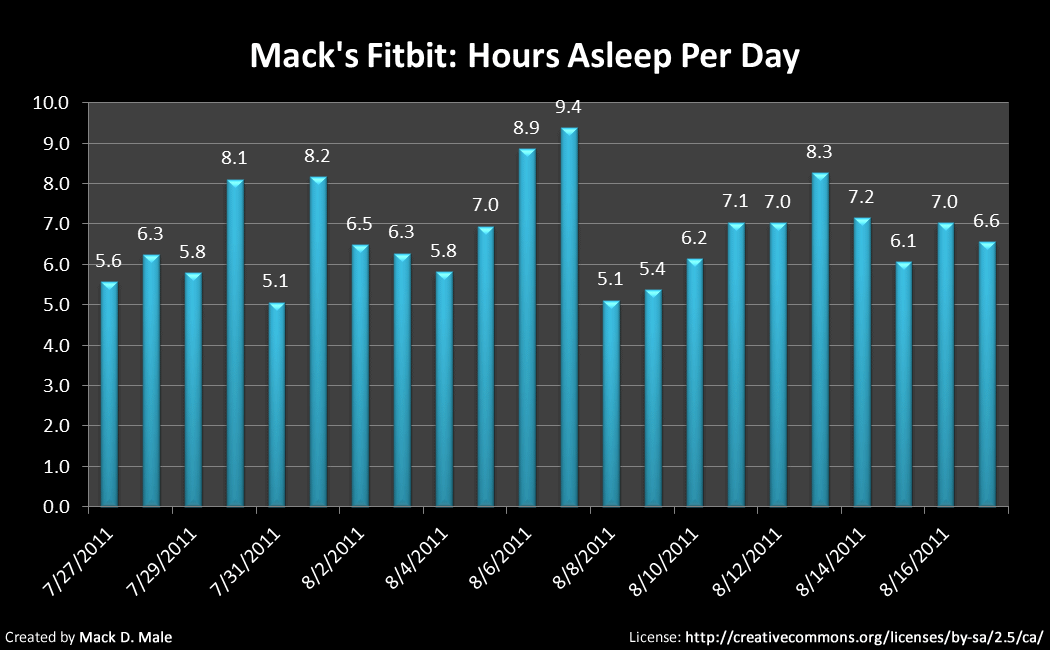
Here are the number of hours I have slept each night:

My average during this time period is 6 hours, 45 minutes, again with some days better than others. The Fitbit also tracks how long it took you to fall asleep. That has just verified what I already knew: I can usually fall asleep in minutes!

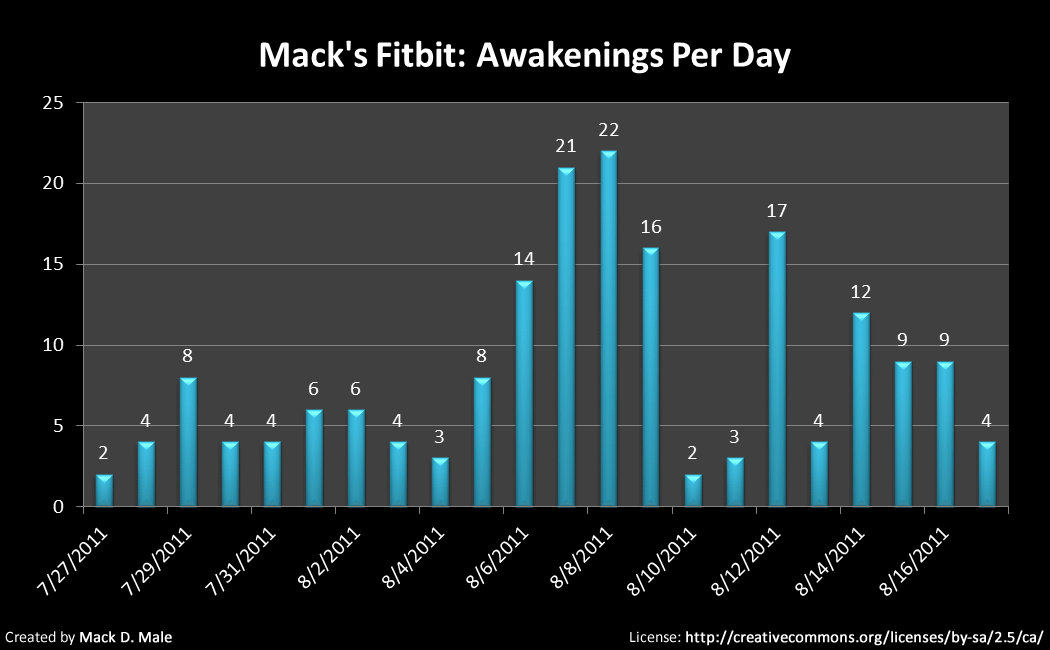
Here are the number of awakenings per night:

I’m not entirely certain what an “awakening” is. Did I just toss and turn enough for it to register? Generally I don’t wake up very often, though it looks like I had a few restless nights.

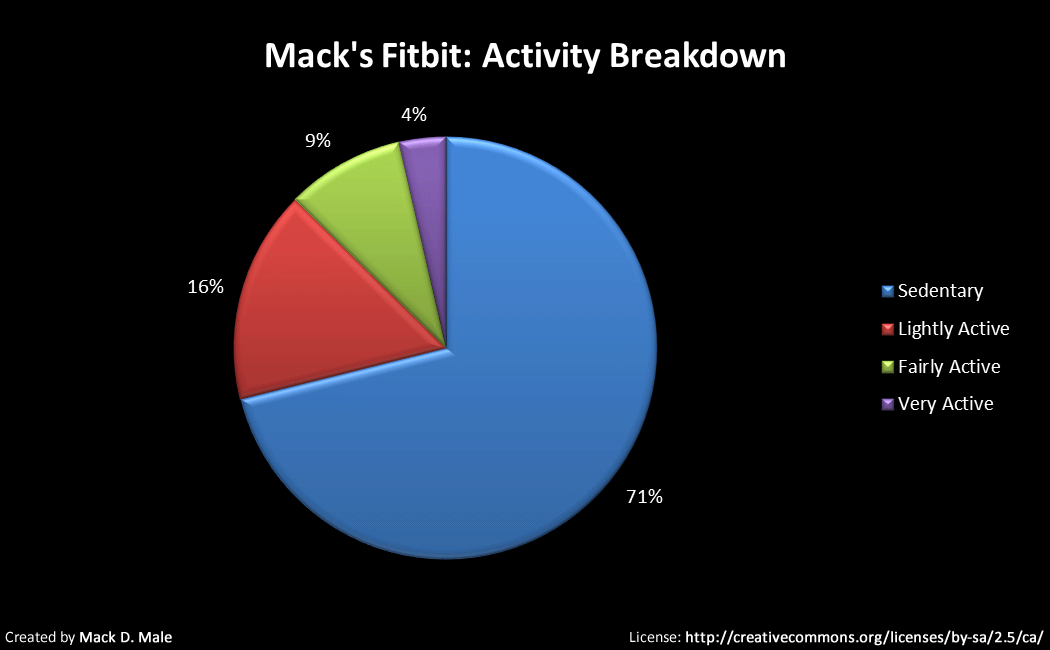
Another thing the Fitbit tracks is your activity score, which is based on how active you are. It also records this by category. Here’s the average breakdown for me during the last few weeks:

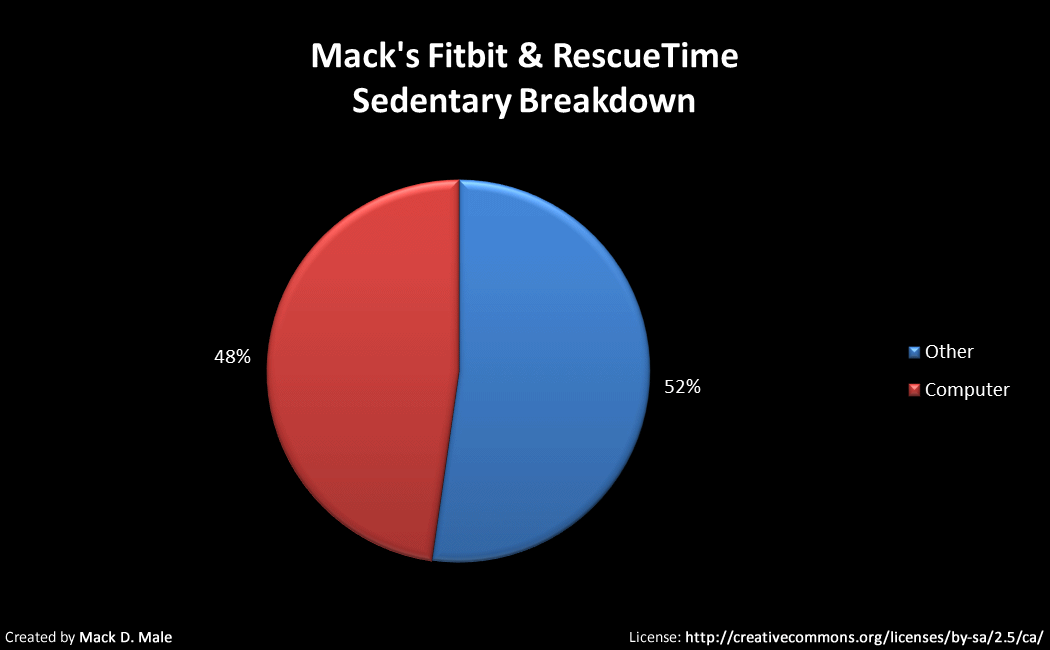
What this means is that 71% of the time I am awake, I’m not moving very much. I guess this isn’t surprising – I know I could be more active! I walk quite a bit, but that’s about it. A lot of my time is spent on the computer. In fact, I know exactly how much time:

I use RescueTime to track my computer usage, so I was able to compare the data. Of the time that the Fitbit recorded I was sedentary, 47% of it was spent on the computer. The rest of the time would be eating, reading, watching TV, driving, coffee meetings, etc.

It’s probably too early to say that the Fitbit has had an impact on my activity or sleep, though there have been days where Sharon and I decided to go for a walk just so I could get closer to 10,000 steps. And I did buy the scale because of the Fitbit. So at least now I know where I stand!

I imagine one day all of this and more will be tracked automatically without needing to wear a little device (who knows what they’ll come up with). Until then, there’s the Fitbit. I’m really happy with it so far, and I would definitely recommend it!

Some awesome recent photos of Edmonton

I love sharing photos of Edmonton on Edmonton Etcetera. There are so many great photographers in our city who regularly share their work online – check out their pages, you won’t be disappointed. Here are some of my favorites (including a few of my own) from the last few weeks!

228/365
228/365 by Ian McKenzie

Pyramids in the City
Pyramids in the City by RandallTT

July 18 - Sunrise
July 18 – Sunrise by Nelson Webb

Cariwest Parade 2011
Cariwest Parade 2011 at 4th St Promenade by mastermaq

Folk Fest Evening
Folk Fest Evening by Sean Gordon

After the Rain
After the Rain by RandallTT

MacEwan Planet
MacEwan Planet by KBauschardt

Everything but the Kitchen Sink...
Everything but the Kitchen Sink… by EdRoland

Old & New
Old & New by mastermaq

I can’t embed this one, but it is pretty awesome too.

Check out the Edmonton group on Flickr for more great photos!

Review: WIND Mobile Data Stick

Back in May I was contacted by a company representing WIND Mobile to see if I would be interested in test driving a data stick for free. I don’t often get contacted for things like this let alone accept them, but I liked the idea of the mobile data stick given my interest in wireless technology so I accepted. This was the pitch:
We’d like to offer you a free WIND Mobile Data Stick with two months of unlimited service to help you stay connected wherever you go. Your readers look to you to stay informed on the latest tech trends and Edmonton happenings – so whether you’re writing from this year’s Fringeopolis, or you want to share a new social media trend with Edmonton’s blogosphere while you’re on the go, if you’re in a WIND Zone, you’ll have access to the internet – and to your readers. All we ask in return is that if you like it, tell people about it.

I said I’d write about it either way, hence this post!

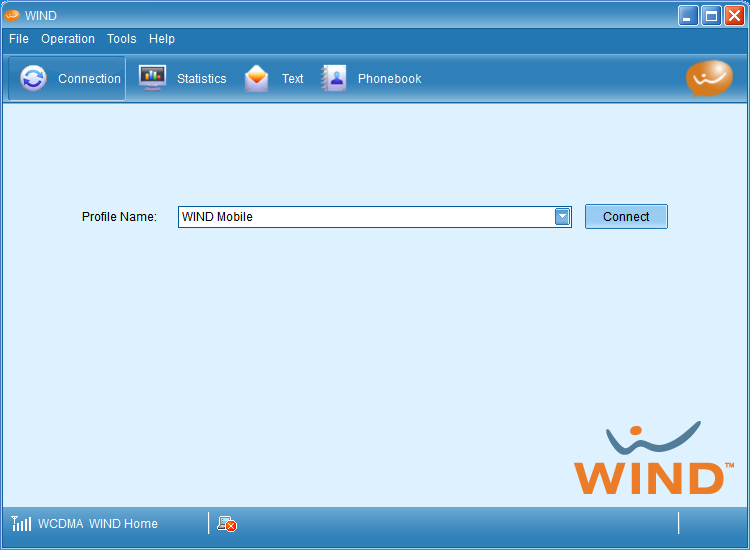
The data stick arrived right at the end of May, and I used it a few times throughout June and July. Setup was really simple – I was up and running in a matter of minutes (I didn’t have to do any activation steps, that was already taken care of). The main task was to install the software. The USB stick itself is manufactured by Huawei and the software they provide is pretty generic, it just gets branded for each carrier. I really dislike installing any extra wireless software on my computer – I prefer to let Windows handle everything. Aside from the dated Windows XP look however, the software thankfully didn’t cause any problems.

Clicking ‘connect’ was all that was required, though I did find it useful to look at the statistics from time to time. As you can see it has the ability to send text messages as well (after all, the data stick runs on the same network as your cell phone). I didn’t use that functionality – it seems kind of unnecessary when my phone is never far away!

I purposefully avoided doing any detailed speed tests with the data stick. If I were to buy one, I wouldn’t be downloading torrents or anything like that, so I figured I’d just test my “normal usage”. That means things like email, Twitter, Facebook, blogging, etc. In general, I was happy with the performance!

The first time I used the data stick was at the Questionmark office, actually. We were in the process of moving from the 8th floor to the 5th floor, and we had all kinds of issues getting our Internet connection moved. And once it did get moved, it would drop all the time! We got it all resolved eventually, but I used the data stick quite a bit while waiting for a technician to show up, so that worked out well.

Not long after that, Sharon and I were guest speakers at a Travel Media Association of Canada retreat focused on social media. I think I could have connected to the wireless they had arranged, but it was easier to just use the data stick. With lots of browsing and demos, the connection worked really well! I never had to wait longer than normal for something to load. The only odd thing I noticed was with geo-location – Twitter would identify my location as Vancouver rather than Edmonton!

The first time I used the data stick for tweeting/blogging was June 11 at TEDxEdmonton 2011. If you were there, you probably saw me down front in the middle, live-tweeting the presentations. There wasn’t any wi-fi available so having the data stick really came in handy. I could have tweeted from my phone I guess, but looking up links, videos, and the other stuff I was including is just so much easier on a laptop. All of that went really well, but I ran into issues when I tried uploading photos to Flickr. The upload speeds were abysmal, and I eventually gave up and plugged in to a wired connection during the breaks.

I also found the data stick useful in a couple of volunteer situations. I am the secretary on my condo board, and we have meetings in our shared room on the main floor. It doesn’t have wi-fi so it was handy to have the data stick to get access to download files and look things up! Another situation was during a meeting for the new Slow Food Edmonton site that I am developing (no it’s not up yet). We were at Credo which usually has excellent wireless, but for whatever reason on that day it wasn’t working. I was able to connect with the data stick though and continue with the meeting as planned.

Final Thoughts

As I mentioned above, I was really pleased with how easy it was to setup and use the data stick. For my “typical usage” testing, the performance was great. I just wouldn’t upload photos!

The thing is, on most days I’m never far from a wi-fi connection. My home office, the Questionmark office, Credo, Transcend, etc. – they all have good wi-fi connections. While it was certainly useful to have the data stick available for those times that I didn’t have wi-fi, I don’t think I’m on the go often enough to justify it.

Homicide Rates in Canada: Statistics & Trends

About a month ago I shared some statistics about Edmonton’s homicide rate. As an initial effort, I think I got my point across: the homicide rate in Edmonton over the last thirty years has been trending downward and is not that different from other large cities in Canada. I have since done some additional research on this subject and would like to share what I have learned.

The graphs below generally compare the ten largest census metropolitan areas in Canada. I have used the homicide rate (the number of homicides per 100,000 people in the CMA) to compare rather than the absolute number of homicides. Where appropriate, I have included the overall Canadian rate and the average of the ten largest CMAs. The data all comes from Statistics Canada (the 2010 information is here). You can click on any graph to see a larger version.

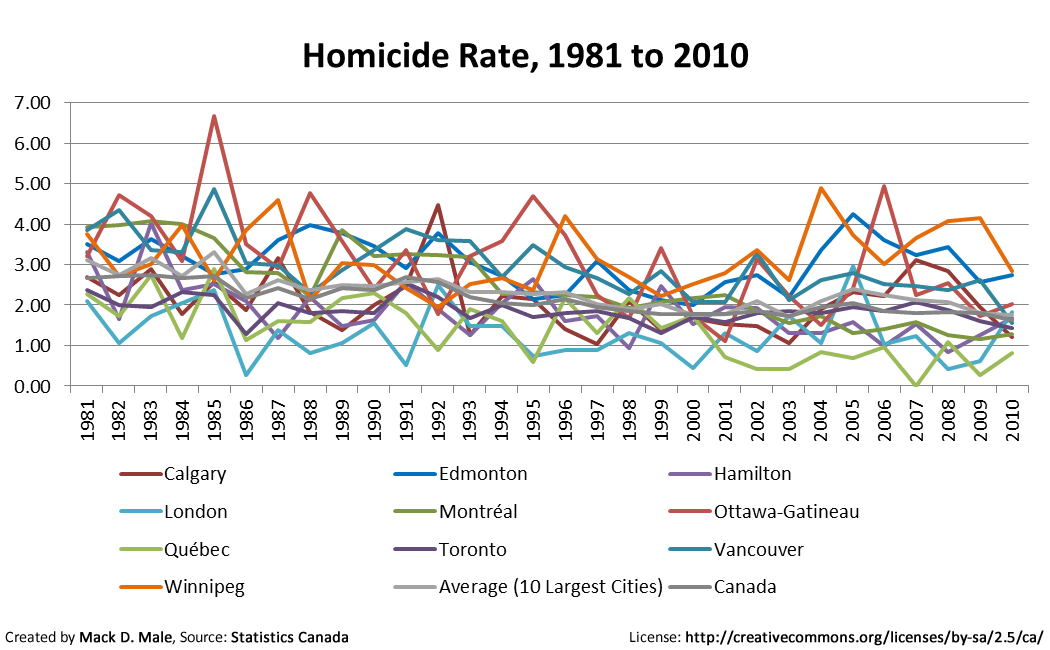
Here are the homicide rates over the last thirty years:

You can see a few spikes (for Ottawa-Gatineau and Winnipeg in particular) but overall the rates are all pretty similar.

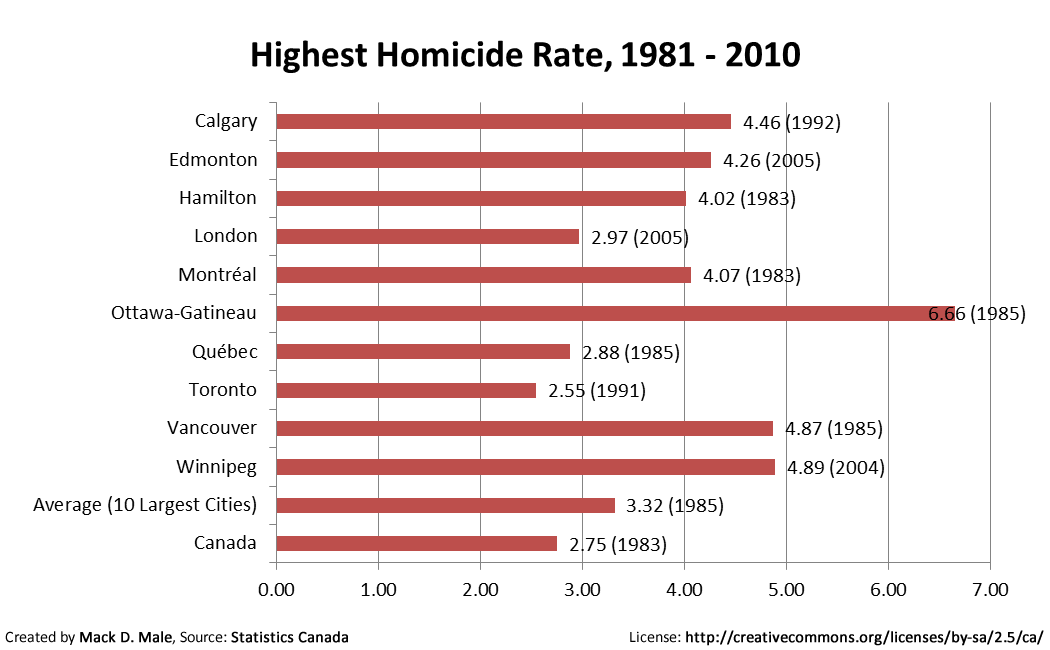
Here are the highest recorded homicide rates:

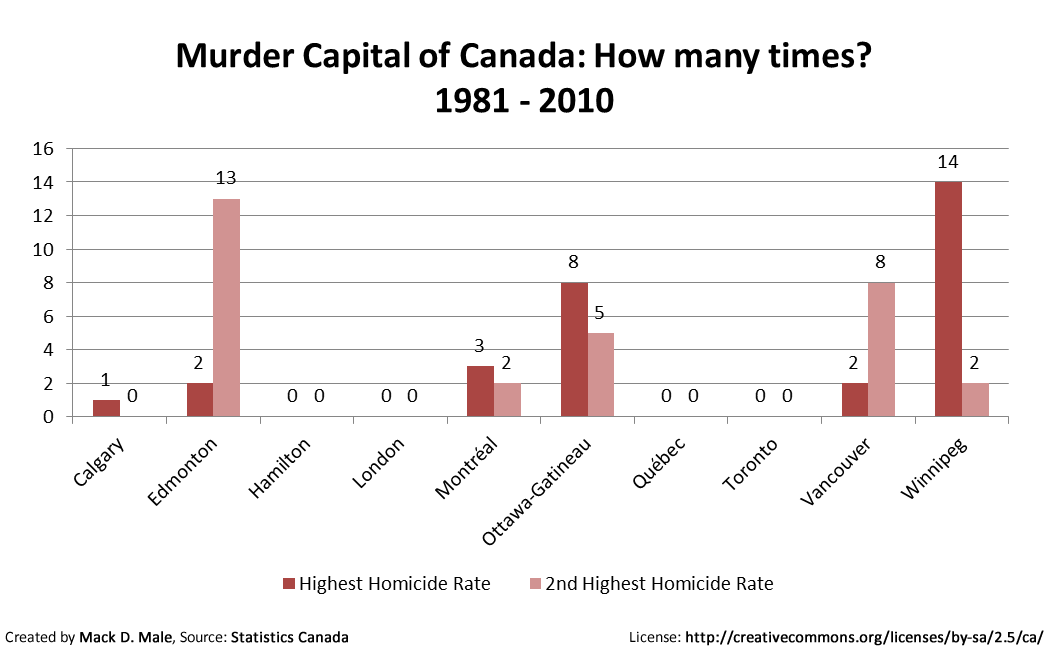
Nearly every location has had spikes at one time or another. But a few places consistently record the highest homicide rates:

You can see that Winnipeg has recorded the highest homicide rate among large cities the most, followed by Ottawa-Gatineau. Edmonton has recorded the second highest homicide rate among large cities most often, followed by Vancouver.

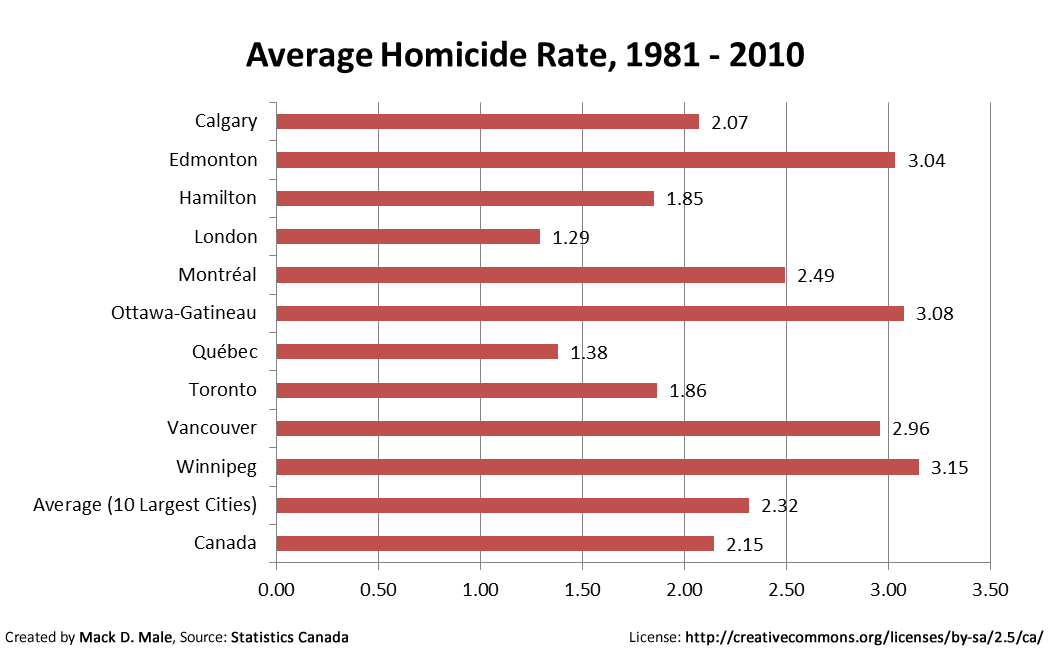
Here are the average homicide rates over the last thirty years:

Half of the ten largest cities are below the Canadian average. As a result, the average for the ten largest cities isn’t that much higher than the Canadian average.

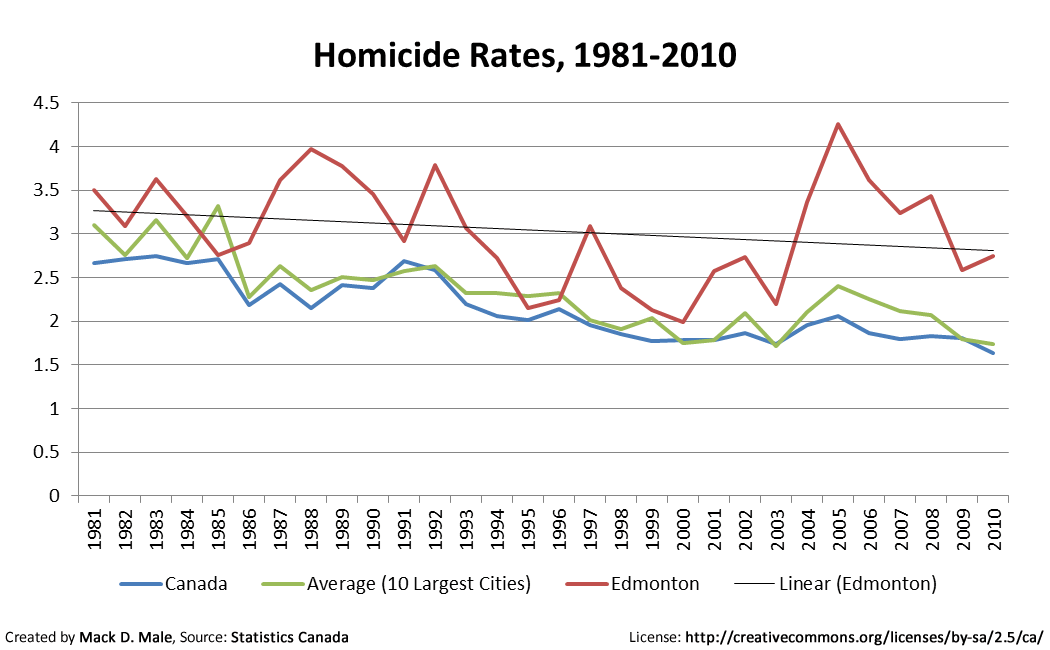
Here is Edmonton’s homicide rate compared against the overall rate in Canada and the average of the ten largest cities. You can see that is trending downward, despite spikes in 2005/2006:

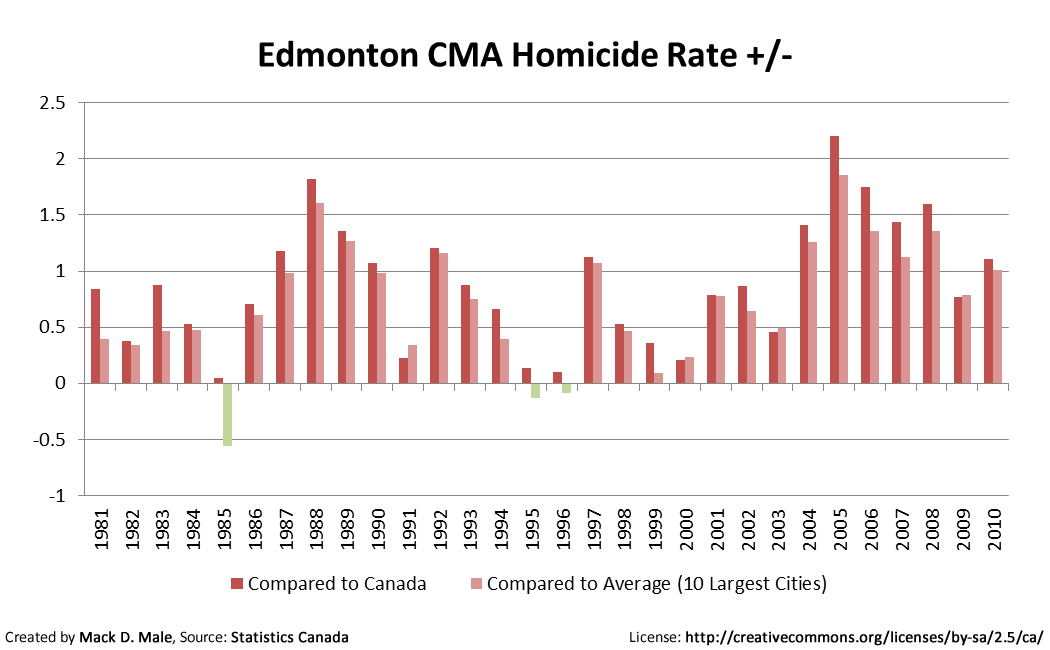
Over the last thirty years, Edmonton has never recorded a homicide rate lower than the Canadian rate. Only three times has Edmonton’s homicide rate been lower than the average for the ten largest cities:

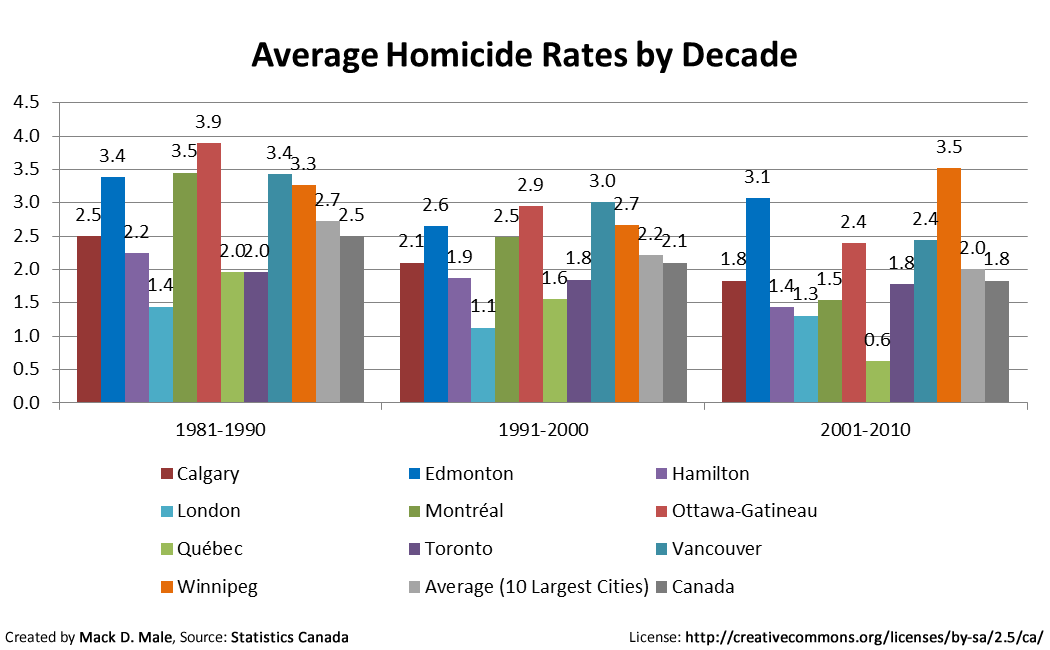
As homicide rates in Canada have generally been trending downward, I thought it would be useful to look at the rates by decade. Here are the average homicide rates by decade since 1981:

You can see that with the exception of Winnipeg, every location recorded a lower average homicide rate in the period 2001-2010 than they did in the period 1981-1990.

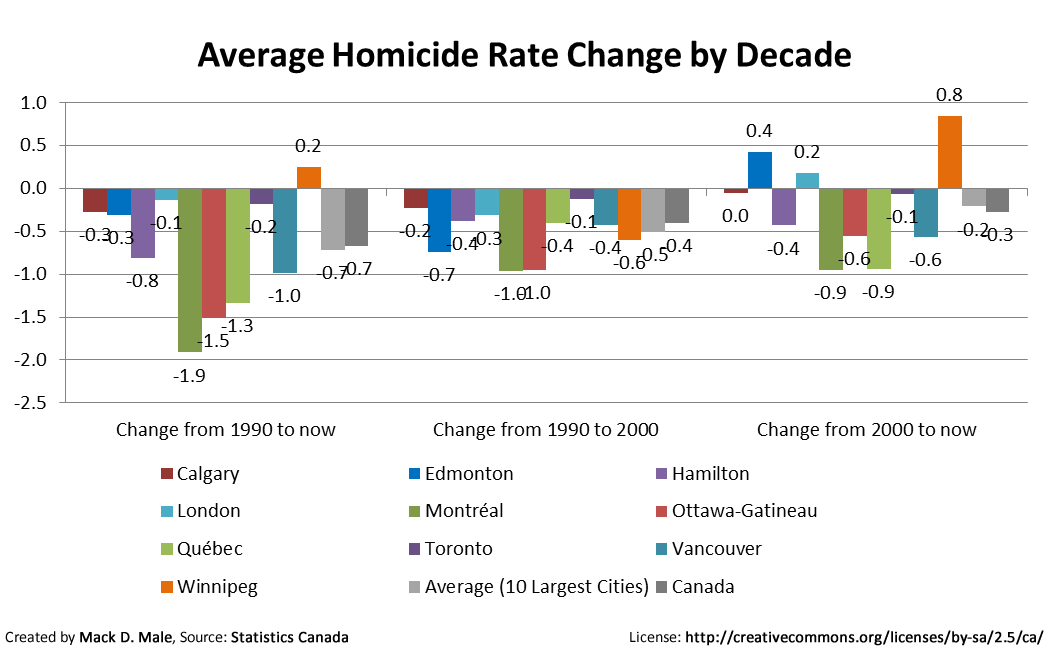
This graph shows the change a little more clearly:

Every location’s average rate decreased in the 1990s. Only three locations (Edmonton, London, and Winnipeg) have recorded increases since 2000, and only Winnipeg’s was enough to increase past 1990 levels.

What’s next?

Today, our city’s new violence reduction action plan was unveiled. You can read the whole thing in PDF here. The report concludes:

The problem of violence in society is complex and multi-faceted. It requires diligent, ongoing coordinated work across a number of agencies and organizations. This includes other orders of government, who have information and resources that will be required in order that solutions be comprehensive, and sustainable over the long-term.

The City and its key partners will continue their efforts to understand and address the root causes of violence and maintain order and safety in our community, keeping the livability of Edmonton among the best in Canada and the world.

I think understanding where we’re at is an important part of unraveling this mystery. Hopefully the information I have shared above will help in that regard. I look forward to the community conversations slated to take place this fall.

In a follow-up post, I’ll take a closer look at Edmonton’s homicide rate in the context of our demographics, economic situation, and other factors.