
As Edmonton continues its climb toward global status, I think it’s important that we consider the digital cultural artifacts that we create along the way. It’s rare that something big happens in Edmonton (or anywhere in the world for that matter) without a website or other online presence of some kind being created. That online presence is important in the weeks and months leading up to an event, but it’s just as important after the fact too. We need to start considering that from the beginning.
 Think about big events that Edmonton has hosted in recent years. The 2001 World Championships in Athletics should come to mind. If you do a search for Edmonton 2001, you’ll find:
And linked from the official IAAF website and many other pages that show up in the results, is the the Edmonton 2001 website, at http://www.2001.edmonton.com/. The problem is, that site no longer exists.
What would happen if the IAAF took down the page they are hosting? It doesn’t have to happen on purpose, it could be an unfortunate side effect of a redesign, server relocation, etc. The article at Wikipedia is pretty sparse, containing mainly result information. And the mention on the EEDC site is insignificant. It’s almost as if the event didn’t happen.
Additionally, I’d argue that none of the links that still exist tell the story of Edmonton 2001. The effort that went into it, the many volunteers and organizations that made it happen, the effect it had on the city, etc. I think it’s important that we capture that information, and that we do so online, where it is easily accessible by all.
Another more recent example would be the ICLEI World Congress, held in June 2009. The City of Edmonton has a brief page devoted to the event, but most of the information exists at the ICLEI site. That’s fine, but again we’re relying on someone else for the information, and we’re missing an opportunity to tell our story. The advantage that the ICLEI had over Edmonton 2001 is that many bloggers wrote about the event and many photographers posted photos, and their content will likely continue to exist for quite some time. The new Transforming Edmonton blog will help too, I think.
The idea of digital preservation applies to smaller-scale events too. Try to find an online presence for the 2005 K-Days (now Capital EX), the year the event’s attendance record was set. Or try to find out about the 2008 Fringe festival.
I recognize that there’s costs associated with preserving our online cultural artifacts. Someone has to pay for them, and someone has to maintain them. And if we go that extra step and treat some online presences as legacy projects with updates and other information to tell our story, there’s obviously costs associated with that too. I think the costs would be quite minimal, however, and definitely worth it.
Perhaps this is something for the Edmonton Heritage Council to tackle? Or the Edmonton Historical Board? Or maybe just you and me. Either way, we need to start taking digital preservation more seriously.


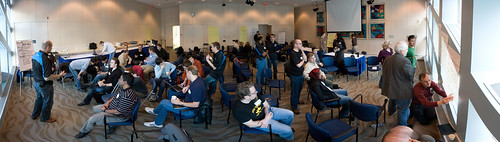
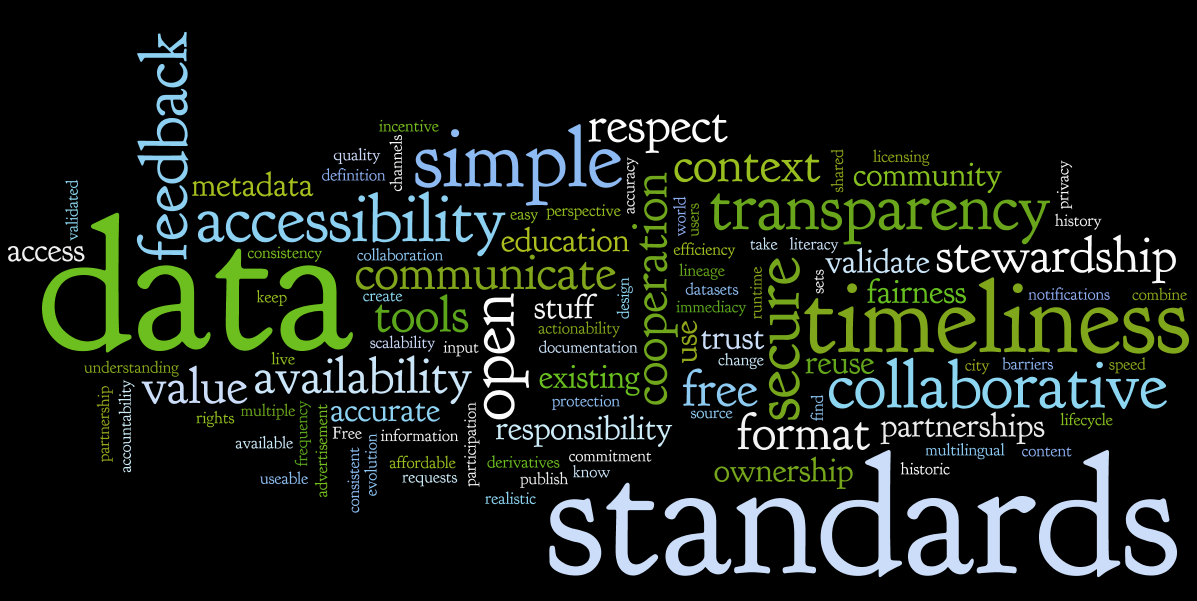


 I feel like a broken record, but I really think tonight was our largest crowd ever for DemoCamp! It’s just amazing to see so many people who care about the technology industry and local entrepreneurs come out to show their support, learn something, and connect with one another. Kudos to everyone who continues to help make DemoCamp the fantastic event it has become by showing up and spreading the word! Special shout out tonight to


 As you may have heard by now, the City of Edmonton is hosting
  In the grand scheme of things, the City of Edmonton could be considered an early adopter of social media tools. They’ve been
  I’m encouraged by the progress that is being made on making open data a reality here in Edmonton. I think the

 The
The  MasterMaq's Blog