State of the Edmonton Twittersphere 2011 – Overview

Welcome to the State of the Edmonton Twittersphere for 2011, my look at the intersection of Twitter and Edmonton in 2011. You can see my 2010 recap here, and my 2009 recap here.

I’ve done my best to ensure all of the data in this report is accurate, but I make no guarantees – use it at your own risk. The data comes from the Twitter API, and was collected over the course of 2011. If a user has his or her location set to Edmonton, St. Albert, Sherwood Park, Leduc, Nisku, Stony Plain, Fort Saskatchewan, Beaumont, Spruce Grove, or matching lat/long coordinates, they are considered an Edmontonian, and thus a “local user”.

Please treat the numbers in this report as a minimum. There are instances where I wasn’t able to capture all of the data, and there are certainly users here in Edmonton who do not match the above definition of a “local user”. More important than the raw numbers themselves are the trends, and that’s why in many cases I have presented rounded rather than exact figures. You can click on any graph to see a larger version.

Here are the highlights for 2011:

  • More than 46,000 local users posted at least one tweet.
    • A little over 1000 of those accounts no longer exist.
  • More than 11.2 million tweets were posted by local users, which works out to 21.4 tweets per minute.
    • That’s 2.3 times as many tweets as were posted in 2010.
  • Here’s a breakdown of those tweets:
    • More than 715,000 tweets were tagged #yeg or a related hashtag (like #yegfood) (6.4%, down from 7.7% last year)
    • Nearly 700,000 tweets were retweets (6.2%, down from 7.2% last year)
    • More than 4.4 million tweets were replies (39.4%, up from 34.7% last year)
    • More than 1.7 million tweets were replies to other local users (15.2%, up from 13.5% last year)
    • More than 2.5 million tweets contained links (22.9%, down from 26.9% last year)
    • More than 320,000 tweets were twooshes (a twoosh is exactly 140 characters) (2.9%, down from 3.9% last year)

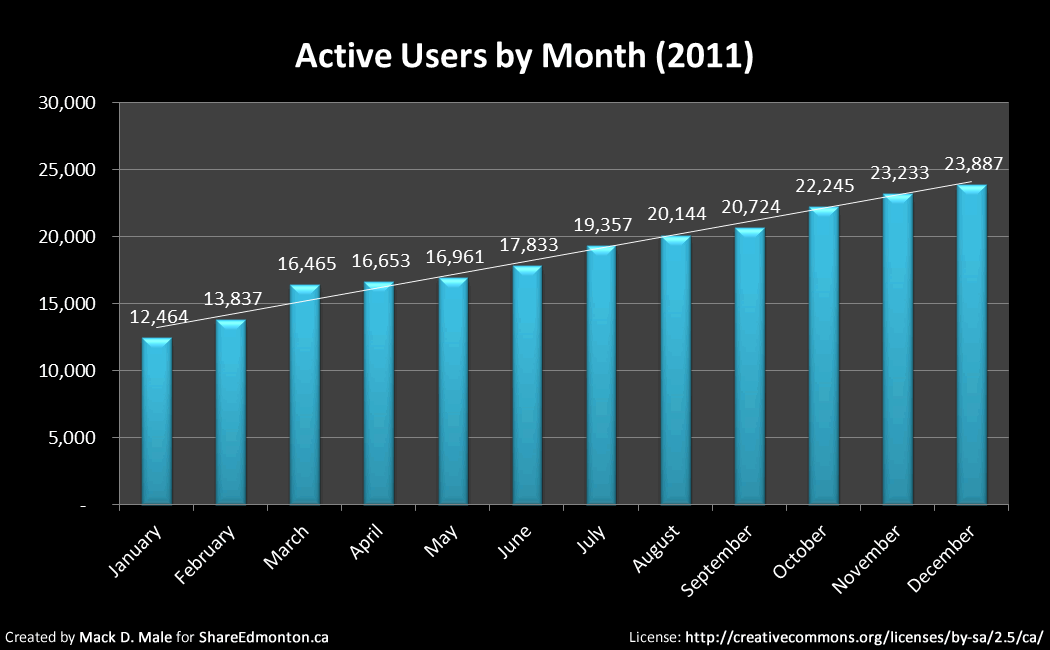
While more than 46,000 local users posted a tweet last year, just under 24,000 were active at the end of the year in December (active means they posted at least one tweet). That’s 1.9 times as many active users as January. That’s slightly better growth than we saw in 2010, when December had 1.8 times as many active users as January.

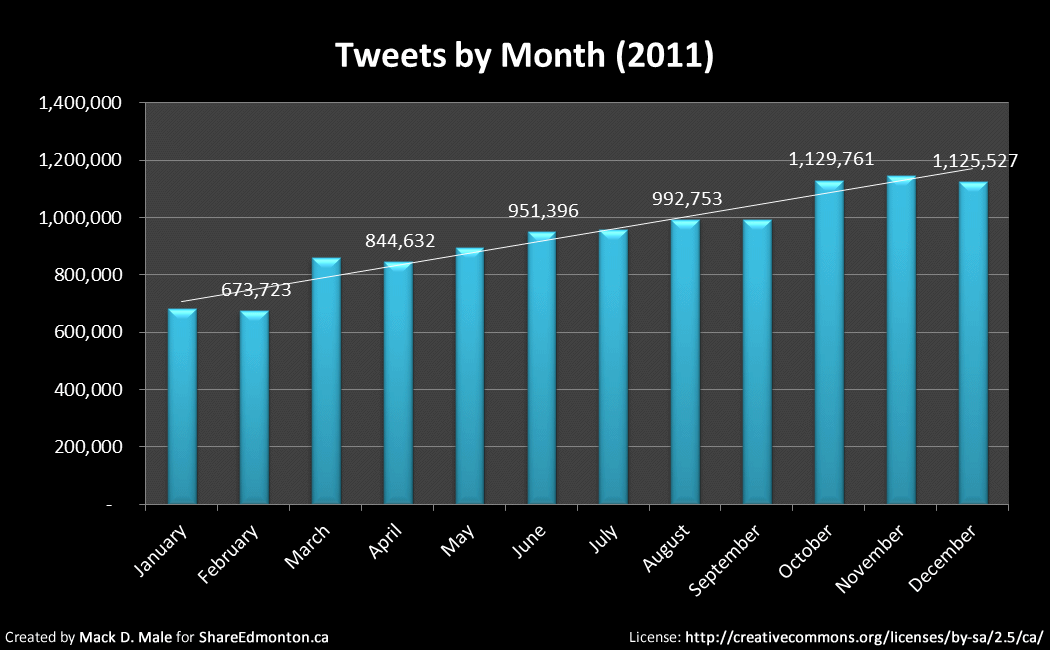
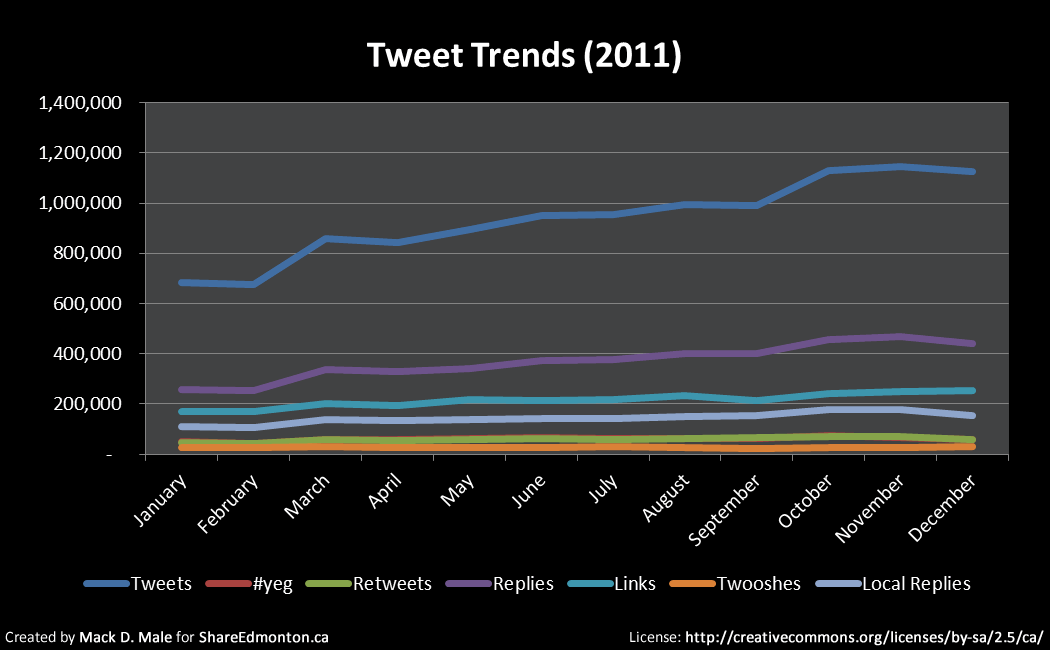
When the year started, Edmontonians were posting a little over 600,000 tweets per month. By the end of the year, that number had nearly doubled to 1.1 million tweets per month. That’s less than the growth that Twitter as a whole experienced last year (3 times as many tweets were posted as compared to the same point in 2010) but is more or less what we saw in Edmonton in 2010 (as compared to 2009).

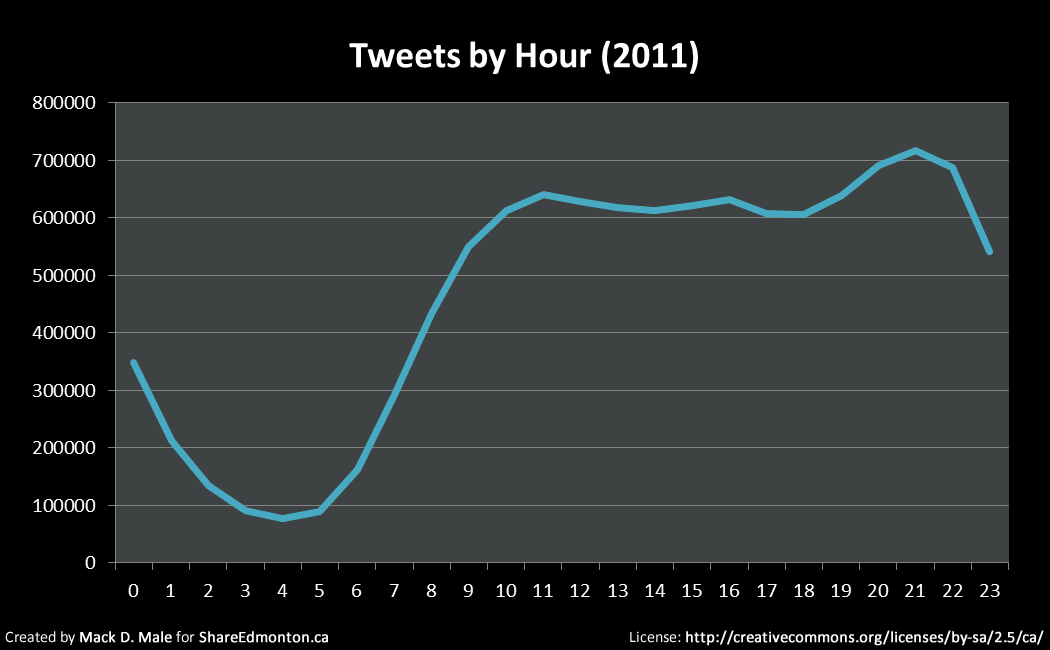
Roughly 49.1% of all tweets in 2011 were posted between the hours of 9 AM and 6 PM, down slightly from 50.8% in 2010. Once again the lowest point for tweet volume was around 4 AM. Last year there were clear early morning and late night spikes, but this year only the late night spike is present (8 PM to 11 PM).

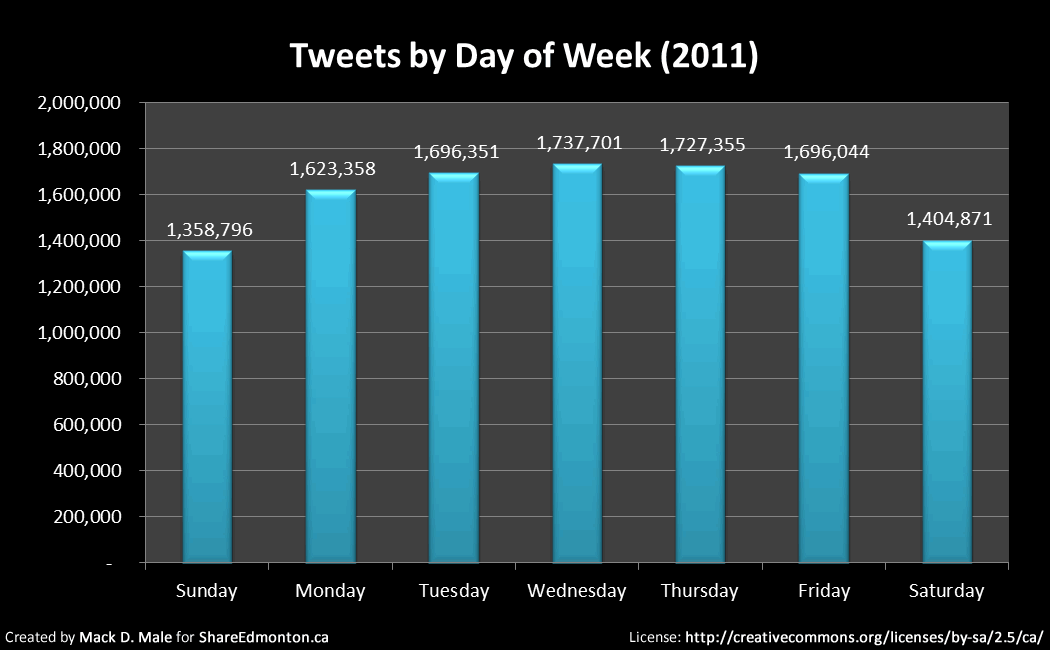
There’s a much nicer looking curve for days of the week this year, with the most tweets being posted during the middle of the week. Sunday typically had the lowest volume of tweets posted.

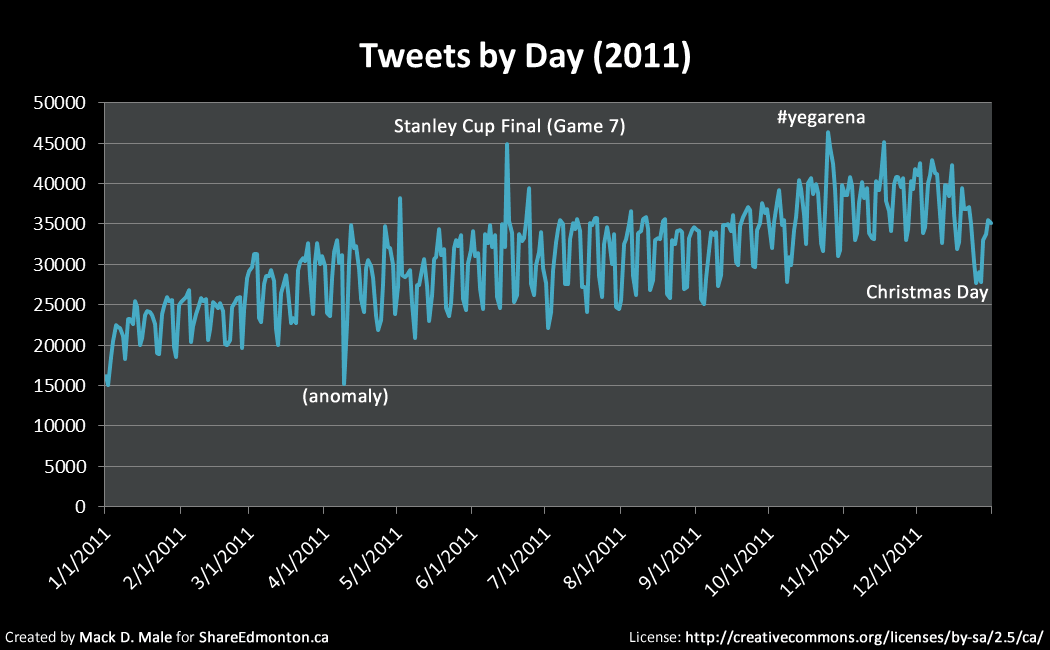
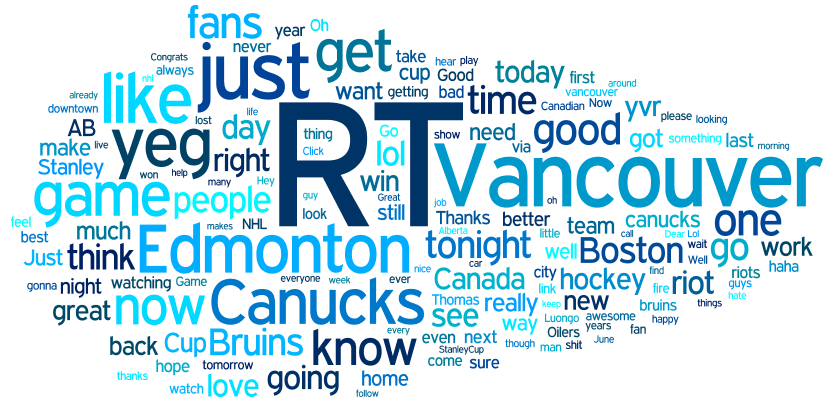
Here’s a look at the number of tweets posted per day for each day of the year. As with last year’s chart, the trend is clearly up, and there are some visible spikes and troughs. The dip on April 9 appears to be an anomaly in the data, perhaps there were issues with the Twitter API that day (unless you have another idea!). The peak on June 15 was not immediately obvious but it turned out after looking at a Wordle of the tweets that the spike was due to Game 7 of the Stanley Cup Finals. With nearly 45,000 tweets posted that day, it remained the record until October 25 when discussion about the downtown arena became the talk of Twitter here in Edmonton. More than 46,000 tweets were posted that day, with almost as many being posted on the next two days as well. The spike on November 17 appears to be related to the snow and cold weather that arrived that week.

Coming Up

In order to make it easier for me to write this report, I have decided to break it into sections. This entry provided an overview, and upcoming entries will focus on different aspects of Twitter usage in Edmonton:

  1. Overview
  2. Users & Clients
  3. Hashtags & Links

If you have suggestions for additional parts to the report, I’d love to hear them. Thanks for reading!

Media Monday Edmonton: Update #31

Here is my latest update on local media stuff:

You can follow Edmonton media news on Twitter using the hashtag #yegmedia. For a great overview of the global media landscape, check out Mediagazer.

So, what have I missed? What’s new and interesting in the world of Edmonton media? Let me know!

You can see past Media Monday Edmonton entries here.

Edmonton Notes for 2/26/2012

Here are my weekly Edmonton notes:

Though I’m sure you’ve seen it by now, the Shit Edmontonians Say video was the talk of town this week so I’ve got to include it here:

Little heavy on the hockey, but I guess that is an accurate portrayal of Edmonton!

February; out like a lion
February; out like a lion by oudzo

Here are some upcoming events:

What kind of festival does Metropolis want to be?

After eight weekends in Churchill Square, Metropolis has come to an end. Featuring four large shrink-wrapped structures, the new festival took a different approach to staging a winter event. Unfortunately, I don’t think it was successful. Sharon has already done a very thorough job of discussing some of the highs and lows of the festival as we experienced it over the past two months, so please make sure you read her post. She concluded:

“It’ll be interesting to see what organizers decide to do next, and what Metropolis might look like should the festival return again. Although I am glad Events Edmonton took a risk, I hope they are able to learn from this initial run and improve in the future.”

I’ll be a little stronger and say that I would be disappointed to see Metropolis return next year only slightly improved. If it is going to continue, I feel a major overhaul is needed. Originally envisioned as a showcase of cold weather construction techniques but sold as a festival to help Edmontonians embrace winter, Metropolis did neither.

Metropolis & Fireworks
The structures were nicely lit on New Years Eve, but were plain and white most of the rest of the time.

I think it’s clear the “build it and they will come” approach that Metropolis took was a failure. I know it’s a lot of work to get something like Metropolis off the ground, so it’s no surprise that the idea was scaled back numerous times (from nine structures down to six and eventually down to just four). Programming an event over a single weekend takes a lot of effort, let alone over eight weekends, even when you leave the programming to others as Events Edmonton did. As a result, there was little to draw people to the festival, and the attendance reflected that. As recently as December, Events Edmonton was estimating attendance of about 13,500 people per day or 300,000 total for the festival. I would be absolutely shocked if they achieved anything even remotely close to that. As Sharon noted in her post, we walked through Metropolis most weekends while it was on and it never seemed busy.

Maybe it was the warm weather or maybe it was the lack of marketing (remember the atrocious website they launched with?). Maybe it was that Events Edmonton put too much faith in the community stepping forward to do something with the structures. Maybe it was poor communication or maybe it was broken promises to partners. Realistically, it was probably the combination of these and other factors that ultimately prevented Metropolis from achieving success. That said, I think there are two fundamental issues facing the festival:

  1. Metropolis was born out of the idea that we should celebrate the cold weather construction techniques that have made Edmonton and other northern cities possible, yet the festival did very little of that.
  2. Metropolis took place in January and February and was therefore considered a “winter” festival, but embracing winter is about much more than picking the right dates on the calendar.

Cold Weather Construction

A little over a year ago, I sat down with Giuseppe Albi to talk about Metropolis. At the time he was still trying to build support for the new festival, so his pitch was well-rehearsed by the time we met for coffee. He talked about the idea itself, but also were it came from. Events Edmonton had been considering ways to mitigate the extreme cold that we often get on New Years Eve, and hit on the idea of some sort of temporary heated dome. That didn’t happen of course, but it provided the seed for Metropolis.

Giuseppe told me about his interest in architecture, something he has loved ever since high school. He remembered cutting articles out of the newspaper when they wrote about a new building going up. One in particular that he talked about was the Professional Building, the first building in Canada built using cold weather construction technology. As he told Elise Stolte in December:

“We pioneered working in cold climates, and 1961 was crucial. That basically ushered in an era of cold-climate construction technology. For 50 years now, we’ve used it all over and we’ve built most of Western Canada and the North with that technology.”

We talked about many other aspects of the festival that day, but what I took away from the conversation was Giuseppe’s passion for showcasing our history of cold weather construction techniques. It really struck me as an important aspect of how Edmonton came to be – imagine how little we’d be able to construct if we needed it to be warm all the time! Apparently we are one of the few cities with a scaffolding training program too. Finding a way to extend the construction season to make the most of our climate is a great story, and I one that I think is worth showcasing.

Metropolis

To be fair, Giuseppe did at least bring some awareness to this story. Metropolis was on the program at the Cold Climate Construction Conference that took place here in Edmonton last May, for example. I certainly have a heightened awareness about cold weather construction, and am interested to learn more.

The real opportunity was at the festival itself however, and that opportunity was missed entirely. Sure the structures themselves were built using scaffolding, but I don’t know much more about them than that. There was no information on site, no presentations about cold weather construction. In the program (which originally cost $5 but was given away by the end of the festival) there are a few features on construction companies, but very little in the way of education.

I wish Metropolis had been more focused on cold weather construction. It would have resulted in a less pedestrian event, and would probably have been of interest to a smaller number of Edmontonians, but I think the chances of success would have been much greater.

Embracing Winter

A few hours after that conversation with Giuseppe, I met with Pamela Anthony, the Artistic Director of Winter Light. I had been very critical of Winter Light and the significant funding it received from the City, but I felt it was finally starting to develop something unique. Last year’s Illuminations featuring Circus Orange was simply amazing. It was freezing cold outside, but the Square was packed with people enjoying themselves. “You need motivation to go somewhere when its cold,” Pamela told me. “It’s exciting how hungry people were for that.”

We of course talked about Metropolis. Aside from a lack of communication (neither Metropolis nor Winter Light reached out to one another) Pamela sounded happy that someone else was also putting energy into building the winter festival scene. She wasn’t particularly enthusiastic about the plan for Metropolis itself, however. “It shouldn’t be about denying winter or sheltering people from winter,” she said. “It’s not a commitment to the winter experience.”

I have thought a lot about that conversation over the last year, and I’m convinced now that Pamela was absolutely right. Just because a festival takes place in January doesn’t mean it’s a “winter” festival. There is nothing about Metropolis that celebrated winter. Bringing people indoors is most certainly not a commitment to the winter experience. Especially when the food and programing offered is the same as anywhere else.

To some extent, I think Metropolis was able to take advantage of the momentum behind “downtown revitalization” to gain support. It was said that Metropolis would bring some focus to downtown during the winter months, and that was certainly the message Giuseppe brought to the Downtown Vibrancy Task Force in October. I remember hearing then and many times after, that “when it is colder than minus 15, people don’t want to be outside”. Kind of like the argument made for the pedways that connect the downtown core. Thing is, we have lots of proof that people will happily spend time outside!

Winter Light Illuminations 2011
People! Outside! In the cold! At Illuminations 2011.

I have already mentioned last year’s Illuminations. The square was full of people enjoying winter that night, even though the temperature was minus 20 with a wind chill of minus 26. How about Deep Freeze? Both last year and this year, Deep Freeze demonstrated that people enjoy doing things outdoors. How about the Mill Creek Adventure Walk? I was blown away by how many people participated this year, it was incredible. And then there’s the annual favorite, Ice on Whyte. Thousands of people attend that outdoor event every year!

Want more proof? Look at the most popular ideas on the WinterCity Strategy’s IdeaScale site. Skating trails, snow hills, safer sidewalks, an outdoor pool, street hockey, an outdoor ice bar festival, an outdoor Christmas market, winter camping, etc. None of those ideas are for things that take place indoors. I think the WinterCity Strategy page is spot on:

This strategy is about changing how many of us feel about winter – from enduring to embracing it. It’s about how we can create a city where people want to be outside on sunny winter days because there are inviting, vibrant public spaces with activities and comfortable places to gather. It’s about using light to create warmth and luminescence during long winter days and using snow as a resource, for things like wind barriers and ongoing public sculpture activities.

Does that sound like Metropolis to you? It sure doesn’t to me.

What kind of festival does Metropolis want to be?

I think Events Edmonton needs to decide if Metropolis is going to be a festival about cold weather construction, or if it is going to be a festival for the masses that truly embraces winter.

I would love to see an event focused on cold weather construction – our history, where are we now, and what’s coming in the future. That would be truly interesting. Reading through Giuseppe’s “Vision for Metropolis” in the program guide, I am once again reminded of his love for this topic. “Winter construction fascinates me,” he wrote. A festival that focused on that fascination would indeed be worth staging.

I would also love to see a downtown event focused on winter.  But on embracing winter, not enduring it. With lots of activities and opportunities for Edmontonians to see that winter doesn’t have to suck. Pulling that kind of festival off means being outside, however. I don’t get the impression that Events Edmonton is willing to commit to the outdoors.

If Metropolis returns next year, I hope it does so with a renewed sense of purpose and a clear mission.

25th Mayor’s Celebration of the Arts – April 2, 2012

silver anniversaryThis year marks the silver anniversary of the Mayor’s Celebration of the Arts, a fun evening celebrating and showcasing local artists. Tickets are on sale now for the event which takes place on April 2, 2012 at the Winspear Centre.

Join us for our 25th anniversary of celebrating the arts in Edmonton! That’s right, we have been showcasing Edmonton’s artists for a quarter of a century, and we are marking this milestone with the most exciting show yet! Get ready for an evening of awards an an eclectic mix of performances that will awe and inspire you.

Sharon and I have attended for the past four years because we love getting introduced to local artists. The mix of performances also makes attending worthwhile – you get a nice cross-section of the local arts scene. For instance, this year’s performers include Tommy Banks, Christian Hansen and the Autistics, Colleen Brown, Citie Ballet, Sandro Dominelli, and the cast of Caution: May Contain Nuts.

Check out my previous recaps if you’re looking to get a sense of what the evening is all about: 2011, 2010, 2009, 2008.

This year proceeds from the event will support the Rock and Roll Society of Edmonton’s Centre for Art & Music, which mentors the next generation of musicians in our city, with a special focus on youth at risk.

For updates, follow @PACEEdmonton on Twitter and on Facebook. You can also check out the event on Facebook and at ShareEdmonton.

Get your tickets now! Hope to see you there!

I love Readability!

readabilityIf you spend any amount of time reading things on the web, you should be using Readability. Yes, I think it’s that simple! I really started using it after Anil Dash blogged about it back in November, and it has made an incredible difference for me. Here’s what it does:

“Readability turns any web page into a clean view for reading now or later on your computer, smartphone, or tablet.”

Simple enough, right? Simple, but powerful. After adding a simple bookmarklet to my browser, I am just one click away from having any web page become instantly more readable. And by that I mean larger text, a consistent font, and no clutter. Or I can save an article for later, or I can even send an article to my Kindle to read on that device instead.

Here’s an example of the difference it makes. The square on the left is the original article, and the square on the right is the Readability page that I get after clicking the bookmarklet (if you’re not logged in, you’ll have to click “Readability view” at the top of that page to see what I am talking about).

The comparison is better when you look at the actual pages, but do you see the difference? The Readability view is just text, no clutter. I could turn off images too, so even the featured image wouldn’t show up.

Here’s another example. Compare this Edmonton Journal article about Stephen Carter and Linda Sloan’s tweet debacle with this Readability view of the article. Which would you rather look at? On my laptop, with a resolution of 1600×900, the actual text of the article is below the fold on the Journal. With Readability, I can start reading right away, with nothing to distract me.

You can control the way it all looks too in the settings. You can pick a different color scheme, a different font size, you can hide images, etc.

In case you’re wondering about lost revenue because the ads aren’t being displayed, Readability has a solution for that too:

“Readability features an innovative way to support writers. Become a Readability Subscriber and 70% of your monthly contribution will go toward supporting great writing. Subscribing is entirely optional.”

“Here’s how it works: Every time you use Readability to read an article, a portion of your monthly contribution is earmarked for that publisher or writer.”

It’s a neat concept.

I love Readability. It makes the experience of reading things online much better. I’m also a fan of the Kindle functionality. Santa gave me a Kindle for Christmas, and with Readability I have been able to quickly and easily get content on it to read on a screen built for reading! I love reading the stuff at Longreads and Longform, but I spend enough time in front of a computer screen as it is, so being able to send those articles to my Kindle is huge.

If you read stuff online, check out Readability. You can see my reading list on Readability here.

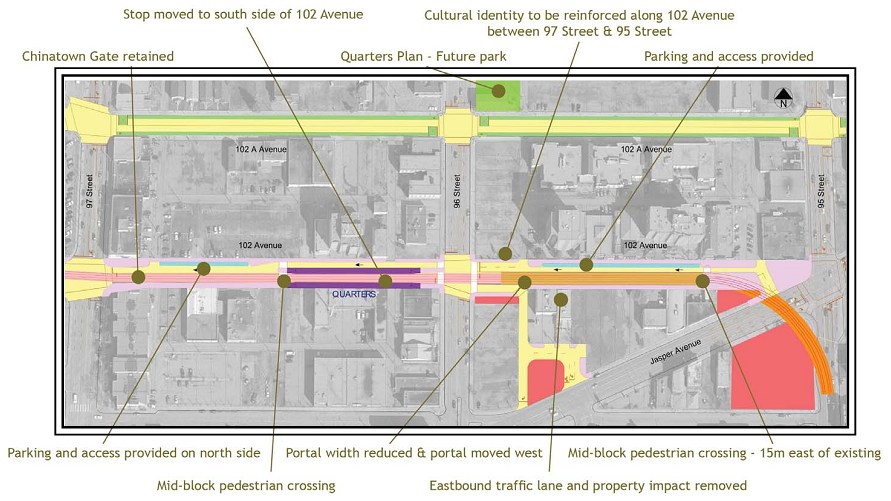
The Downtown LRT Connector should run along 102 Avenue

Today City Council is scheduled to vote on the recommendation from the Transportation & Infrastructure Committee to shift the route of the Downtown LRT Connector from 102 Avenue up to 102A/103 Avenue. I’m opposed to this change for a variety of reasons. Here’s what the Journal’s Editorial Board wrote on February 2:

Responsive government is indeed a positive thing, but Edmonton’s city council has done far too much listening at the expense of decisive action on the LRT file. Councillors approved the current east/west downtown leg along 102nd Avenue in 2010 – yes, two years ago – but on Tuesday the smaller transportation committee voted to recommend a route shift and other changes that could increase the project’s cost by $115 million and delay construction by at least a year to entertain more discussion and allow for further planning.

We know that LRT is our top priority, we know that LRT is vital for our city’s future as an enabling technology for our urban centre, and we know it will only get more expensive to construct over time. Further delaying this important infrastructure is not the correct course of action.

I am certainly not a fan of the way the City does public involvement (though there have been some more positive signs lately) but they did do a lot of consultation on this project. It is disappointing to see that if one group screams loud enough, they can render the rest of the consultation process irrelevant. It sets a dangerous precedent for future LRT construction too.

downtown lrt connector

The route that Transportation officials recommended back in 2010 makes the most sense to me. Here are some of the reasons you can find in the report:

  • 102 Avenue is already more developed than 102A Avenue, which means ridership potential is greater along 102 Avenue.
  • Related to that – all of the destinations are along 102 Avenue! The City notes there are 10 activity centres along 102 versus just 3 along 102A. Churchill Square, the Stanley Milner Library, the Citadel, the Winspear Centre, City Centre, the YMCA, Norquest College, the City Market in the summer, the Edmonton Chinatown Multicultural Centre, etc., are all along 102 Avenue.
  • 102 Avenue is closer to Jasper Avenue, and therefore closer for riders to make connections to other routes. 102 Avenue can connect directly to Churchill Station. I also like that 102 Avenue is half-way between 104 Avenue and Jasper Avenue, which will aid connections to MacEwan, the Arena & Entertainment District, etc.
  • Any option other than 102 Avenue will require an amendment to the Transportation System Bylaw and an amendment to the Capital City Downtown Plan. This would further delay any construction on LRT.

There are three key reasons that Council should vote against changing the route from 102 Avenue:

  1. 102 Avenue is more developed, has more people living and working along it, supports connections to existing transit best, and supports the Capital City Downtown Plan best.
  2. The 102A/103 Avenue route would add significant cost and further delays to the construction of this route.
  3. Changing course now sets a dangerous precedent that could negatively impact further LRT construction.

I strongly urge City Council to vote against the recommendation to change the route from 102 Avenue to 102A/103 Avenue.

UPDATE: Well that was a quick meeting! Council voted to keep the route along 102 Avenue as originally proposed. Excellent news!

Media Monday Edmonton: Update #30

Here is my latest update on local media stuff:


Photo courtesy of West Edmonton Local.

You can follow Edmonton media news on Twitter using the hashtag #yegmedia. For a great overview of the global media landscape, check out Mediagazer.

So, what have I missed? What’s new and interesting in the world of Edmonton media? Let me know!

You can see past Media Monday Edmonton entries here.

Edmonton Notes for 2/12/2012

Here are my weekly Edmonton notes:

Such a cool shot of the Bay/Enterprise Square LRT Station by Alison Poole:

m i s s e d . . .

Here are some upcoming events:

Blink: Pedway Pop-up in Downtown Edmonton

blink edmontonOn Sunday, February 26, 2012 we are transforming the pedway across 101 Street that connects Commerce Place and Scotia Place into a sixty seat pop-up restaurant called Blink. The single-night-only restaurant will feature a delicious six-course meal prepared by chefs Paul Shufelt and Tony Le of Century Hospitality/Lux. Sharon and I have been working on this for quite a while, so we’re very happy to announce that tickets are on sale now!

Pop-up restaurants are all the rage in major cities like New York and London and they’ve started to become popular elsewhere too. The term “pop-up restaurant” is used to mean various things, but I think about three main categories of pop-ups: kitchen takeovers (a chef takes over an existing restaurant’s kitchen and space to create something new), temporary dining spaces (there may not be a kitchen on-site, but some sort of space has been transformed into a dining room), and full-on temporary restaurants (empty spaces completely transformed into restaurants outfitted with kitchens for a short period of time). We’ve had some kitchen takeovers here in Edmonton, but Blink is the first temporary dining space (we’ll have to wait for our first full-on temporary restaurant, an undertaking which requires considerable expense).

When we started discussing the idea for Blink, Sharon was immediately drawn to a pedway. We both love the idea of utilizing forgotten or neglected spaces, so a pedway seemed perfect. When was the last time you stopped in a pedway to look out the window? We walked through the pedways downtown, looking for power outlets, measuring dimensions, etc. We had a few candidate bridges, but decided that we needed a chef on board with the idea first. Knowing that Lux was conveniently located in Commerce Place, we approached Tony and thankfully he agreed to take part in our project right away! That made narrowing the pedway choice down to the one connecting Commerce Place and Scotia Place much easier.

Pedway between Commerce Place & Scotia Place

Next we worked on getting the necessary approvals in place. Jim Taylor, executive director of the Downtown Business Association, was incredibly helpful in that regard. He introduced us to the building managers, and helped us track down the owner of the pedway (we discovered as part of this process that ownership is uncertain for many parts of the pedway system). Everyone really liked the idea, so we quickly started working out the logistics. Thank you to the DBA, GWL Reality Advisors (on behalf of Commerce Place), Morguard Investments (on behalf of Scotia Place), and DECL for helping us make this pop-up restaurant happen!

Pedway between Commerce Place & Scotia Place

We’ve got some work to do still, but our goal is for Blink to look and feel as much like a real restaurant as possible. We have decided to go with a communal table for seating, to enhance the experience of eating in a unique space with other Edmontonians. The menu makes my mouth water every time I read it, with dishes like confit rabbit pot pie and Alberta pickerel – where possible it features local ingredients. Tickets are $65, which I think is a great deal for six courses, and a cash bar will be available as well. The restaurant will open at 5pm for cocktails, with dinner service beginning at 6pm.

We hope to see you on February 26 at Blink in the pedway!

You can read Sharon’s post on Blink here.