Edmonton needs more venues for art exhibitions like Capricious!

Does Edmonton need more venues for showcasing and enjoying local contemporary art? Miranda Sayer thinks so. She’s an independent curator and is the organizer of Capricious!, a month-long pop-up art exhibition that would feature the work of a number of local artists, if only it had a venue.

Miranda got in touch with me a few weeks ago to talk about the project, and highlighted the crowdfunding aspect. She is using RocketHub, a platform similar to Kickstarter except that it is focused on “creatives” and works in Canada. The RocketHub mission page boldly proclaims that the platform is “the foundation for the new creative economy.” While that might be a bit of a stretch, it is a smart way to fundraise. So far Capricious! has raised $595, or about 14% of the goal ($4500). All of the funds raised will go toward making the show happen and each funding level from $10 and up features a variety of rewards.

Miranda Sayer
Miranda Sayer, the independent curator behind Capricious!

While I was indeed interested in Miranda’s use of RocketHub, I was much more intrigued by her thoughts on the lack of viable spaces for art in Edmonton, and especially downtown. “It’s surprising to me that the downtown core doesn’t have more in the way of venues offering local contemporary art, as we have no shortage of talent locally,” she told me. Just a few days before Miranda and I got together for coffee, I had spent an evening visiting Dirt City, Dream City, the transitory public art exhibition in The Quarters (which runs until the end of the month), so her point about the amount of local talent we have really hit home for me.

There does seem to be a shortage of venues, however. Of course the Art Gallery of Alberta and Latitude 53 come to mind, but what else? There’s the Gallery Walk in Oliver, the gallery space at ArtsHab One, the gallery at the Stanley Milner Library, and probably a few others. But the list is not exceptionally long. And how many of the venues that do exist are really available to local up-and-coming artists? Or to curators like Miranda?

This discussion has actually been going on for quite some time. The Mayor’s Arts Visioning Committee noted in its final report last November that “City Hall must plan for arising opportunities to expand and enhance Edmonton’s inventory of arts facilities.” A number of the recommendations in the report talked about the lack of space:

“The need for arts spaces of all types is mentioned numerous times in this report. The repetition is purposeful. It is a high priority need today and the demand for places to create, rehearse, perform and exhibit will only grow in coming years.”

In March there was significant discussion about what should happen to the gallery space at Enterprise Square, which served as the temporary home of the AGA while the new building was constructed. The University of Alberta proposed a $500,000 partnership with the City, which many felt was too expensive. Council should be receiving an updated report on the issue next month.

Arts spaces need not be traditional buildings, either. The Alley of Light has become a gallery space on a number of occasions, and other similar projects have happened throughout the city. In a post last year, Latitude 53’s then-Writer-in-Residence Megan Bertagnolli highlighted the Royal Bison Craft & Art Fair as an artist run centre. “Edmonton needs more points of engagement between art and the public at large and alternative venues like the Royal Bison aim to fill that need,” she wrote. Latitude 53’s Executive Director Todd Janes agreed in a comment on the post: “I have often felt that Edmonton needs more artist-run or artist-initiated spaces and projects – the Royal Bison is just but one and perhaps one of the more successful and similar to the precursor of today’s ARCs (Artist-Run Centres).” Clearly artists are trying to find ways around the lack of venues.

The hope with transitory projects like the Alley of Light or Capricious! is that their success will help make the case for more permanent spaces. “Edmontonians are in fact very receptive to and supportive of contemporary art when it’s offered to them, so having more exhibitions showcasing local talent will hopefully lead to more permanent gallery spaces,” Miranda told me. She is keen to have the show take place downtown, and after no luck trying to find a suitable venue for free, decided to try the crowdfunding approach. The bulk of the money will go toward rent, though some would be used for the opening reception and some promotional materials.

Coy Fox (2011)
“Coy Fox” (2011) by Megan Stein

Here’s the description of Capricious!:

“The show is an opportunity for a number of emerging and established Edmonton artists to present their work in an exciting way (the pop-up gallery — we’re going to occupy a space that ordinarily isn’t for art) so they can encourage Edmontonians to engage and connect with contemporary local art. We have a wonderful and thriving arts community, but unfortunately less in the way of venues for viewing the work, especially in the downtown core.”

There are nine days left to contribute to the project at RocketHub. As a fan of utilizing unconventional spaces for projects that make Edmonton better, I have, and I look forward to seeing the exhibition come to life in the near future!

Farming in the City: Guided Bus Tours of Edmonton’s Northeast

About a month ago I shared with you some thoughts on the ongoing battle over food, agriculture, and Edmonton’s future growth. I noted that changes seem most imminent for the northeast part of the city, where land has been changing hands and individuals and organizations have been lining up on all sides of the issue. Talking about the agricultural land there is one thing, but seeing it firsthand as I did on my tour of Riverbend Gardens back in 2010 and at The Great Potato Giveaway is quite another. Now you have the opportunity to visit the area for yourself with the Farming in the City Guided Bus Tours:

Live Local and the Greater Edmonton Alliance (GEA) are proud to present the Farming in the City guided bus tour Sunday August 26, 2012. This will be your chance to tour some of Edmonton’s treasured agricultural lands and meet the farmers who nurture the soils and supply us with their amazing bounty!

Each informative and entertaining 3 hour tour will be led by a guide who will share the history of the northeast food lands. You will have the opportunity to visit a number of producers who will tour you through their farms, allowing you to see, smell, touch and taste the fruits (and veggies) of their labour!

The event is being organized by a small group of volunteers, some with ties to the Greater Edmonton Alliance. I had the opportunity to chat with three of them, Rachael Borley, Christiane Moquin, and Anna Vesala, to learn more about the event. The organizers are hoping to engage the general population with this event, not just “foodies” or people who are already familiar with the area. “It’s important to have a connection with the farmers and to see how they make their living,” Christiane told me. “People can then make their own decisions.” Rachael is hoping that families will “come and see what’s out there” and noted that the event is definitely family-friendly.

Riverbend Gardens
Riverbend Gardens

With the Food in the City report due back to City Council in the fall, there’s no question that this event is more than just a family outing however. There will be tour guides on each bus who will offer some history and explain things as the tour progresses, though the organizers stressed that they will be “sticking to the facts.” A couple of stops along the way will provide visitors with the opportunity to see the farms, fruit, and vegetables up close. At Horse Hill Berry Farm, visitors will get the chance to forage and taste some berries!

The event takes place on Sunday, August 26. Live Local and Northlands are partners, with Live Local providing the online ticketing and Northlands offering up its vast parking lot as the pickup and dropoff spot for the tours. Buses depart and return every 45 minutes, and each tour is roughly 3 hours long (the first bus departs at 8:30am). Tickets are $10 per person, or $25 for a family. You can pick your timeslot and get your tickets here.

The Great Potato Giveaway
The Great Potato Giveaway at Norbest Farms

If you’ve been curious about the northeast and want to learn more, this is the perfect opportunity to do just that. Don’t miss it!

How do I network effectively? Good tools help!

I’m really looking forward to being one of the three panelists at tomorrow’s Capital Ideas Edmonton event tackling the question, “How do I network effectively?” I guess you could say I have had some success with networking and I definitely have some ideas and thoughts on the subject to share!

How do you approach someone in a crowd without seeming pushy? How can you best connect with someone you meet at an event? Should you send a follow up after first connecting? You have been sharing your networking advice, and now we’re asking three Edmonton entrepreneurs to share their experiences.

We’ll get into those questions and many more during lunch tomorrow, and my sense is that we’ll quickly coalesce around the notion that you simply can’t beat face-to-face interaction. We’ll probably touch on technology, but I don’t think it’ll be the focus. For that reason, I thought it might be interesting to share some of the tools I use to help me network effectively.

Business Cards

I look forward to a time when everyone carries around a device equipped with NFC technology so that we can just tap devices and have contact information shared instantly. We’re not there yet however, so most of us rely on business cards to pass our details to someone else. I tried to do away with business cards for a while, thinking that anyone could Google me really quickly. That experiment didn’t last long though – I learned that people like having something tangible. I’m still using the business cards I designed back in 2009 (with some minor adjustments) and I find they work well. I only have my website and email addresses on the front of the card, which reflects my preference for online communication instead of the phone. On the back of the card is a tag cloud with organizations and words that hopefully jog someone’s memory about where or how they met me. Plus, I think it looks cool! The challenge of course is that I always think of things to add to the tag cloud before I run out of cards. Notably absent at the moment? What the Truck?!.

Website

I have resisted the temptation to make my blog the “front page” of my website specifically so that I have a more static place to put contact information, a brief bio, and a photo. I think this useful for people who want to find out more after looking at a business card or my Twitter profile or some other page that lists my URL. I treat my website as a hub for all of my online activities (you’ll find links to most of my social media profiles). One new service that does this for you is about.me and if you don’t already have a website, I would recommend taking a look at it. Here’s my page.

Online Calendar

You can very often find me at Credo Coffee or one of the other coffee spots downtown because I love meeting with people face-to-face. I will sometimes initiate but very often I get messages from others who want to meet with me to discuss something. I found that keeping track of all the emails and going back-and-forth on availability was time consuming and error prone, so I started looking for tools to help. I settled on Doodle a few months ago, which I had already started using to organize group meetings with others.

Doodle has a great feature called MeetMe which gives you a page that others can use to book time with you (Tungle.me is another option). This requires syncing your calendar with Doodle, but it supports all of the popular options such as Google Calendar, Outlook, iCal, etc. You can see my Doodle page here. Scheduling meetings is now really easy – I just point people to my Doodle page and they can suggest a time that works for them! I have scheduled more than three dozen meetings this way, and I now wonder how I ever got by without it. The basic service is free, but there’s a paid option if you want to customize your page.

Email & CRM

I have been a very happy Exchange/Outlook user for years, and last year I made the transition to Office 365 which is Microsoft’s hosted service. Whether you choose Exchange, Gmail, or some other service doesn’t matter too much, as long as you have access to it from anywhere. I don’t currently use a separate CRM tool, though I have given it some thought (not sure it is worth the effort). What I do right now is store contact details and simple notes about people in my Exchange address book, and I store longer form meeting notes (if necessary) using OneNote. I used Evernote for a while, but I’ve chosen the Microsoft ecosystem, and OneNote simply works better with Outlook, Skydrive, my Windows Phone, etc.

Social Networking

Have a favorite service? Chances are I am “mastermaq” there. I have profiles at most places, though my main networks are Twitter, Facebook, and LinkedIn. These services are great for keeping in touch with people, but they are also a great way to augment my address book. My Windows Phone automatically links contacts from my address book and social networking services together so that I have one master contact list. I can’t tell you how many times I haven’t had a phone number or email address in my Exchange address book but have found it via someone’s social networking profile. Very handy! And the best part is that you don’t really have to keep your address book up-to-date – your contacts do it for you.

Reminders

I use a combination of services to make sure that I don’t forget to follow-up on something or with someone, and I have to admit that I still miss things from time to time (I have a terrible memory). First, I make extensive use of flags in my email. If I can’t deal with something right away, I’ll flag it so that I can review it later. Second, I make use of lists and flags inside of OneNote. Sometimes it’s just easier to have a page with a list of stuff that I know to check. Third, I generally set reminders on events in my calendar. Fourth, and probably most important, I use Remember the Milk. There are dozens and dozens of task list or reminder services out there, but RTM does everything I need it and more. It is frequently updated and improved, it works on pretty much every device, it integrates with a ton of other services, and it’s fast and easy-to-use. Best of all, unless you need some of the advanced features, it is free!

Sync & Backup

I guess underlying all of the tools I have talked about above is that everything is synced to my various computers and devices automatically, as well was backed up. I use both Dropbox and Skydrive very extensively. While these are not “networking” tools, they are important to make sure that all the effort you put into writing things down isn’t all of a sudden lost one day!

Other

Although recent devices and software have improved the situation greatly, I think QR codes are still more of a gimmick than a useful tool. My preference would be to use a short URL that is relatively easy to type or write down instead of a QR code.

And finally yes, I will absolutely Google you before we meet!

I hope you find some of these tools useful for your own networking activities. More importantly, I’d love to hear about the tools you use that I haven’t even discovered yet! Let me know in the comments below.

Off the grid for the weekend

Tomorrow evening Sharon and I are heading up to Goose Lake for the weekend. My family has property there and my parents are currently on vacation “at the lake” as we say, so it’ll be nice to spend some time with them.

It’s somewhat amazing to me that despite being just a two and half hour drive from Edmonton, the area still has very limited cellular or Internet service. On the other hand, according to the 2011 census just 4300 people live in the entire Woodlands County, so it’s not like there’s a huge customer base. It appears that CCI Wireless recently extended coverage to the area, but it’s somewhat expensive. Just a reminder of how big Canada really is, I guess!

For me it’s an opportunity to go “off the grid”. I don’t think I’d ever attempt Paul Miller’s year without Internet, but a couple of days certainly seems doable. I’ll probably bring my Kindle and maybe even my laptop in case the urge to write strikes as it often does, but I intend to spend most of my time on the water or around the fire pit, beer in hand.

Mack & Sharon
Sharon and I at the Goose Lake sign back in 2008

Have a great weekend!

I just hope they keep the corn dogs

If you haven’t made it down to Capital EX yet, you’d better hurry – Sunday is the final day for this year’s edition of the ex! Sharon and I made our annual visit last weekend, and ate way too much, enabled by a media package that gave us free food. It was fun, with some hits and some misses, but for the most part I found the experience similar to previous years.

Capital EX 2012

One of the new features this year was Ribfest. Its location was a little odd, but the ribs and pulled pork were both delicious. I’d like to see the competition aspect expanded in future years, especially as the vendors themselves seemed to enjoy showcasing their many trophies from around North America!

Capital EX 2012

Capital EX 2012

While walking the midway we happened upon the Canadian Beef Bacon wagon from Calgary. We decided to order the sliders, which gave us a nice sampler. To me it tasted a little like breakfast, with the beef bacon, an egg, and maple syrup-flavored bun. I really enjoyed it!

Capital EX 2012

Of course, no trip to Capital EX is complete without a corn dog and Those Little Donuts! Both were delicious.

Capital EX 2012
Forgive the picture, it’s all I’ve got!

Tomorrow is also the last day to Name Your Fair. Northlands is looking to rename the event next year, and after crowdsourcing suggestions from the public, narrowed the list of options down to six (with the help of partners Global Edmonton and the Edmonton Journal):

  • EdFest
  • The Edmonton Exhibition
  • Edmonton Summer Exhibition
  • K-Days
  • River City Festival
  • River City Summer Fair

Amazingly, that uninspired list is what they came up with after considering the following criteria:

  1. Relevance to the 21st century ahead.
  2. Consideration of the incredible historic growth and continued diversification of Edmonton’s multi-cultural fabric.
  3. Defining of the community spirit and outwardly fun characteristics that make Edmontonians who they are.
  4. Embracing of all demographics from new 21st century babies through to our shining senior citizens.
  5. Creative platforms enabling commercial partners to activate and deliver diverse and intriguing experiences.
  6. Agility that will allow a fresh and exciting new theme to be incorporated every year.

K-Days barely has any relevance to our past let alone our future. River City, while often used in Edmonton, could describe most cities in the world. And while the event is an exhibition, that’s not exactly the most exciting name.

Capital EX 2012

Why rename the event? Probably because attendance peaked in 2005, right before Klondike Days was renamed Capital EX. Maybe this is a case of garbage-in, garbage-out, but I find it hard to believe that those six names were the best suggestions the committee received. I don’t think crowdsourcing was the way to go this year. I think that no matter what the next name is, Edmontonians will like it better than Capital EX, simply because it will not have been the unlucky name to replace the beloved Klondike Days. For that reason, I think hiring an agency to do a complete rebrand would have been a better decision.

According to a news release sent out this morning, more than 40,000 votes have been cast in the Name Your Fair contest. It’ll be very interesting to see how many of them are for K-Days. You have until 6pm tomorrow evening to vote.

If those six names are the only options, I don’t really care which one wins. I just hope they still have corn dogs!

You can see more photos from our visit to Capital EX here.

Food, agriculture and the battle over Edmonton’s future growth

The City of Edmonton is currently developing a comprehensive City-Wide Food & Agriculture Strategy. On the surface this sounds like a great initiative. Many other cities have recognized the vital importance of food and have developed strategies and policies, and it’s about time that Edmonton follows suit. The project introduction makes a strong case for this work:

We live in a dynamic and rapidly growing metropolitan centre with a geographic location that demands a thorough consideration of what it means to be part of the food and agriculture system. We know that a resilient local food and agriculture system can contribute significantly to the local economy and to the overall cultural, financial, social and environmental sustainability of Edmonton and the Capital Region.

Developing the Food & Agriculture Strategy is an important endeavor for our city, and it deserves the time, care, and attention that any other serious policy might receive. So why are we rushing it?

Food in the City
Councillor Loken speaks at the Food in the City kickoff event in McIntyre Park in May 2011

The timeline is aggressive: the project officially started on May 28th, 2011 and is scheduled to go to public hearing in the fall of this year. Considering that public involvement activities did not get underway until this spring (and are already largely over), the reality is that the City is trying to develop this strategy in just a few short months with very limited input.

Other cities have certainly taken their time with similar projects. In Toronto, the Food Policy Council was created in 1991 but the Toronto Food Charter was not accepted until ten years later. The City is now in the process of developing the Toronto Food Strategy. In Vancouver, City Council got the ball rolling in 2003 by calling for the development of a “just and sustainable food system” for their city. Four years later the Vancouver Food Charter was adopted and in 2009, Council adopted urban agriculture design guidelines.

I know that whatever goes to Council in the fall isn’t the end of the road – the strategy will be further developed over time. But I don’t think that’s a reason to rush things now, especially given the apparent reason for the rush: this strategy is one of the final pieces standing in the way of land development on the edges of our city.

The Food & Agriculture Strategy is an opportunity for us to consider the importance of food in Edmonton. It’s an opportunity to increase access to local food, to reduce our ecological footprint, and to contribute significantly to the local economy. But it’s also an opportunity to consider what happens to the agricultural land surrounding Edmonton, and that is ultimately a question about the kind of city we want Edmonton to be.

The Way We Eat

During the development of our latest Municipal Development Plan (MDP), known as The Way We Grow, an organization called the Greater Edmonton Alliance caused quite a stir. On more than one occasion from 2008 to 2010, they filled City Hall with Edmontonians demanding a “vibrant and sustainable food economy.” They staged The Great Potato Giveaway, an impressive publicity stunt that brought food to the forefront of the discussion in Edmonton.

MDP Second Reading
Edmontonians filled City Hall for the Second Reading of the MDP

Their efforts resulted in a key victory: the inclusion of polices related to food and agricultural land in the MDP (3.2.1.6 through 3.2.1.11). In particular, policy 3.2.1.7 which states:

Preparation of Area Structure Plans is authorized for the Northeast, Southeast and Southwest Urban Growth Areas, and shall only be approved following Council acceptance of, and adherence with the:

  • Growth Coordination Strategy;
  • Integrated Infrastructure Management Plan; and
  • City-Wide Food and Agriculture Strategy.

In other words, they convinced Council that a food and agriculture strategy had to be in place before any further development on the edges of the city could proceed. They convinced Council that high soil quality, particularly in Northeast Edmonton, is valuable and should be considered as part of any planning and development in the area.

For a document that many critics, myself included, said lacked any sort of bite with respect to curbing sprawl, this was a remarkable achievement.

The Future Growth of Edmonton

An Area Structure Plan (ASP) is at the core of creating and developing new communities. You can think of an ASP as the link between the Municipal Development Plan, which directs and shapes Edmonton’s urban form at a high level, and Neighbourhood Structure Plans (NSPs), which get into the details about what new neighbourhoods in the area might look like (then there’s NASPs which are ASPs for a single neighbourhood). Residential ASPs generally cover an area of between 200 hectares and 2000 hectares, and provide general guidelines as to how MDP policies are to be realized within that area.

There are currently 18 ASPs/NASPs approved in the City of Edmonton, and they contain a total of 86 NSPs (as of December 2011). Of these, 29 are considered completed in terms of land supply as at least 95% of planned low density lots have been registered. Of the 57 remaining, 13 are not yet approved and are at the planned stage, while 44 are under development. This data comes from the Developing and Planned Neighbourhoods Report for 2011, which states:

As of December 2011, the potential low density residential lot supply that is available in approved ASPs is slightly more than 65,000. Based on current absorption rates, Edmonton has an average of 18 years of remaining land supply.

Land supply remaining in the approved Area Structure Plans ranges from a high of 19 years in the Southwest sector to a low of 9 years in the Northeast sector.

The Capital Region Board estimates that by 2040, the population of Edmonton will grow from the current 812,000 to approximately 1.2 million. They project demand for 146,000 new dwelling units by 2039. To put that into perspective, Edmonton currently has a little over 338,000 dwelling units. It’s worth noting that these estimates are based on past trends of larger suburban rather than urban growth. Councillor Iveson wrote at length about this issue during the development of the MDP, which he flippantly called ‘The Way We Sprawl’:

In other words, for fiscal, social and environmental reasons, there is a strong case against conceding to so much peripheral development. Again, I’m not calling for a halt to it, since I don’t see how we could accomplish that under current legislation. I’m calling for greater urbanization within today’s footprint. We’re told that market demand’s not there, that demand is for the suburbs, and that we can’t fight that. But I think we have to work to make urban living more family-friendly – which we’re beginning to do – and we need to make it competitive in terms of affordability. This is work worth doing, even if it’s hard.

So, you can look at those numbers for remaining lot supply and determine than we’d have a shortfall of around 81,000 units but you have to keep in mind that the 65,000 refers only to low density units on the periphery. We also need to consider the medium to high density residential capacity in approved ASPs, which totals 65,100 units, as well as redevelopment projects in the mature and established suburban areas which total an estimated 44,600 units.

MDP Land Use

The alternative is to look at the three “Urban Growth Areas” defined in the MDP (the brown areas on the map above). Rural Southeast, Rural West, and Rural Northeast would together provide an additional 15 years of low density capacity (55,000) units plus additional medium to high density capacity of 24,500 units.

So let’s do the math:

Existing low density capacity in approved growth areas 65,000
Existing medium/high density capacity in approved growth areas 65,100
Mature & established suburban redevelopment capacity 44,600
TOTAL (excluding Urban Growth Areas) 174,700
New low density capacity in Urban Growth Areas 55,000
New medium/high density capacity in Urban Growth Areas 24,500
TOTAL 254,200

As you can see our total capacity is significantly more than anticipated demand of 146,000 units. Even excluding the Urban Growth Areas, we’d have a surplus of 28,700 units. Why would we bother developing the three Urban Growth Areas when we have more than enough capacity in existing, approved areas?

Northeast Edmonton

Of the three Urban Growth Areas, changes for the Northeast seem most imminent. As mentioned above, the Northeast sector of the city has the lowest amount of land supply at an estimated 9 years. It also has the highest forecasted job growth through 2024, with an estimated 12,000 jobs being created over that time. But even with that growth, the area will only represent 2-3% of the city’s total workforce. Wouldn’t extending the LRT further into that area to serve the economic need be a better investment than building new neighbourhoods?

The ASP that is being proposed for the eastern part of the Northeast sector is known as Horse Hill. The name was recently approved by the City’s Naming Committee.

The name Horse Hill comes from the area’s historical association with Fort Edmonton. It was previously used as the home of Fort Edmonton’s horse guard (Blue 1924). During this time, as many as 800 horses were kept here , playing an important role in the maintenance and protection of Fort Edmonton.

The area is approximately 3700 hectares and is bounded by Manning Drive on the west, the North Saskatchewan River on the east, and Anthony Henday Drive on the south (some of the neighbourhoods nearby include McConachie, Gorman, Brintnell, and Kirkness). Development of the ASP is being led by Stantec Consulting and the Stakeholder Advisory Group is made up of landowners, community leagues, residents, and the City. They have already circulated a draft to dozens of departments at the City, even though they know the Food & Agriculture Strategy needs to be in place first. The audacity to move ahead with a draft ASP underscores just how pervasive the business-as-usual mentality really is.

The most unique feature of the Northeast is of course the agricultural land. You’ve probably heard of some of the farms located there: Kuhlmann’s, Norbest Farms, Visser Farms, Horse Hill Berry Farm, and Riverbend Gardens to name just a few. I had the opportunity to tour Riverbend Gardens back in 2010 and found it breathtaking. Their 120 acres of land is pretty much as far as you can go northeast and still be within the boundaries of Edmonton.
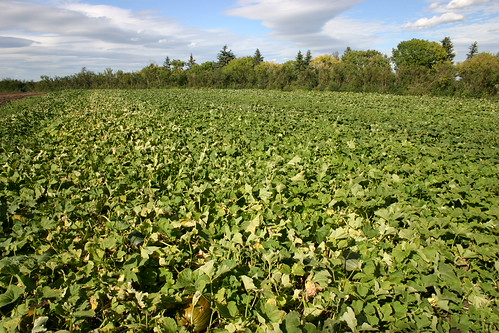
Riverbend Gardens
Riverbend Gardens

Roughly 17% of land in Alberta is good for farming, and the majority of that is situated along the Edmonton-to-Calgary corridor. Edmonton is lucky to have Class 1, 2, and 3 agricultural soils within the city limits, but so far we have not done a very good job of preserving it. Since 1982, Edmonton has lost 74% of its Class 1 soils. Still, in 2009 the average net profit per acre in Edmonton was $79.68, more than double any other location in the Capital Region. And in the Northeast? The average net profit per acre was $270.72. The value of the land in the Northeast needs to be recognized.

Directly to the west of this area, across Manning Drive, is the Edmonton Energy and Technology Park. That ASP was approved by Council on June 9, 2010. The intent is to capitalize on the byproducts left over from oil sands production (the area is about 15 kilometers from existing and proposed upgrader sites).

The Edmonton Energy and technology Park provides a vision for a new eco-industrial area for the city of Edmonton. The opportunity for value-added industries and significant economic spin-off activity based on the development of Alberta’s oil sands was the catalyst for the development of this industrial plan. EETP is designed to take advantage of the primary petrochemicals and products from upgrading and refining in the region.

The 4857 hectare-sized area will be developed over the next 40 years with four primary land use precincts: petrochemical, manufacturing, logistics, and research & development. This is where a lot of that job growth is expected to come from.

crb transportation plan

Partially as a result of the expected increase in industrial activity on the west side of Manning Drive, plans currently exist to connect Highway 28A with Highway 21 via an expressway that would cut right through existing farmland and cross the North Saskatchewan River. The Capital Region Board (CRB) scored a victory in December 2011 when the Province agreed to shelve plans for the Regional Ring Road, but it seems that has done little to protect agricultural land in the Northeast. The CRB’s Integrated Regional Transportation Master Plan includes the expressway as a potential high load corridor (subject to further engineering and technical review). Who knows if the road will actually be built, but the draft Horse Hill ASP includes it.

horse hill asp

In anticipation of this development, an awful lot of land has changed hands. Some estimates suggest that just 15% of land in the area is still owned by original owners. Walton International, a land developer (some would say speculator) that has been active in the Edmonton region for many years, is now the largest landowner in the area. They purchase land at a small premium with the expectation that its value will be significantly increased as the opportunity to develop it draws near. There are a number of holdouts however, including Riverbend Gardens. Recently they and others formed the Northeast Edmonton Agricultural Producers association and launched Friends of Farmers to draw attention to the potential loss of agricultural land.

Business-as-Usual Growth

We cannot afford to grow in the future the way we have in the past. Councillor Iveson highlighted this section of the Growth Coordination Strategy after an initial read:

Although not included in the analysis at this time, operating and maintenance costs in suburban areas represents a significant operational expenditure to the City. Also a large component of capital spending, rehabilitation and replacement of infrastructure is not included in the analysis presented either. Administration is working towards the inclusion of these expenses into future versions of the Growth Coordination Strategy, but at this time the methodology for the gathering and synthesis of the data required for this is not developed sufficiently.

He then stated, “I’m concerned we may not have this full picture before the next Area Structure Plans (for the North East and South West green patches) come up for debate this fall.”

Some land developers will tell you that the City has an obligation to move forward on the three Urban Growth Area ASPs. To them, the City made a promise to develop the land when it annexed the three regions back in 1981. But can we really afford to hold the City of today to decisions that were made over thirty years ago?

I don’t know why the City pursued that annexation in 1981 – I wasn’t yet born – but the answer might be found in Doug Kelly’s book $100,000 An Acre. In Chapter 12 he writes about the development of Campbelltown (now known as Sherwood Park) in the 1950s and in Chapter 14 he elaborates on the City of Edmonton’s opposition to the development. “The city, even then, was concerned about fringe developments and its inability to tax or control development without annexation.” The McNally Report in 1956 and the Hanson Report in 1968 both recommended that Edmonton be allowed to annex St. Albert, Sherwood Park, and the industrial area of Strathcona County. “In all cases, the provincial government knuckled under to the small rural population and disallowed the annexation. It was an injustice to the citizens of Edmonton from which they have never fully recovered.”
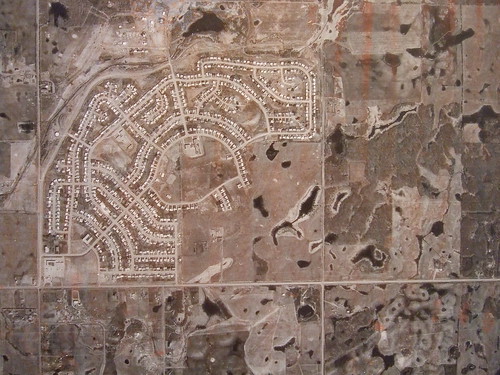
SHERWOOD PARK, ALBERTA MAY 8th 1962 PIC 2
Sherwood Park in May of 1962

I wonder if that experience caused the City to become more aggressive about acquiring the surrounding land decades later. Perhaps they realized the situation for cities was not going to improve. When the province eliminated the Planning Act in 1995 and placed all legislation concerning land development into the Municipal Government Act (MGA), it didn’t come without a cost. “Now the rural municipalities can develop to the fringes of urban municipalities, greatly restricting the latter’s ability to expand for future growth,” Kelly wrote.

The relationship between urban municipalities and the province today seems poised for renewal. With the announcement last month that Calgary, Edmonton, and the province have committed to developing a big city charter, there’s hope that positive changes are on the way for Alberta’s big cities and the options they have for dealing with the unique challenges of growth.

Land developers have sunk money into the Urban Growth Areas and the only way they can get it back and make a profit is for the City to continue growing the way it has been. For sprawl to continue unabated. As a result, the City and Council are almost certainly feeling pressured to get these ASPs approved, but there is absolutely no requirement that they do so. All they must do is follow the process established under the MGA and its ASP Terms of Reference.

We must be willing to stand up and declare that the Edmonton of 2012 and beyond will be a more compact, sustainable city than the Edmonton of 1981. Change is hard, but if the will is there it can be done. We need to be willing to say that if you’ve based your business on decisions that were made over three decades ago, too bad; Edmontonians are no longer picking up the tab.

Food & Agriculture

In our haste to continue unnecessarily growing outward, I’m concerned that we’re going to end up with a Food & Agriculture Strategy that reflects the limited time and attention devoted to it. Determining the true value of the land in the Northeast is just one piece of the puzzle, there are so many other aspects to food and agriculture in the Edmonton region that should be considered.

The discussion primer for the project hits all the right notes, of course.

As part of the strategy, a comprehensive inventory of agricultural assets is being undertaken, as well as an assessment of local food business opportunities. The strategy will include a summary of this background information in order to provide a sense of the current state of food and agriculture in the city and what potential exists. Example practices from across North America are also being examined, as mentioned earlier, in order to gather ideas for what might work in Edmonton.

Assessing local food business opportunities, compiling a comprehensive inventory of agricultural assets – these are excellent ideas, but they are not things that can be completed overnight.

Consulting the right people takes time too. I had the opportunity to attend two consultation events, neither of which was very well attended. At the second such event, there was a lot of great discussion about farmers markets, food hubs, educating people about basic food skills, and much more. And yet, we barely scratched the surface.

Let’s use farmers markets as an example. Yes, everyone seems to agree that farmers markets are a great thing, but what good is a strategy if that’s all it says? Do we have the right number of farmers markets in the Edmonton region? What challenges do they face? What could the City do to help address those and other challenges? Do we have enough producers to support all the markets? These questions deserve to be explored in depth.

Highlands Market
Shoppers at one of Edmonton’s newest markets in Highlands

Given the limited time, I’m not confident that the final strategy will be anything more than a collection of high level goals. I’m sure it’ll be a great read, but I doubt it will be so bold as to make any strong recommendations to Council on how to actually achieve the vision of having a resilient food and agriculture system in Edmonton.

I hope I’m wrong, but I fear the Food & Agriculture Strategy will be viewed as nothing more than another box checked on the road to additional sprawl.

Closing Thoughts

Both the Growth Coordination Strategy and the Food & Agriculture Strategy are slated to go to Council sometime this fall. The Horse Hill ASP is also slated to be reviewed toward the end of October. City Council will soon be on summer break until the end of August, and I’d love for them to return to a flood of messages from Edmontonians expressing their thoughts on this issue. They need to know that a significant number of people support their efforts to curb urban sprawl.

The bottom line is that the agricultural land on the edge of Edmonton is some of the best land in the province. With more than enough capacity to support anticipated population growth within existing areas, there’s no good reason to relinquish such a valuable asset, especially before a proper analysis of the land and how it fits into Edmonton’s future is completed and a strategy is approved.

This is not just a battle between land developers and farmers in the city’s Northeast. This is a battle over the kind of City we want Edmonton to be. I want Edmonton to be a economically and environmentally sustainable city that recognizes the importance of food security and the value of a more compact region. How about you?

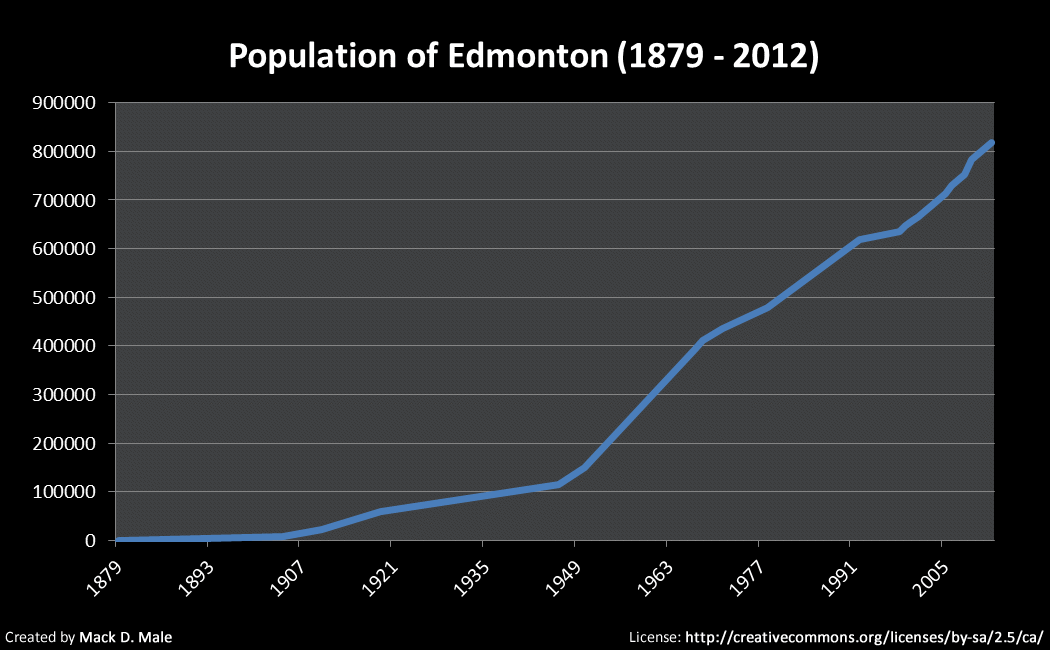
Edmonton’s new official population is 817,498

This morning the results of the 2012 Municipal Census were released, and Edmonton’s new official population is 817,498. That represents annual average growth of about 12,000 since 2009 when the last census was conducted.

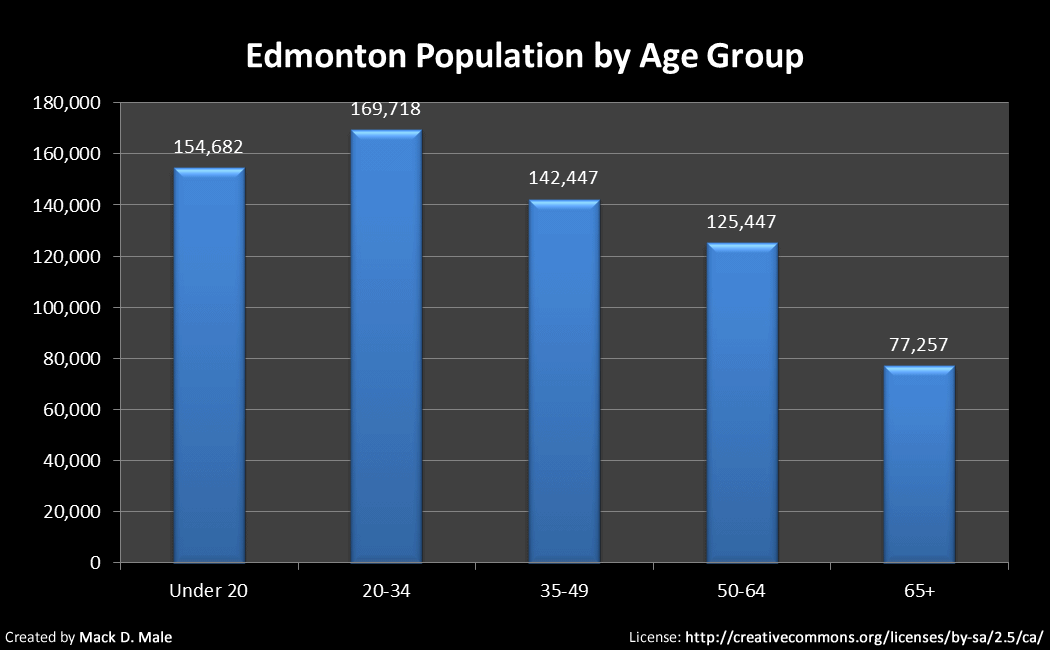
Mayor Mandel seized on the numbers related to age – the largest proportion of residents are in the 25-34 demographic (about 14.5%):

“The growth in population indicates that Edmonton is a city of opportunity,” said Mayor Stephen Mandel. “It is gratifying and exciting to know that so many young people are calling Edmonton their home. This reinforces the appeal of Edmonton, and the value of what our City has to offer; opportunity, culture and quality of life.”

Here’s what our growth curve looks like:

Here’s a look at the population by age group:

One of the new questions asked this year was about mode of transportation from home to work. The results are not incredibly surprising – roughly 80% of Edmontonians get to work by automobile:

You can see all of the results here, including PDFs for each ward and neighbourhood. Unfortunately I can’t do a detailed comparison by neighbourhood, because the open data catalogue has not been updated and I’m not going to sift through 375 PDFs to get the data I need. A note on the website reads: “2012 results will be added to the Open Data Catalogue in early August.” While I suppose it’s a positive that the data will in fact be uploaded to the catalogue, there’s absolutely no excuse for it not already be in there. I feel like I’m fighting the same fight, three years later.

I was most interested in Downtown however, so I did look at the PDF. The population increased far less than I had anticipated, rising to 12,199 from 11,572 (growth of about 5.4%). In other words, just 1.8% of the city-wide population growth occurred in the Downtown neighbourhood. Clearly we still have work to do (perhaps surrounding neighbourhoods grew more, will wait for the open data to analyze that).

Last year City Council passed a new Municipal Census Policy which states that a census will be conducted every two years starting in 2012. Throughout the month of April, census workers knocked on doors asking Edmontonians a variety of demographic questions. The results are important because many grants from other orders of government are calculated on a per capita basis. Additionally, the City needs updated numbers to effectively plan services, and to ensure ward boundaries result in fair representation by population.

The next Municipal Census will be held in April 2014.

Recap: DIYalogue Talks Food

Last night Sharon and I were really excited to be part of DIYalogue Talks Food, the latest event organized by Edmonton’s NextGen. A few dozen people gathered on the Wooftop Patio at The Black Dog on Whyte for a speed-dating style opportunity to learn about Edmonton’s growing local food scene.

Looking for a collaborative space to chew the fat with Edmonton’s local food luminaries? DIYalogue Talks Food connects Edmonton’s established culinary entrepreneurs with local foodies, aspiring chefs, and backyard gardeners in 15-minute small group mini-dates. DIYalogue convenes communities of interest and explores the potential for individual success in the creative industries through unique partnerships and community support.

The speed mentors included:

DIYalogue Talks Food

The mentors paired up, and for the first hour or so, attendees moved from group to group. Sharon and I mostly talked about What the Truck?! but she did field a bunch of questions about her blog as well. Some of our favorite questions of the evening:

  • Are the food trucks mostly run by existing restaurants? There’s a mix right now. Drift is a good example of a truck that started as a truck (though they wanted to start a restaurant originally) and The Act is a good example of a restaurant that now has a truck as well.
  • What does Edmonton’s food scene lack? I said a brunch culture with diners that people will line up at and Sharon agreed and added southern comfort food.
  • What can be done to make Edmonton a better place for food trucks? Read this post.
  • Aside from Tres Carnales and Corso 32, what’s hot? Three Boars!
  • When is the next What the Truck?! event? August, stay tuned!

No food-themed event is complete without something delicious to eat, so it was awesome to have Filistix on hand. They prepared a Moroccan vegetarian tagine – it was delicious! Everyone had the opportunity to sample OFER’s final jar of last year’s cider supply too.

DIYalogue Talks Food

I had a lot of fun with the event, and enjoyed catching up with Nate, Cynthia, and some of the other mentors too.

DIYalogue Talks Food was a great way to kickoff the NextGen blog theme for this month: food.

This month we will be bringing you tantalizing, and thought-provoking posts on and about the food scene in Edmonton. We’ll share what that means to a consumer, to a foodie, to a business owner, to an activist, and to someone who loves to cook, bake, and create.

Looking forward to it!

DIYalogue Talks Food

Thanks to Carol, John, and everyone else who made DIYalogue possible!

An afternoon with the bean sprouts at Lauderdale School!

edmonton public schools foundationA few months ago, Sandra Woitas found me at an event we were both attending and asked if I’d be interested in helping with a video the Edmonton Public Schools Foundation was working on. I said sure, and asked what it entailed. Teaching kindergarten for an afternoon, was her response. I started to explain that I’m really not the best person for the job and that there must be someone else, but Sandra was having none of it. I was going to teach kindergarten!

We found a time that worked, and in mid-April I was set to spend an afternoon with the kindergarten class at Lauderdale School. “This is really going to happen,” I thought, and that was both exciting and scary! I called my Mom, a former preschool teacher and now an SLPA, to get her advice. She was encouraging as mothers tend to be, and advised me to have fun with the experience. A few days before I was scheduled to make my teaching debut, Terry Odegard, the Kindergarten Teacher at Lauderdale, sent me the lesson plan. We would be doing attendance, having a movement break, talking about the calendar (what date is it), playing at centres, taking a break for recess, and then reading a story. It would be a full afternoon with the bean sprouts as Sandra likes to call them!

Finally the day arrived. The feeling I had as I drove to Lauderdale School was not unlike that feeling you get when you’re about to write an exam and you know that you haven’t studied enough and you’re probably not going to do very well. What if the kids didn’t like me? What if I did something horribly wrong and ruined a child for life?! These are the irrational questions I considered.

Sandra met me at the school with coffee, which was really thoughtful and helped put me at ease. I met some of the other teachers in the staff room and then got setup in the classroom while the kids were outside. The camera guys had already done this a few times, so it was business-as-usual for them. I took a few minutes to familiarize myself with the classroom, and then the kids started filing back inside and I greeted them at the door. No turning back now!

The rest of the afternoon was a lot of fun. As you might expect, my fears were completely unwarranted. I couldn’t have messed up even if I wanted to – the kids know the schedule and were quick to point out what we should be doing next. I only used the noise rattle a few times – I was instructed to shake it as a quiet signal when I needed everyone to pay attention. During centres I looked after the painting table, and because the kids had been to the Valley Zoo recently and met the seals who painted with a paint brush in their mouths, we did that too. Hands behind your back and hold the paint brush in your teeth! That was fun, and yes paint got everywhere. During recess, I stayed inside to do a quick interview with the camera crew. Lots of people are uneasy about being on camera, but that seemed like the easiest part of the afternoon to me! The kids came back in from recess, I read a story with them, and then I was on my way. The afternoon really flew by.

Here’s the video that was produced (you can see me in action toward the end):

I ended up having a lot of fun that afternoon, and I definitely came away with much greater respect for kindergarten teachers and the important role that they play in a child’s development and growth. I’m certain I don’t have the patience to do what they do every day! I’m also thankful for the Edmonton Public Schools Foundation and the work that it does.

The Foundation was launched February 10, 2010, for two main purposes: to spread the word about the great things happening in the public education system and to support Edmonton Public Schools across Edmonton. We do this by offering opportunities for improved learning through financial, in-kind and human resource contributions.

Full-Day Kindergarten is one of the programs they support. The provincial government funds half-day kindergarten, but research tells us that children who attend full-day kindergarten are better equipped for success in future grades. We had a lot of discussion about that on EPCOR’s Community Essentials Council recently, but ultimately we decided to support the Full-Day Kindergarten program at Mee-Yah-Noh School (as we did in 2011).

Thanks again to Sandra, Terry, and everyone else at Lauderdale and EPSF for the opportunity!

You can learn more about the Edmonton Public Schools Foundation here. If you’d like to make a donation or otherwise get involved, you can do that here.