What does Alberta’s Budget 2015 mean for Edmonton?

Today was budget day in Alberta. Budget 2015 is being called “a bad news budget” but it could have been much worse. There are tax and user fee increases, cuts to spending (including the first cut to health spending in 20 years), and a new “Health Care Contribution Levy”, and still Alberta’s deficit will grow, to a record $5 billion this year. On the other hand, infrastructure spending seems to be mostly intact, programs for the most vulnerable have not been cut, Alberta retains its tax advantage, and the Province is taking some baby steps toward getting us off the energy price roller coaster. Here is Dave’s take.

Budget 2015

There’s a lot of truth to the “government town” label that people often apply to Edmonton, so any Provincial cuts are going to have an impact. According to the City’s chief economist John Rose, 22% of Edmonton’s employment is related to health care, education, or public administration.

Still, Rose said in recent weeks that Edmonton as a whole would weather the storm better than others in Alberta. From his Labour Force Report issued on March 13:

“Although the impact of lower oil prices is evident in some sectors, the diversity and depth of
Edmonton’s economy has insured that employment continues to grow in Edmonton and that the
City remains a very attractive location for those seeking new opportunities.”

So what does Budget 2015 mean for Edmontonians and for Edmonton?

Highlights

Here are some of the key takeaways from the budget that I think are relevant to Edmonton:

  • For 2015-2016, Alberta Health Services (AHS) faces a decrease of $286 million or 2.1% and will need to cut nearly 1,700 positions
  • The budget includes $926 million in capital spending for health-related “capacity expansion projects” in Calgary and Edmonton
  • There is $50 million over at least two years to renovate emergency rooms in Calgary and Edmonton (specifically the Misericordia, Grey Nuns, and Royal Alexandra hospitals)
  • The budget promises than 300 new restorative care beds in Calgary and Edmonton
  • Post-secondary institutions face $114 million in cuts
  • Campus Alberta institutions (which includes the University of Alberta) are facing a 1.4% operating grant reduction in 2015-2016 and a 2.7% reduction in 2016-2017
  • School boards will receive no money for more students and must cut 3% from non-instructional costs
  • The Province says that “most” school projects announced in 2013 and early 2014 will open in 2016-2017
  • Family and Community Support Services, which helps to fund more than 60 agencies and 80 programs in Edmonton, will be maintained at $76 million.
  • Funding for police remains the same
  • Capital spending of $1.1 billion for the next 5 years includes $124 million for NAIT expansion and $120 million for NorQuest downtown
  • GreenTRIP funding remains intact, which means the first portion of the Valley Line LRT will continue to move ahead
  • MSI funding will remain stable, even if it is more of a loan than a grant
  • The smart fare proposal from Edmonton, St. Albert, and Strathcona County is still “under consideration”
  • The budget contains no funding for the proposed Galleria project

Discussion

Certainly the health care sector is going to take a hit and that will have some impact on Edmonton. The Province maintains that we can get the same quality of service for less, while critics disagree and suggest the effect of this budget won’t be felt only by those at AHS who lose their jobs but also by Edmontonians in need of care. “The time has come for us to start looking at how we can do things in a more efficient manner,” said Health Minister Stephen Mandel. “I don’t think Albertans should have to pay 20 and 30 per cent more for things.”

In addition to the cuts in health-related spending, the budget also introduces the Health Care Contribution Levy, which will apply to individuals with taxable income greater than $50,000 per year. There’s a sliding scale from $200 to $1000 depending on your income bracket. This tax takes effect on July 1, 2015, and applies to roughly 1.1 million Albertans.

The health-related surprise though was money for hospitals, especially given recent suggestions that Edmonton facilities need more than $225 million in maintenance and repairs. The previously announced funding for emergency room upgrades will help in that regard.

It’s not clear how many cuts the education sector will face, but clearly the 3% reduction is going to have an impact. A lack of new funds to deal with growth will likely also mean larger class sizes. At the post-secondary level the cuts are much smaller than many expected.

While there is no provincial sales tax, there are increases to personal income taxes. If you make more than $100,000 per year your tax rate will increase from 10% to 11.5% (phased in over three years) and if you earn more than $250,000 your tax rate will rise to 12% when fully implemented (Edmonton’s media family income is about $100,000). We know that nearly 10,000 employees of AHS earn at least $100,000 a year, which means if they aren’t among the job cuts, they will face increased personal income tax. Though it likely won’t be those who make the most that face the cuts. According to the Herald, Mandel’s own department will spend 18% more than last year.

For most Edmontonians, increased taxes, fines, and user fees will be felt immediately. Gas taxes are increasing by 4 cents to 13 cents per litre. Cigarette taxes are increasing by $5 to $45 for a carton of 200. A bottle of wine or spirits will cost 16 cents more, and a 12-pack of beer will cost 90 cents more. Fines for speeding and other traffic offences are increasing by an average of 35%. Marriage licenses are increasing by $10 as are birth and death certificates.

There is some good news for the most vulnerable Edmontonians. There will be no reductions to child care subsidies for low-income families, nor are there any reductions to the Alberta Seniors Benefit income support. The budget will also accommodate growth for AISH and Persons with Development Disabilities. Starting July 1, 2016 there will also be a new Alberta Working Family Supplement refundable tax credit on earnings up to $41,220. Funding for FCSS, which supports many Edmonton agencies, will be maintained.

On infrastructure there’s mostly good news. Or at least a sigh of relief that important projects will continue moving forward, like the Valley Line LRT which the Province previously committed to.

Responses to Budget 2015

From Mayor Don Iveson:

“The city of Edmonton and Alberta municipalities faired reasonably well on this budget, all things considered – certainly compared to what we all heard and were concerned might be coming,” Iveson said.

“The numbers are fairly small and speaking to our chief economist just now, it may have a small effect on Edmonton’s growth, but we’re talking a decimal to Edmonton’s GDP, not a side-swipe,” Iveson said.

“We can work with the dollars provided,” said Iveson.

From Doug Goss, char of the University of Alberta’s board of governors:

“The message is clear — we all have to find new ways of doing business, we have to be a little more creative,” said Goss.

From Indira Samarasekera, President of the University of Alberta:

“This is a very good outcome,” said Samarasekera, “much better than many were expecting. The provincial government is facing financial pressures, but they’ve demonstrated they understand the importance of post-secondary to Alberta’s future.”

President Samarasekera will address the campus community at a forum on March 31.

From Michael Janz, Edmonton Public School Board chair:

“We’re going to see more students arriving at the school doorsteps with no new money provided to educate them,” he said. “I don’t think this is a good news budget for Edmonton public schools.”

From Marilyn Bergstra, vice-chair of Edmonton Catholic Schools:

“The budget cuts will make it increasingly difficult to support all of our students, particularly our most vulnerable, as well as the new students that are coming to our district,” she said.

From Helen Rice, President of the Alberta Urban Municipalities Association (AUMA):

“Sufficient funding for infrastructure is vital to address the deficit that has continued to grow across the province, and to provide for new infrastructure requirements to meet our obligations to citizens,” said Rice.

“Given the current economic climate, now is the time to secure funding to meet infrastructure needs when prices are falling and the availability of resources to work on projects is increasing,” said Rice.

The reaction from the business community appears to be more mixed.

Budget 2015

Budget 2015 Details

Here are all the budget-related news releases:

Here is the budget presentation from Robin Campbell, Minister of Finance:

You can also download the budget speech in PDF here. You can access the full list of budget documents here.
Media Monday Edmonton: Update #147

Here’s my latest update on local media stuff:

You can follow Edmonton media news on Twitter using the hashtag #yegmedia. For a great overview of the global media landscape, check out Mediagazer.

So, what have I missed? What’s new and interesting in the world of Edmonton media? Let me know!

You can see past Media Monday Edmonton entries here.

Edmonton Notes for 3/22/2015

Here are my weekly Edmonton notes:

Headlines

METRO INE MACAWAN STATION
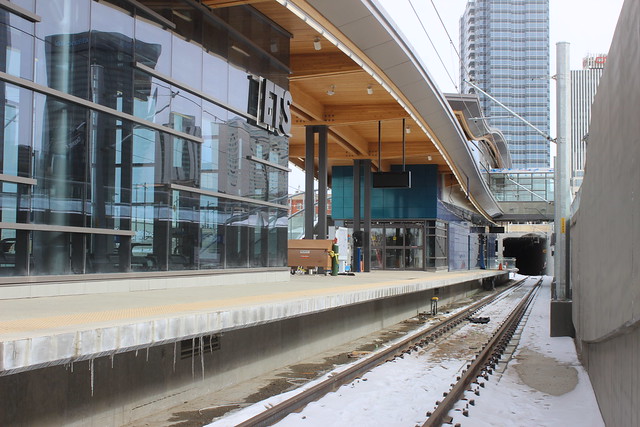
Metro Line MacEwan Station, photo by Jason Woodhead

Upcoming Events

DSC_0002
Is it winter or spring? Photo by Bill Burris

Coming up at City Council: March 23-27, 2015

It’s Committee week again and it looks like it’ll be a busy one with lots on the agenda.

Agendas for upcoming City Council meetings are generally released on Thursday afternoons. I like to take a look to see what Council will be discussing, and I figured I should share that here. Below you’ll find links to the meetings taking place next week, as well as links to and thoughts on some agenda items that caught my eye.

City Council Swearing In 2013-2017

Monday, March 23, 2015

The week begins on Monday with a Community Services Committee meeting scheduled from 9:30am until 5:30pm. There are thirteen reports on the agenda, plus one response to an inquiry from Councillor Knack and one private report. Here’s what caught my eye:

Urban Beekeeping Pilot Project & Bylaw Changes

This report provides an overview of the pilot project on urban beekeeping and also recommends some bylaw changes for Council’s consideration. Here’s how the pilot went:

  • Over 35 inquiries were made, but only 3 residential sites were setup. Timing and strict neighbour permission requirements are blamed for the low numbers.
  • All 3 sites successfully complied with the provisions of the pilot.
  • “The three pilot sites were managed by experienced beekeepers and conversations with enforcement staff were very positive.”
  • Just one complaint was received from a citizen, and it was about a noticeable increase in bees. Research about how to reduce bee hive impacts on neighbours will be “incorporated into an ongoing education and awareness program.”
  • Participants, neighbours, and community members were all surveyed – just one respondent indicated they did not support the idea of urban beekeeping.

A representative from Animal Control & Licensing met with the Edmonton Food Council, a meeting that I attended. We had a great discussion about the pilot and the proposed changes. The report says, “the Food Council supports the City to enabling implementation of urban beekeeping in a way that enhances the positives of beekeeping while minimizing the exposure of citizens to undue risk.”

Currently, the Animal Control & Licensing Bylaw prohibits citizens from keeping large animals (like Stampy I guess), poultry, bees, or poisonous snakes, reptiles, or insects, unless they have permission from the City Manager. The proposed amendments would allow those things if a citizen successfully obtains a license issue by the City Manager. This is not unlike needing to get a pet license for your dog or cat. The City could place terms and conditions on a license, such as the term, or the maximum number of animals that may be kept. They can investigate complaints and they can perform inspections. And of course, the license can be revoked at any time. The requirements are pretty straightforward:

  • You need to be 18 years of age or older
  • You need to pay any applicable fees
  • You need to provide all required information

A license to keep bees is proposed to be free. To get a license, you’ll need to comply with the City’s Bee Site guidelines, you’ll need to register with the Province Apiculturist and comply with the Alberta Bee Act, and you’ll need to complete a recognized beekeeping course. Guidelines include:

  • Hives can only be in the backyard, and must be at least 3 meters from a neighbouring fence line.
  • You can only have one active hive in your yard, consisting of a bottom board and hive cover with no more than four supers.
  • A fresh water source is required to minimize bees going to neighbouring properties.

This is really great to see – the guidelines are reasonable and approachable, the proposed process allows the City to take action when necessary, and the City is encouraging education and community around beekeeping.

I’m excited to see urban beekeeping moving ahead in Edmonton!

Electronic Cigarettes

Councillor Knack made an inquiry back in December about electronic cigarettes, seeking information about whether the current smoking bylaw is applicable or not. The report is very clear:

“The current City of Edmonton Smoking Bylaw does not apply to electronic cigarettes. This product does not contain tobacco and is not currently regulated under the Tobacco and Smoking Reduction Act or Public Places Bylaw 14614.”

There are no specific restrictions on the sale of e-cigarettes. Because they are relatively new, Health Canada has not fully evaluated them and generally advises Canadians against purchasing or using them. Because of that, e-cigarettes cannot be used in AHS facilities nor inside City facilities.

Fire Pit Enforcement Options

This one is a follow-up to the discussion that took place back in November. As directed, Administration has identified “mechanisms to protect citizens from extreme nuisance impacts of neighbourhood fire pits”. They came up with three:

  • Existing Mechanisms – Rather than issue a $250 fine, officers could require a mandatory court appearance.
  • Create a Subjective Nuisance Bylaw Provision within the Community Standards Bylaw
  • Enhanced Responsive Services – This would require additional staff, and therefore, budget.

The first two would have no cost implications.

Other

Here are some of the other reports on the agenda:

Additionally, a bunch of reports have been given revised due dates, so get your calendar out and pencil in these dates if they’re of interest:

Tuesday, March 24, 2015

On Tuesday, the next Executive Committee meeting is scheduled to take place from 9:30am until 5:30pm. There are twelve reports on the agenda, plus one response to an inquiry from Councillor Esslinger. Here’s what caught my eye:

City Council Policy on Open City Initiative

The recommendation here is that Council approve City Policy C581, the Open City Policy. “An open city is a connected city,” the report says. “Philosophically, an open city is connected and responsive to the goals and objectives of an informed and engaged public, who in turn are partners consulted in setting the goals and objectives of the city.”

The included draft policy incorporates the five most frequently occurring suggestions from respondents to an Edmonton Insight Community survey:

  • Emphasis on citizen and community involvement in decision-making
  • Embrace openness in all City employees’ and election officals’ actions
  • Clarify how privacy will be protected
  • Specify how the City will ensure all practices and processes will adhere to Open City Principles
  • Use understandable language

The draft policy says that as an open city, “Edmonton will create opportunity for diverse input and participation, inviting Edmontonians to play a larger role in shaping the community and enabling social and economic growth.” The core commitments in the policy would have the City:

  • Manage information and data assets as a strategic resource
  • Ensure information and data are open by default and private where appropriate
  • Expand opportunities to foster a collaborative environment and engage Edmontonians to ensure municipal activities reflect community values, priorities and standards
  • Embrace technology and new business models to deliver services to Edmontonians
  • Remove barriers to access and open up new possibilities for collaboration between Edmontonians and the City
  • Work with other public and private sector organizations for the advancement of Open City principles

I can’t say that I’m thrilled with the second point (I’d rather see a separate point on privacy and not diminish the “open by default” commitment), but overall, I think this is a big step in the right direction. I expect Council will be happy with it too.

Update on Infill Progress

This report provides an update on the 23 actions identified in Edmonton’s Infill Roadmap. Here are the highlights:

  • Three of the five communications actions have been completed, including work on the website and the development of the Good Neighbour Construction Guide.
  • Three of the five collaboration actions have also been completed, including the Infill Tour and the Infill Planning Academy Course.
  • One of the three knowledge actions has been completed – the creation of a document that provides a basic understanding of drainage services in Edmonton.
  • Twp of the five rules actions have been completed (these deal with zoning changes).
  • Two of the five process actions have been completed.

Northern/Circumpolar Initiatives Secretariat

Council is considering the formation of a Northern/Circumpolar Initiatives Secretariat that could help Edmonton “achieve significant progress in the Northern/Circumpolar region through supporting and building partnerships with northern communities.” EEDC was directed to develop a business plan for the initiative, which this report includes and summarizes.

The area of influence would be the Edmonton region, but also Whitehorse and Yellowknife. The hope is that Edmonton can form partnerships with northern communities around issues like health care, education, commerce, innovation, and community development.

The idea would be to formally create the Secretariat by the end of Q2 2015. The City, EEDC, the Edmonton Chamber of Commerce, and the University of Alberta would provide funding and in-kind resources as partners in the initiative. Council has already approved a one-time package of $90,000 for 2015.

Other

Here are a few notes on some of the other reports:

The following reports have been given revised due dates:

Wednesday, March 25, 2015

The next Transportation Committee meeting takes place on Wednesday from 9:30am until 5:30pm. There are five reports on the agenda, as well as one response to an inquiry made by Mayor Iveson.

Cell Phone and Wi-Fi Coverage in LRT Stations and Tunnels

I don’t think there’s much new here, but the report provides an update on the inquiry that Mayor Iveson made about getting connected when you ride the LRT. The City is targeting Q4 2015 for service in the tunnels. They are currently discussing the implementation of “a single co-location solution” that would allow any service provider to “connect to a common carrier supported infrastructure”. So instead of every company installing hardware, one set of gear will be installed that all will share. Can’t wait to see this roll out!

Valley Line Stage 1 Environmental Impact Screening Assessment Update

This is a pretty big report with four attachments. The recommendation to Council is to approve the Environmental Impact Screening Assessment, to approve the list and locations of Major Facilities, and to approve the upgrades for the construction access route through the west side of Louise McKinney Park.

311 Calls – Snow & Ice Complaints

This report summarizes the process for managing 311 calls received for snow and ice control operations. Improvements for managing these calls have been made and more are planned. For instance, revised scripts reduced the ratio of calls being referred to Roadway Maintenance from 63% to 49%.

For the 2013-2014 season there was a total of 47,779 calls, and that decreased to just 22,186 in the 2014-2015 season. The report says that 82.7% of notifications are closed within 5 business days, which is an improvement from 53.8% last time.

You can see snow & ice maintenance calls into 311 using the 311 Data Explorer.

NAIT Line Transit Security

Since 2011, ETS says it has seen a 17% increase in security-related files due to rapid ridership growth “without a proportionate increase in Transit Peace Officer staffing levels.” In order to “maintain the reputation of Edmonton Transit as a safe, secure and welcoming system” with the activation of the Metro Line to NAIT another six Transit Peace Officers will be required.

The report also notes than the Metro Line presents “unique security challenges” due to its proximity to the downtown arena and entertainment district. And though the Transit and Police Partnership Team pilot project has been positive, it also demonstrated the need for more security as a total of 140 arrests, 450 warrant executions, and 329 ticket violations were generated in a five month period.

Alternatives to adding new Transit Peace Officers include sticking with the status quo, engaging police, or hiring private security. The cost for wages, benefits, equipment, and training for six Transit Peace Officers from June to December 2015 is $354,000 and $607,000 for 2016.

Other

The other reports include:

And a bunch of reports have been given revised due dates:

Thursday, March 26, 2015

Executive Committee is meeting again on Thursday afternoon. There’s just one item on the agenda, and it’s a private, verbal report: Civic Agencies Recruitment – Applicant Interviews. This is a continuation of an ongoing item.

Wrap-up

You can keep track of City Council on Twitter using the #yegcc hashtag, and you can listen to or watch any Council meeting live online.

Media Monday Edmonton: Update #146

Here’s my latest update on local media stuff:

Red Bull Crashed Ice
Another cool photo of Red Bull Crashed Ice, courtesy of retired CTV cameraman Al Girard

You can follow Edmonton media news on Twitter using the hashtag #yegmedia. For a great overview of the global media landscape, check out Mediagazer.

So, what have I missed? What’s new and interesting in the world of Edmonton media? Let me know!

You can see past Media Monday Edmonton entries here.

Edmonton Notes for 3/15/2015

Here are my weekly Edmonton notes:

Headlines

Red Bull Crashed Ice in Edmonton
Red Bull Crashed Ice in Edmonton, photo by Jeff Wallace

Upcoming Events

70,000 Strong
70,000 Strong, photo by Kurt Bauschardt

Red Bull Crashed Ice - Edmonton
Red Bull Crashed Ice, photo by IQRemix

Coming up at City Council: March 16-20, 2015

Agendas for upcoming City Council meetings are generally released on Thursday afternoons. I like to take a look to see what Council will be discussing, and I figured I should share that here. Below you’ll find links to the meetings taking place next week, as well as links to and thoughts on some agenda items that caught my eye. You can find my previous roundups here.

City Council Swearing In 2013-2017

Monday, March 16, 2015

The week begins on Monday with a Public Hearing scheduled to last all day. There are 20 bylaws on the agenda. Here are some that caught my eye:

Bylaw 17011 – Adoption of The Decoteau ASP

You’ll recall that this bylaw was first considered at the February 9 meeting, where Council asked for some improvements. Here’s what has changed:

  • The net residential density of the proposed ASP has increased from 30.6 to 34.0 dwelling units per hectare.
  • An increase in the Business Employment designation is not being proposed as it would increase infrastructure costs, among other considerations. Administration says this can be further refined during the NSP phase.
  • Mapping and policies related to wetland and natural areas have been verified as providing “an accurate representation of the ecological network proposed for retention.”

This bylaw is ready for second reading only – third reading is being withheld pending review by the Capital Region Board.

Bylaw 17116 – Amendment to the Zoning Bylaw re: Garage & Garden Suites

This bylaw is meant to eliminate restrictions for Garage and Garden Suites and to enable the subdivision of sites zoned RF1 to narrower lots not less than 7.6 meters wide. These two amendments were brought to Executive Committee back on November 12 and address two actions from Edmonton’s Infill Roadmap (pdf):

  • Action 14: Create more and better opportunities for Garage and Garden Suites in established neighbourhoods by amending the Zoning Bylaw’s location criteria and Site regulations for these types of housing.
  • Action 15: Change the (RF1) Single Detached Residential zone to allow the subdivision of properties into narrower lots that are half of the average width of the other lots on the block (but not less than 25ft wide)

There are currently restrictions on where Garage and Garden Suites can be located, on the height of those structures, and on the minimum site area. The proposed amendment addresses all of these restrictions.

The second proposed amendment will allow a minimum site width for single detached housing of 7.6 meters, decreases the minimum site area for single detached housing to 250.8 m2, increases allowable site coverage for narrow lot developments to 42%, and allows the subdivision of a lot zoned RF1 to a maximum of two lots.

Public input came from the Evolving Infill consultation efforts as well as a pilot project that took place in the Prince Charles neighbourhood. The report says that “more than 1000 residents and stakeholders took part in both Evolving Infill and Garage and Garden Suite consultation.”

Bylaw 17114 – To allow for the development of Public Education Services, Allard

This bylaw is to rezone the property located at 660 Allard Boulevard SW from AP to US to accommodate the development of a public elementary school. This is being done “in conformance with the Heritage Valley Servicing Concept Design Brief and the Allard Neighbourhood Area Structure Plan.” No concerns or questions were raised as a result of the advance notice.

Bylaw 17132 – Closure of portions of 101 Street NW, 100A Street NW

This bylaw is about road closures yes, but it’s really about repurposing Fire Station 21 in Rossdale:

“On July 3, 2013, City Council approved a Community Services Committee Report that recommended, in part, that the existing Fire Station 21 be repurposed to house an active river rescue crew, provide backup service to the downtown core, house specialized apparatus, be approved as a major facility within the River Valley, and that the location of the facility within the River Valley be deemed essential and approved pursuant to section 3.5.1 of the North Saskatchewan River Valley Area Development Plan Bylaw. This road closure application is a step in the ongoing progression to achieving these recommendations.”

Apparently the station is built over several lots and road right-of-way created by “Plan Q” way back in 1893.

Other

A few others I wanted to note:

  • Bylaw 17111 is to allow a freestanding sign to be put up at 5315 127 Street NW to identify the new Eco Station.
  • Bylaws 17070 and 17071 will be considered together, and amend the Maple NSP to designate land that was being used for a cell tower to row housing as the tower has been dismantled and is no longer in operation.
  • Bylaw 17133 is an amendment to the zoning bylaw to reduce the required minimum Side Setback for garages in RF4 zoned areas from 0.9 meters to 0.6 meters, “specific to Garages where the vehicle doors face a Lane abutting the Site.” Currently constructing a detached garage for each unit of a semi-detached house would require a Class B discretionary development approval.

Tuesday & Wednesday, March 17/18, 2015

Next up for Council is a regular City Council Meeting scheduled to take place on Tuesday and Wednesday. There are 14 public reports, 3 bylaws, and 3 private reports on the agenda.

Council Members’ Updates on Agency & Initiative Appointments

This report provides an update on the agencies and initiatives that the Councillors are members of. Here are some highlights:

  • AUMA’s Executive Committee will be making its annual presentation to Council’s Executive Committee on March 24.
  • The Chair and CEO of the Capital Region Board will also be presenting to Executive Committee on March 24. The CRB’s Regional Services Committee may be disbanded pending a report in August 2015.
  • The Federation of Canadian Municipalities (FCM) will hold its annual conference in Edmonton from June 5-8. The mayor will host a reception in Churchill Square after the opening game of the FIFA Women’s World Cup on June 6.
  • Edmonton will be the host city for the 2019 International Council on Alcohol, Drugs & Traffic Safety (ICADTS). The 7th Traffic Safety Conference takes place here in Edmonton from April 27-30.

Edmonton’s Community Energy Transition Strategy

This report presents a draft of the strategy and will be discussed in a facilitated session on Wednesday morning. So what is a Community Energy Transition Strategy?

“Edmonton’s Community Energy Transition Strategy is a risk management strategy designed to protect Edmonton’s quality-of-life (social, economic, environment) from climate and energy-related risks.”

“The strategy responds to City Council’s 10-year goal to be “the nation’s leader in setting and achieving the highest standards of environmental preservation and sustainability both in its own practices and by encouraging and enabling the practices of its partners.” Equally, it responds to Council-approved goals in The Way We Green and to corporate outcomes and measures that call for a reduction in greenhouse gas emissions in both City operations and the Edmonton community.”

Energy transition is about reducing our greenhouse gas emissions, improving energy efficiency and conservation, ensuring our energy systems are resilient to disturbances, and positioning Edmonton to take advantage of clean energy technologies. The strategy contains:

  • A Diagnosis of the energy and climate challenges/opportunities we face globally and locally;
  • Strategic Courses of Action for addressing these challenges/opportunities in coming decades;
  • An Eight-Year Action Plan establishing the first step (2014-2017) and signaling the second step (2018-2021) of Edmonton’s energy transition journey.

The strategy calls energy transition “the golden opportunity of our age” and says that “few places are better positioned than Edmonton in terms of knowledge, experience, and financial capacity to lead and excel in this area.”

To say there’s a lot to digest here would be an understatement. There are 11 strategic actions, 7 opportunity areas, 45 focus areas, and 10 community scale programs. Targets include reducing greenhouse gas emissions by 35% by 2035 (compared to 2005 levels), reducing energy consumption by 25% per person by 2035 (compared to 2009 levels), and generating 10% of Edmonton’s energy locally by 2035.

By 2035, Edmonton’s Community Energy Transition Strategy is “expected to deliver a net present value of approximately $2.5 billion to citizens and community stakeholders.” The report argues that a City Policy is important to make this happen.

So, how much will it cost? Funding of $1.9 million a year is needed in 2016 and 2017 for startup initiatives. The programs beginning in 2018 would require another $27.5 million per year through 2021. No funding sources are identified in the report, but it does say that “additional federal, provincial, and municipal government funding will be needed to advance these initiatives.”

Communications Plan for LRT Funding Advocacy

The report isn’t available yet, but Council will be discussing how to advocate for funds for future LRT development. This item came up at the Transportation Services Committee back on February 25. As a reminder, there is roughly 32 km of the 69.7 km LRT Network Plan without funding.

Committee Reports

The Committee reports were all recently discussed at one of the four committees and have been referred to Council with a recommendation for approval. A few that I wanted to highlight include:

Bylaws

As mentioned, there are three bylaws on the agenda:

  • Bylaw 17005 is an amendment to the Procedures and Committees Bylaw 12300 to change the time for continuation of City Council meetings and Public Hearings. Currently they continue the next business day, but the amendment would allow Council to choose a time within the next three business days.
  • Bylaw 17128 is to decrease the borrowing authority by $9.6 million to $12.3 million for the Aurum Energy Park. This is required to enable the City to recover the actual cost of the local improvement rather than the estimated cost.
  • Bylaw 17101 increases borrowing for sidewalk reconstruction in the Hazeldean neighbourhood by $8,339 because the originally assessed area was short by 46 meters. This is a very small chunk of the $6.9 million project cost.

Private Reports

Council will receive three private reports: one is an intergovernmental update on the City Charter, and the other two deal with the performance evaluations for the City Manager and City Auditor. The 2014 performance evaluation results are time-specific at 1:30pm on Tuesday.

Thursday, March 19, 2015

Another Community Services Committee meeting has been scheduled for Thursday morning, to allow Council to continue interviewing applicants for the Civic Agencies Recruitment effort.

Wrap-up

You can keep track of City Council on Twitter using the #yegcc hashtag, and you can listen to or watch any Council meeting live online. You can read my previous coverage of the 2013-2017 City Council here.

Media Monday Edmonton: Update #145

Here’s my latest update on local media stuff:

You can follow Edmonton media news on Twitter using the hashtag #yegmedia. For a great overview of the global media landscape, check out Mediagazer.

So, what have I missed? What’s new and interesting in the world of Edmonton media? Let me know!

You can see past Media Monday Edmonton entries here.

Edmonton Notes for 3/8/2015

Here are my weekly Edmonton notes:

Headlines

Edmonton Skyline
Edmonton Skyline (41 image composite) by Dave Sutherland

Upcoming Events

Icy Snakes
Icy Snakes (Crashed Ice) by Kurt Bauschardt

Edmonton wants to tap into local creativity with labs

The City of Edmonton is hoping to tap into the creative ideas and energy of Edmontonians with two new lab initiatives. Open Lab aims to “create unique technological solutions for municipal challenges” while CITYlab will “advance conversations around urban planning.” Both initiatives, if successful, will change the way the City does business. The hope is that a healthy dose of innovation will be injected into the organization to ultimately result in better, more efficient outcomes for citizens.

Open Lab

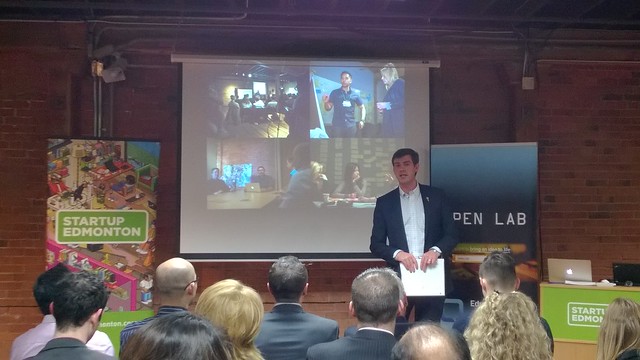
The program room at Startup Edmonton was packed yesterday for the launch of Open Lab. Mayor Don Iveson, Startup Edmonton’s Ken Bautista, a few other speakers shared an overview of what the program is and what they’re hoping to achieve with it.

Open Lab Launch

So, what is Open Lab?

“A physical and virtual space where City employees and Startup communities can work together to create innovative solutions to municipal challenges. It is a unique continuous innovation program that combines local government, open data, smart creatives, and lean startup culture to build new products that improve the citizen experience.”

Open Lab is part of the Open City Initiative, which launched back in June. It’s also a partnership with Startup Edmonton, and that’s what makes it different from previous attempts at this same idea.

Startup Edmonton believes there are three main ingredients for a thriving entrepreneurial community: people & innovation, community & collision, and leadership & growth. They believe in the importance of thinking bigger, valuing community, and building to scale.

  • “Smart creatives solve big problems.”
  • “Entrepreneurship is a team sport.”
  • “Entrepreneurial leaders grow & scale companies.”

One of the ways Startup tries to implement these principles is via the lean startup approach. The goal with Open Lab is to add some of that lean startup culture into the City. There are three main components to the initiative:

  • Collision Days – Deep dive events where startups and SMEs discuss technologies, tools, and issues impacting a particular industry or community.
  • Open Lab Accelerator – Helping teams learn how to use lean startup methodologies, customer development, and validate what products to build in the first place.
  • Leadership Program – Developing product managers and leaders inside the city who build and test ideas like startups, using prototyping, behaviour science, and design thinking.

The Open Lab Accelerator is not unlike Preflight, the successful Startup Edmonton program that has helped local success stories like Poppy Barley.

Open Lab Launch

Michael Strong, a planner with the City of Edmonton, was one of the speakers at yesterday’s launch events. He was sort of the guinea pig for Open Lab, and he described how the approach helped his team think about new ways of achieving one of their objectives, which is to get people using and thinking about LRT in a different way. They have mocked up an app that would combine the “get me from A to B” and “what’s around me” approaches to help people more effectively use the LRT.

As I indicated above, this isn’t the first time the City has tried to tap into the local startup community. I am reminded somewhat of the lackluster Leveraging Technical Expertise Locally program, for instance. I think what’s different this time is that everyone involved recognizes the biggest hurdle is culture. And certainly Startup Edmonton has demonstrated success with getting people to think differently in a way that gets results.

Another big difference from the past is that the City has continue to embrace open data and there’s a lot more to work with now than there was six years ago. There’s a greater understanding of what open data is, what the benefits are, and how the City can work together with citizens to get things done. Indeed the news release highlights the recently launched 311 Explorer as one example of “how City data can be useful to everyone.”

So I am optimistic about Open Lab. If you want to find out more in person, Startup Edmonton is hosting a series of Open Lab Meetups on the last Thursday of the month from 2pm to 5pm. Open Lab representatives will be there to hear your ideas and visions and to help guide you.

CITYlab

I have been hearing about CITYlab for months now, but no one could give me a clear description of what it was. In retrospect, that’s probably because no one knew! They had an idea but weren’t sure where to take it. Now CITYlab has found an anchor, in the Open City Initiative, and the City is ready to start experimenting with a new approach to placemaking.

citylab

From the news release:

“CITYlab will partner with groups and individuals on projects and events that test or support the City’s urban planning goals. CityLab will serve as a resource for Edmontonians with creative and new urban planning ideas.”

The aim is to be a “laboratory to support and create small, temporary projects, activities and events to advance conversations around urban planning.” They want to make urban planning fun, as difficult as that might sound!

You might expect a project like this to rely heavily on techology, but CITYlab’s first experiment is decidedly analog. Starting on March 7, CITYlab will be distributing self-addressed stamped postcards across the city. If you get one, they want you to write down your urban planning ideas or projects and send it back. All of the returned postcards will be used to make a temporary art installation, and CITYlab is committing to undertaking at least one of the ideas or projects suggested. If you’re so inclined, you can also submit a project idea online.

citylab

One of the folks behind CITYlab is Jeff Chase, a senior planner who you might know from Edmonton’s NextGen or #yegsnowfight. He is a big supporter of Make Something Edmonton and understands the value of a different way to engage citizens on urban planning. “These creative new approaches to planning will help us meet the challenges that our city faces as it grows,” he said in the news release.

CITYlab still feels a little nebulous to me, but at least it’s out in the open now. If citizens are willing to get involved, it feels like there’s an opportunity to help shape and define the initiative further.

You can follow @PlanEdmonton on Twitter for updates, or check out the #yegcitylab hashtag. You can also email citylab@edmonton.ca if you want more information or two request a postcard.

Taking steps to become an Open City

Here’s what I wrote about the Open City Initiative back in June:

“I like the direction outlined in the Open City Initiative, unfortunately I just don’t have much confidence that it’ll go beyond a report and lots of talk.”

I questioned whether the report would sit on a shelf or if its goals and objectives would be resourced and actioned. With the launch of Open Lab and CITYlab, I’m now a bit more confident that the Open City Initiative will have a real impact. These are tangible projects that I think will make a difference.

I’m excited to see how this unfolds!