Coming up at City Council: December 15-19, 2014

Agendas for upcoming City Council meetings are generally released on Thursday afternoons. I like to take a look to see what Council will be discussing, and I figured I should share that here. Below you’ll find links to the meetings taking place next week, as well as links to and thoughts on some agenda items that caught my eye.
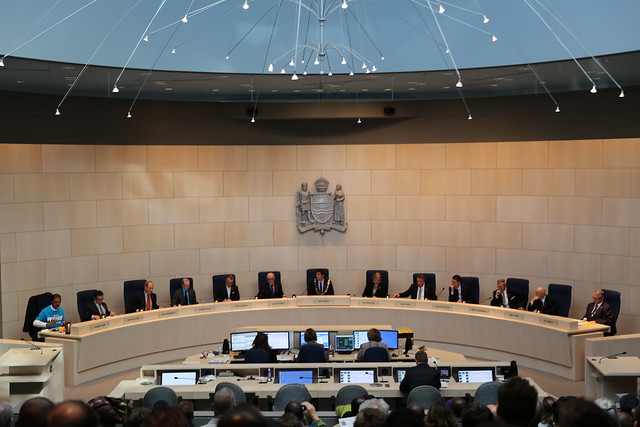
City Council Swearing In 2013-2017

2015 Budgets

Yesterday, City Council approved both 2015 Operating and Utilities budgets, as well as the 2015-2018 Capital Budget. The Operating Budget average tax increase is 5.7%, of which 1.5% is still dedicated to the Neighbourhood Renewal Program. Here’s what the mayor said in the news release:

“This Budget demonstrates how the City of Edmonton works at improving our operations and finding more efficient ways to deliver on our commitments to Edmontonians,” said Mayor Iveson. “City managers have been committed to positive changes that create better value, ensuring maximum payoff for every taxpayer dollar.”

The Capital Budget will see investment of $4.3 billion in infrastructure throughout the city. Here are the mayor’s comments from the news release:

“The Capital Budget strikes a balance between investments in a growing city and the requirement to keep existing City assets in good repair,” said Mayor Iveson. “We’re building a great city for the people who live, work and play in Edmonton.”

Mayor Iveson also wrote a wrap-up blog post which defended the tax increase and called the budget a “value-for-money kind of budget”. He said it “makes responsible use of every dollar we’ve asked for.”

The budget was approved unanimously by City Council.

Monday, December 15, 2014

Council starts the week with a public hearing scheduled to take place all day. After the incredibly involved budget discussions, I’m sure all of Council will be happy to get back to business as usual!

There’s not much on the agenda that caught my eye, but here are a few things:

  • Bylaw 17023 proposed to close a portion of Winterburn Road (215 Street NW) to allow for the development of business and industrial uses in the area.
  • For those of you annoyed by such things, bylaw 17019 is a rezoning to allow for digital signs in Place LaRue near 184 Street and 100 Avenue.
  • Bylaw 17025 is for an amendment to the Stewart Greens NSP. Nothing major, and doesn’t result in any changes to the approved Land Use and Population Statistics.
  • Bylaw 17015 is an amendment to The Hamptons NSP and Bylaw 17016 would allow for the development of a medium rise apartment site (four apartment buildings with 364 total units and 88 townhouse units). Together these two bylaws increase the density of the site by enabling the development of additional apartment buildings in place of the townhouse units.

Tuesday, December 16, 2014

The LRT Governance Board will meet on Tuesday in the River Valley Room at City Hall. As a Committee of Council, I thought I’d include it here.

The main item is the LRT Governance Board’s semi-annual report. Here are the highlights:

  • The board met six times this year.
  • Five RFQ submissions were received and evaluated, resulting in a recommended shortlist of proponents for Stage 1 of the Valley Line LRT project.
  • The three shortlisted proponents were issued an RFP in September.
  • A public engagement plan was approved in July, including the “accountability, transparency, and disclosure framework.”
  • As a P3 project, the LRT Governance Board is tasked with ensuring the Valley Line LRT project delivers “long-term value for money, and cost and scheduled certainty.” So far, they are confident the project does indeed “demonstrate value for money as a P3 project.”
  • Also in September, the board approved the draft Project Agreement, which is the main contract between the City and the winning proponent that covers the 35 year period of design, construction, operations, maintenance, and financing for Stage 1 of the Valley Line LRT.

Also on the agenda is a verbal update on the Valley LRT Line project, as well as on the RFP activity. The LRT Governance Board is slated to meet five times in 2015, in March, May, July, August, and November.

Wednesday, December 17, 2014

Council’s final meeting of 2014 will take place on Wednesday, and there are some big items on the agenda.

Municipal Development Corporation Business Plan

The first report listed (though not yet available) is a business plan for the proposed for-profit municipal development corporation. This is a follow-up to the September 2014 meeting decision to proceed with the establishment of a municipal land corporation (you can see that report on options here). The business plan should include “a governance model, financial analysis, non-financial analysis, and a detailed implementation strategy for the establishment of a for-profit municipal development corporation.” Administration was also tasked with generating “a list of potential City-owned properties to be included in the initial transfer to the entity.”

Emerging Economy Initiative

This item was known until September as the “Economic Development – for Start-ups Initiative” until Council decided to change the name. The main update here is the draft terms of reference for this initiative, which “outlines the background and recommended future state for the five Council recommended small-business and entrepreneurship focused programs.” The five programs include:

  • New Canadian and Aboriginal Business Start-up Supports
  • “Make Something Edmonton” and “Edmonton Original” marketing strategies
  • TEC and Startup Edmonton mentoring and accelerating programs
  • Live Local and Local Economy Organizations
  • Corner Store Program

The City is meant to be a partner in this effort along with EEDC and the Edmonton Chamber of Commerce. In some cases the City has provided seed money to these programs, in other cases the City indirectly funds them through contributions to parent organizations (like TEC and Startup Edmonton through EEDC).

Can I just say I really dislike how they include the dash in “start-up”! Seems unnecessary.

Bylaw 17001: Edmonton Downtown Academic and Cultural Centre Pedway Connection

This bylaw is ready for first reading and would authorize the City to borrow up to $22.5 million to build a pedway connection to the proposed EDACC (or Galleria as it is more popularly known). Because this is on Crown land, second and third reading would only take place after the Minister of Infrastructure has approved it. No valid petitions to this project were received.

The proposed pedway is an underground connection from Churchill LRT Station into the Station Lands through the new Royal Alberta Museum. The total cost of the project is $30 million, 25% of which will be financed by the City. The remaining $22.5 million will be financed “by way of local improvement assessment against the abutting property owners.” But this bylaw allows the City to borrow that money to complete the project, with the debt to be repaid over a period of 20 years.

The capital profile for the pedway justifies the project as follows:

“A significant factor of the Galleria project is the partnership with the University of Alberta. The establishment of an academic facility campus will bring more people to the downtown core every day, catalyzing services and development in and around the downtown area. The University participation is conditional upon connecting 104 Ave to the Churchill LRT Station via an underground Pedway.”

In terms of timing, it was argued that the pedway needed to be built now or a connection to the RAM would not be possible.

2015 Council and Committee Meeting Schedule

The schedule was approved back in October, but Council asked to hold their City Council meetings more consistently on Tuesdays (with a continuation on Wednesday mornings). This report changes a few of the meetings to better align with that schedule. So in general, Public Hearings take place on Mondays and Council meetings take place on Tuesdays.

Special Meeting on Public Engagement

The Council Initiative on Public Engagement is well underway, and a public event has been planned for January 24, 2015 to “discuss the vision for the Initiative.” Mark your calendars! In order to get aligned, a joint City Council and Corporate Leadership Team (CLT) facilitated session is being proposed for January 21, 2015.

Capital Region Board Appointments

Both Mayor Iveson and his alternate Councillor Gibbons are unavailable for the CRB meeting in January, so it is being proposed that Councillor Walters attend instead. Additionally, Council is looking to update its appointments to the CRB Subcommittees and Task Forces as follows:

  • Advocacy & Monitoring: Mayor Iveson, Councillor Gibbons as the alternate
  • Governance, Priorities & Finance: Councillor Walters, Councillor Gibbons as the alternate
  • Land Use & Planning: Councillor Gibbons, Councillor Walters as the alternate
  • Regional Services: Councillor Gibbons, Councilllor Walters as the alternate
  • Transit: Councillor Walters, Councillor Gibbons as the alternate
  • Growth Plan Update Task Force: Mayor Iveson, Councillor Gibbons as the alternate
  • Housing Task Force: Councillor Gibbons, Councillor Walters as the alternate

BRZ Budgets & Travel Grant Recommendations

Just when you thought Council was done with budgets, they’re right back it! On Wednesday they will approve the 2015 Business Revitalization Zone (BRZ) budgets. There are 13 BRZs in Edmonton.

Council will also be discussing the latest Community Investment Program Travel Grant Program grant recommendations. This program is intended to support round trip travel from Edmonton for individuals working in the arts and festival communities. Grants of up to $750 per traveler can be awarded. A total of $21,600 is being recommended in travel grant funding to 27 individuals. The Edmonton Arts Council has recommended $82,240 in travel grant funding through the program in 2014.

Other

A series of updates from Council on Agency and Initiative appointments is being made available at this meeting. These include updates on work with AUMA, the ELEVATE initiative, the Urban Isolation/Mental Health initiative, Child Friendly Edmonton, and the Edmonton Women’s Initiative.

Council is being asked to approve expropriation of four properties for Stage 1 of the Valley Line LRT project: Property 1, Property 2, Property 3, Property 4.

There is one listed motion pending, from Councillor Knack, on electronic cigarettes.

Three private reports are listed:

  • Edmonton Business Revitalization Zones – 2015 Boards of Directors
  • Process and Timelines for City Manager and City Auditor 2014 Performance Evaluations
  • Reappointment Recommendation – Audit Committee Public Member

One report has been revised to March 2015 on Electrical Franchise Fee Charges as part of The Way We Finance.

Winter Recess

Following Wednesday’s meeting, Council will be on winter recess. They’ll resume on January 19, with Committee meetings on Monday, Tuesday, and Wednesday that week. A public hearing is slated for January 26, with the first City Council meeting of the year scheduled to take place on January 27.

That’s it! You can keep track of City Council on Twitter using the #yegcc hashtag, and you can listen to or watch any Council meeting live online.


Media Monday Edmonton: Update #133

Here’s my latest update on local media stuff:

Social Media Breakfast #38 Edmonton
Media was the discussion at Social Media Breakfast Edmonton #38

You can follow Edmonton media news on Twitter using the hashtag #yegmedia. For a great overview of the global media landscape, check out Mediagazer.

So, what have I missed? What’s new and interesting in the world of Edmonton media? Let me know!

You can see past Media Monday Edmonton entries here.

Edmonton Notes for 12/7/2014

I’m in Miami for most of the week for work. Here are my weekly Edmonton notes:

Headlines

The Capital - pano
Amazing pano from Jeff Wallace!

Upcoming Events

Alberta First Nations Opportunities Forum

Why isn’t City Council pushing back on the Edmonton Police Service?

An Edmonton Journal editorial in late 2002 discussed the potential decision between the police union’s campaign for 300 new officers and the operating expenses of the new helicopter that had just been donated by the Edmonton Police Foundation:

“Some would argue that the city should find the money to provide both more officers and the chopper. Yet how realistic is that? And if we must choose, which option will provide the best policing?”

In the end, Council voted to add an extra $5.1 million to the 2003 operating budget to hire 55 new officers, but rejected an increase to pay for the helicopter operating expenses. Police chief Bob Wasylyshen promised to find money elsewhere in his budget to enable the helicopter to fly.

Oh how times have changed. Now, the police get a new helicopter paid for by taxpayers, along with the operating costs of that helicopter, and they’ll get likely an increase in officers too.

Instead of asking EPS to find efficiencies in its budget as in years past, recent Councils seem content to go out of their way to support the growth of the police budget, both operating and capital. Instead of applying “Council’s 2%” to the police, Mayor Iveson is instead going to lobby higher levels of government for more money. And this year he went further – inexplicably, he’s going to lobby the helicopter industry to build a better product!

I want to live in a safe community and I have great respect for the work our police officers do. But as a taxpayer, I also want to know that I’m getting the best return on my investment. So I think it’s fair to question the police service, and as the largest part of the budget at between 16-18%, to question them harder than other departments. Is EPS really operating at maximum efficiency? Is there truly no room in the budget, now more than $360 million a year, to improve the way our police service runs?

The 20 year drought ends

Though police staffing levels have increased considerably in recent years, there was a long period of time during which the number of officers remained stagnant, despite increases in our population.

In 1991, police chief Doug McNally fought to add 11 officers, but was left with a budget of $76 million and the ability to add just one officer. He said EPS “desperately” needed additional staff, partly due to the roughly 90,000 more people that were living in the city compared with 1981.

Ten years later, in budget discussions in 2002, Councillors asked EPS about their staffing levels. The police noted that despite an increase in population of about 115,000 people from 1982 to 2001, the number of authorized police officers increased by just one to 1,138. That means the ratio of police officers to citizens went from one for every 485 people to one for every 585 people. Total FTEs had increased just 332 to 1,494.

change in ftes

Since 2001, the population has increased by about 212,000 people, and the number of FTEs at EPS has gone up by 780, to more than 2,200 today. The number of officers totals a little over 1,600. And with the 2015 budget, EPS is proposing to increase to more than 2,400 (with more than 1,700 officers), as shown in the chart above.

Declining crime stats

Despite the stagnation in staffing levels through the 1990s, crime statistics in Edmonton fell along with the rest of Canada. In 1995, Edmonton led the country with a 19% drop in crime. If the number of officers didn’t increase, how did the decrease happen? Tony Mandamin, chair of the Edmonton Police Commission at the time, offered his opinion: “What I take from that is we’re doing something different and the number one thing we’re doing different is community-based policing.”

Acting chief Al Buerger agreed, saying “no police department on its own can have that effect.” The local push to support community-based policing began in 1991. Crime rates continued to fall through the 90s and into the early 2000s.

change in csi

Despite some blips over the last 15 years, we can see that crime has continued to fall. The Crime Severity Index (includes all Criminal Code violations including traffic, drug violations, and all Federal statutes), which for Edmonton stood at 150.57 in 1998, was down to 93.34 in 2013, the most recent year for which data is available.

The latest statistics show that crime is down across the entire country more or less uniformly.

The disconnect

Despite the decrease in crime, we hear the same refrain year after year. We need more police officers, because the work is getting more complex and our population is increasing so dramatically.

In 1994, facing cuts in provincial grants to EPS, chief Doug McNally said “we’re absolutely assured the quality of policing will go down.” But we know that in fact it went up.

In 2001, Council cut the proposed EPS budget by $1.7 million, and they shaved $1.5 million off the capital budget too. Police chief Bob Wasylyshen said the move left him “flabbergasted”. Yet they found a way to improve the service being offered anyway.

One could argue that the increase in officers throughout the last 15 years is the reason for the decrease in crime, but you can’t make that argument for the 15 years before that. There seems to be a disconnect between the dire warnings from EPS and the facts.

Air-1, Air-2, and the helicopter debate

Despite the correlation between community policing and a decrease in crime rates, we have increasingly decided to spend money on other approaches. Like helicopters.

The push to acquire a police helicopter picked up speed in the late 1990s, but it wasn’t until 2002 that Air-1 was purchased and brought into regular service. A one year pilot project began in August 2001 with a leased helicopter, and a public lottery raised the $1.7 million needed to purchase it the following year. Initially, it was expected that Air-1 would cost EPS about $600,000 per year in operating costs.

In response to questions from Council in 2002 about replacing Air-1:

“The helicopter has an expected life cycle of 30 years. The EPS has an obligation to ensure the on-going maintenance will enable the equipment to remain in top condition.”

“Replacement of the helicopter has not been contemplated at this time. City funds are not anticipated to be used for any replacement of this citizen sponsored initiative. Partnership and other funding sources will be explored when this becomes a necessity.”

Then in September 2006, it was revealed that EPS was assessing the feasibility of a replacement or a complete rebuild of the helicopter. Instead, we ended up with a second helicopter. Total funding of $2 million for Air-2 was approved in 2008 ($1.65 million for the helicopter, $350,000 to outfit it for police work) and the helicopter was purchased and went into service in August 2009.

When Air-2 was purchased, the rationale was for it to take over as the primary eye in the sky, given that Air-1 was said to be unavailable 30% of the time because of maintenance.

Air 2 - Dim
Air-2, photo by Buie

We’re currently spending about $1.9 million each year on the police helicopters. Operating costs like fuel and maintenance account for $1.1 million, with the remaining $800,000 spent on personnel for six positions. In response to a question from Councillor Sohi, the EPS said “this $1.1 million is equivalent to 8 constables, but in all likelihood this $1.1 million would just be used to offset the productivity efficiencies that are realized as a result of Air-1.” Back in 2000 when public campaigns to fund a helicopter were picking up steam, an EPS official suggested a helicopter could be as effective as 30 officers.

Helicopters “are operationally available 4,845 hours over 365 days in a year, weather and maintenance permitting.” That’s half the year that they are available, but they are only budgeted to be in the air for a total of 1,700 hours, or 35% of the available time. In 2013, they flew 1,611 total hours.

We know that while the helicopters are effective when they are involved (with a 99.2% apprehension rate) the problem is they aren’t involved very often. The average response time to respond to a call is 73 seconds, but most “criminal flights” as they are called are quite short. In 2012, the helicopters were only involved in 64 or 37.6% of all recorded criminal flights.

Combined with poor weather, the helicopters just aren’t available or useful to police very often, a point that Councillor Knack returned to again and again during the most recent debate. Is that something we should be spending money on?

New helicopter(s)

In proposing the purchase of two helicopters this budget cycle, EPS Chief Knecht suggested the police would not be back at Council asking for new helicopters for close to 20 years. “Yeah right!” was my first thought. And I think that EPS’s own recommendations would call the chief’s comments into question. In response to a question from Mayor Iveson on the viability of purchasing a new EC130, EPS wrote:

“To maximize trade-in value and minimize maintenance, the EPS’s life span recommendations for any single engine helicopter within the program is 8-10 years. For a twin engine helicopter a 10- 12 year consideration is advocated.”

So realistically, EPS would be back in 10 years asking to replace their twin-engine helicopters had Council approved them.

And they didn’t want just any old helicopter, they wanted the Cadillac option at $7.2 million a piece. That’s firmly in the want category, as far as I am concerned.

In response to a question from Mayor Iveson about the pros and cons of the EC130 helicopter, EPS wrote, “EC-130’s are rarely used for law enforcement service in North America and are not viable for flight patrol operations.” If that’s the case, then how did our police service end up with two of them? UPDATE: Our service flies EC120 choppers.

EPS was looking for twin-engine models, but Council discussed the possibility of a single-engine option instead. Here’s what EPS had to say about the difference between a single-engine and a twin-engine helicopter:

“Generally, the major difference between a single engine helicopter and a twin engine helicopter is the ability for the twin to continue flying in the event one engine fails. The redundancy of this second engine would allow the EPS to reliably and safely navigate the helicopter into small spaces like helipads, heliports and forward operating bases within congested areas of the city. This redundancy also would contribute to the increased safety associated to flying longer distances over the ever expanding “built up” areas of the growing city.”

For the safety of the officers flying them, let’s hope the engines don’t fail very often. Still, that redundancy doesn’t seem like a great reason to buy a new helicopter, let alone a much more expensive one.

Though Mayor Iveson did ask about the potential for using drones, EPS basically responded that current Transport Canada regulations make them impractical for police work (despite the fact that the RCMP already uses them in some situations). “Helicopter’s and UAV platforms are not mutually exclusive,” they wrote, presumably in a bid to hang on to their helicopter funding. While that may be true, it’s not difficult to look at the rapidly increasing level of investment into drones and the changing regulatory landscapes around the world to see that we should be examining the technology more closely.

Let’s put data analytics to work on the budget

I think the helicopter debate is instructive, because it’s full of information that just doesn’t hold up upon inspection. Just like the disconnect in staffing levels vs. crime rate, there seems to be a big gap between what EPS says about the helicopters and what is actually the case.

Here’s another example. Question after question from Councillor Nickel about the 2015 operating budget was met with the same response from EPS: “The EPS does not formally measure and report on the “insert measurement here” as defined by Statistics Canada, and hence this data is not provided for 2014.” This is what we hear all the time – local police don’t use the same statistics, so it can’t be compared. Well, why not? Why aren’t we demanding comparable data? It makes it seem like they’re hiding something.

It shouldn’t be enough to point to an increasing population and to just say “the work is more complex.” The police have one of the most sophisticated data analysis systems/teams in the city, so why can’t we have better justification for their budget requests?

New helicopter is a go, what about new officers?

Mayor Iveson called the meeting this week “the most complex bit of procedural chicanery” he has ever seen. Councillor Oshry called the discussion “city government at its almost worst”. I listened on Monday night, when the first vote took place, confused all the Councillors, and was postponed until Tuesday morning.

After a long and difficult debate (that ended up being more about procedure than the issue at hand), Council voted to spend $3.47 million to buy a new single-engine police helicopter. They made that purchase subject to a report on how the new helicopter would be stored, maintained, and operated, and a report evaluating the pros and cons of the EC130 (the existing model of Air-1 and Air-2) versus the AC350 (the single-engine helicopter proposed by EPS). They also voted to have the mayor work with the Police Commission and federal government to explore housing the helicopter fleet at CFB Edmonton.

But wait, there’s more! They also decided it would be a good use of Mayor Iveson’s time to “advocate to the helicopter industry on the prospects for a suitable forthcoming enclosed tail rotor single engine model.” Look, if anyone can understand the appeal of digging in and truly understanding an issue, it’s me. But do we really need the mayor to become an expert on helicopters? And to use his already limited time to advocate to the helicopter industry? Not in my opinion.

So far during the 2015 budget discussions, Council has committed to a new helicopter (among other police-related capital expenditures) and to having the mayor lobby others for more money. Soon they’ll need to make a decision about growing the operating budget.

eps net operating requirement

Since 1999, the EPS operating budget has grown to more than $360 million. In the chart above, you can see the net operating requirement (the amount our taxes cover after revenue is taken into account) has increased by nearly three times, from about $101 million to almost $300 million.

Doing more with less

Not that long ago, Council seemed more willing to push back on EPS requests for increased funding. In 2004 for instance, EPS was tasked with cutting $2 million from its 2005 administration budget in order to help pay for up to 124 new patrol officers. A similar challenge doesn’t seem to be on the table this time around.

I don’t disagree that the Province and the federal government should contribute more to the police budget. If it’s true that EPS is handling an ever increasing workload for the feds, and I have no reason to question officials who say that’s the case, then perhaps EPS should make information about that available. At the moment, it’s not clear what portion of proposed increases are for local policing versus other work.

It’s not uncommon to hear that often the best solutions arise during times of restriction, not abundance. That’s what happened in the 1990s. “Community policing isn’t sexy,” wrote current Councillor Scott McKeen in his column in the Journal on December 11, 2002, noting that the helicopter had captured the public’s imagination. “It just works.”

In the midst of new helicopters and additional officers, I just hope we’re not missing out on the modern day equivalent of community policing. What could EPS do if they were a bit less comfortable?

Your Guide to Winter 2014/2015 Festivals & Events in Edmonton

Here’s my listing of winter festivals & events for 2014/2015, powered by ShareEdmonton. Below you’ll find dozens of events with a website, dates, and links to social media for each. You’ll also find a link to the event at ShareEdmonton and a link to an iCal for the event. I hope you find this listing as useful as I do.

Alberta Legislature

Festivals & Events

For my summer festival & event listing, I included events from June through August. For winter, I’m generally looking at December through March. Here’s the listing:

Event Dates Links
Christmas on the Square Holiday Light Up November 15 SE 
All is Bright on 124 Street November 22 SE    
Festival of Trees November 27-30 SE    
A Christmas Story, The Musical Nov 27 – Dec 7 SE    
Royal Bison Craft & Art Fair Nov 28-30 & Dec 5-7 SE    
Snow Valley’s Winterfest November 28-30 SE    
It’s a Wonderful Whyte Nov 29, Dec 6, 13, 20 SE     
A Christmas Carol Nov 29 – Dec 23 SE     
Butterdome Craft Sale December 4-7 SE    
The Legislature Light-up December 4 SE    
Celebrate the Season December 5-23 SE    
Festival of Light December 5-14 SE    
Luminaria December 6-7 SE   
Frostival in McCauley December 6-28 SE 
Candy Cane Lane Dec 12 – Jan 4 SE    
Southeast Winter Fun Festival December 13 SE   
Christmas Reflections Dec 13 – Jan 3 SE    
Edmonton Singing Christmas Tree December 18-21 SE   
New Year’s Eve Downtown December 31 SE    
Deep Freeze: Byzantine Winter Festival January 10-11 SE   
Edmonton Whiskey Festival January 14 SE 
World Snow Day January 18 SE     
Ice on Whyte Jan 23 – Feb 1 SE    
Winter Cities Shake-Up 2015 January 27-30 SE  
illumiNITE January 29-31 SE 
Green & Glow Winterfest January 29-31 SE    
Winter Walk Day February 4 SE   
The Flying Canoe Adventure February 6-7 SE 
Edmonton Resilience Festival February 7-8 SE    
Winefest Edmonton February 13-14 SE   
Silver Skate Festival February 13-22 SE   
winterfête: Family Day at the Alberta Legislature February 16 SE    
Expanse Festival March 12-15 SE 
Farewell to Winter Patio Party March 13-15 SE    
Red Bull Crashed Ice March 14 SE     
Northern Lights Music Festival March 2015  
Downtown Dining Week March 20-29 SE   
Western Canada Fashion Week March 26 – April 4 SE   

You can check out a calendar view of festivals here or you can download the iCal feed for your own apps.

Winter in Edmonton

Edmonton is a winter city, and we’re working hard to reclaim the joy of winter and embrace the season! You can learn all about the WinterCity strategy and associated events and ideas here. Stay tuned for a new Winter Signature Drink contest and the For the Love of Winter Fashion Design Competition.

There are some great outdoor events taking place this season if you’re looking to take advantage of the hills and rinks around the city, such as Sip & Slide Sundays, Swing ‘n Skate Sundays, and Servus Free Ski Fridays. You can check out a full listing of winter events here or you can download the iCal feed for your own apps. If you’d rather download a PDF, the WinterCity folks have put together this handy winter excitement guide.

There are of course many more events listed in the ShareEdmonton calendar, so check it out! Have I missed something that should be included? Let me know in the comments and I’ll add it.

Happy winter!

Media Monday Edmonton: Meet The Yards

There’s a new, hyperlocal magazine now available in Edmonton focused on our city’s central neighbourhoods. The Yards launched last week at an event downtown, and soon it’ll find its way into more than 24,000 mailboxes in the Oliver and Downtown neighbourhoods. A collaboration between the Oliver and Downtown community leagues, The Yards will attempt to document and impact the major changes taking place in central neighbourhoods by redefining what it means to be a community publication.

The Yards Cover

I attended the launch event last Thursday and have since had the opportunity to speak with Jarrett Campbell, President of the Oliver Community League, and Omar Mouallem, editor of The Yards, about the project.

The Idea

The core idea behind The Yards is that central Edmonton is special. Downtown has been called “Edmonton’s living room” by more than a few community leaders, and together, Downtown and Oliver are home to many more people than the thousands who live there; thousands more work, eat, shop, and seek entertainment in the two neighbourhoods. Additionally, both neighbourhoods are undergoing significant changes. Multiple new investments, both private and public, are having a major impact and will continue to do so for years to come.

The Yards is a way for the community to chronicle those changes, and to shape the conversation around them. “A newsmagazine gives us the opportunity to showcase why living centrally is not only possible but favourable,” is what DECL President Chris Buyze wrote in his first message in the magazine. “We’re excited about telling our neighbourhood’s stories and discussing it with the broader community,” added Jarrett in his.

The idea initially wasn’t quite as grand, however. When Jarrett became president of the community league in 2012, he had a long list of things he wanted to get done, and while improving and modernizing the community newspaper was on the list, it wasn’t near the top. It wasn’t until about November 2013 that discussions began about what could be.

Jarrett simultaneously led his community league’s effort to handover the production of its newsletter to a third party and led the creation of The Yards, a balancing act which was definitely tricky at times. In the end the community league had to choose between two proposals, one of which was The Yards. “We [at The Yards] operated under the assumption this was going to happen,” said Jarrett, who recused himself from the community league’s decision on the matter. He was confident the idea and team would win the board over. The board’s final decision to move ahead came in July, and The Yards was born.

The Model

The Yards is published by the Central Edmonton News Society (CENS) in partnership with the Oliver Community League (OCL) and the Downtown Edmonton Community League (DECL). As a non-profit organization, CENS is made up of volunteers, but The Yards does have paid staff, and they do pay their writers. Omar is the magazine’s editor, while Vikki Wiercinski is the artistic director. No one is involved to get rich. “Everyone is doing this out of passion,” Omar said. “It isn’t lucrative!”

Jarrett serves as the primary link between the community leagues and CENS. He is President of the OCL Board of Directors and is Chair of the CENS Editorial Committee (DECL President Chris Buyze is Vice Chair of the Editorial Committee). Jarrett is listed as the publisher of The Yards, but hopes to see someone else move into that position in the future.

The Yards Launch
Omar, Jarrett, Vikki, and Chris

The masthead says “the Editorial Committee consults on story ideas and offers strategic support, leaving the decision-making and final content to The Yards staff.” Members include Alex Abboud, Justin Archer, Lisa Baroldi, David Cournoyer, Emerson Csorba, Cory Haller, Myrna Kostash, Milap Petigara, and Anne Stevenson.

In addition to advertising revenue, The Yards is funded by the two community leagues. OCL contributes $15,000 per year, which is what it was already paying for the community newspaper. DECL contributes another $5,000, and this is the first printed communication it has ever had. It’s the community leagues that make advertising appealing too. Their involvement means the publication can be sent to 24,300 mailboxes, which is far more than other organizations are able to achieve with Canada Post. Combined with high quality content, that distribution is appealing. “The value proposition is there,” Jarrett said.

When I asked why it was important for CENS to be a non-profit, Omar and Jarrett both seemed surprised at the question, as if they couldn’t see it working any other way. “Having a non-profit mandate allows us to support issues in a different manner,” Omar told me. “As a non-profit, we can be advocates.”

The Name

As Omar wrote in his first editor’s note, the name “harkens back to the old Canadian National rail yards along 104 Avenue” and serves as a way to look ahead without ignoring the past. On the website, the name is described as “a loving tribute” both to the rail yards and to “the role downtown has always played, as a gathering place for the whole city.” Fitting as it may sound, naming the magazine was no easy process.

“The Yards wasn’t even an option at first,” Jarrett admitted. Names like “53”, “Magpie”, “Centric”, and “The Crux” were considered and voted upon. After one round of voting, no clear winner emerged. That’s when Chris suggested “The Yards”. It wasn’t an immediate hit either. “I really didn’t like it at first,” admitted Jarrett. “But it is growing on me.” Omar loves that the name prompts a conversation with people about the history of the area, but agreed that “it needed to percolate a bit more” before the team felt confident it was the right name for the project.

The Content

Each edition of The Yards will contain messages from OCL and DECL, but the focus is on high quality, professionally written content. And while that content will certainly reflect the issues that are important to residents, it’ll go beyond what might have appeared in the old community newspaper. “The reality is many people come to Oliver and Downtown to work, to eat, for entertainment,” Omar said. He wants the magazine to reflect that, and to reach a broader audience.

Whereas the old community newspaper was often made up of submissions from non-profits, the new magazine is “run like a magazine”, to use Omar’s phrase. Instead of accepting submissions (and basically printing all of them), the magazine may choose to interview people to present more context around issues that are deemed worthy of coverage. If there’s an issue the community would like to see covered, they need to let the editorial staff know.

The goal is to have something that is relevant for much longer than the old community newspaper. “You could pick this up in six months and it’ll still be relevant,” says Jarrett. The first issue includes an article on empty nesters considering a move to downtown, a list of restaurant deals that can be found in central Edmonton, an events calendar, “a biography of downtown”, and opinion pieces on a “wet shelter” and designing safer crosswalks.

Omar also sees education as part of the magazine’s mandate. “I want readers to walk away from The Yards feeling like they have increased literacy on municipal issues,” Omar told me.

The Approach

While you can read The Yards online, it’s currently available only through Issuu, rather than via a developed website with permalinks for each article. But an improved website is in the works, and the team definitely want to have linkable articles. “I’d rather put money into content,” Omar told me. Right now, the focus is on growing the magazine.

“The Yards is modern and very visual,” Omar said. Vikki is largely responsible for that, drawing on her expertise as a graphic designer (she also organizes the popular Royal Bison craft fairs). For the first issue, they worked with local firm Studio Tipi on the illustrations. They’ve worked with Monocle, Alberta Oil Magazine, and many other publications in the past. Their flat, 2D-style illustration on the cover uses a limited color palette and feels both modern and timeless.

Another area of focus for The Yards has been social media. The magazine currently has about 450 likes on Facebook and more than 1000 followers on Twitter. “I think we’re already developing a credible voice on the area for those online communities,” he said. It’s through social media that many people find out about news and events, Omar pointed out, so it’s important for The Yards to have a presence there.

The Yards Launch

The launch event last week wasn’t just a way to build awareness about the new magazine, but is indeed a sign of things to come. “We’re applying some knowledge from modern magazines,” says Omar, pointing out that they have come to view events as a critical part of a successful magazine. “There’s a lot of value in events, because they bring the community together.” The plan is to host an event with a guest speaker in conjunction with the launch of each new issue.

The interview with Mayor Iveson at the launch event was recorded for The Yards podcast, another component that Jarrett and Omar hope to explore. They’re aiming to do one podcast per month for now, but again, the priority is the magazine and ensuring that grows successfully.

In addition to showing up in the mailboxes of residents in the two neighbourhoods, The Yards will also be available at restaurants, coffee shops, and other businesses in the area.

The Community

Throughout our conversation, Jarrett and Omar reiterated that The Yards is a work in progress and they’re still figuring out how things are going to work. That applies especially to the relationship between The Yards and the community leagues. Right now the relationship is great, with lots of alignment between the community leagues and the editorial team. But a new community league board could change that dynamic, Jarrett admitted.

There’s also the matter of ensuring that the magazine reflects the entire community and not just the community league boards. “The community league doesn’t always reflect the makeup of the community,” Omar pointed out, noting the editorial committee is made up primarily of community representatives.

Though Oliver and Downtown are the communities behind The Yards, the stated aim is to serve central Edmonton, which includes surrounding neighbourhoods like Queen Mary Park and McCauley. “Downtown is all of the intrinsically connected central neighbourhoods,” Omar wrote in his editor’s note. “We believe it does us good to consider the sum of the parts and not get hung up on invisible lines.” It’ll be interesting to see how effectively the magazine reflects those varied communities.

Despite the risks, those involved see The Yards as a better model that will ultimately benefit the community. “For neighbourhoods that are changing so rapidly, the [old community] newspaper is not the best way to engage citizens on the issues,” Omar said.

The Yards

The primary goal is to produce quality content, which Omar and Jarrett hope will allow the magazine to grow. Having more advertisers will allow the magazine to include more pages, and Jarrett is confident that will happen. “Once people see the product,” he said, “they’ll get it.”

The Yards Launch

Omar feels the passion of those involved will shine through and will ultimately allow the publication to fulfill its mandate. “We’re civic-minded, engaged, and proud of our community, and we want to share that,” he said. “The magazine is a great way for us to shape the conversation.”

You can read the first issue of The Yards online now. Follow them on Twitter and on Facebook for updates.

Edmonton Notes for 11/30/2014

Here are my weekly Edmonton notes:

Headlines

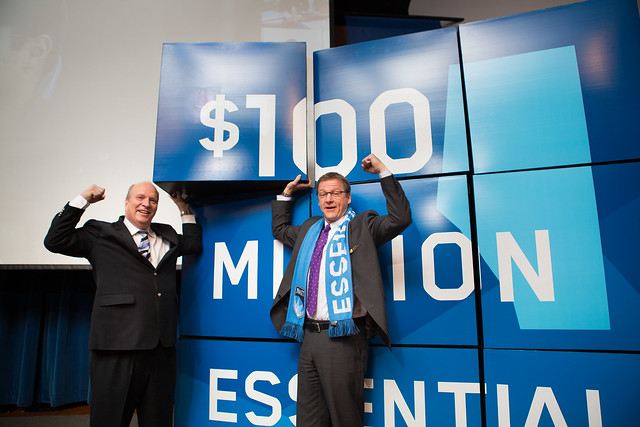
Essential: The NAIT Campaign
Essential: The NAIT Campaign aims to raise $100 million

Upcoming Events

Student Trustee Election 2014
Johannah Ko is EPSB’s first ever Student Trustee

Recap: Best Bar None 2014

Last week I attended the fifth annual awards ceremony for Best Bar None. This year, 53 local bars, clubs, pubs, and lounges received accreditation, which means they are committed to ensuring their locations are held to the highest levels of safety and quality. While receiving accreditation is an achievement itself, the best of the best in six different categories were also honored with an award.

Best Bar None 2014

The winners for 2014 were (pdf news release here):

You can find the full list of accredited venues here.

Most of the accredited businesses had representatives present at the ceremony, and they all seemed to be having a great time. There was definitely some friendly rivalries going on, especially for the Club category, which The Ranch has won three times in a row now. Another frequent winner in previous years was Hudson’s Canadian Tap House.

Best Bar None 2014
Accredited & awarded businesses in the Club category

I’ve always heard about Best Bar None, but didn’t know much about it until I attended the awards ceremony this year. Here’s the description from their website:

“There’s good, there’s great, and there’s best. Best Bar None is a voluntary program for nightlife venues, designed to keep staff and patrons safe while recognizing excellence in the industry. Working with other establishments, government bodies, and law enforcement, a Best Bar None accredited establishment has taken steps to make sure their business is held to the highest levels of safety and quality. Through rigorous assessment, accreditation and awards, Best Bar None helps make sure your favourite nightlife venues have you covered.”

Becoming accredited means submitting written policies and procedures that cover all mandatory policies, completing mandatory operational forms and checklists, passing an in-person assessment, and completing a questionnaire. Businesses must have a wide range of policies, such as a glass collection policy and a written procedure for premises evacuation in the event of an emergency. For those venues that go above an beyond, there are a series of bonus policies they can submit, such as having a policy to provide surveillance camera images and data to police immediately upon request. During the physical assessment, venues must meet 19 different criteria, with an additional 22 criteria available for bonus points. You can see the complete criteria checklist online here in PDF.

Best Bar None 2014

The program is a partnership between the Alberta Gaming and Liquor Commission (AGLC), the City of Edmonton, and the Edmonton Police Service (EPS). Originally created in the U.K., the Alberta Safer Bars Council brought the program to Edmonton for a pilot in 2010. Of the 63 establishments that applied for accreditation that year, 38 were successful. Since being piloted here in Edmonton, the Best Bar None program has since been adopted in Calgary, Grande Prairie, Toronto, and Ottawa, with many other municipalities looking to start their own programs.

At the City of Edmonton, the Best Bar None program is administered by Responsible Hospitality Edmonton. They are stewards of Edmonton’s late-night economy, affectionately known as “the other 9 to 5”. It’s bigger than you might think too, with more than 5,800 full-time equivalent jobs, 235 licensed establishments open after midnight, and an estimated total impact on economic output of $686 million. In addition to their work on Best Bar None, Responsible Hospitality also runs the Public Safety Compliance Team and Street as a Venue programs.

You might think the Best Bar None program is for those in the industry only and not of interest to patrons, but that’s not true. Surveys show that 90% of patrons believe bar managers can do things to make their venues safer and 80% rate safety as being important when considering which locations to attend. I have certainly noticed the sticker on windows more frequently when I walk past establishments now, and it’s helpful to know that those locations have met a minimum standard.

AGLC has produced some new commercials that make this point as well, with their slogan “we’ve got you covered”:

Thanks to AGLC for inviting me to the event, and congratulations to all of the accredited and awarded businesses! You can see the rest of my photos here.

You can follow Best Bar None on Twitter for updates.

Mayor Iveson on Budget 2015, Council’s 2%, City Charter, and more

On Monday, Mayor Iveson held a lunchtime “editorial board” at his office for some local bloggers. He seemed energized and excited to talk about the budget, even though he was in the middle of a day-long public hearing and barely had time to eat. Given the limited time we had available, we didn’t cover as much as I would have liked, but we did get to hear from the mayor on some important budget-related topics. Here are some that I wanted to highlight.

Mayor Don Iveson

Demystifying the Budget

Describing the budget as “by far the most complex piece of governing that we do,” Mayor Iveson said he was pleased with the attempts this year to demystify it for Edmontonians. He cited the new City Budget microsite and the associated PDF primer as two positive examples of a different approach to getting budget information to citizens.

He also mentioned the Reddit AMA with CFO Lorna Rosen. I thought that was a great initiative, but there weren’t as many questions as I expected. I asked Mayor Iveson what the City can do to increase the budget literacy so that people feel empowered to ask more meaningful questions.

“How do you usefully simplify 600 pages of information into a high level, ‘where does the money go?’,” he asked rhetorically. “People have every right to say, ‘where does this money go'” but he noted that it’s certainly not an easy process. One positive example was the Edmonton Insight Community, which serves as an educational tool as much as an input tool. More than 800 Edmontonians spent an average of 24 minutes using the interactive tool that was part of the Edmonton Insight Community survey on the budget.

“I think we could go one step further in the future, with an interactive website,” he added. The mayor envisions being able to put in your tax roll and see how your contribution breaks down by department. He says Edmontonians would be pleasantly surprised to see that the City does indeed spend the bulk of its money on the things that citizens say are important to them.

Progress on Council’s 2%

During the election, Mayor Iveson proposed a new program called “Council’s 2%” that would require City Administration to find about 2% in increased efficiency every year. The goal would be to take the roughly $20 million saved per year and invest that into either infrastructure improvements or other innovative ideas.

The goal this year was to find about $23 million in savings. So how did the City do? “They were able to find tangible changes in the $15.5 million dollar range, which for the first year out, is pretty good,” Mayor Iveson told us. But he made it clear that this work is about more than the figures. “The point is less about the exact dollar, and is about the goal of continuous improvement, and being transparent with the governors and the public about the accomplishments that they’re making.”

It’s a culture change, from what Mayor Iveson calls “pin the tail on the budget” to interactions based on trust. “We trust our staff to do the right thing if they are given the right incentives and given the right recognition for doing the right thing.” Instead of padding the budget because they think Council will just try to cut a few million, the goal is to have Administration put forward the most realistic figures they can. Mayor Iveson explained that a tiny change in assumptions can often translate into millions of dollars in the budget. Over time, that trust could translate into greater acceptance by Council of ideas brought forward by Administration, where as previous Councils would have remained skeptical.

So while the City is off to a good start with Council’s 2%, there’s still a lot of work to be done. “It’s a term-long project to instill that culture,” Mayor Iveson said.

Big City Charter

Everyone knows that Calgary, Edmonton, and the Province have been holding discussions on the idea of a big city charter, but no one seems to know where that effort is going or how successful it’ll be. Mayor Iveson said the question is not whether Edmonton will get anything from the effort, but how much we’ll get. “Getting nothing is a politically unacceptable result,” he told us. “There’s too much political expectation that something must be done.”

The mayor made his case for receiving a bigger piece of the pie. Or as he put it, “some equity in consideration of the fact that we are a hub for northern Alberta.” Though he did talk briefly about the importance of having stable funding for and “line of sight” on big infrastructure projects like LRT expansion and improvements to the Yellowhead, the mayor focused more on working with the Province in his comments.

For instance, he spent quite a bit of time talking about the cost of the Edmonton Police Service. “Policing is a huge area were we can give example after example of the load that Edmonton is carrying for northern Alberta,” he explained. He said EPS deals with national and sometimes international criminal phenomena (like cybercrime) but is funded almost entirely by Edmonton property taxes. Noting the importance of the work, he said “I don’t want to get out of that business, I just want appropriate help.”

Mayor Iveson lamented the fact that Family and Community Support Services (FCSS) funding has not been increased in quite some time, and said “if we don’t deal with some of those things proactively they can become policing challenges, which is the most expensive thing we do.” He talked about preventing people from needing to access health care, as an example, which is a big piece of the provincial budget. “I’m less interested in just getting the Province to just pay for a whole bunch more cops,” he said. “What I’m really interested in is getting the Province to fund FCSS.” It’s about working together on prevention.

That’s the mayor’s takeaway message. “The City Charter isn’t just us with a hand out,” he said, “it’s us with a handshake.”

Neighbourhood Renewal

The 1.5% levy to fund neighbourhood renewal looks like it’ll remain in place for the foreseeable future. Repeating something he has said before, Mayor Iveson told us that “people want lower taxes and they want me to fix their streets – I can’t do both.”

The general sentiment he’s hearing is that people are fine with paying a little bit more in tax now because they see things changing. They see neighbourhoods getting reconstructed, and they see potholes getting filled, they see roads being improved.

“I do worry that in the newer areas there may be less understanding that we are building up a reserve fund,” he admitted. The mayor explained that after 15 years, neighbourhoods will get preventative maintenance, and at 60 years of age, they’ll get rebuilt on time. Thanks to the neighbourhood renewal fund, new neighbourhoods won’t fall into the state of disrepair that some of our mature neighbourhoods have. “It’s actually the old neighbourhoods that got off scot-free over the last 60 years by not contributing to such a fund.”

Though he has previously suggested there might be light at the end of the tunnel for those looking for a tax break, the mayor clarified that comment. “The neighbourhood renewal levy will be fully funded on an ongoing revolving basis as of about 2018,” he told us. So you can count on that 1.5% tax levy for at least the next four years.

Mayor Don Iveson

Final Thoughts

I was very glad to have some time to hear directly from Mayor Iveson on the budget. It’s great to see that he is willing to reach out to bloggers and other social media folks, too. Budget discussions continue at City Hall for the next couple of weeks, and you can find all the relevant information here.

Media Monday Edmonton: Update #132

Here’s my latest update on local media stuff:

capital fm xmas

You can follow Edmonton media news on Twitter using the hashtag #yegmedia. For a great overview of the global media landscape, check out Mediagazer.

So, what have I missed? What’s new and interesting in the world of Edmonton media? Let me know!

You can see past Media Monday Edmonton entries here.