Recap: DemoCamp Edmonton 13

Last night we held Edmonton’s thirteenth DemoCamp, our second in the larger space at the Telus Centre on the University of Alberta campus. It was another fantastic turnout, with close to 100 people eager to see what startups and developers in our city are working on. We had a great turn out at Original Joe’s afterward too (and if you’ve been to DemoCamp before, you know that’s where the magic happens). Snow can’t keep the local startup community down!

DemoCamp Edmonton 13

We had five demos:

  • Scott Montgomerie showed us My Edmonton, an app he originally developed with a few other people at Edmonton’s first Startup Weekend. It started life as a real estate app, but evolved to be more of a local utility, with information on events, news, property info, and nearby services. My Edmonton is available both on the web and as an iPhone app. You can learn more at the blog.
  • Our second demo was from Yegor Jbanov, who showed us Deckle, an online print job automation tool. Targeted at the professional printing industry, Deckle integrates with Adobe Creative Suite and supports precision printing, such as for cheques which have strict requirements on layout and positioning. Yegor said that if you can do it with InDesign, you can pretty much do with with Deckle.
  • Mo Hamdan was up next, to show us Promptu Manager, a tool for managing fixed assets. Promptu is a Windows application, with a user interface very reminiscent of accounting packages such as Simply Accounting or Quick Books. Unfortunately the demo didn’t go as smoothly as Mo had hoped. It’s difficult to make a series of data entry screens interesting, I guess.
  • Our fourth demo was from Trevor MacDonald, who showed us Pluggin.it. The idea is to leverage your social network to help you sell stuff. Let’s say you have a car that you want to get rid of. You can offer a reward and then get your friends to “plug” your listing, and if their assistance leads to an eventual sale, they can claim part of the reward. Pluggin.it is in beta (they are having a launch party tonight) but looks pretty polished and definitely has some potential. You can learn more at Brittney’s blog.
  • Our final demo was from Andrew Czarnietzki, who works at 3DI (here’s a profile I did in 2009). He showed us a game he developed in his spare time that makes use of some of the interesting technology available to him at 3DI, such as pureLIGHT. It was really interesting in that it used “weird geography” and light as its unique features. When you fired your weapon, for instance, the light would bend around the geometrical shapes in the game. Looks like it would be a fun game to play on Xbox Live or something like that!

DemoCamp Edmonton 13As a fan of open data and local apps, I really enjoyed My Edmonton. If you haven’t seen it before, check it out. I think Pluggin.it is a neat concept as well, and everyone really seemed to enjoy the demo. It’ll be interesting to see what kind of uptake it gets. My favorite demo was probably the game though – I love it when developers experiment with stuff just because they love it. Who knows, maybe one day Andrew’s game will be available on Xbox Live!

A few announcements:

Thanks to everyone who came out to lucky number 13. See you at DemoCamp Edmonton 14!

State of the Edmonton Twittersphere – October 2010

Welcome to the tenth State of the Edmonton Twittersphere for 2010, my look at the intersection of Twitter and Edmonton, AB. You can see the stats for September here.

For information on the data, definitions, and other background, click here.

For October 2010:

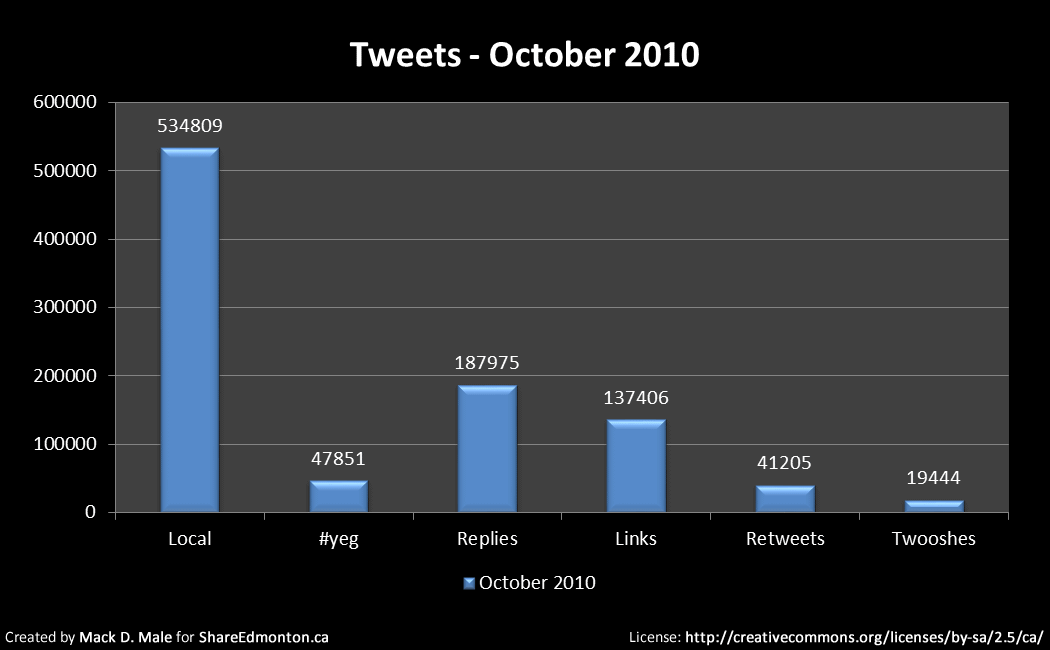
# of local users: 9621 (an increase of 433 from September)
# of tweets by local users: 534809
# of tweets by local users containing #yeg: 47851 (8.9%)
# of tweets by local users that were replies: 187975 (35.1%)
# of tweets by local users containing links: 137406 (25.7%)
# of tweets by local users that were retweets: 41205 (7.7%)
# of tweets by local users that were twooshes: 19444 (3.6%)

Here are the numbers above in graphic form:

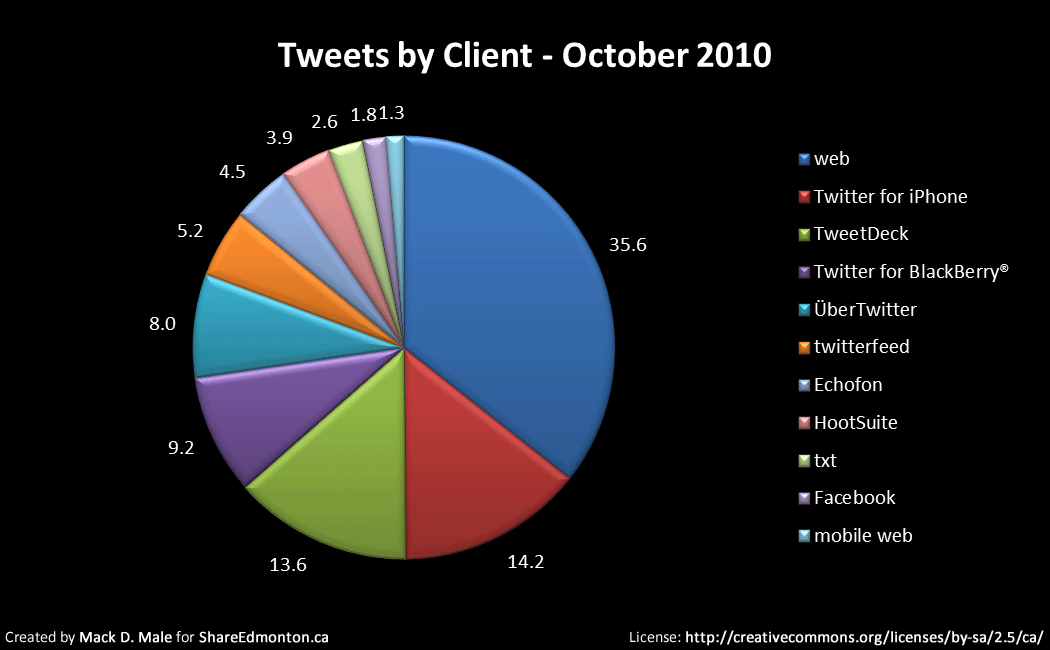
Here are the top clients used by local users for posting updates:

Some other interesting stats for the month:

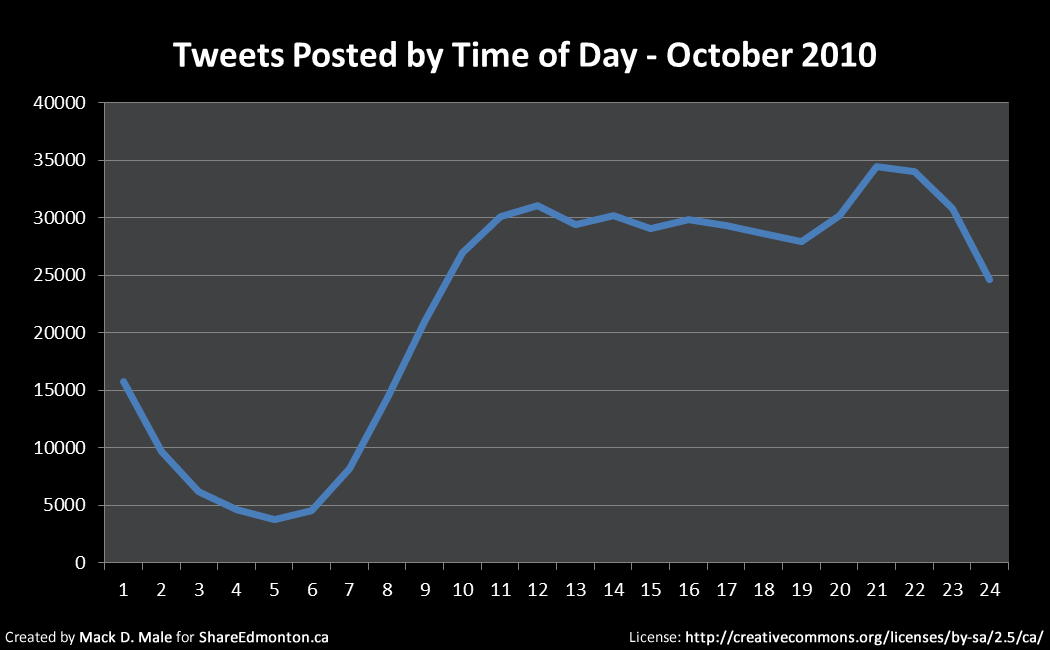
  • Just over 49% of all local tweets were posted between 9 AM and 5 PM.
  • Local users posted roughly 12.0 tweets per minute in October (compared to 11.7 tweets per minute in September).
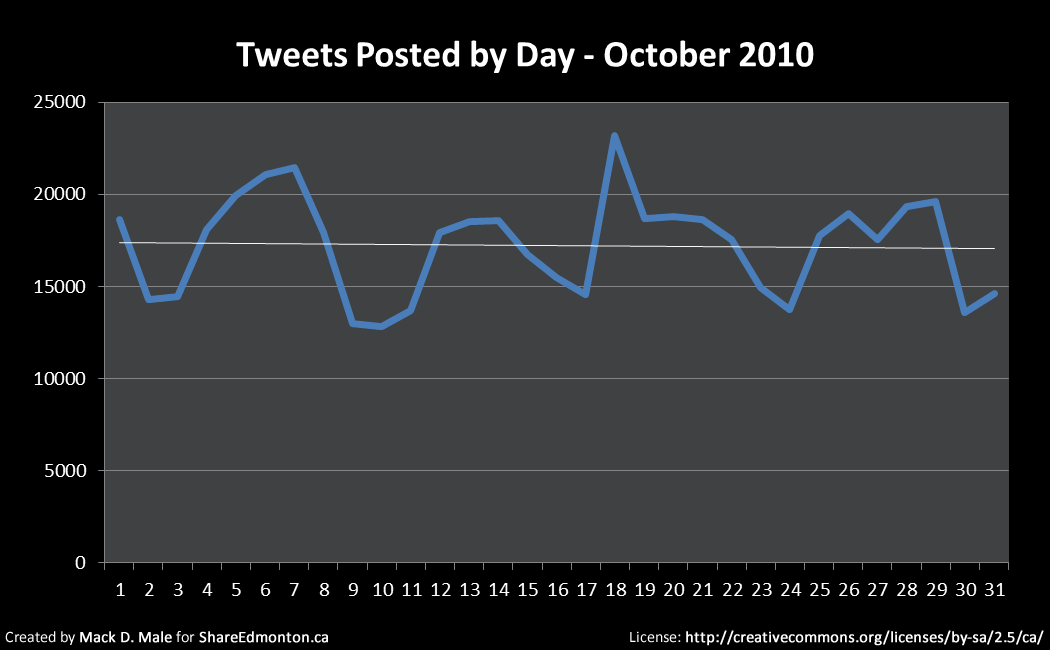
  • The day with the most local tweets posted was October 18 at 23232. On average, 17252 local tweets were posted each day (compared to 16783 in September).
  • Of the 187975 replies posted by local users this month, 74095 or 39.4% were to other local users.
  • A total of 2035 users posted 50 times or more in September. In comparison, 1323 users posted just once.


Here are the top ten most active local users (not including bots):

  1. rootnl2k
  2. PoisonLolita
  3. ZoomJer
  4. counterplot
  5. DWsBITCH
  6. Darmoon87
  7. trinamlee
  8. RyanPMG
  9. KikkiPlanet
  10. brooke_bieber_

Here are the top ten most active local users using #yeg (not including bots):

  1. Edmontonsun
  2. TamaraStecyk
  3. Sirthinks
  4. edmontonjournal
  5. iNews880
  6. ctvedmonton
  7. mastermaq
  8. cbcedmonton
  9. DebraWard
  10. BodyArchitects

Here are the top ten most replied to local users:

  1. PoisonLolita
  2. ZoomJer
  3. RockstarJodie
  4. britl
  5. Wildsau
  6. CommonSenseSoc
  7. JenBanksYEG
  8. TamaraStecyk
  9. KikkiPlanet
  10. Sirthinks

Here are the top ten most retweeted local users (by other local users):

  1. ctvedmonton
  2. mastermaq
  3. edmontonjournal
  4. NHL_Oilers
  5. JasonGregor
  6. CityofEdmonton
  7. dantencer
  8. cbcedmonton
  9. Paulatics
  10. chrislabossiere

Final Thoughts

October was a big month for Twitter here in Edmonton, thanks primarily to the municipal election. More users, more tweets, more tagged tweets, and more retweets. The busiest day of the month was election day (there’s a noticeable spike the in graph). Twitter was used to discuss the forums and other election-related events, to learn about the candidates, and to debate the issues. And on the big night, the candidates themselves used Twitter to capture the moment. You can see my election-related entries here.

Slowly catching up on my stats – I should have the rest of 2010 up soon.

As always, keep in mind that the stats above rely upon users setting the location field of their profile to something like “Edmonton”. Users who leave that field blank or who put something like “Canada” are not reflected in the above stats. More Information.

State of the Edmonton Twittersphere – September 2010

Welcome to the ninth State of the Edmonton Twittersphere for 2010, my look at the intersection of Twitter and Edmonton, AB. You can see the stats for August here.

For information on the data, definitions, and other background, click here.

For September 2010:

# of local users: 9188 (an increase of 700 from August)
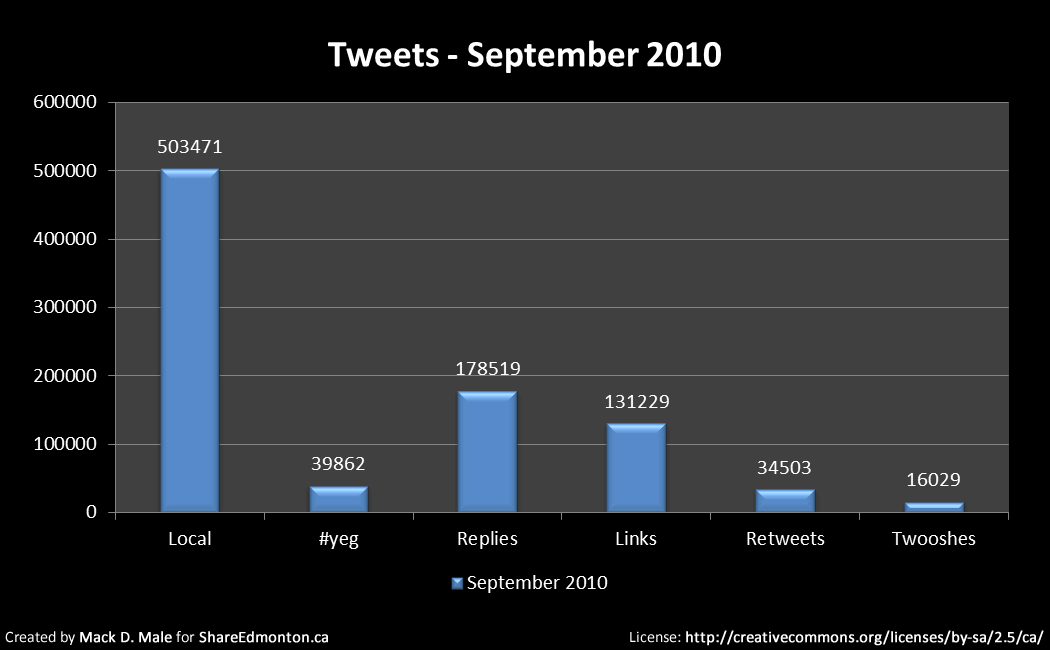
# of tweets by local users: 503471
# of tweets by local users containing #yeg: 39862 (7.9%)
# of tweets by local users that were replies: 178519 (35.5%)
# of tweets by local users containing links: 131229 (26.1%)
# of tweets by local users that were retweets: 34503 (6.9%)
# of tweets by local users that were twooshes: 16028 (3.2%)

Here are the numbers above in graphic form:

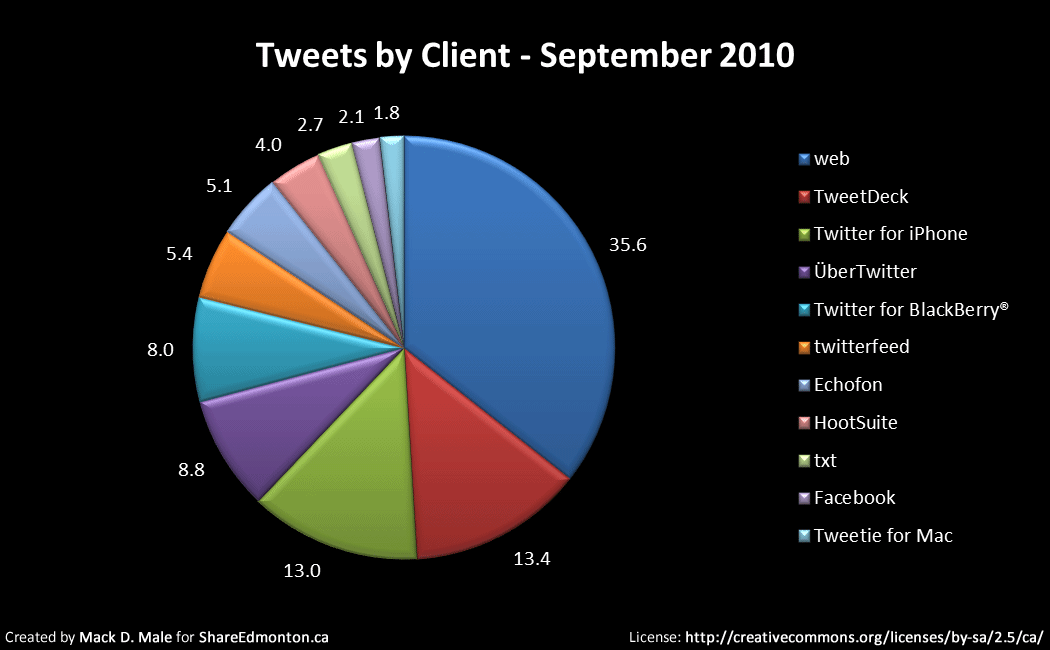
Here are the top clients used by local users for posting updates:

Some other interesting stats for the month:

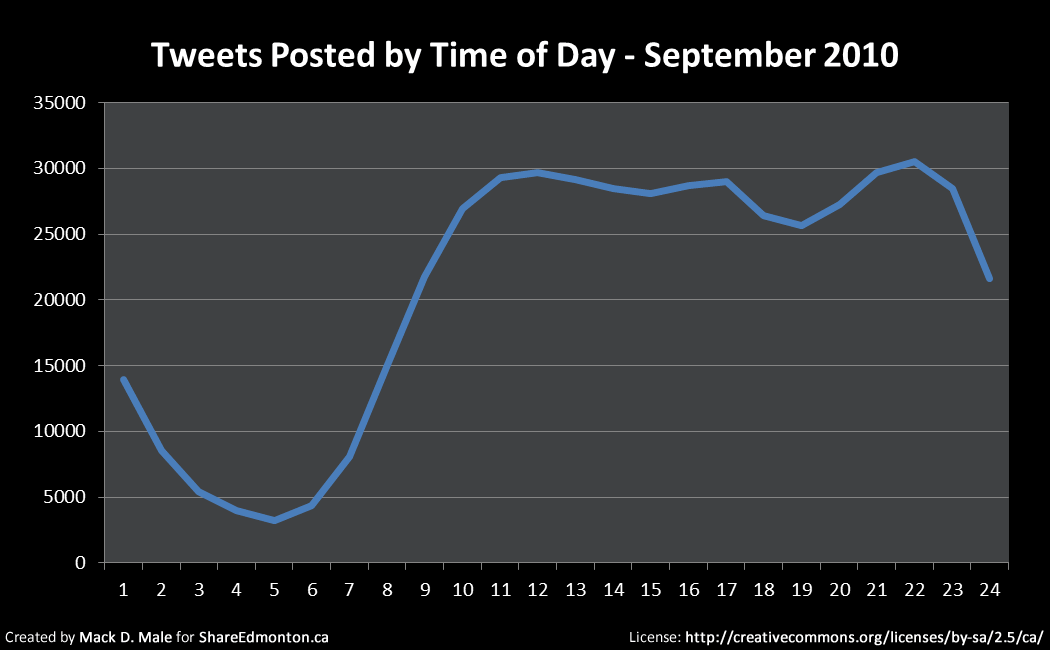
  • Just under 51% of all local tweets were posted between 9 AM and 5 PM.
  • Local users posted roughly 11.7 tweets per minute in September (compared to 10.8 tweets per minute in August).
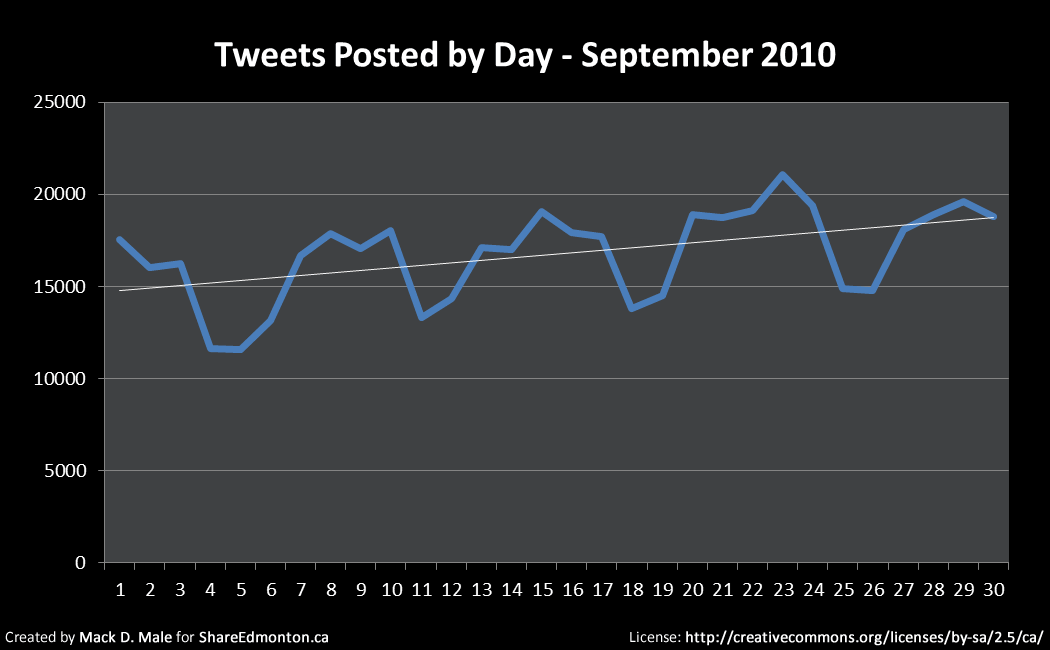
  • The day with the most local tweets posted was September 23 at 21096. On average, 16783 local tweets were posted each day (compared to 15536 in August).
  • Of the 178519 replies posted by local users this month, 69081 or 38.7% were to other local users.
  • A total of 1904 users posted 50 times or more in September. In comparison, 1233 users posted just once.


Here are the top ten most active local users (not including bots):

  1. rootnl2k
  2. Lekordable
  3. DWsBITCH
  4. DJPh03NiX
  5. SaySandra
  6. confessionality
  7. TRENCHBABE
  8. ZoomJer
  9. CommonSenseSoc
  10. Tucktovich

Here are the top ten most active local users using #yeg (not including bots):

  1. Edmontonsun
  2. edmontonjournal
  3. Sirthinks
  4. iNews880
  5. ctvedmonton
  6. cbcedmonton
  7. DebraWard
  8. mastermaq
  9. BodyArchitects
  10. edmfilmfest

Here are the top ten most replied to local users:

  1. PoisonLolita
  2. ZoomJer
  3. confessionality
  4. SaySandra
  5. Wildsau
  6. CommonSenseSoc
  7. britl
  8. RockstarJodie
  9. KikkiPlanet
  10. Sirthinks

Here are the top ten most retweeted local users (by other local users):

  1. edmontonjournal
  2. mastermaq
  3. TrafficEdmonton
  4. CityofEdmonton
  5. ctvedmonton
  6. dantencer
  7. NHL_Oilers
  8. bingofuel
  9. Paulatics
  10. iNews880

Final Thoughts

I’m not sure why there was a bit of a jump in users and in the number of tweets posted in September, except perhaps that people go from “summer” mode to “get down to business” mode. Interest in the upcoming election made have played a role as well.

As with the previous month, the number of retweets includes both new and old style, both with and without extra comments.

Slowly catching up on my stats – I should have the rest of 2010 up soon.

As always, keep in mind that the stats above rely upon users setting the location field of their profile to something like “Edmonton”. Users who leave that field blank or who put something like “Canada” are not reflected in the above stats. More Information.

DemoCamp Edmonton 13

Sick of hibernating inside because of all the snow and cold weather? Join us on Wednesday evening for Edmonton’s next DemoCamp – lucky number 13! If you’ve never been to DemoCamp before, it’s time to stop missing out. There is no better opportunity to connect with Edmonton’s technology and startup community. Here are the details:

Date: Wednesday, January 19, 2011
Time: 6:30pm (and drinks/networking afterward)
Location: Telus Centre 150, University of Alberta (map)
Cost: Freesign up
See the event on ShareEdmonton or on Facebook.

The rules for DemoCamp are simple: ten minutes to demo real, working software, followed by a few minutes for questions. No slides allowed. You can read my recap of our last DemoCamp here (the archive of recaps is here).

If you can’t make it on Wednesday, follow along online using the #democampyeg hashtag. Stay tuned to Startup Edmonton for more technology and startup events.

See you Wednesday evening!

Edmonton Notes for 1/16/2011

Check out Edmonton notes throughout the week at Edmonton Etcetera!

Here are my weekly Edmonton notes:

Edmonton skyline!
Edmonton Skyline by Edith Hoffman

IMG_2105
Check out more photos from Ice on Whyte here.

Edmontonians rank public transportation as the City’s top priority

If it were up to me, that would be the headline on the front of every newspaper and at the top of every news broadcast in Edmonton today. The result was buried in the middle of a report that goes to Council on Monday on the proposed downtown arena, but that makes it no less significant in my mind.

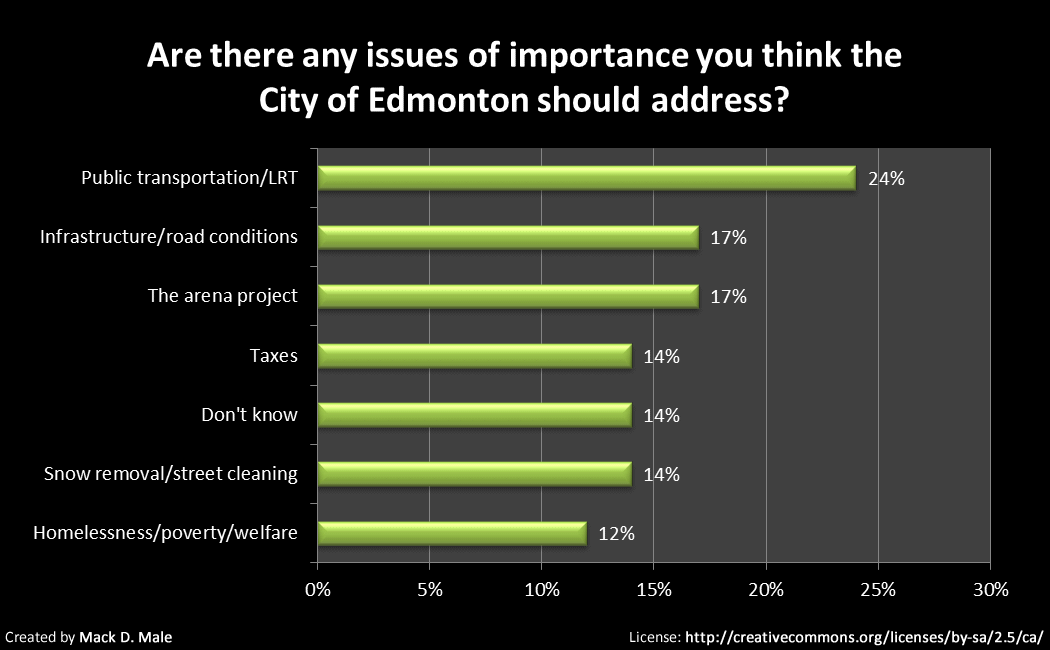
Edmontonians who participated in a statistically valid phone survey from December 20 to December 23 were asked what the key issues are that the City of Edmonton should address. Public transportation, and specifically LRT, came out on top.

The City is addressing this, of course, with an expansive plan to extend the LRT to all corners of the City. Shifting Edmonton’s Transportation Modes is also one of the goals in the City’s 10-year strategic plan, and public transportation is the key to achieving that. But we have to keep pushing. As the City’s Chief Economist John Rose said:

“[LRT is] the urban equivalent of an enabling technology – if you have it, you can do a lot of great things.”

Public transportation is costly – both to build and to operate. No question about that. But it’s worth it, and more importantly, Edmonton’s future success depends on it.

It’s important to remind ourselves, not to mention City Council, that improved public transportation is what Edmonton needs above all else.

Economics and more with John Rose, the City of Edmonton’s Chief Economist

John Rose moved to Edmonton last May to become the City of Edmonton’s Chief Economist. It’s an important role at the City, though it is one that most people know very little about. I sat down with John last week to chat about his new job and to get his thoughts on Edmonton.

John loved geography when he was younger, and wanted to work in a field where he could apply that passion. He settled on urban planning, but while studying at the University of Toronto, switched to economics. He has been in the field ever since, working for the federal Foreign Affairs department in the 1980s in West Germany and South Korea before returning to Toronto to tackle the consulting business. He most recently worked for PricewaterhouseCoopers.

The move to Edmonton was a unique opportunity for John to combine his interests in urban planning and economics. “I’m interested in what drives the economics of municipalities forward.” He brings an outsider’s perspective to the City of Edmonton, something that initially made him wary. “I thought people would just say ‘here’s another Easterner showing up, telling us what to do’, but people have been very welcoming.”

As the City’s Chief Economist, John is responsible for publishing the reports that the City relies on for budget planning and strategy, among other things. Twice a year he publishes a long-range forecast, using a statistical model of Edmonton’s economy that looks both 3 and 10 years into the future. On a quarterly basis, he publishes City Trends, which provides current information on social, economic, demographic, land development, and transportation trends (here’s the PDF for Q3 2010, the latest to be posted to the website).

The City of Edmonton uses economic models developed by The Centre for Spatial Economics (C4SE). Somewhat surprisingly, Calgary and the Province of Alberta also use models from C4SE. The models can be complex, but John said recent technology improvements are making a difference. “In the 80s, you needed a mainframe to drive even the most simplistic models,” he told me. “Now the tech required is ubiquitous.” While acknowledging that economics is abstract – “you can’t touch the economy” – John said technology is increasingly getting rid of the mystique and mystery.

If you look at the Economic & Demographic section of the City’s website, you’ll find that most of the information is out-of-date. John explained that the transition from his predecessor is the cause, but he said to expect changes. “There’s a lot of value in the information and we want to get it out there, we want it in the public realm.” John noted there currently isn’t a way to notify people when new information is posted, but said an internal effort currently underway should change that. Getting everyone on the same page is a major push for his office this year.

John would also like to see a shift toward more regional forecasting. He works with a variety of organizations outside the City of course, including EEDC, the Chamber of Commerce, and the Finance department at the Province, but sees room for improvement. “We already do regional forecasting to a degree, because we do the CMA and extract a forecast for the City from that.” John noted that most statistics are available at the Census Metropolitan Area (CMA) level, and so it makes sense to look regionally when setting up models. “With a larger economic entity, the trends smooth out a little.” John suggested the Capital Region Board might be the logical place to host a regional forecasting effort.

Speaking of the capital region, John said that while 2011 will be a strong year for Edmonton, “most of the growth will take place outside the City of Edmonton proper.” This is partly because the City itself didn’t suffer as large a setback as a result of the recent downturn. “The manufacturing sector took a big hit in Alberta and Edmonton,” a sector largely concentrated outside the city, such as in the northeast. In a recent interview with the Edmonton Journal, John said we should see an annual growth rate of nearly 4% here in Edmonton.

He was also bullish on the province. “Alberta will be ahead of the national economy as a whole in 2011,” John told me. Again, this is due in part to the way the economic slump affected the province. “The impression is that Canada came through it very well, but the truth is the province didn’t.” In 2011, John expects Alberta to post the first or second best provincial growth rate in the country, depending on how Saskatchewan does.

Turning to individual sectors in the City, John told me that construction will show growth, but mostly due to commercial projects. The residential construction sector will be somewhat sluggish because “there’s just not a big demand for a lot of new housing.” FIRE will do well, but John cautions that increased regulation will have an impact. The retail sector will also grow more slowly this year, because people are reluctant to take on more debt and as as a result savings rates are going up. “The consumer-oriented durable component in particular” will grow slowly according to John, because as people buy fewer houses, the need for new vehicles, furniture, appliances, etc. also diminishes.

John talks about trends and forecasts all the time – he has made it part of his job to do interviews, meet people, and spread the word on Edmonton’s economy. He can rattle the numbers off with ease, and is obviously very knowledgeable. As our discussion shifted toward the city more generally, John became more thoughtful. We talked about the common refrain that Edmonton’s head office situation is dismal at best, and John pointed out that the larger question is how to “attract and retain investment, and talent.” He said we should do “exit interviews” with organizations that leave the City, to try to highlight any cross-cutting themes.

I asked John about the push to revitalize downtown, and in particular, about the City Centre Airport and the proposed arena. He called the ECCA redevelopment a “good move” by the City, because making such a large piece of land adjacent to the core largely residential will have a positive impact on our downtown. “The key to developing a vibrant downtown, is to have people living, working, being entertained, doing all those things, in the core.” He doesn’t think a blanket policy on financial incentives (such as the Railtown subsidy) to attract more residents to downtown makes sense, however. “If there’s an area that we want developed in a particular way, then the City could be come active, but otherwise there’s enough opportunity already.” John didn’t take a side on the arena, but said “it depends on how the development takes place” and said his main concern is that “we don’t want to be in a situation of two competing facilities.” He cited the Air Canada Centre in Toronto and the positive changes and increased activity it brought to the area south of Front Street. “It is very nicely integrated into the city.”

I asked John what he missed about Toronto, and he quickly replied “jazz clubs.” He said while the Yardbird Suite is great, there was more variety with regard to venues back in Toronto. John joked that by moving away from Toronto when he did, he avoided the current political drama that is taking place with new mayor Rob Ford. That led us into a discussion about transit, and LRT in particular, something John considers “the urban equivalent of an enabling technology – if you have it, you can do a lot of great things.” Projects such as the LRT expansion “are a big benefit to the local economy” in the short-term and are “vital for the City’s future,” John told me. The real value to the economy is what the LRT enables, rather than the jobs it directly creates. “If you don’t have mass transit downtown, you’re going to have a hard time developing nightlife, for instance.”

I really enjoyed talking with John (and not just because when I asked him if he was now an Oilers fan he replied, “that implies I was a Maple Leafs fan before!”). Stay tuned to his section of the City’s website for future economic updates.

Yes! For Edmonton Position Statement on the Proposed Downtown Edmonton Arena

Yes! For Edmonton sent the following position statement on the proposed arena to the media this afternoon:

I have been privy to some of the discussions about this, and was opposed to the statement being released because it kind of suggests that everyone who signed up to support the group on the airport issue automatically supports this one too. I don’t believe that is the case.

There are people in the organization who wanted to make a statement on the arena, and that’s fine. The more people who share their thoughts and opinions, the better. But I don’t think it is clear who Yes! For Edmonton speaks for, and that causes me some concern as the group approaches future issues.

It’s not clear whether this position statement will be posted on the Yes! For Edmonton website or what other updates will be made.

Shifting the Alberta Advantage

The main thing we talked about yesterday at the ONEdmonton forum was economic development. In addition to breakouts and other discussion, we had two informative presentations that I hope to blog about over the next while. In her presentation on Diversifying Edmonton’s Economy, Tammy Fallowfield, EEDC’s Executive Director of Economic Development, touched on shifting the “Alberta Advantage”. Here’s what her slide said:

  • Remain relatively low tax
  • Not a low cost environment
  • Not a surplus of labour
  • Not a currency ‘bargain’

I think the phrase “Alberta Advantage” means different things to different people, but traditionally our low taxes, low cost of doing business, surplus of labour, and being attractive to investment, have all been considered important aspects. Here are a few notes on each.

Alberta’s low taxes remain a strength. From the Alberta Competitiveness Council’s 2010 report (PDF, 14 MB):

[Taxes and fiscal policy] represents the area of best performance for Alberta, with moderately low tax burdens for both corporations and individuals and a strong government financial position.

Of all the measures that report looks at, Alberta performs the best (unsurprisingly) in taxes and fiscal policy.

What about being a low-cost environment? From the same report:

Within Canada, business costs in Alberta (Edmonton) are lower than Ontario (Toronto), but higher than in each of the other provinces compared. This result is due to Alberta’s strong economy of recent years, which led to a much higher increase in business costs – especially labour, electricity, and facility costs – than seen in other provinces.

I haven’t yet found a good comparison of business costs with regions elsewhere in the world, so let me know if you come across something. I suspect the picture is not as rosy as it once was.

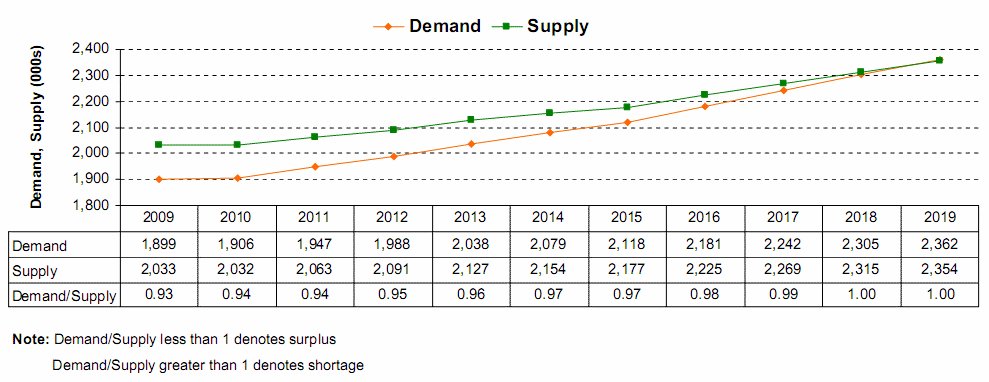
How about our labour force? All across Canada the population is aging, and that (along with our very low fertility rate) is going to lead to labour shortages. Here’s a graph from Alberta’s Occupational Demand & Supply Outlook, 2009-2019 (PDF), that shows this trend for our province:

There are many consequences as a result of this trend, not the least of which is Alberta’s challenge to attract and retain labour. Our taxes will likely also be impacted – an older population means higher costs for health care, and a slow growing labour force means a slow growing tax base.

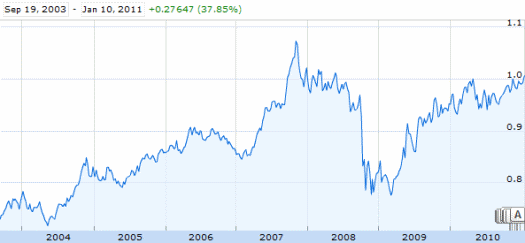
Let’s look at the Canadian dollar (compared to the US dollar).

The strength of the Canadian dollar has an impact on foreign investment, among other things. As you can see, the dollar has been quite strong in recent years (aside from the dip in late 2008/early 2009), which may not be a good thing for Alberta.

So if being low-cost, having a surplus of labour, and being a relative currency ‘bargain’ are no longer part of the Alberta Advantage, what does that mean?

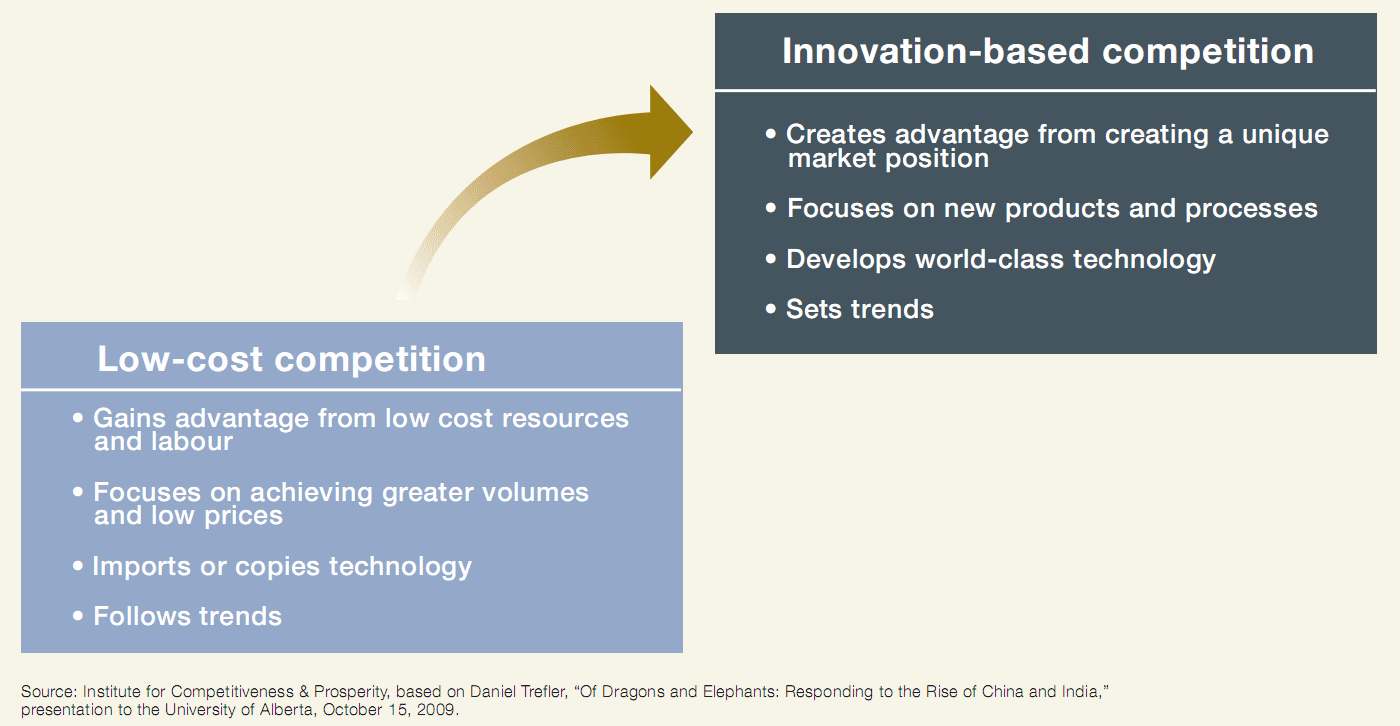
This diagram comes from the Institute for Competitiveness & Prosperity, based on a presentation that Professor Daniel Trefler of the University of Toronto gave here in Alberta on October 15, 2009. The diagram was originally used to illustrate the shift that China and India have yet to make.

On the same slide that listed the four points above, Tammy included this diagram. That’s the shift we need to make here in Alberta – from being a strong low-cost competitor, to being a strong innovation-based competitor.

How are we going to do that? By making strategic choices. Here’s (more or less) what Tammy showed next:

Tammy went on to talk about the industries that are important for us to focus on here in Edmonton, and a similar exercise would apply for Alberta. I’m not sure if what I have written above is exactly what she was trying to get across, but that’s how I interpreted it.

What do you think about shifting the Alberta Advantage?

ONEdmonton Downtown Vibrancy Task Force letter to City Council regarding the Proposed Downtown Edmonton Arena and Entertainment District

ONEdmonton is a group of local leaders that have come together a few times over the last year to discuss how we can make Edmonton one of the world’s top 5 mid-size cities. The first subcommittee, called the Downtown Vibrancy Task Force, was launched in November after the larger group identified that our urban core is the top priority. I have been fortunate enough to be part of both groups.

Today, our task force sent a letter to City Council regarding the proposed Downtown Arena and Entertainment District:

The task force is a group of majority, not consensus. At the last meeting, the majority of the task force members voted the arena project as the top near-term priority in Edmonton’s downtown.

The task force members include: Chairperson Randy Ferguson (Procura), Bob Black (Katz Group), Dr. Paul Byrne (MacEwan), Carolyn Campbell (University of Alberta), Michael Janz (Public School Trustee, EFCL), Terry Kilburn (Avison Young), Bernie Kollman (IBM Canada), David Majeski (RBC), Mack Male, Doug McConnell (Dialog), Scott McKeen, Honourable Anne McLellan (Bennett Jones), Carol Neuman (Edmonton Next Gen), Simon O’Byrne (Stantec), Ian O’Donnell (Downtown Edmonton Community League) Keith Shillington (Stantec), Paul Verhesen (Clark Builders), Sheila Weatherill (EPCOR), Richard Wong (Sutton Place Hotel), and Ralph Young (Melcor). Representatives from EEDC facilitate the task force.

I don’t think anyone on the task force considers the arena project a done deal, nor do they think the issue is a simple one, and this is reflected in the letter. My read of what the task force is saying here is this: there’s potential with the arena project to positively impact our urban core, so let’s keep things moving and figure out how to make that happen.

UPDATE: I originally left out Ian O’Donnell and Sheila Weatherill, because they joined us after the first meeting. My mistake. EEDC has posted the list here.