What’s next for Edmonton Stories?

The last time I wrote about Edmonton Stories, I questioned the value of the initiative. Here’s what I wrote back in September:

I think Edmonton Stories is a great concept, and I’m glad to see that Edmontonians are contributing stories. The project was created to help market the city elsewhere though, and I don’t think it is accomplishing that yet.

I didn’t see any connection between the fantastic collection of stories that Edmontonians had contributed to the site and the marketing of Edmonton to others. Based on the reaction to that post, I don’t think I was alone in wondering what the next step was for Edmonton Stories.

Last week I sat down with Mary Pat Barry, Communications Branch Manager at the City of Edmonton, to try to get an answer to that question. We talked for about an hour in her office at City Hall, looking at the website itself, statistics, a case study, and marketing materials. The fact that I had been critical of the project in the past didn’t seem to bother Mary Pat. Not because she didn’t care, but because she was so excited to convince me of the value of Edmonton Stories. She could see the bigger picture, and she wanted me to see it too.

First, here are the latest statistics (May 14, 2009 to January 31, 2010):

  • 272 stories posted
    • 176 user generated
    • 55 containing video
    • 5 containing audio
    • 6 non-English language stories
  • 515 comments posted (100 stories have comments)
  • Users in 3,929 cities from 162 countries have visited the site
  • Total Visits: 203,685
  • Total Unique Visitors: 162,313
  • Total Page Views: 542,488
  • Time on Site: 00:01:42
  • 59.3% of visitors came from outside Edmonton

The statistics have also been broken down into two phases: the contesting phase (May 14 to September 15) and the post-contesting phase (September 16 to January 31). The number of visits and page views have both declined from the first phase to the second, but after talking to Mary Pat, I’m not sure that matters much.

At its core, Edmonton Stories is all about labor and visitor attraction. It exists because the old or standard ways of attracting skilled labor or visitors to Edmonton either are not very effective, or are very expensive. It exists because the best people to share why Edmonton is a great city are Edmontonians themselves. With that in mind, I think it’s useful to think of Edmonton Stories as a two-stage project:

  1. Gather stories from Edmontonians
  2. Attract labor and visitors using those stories

Mary Pat said she was “awed” with regards to the first stage. That so many Edmontonians took the time to write and share their stories is not something to take lightly. The collection of stories is a great asset.

The second stage is the answer to what’s next. Instead of just explaining it to me, Mary Pat showed me a recruitment partnership case study with the Edmonton Police Service (EPS).

In the fall of 2009 EPS was set to launch a recruiting initiative in select locations in the United States (Seattle, Cleveland and New York City). Confident that the EPS Recruiting Unit could effectively extol the attractiveness of the police service and the work it demands, EPS turned to the City of Edmonton for advice on how they might promote Edmonton as a potential home for recruits and their families.

The City of Edmonton’s solution? Edmonton Stories. The idea was to use the content on EdmontonStories.ca, the personal, tangible experiences of real people, in a targeted way to help EPS recruit new members. I remember reading about the recruitment efforts, but the news articles never mentioned that Edmonton Stories was involved. Here’s what Edmonton Stories did to help:

  • Built a dedicated page featuring stories written by Edmonton police officers: http://www.edmontonstories.ca/eps
  • Created a guide for on-site recruits describing how best to use the dedicated page
  • Produced branded “conversation cards” to hand out at hiring fairs
  • Promoted the dedicated EPS page on Twitter, Facebook, and Google AdWords.

The experiment was a great success. Edmonton Stories had 6.7 times more visitors from Cleveland after the recruitment fair, and 8.1 times more visitors from New York City (the first city, Seattle, was sort of used to figure things out). According to candidate surveys, 74% had not considered Edmonton as a place to live before the recruitment fair, while after, 76% reported they would likely or very likely relocate to Edmonton, and 84% planned on submitting an application to EPS within the next six months. Most importantly, EPS received an “unprecedented” number of detailed applications from potential recruits met at the recruitment fairs. The total number is 6, but for an application process that can take 18 months, that’s seen as very successful.

It’s difficult, of course, to separate the effect Edmonton Stories had on the campaign from the rest of the EPS recruitment efforts, but those involved feel Edmonton Stories had a significant impact.

The City of Edmonton can now take what was developed for the EPS and apply it to other industries. They can provide specific industry stories, the recruiters guide, conversation cards, and much more to recruiters to help attract talent to Edmonton. The stories that Edmontonians have shared are finally being put to use.

I asked Mary Pat if the focus on helping recruiters would take away from maintaining the website itself. While she conceded that less effort has been put into attracting new stories, she said that the website certainly remains a focus. She highlighted two things – translations and a redesign. The team is working on 19 languages for 36 stories, with 10 languages available at launch. The translations take time, because Edmonton Stories works to get approval from each of the authors before posting. The redesign, live as of today, brings a fresh look, a news section, new ways of discovering stories, and tighter integration with social media services.

I think that asking whether or not Edmonton Stories is delivering a return on investment is still a fair question. However, it’s clear to me now that there’s direction and a way for the site to deliver on its core objective of attracting labor and visitors to Edmonton. I think the EPS case study is exciting, and demonstrates that Edmonton Stories can provide value.

Edmonton’s Municipal Development Plan passes second reading

City Council passed the Municipal Development Plan in second reading tonight. Titled “The Way We Grow,” the document is Edmonton’s strategic growth and development plan, meant to shape urban form and guide future land use. It must now be approved by the Capital Region Board, after which it’ll return to Council for third reading (expected in the May-June timeframe). Here are a few notes on the evening:

  • Councillors Henderson and Krushell pounced on the removal of the words “winter city” from the plan. Councillor Henderson’s proposed amendment was passed unanimously, changing the wording to something like the following: “That all urban design reflects that Edmonton is a winter city, allowing citizens to enjoy it in all seasons.”
  • Councillor Iveson pushed for stronger language around intensification targets, arguing that we need to move beyond simple aspiration to achieving meaningful outcomes. His amendment was passed unanimously.
  • Mayor Mandel said that Councillor Iveson’s amendment was a clear statement that Council wants more aggressive intensification, something the Mayor has supported. He again urged creative solutions to cost difficulties for infill development.
  • There was quite a bit of discussion on the topic of gravel mines in the river valley. I suspect we’ll hear more about that in the future.

The Greater Edmonton Alliance has played a key role in the evolution of the MDP, through it’s campaign to “create a vibrant and sustainable food economy.” Hundreds of Edmontonians once again filled City Hall this evening to show their support. Here are a few photos:

MDP Second Reading

MDP Second Reading

MDP Second ReadingMDP Second Reading

If you’d like to be notified about future GEA events and initiatives, consider joining their mailing list.

GEA has had great success with the campaign, perhaps most memorably with The Great Potato Giveaway. It’ll be interesting to see which issue GEA turns its attention to next.

You can see a few more photos from the evening here.

UPDATE: Don posted his thoughts here.

Help bring Tech Days Canada to Edmonton!

Microsoft is planning the 2010 edition of Tech Days Canada, and they’re considering a stop here in Edmonton. In previous years, local developers have had to make the trip down to Calgary. If you’ve never heard of Tech Days, here’s what it’s all about:

With forty 200+ level sessions, Tech Days is the learning conference on both current technologies and new products like Windows 7, Exchange 2010 and much more.

The idea is to bring technical training content from TechEd, Mix, PDC, and other Microsoft conferences to Canadian developers and IT pros. There are sessions on Silverlight, test driven development, virtualization, IIS7, SharePoint, refactoring, Visual Studio, and more. I have led three sessions at Tech Days Calgary in past years, on ADO.NET Data Services, Internet Explorer 8, and REST Services with WCF.

When Microsoft was planning Tech Days 2009, they considered stopping here, but we lost out to Halifax. I don’t know about you, but I don’t want to see that happen again.

I think there are definitely enough local developers and IT professionals to host Tech Days here, so let’s make the decision for Microsoft an easy one! If you want to see Tech Days come to Edmonton this year, email damirb@microsoft.com, or tweet your interest!

Notes for 2/21/2010

Busy week ahead for me. Here are my weekly notes:

Edmonton Notes for 2/20/2010

Here are my weekly Edmonton notes:

Edmonton

How much do traffic signs cost?

I read with great interest this week about the City of Edmonton’s new residential speed reduction pilot. Speed limits have been on my radar since late last year when Patricia Grell of the Woodcroft community started her Safe Speed Limits blog. She and many others have been pushing for a reduction to 30km/h on residential streets. The pilot goes half way, to 40km/h, and will take place in six Edmonton neighbourhoods: Woodcroft, Beverley Heights, Ottewell, King Edward Park, Westridge/Wolf Willow and Twin Brooks.

Those communities were selected based on “the extent of the speeding problem” as well as traffic volume, the number of playgrounds and schools, etc. The City consulted with the Edmonton Federation of Community Leagues to identify community leagues that would be willing to participate. EFCL Executive Director Allan Bolstad told me that community leagues will act as the “window into the neighbourhoods”, both to help inform and educate, as well as gather feedback on how well the program is working. He said the community leagues will meet mid-March to start implementation, and will continue to meet regularly to evaluate.

The City of Edmonton already has traffic safety programs of course, and they will be integrated into the pilot. Specifically, Speed Watch (which shows drivers their speed), Neighbourhood Pace Cars (vehicles that act as mobile speed bumps), and Safe Speed Community Vans will all be used. Dan Jones from the City’s Office of Traffic Safety said there will also be digital readout speed trailers (like the ones you see at construction sites) and of course, new traffic signs.

He also confirmed that the projected cost for the pilot is $100,000 per neighbourhood. I’m in favor of reducing speed limits, if only so that police officers can ticket people at 50km/h instead of the current 60km/h, but when I heard that figure I thought it sounded rather expensive. Allan Bolstad said he too was “puzzled” by the amount. If I understand things correctly, only the signs are new – the other programs already exist and presumably already have the appropriate funding. Which begs the question – how much do traffic signs cost?

To find out, I talked to Rick MacAdams from Edmonton-based hi signs. They manufacture a wide range of signs, including the speed limit signs you’d see around town. Their speed limit sign, the RB-1, comes in two versions: one with a high intensity reflective film and one with a “diamond grade” reflective film (both films are 3M products). The first costs $76.70 per sign while the diamond grade one costs $109.38. That’s if you’re buying one or two signs; there are discounts for large volume orders, of course.

Next question – how many signs are required in each neighbourhood? I decided to go to Google Maps, to count the number of straight street segments in a couple of the neighbourhoods. I took that number, and multiplied it by two (so we have signs for each direction). The range I came up with was between 60 and 120 signs per neighbourhood. You can probably do the math, but at 120 signs per neighbourhood, using the highest price per sign, the total comes to $13,125.60 per neighbourhood. So a grand total for the pilot of $78,753.60. Nowhere close to the $100,000 per neighbourhood that has been projected!

Now this back-of-the-napkin analysis leaves a number of things out. For one, the time and cost required to have crews post the signs in each neighbourhood. For another, the cost of the digital speed readout trailers. There will also likely be marketing costs. But it also leaves out the fact that the City of Edmonton has its own sign creation department, so the cost per sign is probably far less than what hi signs would charge. And my analysis probably significantly overestimates the number of signs required for each neighbourhood.

So I’m left happy but confused and maybe even a little alarmed. Happy that the City has heard residents and is testing residential speed limit reductions to see if it improves community safety. Confused because I can’t imagine why this pilot will cost $600,000.

January 2010 Headlines: Edmonton Journal vs. Edmonton Sun

I think it’s fair to say that Edmonton’s two major dailies have strong stereotypes attached to them. The Edmonton Journal, as the capital region’s newspaper of record, is generally considered reliable, encompassing, and important, with an emphasis on politics and current events. The Edmonton Sun, which has just less than half of the Journal’s weekly circulation (according to data from 2008), is generally considered a bit more tabloid-like, with an emphasis on sports and special sections. But I’m not happy with stereotypes – I like data!

There is obviously much more to a newspaper than its headlines, but I figured that was a good starting point for comparison. Using data extracted from Twitter (which means it may be incomplete) I compared headlines from The Journal and The Sun for January 2010. I counted 662 headlines for The Journal (in blue) and 589 headlines for The Sun (in red).


The most frequently used words in The Journal’s headlines were: Edmonton, Alberta, new, fire, man, woman, Oilers, Calgary, gallery, and police.

The most frequently used words in The Sun’s headlines were: Haiti, Canada, city, man, Canadian, Edmonton, Alberta, Hatian, new, and quake.

Here’s a quick comparison of the average length, average number of words, and average Automated Readability Index (ARI) for each headline:

I’m not sure that calculating the ARI for a headline is valid, but calculating it for the collection of headlines isn’t valid either (because they aren’t equivalent to sentences). I did look at the collection though – The Journal used 865 complex words, whereas The Sun used 552 (a complex word is three syllables or more, as determined using this online tool).

I don’t know what the takeaway is here, but I thought it was interesting enough to share. I’ll probably revisit this again in the future, with additional news sources, and probably some sentiment analysis as well. If you have any suggestions, let me know in the comments!

State of the Edmonton Twittersphere – January 2010

Welcome to the first State of the Edmonton Twittersphere of 2010, my look at the intersection of Twitter and Edmonton, AB. You can see last month’s stats here.

For information on the data, definitions, and other background, click here.

For January 2010:

# of local users: 5841 (an increase of 324 from December)
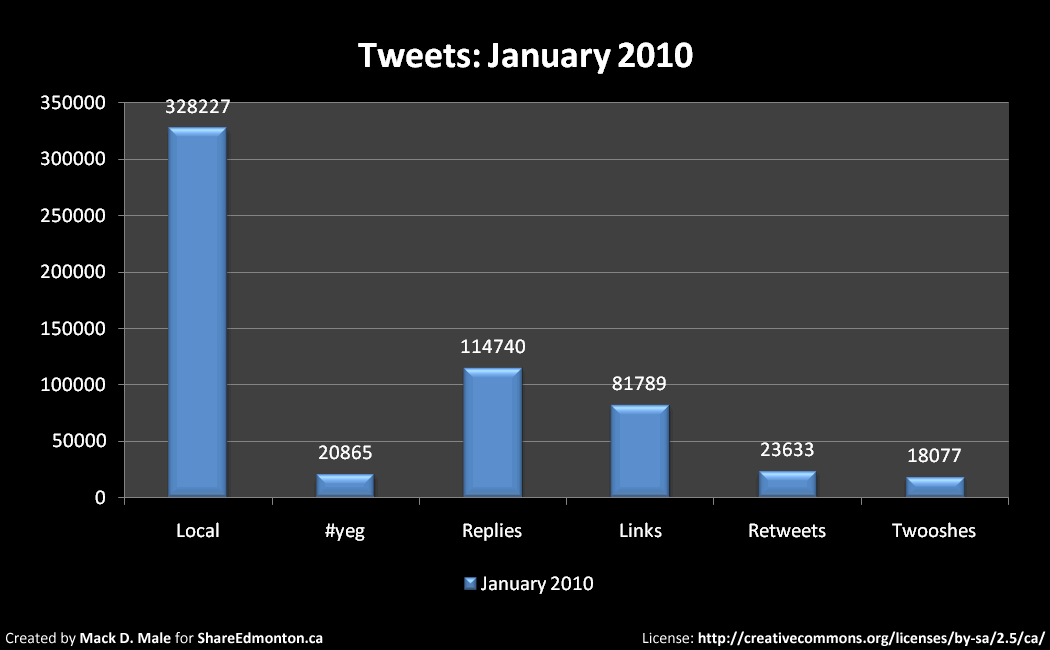
# of tweets by local users: 328227
# of tweets by local users containing #yeg: 20865 (6.4%)
# of tweets by local users that were replies: 114740 (35.0%)
# of tweets by local users containing links: 81789 (24.9%)
# of tweets by local users that were retweets: 23633 (7.2%)
# of tweets by local users that were twooshes: 18077 (5.5%)

Here are the numbers above in graphic form:

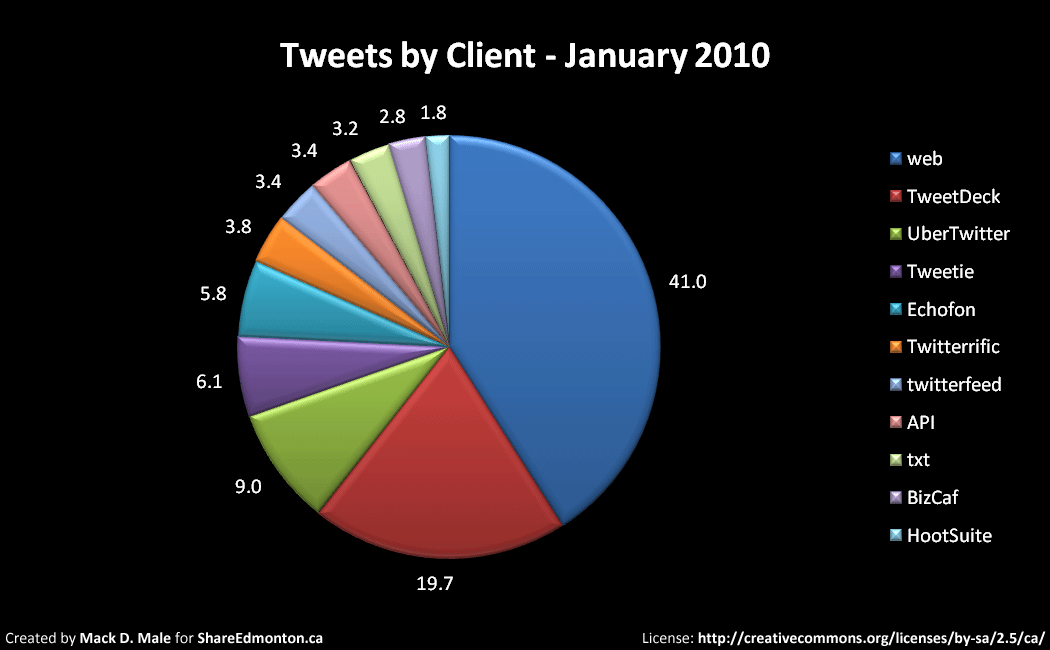
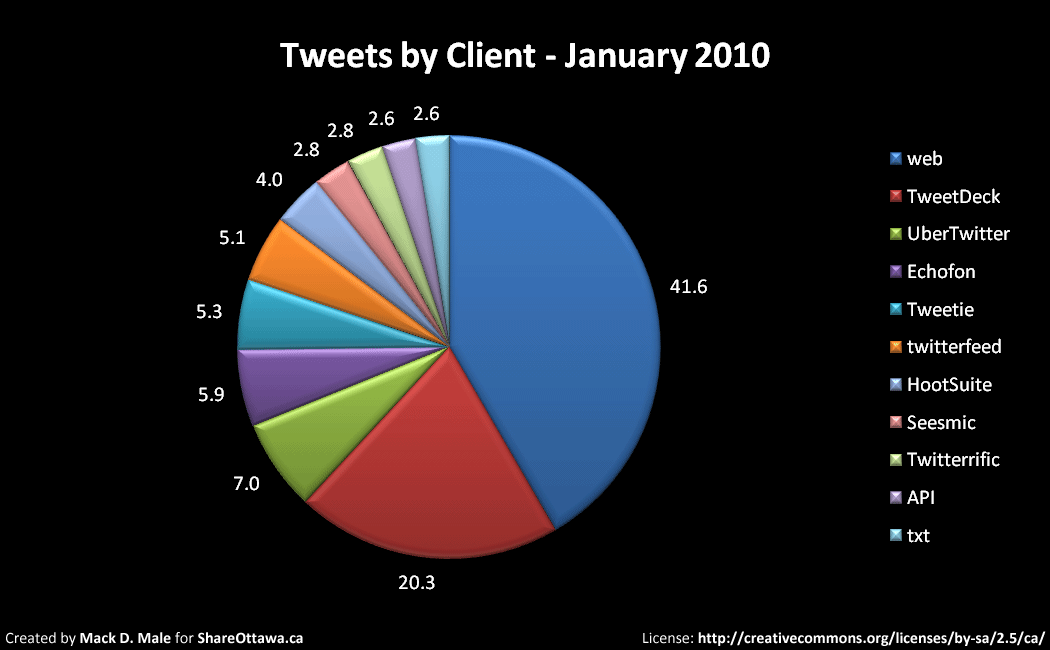
Here are the top clients used by local users for posting updates:

Some other interesting stats for the month:

  • Just under 51% of all local tweets were posted between 9 AM and 5 PM.
  • Local users posted roughly 7.4 tweets per minute in January (compared to 6.7 tweets per minute in December).
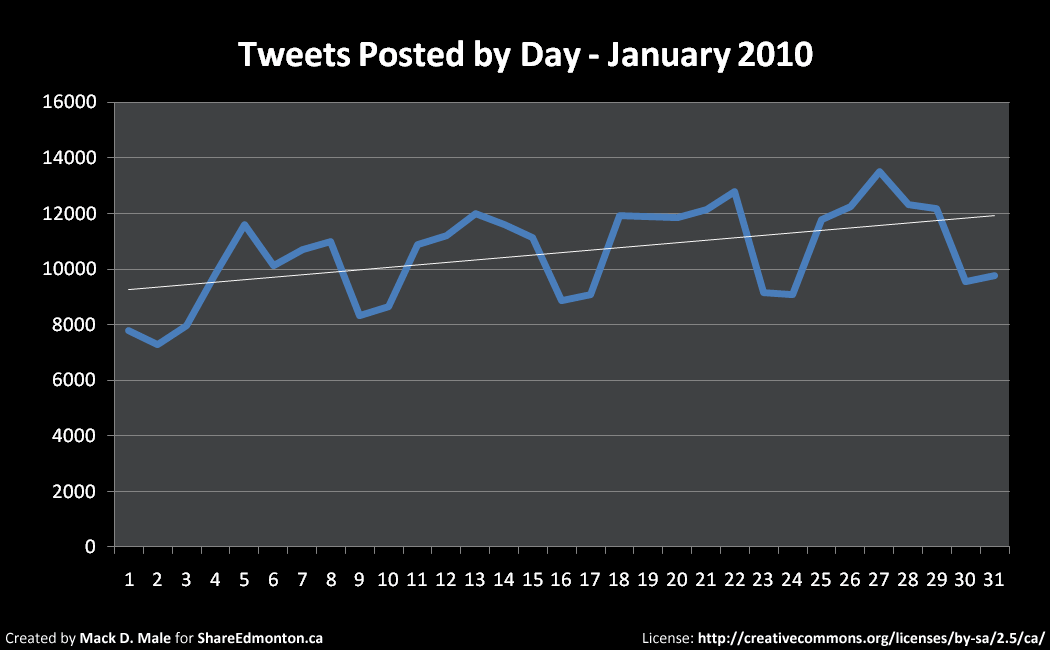
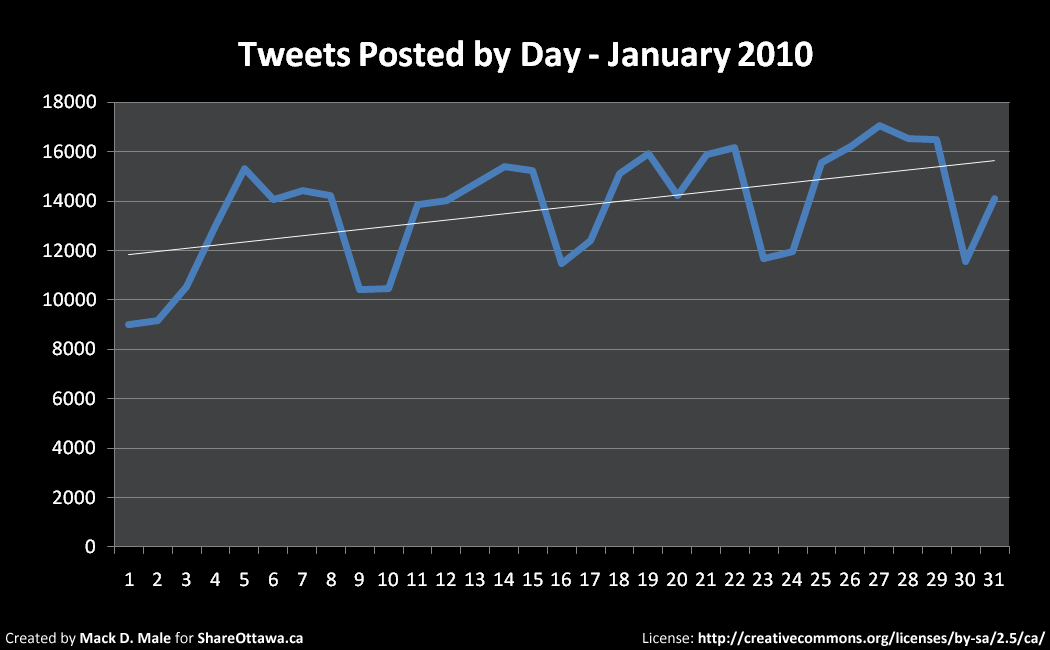
  • The day with the most local tweets posted was January 27 at 13518. On average, 10588 local tweets were posted each day (compared to 9568 in December).
  • Of the 114740 replies posted by local users this month, 41713 or 36.4% were to other local users.
  • A total of 1236 users posted 50 times or more in January. In comparison, 854 users posted just once.

Here are the top ten most followed local users:

  1. revtrev
  2. Pat_Lorna
  3. wearestereos
  4. LesM
  5. dancinginlife
  6. DrBarryLycka
  7. dragonage
  8. NHL_Oilers
  9. DarleneV
  10. subunit1

Here are the top ten most listed local users:

  1. DaBaby
  2. revtrev
  3. dragonage
  4. redneckmommy
  5. NHL_Oilers
  6. paradepro
  7. dancinginlife
  8. Pat_Lorna
  9. gsiemens
  10. wearestereos

Here are the top ten most active local users:

  1. EdmontonBizcaf
  2. Gen22
  3. etownmelly
  4. PsychicJay
  5. rootnl2k
  6. GeneralTekno
  7. Lois_Taylor
  8. trinamlee
  9. steenyweeny
  10. Sajeder

Here are the top ten most active local users using #yeg:

  1. WeatherEdmonton
  2. edmontonjournal
  3. DebraWard
  4. iNews880
  5. cbcedmonton
  6. yegtraffic
  7. Tamara_Stecyk
  8. livingsanctuary
  9. ZoomJer
  10. BrentWelch

Final Thoughts

Slight increase in the number of active users this month, which basically brings us back to where we were in November. Quite a significant increase in the number of tweets posted this month too – we even broke 13,000 per day!

Edmonton continues to have the most tagged tweets and the most conversations (replies to one another). We’ve had a bunch of tweetups lately too. We really do have an amazing community in Edmonton!

I’m going to do a separate post on Olympics tweets, because I think there is some really interesting data there. Edmontonians posted a lot during the opening cemeronies!

State of the Calgary Twittersphere – January 2010

Welcome to the first State of the Calgary Twittersphere of 2010, my look at the intersection of Twitter and Calgary, AB. You can see last month’s stats here.

For information on the data, definitions, and other background, click here.

For January 2010:

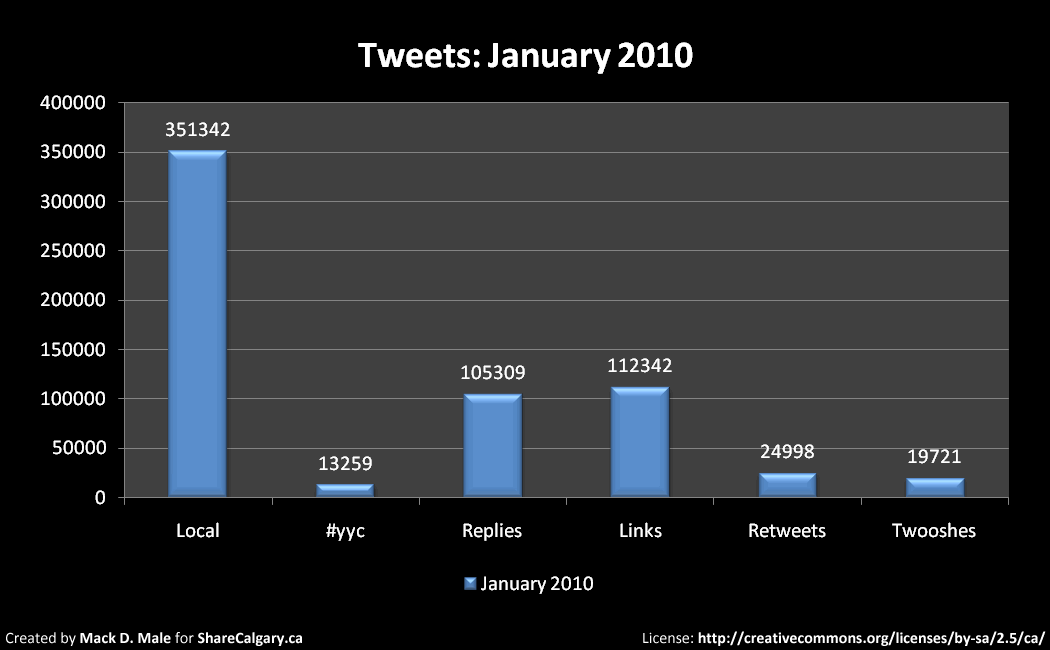
# of local users: 7371 (an increase of 249 from December)
# of tweets by local users: 351342
# of tweets by local users containing #yyc: 13259 (3.8%)
# of tweets by local users that were replies: 105309 (30.0%)
# of tweets by local users containing links: 112342 (32.0%)
# of tweets by local users that were retweets: 24998 (7.1%)
# of tweets by local users that were twooshes: 19721 (5.6%)

Here are the numbers above in graphic form:

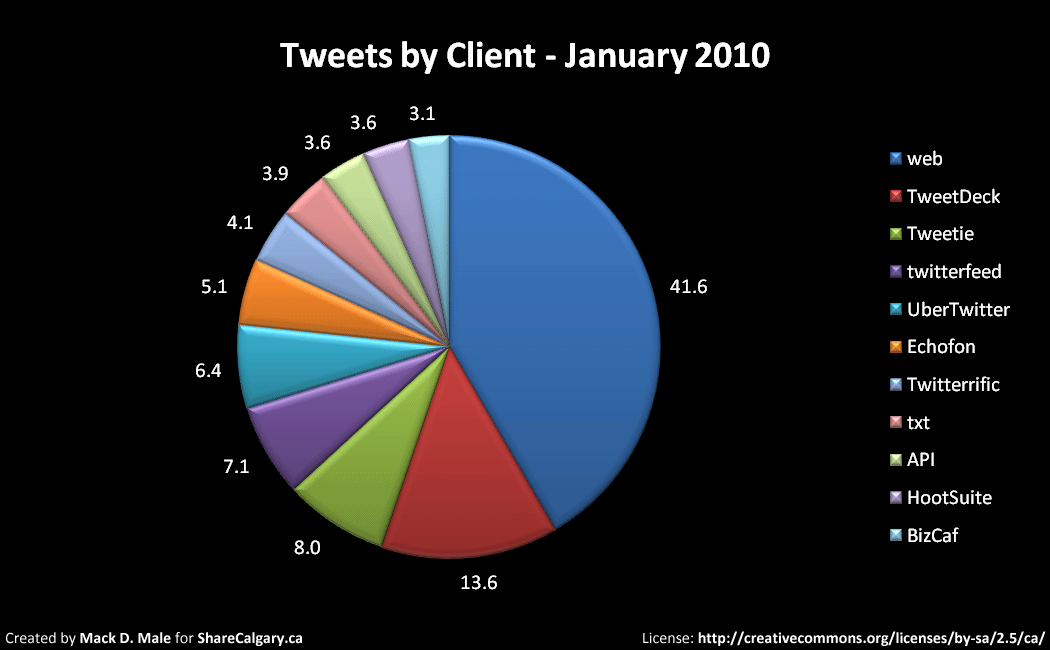
Here are the top clients used by local users for posting updates:

Some other interesting stats for the month:

  • Just under 50% of all local tweets were posted between 9 AM and 5 PM.
  • Local users posted roughly 7.9 tweets per minute in January (compared to 7.3 tweets per minute in December).
  • The day with the most local tweets posted was January 27 at 13935. On average, 11334 local tweets were posted each day (compared to 10472 in December).
  • Of the 105309 replies posted by local users this month, 28981 or 27.5% were to other local users.
  • A total of 1274 users posted 50 times or more in January. In comparison, 1182 users posted just once.

Here are the top ten most followed local users:

  1. douglasi
  2. cristinereyes21
  3. MarkIsMusing
  4. OksanaIrwin
  5. CrazyMechanic
  6. TOMIMWizard
  7. VeronicaHay
  8. CassieSTROM
  9. LeeCoates
  10. WestJet

Here are the top ten most listed local users:

  1. douglasi
  2. cristinereyes21
  3. VeerUpdate
  4. jwatson68
  5. WestJet
  6. NHLFlames
  7. izzynobre
  8. uppercasemag
  9. dayhomemama
  10. ThankASoldier

Here are the top ten most active local users:

  1. CalgaryBizcaf
  2. ProtruckR
  3. nscafe
  4. izzynobre
  5. MarketingHits
  6. a_picazo
  7. alex_ruiz
  8. opiatedsherpa
  9. that_angela
  10. BoldlyBeautiful

Here are the top ten most active local users using #yyc:

  1. WeatherCalgary
  2. alex_ruiz
  3. nscafe
  4. C_DIG
  5. a_picazo
  6. JohnCornegge
  7. lonnietaylor
  8. that_angela
  9. jcpollock
  10. paulinate

Final Thoughts

Slight increase in the number of active users this month, no doubt thanks to the holidays ending and everyone getting back to work. The number of tweets posted per day increased throughout the month as well, breaking the 13,000 mark twice. There was also a slight increase in the number of tagged tweets.

State of the Ottawa Twittersphere – January 2010

Welcome to the first State of the Ottawa Twittersphere, my look at the intersection of Twitter and Ottawa, ON.

For information on the data, definitions, and other background, click here.

For January 2010:

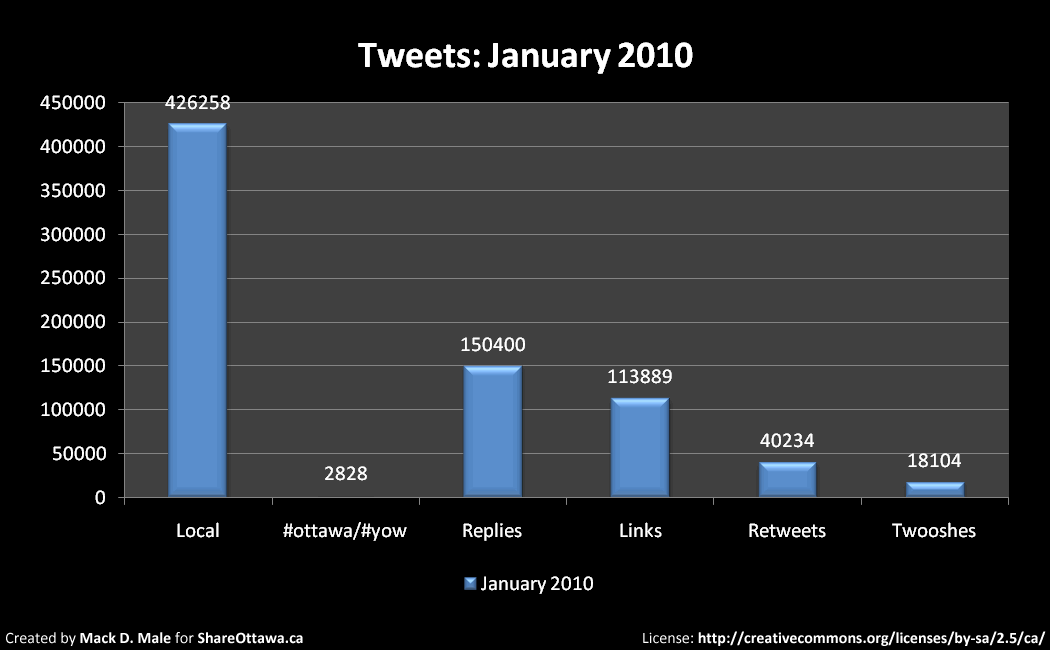
# of local users: 8562
# of tweets by local users: 426258
# of tweets by local users containing #ottawa/#yow: 2828 (0.7%)
# of tweets by local users that were replies: 150400 (35.3%)
# of tweets by local users containing links: 113889 (26.7%)
# of tweets by local users that were retweets: 40243 (9.4%)
# of tweets by local users that were twooshes: 18104 (4.2%)

Here are the numbers above in graphic form:

Here are the top clients used by local users for posting updates:

Some other interesting stats for the month:

  • Just under 52% of all local tweets were posted between 9 AM and 5 PM.
  • Local users posted roughly 9.6 tweets per minute in January.
  • The day with the most local tweets posted was January 27 at 17041. On average, 13750 local tweets were posted each day.
  • Of the 150400 replies posted by local users this month, 41710 or 27.7% were to other local users.
  • A total of 1618 users posted 50 times or more in January. In comparison, 1235 users posted just once.

Here are the top ten most followed local users:

  1. pmharper
  2. billbateswins
  3. campbed
  4. Jason_OToole
  5. ErinBlaskie
  6. BlackBerryCool
  7. snookca
  8. knealemann
  9. MattMossop
  10. AtifMirzaRemax

Here are the top ten most listed local users:

  1. CharlesCrosbie
  2. snookca
  3. pmharper
  4. BlackBerryCool
  5. michelfortin
  6. ErinBlaskie
  7. michaelgeist
  8. surinderJsingh
  9. CloutMarketing
  10. plevy

Here are the top ten most active local users:

  1. whoreformusic
  2. kareenaristide
  3. CRAcorruption
  4. ice89
  5. LorenaHeletea
  6. Mr_SaGz
  7. bitofmomsense
  8. wickedcanadagal
  9. all_caps
  10. Dr_Tania

Final Thoughts

I wasn’t quite sure what to expect with the Winnipeg stats, so learning that they don’t use a local hashtag was interesting, not surprising. But it’s safe to say that I am surprised local hashtag usage in Ottawa is so low (unless they use one I’m not aware of): I counted just 112 tweets tagged with #yow, and just 2716 with #ottawa. As you can see above, that’s less than 1% of all tweets posted during the month. Maybe some of that is due to the federal/national focus that is natural for Canada’s capital city. Ottawa users do reply to one another more frequently than Winnipeggers do, however.

Another surprise: there are a lot of users in Ottawa and they post a lot! I’m looking forward to seeing if the numbers grow.