Finding your way around downtown Edmonton is about to get easier

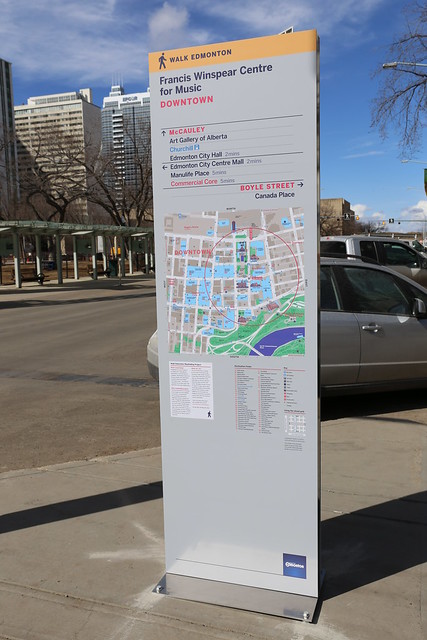
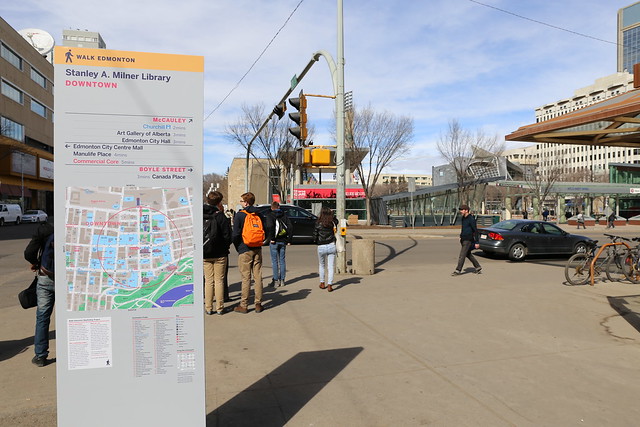
Walk around downtown today and you might notice some new signage. New wayfinding prototypes have been installed around Churchill Square, part of a pilot project being led by Walk Edmonton.

Edmonton Wayfinding

Each sign contains directions to nearby destinations, a map of the area the sign is located in, and information about the wayfinding project. Importantly, the directional information and the map contain time estimates for pedestrians. This should help pedestrians to orient themselves and make it to key destinations.

Edmonton Wayfinding

The Downtown CRL Plan (PDF) contains a catalyst project called Green and Walkable Downtown that refers to “a phased and coordinated program of street and public realm improvements” focused on pedestrians. It also highlights the notion of a wayfinding system:

“Wayfinding refers to the system of visual cues, such as signage and maps that people use to find destinations and navigate neighourhoods. In the downtown context, a coherent and effective wayfinding system is particularly important to pedestrians and cyclists.”

“The wayfinding signage that exists downtown today is inconsistent and in some cases incoherent or absent. There is currently a patchwork of signage systems. A Wayfinding System would include signage at street level for pedestrians. Web and mobile phone-based wayfinding tools could also be developed. All components will be well-integrated, sharing a mutual look, language, and logic that will facilitate movement.”

Edmonton’s current wayfinding is a mess. It’s a mix of different approaches, developed at different times, with no coherent system or plan. It’s not just the pedway either, it’s everything. I’m really excited to see this start to change, and just in time for what is perhaps the busiest construction period downtown has ever seen, with the LRT, arena, Royal Alberta Museum, and many other projects underway. Good wayfinding is about to become more important than ever before.

Edmonton Wayfinding

This is just a first step, and there’s lots more that could be done. I’d love to see a digital component as well, with a mobile site or apps or both. Connections could be made to ETS wayfinding, and of course, we need to fix the pedway signage!

The City is running an online survey to gather feedback on the proposed maps and signs. You have until May 4 to provide your input!

Edmonton Wayfinding Project

While the City has been working on wayfinding for a while, it was a group of interested citizens that really got things moving.

Tim Querengesser put a project up on Make Something Edmonton in March 2013. It was focused on the pedway, but it quickly attracted a group of interested Edmontonians. After a couple of meetings, they expanded their scope to wayfinding more generally.

Tim had moved to Edmonton from Toronto not long before starting the project. When he discovered the pedway he thought it was great, but found the signage to be very poor. After travelling to many large cities, he had seen plenty of examples of excellent signage. Tim figured he should try to do something about it. “In Toronto there’s a ‘don’t get involved’ culture,” he said, “but I really wanted to get involved here.”

Edmonton Wayfinding Project

Putting up a Make Something Edmonton page was all it took to get started. The group is now known as the Edmonton Wayfinding Project, and they’ve been a critical factor in the development of the City’s wayfinding effort. They’re all volunteers but they’re quite active. They have published articles on wayfinding, organized an installation at Harcourt House, have created a buzz in the media, and have met with the City numerous times to provide guidance and feedback.

There’s no question the group has had an impact. In fact, the City’s own report on wayfinding (PDF) says so:

“Wayfinding is also a topical item of conversation in the city as a result of to advocacy and projects improve use and navigation of the Pedway and River Valley Parks. The ‘Make Something Edmonton’ group are an example of grass-roots community interest that has raised the profile of wayfinding in the city.”

Have you ever wanted to change something in Edmonton but thought it was too difficult? Let this be an example of how anyone can make a difference as long as you’re willing to put in a little time and energy! It’s so exciting to see a group of engaged Edmontonians going after something they care about. Imagine what could be done if there were another dozen groups like the Edmonton Wayfinding Project!

Kudos to Tim and the entire team on your achievements thus far; keep it going! You can follow the group on Twitter at @WayfindYEG.

Edmonton’s 2014 Municipal Census goes online

The City of Edmonton is conducting its biennial census this year, and for the first time, you can participate online! The census is an important tool for collecting up-to-date demographic information that is used in decision-making and also for per-capita grants. Completing the census online is optional, so if you do nothing, a census worker will come to your door as in years past.

Here’s how it works. Over the next couple days, every household will be receiving a letter with information on how to complete the census online. That letter will include a PIN that you’ll use to access the online questions. The questions being asked online and in person are the same, except for one extra question that only online respondents will get to answer:

“In the future, what additional channels or sources would your household like added to receive information regarding City services?”

The idea is for the City to get an idea of citizen expectations for getting information out about services. The reason that question is only being asked online is because it requires a written response (presumably it would be too slow for door-to-door collection). If you’re wondering how to answer it, my suggestion would be to write “open data”!

The online census is powered by Dominion Voting Systems, a Denver-based company that sells electronic voting machines (it was founded in Toronto in 2002). Their solution for Canadian municipalities is also being used by Lethbridge this year.

In an effort to help people complete the census online, the City of Edmonton is hosting a series of outreach events over the next couple of weeks:

“The staff will be there offering guidance and support to individuals who wish to complete their census online using computers available at the various venues. Any one who would like information on the online census option, or assistance with completing their census online, are welcome to attend.”

The online portion of the census starts tomorrow, April 10 at 8am and will run until 8pm on April 27. Door-to-door collection will begin on May 10, which will enable workers to avoid visiting any household that has already participated online. Census workers present City-issued identification so you can ensure they are legitimate workers before answering any questions. If you’re interested in being a census worker, you can apply here.

I was disappointed when Council voted last year against adopting online voting, so I’m quite pleased to see the City taking another step in the online direction with this year’s census. I hope it is a success and builds confidence for future online endeavours!

You can see my post on the results of the 2012 Municipal Census here. If you’re curious, here’s Policy C520B, the Municipal Census Policy.

Media Monday Edmonton: Update #107

Here’s my latest update on local media stuff:

troubleshooter

You can follow Edmonton media news on Twitter using the hashtag #yegmedia. For a great overview of the global media landscape, check out Mediagazer.

So, what have I missed? What’s new and interesting in the world of Edmonton media? Let me know!

You can see past Media Monday Edmonton entries here.

Edmonton Notes for 4/6/2014

Here are my weekly Edmonton notes:

Headlines

Edmonton Downtown from Saskatchewan Drive
Edmonton Downtown by Davan Russell

Upcoming Events

84:365 – Gibson Block
Gibson Block by Jamey M. Photography

Edmonton announces bid to host the 2022 Commonwealth Games

On Monday, the City of Edmonton announced it will bid to host the Commonwealth Games in 2022. Mayor Iveson had this to say about the news:

“Our city’s successful history as a great event host city started with the 1978 Commonwealth Games. Hosting the games in 2022 will demonstrate to the world how much Edmonton has evolved and reflect the Commonwealth Games Federation’s confidence in our city.”

As recently as a week ago, the Commonwealth Games Federation was concerned about a lack of interest in hosting future Games, potentially due to in-fighting and cost. No city had yet stepped forward, and cities that had previously expressed interest such as Singapore, Birmingham, and even London, all cancelled their plans. Then, at the last minute, Edmonton and Durban, South Africa, stepped forward.

Queen Elizabeth II 1978
Her Majesty Queen Elizabeth II and His Royal Highness the Duke of Edinburgh attend the Commonwealth Games in Edmonton in 1978

When Edmonton hosted the Games in 1978, they were the biggest to date. Forty-six countries participated, sending 1,474 athletes to compete in 128 events across 10 sports. When the Games take place later this year in Glasgow, more than 70 countries are expected to participate, with more than 4,300 athletes competing in nearly 300 events across 17 sports.

Where did this come from?

The announcement seemed to come out of nowhere, but the possibility of Edmonton hosting the Games actually came up in February 2012, shortly after Commonwealth Games Canada decided to pursue another bid. Here’s what Mayor Mandel said at the time:

“I think 1978 (the last Edmonton Games) was a watershed moment for the city, and 2022, almost 45 years later, it would be a nice re-coming out party.”

“It’s a chance to showcase Edmonton. We have great facilities in the city, so I don’t think there would be a huge capital investment with these games other than some expansion. We would obviously have to do some upgrades.”

Big cities bid on major events to diversify their economies, attract tourists, build their reputations, and engage their citizens. Though many cling to a small-town mentality, Edmonton is a big city. Big cities bid on big events.

The 1978 Commonwealth Games were widely viewed as a coming out party for Edmonton, introducing us to the world stage. The City’s 2004 Annual Report reiterated this view:

“The Commonwealth Games [brought] unprecedented attention Edmonton, marking it as a city of international prestige and importance.”

It’s not like Edmonton has been standing still since 1978 either. We followed the Commonwealth Games up with the 1983 Universiade Games. We have hosted World Cup qualifying matches, World Figure Skating Championships, the 2005 World Masters Games, and much more. Perhaps biggest of all, we hosted the 2001 World Championships in Athletics.

The next few years will be especially busy. This year Edmonton is hosting seven games during the FIFA U-20 Women’s World Cup Canada, and next year we’re hosting eleven games during the FIFA Women’s World Cup Canada. Off the pitch, Edmonton is hosting the 2015 and 2016 Canadian Track and Field Championships, the latter of which will serve as the Canadian Olympic Track and Field Trials for athletes looking to compete in the Summer Olympics in Brazil. It’s going to be an exciting few years for sports in our city!

Would the federal government support the bid?

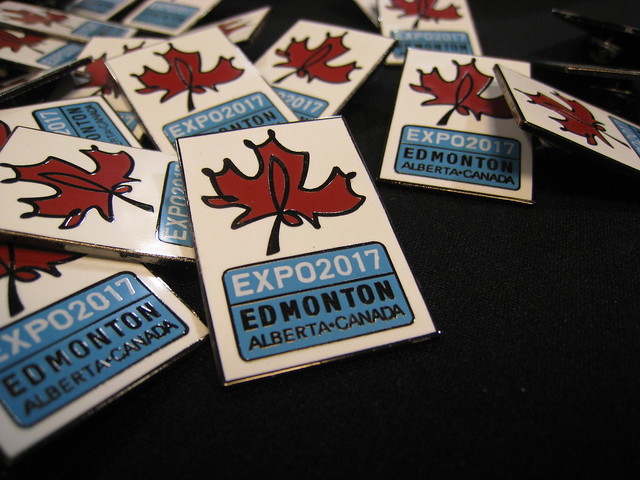
Edmonton’s bid to host EXPO 2017 was brought to a halt in 2010 after the Government of Canada withdrew its support, citing the unknown future costs of security. Mayor Mandel felt the real reason was a lack of support for our city, saying that “when it comes to Edmonton’s growth and ambition, our federal government simply isn’t interested.” He singled out MP Rona Ambrose for failing to build the necessary support in Ottawa for Edmonton’s bid.
Edmonton EXPO 2017 Launch

Do we need federal support for this bid? Financially, it seems unlikely a successful event could be staged without support from the Government of Canada, despite City Manager Simon Farbrother’s optimism that the City and Province could support it themselves. The reality is that hosting the Games is a $1 billion proposition, based on recent costs. Security concerns would also likely be a federal issue.

Would the federal government support this bid? Sport Canada guidelines outline that the federal government can only support two Canadian bids for major games in any decade. It is widely expected that Quebec City will bid to host the Winter Olympics, so Edmonton would be counting on being the second major event host.

Halifax was hoping to bid for the 2014 Commonwealth Games, but they were forced to withdraw their bid over concerns with the budget. It was the first time Canada had withdrawn a bid for a Commonwealth Games event. Edmonton’s bid would need to be rock solid.

What does this mean for LRT?

One of the drivers behind Edmonton’s failed bid to host EXPO 2017 was infrastructure money expansion for LRT. Big events require big money, and it was hoped that part of staging a successful event would mean expanding the transit network. Many Edmontonians were quick to make the connection to LRT after Monday’s announcement too.

It’s true that Edmonton’s LRT first opened in 1978, just months before the Commonwealth Games. But that project is not what took the LRT from conception to reality, nor is it what funded the construction. From Ride of the Century:

“In truth, the visionary planning that laid the foundation for the LRT dated back to the decommissioning of the streetcars in 1951, but it took until the early 1960s for the rapid transit dream to take coherent shape in D.L. MacDonald’s Report on the Present Operating Conditions of the Edmonton Transit System With a View to Determining a Policy for The Future Operation of the System in 1961.”

When the LRT opened on April 22, 1978, at a cost of $64.9 million, it was 7.25 km long with five stations.

LRT

Edmonton hosted the 1978 Commonwealth Games from August 3 to 12. Edmonton Transit had been planning transportation for the Games for two years, even assembling a fleet of 724 buses from Edmonton, Calgary, and Red Deer rolling stock to help meet demand. Their planning paid off.

“Edmonton Transit conveyed almost two million spectators to events over the nine days of the Games, and on August 8, the LRT system set a ridership record of over 69,000 people.”

“The Games were a shining moment for the city, and Edmonton Transit had played its part well passing the gargantuan test with flying colours.”

Just as we needed to continue building LRT with or without EXPO 2017, we need to move forward with LRT expansion whether we host the Games or not. I’d hate to see us tie LRT expansion money to the bid. LRT is our top infrastructure priority, and this event should have no bearing on that.

What does this mean for other infrastructure?

Events like the Commonwealth Games typically leave a physical legacy of facilities in the cities that host them. New sports and recreation facilities built for the Games could serve Edmontonians for years to come.

It is expected that Commonwealth Stadium would once again serve as the venue for the opening and closing ceremonies. It has received numerous upgrades in recent years, and could still receive more. Other facilities that were built for the 1978 Games, like Kinsmen, would likely receive upgrades and could be used. Foote Field was recently upgraded, and a new velodrome adjacent to Peter Hemingway pool has already been in the works. Edmonton had bid to host the 2015 World University Games, and had included a list of facilities as part of that bid that never moved forward. Those plans would likely be dusted off if this bid is successful.

Who is the competition?

In 1978, Edmonton’s competition was Leeds in England, a city with a population of about 200,000 more at the time. Our competition for the 2022 Commonwealth Games is Durban, a South African city of nearly 600,000 in a much larger metro area home to more than 3.4 million people. South Africa has never hosted the Games before, so that likely gives them an edge.

Apparently Durban had previously considered a bid for the 2020 or 2024 Summer Olympics, which suggests to me they are hungry to host another major international event and will be stiff competition. Durban hosted matches in the 2003 ICC Cricket World Cup and was of course one of the host cities for the 2010 FIFA World Cup.

Canada has hosted the Games four times: 1930 in Hamilton, 1954 in Vancouver, 1978 in Edmonton, and 1994 in Victoria. Edinburgh and Auckland are the only cities to have hosted the Games more than once.

Can Edmonton win? City Manager Simon Farbrother is certainly confident:

“We will, yes. We don’t go into these things to come second. Let’s put it that way.”

What’s next?

The cost of bidding had previously been estimated to range from $8 million to $10 million. Edmonton and Durban will work to finalize their bids by March 2015. After that, members of the Commonwealth Games Federation will meet a General Assembly in Auckland, New Zealand to choose a winner on September 2, 2015.

An Edmonton delegation will be travelling to Glasgow this year as official observers to learn best practices. The City has apparently talked with Glasgow officials about the bidding process too.

The City of Edmonton has said it will continue discussions with the Province and will be looking to engage other stakeholders throughout the country to win their support. Of course, Edmontonians will also be invited to get involved, so look forward to those opportunities in the near future.

Media Monday Edmonton: Update #106

Here’s my latest update on local media stuff:

Mayor's Symposium on Poverty
When I see the mayor these days, it is usually when he’s surrounded by microphones and cameras!

You can follow Edmonton media news on Twitter using the hashtag #yegmedia. For a great overview of the global media landscape, check out Mediagazer.

So, what have I missed? What’s new and interesting in the world of Edmonton media? Let me know!

You can see past Media Monday Edmonton entries here.

Edmonton Notes for 3/30/2014

Here are my weekly Edmonton notes:

Headlines

TRC Walk of Reconciliation

Earth Hour 2014
CWB went dark for Earth Hour

Upcoming Events

March 29 -  Celebrity Showcase - Vicky Lau 03
Western Canada Fashion Week!

Some of my favorite gadgets as of March 2014

It’s probably no surprise to you that I love gadgets. I can’t help it, I’m a sucker for a new shiny toy. Some of the gadgets I buy turn out to be underwhelming or less useful than I had hoped, but some quickly become indispensable. This is highly subjective of course, but it seems like more and more of the gadgets I have bought recently are good quality, very useful, and attractive. Am I getting better at picking them, or has the bar just generally been raised?

Here are a few of my current favorites!

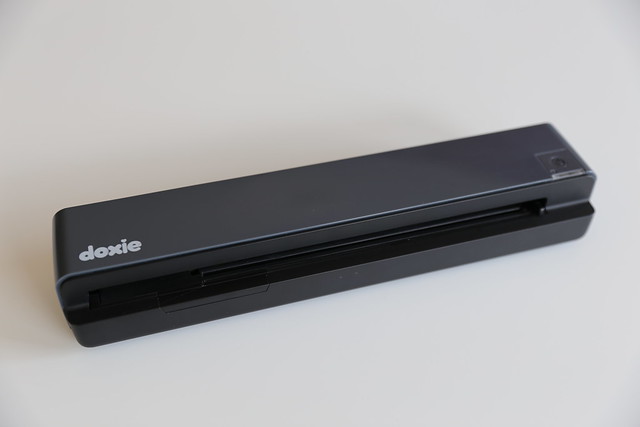
Doxie One

I bought a Doxie One back in November 2012 when I decided I was going to get serious about going paperless. That quest is ongoing, but the Doxie has definitely made a difference! I use it to scan invoices, receipts, business cards, and even handouts from all the different media events I go to. Unlike old school scanners that need to be connected to your computer and have terrible software, the Doxie scans things to an SD card that you can then plug into the computer later. It’s amazing how much of a difference it makes when you can separate those two tasks – scanning feels like less of a chore with the Doxie. The app it comes with is great too, letting you save scans as PDF, images, and other formats straight into OneNote, Dropbox, or wherever you like. Love it!

Logitech Wireless Headset H800

I spend a lot of time on calls for work, via Lync or Skype. I have lost count of the number of USB headsets I’ve had over the years. After the cable on my last one eventually deteriorated, I decided to go wireless. I settled on the Logitech Wireless Headset H800 and could not be happier. It’s sleek and light, produces great quality sound, and supports both a tiny USB dongle and bluetooth, which means I can use it with both my desktop and my mobile devices. The headset charges using a micro USB cable which is handy (because pretty much every other device uses the same cable). Battery life is not amazing, but is more than adequate.

Jabra SPEAK 410

I first used a Jabra SPEAK when I was hosting some meetings at Startup Edmonton. I loved it so much, I decided to go and buy one! When I’m with colleagues or simply don’t want to wear my headset, I’ll use the Jabra. It is absolutely fantastic. It’s small and highly portable, produces great sound, and I love the controls. Answer, hangup, mute, volume – all seamlessly work with Lync and Skype. No software necessary either, just plug it in and away you go!

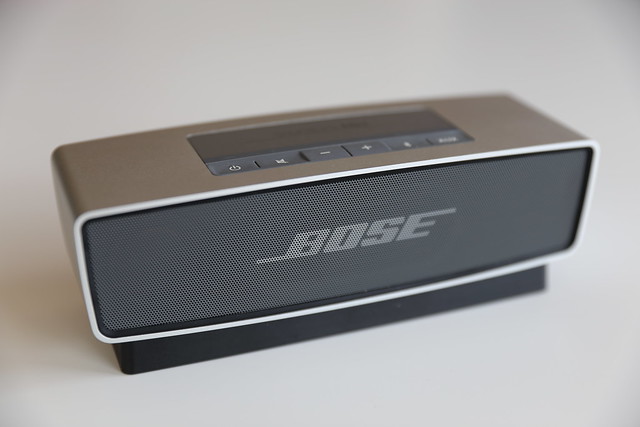
Bose SoundLink Mini

Sharon and I wanted a small speaker for our condo so after looking around at various options, I eventually decided on the Bose SoundLink Mini. It’s a bluetooth speaker and is meant to be portable (though we just leave it on the dock all the time). It produces fantastic sound, so good that I’m now looking to replace my crappy desktop speakers because they sound so bad in comparison. I can pair my Surface and Sharon has paired her phone with the speaker, so either one of us can play music easily. It’s perfect for when we’re cooking or have guests over or just want to have some background tunes.

Logitech Bluetooth Illuminated Wireless Keyboard K810

When I bought my Surface Pro, I decided to get the touch cover (the flat one without physical keys). It works great when I’m on the go, but at home I wanted a keyboard with actual keys to use. I decided on the Logitech Bluetooth Illuminated Keyboard K810. It’s pretty small and connects via bluetooth with the ability to switch between thee devices just by pressing one button. It’s also illuminated, and with a hand proximity sensor, it turns off the backlight to save power when your hands are not near it. Speaking of power, I don’t think I have ever had to charge it. Granted I don’t use it all the time, but still, the battery life is impressive.

Microsoft Sculpt Ergonomic Desktop

Last but not least is the Microsoft Sculpt Ergonomic Desktop. I wasn’t sure if I’d like the ergonomic keyboard and mouse, but this is absolutely the best combo I have ever owned. The mouse is surprisingly comfortable and uses real batteries (I’ve given up on so many mice because the rechargeable batteries all suck). The keyboard is the star though. It’s striking design looks great on my desk and it’s incredibly comfortable. You can see where my hands have rubbed against the cushioned palm rest, but still, it has held up well. My favorite part are the keys – they are more like laptop keys than traditional desktop keyboard keys, with less “throw”. I also love that it comes with a separate number pad, which I never use, meaning it doesn’t clutter up my desk.

I use The Wirecutter quite a bit for reviews, so check it out if you haven’t come across it already. I’m always looking for new gadgets, so who knows what I’ll be using in a year or two. Things are changing so quickly and for the better!

City Council approves a new transportation goal and outcomes for The Way Ahead

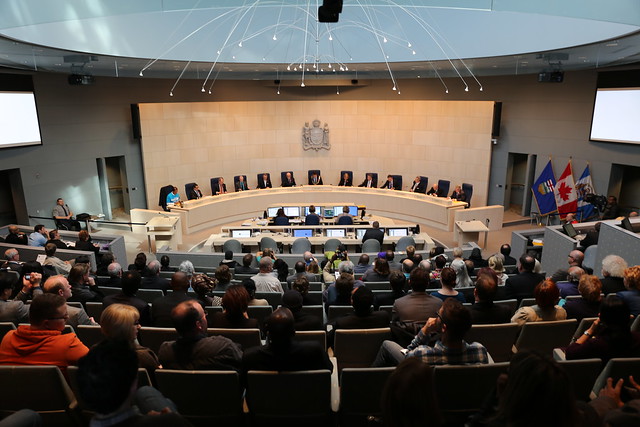
It’s no secret that LRT is City Council’s top infrastructure priority. They have repeatedly stressed the importance of expanding our LRT network, and scored a win recently with the Valley Line. LRT is part of a bigger transformation that Council hopes to realize, which is a shift away from the car-dominated transportation network we have today to a network that offers realistic choice through a range of travel options. At Wednesday’s City Council meeting, they approved a new goal for The Way We Move that makes this transformation clearer.

City Council Swearing In 2013-2017

In November last year, Edmonton’s new City Council took part in a series of strategic planning sessions. In addition to serving as a crash course on the City’s strategy and approach to long-term planning, the sessions were also a way to ensure the new Councillors were on board with the corporate outcomes, measures, and targets for each of the six 10-year goals identified in The Way Ahead. Among the key outcomes of those meetings were a desire by Council to review the goal statement for The Way We Move, as well as a desire to emphasize public engagement within The Ways.

The public engagement action is being handled through a new Council Initiative, and I think we’ll hear much more about that in the weeks ahead. I’m looking forward to it.

The goal for The Way We Move was reviewed and discussed at a couple of subsequent Council meetings, notably January 28 and March 11. Council wanted to stress the use of public transit, but they wanted to make it clear that Edmontonians would have choice. The goal they ultimately settled on reflects both of those desires and has led to a new set of outcomes too.

Current Goal: Shift Edmonton’s Transportation Mode

The current goal statement for The Way We Move is focused on “mode shift”, which is meant to convey that while the majority of Edmontonians get around the city using vehicles today, that should not always be the case. The reasons for needing a shift included changing our urban form to be more sustainable, accessibility, supporting active and healthy lifestyles, reducing the impact on the environment, and attracting business and talent to Edmonton.

Here’s the goal statement that accompanies the goal:

“Modes of transportation shift to “fit” Edmonton’s urban form and enhanced density while supporting the City’s planning, financial and environmental sustainability goals.”

Each goal also has an ‘elaboration’ associated with it. The current one for transportation reads:

“In shifting Edmonton’s transportation modes the City recognizes the importance of mobility shifts to contribute to the achievement of other related goals. To do so suggests the need to transform the mix of transport modes, with emphasis on road use for goods movement and transiting people and transit use for moving people. This goal reflects the need for a more integrated transportation network comprising of heavy rail, light rail, air and ground transport, and recognizes the important contribution that transportation makes to environmental goals.”

While the current wording attempts to connect with the other goals in The Way Ahead, it doesn’t as forcefully make the case for offering alternatives to single-occupant vehicles. The other challenge is that “mode shift” doesn’t mean anything to most of us, and sounds bureaucratic.

Perhaps more importantly, this was the only goal that was presented as if was worth doing solely to achieve the other goals. Surely a shift in how we move around the city should have benefits of its own!

New Goal: Enhance use of public transit and active modes of transportation

The new goal statement reads:

“Enhancing public transit and other alternatives to single-occupant vehicles will provide Edmonton with a well-maintained and integrated transportation network. Increased use of these options will maximize overall transportation system efficiency and support the City’s urban planning, livability, financial, economic and environmental sustainability goals.”

And the new elaboration reads:

“Through this goal, the City recognizes that a transportation system that is designed to support a range of travel options will increase the number of people and the amount of goods that can move efficiently around the city, while supporting the City’s goals for livability, urban form, financial, economic and environmental sustainability. Creating this 21st century sustainable and globally competitive city means offering choice. It will allow Edmontonians of all ages and abilities to safely walk, bike, ride transit, ride-share or drive to the places they need to go. The trade-offs needed to achieve this vision will create an integrated transportation system with greater travel choices for Edmontonians.”

The connection to the other goals is still present in the new wording, but not at the expense of highlighting the desire for alternatives to the car. There’s also the suggestion that trade-offs will need to be made in order to create a system that offers choice – we can’t have it all without making some hard decisions. The new goal is much more approachable now that “mode shift” is gone.

New Outcomes

Alongside this change, Council approved 12 new corporate outcomes, replacing the 20 that had previously been approved. Through their discussions, Council felt the outcomes should be specific and measurable, and provide a clarity of purpose. They wanted to simplify the approach. Here are the 12 outcomes they ended up with:

  1. Edmonton is attractive and compact
  2. The City of Edmonton has sustainable and accessible infrastructure
  3. Edmontonians use public transit and active modes of transportation
  4. Goods and services move efficiently
  5. Edmontonians are connected to the city in which they live, work, and play
  6. Edmontonians use facilities and services that promote healthy living
  7. Edmonton is a safe city
  8. The City of Edmonton’s operations are environmentally sustainable
  9. Edmonton is an environmentally sustainable and resilient city
  10. The City of Edmonton has a resilient financial position
  11. Edmonton has a globally competitive and entrepreneurial business climate
  12. Edmonton Region is a catalyst for industry and business growth

Gone are words like “minimized”, “supports”, or “strives”. The new language seems less open to interpretation, which is a good thing for determining progress. The next step is for Administration to prepare measures and targets based on these outcomes and to update The Way Ahead (there are currently 65 approved measures and 27 approved targets).

Results?

It’s great that Council wanted to strengthen the transportation goal and that they have simplified the outcomes. Most of this strategic planning was completed by previous Councils, so the exercise probably helped to ensure our current Councillors feel a sense of ownership. But the challenge remains: we need to implement the plans and see results. An annual report on progress will go to Council next year, based on the new outcomes, measures, and targets.

Coming up in April: Mayor’s Celebration of the Arts & Eat Alberta

I’m helping to organize a couple of events coming up in April that I wanted to tell you about. Tickets are going quickly for both events!

Eat Alberta

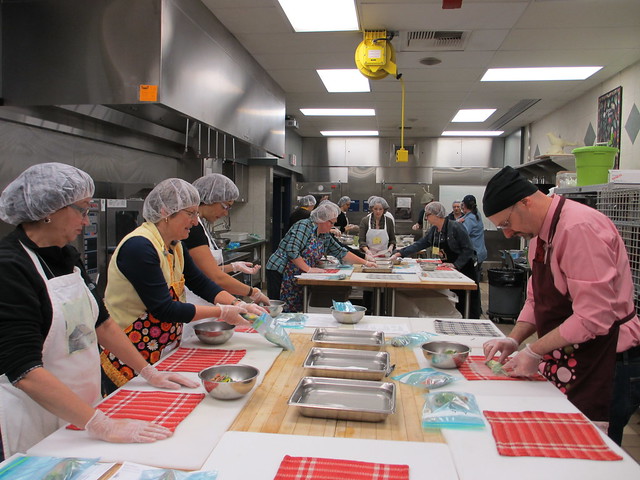
This is our fourth year for Eat Alberta, a one-day, workshop-style conference with a mix of hands on learning, food tastings, and demonstrations or presentations that focus on Alberta foods. The event takes place on April 26 in the kitchens at NAIT.

Here’s a video we did during last year’s event:

Tickets went on sale today for $150.00 each. Each ticket includes two plenary sessions, four workshops, breakfast, lunch, and a wine tasting. To ensure an equitable distribution of sessions (and to introduce you to something you might not have picked) we sell ten different tracks. I’m pretty excited about our lineup of sessions and presenters for this year.

Eat Alberta 2012

For more on Eat Alberta and what you can expect, check out Sharon’s post.

Mayor’s Celebration of the Arts

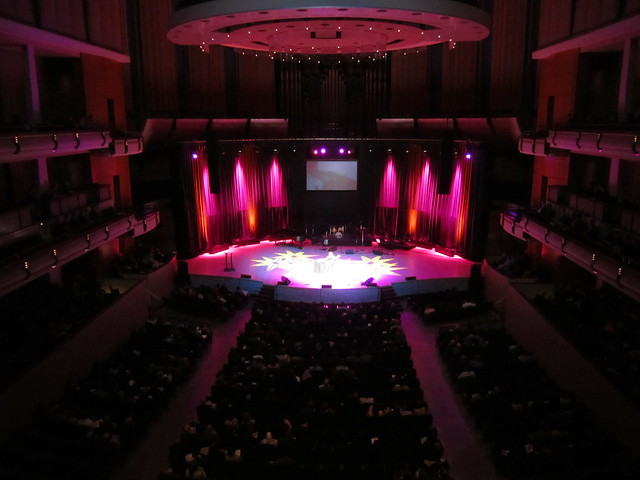
The 27th annual Mayor’s Celebration of the Arts is taking place on April 28 at the Winspear Centre. This year is of course the first event for Mayor Don Iveson. The event celebrates some of the best artistic talents our city has to offer with awards, and is packed full of amazing performances.

Mayor's Celebration of the Arts 2011

You can see the list of nominees for 2014 here. A total of 11 awards will be given out during the evening.

Tickets are on sale now with prices ranging from $15 to $80 depending on where you decide to sit. Each year the event supports a charitable organization in Edmonton, and this year we’re supporting the Music Enrichment Program. Stay tuned for details on the performances.

You can read my recap of last year’s event here. I joined the committee three years ago and I’m thrilled to still be playing a part in the event!