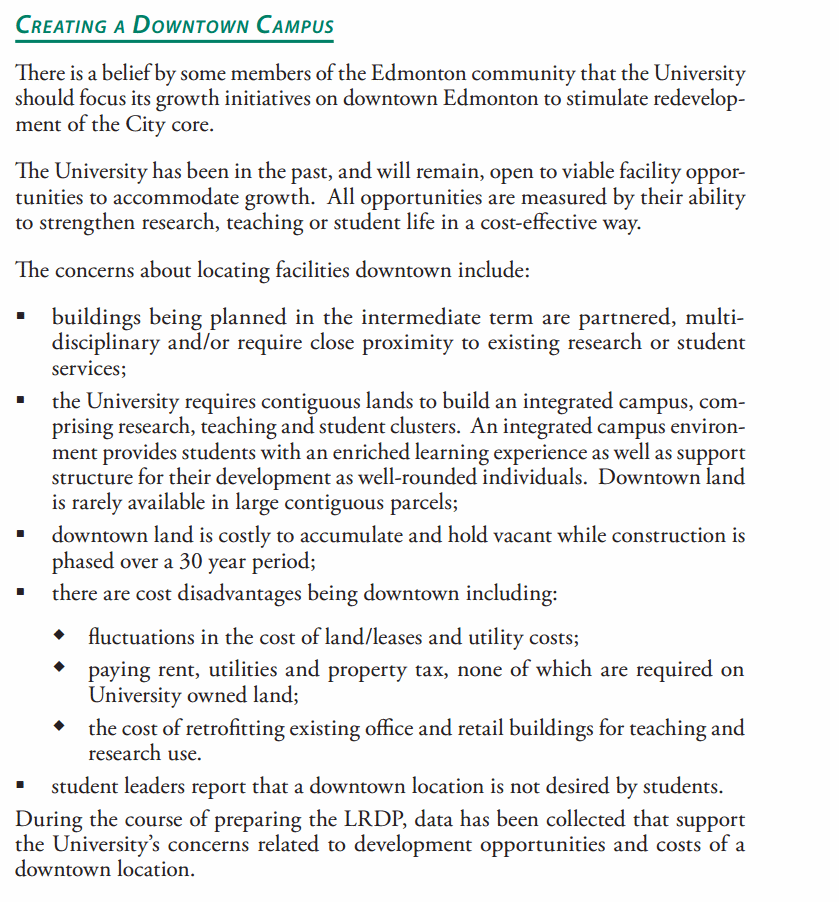
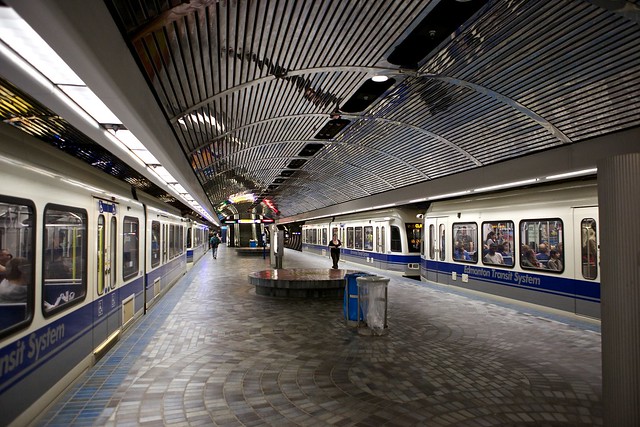
Wayfinding in Edmonton inches forward

At Executive Committee today, Councillors discussed a report which outlined why wayfinding is important, a strategy for moving it forward, and initial implementation options and costs.

Edmonton has very little wayfinding information for citizens or tourists and what we do have is confusing and lacks consistency. It has become clear that our city’s haphazard implementation of wayfinding within the pedway system is a disaster and is a mistake we should not repeat. The City’s push to see Edmontonians shift transportation modes is another big reason to support this initiative – finding your way around can be difficult if you’re not in a car. As Edmonton grows and attracts both more residents and visitors, the problem is only going to get worse. And like most things, the longer we wait to do the work required, the more it’ll probably cost.

wayfinding

The good news is that the City seems committed to doing something with wayfinding in a coordinated, strategic way. Administration understands and has articulated the benefits of wayfinding. The risk is that the funding to do it right may not be available.

Here’s an audio overview of today’s meeting & news:

You can download the cloudcast here.

Hooray for citizen action!

Would the City have come around to this position without citizen action? Perhaps eventually. But without question, the work of the Edmonton Wayfinding Project has had a significant impact. They’ve engaged citizens, they’ve conducted surveys and have done some other public engagement work, they have connected with experts in other cities, and they have pushed for collaboration with City Administration. Perhaps most importantly, they’ve shone the light on a topic that could have easily been ignored, and for no reason other than they want to make Edmonton a better place to live and visit.

The founder of the project, Tim Querengesser, was at Council today to speak to the report and to make his group’s case for the importance of progressing this work. The group published a discussion document today as well, which concluded:

“The Edmonton Wayfinding Society recommends City Council support the reports it is examining and follow their recommendations, with one caveat. The Society recommends the City reconfigure the roadmap toward a unifying wayfinding system for Edmonton to include the pedway/LRT system. Further, the Society recommends that its volunteer-driven research suggests a comprehensive study of pedway users, attitudes and behaviours is badly needed to create a wayfinding system that works in all nodes of Edmonton’s transportation infrastructure. In the interim, the Society also recommends that Edmonton introduce, immediately, guidelines for all new developments that add wayfinding as a factor that is examined. “

Be sure to follow @WayfindYEG on Twitter for updates.

Concern about costs

Today’s report included both a business case and a detailed strategy. The two hefty documents (a combined 97 pages) provide all of the necessary background and detail that you could hope for. The opening paragraph of the business case highlights one of the big problems with wayfinding efforts in Edmonton in the past:

“There have been several attempts to create a corporate wayfinding program in the City of Edmonton which have failed at the value for money decision. While it is understood generally that wayfinding offers many benefits to a growing city, it has not so far obtained support as a priority for the investment needed for citywide implementation.”

Cost dominated much of the discussion today too. Councillor Oshry in particular peppered Administration with questions about the cost of implementation, and argued after the meeting that we don’t need “the Buckingham Palace version of the signs.” He told the Sun that the proposed wayfinding strategy “seems excessive”. Mayor Iveson, however, said “to cheap out on these signs is probably a mistake.”

The overall cost of implementing the wayfinding strategy is estimated at around $10 million. That includes the development of signs, apps, plans, artwork, and more. It also includes the rollout of hundreds of physical signs. A big chunk of that cost, $5.5 million, is for the installation of maps at each existing LRT or transit station. Options for funding the project include: direct funding, which Council would need to approve; incremental funding, which would mean signs only appear as projects are completed; and revenue generation, which could be from sponsorship or advertising. Rollout options were also discussed, such as focused on downtown first and other areas later.

The business case concludes that “a pedestran-focused wayfinding system in Edmonton offers a positive benefit to cost proposition” and that “wayfinding has been shown to be a cost-effective means to overcome barriers to modal shift, a way to improve the local economy and a contributor to overall city liveability.”

Design standards

A lot of design work has already been done, which you can see in the report but also in the prototype signs that were installed around Churchill Square back in April. Future signs will include both “Walk Edmonton” and the City of Edmonton brand, and they’ll likely look a bit different than the prototype signs based on feedback and other lessons.

wayfinding

Icons are meant to be based on national or international standards, to ensure widespread recognition. The Benton Sans typeface is proposed for use across maps and signs, because it has good legibility at both large and small sizes, comes in a wide range of weights, and is a little more unique than Helvetica or other commonly used typfaces.

wayfinding

Consideration has already been given to colors, themes, cartographic elements (like the “you are here” markers), 3D landmarks, and incorporating the pedway.

Governance and maintenance

There was some discussion today about the need for a wayfinding czar, or as the detailed strategy calls the position, a “Wayfinding System Manager”. Harry Finnigan, who worked on wayfinding in Winnipeg and who spoke at Council today, said he wished they had implemented a similar position in Winnipeg. Ultimately though, Administration today decided they would rather have a team of people take responsibility for wayfinding, and Council didn’t push the point.

wayfinding

On the topic of maintenance and operations, the strategy identifies the importance of both a procurement strategy to efficiently buy and maintain signage, and an asset management database, to record information about each sign. That database of information is sorely lacking from the pedway system currently, and would certainly be important to have going forward.

The wayfinding strategy will be managed by Walkable Edmonton, under the Walk Edmonton brand. ETS and Great Neighbourhoods are the two main internal partners. Mayor Iveson also suggested that the Edmonton Design Committee be involved.

What’s next?

To some degree, the City is going to move ahead with its efforts to develop the corporate wayfinding program. At some point however, more funding will be required. There are four capital profiles being recommended for funding in the proposed 2015-2018 Capital Budget, which is when we’ll likely hear about wayfinding next. If those four profiles were funded, that would enable the City to complete roughly 60% of the wayfinding strategy.

That means Edmontonians need to keep pushing for wayfinding if they think it is important! Tell your Councillor if you want to see more funding go into this important project.

For more on wayfinding, check out the City of Edmonton’s website here and the Edmonton Wayfinding Project here.
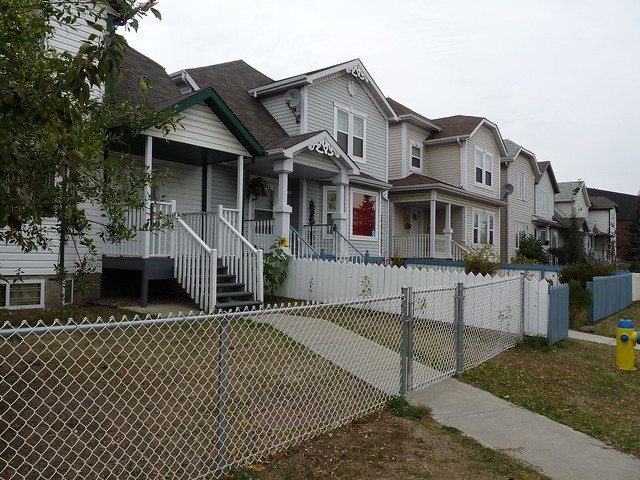
Edmonton should eliminate the RF1 zone to advance infill development

City Council should eliminate the RF1 zone and rezone all of those areas to RF3. Such a move would raise the base zoning for residential neighbourhoods across the city, moving the discussion around accommodating Edmonton’s growth from “how does infill fit in” to “infill is a key part of our entire city’s future, let’s make it work.” Such a decision would make it clear that the entire city needs to evolve together as we grow.

This is not a new idea. It has been proposed before, such as by the Infill Development Edmonton Association. More recently, Councillor Michael Walters has been in the news, making the case for increasing density throughout the city rather than just in specific neighbourhoods:

“We’ve created this sense of entitlement that my neighbourhood is a single-family neighbourhood. No infill should be permitted here,” said Walters. “I don’t think that any neighbourhood is entitled to have low density.”

As long as the majority of our mature neighbourhoods are zoned RF1, we’ll always have an “us vs. them” problem. I mean, just look at what one Kenilworth resident told The Journal:

“Duplexes? No, we don’t want that,” added June Lunn, who moved in five years ago. “Those kind of things are low income. I think older neighbourhoods should just be left how they are. That’s why we live here. If you can’t afford it, go elsewhere,” she added. “I’m not trying to be rude, but we work hard for where we live.”

Entitlement and NIMBYism at its finest. But this isn’t just about building an inclusive city. This is about accommodating the amazing growth Edmonton is experiencing and is projected to continue experiencing. Suburban neighbourhoods alone just aren’t going to cut it. Mayor Iveson wrote about this today:

“We simply can’t continue to build our city and accommodate our growth by developing new neighbourhoods alone. Our suburban neighbourhoods provide great homes, communities and amenities for Edmontonians, but they can’t be the only place where Edmonton’s growth and change occurs. The way we’ll continue to be able to grow a great city in a strong region is by enabling diverse housing options across our entire city. Infill is a crucial piece in building up our established neighbourhoods and further embracing the urban shift that is already underway in Edmonton.”

Infill

The fact is, Edmonton is behind on one of the key goals set forth in The Way We Grow, Edmonton’s municipal development plan. The plan targets that “a minimum of 25 percent of city-wide housing unit growth locate in the Downtown and mature neighbourhoods” and near LRT and transit centres. That’s infill, and while it is happening, it isn’t happening quickly enough. We’re no where close to 25% and without some sort of bold action, we’ll never get there.

As a result, the City has now published its first major report on the topic. Edmonton’s Infill Roadmap is “a two year work plan to advance infill.” Many speakers today described the roadmap as “a good start” and felt it adequately captured the public consultation that went on during its development. But the sentiment was clearly that it doesn’t go far enough.

The roadmap identifies 23 actions, including 8 that the City considers priority actions to begin immediately. “They are key activities that are needed to remove barriers to the development of more new housing and to proactively manage growth,” the roadmap says. The actions are broadly categorized into communication, collaboration, knowledge, rules, and process. As is typical with these kinds of reports, the actions are mostly baby steps, especially those in the rules category.

Action 15 says, “change the RF1 (single detached) zone to allow the subdivision of properties into narrower lots that are half the average width of the other lots on the block (but not less than 25 feet wide).” Action 16 says, “create more opportunities for row housing in the RF3 (small scale infill development) zone by removing location restrictions and changing the site regulations that currently limit this form of infill on RF3 lots.”

Council could just let the roadmap run its course, and maybe learn from that to agree on the next set of actions in two years. And eventually, after many years, we’d have transformed the RF1 zone into something that better enables infill. But I think Council needs to be bolder. The time for baby steps is over.

rf3 zones

There are just 16 neighbourhoods that currently feature predominately RF3 zoning. The vast majority of our neighbourhoods are zoned RF1. But as Administration readily admitted today, RF1 is no longer relevant. It’s just not how we develop neighbourhoods anymore. New areas of the city feature greater diversity than just single detached homes, and have higher density than mature, RF1 neighbourhoods as a result. If the RF1 zone is no longer relevant, then why keep it around?

Moving the baseline to RF3 is not a silver bullet. It also doesn’t mean that every new home built is going to be a townhouse. But it does remove a key barrier to infill, and it does make the desired mix of housing possible. It would allow land prices to stabilize, making infill more affordable.

Ambleside
Medium density housing in Ambleside

Council repeatedly asked the two panels of speakers today for advice on how to get the public onside with more infill and any potential zoning changes. They talked about “social acceptance” and noted they’re the ones that field the angry calls.

Here’s the thing: some people are going to complain no matter what you do. There will always be the June Lunn’s of the world. As was pointed out in response to Council’s questions, waiting to get everyone on board prevents action. You’ll never get everyone on board. It’s important to keep the dialogue ongoing of course, and to give Edmontonians an opportunity to be heard. But that doesn’t mean we have to keep pressing pause. Take action, and clearly inform citizens about why that decision was made and what it means. Council was elected to make the best decisions on behalf of citizens for our city’s future, and if that means infill throughout the city, then let’s get on with it already.

Today, Executive Committee passed a couple of motions to move this work forward. First, they asked for a report “outlining options to overhaul our suite of low density zones (RF1-RF4)” which could include consolidation, changes to the Mature Neighbourhood Overlay, and information about incentives that could be offered to support increased densification. We should hear back on that in January. Second, they voted to allow garage and garden suites and to change RF1 to allow narrower lots not less than 25 feet wide. A public hearing on the changes will take place by January. Furthermore, they asked for an update on progress with the Edmonton Infill Roadmap by March 2015.

That’s all good, and as we head into a very busy capital budget season, it’s probably enough for now. But I’d like to see Council go further when they pick this back up in the new year. Let’s get rid of the RF1 zone, either by rezoning those areas to RF3, or by coming up with a new consolidated zone to achieve our infill objectives. Let’s take a bold step forward.

For more on today’s discussion, check out this post from Elise Stolte.

Can new President & CEO Tim Reid help Northlands find its way?

Northlands announced today that Tim Reid will step into the role of President and CEO effective September 15, 2014. He takes over from CFO and VP of Corporate Services Sharilee Fossum, who stepped into the role in January when Richard Andersen resigned. Tim is coming off a successful stint in Fort McMurray and inherits an organization facing great uncertainty about its future.

Tim Reid

It was just over a year ago that Tim became CEO of the Regional Recreation Corporation of Wood Buffalo (RRC), the organization responsible designing, building, stewarding, and operating “several state-of-the-art community recreation, sport and event facilities and venues” in the Regional Municipality of Wood Buffalo. Prior to that, he was COO of MacDonald Island Park Corporation, precursor to the RRC. Tim will ease into his new role, remaining with the RRC in a supporting capacity for the next six months. The RRC had five projects in the design or construction phase as of January 2014, with a total budget of more than $360 million, including the $127 million Shell Place, slated to open in January 2015.

Tim takes over at a difficult time for Northlands. The organization seems as uncertain as ever about its future, especially in the face of major changes to its core businesses. Will it be an organization focused on agriculture, one focused on meetings & conventions, or one focused on sports & entertainment? Will it find the courage to narrow its focus, or will Northlands continue to straddle three very different industries?

These questions are all the more pertinent now that momentum is firmly behind Rogers Place, the new downtown arena. Despite repeated statements from Northlands officials over the years suggesting they’ll continue operating Rexall Place as-is, the fact is that losing the Edmonton Oilers will have a significant effect on the financial health of the organization. And no one knows if Edmonton can support two large concert venues.

There’s no question that Tim has had a positive impact on Fort McMurray, but can he find similar success here in Edmonton? Granted he doesn’t start for another month, but Tim’s first interviews with the media don’t provide much confidence.

Tim told Metro today that he understands the need to figure out a future for Rexall Place. “We’re trying to put together the data as we speak, so we know exactly what happens when the Oilers and their properties move to another arena,” he said. However, he went on to say that Northlands needs to “find out what opportunities there are for growth on the agriculture side, on the convention and hosting side.”

The downtown arena wasn’t decided yesterday of course – things have been in motion for quite some time now. Are we really to believe that Northlands is only now running the numbers on Rexall Place without the Oilers? I fully appreciate that Tim hasn’t even started yet, so he probably hasn’t seen all the data. He should have just said so. He told reporters that Northlands need to work with the City, Oilers, and Katz Group, but gave no details.

Edmonton Rexall Place

His second comment about finding other opportunities is potentially more concerning, especially coupled with his stated vision for Northlands:

“We want to be the heart of Edmonton and the place where the community goes to celebrate together.”

As a vision it is certainly concise and inspirational, but it’s also vague and generic. It doesn’t say anything about what Northlands is or does. The organization’s 2013 Annual Report lists agriculture, entertainment, trade shows, concerts, horse racing, casino, and conferences as the businesses that Northlands operates in. Its “looking forward” statement is just as confusing:

“As Northlands moves into 2014, we will continue to provide Edmonton and the Capital Region with the best in events and entertainment. We will capitalize on our role as an urban agricultural society by partnering with like-minded organizations to enhance our already robust local food market. As Edmonton’s destination of choice for entertainment, we will continue to bring some of the world’s best performers to our arena. We will build our visitor base for all of our venues by showcasing Northlands as the destination for entertainment, events and the community.”

Founded as an agricultural society 135 years ago, Northlands has never been willing to fully commit to entertainment, even after bringing in Richard Anderson from San Diego where he was GM of PETCO Park and Executive Vice President of the San Diego Padres. Over the years, members of the board have differed greatly on how much importance Northlands should give to its agricultural initiatives. The organization’s roots might be in agriculture, but it’s sporting that defines Northlands today, at least financially.

Without the $21 million that Northlands received in grant revenue in 2013, it would have run a $19.7 million deficit. Its four main businesses – Northlands Park, Rexall Place, Agriculture and Signature Events, and EXPO Centre – accounted for $136 million in revenue. Of that, Northlands Park (horse racing and casino) accounted for 43% and Rexall Place accounted for 28%.

With declining horse racing revenues and the likely loss of business due to competition with Rogers Place, it’s clear that Northlands needs to make a move. But talk of reinvention is easier said than done. With 19 members on its volunteer board of directors and an 18-person board of governors, Northlands currently has a lot of cooks in the kitchen. Tim certainly has his work cut out for him!

I think it’s great that Northlands was able to find someone relatively close to home to be its new leader. Tim has been in Alberta for years and is already familiar with the political climate here. For all its faults, Northlands remains extremely connected to the community. Last year alone, more than 1,100 volunteers donated more than 21,000 hours of their time and Northlands supported more than 80 charitable organizations, investing “more than $1.25 million in cash and value into the community.” I hope he does find success at Northlands and is able to have a positive impact on our city.

Tim, welcome to Edmonton, good luck, and in true Make Something Edmonton fashion, how can I help?

UPDATE: Here’s a post from McMurray Musings’ Theresa Wells on Tim and his leadership abilities.

Edmonton moves forward with urban beekeeping

Urban beekeepers are buzzing in Edmonton now that City Council has given the green light to a pilot project that will allow hives in backyards within city limits. On July 7, the Community Services Committee approved the pilot with urgency, pushing for the rules against urban beekeeping to come to an end. The City will now undertake a pilot and will report back with recommended bylaw changes in early 2015.

Bee in a Peony
Bee in a Peony by Martin Male

The battle to keep bees has been going on for quite some time and given that numerous other cities allow urban beekeeping, this decision was seen by many as long overdue. Importantly, it’s another recommendation from Fresh that will see implementation, and it’s a sign from Council that they are serious about food and agriculture in Edmonton.

Here’s an audio story about the news:

You can listen on Mixcloud or you can download the episode here.

Further Reading

Sources

Edmonton’s skyline can now officially rise higher

For all the noise that was made about height restrictions over downtown in recent years, they sure went away quietly today! At a public hearing, City Council made the removal of the Airport Protection Overlay (APO) official, passing Bylaw 16859 without debate. The zoning bylaw no longer references height restrictions, and buildings downtown can now rise to whatever height the market will bear.

Edmonton City Centre Airport

Section 810 described special regulations for the Downtown Development Area as follows:

“…the maximum Height of a development within the Downtown Development Area, defined in Appendix I to this Schedule, shall not exceed a Height of 815.34 m above sea level.”

Though the maximum height of each building varied with its specific location, in general, the overlay restricted buildings downtown to a maximum height of about 150 metres. The new EPCOR Tower was built to the maximum height allowed, rising to 149 metres, about two-thirds the height of the Bow building that now dominates Calgary’s skyline. Now, buildings can go even higher.

It was only a matter of time until the Airport Protection Overlay was removed, thanks to the full closure of the City Centre Airport in December. “The removal of the Airport Protection Overlay is considered to be an administrative process directly resulting from the closure of the Edmonton City Centre Airport which underwent significant public consultation,” today’s report read. Still, the outcome marks another milestone in the history of the City Centre Airport.

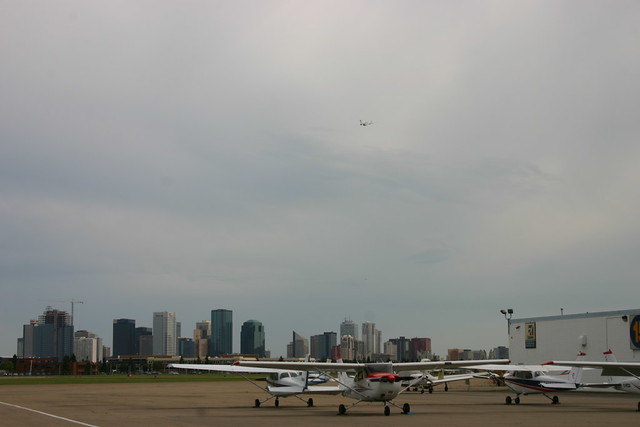
City Centre Airport

Our attention has now fully shifted to Blatchford, and rightly so, but the removal of height restrictions could enliven downtown’s development too. There are of course many examples of great cities that have managed to grow with height restrictions in place, such as Paris or London. Removing the Airport Protection Overlay in Edmonton isn’t going to change the fortunes of downtown by itself, but it is one more barrier out of the way. For a good discussion on what the removal of height restrictions over downtown could mean, check out this Avenue Edmonton article.

Another tentative step forward for Edmonton’s Blatchford community

Edmonton’s Blatchford Redevelopment project took another step forward today with Council’s approval of the implementation strategy. Will it be the ambitious, carbon neutral, “world-leading” project that has been described over the years? Not necessarily. But it remains the most significant development project in Edmonton’s history, a sustainable and exciting community that will bring housing choice for families into our city’s core.

Blatchford

Today’s Motion

Here’s the motion that was passed today:

That the Blatchford Redevelopment Project implementation strategy be approved and include the following:

  1. The development of a Capital Profile and a funding strategy for Council’s consideration
  2. The implementation of the development approach as outlined in Scenario 5a of Attachment 5 to the June 10, 2014 Sustainable Development report CR_1123rev, including the following key features:
    • Medium density residential, with high density in direct proximity to LRT station
    • Town Centre
    • Institutional lands (NAIT, school sites)
    • Major park (18.8%)
    • Urban agriculture
    • Low impact development
    • Irrigation system
    • Custom designed streets
    • District energy: ambient loop with geo-exchange (preferred: requires further evaluation) or gas-fired cogeneration (in proforma)
    • High performance building envelopes
    • Fibre optic network
    • Affordable housing
    • Education program
  3. The development of a preliminary timeline for LRT extension into Blatchford and the construction of the Blatchford NAIT LRT station and the Blatchford North LRT station that will accommodate and facilitate the development of the east residential area
  4. A report to be provided to Committee on additional liveability and sustainability features that could be implemented in Blatchford, for example, ambient loop systems, solar photovoltaic panels for homes and/or supplemental to our district energy system, a recreation lake, and accessibility and age-friendly features.

The motion passed 10-2, with Councillors Caterina and Nickel voting against it. Councillor Nickel said the motion didn’t do enough to “hold on to that original vision of being world-class.” Most of the yes votes cited the importance of point 4.

The target for Administration to return with the requested information is October 28, 2014.

What does it mean?

In short, Council decided today that maybe it didn’t need everything that was suggested in the original, award-winning design. The recommended scenario “includes all of the key design elements from the Perkins+Will concept plan and it optimizes investment in environmental and social sustainability features.” By “optimizes investment”, they really mean that features like the ambient loop, geo-exchange district energy system, and pneumatic waste collection system were cut to save money. The recommendation also reduces the size of the major park by about 10% to allow more room for housing. It results in a net profit of nearly $45 million, and would be built-out over 25 years.

The City argues that the modified plan will still provide family-oriented housing, create mixed-use and employment opportunities, and will accommodate NAIT expansion. It still positions Edmonton as “a leader in achieving sustainability” even though it doesn’t go as far as Perkins+Will originally envisaged.

A reasonable compromise

Mayor Iveson has written about the project twice in the last week. Today he shared his thoughts in advance of the Council meeting:

“I don’t think the recommended scenario for Blatchford is a compromise. In fact, I’d say it’s as close to a balanced triple bottom line – social, financial and environmental – as we could hope for. We’ll achieve the ambitious principles set out by council and still produce a reasonable return on our investment.”

That follows his earlier comments:

“Some of the grief Edmonton has endured for poor urban design over the last 50 years can be countered with a project of Blatchford’s scale. This is a story we can share with the world; as good of a reputation-smasher as we’re ever going to see.”

It was great to hear the rest of Council share both his desire to stick to the principles set out by the previous Council and his desire for something impressive.

In voting to move ahead with the modified plan today, Council reached a reasonable compromise. It’s not uncommon for projects to start out far more ambitious than they end up, and it’s Council’s job to try to find the middle ground between citizens’ ambition and Administration’s risk aversion. I think that’s what they did today. No doubt communication about the plans could have been much better, but that could be said of just about every City project.

What happened with Perkins+Will?

Clearly there were issues between Perkins+Will and the City during this process, resulting in the firm attending today’s meeting. Director of Urban Design Joyce Drohan did not mince words once prompted, saying that her firm was “extremely disappointed.” She also called the process “extremely disrespectful.” Before she could get too deep into her criticism, Mayor Iveson stopped her, saying there were other issues at play. He later said that Perkins+Will had “not been cooperative.” There was definitely some animosity present during the meeting today.

Is it just a case of two partners trying to find a way to work together on an ambitious and stressful project? Perhaps, except this isn’t the first time that issues have been raised about the City’s process. Where there’s smoke there’s generally fire. And as Tegan quite rightly pointed out today, “the problem is that the world is watching on this one.” For some reason, Perkins+Will felt they had no choice but to show up in person to publicly defend their work. That’s concerning.

A few Councillors expressed concern today at how the modified Blatchford plan would be received by the public. There’s no question that there’s a communications challenge ahead of Council and the City, but I don’t think it’ll be too difficult to get Edmontonians onside with a pragmatic approach to city building. The bigger challenge is ensuring future partners aren’t turned off working with Edmonton because of the way things were handled with Perkins+Will and the other firms that competed in the international design competition.

Bringing families into the core

Closing the City Centre Airport was a pivotal moment in Edmonton’s history. Finishing the consolidation of air traffic at the Edmonton International Airport, removing the height restrictions imposed on downtown by the Airport Protection Overlay (which could be official as of June 24), putting a distracting and wasteful discussion behind us – those were among the many reasons to support the closure. But the most important reason for me was always the opportunity to increase the density of our city’s core.

I’ve long seen Blatchford as an opportunity to enhance housing choice. It’s a project that will make it increasingly viable for families to live in the core. Imagine the impact of another 30,000 people living just a short train ride from downtown! We’ve already seen what can happen when you increase the number of residents.

Would it be ideal if the project were highly profitable for the City of Edmonton? Sure. Would it be great if the community was carbon neutral? Yes. Would I be thrilled to have cities around the world look upon Blatchford with admiration for its leading edge sustainability? Absolutely. But those things are all secondary for me.

Blatchford

Blatchford, opening 2016?

The expectation is that builders will start to pre-sell homes in 2016, with the first moving moving in late that year or early in 2017. There’s a lot of work to do before we get to that point, but it’s exciting to know that Blatchford will be a reality sooner rather than later.

You can keep up-to-date with the project here.
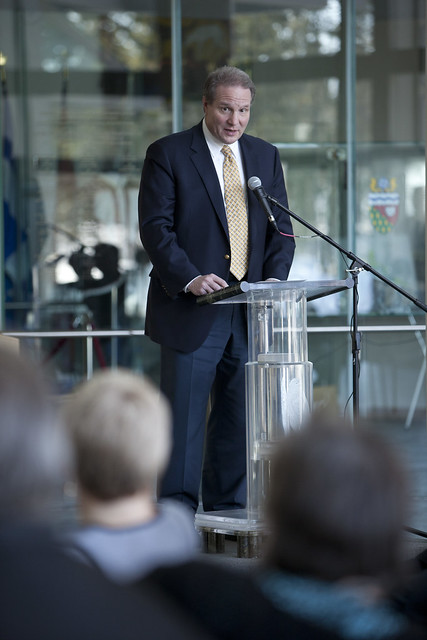
Politicians in the 2014 Edmonton Pride Parade

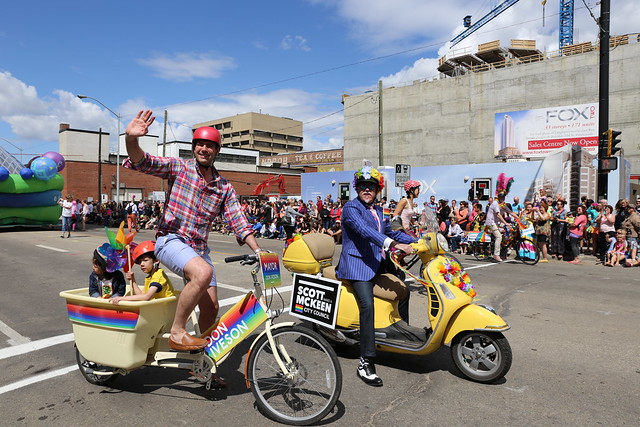
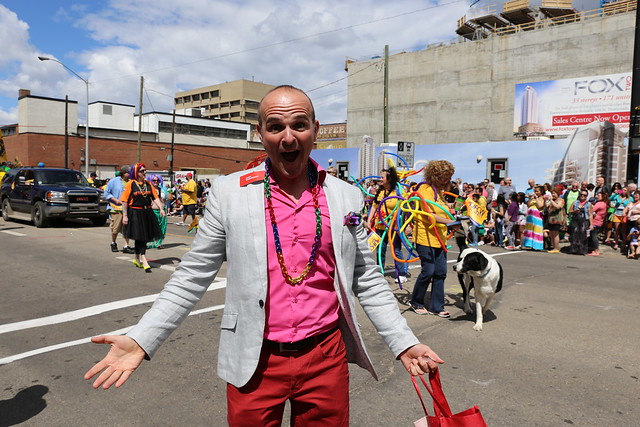
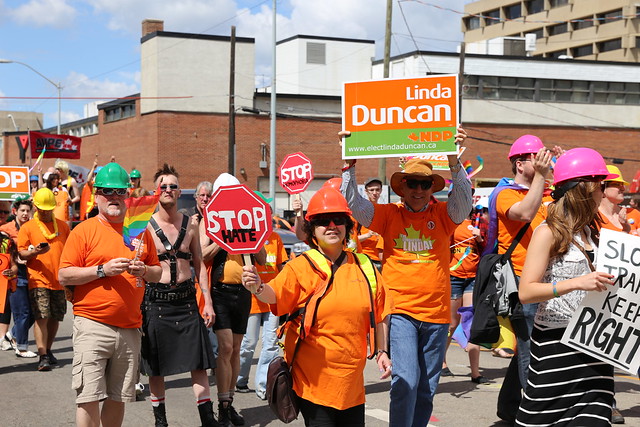
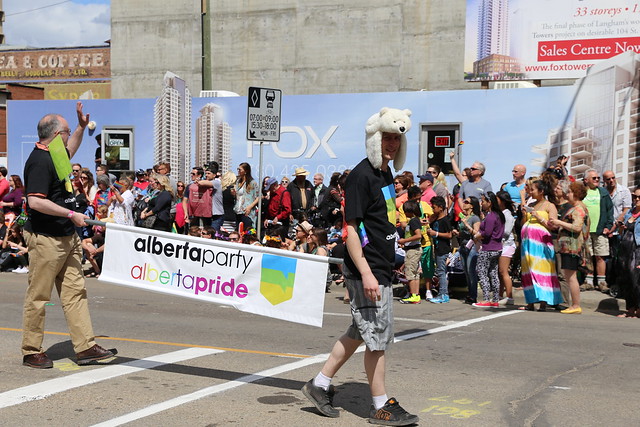
Here’s a look at some of the politicians that participated in the Pride Parade that made its way through Edmonton’s downtown early this afternoon.

Edmonton Pride Parade 2014
Premier Dave Hancock

Former premier Alison Redford was the first premier to attend a pride parade when she addressed the crowd in Churchill Square back in 2012. She followed that up last year by becoming the first premier to march in a pride parade when she acted as grand marshal for Calgary’s parade. Premier Dave Hancock became the first premier to participate in Edmonton’s Pride Parade today.

Edmonton Pride Parade 2014
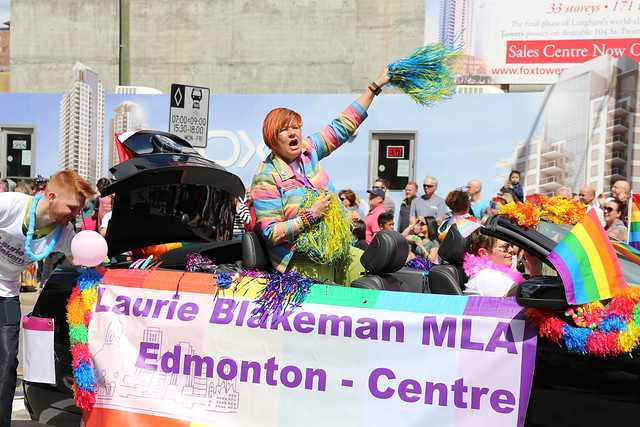
MLA Laurie Blakeman

Edmonton Pride Parade 2014
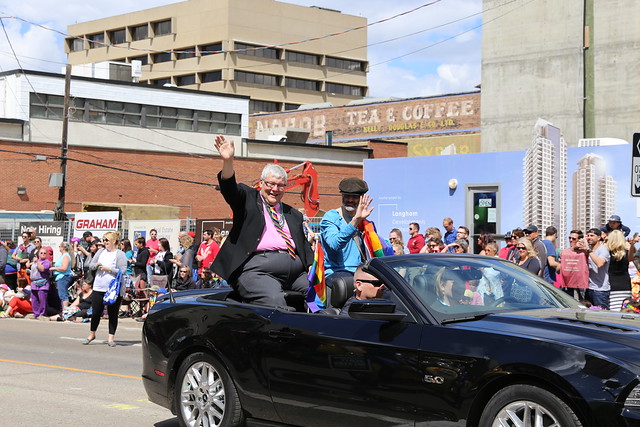
MLA Raj Sherman

Edmonton Pride Parade 2014
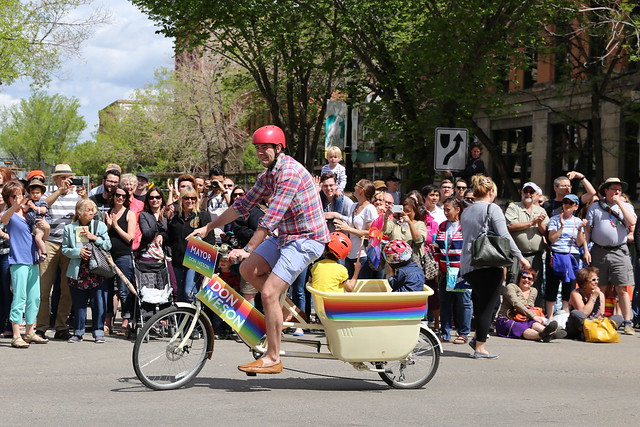
Mayor Don Iveson

Former Edmonton mayor Bill Smith repeatedly refused to proclaim Gay Pride Week in Edmonton, but that all changed in 2005 when former mayor Stephen Mandel proclaimed Pride Week. He became the first Edmonton mayor to participate in a pride parade when he rode that year in a car alongside Michael Phair, the city’s first openly gay elected official. Mayor Don Iveson has supported the parade for years.

Edmonton Pride Parade 2014
Mayor Don Iveson, Councillor Scott McKeen, Councillor Ben Henderson

Edmonton Pride Parade 2014
Councillor Dave Loken

Edmonton Pride Parade 2014
Councillor Andrew Knack

Councillors Walters & Henderson
Councillor Michael Walters & Councillor Ben Henderson, photo courtesy Michael Walters

Edmonton Pride Parade 2014
Randy Boissonnault, Liberal nomination candidate for Edmonton Centre

Edmonton Pride Parade 2014
The Liberal Party

Edmonton Pride Parade 2014
The NDP

Edmonton Pride Parade 2014
The Alberta Party

You can see many more photos of the parade here. The Pride Festival runs through June 15.

Land of the Midnight Food Truck?

Think food trucks are a big city thing? Think again! Even the small town of Inuvik, NT is grappling with the trend, even though they have just one truck (actually it’s a trailer) called Ready Red’s, not to mention a climate that makes street vending realistic for just a few short months each year. Brick-and-mortar businesses have complained as have taxi drivers and even some residents. A similar situation has played out in dozens of towns and cities over the last six years or so, ever since the “modern” food truck boom began.1

With my passion for food trucks and the fact that I lived in Inuvik for eight years when I was a kid, I’m quite interested in the outcome of Ready Red’s fight. It’s fascinating to me that the same arguments are made again and again in different towns and cities. At the opposite end of the scale from Inuvik there’s New York, which has been dealing with complaints about food trucks for years. Some places clamp down on food trucks, others work hard to support them. Even locations that are relatively close together can have very different approaches; for instance, San Diego heavily regulates food trucks whereas Los Angeles is quite open to them.

DSC_1343
Welcome to Inuvik, photo by Chris Harrison

In today’s Inuvik Drum, the news brief read:

“Following complaints about the Ready Red’s mobile food trailer parked near the Mad Trapper, the town’s bylaw review committee has recommended banning street venders from parking along Mackenzie Road in the core area.

Instead of using existing roadside parking spaces, the town’s bylaw amendment would move street venders on to private property, similar to how Bill Rutherford operates his grocery business.”

Bill Rutherford is affectionately known to locals as “Bill the Fruit Man”. He brings fresh produce from Whitehorse to Inuvik every three weeks in a large semi-trailer. I remember going to buy groceries with my parents from his truck, parked in an empty lot on the main street2. I guess you could say that was my first exposure to a “food truck”.

Josh Tyler is the owner of Ready Red’s and he was at Inuvik’s Town Council meeting last night to make his case. He also started an online petition that currently has over 270 signatures. Josh promised to have “a mob of people and supporters” with him at the meeting, and it sounds like he delivered. Mayor Floyd Roland said he had never seen such a turnout for a council meeting!

Unfortunately, it doesn’t look good for Ready Red’s. The proposed bylaw that would ban food trucks on town roads passed first and second reading. It still has to pass third reading before it would become an official town bylaw. If that happens, Ready Red’s would only be able to operate on private property3.

Downtown Inuvik

That’s a photo of Inuvik’s main street, Mackenzie Road, in the winter, which is pretty much how I remember it. You’d think this would be a big enough barrier for food trucks in the north! Ready Red’s parks just to the left of where this photo was taken.

Should towns and cities embrace food trucks? I’m inclined to say yes, because I think food trucks bring more than just good food to the table – they also promote street activity. At least one study makes a strong economic case for food trucks too (PDF):

“Street sellers can create jobs, help keep streets safe, give consumers the goods and services they want and add to the vitality of cities. But for that to happen, cities must get rid of the convoluted and protectionist laws that stand in vendors’ ways.”

The authors of that report recommend eliminating or revising obsolete restrictions, repealing bans on street vending, repealing proximity restrictions, streamlining the permit process, and providing clear, simple, and modern rules that are narrowly tailor to address health and safety issues. “Then they should get out of the way and let vendors work.”

We’ll have to wait and see if Inuvik decides to put up barriers or instead decides to let food trucks flourish. Inuvik Town Council meets on the 2nd and 4th Monday and Wednesday of each month, so their next meeting will take place May 26. Minutes from last night’s meeting will eventually be posted on their website.

If you’re in Edmonton, don’t miss our first What the Truck?! of the season, taking place on 104 Street on May 24. RSVP on Facebook!


  1. Richard J. S. Gutman, author of “American Diner: Then & Now”, estimates the food truck industry can be traced back to Walter Scott who back in 1872 parked a wagon in front of a local newspaper office in Providence, R.I. and sold sandwiches and pies. The beginning of the modern food truck era is generally believed to coincide with the popular Kogi Korean BBQ truck, which burst on to the scene using social media about six years ago. See: Who Made That Food Truck? 

  2. Has Inuvik changed much since I lived there? Some things change, some stay the same. The fruit man still sells his produce, but my elementary school was demolished a few weeks ago

  3. I’m not 100% certain, but it looks like Ready Red’s began life on the sidewalk, as a hot dog and burger stand, back in 2011. 

Why does the University of Alberta want to be part of the Galleria project?

“The University has long desired to establish a significant campus in downtown Edmonton.”

That’s the first thing the Edmonton Downtown Academic and Cultural Centre (Galleria) business case from April 2013 identifies under opportunities and benefits for the University of Alberta. It sounds plausible, given the ongoing interest in revitalizing downtown and the University’s desire to play a role in the larger Edmonton community. But is it really true?

Here’s what columnist Paula Simons wrote in November 2001:

“Officially, a downtown campus isn’t an option. I’ve spoken to U of A President Rod Fraser, to University Provost Doug Owram, and to Jim Mitchell, the university’s vice-president of facilities. They all tell me it would be too expensive to build downtown, much more than developing land they already own in Garneau or southwest Edmonton. They say it would be too hard to find suitable space for labs and large lecture theatres. They say students and staff would feel isolated from campus life and facilities. They say it’s not their mandate to save downtown, but to serve the best interests of the U of A.”

That was around the time that the University of Alberta’s Long Range Development Plan (LRDP) was being developed (approved in 2002). It provides “a planning framework to accommodate and to guide physical development on University lands during the next thirty years.” Though it focuses on land and facilities that the University already owns, it does deal explicitly with the idea of a downtown campus:

ualberta lrdp

Though the plan has been amended a few times over the years, notably to incorporate Augustana Campus and most recently to incorporate updated plans for South Campus, that section has never been changed. “South Campus will accommodate much of the growth of the University of Alberta for the next thirty years” is what the most recent amendment says.

Even in 2005, when the University announced plans to buy the Hudson’s Bay building, it was not seen as a first step toward a larger campus in downtown or a change to previous plans. New President Indira Samarasekera said “the University of Alberta is a contributor to business, arts, and other sectors,” adding “we have an obligation to the community that we take seriously, and a downtown presence will build on that.” A few years later at the official opening of Enterprise Square, she said “that the University has finally crossed the river and found a place in the heart of the city is very significant” but also admitted that “it initially scared the heck out of me; we took a leap of faith.”

It was with some surprise then that Provost and Vice President Academic Dr. Carl Amrhein posted the following on the University of Alberta’s blog yesterday:

“The Galleria project is more than much-needed space for the University of Alberta—it is consistent with the university’s vision of an urban, linear campus connected by LRT where students, faculty and members of the public move freely around the city to access world-class teaching and research experiences offered at Edmonton’s post-secondary institutions. Imagine the vibrancy that 5,000 art, design and music students, faculty and staff will bring to the downtown core. Imagine the potential when students and professional artists interact through linkages with the Winspear, Citadel and Art Gallery of Alberta. The creative energy will be palpable!”

That seems to contradict not only statements by earlier University officials, but also the LRDP. Had the need for “an integrated campus environment” changed? Had the disadvantages about paying rent changed? Did student leaders now find a downtown location desirable? I reached out to Dr. Amhrein for clarification.

“There’s a technical point,” he told me, “which is that the Long Range Development Plan is concerned with real estate that the university owns and controls.” Given that the U of A would be leasing space inside the new Galleria project, it wouldn’t necessarily contradict the plan. He recognized the larger point however, and said “the argument for integrated locations is ease of mobility and the ability to move people around in a certain amount of time.” That’s where the LRT comes in.

Bay/Enterprise Square
Bay/Enterprise Square LRT Station, photo by Christopher Cotrell

“The feature that made Enterprise Square imaginable was the LRT,” Dr. Amrhein told me. “It meant that it was no more difficult to get from HUB to Enterprise Square than it was to get from HUB to South Campus.” He said the U of A’s first question then about the Galleria project was, “is there an LRT stop?” As both Churchill LRT Station and MacEwan LRT Station are close, the goal of an “urban, linear campus connected by LRT” is achieved at the Galleria, according to Dr. Amrhein.

In his blog post, Dr. Amrhein reiterated the University of Alberta’s key requirement for the Galleria:

“Yes, the university has identified climate-controlled access to the Galleria from the LRT as critical for our students, faculty and staff, and the patrons of the performances at the Galleria theatres and concert halls. A pedway is one solution, but there are others.”

He sounded annoyed that the pedway had become such a touch point in discussions about the Galleria. “The pedway is not a deal-breaker for the University,” he told me. Only “climate-controlled access” is a requirement. When I asked him to suggest alternatives to a pedway that could meet that requirement, initially he dodged the question. But asked a second time, he suggested the position of the buildings could provide the required access, citing the Telus towers and their connection to the LRT as an example. “Clever positioning with a plus fifteen would achieve the same result,” he said, noting that the project architects would have to rethink their plans to make that happen.

Dr. Amrhein told me the University requires climate-controlled access for three reasons. The first is the need to move faculty, staff, and students around campus in short periods of time. “When it’s dark and cold, there’s a disincentive to move around the facilities,” he said. The second is safety, which Dr. Amrhein said has been “completely lost in the conversation.” He stressed the importance of safety, saying that pedways are “well-lit and heated, and very visible” and that they often include security features. “There’s a personal safety issue here.” The third is accessibility of the performance venues for the community.

AuroraCollege_jm258
Dr. Carl Amrhein, photo by James MacKenzie

Back to the central question – why does the University of Alberta want to be part of the Galleria project? To answer that, Dr. Amrhein brought up Mayor Mandel and his vision to have all of Edmonton’s post-secondary institutions integrated and connected by LRT. “Imagine a medical student at NAIT,” Dr. Amrhein said. “That student can move from the classrooms at NAIT to the labs at the Walter MacKenzie Health Sciences Centre because of the LRT.” Integration across institutions like that would “put Edmonton in a very small group” of cities, Dr. Amrhein said.

It’s clear that Dr. Amrhein views the University’s participation in the Galleria project as something that will help Edmonton as a whole. “I hope it goes ahead.”