Space for Place: Placemaking in Edmonton

Today I had the opportunity to speak about place and placemaking at City Hall along with Jeff Chase, a Senior Planner at the City of Edmonton working on CITYlab. You may also know him as co-organizer of #yegsnowfight!

The City of Edmonton’s Sustainable Development department has organized a few lunch & learn events for Edmonton’s Business Revitalization Zones (BRZs) and for the April event they wanted to talk about ways to increase vibrancy and create social space. They asked Jeff and I to speak about that.

This was the description for our talk:

“What is placemaking? Placemaking is about animating and using spaces in our cities to connect people. From art installations, to public events and activities, placemaking affords opportunities for people to engage in their cities in new ways.

Join us to learn about placemaking from two passionate Edmontonians who are actively transforming public spaces in our City, and take home lessons you can use to bring life to the shared spaces in your own districts and communities.”

I like the way that Jeff put it: “Space is an empty container. We fill it with memory and time, with feelings and emotions, and with connections. The outcome, on a variety of scales, is place.” Here’s one of the ways we illustrated that:

space vs place

It’s not just about filling a space with people, of course. It’s about connecting people with one another. That’s what turns space into place.

So placemaking is a way to do that, it’s a way to connect people with one another. We considered a spectrum of different placemaking approaches:

placemaking spectrum

Tactical Urbanism refers to the simple, often temporary things that can be done to create a sense of place. Things like temporary art or adding seating to an empty sidewalk. Events & Activities are a little more involved and tend to be larger initiatives but again are often temporary. Things like What the Truck?! or #yegsnowfight are good examples. Urban Planning is the most permanent form of placemaking, encompassing everything from streetscaping to neighbourhood development. And of course there can be combinations of these things.

Place matters for a variety of reasons. We all crave community and that doesn’t come from space alone. Placemaking can be a useful tool to connect us with our neighbours. It can also help us respond to context, such as crime or weather. Would you rather walk down a dark alley or a well-lit, busy one? In the shoulder season, are you willing to brave the patio on your own or would a blanket and a heater help? These are some examples of the impact that placemaking can have. Another impact of course is on the bottom line – we like to linger and spend time in places that fill us with emotion and connection, and the businesses in those places usually benefit as a result.

Here are some of the examples we showed during the presentation.

What the Truck?! is a series of food truck events that is a good example of the “Events & Activities” approach to placemaking. The events only last 4-5 hours, but they happen in different locations and get people out on the street experiencing their city from a different perspective.
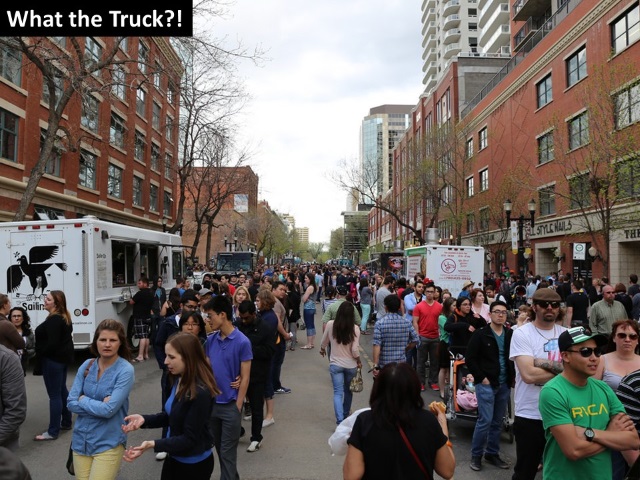
place example

The #yegsnowfight that took place at Kinsmen is a great example of an event that brought people together and got them to experience a space in a completely different way than they would normally. And as a winter city, how fitting is a snowball fight?!

place example

OpenPianoYEG is an awesome example of a public art project. Anyone can sit down at one of the colorful pianos and start playing.

place example

This tire seat was setup near the downtown streetcar station. The note attached to it reads: “Take a seat and enjoy the view. Put your headphones on to drown out the real world and enter the one your mind has sculpted, or take your headphones off and let the world surround you. Either one gets you to a pretty rad place.”

place example

The Winter Market that was held in Churchill Square is another good example of an event approach to placemaking. We talked a bit about some of the other things WinterCity has done too.

place example

Have you seen the construction hoarding art along the Mayfair Village development at Jasper and 109 Street? BGCBigs worked with the developer to make this happen. It turns what could be an unfriendly and even scary space into a welcoming one.

place example

I love the Alley of Light example because over the years it has used all of the placemaking approaches. Tactical projects like painting the roadway got people talking and resulted in more people using the alley. Events brought people into the alley and enlivened the pocket park. And most recently, the pocket park was redeveloped with new surfacing, landscaping, and amenities.

place example

And that’s just a small handful! Jeff and I had a lot of fun putting the presentation together, and we enjoyed hearing about the audience’s favorite places too.

We know there are lots of Edmontonians with ideas about place and we hope that by highlighting even just a few examples we can inspire them to become placemakers. There are lots of organizations and resources out there to help too, like Make Something Edmonton, CITYlab, and many more.

Thanks to Jodi and Stuart for organizing the event today and for having Jeff and I as speakers and thanks to everyone who attended!

What’s your favorite place? Have a placemaking idea of your own? I’d love to hear it!

Recap: 2015 Mayor’s Celebration of the Arts

The 28th annual Mayor’s Celebration of the Arts took place last night at the Winspear Centre. This was the second event under Mayor Don Iveson and he seemed to be having just as much fun this year as last! He got in on the break-dancing to start the evening and also joined The Wet Secrets on stage to close out the show. This was also a big year for the Professional Arts Coalition of Edmonton, which produces the show. PACE has both a new visual identity and for the first time, an Executive Director (Sheiny Satanove).

2015 Mayor's Celebration of the Arts
Hey Ladies in front of the Production World screen featuring art by Jason Carter

The evening was hosted by Leona Brausen, Cathleen Rootsaert, and Davina Stewart, the trio behind the comedy show Hey Ladies which “celebrates Edmonton artists, local businesses, and other home-grown phenomenon.” They’ve called the Roxy Theatre on 124 Street home for the past eight years, so it was fitting to have them as emcees given that this year’s event supported Theatre Network. You can find Hey Ladies at the ATB Financial Arts Barns this season. I thought they did a great job as hosts, bringing just the right amount of energy and humor to keep things humming along!

The Awards

The full list of nominees is available at the PACE website. Here are the winners:

Mayor’s Award for Innovative Support by a Business of the Arts
Happy Harbor Comics, nominated by Jeff Martin

Mayor’s Award for Sustained Support of the Arts
Audrey’s Books, nominated by LitFest and the Alberta Book Fair Society

John Poole Award for Promotion of the Arts
Alexis Marie Chute, nominated by Wes Lafortune

ATB Financial Ambassador of the Arts Award
Rapid Fire Theatre, nominated by the Rapid Fire Theatre Board of Directors

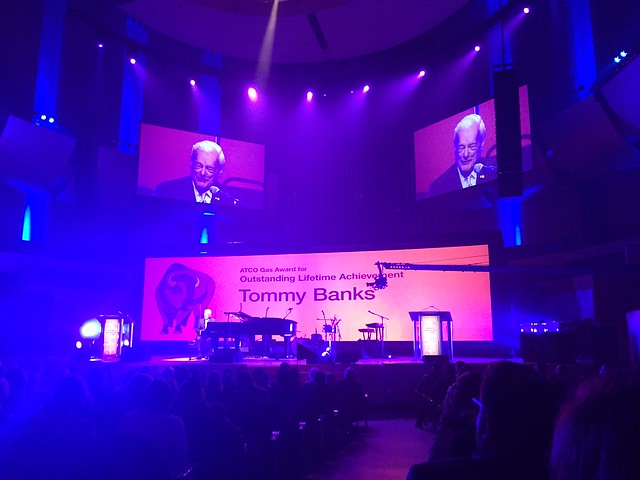
ATCO Gas Award for Outstanding Lifetime Achievement
The Honourable Tommy Banks

CN Award for Youth Artist
Kieran MacDonald, nominated by Victoria School of the Arts

DIALOG Award for Excellence in Artistic Direction
Amy Shostak, nominated by Christopher Samuel

Mile Zero Dance Progressive Artist Award
Paul Freeman, nominated by the Nina Haggerty Centre for the Arts

Northlands Award for an Emerging Artist
Ahmed Knowmadic, nominated by Muna Saleh

The 2015 Robert Kroetch City of Edmonton Book Prize
Rudy Wiebe for Come Back published by Penguin Random House Canada

Syncrude Award for Excellence in Arts Management
Karen Brown-Fournell, nominated by Christine DeWitt

TELUS Courage to Innovate Award
Amber Borotsik, nominated by Ben Sures

Congratulations to all the nominees and winners!

Tommy Banks is of course no stranger to Edmontonians and last night he was recognized for his “outstanding contribution to the arts in Edmonton.” He’s won several awards over his career (including a Juno and a Gemini), is a member of the Edmonton Cultural Hall of Fame, is a recipient of the Alberta Order of Excellence, and is an Officer of the Order of Canada. In addition to a short video about his accomplishments, we were treated to a couple of songs by the man himself.

2015 Mayor's Celebration of the Arts

One of the first things Mayor Iveson said on stage was how honored he was to be in the same building as Tommy Banks. It was fitting then that when Banks took the stage later in the evening to perform, he called out Mayor Iveson as hip and “probably the only mayor in the whole country” who would try to break-dance on stage!

The Entertainment

The evening’s entertainment lineup, sponsored by Qualico Communities, included:

And in the lobby, guests enjoyed art by Jennie Vegt and Jeff Collins, curated by The Works.

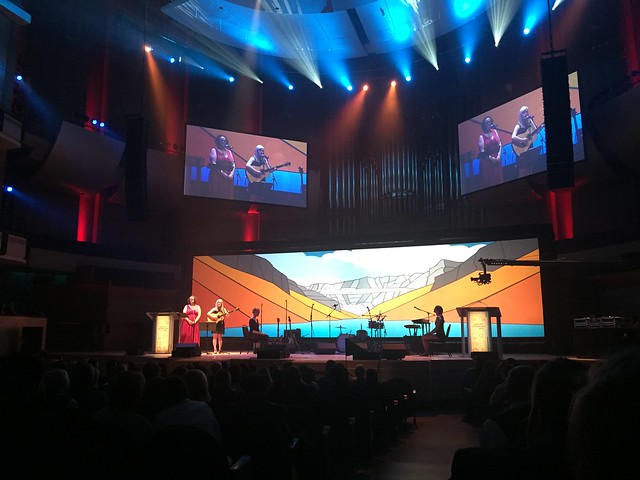
2015 Mayor's Celebration of the Arts

All of the performances were great but just like last year, I was particularly impressed by Mary Pinkoski. I thought the addition of Eva Foote and dancers Jeannie and Jodie Vandekerkhove nicely elevated her slam poetry. DJ CreeAsian brought a fun vibe to the evening and, combined with the incredible moves of Rhythm Speaks, opened the show with a lot of energy. I really enjoyed The Wet Secrets and Capital City Burlesque at the end of the night, even though it was probably a bit loud for some in the audience. Le Fuzz are no strangers to the Mayor’s Celebration and this year they provided the entertainment in the lobby after the show.

Other Thoughts

Was it just me or was there a very noticeable Make Something Edmonton undercurrent to the evening? Perhaps undercurrent is the wrong word as the term “maker” was used more than once throughout the event. It was in the speeches and it was in the art too, with Mary Pinkoski and Eva Foote’s performance and the snippet of Birdie on the Wrong Bus being the most overt. I’m not complaining – I love the newfound confidence that seems to be permeating Edmonton lately. Last night was just another example.

This was the second year for Catch the Keys Productions and they continue to take the event in new and interesting directions. Congrats to Megan and Beth on another excellent evening! The program had a good consistent pace even though more time was given this year to talk about the nominees (which I really appreciated). Elm Cafe was again brought in to cater snacks in the lobby (the fennel brown butter and garam masala popcorn was amazing) along with macarons from Duchess Bake Shop. I’m not sure the attendance was as strong as past years, and that’s too bad because it really was a great show!

For more photos from the evening, check out Diversity Magazine. You can read last year’s recap here.

See you at the 2016 Mayor’s Celebration of the Arts!

Northlands Arena Strategy Committee Final Report Released

Today the Northlands Arena Strategy Committee released its final report which includes recommendations on the future of Rexall Place for the consideration of the Northlands Board of Directors. This brings our six month process to an end and I think provides the Board with some actionable, useful insight and analysis regarding what to do with Rexall Place. This is not the end of the road, but I think it is a major step toward resolving this important challenge for our city.

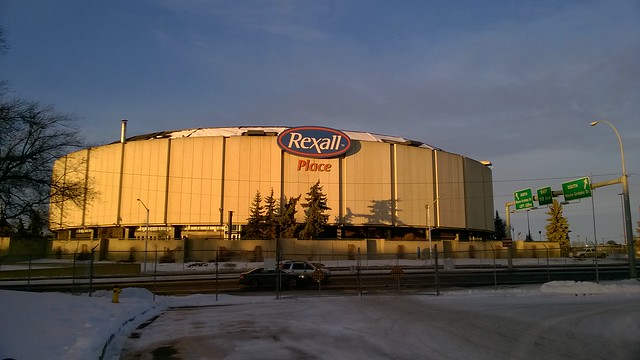
Rexall Place

You can download the full report in PDF here (warning: it’s large). You can also download the more reasonably sized report highlights in PDF here.

We are making two recommendations. Our primary recommendation is as follows:

“The NASC has highlighted that the current scenario surrounding a conflict oriented and competitive model specific to major sports and entertainment venues within the City of Edmonton has stalled progress; there is a need for a new approach. It is recommended that the Northlands Board of Directors consider a collaborative solution for the Northlands arena (Rexall Place) and define this possibility as two party or three party potential outcomes.”

Basically, if there’s a way to find a collaborative model that works, do so. The two party outcome would be a way for Northlands and the Oilers to work together to use Rexall Place in a way that is complementary to Rogers Place. The three party outcome would be an agreement between Northlands, the City of Edmonton, and the Oilers to find an alternative use for the building.

Fortunately, I think significant progress has been made on building the relationships necessary for a collaborative model to work. Here’s what Committee Chair Andrew Ross wrote in his summary (which you’ll find in the report):

“The NASC worked collaboratively and while we did not always agree we respectfully debated to find the right solutions; this final report has achieved consensus of the group. An unintended outcome developed throughout this process is the significant progress made to repair previously strained relationships between members of the Northlands Board of Directors and key stakeholders at the City of Edmonton and the Oilers Entertainment Group (OEG). Special thanks goes to Tim Reid, President and Chief Executive Officer of Northlands; Bob Nicholson, Vice Chairman of the OEG; Simon Farbrother, City Manager; and Mayor Don Iveson who have been willing to take a forward looking approach in the best interest of our city and the sustainability of the Northlands organization.”

If that collaborative approach does not work out, then we feel that the worst thing we could do is nothing. And so our secondary recommendation is vigorous redevelopment:

“If a redevelopment strategy is implemented the Northlands arena (Rexall Place) should be demolished and the land repurposed in a way that would complement the surrounding neighbourhood, act as a catalyst to stimulate development growth, and support the sustainability of Northlands.”

Though we did look at other models, it became clear to us that most of them are not desirable. Nobody wins in a competitive model, going dark would be highly detrimental to the community, and as mentioned, kicking the can down the road is possibly the worst decision that could be made.

The next step now is for the Northlands Board to decide which direction they want to go. I expect they’ll need some time to digest the report and its findings, and with the AGM and election coming up at the end of the month, it’ll likely be the new board that deals with the decision. Northlands has already been undergoing some strategic review and planning and I expect that work to continue into the fall.

I have really enjoyed my time on the Committee. The timelime we were working with was aggressive, but I think that brought an appropriate level of urgency to the process. I certainly learned a lot over the last six months, and I hope that I have made a meaningful contribution. I have quite a bit to say about Rexall Place and this whole challenge which I will share in the weeks ahead. For now, check out the report and let me know what you think!

Branding Edmonton: Signs & Slogans

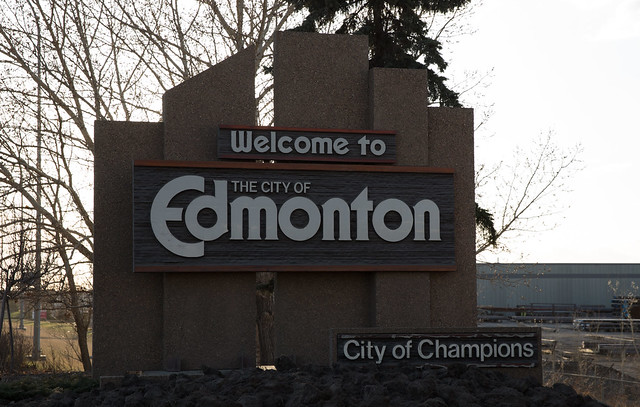
For more than 20 years, Edmontonians have been discussing whether or not our entrance signs should feature a slogan and if so, which one. Whenever City Council or other local leaders have felt the need to shore up our city’s image, the entrance signs have been the go-to starting point. And whenever someone has suggested the entrance signs are dated and need to be replaced, the conversation has inevitably morphed into one about the slogan and brand for our city.

Questions were raised about “City of Champions” as soon as the signs went up in 1989. That prompted Economic Development Edmonton to do some research and a few years later they found there were at least 27 slogans being used to describe the city, like “Gateway to the North”, “Canada’s Oil Capital”, and “Official Host City for the Turn of the Century”. But only one was highly visible, and that was “City of Champions” thanks to the entrance signs.

IMG_6621.jpg

You only see the entrance signs if you drive into Edmonton, but that hasn’t diminished their importance in the eyes of community leaders and commentators. The entrance signs and debate about them have often been considered the manifestation of our identity as a city. Gene Dub’s controversial entrance pyramid design that won a national design competition in 2008 was a good example of this. It would have done away with slogans and logos in favor of striking public art. The jury called it “a symbol of a city that is poised, confident and energetic.” But not everyone saw it that way. Former Edmonton Journal columnist Lorne Gunter compared the idea to Bedford, Nova Scotia’s giant “Clearwater” lobster statue and said Dub’s proposal would have been “an artificial symbol erected by civic leaders to try to force a recognition of their community that isn’t happening on their city’s or town’s own merits.”

It’s no surprise then that the entrance signs as they exist today are a perfect representation of this conflation of issues. The signs have been cobbled together, piece by piece, just like our city’s brand. In the absence of a strong place brand for Edmonton, we used the City of Edmonton’s corporate logo and the “City of Champions” moniker as stand-ins. When we felt that perhaps we weren’t a welcoming enough place, the words “Welcome to” were added. When we didn’t feel important enough in the province, we added “Alberta’s Capital”. Whenever our sports teams have endured slumps, we’ve suggested removing “City of Champions” from the signs (but someone has always pointed to another local success as a reason to keep them).

And now, because we’re feeling emboldened by population and economic growth, not to mention lots of capital spending, we’re again looking to the signs. They don’t feel representative of Edmonton today nor of the Edmonton we hope to become. They’re old and they look it.

Will the discussion be different this time? I think it could be. Yes, the sign and city identity issues have become so intertwined that maybe it’s not even possible to separate them now. But we should try.

Michael Oshry - Ward 5
Photo by Dave Cournoyer

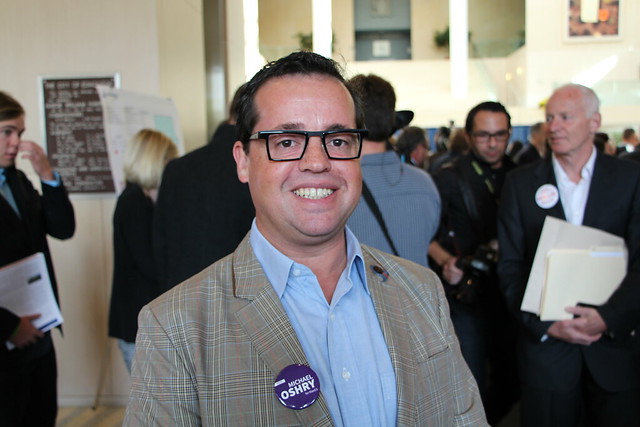
On Tuesday, Councillor Michael Oshry is expected to make a motion requesting that the City remove “City of Champions” from Edmonton’s seven remaining entrance signs. The City says the signs are structurally sound, but that’s not why Councillor Oshry is making this proposal. Removing the slogan could finally allow us to discuss the brand issue separately from the signs, and I think that’s really his endgame.

I asked Councillor Oshry why he brought the sign debate up again at Council, and he admitted it seemed like a good starting point for a broader discussion about Edmonton’s brand. “They look dated, they’re old,” he said of the entrance signs. He isn’t fond of the “City of Champions” slogan either. “When we’re trying to attract people, the slogan means nothing,” he said. “And the slogan isn’t actually used anywhere else!”

At least, it’s not used anywhere else in Edmonton. We don’t use it for any of our internal or external marketing. But other cities use it or have used it, like Boston, San Francisco, East St. Louis, Pittsburgh, Inglewood, Tuscaloosa, Syracuse, Tampa, and Brockton, to name just a few. There’s nothing unique or particularly Edmonton about the “City of Champions” slogan.

Welcome to the City of East St. Louis, IL - City of Champions
Photo by Paul Sableman

Removing “City of Champions” is low-hanging fruit that could enable us to get started with a fresh slate, Councillor Oshry said. He doesn’t know where this will lead, but if we do end up discussing new signs, he favors simple ones. “They shouldn’t even have the corporation logo on them, it should just be ‘Welcome to Edmonton’ the place.” He also doesn’t want to spend tons of money on new signs. “They don’t have to be the greatest things the City does, but they need to be better than average,” he told me.

Ronna Bremer, Director of Image, Brand, and Marketing (or just “reputation” for short) in Corporate Communications at the City of Edmonton, agrees that the signs should be replaced with something simple but attractive. “What do those dated signs say about our city?” she asked rhetorically. “They should just say ‘Welcome to Edmonton’.”

EEDC and its predecessors have frequently been included in the discussion about entrance signs and slogans (no doubt thanks to the conflation of issues). “The decision about the welcome signs belongs firmly in the hands of the City and City Council,” EEDC CEO Brad Ferguson told me. He added that for what its worth, he thinks “the signs are dated and we need new ones” but stressed “that’s different from needing a new logo and slogan.”

It has been suggested that new signs would only come after the City makes a final decision on a new brand and logo. That would be the wrong approach to take. There are three different things wrapped up in that suggestion – the signs themselves, Edmonton’s brand and identity, and the City of Edmonton’s brand. The signs do not need to include the City of Edmonton’s corporate brand; they exist to welcome visitors to Edmonton, not to the new City of Edmonton office tower or to a recreation facility. It was probably a mistake to put the corporate logo on them in the first place.

The signs should be representative of Edmonton the place. They should reflect Edmonton’s place brand. This is the work that Make Something Edmonton has been doing. They haven’t been trying to figure out what the City’s new logo should be. They’ve been working to identify the essence of Edmonton. From their brand book:

“A place cannot be reduced to a logo and a slogan. It’s more than marketing. The Edmonton brand is about being true to who we are at our best.”

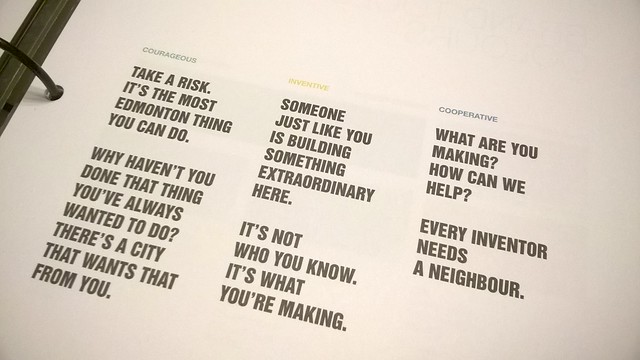
They have come up with “statements of encouragement” which are kind of like slogans, but there are many of them, and you’re supposed to take inspiration from them to create your own. “Be playful about it,” the brand book says. The statements of encouragement are conversation-starters and are “simple, memorable ways to express Edmonton-ness.” But they’re not a collection of possible slogans. It would be wrong to pick one and put it on the entrance signs.

Statements of Encouragement

The brand promise is the heart of the place brand:

“If you have the courage to take an idea to reality, to build, to make something, Edmonton is your city.”

That’s what any new entrance signs need to reflect.

So how do we do that? “We could tell people a story as they enter the city,” Todd Babiak told me. He has been working on Make Something Edmonton since the beginning, and he has thought a lot about this. What if instead of a single static slogan, we changed the message on our entrance signs every now and then? What if instead of one entrance sign, we had many, each featuring a different statement of encouragement or example of local makers? We talked about the “City of Champignons” sign that some pranksters plastered over the existing “City of Champions” sign a couple years ago. “You could argue that’s the most Edmonton thing anyone has ever done!” Todd said.

He’s not sure what the answer is, but he knows how we should go about finding it. “There’s a way to build things in Edmonton,” he said. “If you want it to work, invite the community in.”

It sounds difficult, but I think it can work. Right now we don’t see Edmonton’s place brand reflected in very many places. But over the next year or two, if Make Something Edmonton and EEDC are successful at getting others on board, that will change. And then our entrance signs simply need to be consistent with the branding we use elsewhere, like at the airport or at our post secondary institutions. Let’s see what people come up with before trying to design new signs. And please, let’s remember they’re just signs!

In the meantime, we should remove “City of Champions” from Edmonton’s entrance signs to bring clarity to this discussion. The signs don’t need logos or slogans and neither does Edmonton.

You can learn more about the history of Edmonton’s entrance signs here.

Welcome to Edmonton: How our entrance signs came to be

Until the late 1980s, Edmonton’s city limits were marked with simple blue and white signs that said “Welcome to the City of Edmonton”, not unlike the signs you’ll find near entrances to dozens of other towns around Alberta. The marker “City of Champions” was added following a streak of wins by the Eskimos and Oilers, though many also attribute that slogan to the way the city came together during the tornado of 1987. Not long after, City Council decided the existing signs were tacky and commissioned a study on the wording and design of new signs. That study decided that the word “welcome” was no longer necessary, but the “City of Champions” moniker was to remain.

IMG_6621.jpg
The sign welcoming visitors entering Edmonton via the Sherwood Park Freeway

And so, Edmonton’s concrete entrance signs, made of sandblasted concrete shaped into a stylized silhouette of the city skyline, were erected from 1989 to 1991. A total of nine signs were put up, the last of which was located so close to St. Albert that aldermen there complained and threatened to redraw the southern boundary so that the sign would be on their land.

Others also disliked the signs. In April of 1989, Calgary mayor Don Hartman said Edmonton should tear the signs down. “Calgary has replaced Edmonton as the City of Champions,” he said. A cartoon in the paper next day also made fun of the signs by depicting new signs on the north edge of Calgary that read “City of Champs, 1 KM” on the southbound side and “City of Losers, 290 KM” on the northbound side.

But Edmontonians liked the signs. In late 1991, the Journal ran a reader poll about whether or not to keep the new signs. “Overall, 70 per cent of survey respondents say the signs are fine,” the paper reported. They found that residents in Sherwood Park, elsewhere in Alberta, and even outside Alberta all liked the signs.

Some locals grew to dislike aspects of the signs, however. Alderman Ron Hayter complained that the signs did not extend a welcome to visitors and were thus unfriendly. It took a while, but in the fall of 1996 the words “welcome to” were added. The total cost for adding that box to all nine signs? Just $8,837.93 ($982.00 each).

entrance sign
Photo courtesy of CBC

In late 1999, City Council began considering updated Highway 2 Corridor Design Guidelines. They also proposed spending $65,000 to “place signage of a complimentary, but smaller nature, to that of the major entrances” at thirteen other entrances to Edmonton. While discussing the report in June 2000, City Council passed the following motion:

“That the designation “Alberta’s Capital City” or other similar phrase be added to signage on Edmonton’s nine major entrance highways and included on any future entrance signage. Further that a report, including both the feasibility of this proposal and the cost involved, come back to the August 23, 2000 Executive Committee meeting.”

In the fall the report came back and said that adding the words “Alberta’s Capital” to the nine existing major entrance signs would cost an estimated $28,500. Council decided that was a bit too expensive, but a subsequent plan to spread the cost over three years was approved in December 2000. As you can see in the first photo above, the signs have fallen into disrepair and this addition isn’t even present on every sign anymore!

In December 2005, Council approved $625,000 for new entrance signs on the Stony Plain Road and Yellowhead East entrance corridors (they had already approved another $275,000 in December 2004). Manasc Isaac Architects provided an initial concept for the Stony Plain Road entrance sign:

entrance sign

The design concept for the Yellowhead East entrance came from Gibbs and Brown Landscape Consultants:

entrance sign

In March 2006, Council decided that a design competition would be held for the two new signs and that the newly formed Edmonton Design Committee would manage it. The competition drew eighteen submissions from across the country, and in May 2007 two finalists were selected: a pyramid-based design from local architect Gene Dub and a ribbon of steel design by Montreal architect Sylvie Perrault. Both received a $50,000 honoraria to take their designs to the next stage which included preliminary plans, a model, engineering assessments, and cost estimates.

entrance sign

Throughout 2007 there was a lot of debate about the new entrance signs (frequently called “entrance markers” at the time for some reason). “At some point, the old signs do need to be replaced,” said Councillor Karen Leibovici as the discussion grew more heated. Her Council colleagues seemed on board with the idea of replacing the entrance signs, but they may have been the only ones.

The most common complaint from the public was related to the cost. The City estimated the cost of the original signs to be around $400,000 each and replacing just two with new ones would cost between $600,000 and $1.4 million. But cost wasn’t the only concern. Soon after the two final designs were unveiled, citizens registered their dislike for both. Of 268 phone calls made to the City, only 2 were favorable.

Some people defended the design competition and the spending though. Then Journal columnist Todd Babiak wrote in May 2007, “the public reaction to the city’s design competition is emerging as my new least-favourite thing about Edmonton.” He argued that “to frame this project in terms of spending priorities in incoherent.” While he agreed that Edmonton was being “starved to death” by the other levels of government, he argued in favor of spending on the signs as public art:

“In 10 years, we won’t remember the potholes of 2007. But giant pyramids on each end of the city could be there, still inspiring debate.”

“If we continue to configure our priorities, as a community, around a reflexive, mean- spirited and frankly stupid hostility to cultural spending, the filled potholes will allow a lot of very smooth one-way trips out of this cold, efficient province.”

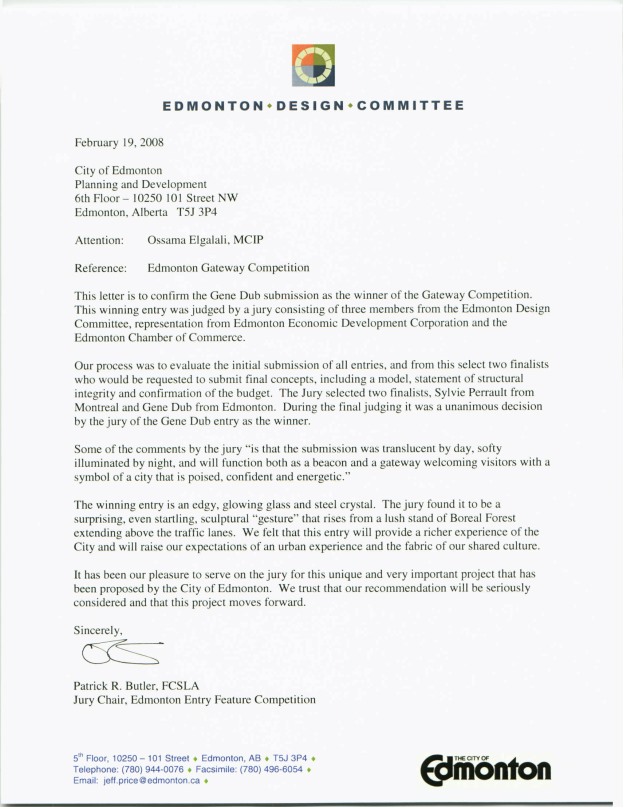
In February 2008, the jury selected Gene Dub’s proposal. A letter from the Edmonton Design Committee said the decision was unanimous and that “the winning entry is an edgy, glowing glass and steel crystal.” They called the design “surprising, even startling” and said it would “function both as a beacon and a gateway welcoming visitors with a symbol of a city that is poised, confident and energetic.”

entrance sign

But wasn’t meant to be. By the time City Council was getting ready to make a final decision, the estimated cost had ballooned from $900,000 to more than $2.5 million. Council voted 6-5 against the proposal in July 2008, bringing the debate to a close (at least temporarily). Writing about the decision in the Journal, then-columnist Scott McKeen called Council “hypocritical” and said a majority of them “caved badly under the weight of public pressure.”

There has always been some minor discussion about the signs, but in the last two years, the debate has once again become interesting. In October 2013, vandals made their mark on the signs, replacing the “City of Champions” section with their own humorous slogans like “City of Speed Traps”, “Suck it Calgary”, and “City of Champignons”.

city of champignons

Last fall, Councillor Michael Oshry officially reopened debate about the signs, saying “we need branding that demonstrates what we are about now and where we’re going and not about where we were 30 years ago.” He has since suggested an acceptable initial step would be to simply remove “City of Champions” from the signs. He is expected to make a motion to that effect at Tuesday’s City Council meeting.

According to the latest City report, just seven of the major entrance signs remain (the two welcoming visitors from St. Albert and along Highway 28 no longer exist). An option to fund new signs with corporate advertising was quickly dismissed by Mayor Iveson. “Not on my watch,” he said. A new design competition could be an option though, as could a public search for a new slogan. That’s not necessary though, according to Mayor Iveson. “We’re in the post-tagline era,” he said.

For better or for worse, debate about Edmonton’s entrance signs has always been conflated with debate about our brand and image. I’ll examine that in more detail in an upcoming post.

Recap: DemoCamp Edmonton 28

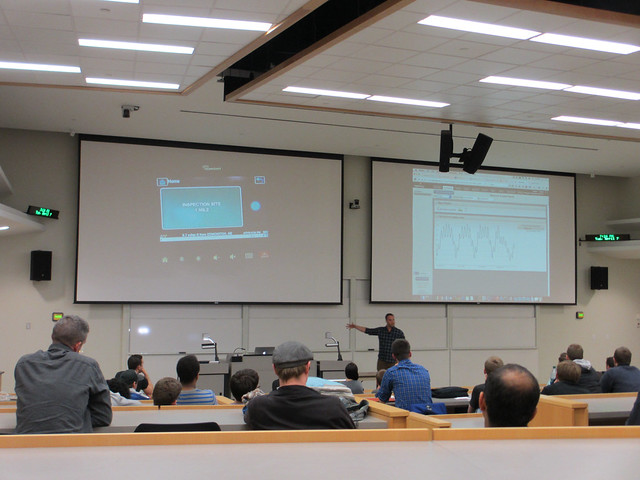
Edmonton’s 28th DemoCamp took place last night at the Centennial Centre for Interdisciplinary Sciences (CCIS) on the University of Alberta campus. We had six demos, including two from Computer Engineering students at the U of A. You can read my recap of our last DemoCamp here.

DemoCamp Edmonton 28

In order of appearance, last night’s demos included:

Our first demo was from Trevan, Jeremy, and Jordan who showed us the game they built at MADJAM 2015. The theme was “What do we do now?” and they had just 48 hours to build their game. Called Super Time Warp Battle Force, the game is “a web-based multiplayer deathmatch-style game where you control your avatar through three different eras, each with their own unique mechanics.” The game won third place! They used socket.io for multiplayer and pixi.js for drawing things on screen. You can play the game here.

Michael and Craig from OMx were the second demo this evening (they were at Launch Party Edmonton 5 back in October). They showed us their beta kit, which includes a urine collection cup, two sterile test tubes, some wipes, and a plastic bag. You provide the urine sample, put the tubes in the bag, and ship it back to OMx and they analyze it and provide a report. They are hoping to be able to measure 120 different things, but are starting with a smaller subset intended to help you “optimize your diet, form healthier habits and learn about your body.” This field of science is called metabolomics – there are apparently more than 4000 indicators in urine. They recommend the easypost API if you need to ship something!

DemoCamp Edmonton 28

Our third demo was from Drivewyze. They’ve been around for a while, as they participated in Launch Party Edmonton 4 back in November 2013 and were founded in 2012. Sean showed us their system, which uses GPS and geofences to provide drivers with weigh station notifications and alerts via dedicated physical devices like the PeopleNet Blu2 or mobile phones. So that’s the first part – they save drivers time by allowing them to legally bypass weigh stations (in 34 states currently). The second part is that they’re collecting a lot of data behind the scenes, and it’s clear they are hoping to extract some value from that.

Up next was Tim who showed us LinkMetrics. The service allows you to create trackable links for your website that provide you with extensive information about what the user did after clicking, such as which pages they visited, how long they were there for, and more. The idea is to provide you with insight about whether or not it is worth following up with that individual. The service can also provide you data in real-time!

Our fifth demo was from James and Jesse who showed us what they call the Burgess Wireless System (which is their 4th year Capstone project). Focused on retail environments, the system allows a store manager to see a live map of the store that uses Bluetooth and Wi-Fi to determine where customers are, who hasn’t been helped in a while, and where the closest employee is. The service provides both real-time and historical data which can be useful for analysis over time. Because it was a learning project, they used dozens of different technologies to power the system.

The final demo of the evening was BarTinder from Jacob, Andrew, and Chris. Theirs was also a Capstone project and it was inspired by Darkhorse Analytics and their use of D3.js. The responsive website shows a visual representation of a cocktail and its ingredients, and also provides instructions on how to make the drink. You can also input what you’ve got in your bar and the website will tell you which drinks you can make. If you want BarTinder to suggest a random drink, simply click the “I’m Feelin’ Tipsy” button. It reminds me of an app I use on Windows called Cocktail Flow.

DemoCamp Edmonton 27

I really liked BarTinder because it was both entertaining and useful. Apparently Darkhorse Analytics owns the intellectual property, so it’ll be interesting to see if they do anything with it. I continue to be intrigued by OMx. I’m sure that the self-diagnostic space is going to heat up considerably so they’re probably positioned well to take advantage of that.

Some upcoming events to note:

Over 150 meetup events took place at Startup Edmonton last year! Keep an eye on the Startup Edmonton Meetup group for more upcoming events. They have also added a listing of all the meetups taking place at Startup to the website. You can also follow them on Twitter.

See you at DemoCamp Edmonton 29!

Edmonton Public Library (EPL) continues to write the book on innovation

Back in February I had the opportunity to attend a Lunch & Learn event at the Edmonton Public Library. I joined nearly two dozen Edmontonians at the Stanley Milner library downtown to find out more about EPL and what they have been working on. Pilar Martinez, EPL’s Deputy CEO and Tina Thomas, Director of Marketing & Fund Development at EPL, led us through a brief presentation about EPL’s history and then told us more about two key initiatives they are raising money for. We finished with a tour of the Makerspace.

Normally I’d start with a photo of the library, but instead I want to share this colorful application of EPL’s Spread the words brand.

EPL Parkade
EPL Parkade by Ian McKenzie

I’m a regular user of the library so I feel like I know it well. But I still learned quite a bit during the lunchtime session! “Our history is all about innovation,” Pilar told us. To gain a better understanding of that history, we watched this video which was made to celebrate EPL being named Library of the Year in 2014:

Being named “Library of the Year” is the equivalent of winning the Stanley Cup in the world of libraries. EPL is the first ever Canadian library to receive the accolade.

Technology

The library is about more than books. It has been for a long time.

If you take a look at the EPL website today you’ll find the Digital Content tab. That’s your gateway to a whole other world of resources, including e-books, audiobooks, magazines, databases, open data, online learning, and more. In fact, EPL says they offer more than 5 million digital resources.

Here are some of the ones I use most frequently:

I’m continually amazed that I can access these resources for free using my computer without ever having to step into a branch. And I’m barely scratching the surface of what’s available!

Makerspace

The other non-book resource that I use all the time is the Makerspace, especially now that it features two recording booths. You won’t find any books in the Makerspace, unless of course you print one using the Espresso Book Machine! It’s a place for technology, exploration, and fun. Graham and I meet there every week to record Mack & Cheese and we always find it busy and full of activity.

On the tour we learned about the space from Peter Schoenberg, EPL’s Manager of Digital Literacy and Web Services. He explained that the Makerspace offers tools and resources to help people learn about things like 3D printing, graphic design, and more. And while you could in theory use the resources there to start a business, you’d quickly outgrow the space (and EPL is happy to help you get to that point).

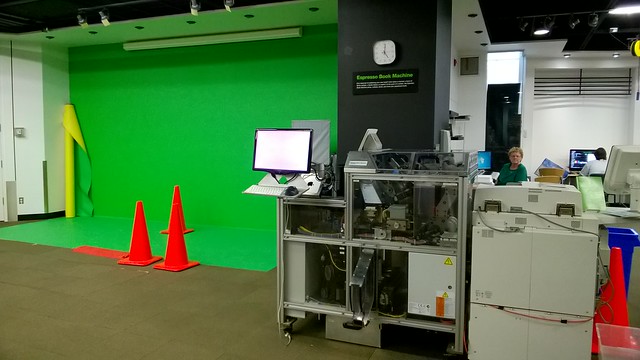
Inside you’ll find computers and workstations in an open concept. The space works well for hackathons! You’ll also find the aforementioned Espresso Book Machine and a green wall for photography and video work:

EPL Makerspace

There are three 3D printers (they had to add another recently to keep up with demand):

EPL Makerspace

There are a couple of gaming spaces with Xboxes and these incredible overhead cone speakers that keep the sound minimized to the local area:

EPL Makerspace

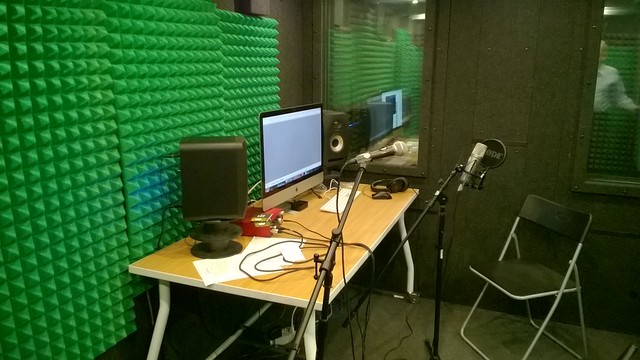
And there are two sound-proof recording booths with computers, mics, mixers, amps, and instruments:

EPL Makerspace

The Makerspace is an incredible resource and if you couldn’t tell, I’m a big fan. Check it out if you haven’t already done so! You can request a tour here.

Welcome Baby

One of the programs I didn’t know about before the luncheon was Welcome Baby, a program that puts books and early literacy resources in the hands of newborns and their parents. “A library card, books and story times are the first steps to a love of reading and success later in life.”

Through a partnership with AHS, the program is being brought to parents when they visit a clinic for their child’s two month immunizations. Babies also receive a library card, free of course. “Early literacy is the foundation and EPL is focused on it,” Pilar told us.

Each Welcome Baby Early Literacy Kit costs $25 and EPL is hoping to raise $1.5 million total. You can donate to Welcome Baby here.

epl2go

The other program we learned a lot about was epl2go, a new literacy van initiative. Before I spoil it, watch this entertaining promotional video:

The idea is actually an old one (EPL used to have book mobiles that would travel to different neighbourhoods). epl2go vans will bring programs and services from the library to Edmontonians who don’t have easy access to an existing branch. In today’s parlance, we might describe epl2go as a pop-up library!

EPL is looking to raise $1 million to have four epl2go vans – one for each quadrant of the city. You can donate to epl2go here.

Facelift and more for Stanley Milner downtown

Let’s face it, the Stanley Milner library downtown isn’t incredibly attractive. It certainly doesn’t fit with the Art Gallery of Alberta, the Winspear Centre, City Hall, and it’ll look even more out of place when the LRT starts running past the front door. It’s also not super functional, with poor connections to Churchill Station and an insanely congested sidewalk/bus stop out front. We’ve been talking about this for years in Edmonton, with ideas for renovations and updates frequently being proposed (here’s one from 2010 for instance).

Edmonton Downtown Library
Edmonton Downtown Library by IQRemix

The good news is that the building is going to be renewed thanks to Council’s decision to fund the $61.5 million project last December. The City is providing $51.5 million of that while EPL will need to fundraise the remaining $10 million. The goal is to open the doors of the new facility in late fall of 2018 so they’ll have to move quickly. EPL hasn’t yet figured out what the donation campaign will look like, but they’re working on it.

We’ll have to wait until the full plan for the building renewal is revealed to know everything that’s going to change, but we do know that internal systems will be upgraded so the library can achieve a LEED silver designation at minimum. We also learned at the luncheon that EPL intends to use the opportunity to greatly improve the utility of the interior of the building too, with lots of work spaces, meeting rooms, and other community facilities. And yes, the Makerspace will also receive upgrades and additions, like potentially a kitchen space.

Connect with the library

Check out @EPLdotCA on Twitter, edmontonpl on YouTube, and EPLdotCA on Facebook. If you don’t already have your free library card, you can learn how to get one here.

What does Alberta’s Budget 2015 mean for Edmonton?

Today was budget day in Alberta. Budget 2015 is being called “a bad news budget” but it could have been much worse. There are tax and user fee increases, cuts to spending (including the first cut to health spending in 20 years), and a new “Health Care Contribution Levy”, and still Alberta’s deficit will grow, to a record $5 billion this year. On the other hand, infrastructure spending seems to be mostly intact, programs for the most vulnerable have not been cut, Alberta retains its tax advantage, and the Province is taking some baby steps toward getting us off the energy price roller coaster. Here is Dave’s take.

Budget 2015

There’s a lot of truth to the “government town” label that people often apply to Edmonton, so any Provincial cuts are going to have an impact. According to the City’s chief economist John Rose, 22% of Edmonton’s employment is related to health care, education, or public administration.

Still, Rose said in recent weeks that Edmonton as a whole would weather the storm better than others in Alberta. From his Labour Force Report issued on March 13:

“Although the impact of lower oil prices is evident in some sectors, the diversity and depth of
Edmonton’s economy has insured that employment continues to grow in Edmonton and that the
City remains a very attractive location for those seeking new opportunities.”

So what does Budget 2015 mean for Edmontonians and for Edmonton?

Highlights

Here are some of the key takeaways from the budget that I think are relevant to Edmonton:

  • For 2015-2016, Alberta Health Services (AHS) faces a decrease of $286 million or 2.1% and will need to cut nearly 1,700 positions
  • The budget includes $926 million in capital spending for health-related “capacity expansion projects” in Calgary and Edmonton
  • There is $50 million over at least two years to renovate emergency rooms in Calgary and Edmonton (specifically the Misericordia, Grey Nuns, and Royal Alexandra hospitals)
  • The budget promises than 300 new restorative care beds in Calgary and Edmonton
  • Post-secondary institutions face $114 million in cuts
  • Campus Alberta institutions (which includes the University of Alberta) are facing a 1.4% operating grant reduction in 2015-2016 and a 2.7% reduction in 2016-2017
  • School boards will receive no money for more students and must cut 3% from non-instructional costs
  • The Province says that “most” school projects announced in 2013 and early 2014 will open in 2016-2017
  • Family and Community Support Services, which helps to fund more than 60 agencies and 80 programs in Edmonton, will be maintained at $76 million.
  • Funding for police remains the same
  • Capital spending of $1.1 billion for the next 5 years includes $124 million for NAIT expansion and $120 million for NorQuest downtown
  • GreenTRIP funding remains intact, which means the first portion of the Valley Line LRT will continue to move ahead
  • MSI funding will remain stable, even if it is more of a loan than a grant
  • The smart fare proposal from Edmonton, St. Albert, and Strathcona County is still “under consideration”
  • The budget contains no funding for the proposed Galleria project

Discussion

Certainly the health care sector is going to take a hit and that will have some impact on Edmonton. The Province maintains that we can get the same quality of service for less, while critics disagree and suggest the effect of this budget won’t be felt only by those at AHS who lose their jobs but also by Edmontonians in need of care. “The time has come for us to start looking at how we can do things in a more efficient manner,” said Health Minister Stephen Mandel. “I don’t think Albertans should have to pay 20 and 30 per cent more for things.”

In addition to the cuts in health-related spending, the budget also introduces the Health Care Contribution Levy, which will apply to individuals with taxable income greater than $50,000 per year. There’s a sliding scale from $200 to $1000 depending on your income bracket. This tax takes effect on July 1, 2015, and applies to roughly 1.1 million Albertans.

The health-related surprise though was money for hospitals, especially given recent suggestions that Edmonton facilities need more than $225 million in maintenance and repairs. The previously announced funding for emergency room upgrades will help in that regard.

It’s not clear how many cuts the education sector will face, but clearly the 3% reduction is going to have an impact. A lack of new funds to deal with growth will likely also mean larger class sizes. At the post-secondary level the cuts are much smaller than many expected.

While there is no provincial sales tax, there are increases to personal income taxes. If you make more than $100,000 per year your tax rate will increase from 10% to 11.5% (phased in over three years) and if you earn more than $250,000 your tax rate will rise to 12% when fully implemented (Edmonton’s media family income is about $100,000). We know that nearly 10,000 employees of AHS earn at least $100,000 a year, which means if they aren’t among the job cuts, they will face increased personal income tax. Though it likely won’t be those who make the most that face the cuts. According to the Herald, Mandel’s own department will spend 18% more than last year.

For most Edmontonians, increased taxes, fines, and user fees will be felt immediately. Gas taxes are increasing by 4 cents to 13 cents per litre. Cigarette taxes are increasing by $5 to $45 for a carton of 200. A bottle of wine or spirits will cost 16 cents more, and a 12-pack of beer will cost 90 cents more. Fines for speeding and other traffic offences are increasing by an average of 35%. Marriage licenses are increasing by $10 as are birth and death certificates.

There is some good news for the most vulnerable Edmontonians. There will be no reductions to child care subsidies for low-income families, nor are there any reductions to the Alberta Seniors Benefit income support. The budget will also accommodate growth for AISH and Persons with Development Disabilities. Starting July 1, 2016 there will also be a new Alberta Working Family Supplement refundable tax credit on earnings up to $41,220. Funding for FCSS, which supports many Edmonton agencies, will be maintained.

On infrastructure there’s mostly good news. Or at least a sigh of relief that important projects will continue moving forward, like the Valley Line LRT which the Province previously committed to.

Responses to Budget 2015

From Mayor Don Iveson:

“The city of Edmonton and Alberta municipalities faired reasonably well on this budget, all things considered – certainly compared to what we all heard and were concerned might be coming,” Iveson said.

“The numbers are fairly small and speaking to our chief economist just now, it may have a small effect on Edmonton’s growth, but we’re talking a decimal to Edmonton’s GDP, not a side-swipe,” Iveson said.

“We can work with the dollars provided,” said Iveson.

From Doug Goss, char of the University of Alberta’s board of governors:

“The message is clear — we all have to find new ways of doing business, we have to be a little more creative,” said Goss.

From Indira Samarasekera, President of the University of Alberta:

“This is a very good outcome,” said Samarasekera, “much better than many were expecting. The provincial government is facing financial pressures, but they’ve demonstrated they understand the importance of post-secondary to Alberta’s future.”

President Samarasekera will address the campus community at a forum on March 31.

From Michael Janz, Edmonton Public School Board chair:

“We’re going to see more students arriving at the school doorsteps with no new money provided to educate them,” he said. “I don’t think this is a good news budget for Edmonton public schools.”

From Marilyn Bergstra, vice-chair of Edmonton Catholic Schools:

“The budget cuts will make it increasingly difficult to support all of our students, particularly our most vulnerable, as well as the new students that are coming to our district,” she said.

From Helen Rice, President of the Alberta Urban Municipalities Association (AUMA):

“Sufficient funding for infrastructure is vital to address the deficit that has continued to grow across the province, and to provide for new infrastructure requirements to meet our obligations to citizens,” said Rice.

“Given the current economic climate, now is the time to secure funding to meet infrastructure needs when prices are falling and the availability of resources to work on projects is increasing,” said Rice.

The reaction from the business community appears to be more mixed.

Budget 2015

Budget 2015 Details

Here are all the budget-related news releases:

Here is the budget presentation from Robin Campbell, Minister of Finance:

You can also download the budget speech in PDF here. You can access the full list of budget documents here.

Roundup: Pre-Election Politics in Alberta

As you know I stay fairly focused on municipal issues, especially as they relate to Edmonton. But with the provincial budget set to be released on Thursday, a televised address from the Premier tonight, the review of the Municipal Government Act, and expectations of an imminent election, I’ve been thinking more about provincial politics lately. Here’s a brief summary and some thoughts on what I’ve been paying attention to.

Premier Prentice’s TV Address

Tonight, Premier Jim Prentice delivered a 16 minute address called Alberta Looks Ahead on CTV (which apparently cost between $80K and $100K). “We are a turning point in our province,” he said at the beginning. He described the need for “thoughtful decisions for the future” and said Albertans have told him they want balance.

The highlights as I understood them:

  • A 10 year plan will be introduced with the budget, with three pillars: strong fiscal foundation, building a lasting legacy, securing Alberta’s future
  • There will be no sales tax and Alberta will retain “the most competitive tax system in Canada”
  • The goal is to be back to a balanced budget by 2017
  • The government will hold the line on expenditures, which essentially means cuts in a growing province
  • Albertans will be asked “to contribute to the costs of the health system”, slowly at first but growing over time
  • By 2018-2019, 75% of energy revenue will go to program spending
  • By 2019-2020, 50% of energy revenue will go to program spending, with 25% going to emergency funds and paying down the debt and 25% going to the Heritage Savings Trust Fund

The Premier talked a lot about how he is determined to restore our commitment to the Heritage Fund, and said “paying off our debts is something we simply must do.” If I remember correctly, he mentioned only two former Premiers by name: Peter Lougheed and Ralph Klein.

Perhaps this is a more accurate, succinct recap courtesy of Marty Chan:

There were no “look in the mirror” comments tonight, but I did love the soundbite toward the end when Premier Prentice spoke about “a spirit of openness across every segment of Alberta”. He offered some examples, including “from bloggers to loggers,” which led to this gem:

Dave is probably the most well-known political blogger in the province. You can see his latest nomination update post here.

The Premier is also planning to host a series of Telephone Town Halls along with various Ministers, on March 25 and March 30. You can dial in toll-free at 1-855-269-4484. Tonight I saw many complaints about robocalls, so it’ll be interesting to see how those town halls are received.

Budget 2015 Consultations

The Province conducted an online survey for Budget 2015 and in total received 40,513 responses. The survey was open from February 5-28. Some of the key findings include:

  • 9 out of 10 respondents feel low oil prices will greatly or somewhat affect the Alberta government’s ability to budget
  • when asked what is the right balance to respond to the drop in revenue, Albertans were split almost evenly 3 ways between reducing spending, increasing revenue and running a deficit budget
  • 9 out of 10 respondents feel government needs to take action either immediately or within this year

I’m not sure how representative the results are, but it’s useful data to consider nonetheless. Budget 2015 will be released on Thursday, March 26.

Perhaps most interesting to me is that the survey results were made available through the Open Data Portal! This enables you to ask the hard questions, like: how long did the average person take to fill out the survey? The average length of time was 7 minutes, with the median at 11 minutes. Ignoring the records that were greater than 90 minutes (people leave tabs open all the time) here’s what the data looks like in a chart:

budget survey time taken

You can download all the data as a 13 MB Excel file. Give it a go and have some fun!

I hope this is a sign of things to come in terms of making information available through the open data catalogue in a timely fashion.

Municipal Government Act Amendments

Last week, the Government of Alberta tabled amendments to the Municipal Government Act. You can get a brief overview of what’s changing here. From the news release:

“The last major consolidation of the MGA took place in 1995, after nearly 10 years of review. The current MGA review began in 2012 and has involved input from more than 1,200 written submissions, and more than 1,500 people at 77 community meetings.”

A few of the proposed changes I found interesting:

  • Municipalities would be required to adopt public participation policies that outline their approaches for engaging with stakeholders. Edmonton already has a policy for this and is actively review and improving its approach to public engagement.
  • Existing petition requirements make it difficult to successfully petition a municipality, so one proposed changed would allow municipalities to change the rules for petitions.
  • Currently municipalities need to use snail mail or newspapers to notify the public about things like bylaws and public hearings, but this is 2015! The proposed change would make it possible for municipalities to announce notifications online or using other methods as they see fit.
  • Another change would require municipalities to adopt three-year operating plans and five-year capital plans. Edmonton is already moving in this direction.
  • Municipalities are currently required to have statutory plans, but there is no explicit hierarchy specified, they simply need to be consistent with one another. The proposed change is to identify the hierarchy and relationship of those plans. In Edmonton, this could impact The Way Ahead.
  • Another change would allow for the creation of civic charters, which the Province, Edmonton, and Calgary have already been pursuing.

There are more amendments still to come. Additional review and consultation will take place this spring with the goal of proclaiming the fully revised MGA and regulatory updates by the end of 2016.

MSI Funding (March 2015)

Another pre-election, pre-budget announcement was about the allocation of $400 million in MSI funding. Edmonton is slated to receive just over $80 million out of that, which is less than half of what the City was expecting for 2015.

“Until we get the provincial budget, I won’t know how much additional dollars are available and we won’t be able to make any decisions about which projects go ahead until we see the provincial budget,” said Mayor Don Iveson.

For its part, the Liberals have called the MSI announcement “an elaborate ruse” due to some creative accounting with the Basic Municipal Transportation Grant.

Wildrose Leadership Race

Also tonight, we held our third #abvote Hangout at http://abvote.ca. In addition to Dave, Ryan, and myself, we had the three Wildrose leadership candidates join us: Drew Barnes (MLA for Cypress-Medicine Hat), Derek Fildebrandt sitting in for Brian Jean (Former MP for Fort McMurray - Athabasca) and Linda Osinchuk (Former Mayor for Strathcona County). We started with a discussion about the Premier’s address, and then moved on to some other questions for the candidates.

You can watch the archived video on YouTube or here:

I asked a question about how they’d support municipalities, and of course the Wildrose 10/10 plan came up, which would allocate 10% of tax revenues and 10% of surpluses to municipalities.

They’re rushing this race, but with speculation the writ will drop on March 30, they don’t have much of a choice. You can learn more about how voting works for the leadership race here. The Wildrose party will announce its next leader on March 28 in Calgary.

Other

I have already mentioned these things in previous roundups but it’s worth linking to them again:

That’s it for now! Stay tuned for our next Hangout and follow all the latest stuff online using #ableg and #abvote. Now I guess I had better go update the Election Results dashboard

Review: Inateck USB 3 Enclosure & Wireless Presenter Stick

From time to time I get invited to review various things here on my blog. I usually turn those invitations down, but sometimes I’m intrigued and agree. That’s what happened back in December, not long after I purchased the Inateck PCI-E to USB 3.0 Expansion Card that I wrote about yesterday. Someone from Inateck emailed asking if I’d be interested in reviewing a couple of their other products. I hadn’t ever come across the brand until I started looking for that USB 3 expansion card, and I was surprised that they reached out so quickly after my purchase. I was happy enough with the expansion card, so I figured, why not? Let’s see what else they’ve got!

They invited me to pick a couple of items off their website to review (and they sent me one of each for free). I decided on the Tool Free USB 3.0 HDD Enclosure (FEU3NS-1E) and the Perfect Laser Pointer Pen for Presentation (WP1002).

Tool Free USB 3.0 HDD Enclosure

An enclosure might seem like a strange thing to want to try, but I have used quite a few over the years. It seems I always have a hard drive that needs attention. Currently I’ve got a few Vantec NexStar enclosures, but nothing with USB 3, and I liked the idea of a smaller one for 2.5″ drives.

Inateck USB 3 Portable HDD Enclosure

The Inateck USB 3.0 HDD Enclosure comes with the HDD case, a short USB 3 cable, and a user manual (which is completely unnecessary). The enclosure is made of plastic and is really light at just 70 grams. It supports 2.5″ SATA HDDs and SSDs, as long as they are 9.5mm thick or less. For 7mm drives, there’s an extra foam pad that you can use to stabilize the drive.

The main problem with most enclosures is the time it takes to get them open, screw the drive in, and then close them back up again (for temporary jobs, I have started using the NewerTech USB 3.0 Universal Drive Adapter, which is awesome). That’s why the “tool free” nature of the Inateck enclosure really appealed to me.

Inateck USB 3 Portable HDD Enclosure

To open the enclosure, all you need to do is slide the top forward. Then you can lift it up, revealing the connector for the drive. To close it, you simply reverse the action. Even though it’s plastic, the build feels solid enough that I wouldn’t worry about it breaking with use (as opposed to say, the plastic releases on the QNAP TS-451 that I recently got). To get the drive itself in, you just need to align it with the connector, and then push. There are two small screws that you could remove if you had trouble with this for any reason (they are the only thing holding the connector to the case…I see that Inateck is now selling the connector as a standalone product basically too).

After the drive is in and the enclosure is plugged in, you simply flip the power switch. There’s a handy LED that comes on too. I have seen a few criticisms of the USB cable, as the enclosure uses the Type-A cable, as opposed to an A to Micro-B that you likely use for a mobile phone. Just don’t lose the cable that comes with it I guess!

Inateck USB 3 Portable HDD Enclosure

I tested the drive with both an HDD and an SSD. I’m a Windows 8.1 user and had no problem with plugging the drive in – it was recognized right away with no reboot or driver install required. I didn’t measure the transfer speeds, but it was as quick as expected. The enclosure does support UASP (USB Attached SCSI Protocol) if your controller supports it and you’re using an SSD.

The Inateck enclosure is currently just $23.99 at Amazon, which is very affordable. So would I buy one? If I needed a basic 2.5″ enclosure, yes. The main selling feature to me is the ability to swap drives in and out very quickly. If that’s important, then the Inateck enclosure would work very well. If I was looking for an enclosure for one drive that I didn’t anticipate changing very often, I might look for something sturdier.

Wireless Presenter Stick

The second item I chose was the “Inateck Perfect Laser Pointer Pen for presentation”, which is a mouthful, so I’ll call it the Wireless Presenter Stick. It’s one of those devices you hold when you’re running through a PowerPoint presentations to switch the slides without having to walk over to the laptop to do it. I’ve never had one of my own, though I have used tons of them over the years.

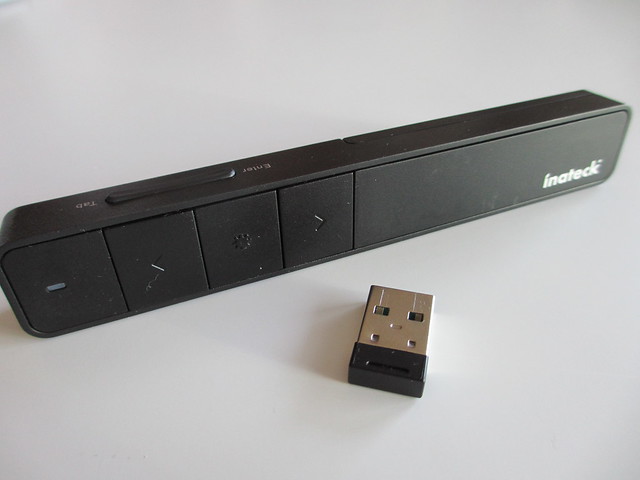
Inateck WP1002 Wireless Presenter

The Wireless Presenter Stick requires one AAA battery, which is not included. It’s made of plastic and is really light at just 24 grams. Inateck says it has a range of 20m. It requires a little USB dongle that is conveniently stored in the base of the stick itself with a magnet for good measure. Bluetooth would have been nice, especially if the MacBook-led trend of fewer ports continues, but it’s not a deal-breaker. The stick also features a laser pointer, which is handy for pointing to thinks on the screen/wall.

Inateck WP1002 Wireless Presenter

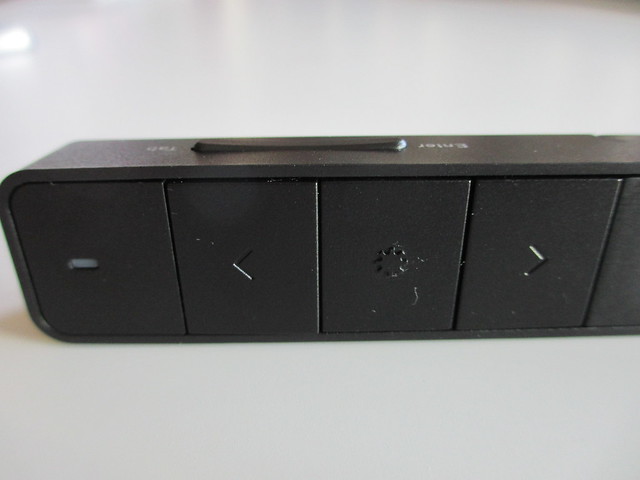
I feel like a wizard wielding a wand when I hold the stick! It’s about 5 inches long, so it’s certainly going to be noticeable when you hold it. Most of the edges are rounded, except for the top edge which is straight. While it does help you orient the stick in your hand, it does make it a little less comfortable to hold. There are five buttons and a power switch on the stick. The three buttons along the top are the forward and back buttons, plus the laser pointer button. Along the right side are the Tab and Enter buttons. The left side is where you’ll find the power switch (the stick will automatically enter sleep mode if you don’t press anything for a while to save battery power).

I have used the Wireless Presenter Stick for maybe half a dozen presentations now, on a few different computers. No drivers or installation is required, you simply plug in the USB dongle and you’re good to go. I didn’t test the range but in a big conference room it never failed to work as I moved around. I am a little surprised to see some wear on the buttons already, maybe from dirty hands? Nothing functionally wrong, just some markings on the plastic.

I have also used it in a group presentation during which we passed the stick around to a few different presenters. Pressing the buttons always works, there’s never a stutter or pause, and you never have to press it more than once. But, the one problem we did run into, is that everyone kept pressing the wrong button! When you hold the stick properly (the way that feels comfortable), the “previous” button is at the top and the “next” button is at the bottom. But invariably people try to press the top button for forward/next! It’s a minor annoyance I suppose, but I was surprised at how consistently the issue came up with new people. Because there’s no software to install, there’s no way to remap these buttons, but that would have been one way to solve the problem.

Inateck WP1002 Wireless Presenter

You can use the stick for more than just presentations. If you’re inside a browser, you can use the up and down arrows to scroll the page. You can also use the tab button to move from link to link, and enter to select one. This is a lot slower than the mouse or touch of course, but it can be done. It would probably make most sense as part of a presentation.

Inateck’s Wireless Presenter Stick is currently $26.99 at Amazon. The most direct competitor is probably the Logitech Wireless Presenter R400, which is nearly double the price. The Logitech one is about the same length but is wider and thicker and slightly heavier. The Inateck stick is decidedly less ergonomic, but compared to most of the other options out there, it’s slim and light. It gets the job done for a great price.