State of the Edmonton Twittersphere – October 2009

Welcome to the tenth State of the Edmonton Twittersphere, my look at the intersection of Twitter and Edmonton. You can see last month’s stats here.

The source of the data this month is the same as last, primarily Twitter Search but also from Twitter directly. If a user has his or her location set to Edmonton, St. Albert, Sherwood Park, Leduc, Nisku, Stony Plain, Fort Saskatchewan, Beaumont, Spruce Grove, or matching lat/long coordinates, they are considered an Edmontonian.

For October 2009:

# of local users: 5631 (an increase of 184 from September)

To clarify, that means there were 5631 users who posted at least one tweet in October 2009 with their location set to something that makes them an Edmontonian as described above. This number should be treated as a minimum – there are probably many more Edmonton users without their location set.

Here are the rest of the stats for October 2009:

# of tweets by local users: 270044
# of tweets by local users containing #yeg: 18021 (6.7%)
# of tweets by local users that were replies: 98011 (36.3%)
# of tweets by local users containing links: 58448 (21.6%)
# of tweets by local users that were retweets: 13764 (5.1%)
# of tweets by local users that were twooshes: 7973 (3.0%)

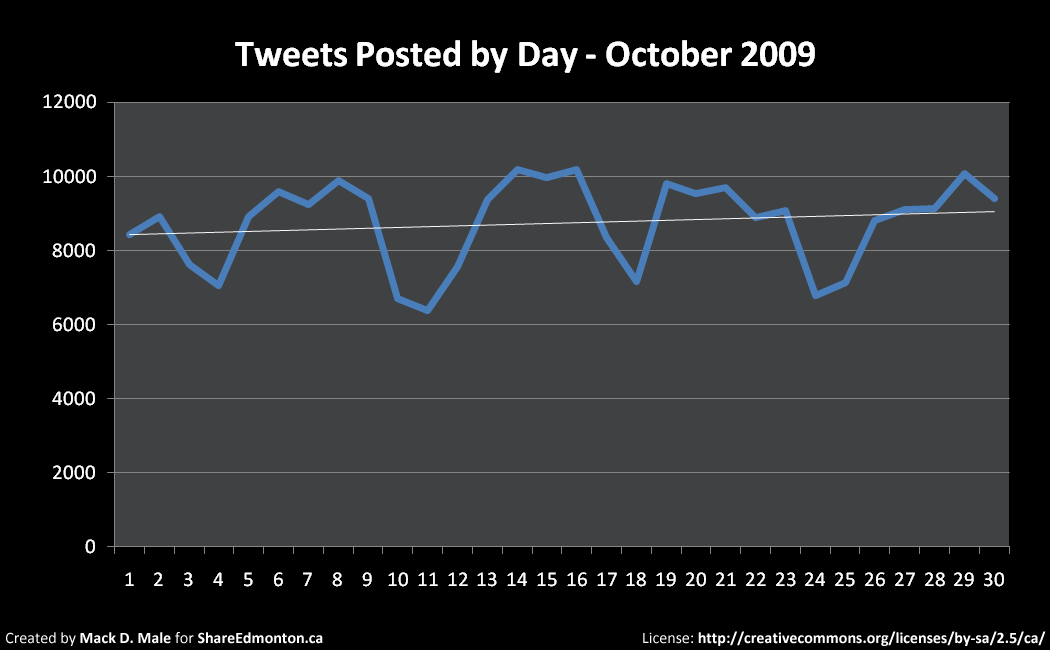
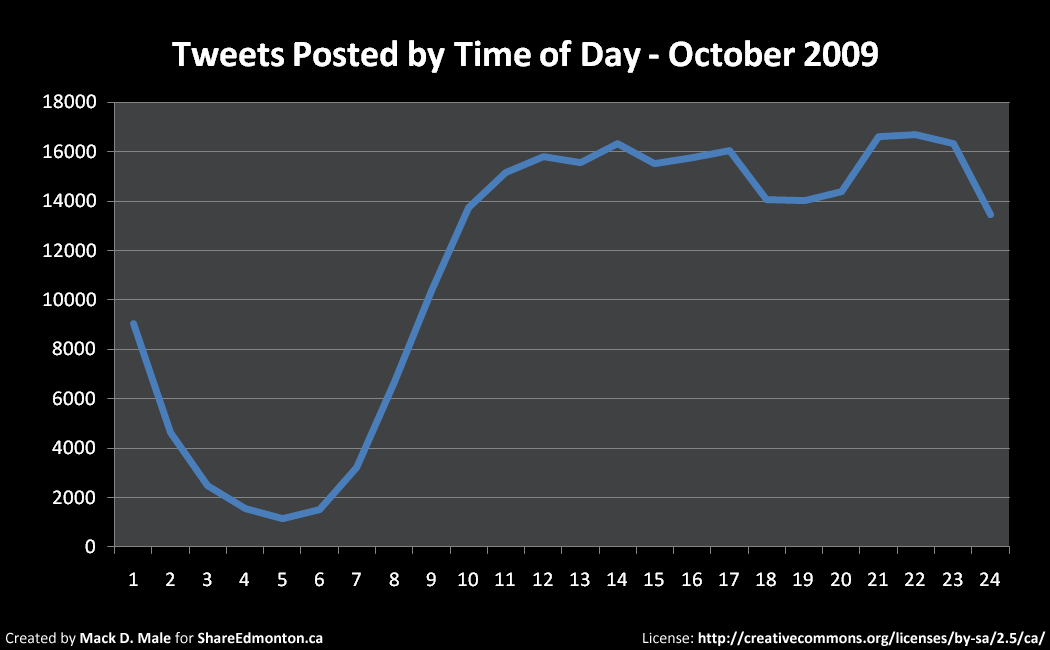
Here are the numbers above in graphic form:

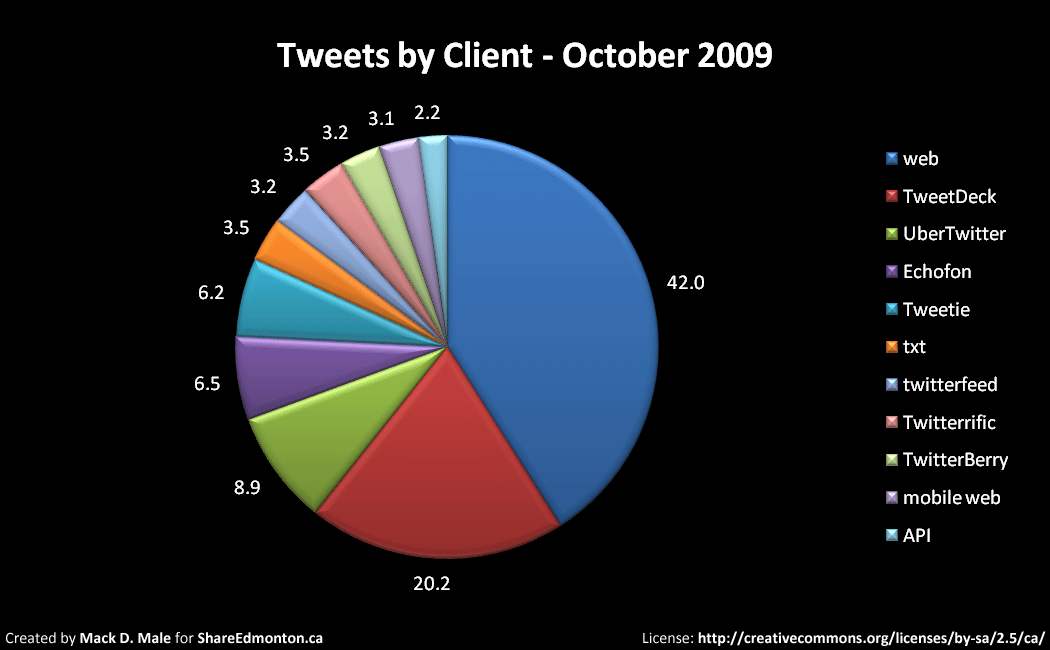
Here are the top clients used by local users for posting updates:
Here are the number of local users by community (besides Edmonton itself) for October:
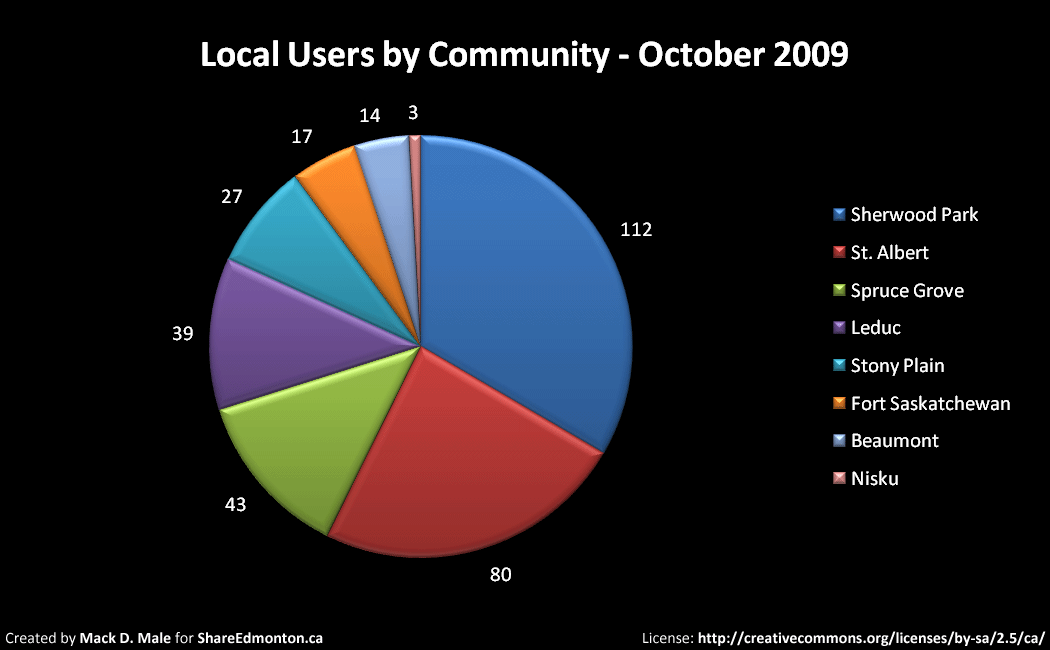
Keep in mind that is based entirely on the text inside the location field of the user’s profile, and is definitely a minimum. Still, gives you an idea of the breakdown.

Some other interesting stats for the month:

Final Thoughts

I was hoping to have stats on Lists in this month’s post, but the API isn’t quite ready yet, so stay tuned for that next month! The increase in users this month was more than double last month’s increase, which is good. The number of tweets being posted by local users continues to rise also – there were three days this month with over 10,000 tweets posted.

Since January, I have identified nearly 12,500 local users. The number above, 5631, is how many of them were active in October.

Calgary stats are up next!

2009 Edmonton Citizen Satisfaction Survey Results

The results of the 2009 Citizen Satisfaction Survey are being presented to City Council today. The survey was once again conducted by Banister Research & Consulting Inc. Some quick facts:

  • The total cost of the survey was $13,650.
  • A total of 800 telephone interviews with Edmonton residents aged 18 or older were completed between June 2 and June 14, 2009.
  • A total of 7989 calls were attempted, 2328 of which resulted in refusals.
  • 50% of respondents were male, 50% were female.
  • 79% of respondents have lived in Edmonton for more than 10 years.
  • 69% of respondents were aged 45 or older.
  • 76% of respondents reported average household income of less than $150,000
  • City-wide results provide a margin of error no greater than +/- 3.5% at the 95% confidence level, 19 times out of 20.

There’s lots of great information in the report, which you can download in PDF here. Or if you prefer, you can just download the highlights, also in PDF.

One of the survey questions is the following:

Now, taking into consideration all City of Edmonton services and programs, overall, how satisfied are you with the services and programs provided by the City of Edmonton to residents?

And here are the results:

In the report, Banister explains:

It is important to note that in 2007, 2008 and 2009 this overall satisfaction question was asked following the satisfaction ratings for specific City services. This was done in order to allow respondents to think of all facets of the service provided by the City of Edmonton, thereby providing a cumulative and overall rating.

I thought it would be interesting to check how effective that is. Unfortunately, the results of the survey are in PDF, not the easiest format to work with. Fortunately for you, that didn’t stop me!

Download the Satisfaction Results by Area in XLS

(I recognize that Excel isn’t the ideal open format, but it was quicker than creating 18 different CSV files. And hopefully this data will be made available as part of the open data initiative anyway.)

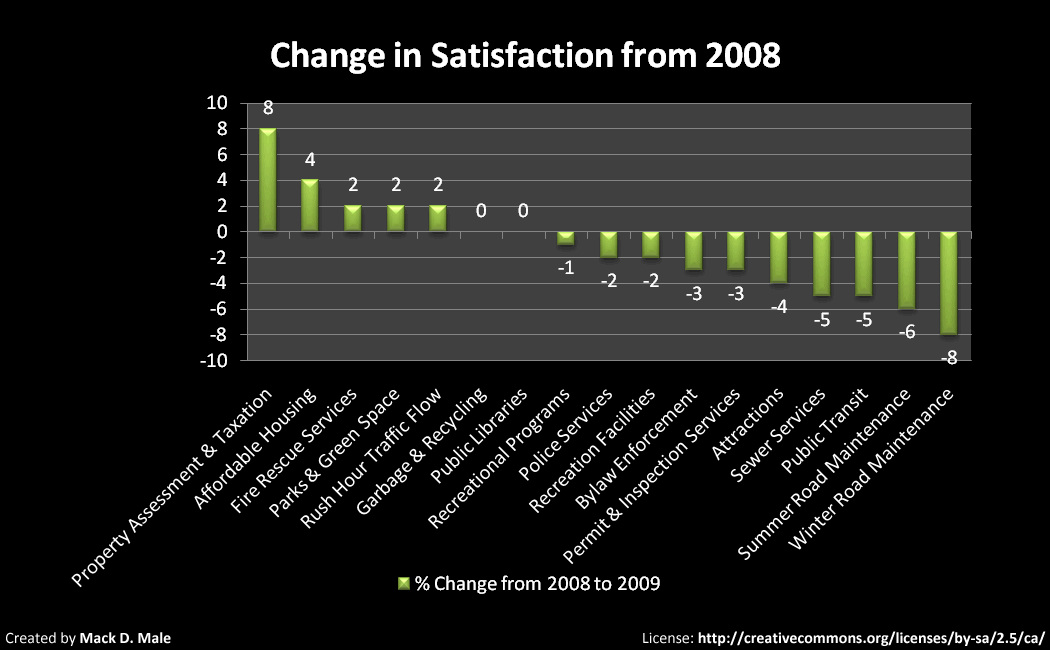
Citizens were asked how satisfied they were with 18 different service areas (one, environmental programs, was new this year so I ignored it). The data is available for each area for 2009, 2008, 2007, and 2003. I added up the “very satisfied” and “somewhat satisfied” percentages for each and compared it with previous years. Here is the percentage change in satisfaction for each area from last year:

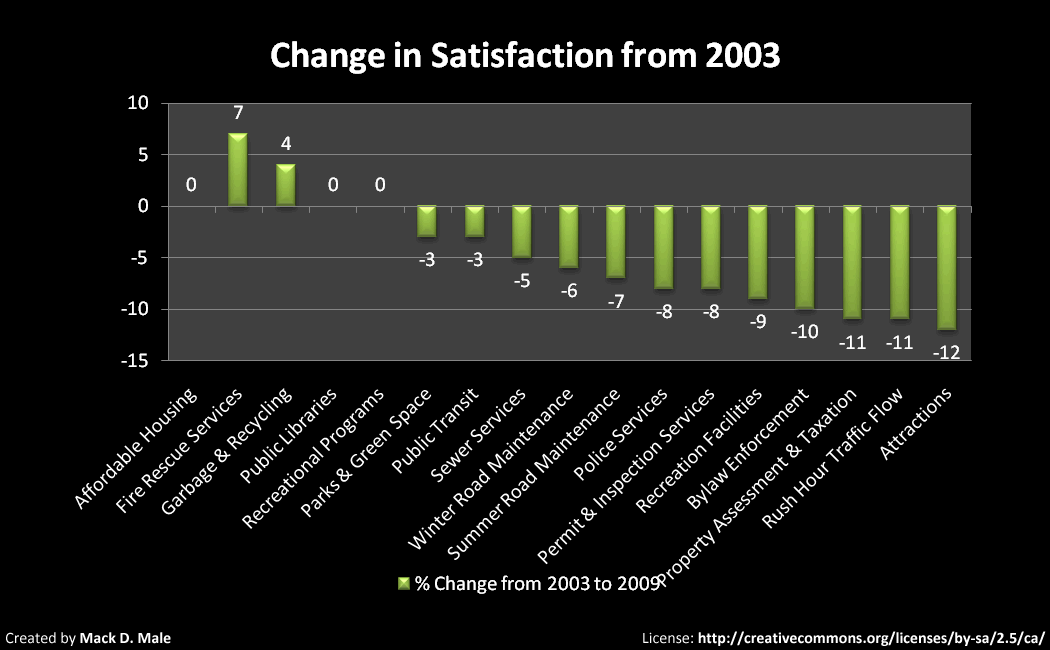
And here is the percentage change in satisfaction for each area from 2003 (affordable housing was not scored in 2003):

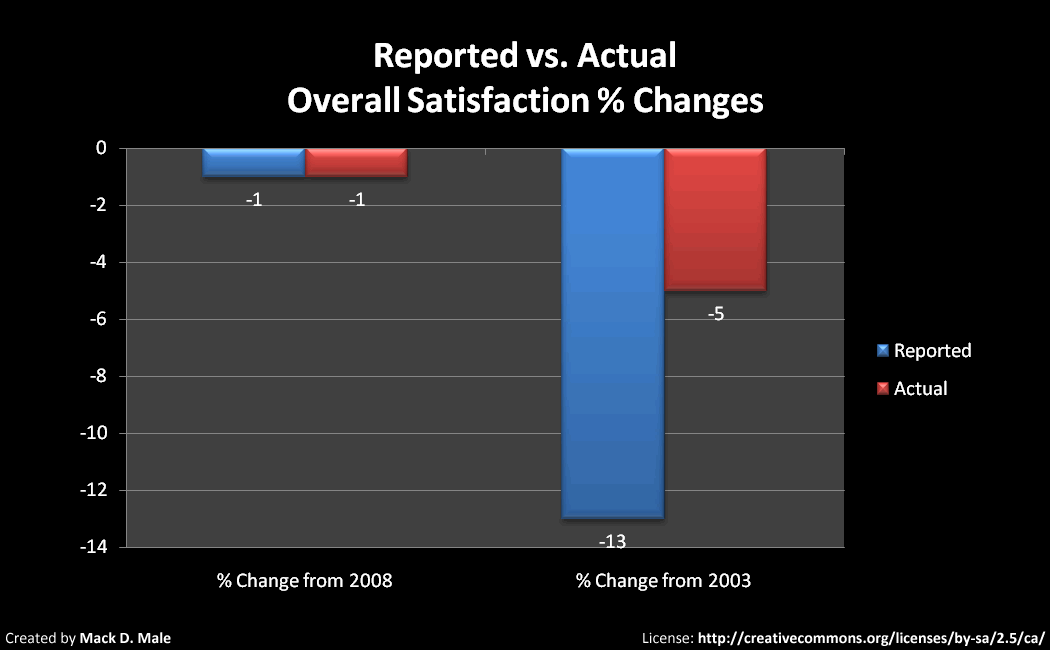
Now we can compare the reported and actual change:

Respondents reported a 1% decrease in overall satisfaction from 2008, and the average change of all the services was the same. Compared with 2003 however, respondents reported a 13% decrease in overall satisfaction, but the average change of all services was a decrease of just 5%.

See how much fun you can have with open data? Now imagine combining this dataset with other datasets! I’d love to compare the results of the satisfaction survey with 311 call volumes, for instance.

The City of Edmonton’s Social Media Advisory Committee

In the grand scheme of things, the City of Edmonton could be considered an early adopter of social media tools. They’ve been on Twitter since February 5, 2009 and have established a presence on Facebook, YouTube, and other sites. While most organizations are still unsure about how to get started with social media, the City of Edmonton is slowly but surely gaining expertise.

Recently I learned that the City established a Social Media Advisory Committee (SMAC) in the spring of this year. I asked Jason Darrah, Communications Business Partner at the City of Edmonton, to tell me more about it. He started by explaining how the committee came to be. I’m paraphrasing here:

In the early days, the City was a fairly simple system. The roads people worried about roads, and the sewer people looked after the sewer system. These were silos, but it worked fine. When a new way of dealing with the world appeared, each silo handled the changes on its own. So at some point in the City’s history, Transportation handled all media related to Transportation, and Waste Management handled all media related to Waste Management. Eventually, it became clear that economies of scale and a unified voice could be achieved by creating the Communications department. More importantly, the Communications department could use its experience to help each of the silos be more effective than they could be individually.

The SMAC followed a similar trajectory. The difference is that today, the City is a complex system. We still have silos, but a change in one area quite often has an impact in another. I think that’s the reason that the SMAC was created so quickly. Jason and his colleagues in Communications recognized some of the advantages:

  • The committee can act as a resource for each of the silos. So when a department wants to get started, they know where to go to learn.
  • They can also provide operational support, actually doing some of the social media work.
  • It’s a way of managing risk, by establishing a competency.
  • The committee is a way of distributing knowledge. They gather information about all of the different social media projects taking place, and can offer advice based on experience.

That last point is particularly important. The SMAC is an advisory committee. Unlike many City committees, whose members are designated by senior managers, the SMAC is comprised of 26 individuals with social media experience (as you can imagine, many of them are young). It has grown fairly organically by attracting people who are using the tools. At their first meeting in May, the SMAC members simply talked about what they knew and had experience with (and they have since recognized a few gaps, Legal for instance).

The key for SMAC is to avoid becoming the social media police. If a department or group wants to do something with social media, they might have a representative on the SMAC, or they would reach out to one. They’d make a pitch to the committee not for approval, but for knowledge. The SMAC might share information about similar projects, or it might make recommendations for tools to use, but it doesn’t say no. The other characteristic that’s interesting is the pull model – SMAC waits for people or groups to come to it, rather than proactively preaching. Obviously some projects will happen without SMAC’s knowledge, but that’s okay.

I really love the SMAC approach. I talk with a number of local organizations about using social media, and I often wonder why they want to learn from me. Obviously I think I have something to offer, and I usually do it for free, but I have always felt that most organizations have untapped knowledge and experience within. By getting all of the individuals with social media experience together, the City has recognized that and has created a fantastic resource for all other employees. I’m particularly intrigued by the fact that although SMAC was started by Communications, it exists outside of it. Kudos to Jason and his colleagues for embracing the notion than social media is something different.

There’s no doubt in my mind that the Social Media Advisory Committee will play an integral role in helping the City of Edmonton use social media effectively, and I believe it’s a model that other organizations should look at adopting also.

Somewhat related…

While social media is different than other communications tools, some of the same rules still apply. The City of Edmonton (and SMAC) is currently drafting a set of Social Media Guidelines, to help employees use the tools effectively. Note this is not a policy, because there are three policies already in place that cover employee conduct with social media tools and everything else: the Employee Code of Conduct, the Media Relations Policy, and the Conduct and Acceptable use of Telecommunication Technology policy. The other advantage to having guidelines rather than a policy is that guidelines are easier to update, which is important when you’re dealing with something that changes as quickly as social media.

Notes for 11/8/2009

Here are my weekly notes:

  • We had our first AfterCamp event on Saturday for ChangeCampEdmonton. Thanks to everyone who came out!
  • I’ve been doing lots of stuff with ASP.NET MVC lately, and I love it. Most of my ASP.NET work in the last few years has been MVC-style inside WebForms anyway, so the switch has been nice and smooth.
  • I started reading this article but gave up probably 10,000 words in: Gladwell for Dummies. Such an intriguing title, too bad the article didn’t live up to it.
  • Like many others, I can’t believe Microsoft let Don Dodge go.
  • This link made the rounds over the last week: The future of news is entrepreneurial. I’m still thinking about and digesting that statement, but in general, I agree.
  • I hate, hate, hate, hate, hate receiving large files via email. “Bottom line, sending a large attachment via email is relocating using the U.S. Postal Service as your moving company. It is painful, limited, and expensive.”
  • On Thursday evening Sharon and I went to see Broke, the opening documentary for the Global Visions Film Festival. I can’t say that I loved the film, shot in cinema-verite style, but it was enjoyable enough. It turns out that we sat beside the “star” of the film, David Woolfson, the pawnshop owner!

Edmonton Notes for 11/7/2009

Here are my weekly Edmonton notes:

Update on Open Data in Edmonton

I’m encouraged by the progress that is being made on making open data a reality here in Edmonton. I think the open data sessions at ChangeCamp had an impact, as did Councillor Iveson’s formal inquiry. There’s still a lot of work to do, however!

A few brief updates:

  • Just a reminder – we’re using #yegdata on Twitter.
  • The Edmonton Public Library has created an Open Data portal, and is hosting a CSV file of all EPL branch locations, complete with latitude and longitude. It also shows recent tweets!
  • I updated the open data page on the ChangeCamp wiki with some more notes. If you have notes to add, please do so!
  • Chris Moore, CIO for the City of Edmonton, is really embracing the concept of open. He’s charged with delivering a report to City Council by the end of the year, and has decided to open up the creation of that report anyone interested. You can see the document on Google Docs here, just ping Chris and he’ll give you access.

We’ve also started having open data chats with beer! Our next one takes place tomorrow evening:

#yegdata conversation
November 4, 2009 at 4:30pm (come whenever)
Rose & Crown Pub, 10235 101 Street

RSVP on Facebook
See the event on ShareEdmonton

Feel free to drop after work. Our last discussion was really great. One of the things we talked about was the approach we should take. In general, I think the preferred approach is something like the following:

  1. Low-hanging fruit (stuff that is already on the website, just in a closed format, etc)
  2. Data that doesn’t have FOIP implications but that isn’t already available
  3. Everything else
  4. APIs for real-time data?

We’ve got more than enough with the first two to keep everyone involved busy for quite some time.

One of the things we discussed was identifying and prioritizing the first two. What kinds of data does the community want? Which data is already up on the website in a closed format? To help facilitate that, I’ve created a UserVoice site for #yegdata, and have seeded it with 18 types of data that I’d like to see the City of Edmonton make available. Here’s where I need your help!

  • Add other types of data that you’d like to see/use, or that you’ve identified as already available in some format on the City of Edmonton’s website.
  • Everyone gets 10 votes – please vote on the data you’d most like to see/use.
  • Spread the word and get others to add/vote as well!

There are no guarantees that the data and priority identified through the UserVoice site will be what actually happens, but it’ll definitely help the City move forward. Thanks in advance!

Help us identify and prioritize open data here!

Recap: Start Me Up at ICE 2009

Tonight at the ICE Technology Conference, six local software startups demoed their wares to about 50 other technology professionals at Start Me Up. The event was designed to help bridge the gap between the CIPS (old school) and startup (new school) communities, and I think it achieved that to a certain extent. The demos tonight included:

Start Me UpStart Me Up

The format of the evening would have been familiar to anyone who has attended DemoCamp in the past, but for many in the room it was brand new. Much to my delight, everyone seemed to enjoy it, and there was definitely no lack of questions, comments, and feedback for the demoers. For someone like myself, who has seen all of these demos in the past, it was still very interesting because each one had something new to show. I also found the audience remarks quite intriguing (they asked different things than the typical DemoCamp crowd, as you can imagine).

I think the attendance tonight could have been a bit better, but it was still quite good for a first-time event. One of the people in the audience suggested that the event be moved to lunchtime next year, so that more of the conference-goers could attend. It’s a good idea, and shows that there’s both the potential and the desire for Start Me Up to grow.

Thank you to our demoers for the evening, and to Erin and her organizing team for recognizing the value of connecting with Edmonton’s startup community and making this event happen!

Notes for 11/1/2009

Here are my weekly notes:

Edmonton Notes for 10/31/2009

Happy Halloween! Here are my weekly Edmonton notes:

Avenue Edmonton’s Top 40 Under 40 for 2009

Avenue Edmonton’s first annual Top 40 Under 40 will appear in the November issue of the magazine, available at various locations around the city. Here’s what it’s all about:

When trying to imagine the future of Edmonton, one has to picture the future faces that will shape it. These faces are of urban planners mapping the new city, community workers enhancing our quality of life, entrepreneurs enriching the local economy and artists sending our brand out to the world. In Avenue’s inaugural Top 40 Under 40, we seek to honour the brightest and most talented individuals under the age of 40 who are excelling in their careers, giving back to the community and raising the city’s profile. They are the generation of today making a better future for the people of tomorrow.

I’m truly honored to be part of such a fantastic group of Edmontonians. Last night’s event (at Sabor Divino) was lots of fun, and I met some great people. It was a little cramped though, and a little loud. That means next year’s will be even better! Here are some photos:

This is the image that appears for my page online. The one in the magazine is different, but I really like both. I think 3TEN Photography did an amazing job with all the photos!

Avenue Top 40 Under 40 Edmonton

Major congrats to Cary Williams, who is featured on the cover of the issue. Such a great choice, and it’s a great photo too! You can read his article here.

Avenue Top 40 Under 40 EdmontonAvenue Top 40 Under 40 Edmonton

Thanks to Sharon for taking photos last night!

Avenue Top 40 Under 40 EdmontonAvenue Top 40 Under 40 Edmonton

The Top 40 Under 40 list is important, not because the people on the list are looking for recognition, but because it helps to remind us that there are lots of incredibly passionate people working to make Edmonton a better place to live.

The issue comes out November 1st (it’ll likely start appearing around the city this weekend). You can follow Avenue Edmonton on Twitter.

I also want to pass along my congratulations to the Top 40 Under 40 for Calgary!