Patent for podcasting? Seriously?

A company you’ve probably never heard of before announced today that it has been awarded a patent on podcasting. VoloMedia was awarded U.S. Patent 7,568,213  titled "Method for Providing Episodic Media" yesterday. I think the fact that VoloMedia’s Murgesh Navar posted an entry defending the patent before anyone even knew about it underscores just how silly it is.

Here’s what Dave Winer wrote today in response:

I’m certainly not a lawyer or an expert in patent law, but it seems the work Adam Curry and I did in creating the format and protocol for podcasting, in 2001, may have inspired their "invention." It certainly predates it.

Honestly it boggles my mind how software patents are awarded. First of all, VoloMedia applied for the patent in November 2003. Why did it take nearly six years for it to be decided? It’s a cliche, but that’s an eternity on the Internet. Second of all, how could the patent office not discover prior art within those six years? It’s just ridiculous.

According to NewTeeVee, VoloMedia is in talks with Apple and TV networks, among others, “about growing the business and market.” Seriously? I hope VoloMedia fails fast. I really dislike companies that exist solely to sue other companies for violating patents they should never have been awarded in the first place. That’s exactly what VoloMedia is becoming.

For more, check out Ars Technica. Here’s to hoping that VoloMedia’s patent is invalidated.

Twitter promoting Search despite major issues

Yesterday Twitter launched a new home page that puts more emphasis on search and trending topics. There’s a nice big search box on top, with up-to-date, daily, and weekly trends underneath. The aesthetic is different from the rest of the site however (you don’t see any of this if you’re logged in), so don’t be surprised to see additional changes in the coming weeks.

If you enter a query or click on a trending topic, the search results appear below. It looks a lot like Twitter Search. Some of the improvements include a description of what the trending topics are (Hell’s Kitchen was given the description “A reality television cooking competition”) and search tips appear in a little box on the right.

I don’t think the new design should be a surprise to anyone – it has been clear for quite some time that Twitter Search is important.

What’s surprising is that they’re promoting search even though it has major issues:

  • Stale Results: Twitter itself has become very stable lately, but the same cannot be said for Twitter Search. Results routinely become stale, sometimes for as long as an hour or two (so the newest tweets to show up in the results were posted an hour or two ago). For a real-time search engine, the stale results issue happens surprisingly frequently.
  • Missing Tweets: Over the last few weeks I’ve noticed that the number of missing tweets has increased (though I think it has always been an intermittent problem). It used to be that I could enter my username and see all replies at Twitter Search, but lately I can’t. Some tweets simply don’t appear in the Twitter Search index. I’ve submitted a support request about this, but have not heard anything back yet.
  • Other Intermittent Issues: There are a few good reasons that someone might not appear in search results (such as if they have a private account) but lately Twitter has had issues keeping the index up-to-date with new accounts.
  • Lack of Innovation: With the exception of adding the “source” property to search results, Twitter has done very little to improve the service they purchased a little over a year ago. Real-time search is new and ripe for innovation, but Twitter doesn’t seem interested. One of the oldest quirks is that user IDs returned from Twitter Search don’t match up with user IDs at Twitter itself. This is scheduled to be fixed in the next version of the API, but it’s not clear when that will happen.

Worst of all, Twitter has been terrible at communicating about the above issues. The Twitter Status blog is never updated when search results go stale, and very little has been shared regarding the future direction of Twitter Search.

The good news is that Twitter is finally starting to acknowledge that they need to improve search. Last night, Biz wrote: “We have a lot of work to do when it comes to the quality of our search results and trend analysis…”

Search is vitally important to Twitter, and I want to see them succeed. If they don’t address the above issues however, someone else is going to come along and steal their thunder.

Edmonton Story: Discovering Live Theatre

Last week, my Edmonton story was published at EdmontonStories.ca. Titled Discovering Live Theatre, my story is about finding a love for local live theatre. Here’s the first paragraph:

When I was in high school, my idea of theatre consisted of going to see the latest Hollywood release at one of Edmonton’s many movie theatres. It wasn’t until I was in University that I was introduced by a friend to live theatre. At the time, I wondered why my friend was so keen to have me go. Surely you had to be in New York or London to experience great live theatre? Not so, I soon discovered.

It’s perhaps a little out of character for me, in that it’s not related to Twitter, social media, or technology at all. I wanted to write about something that wasn’t associated in any way to my work. That said, I still think it captures part of what makes Edmonton special to me.

Of course, theatre and technology do cross paths once in a while:

No texting during the show!

Give it a read and let me know what you think. Can you guess who the friend mentioned in the story is?

If you have a story, submit it here. You can read about the contest for submissions here.

Also, the 2009 Edmonton International Fringe Festival is coming up! The program went on sale today – you can buy it 7-Eleven or a few other places, or online. This year’s theme is “Stage a Revolution”. The festival runs from August 13th through the 23rd.

Attendance Numbers for Edmonton’s Capital EX

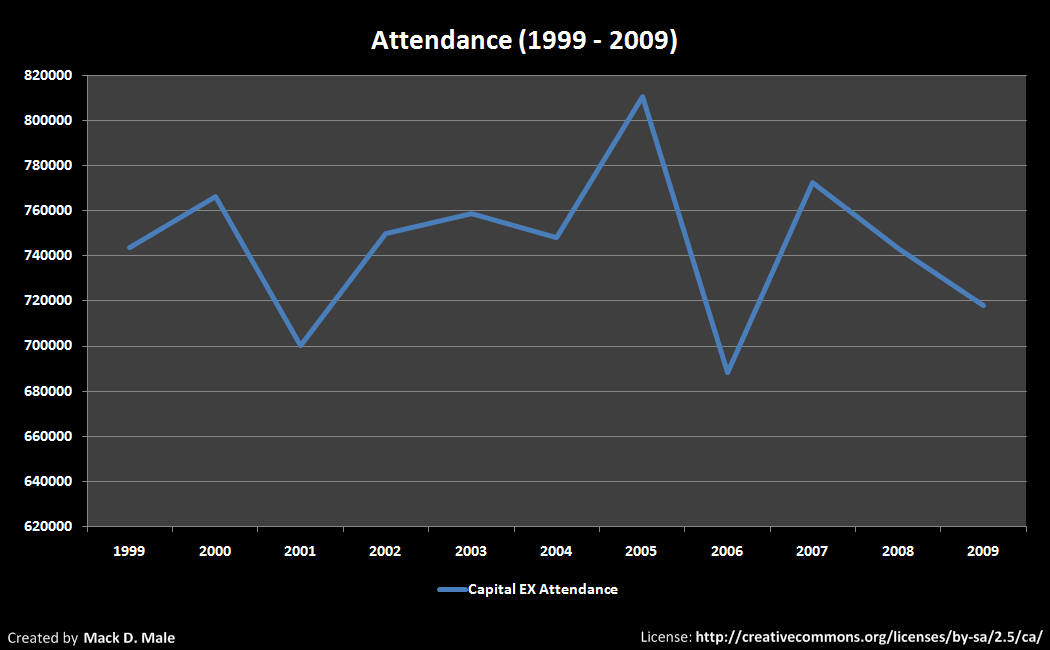
Edmonton’s Capital EX wrapped up yesterday. Sharon and I visited on Thursday evening and had a good time. Today Northlands released the attendance numbers, and though slightly lower than previous years, the ten-day festival still recorded an impressive 717,966 visits. I had been looking forward to the final numbers, so that I could compare it with previous years.

Here are the attendance numbers for the last ten years (you can download the raw data below):

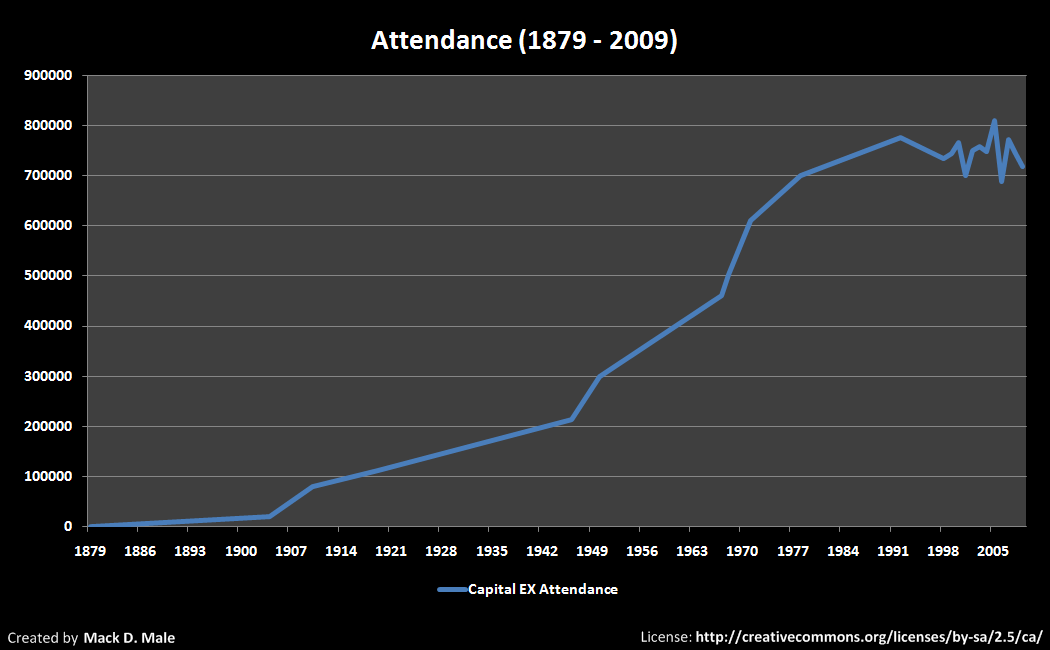
Though much of the data is missing, I was able to track down some numbers going all the way back to 1879:

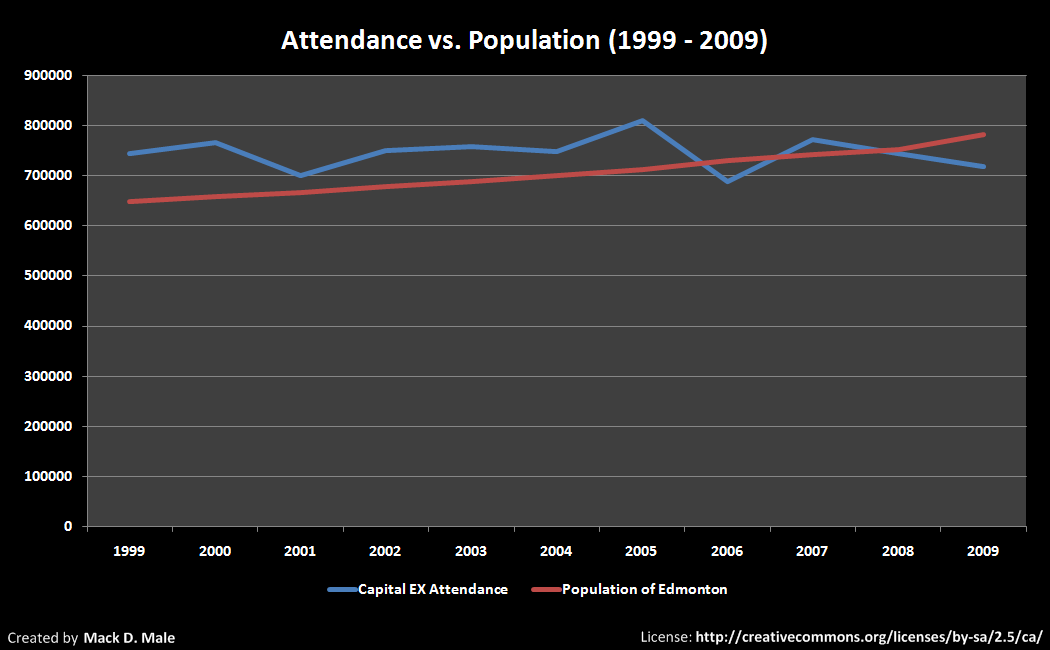
After getting this information, I decided to compare it to the population of Edmonton for the same time periods. Here is the comparison for the last ten years:

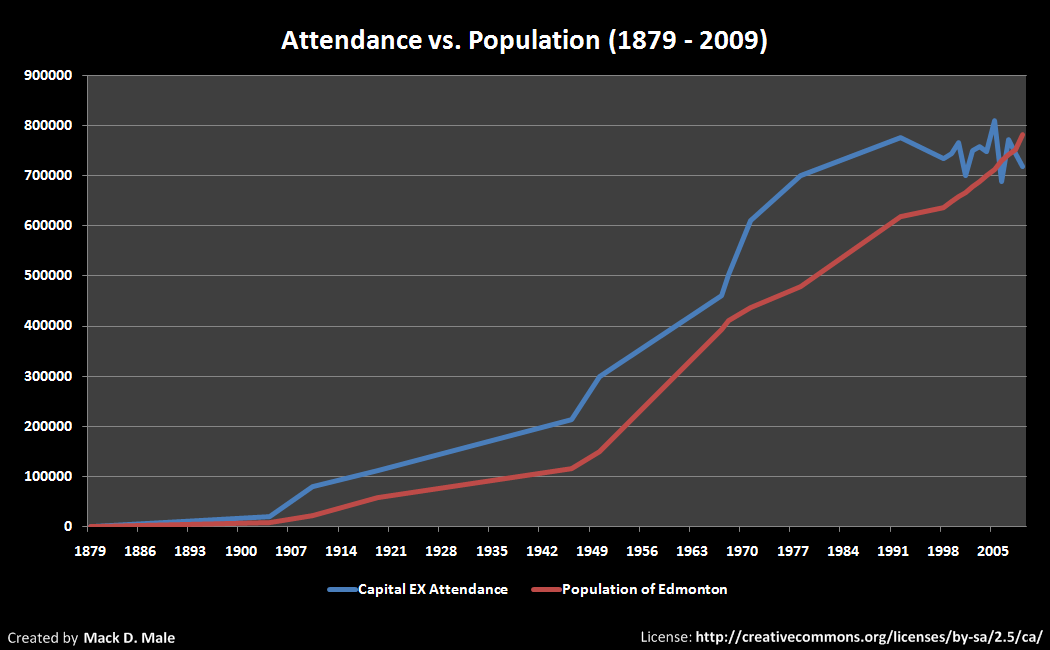
And the same comparison starting in 1879:


A couple things to note about the data in this post:

  • The event changed from Klondike Days (adopted in 1962) to Capital EX in 2006. This explains the large drop that year.
  • The event was a six-day fair from 1912 to 1967, and a ten-day fair thereafter (I think, certainly for the last 20 years or so it has been). I haven’t adjusted the figures for this.
  • The population data, which comes from the City of Edmonton, doesn’t account for surrounding communities.

Download the Capital EX Attendance & Edmonton Population data in CSV

Sources: iNews880, CBC, Edmonton Journal, Amusement Business (1, 2, 3, 4), City of Edmonton, Capital EX Fair History

Notes for 7/26/2009

What an incredibly hot weekend here in Edmonton, plus 30 degrees both days. Here are my weekly notes:

Edmonton Notes for 7/25/2009

Here are my weekly Edmonton notes:

EPS responds to my query about the Crime Mapping terms of use

Last week I posted about the new Crime Mapping site launched by the Edmonton Police Service (EPS). One of my criticisms of the site was the very restrictive terms of use or disclaimer that you must agree to before you can use the site. In particular:

While it is acceptable to pass the website link on to others in your community, you will not share the information found on the website with others other than with members of the Edmonton Police Service or other law enforcement agencies; and

You will only use this website and the information in it so you can inform yourself of, and participate in, this community policing initiative;

This is problematic because it effectively means that you can’t do anything with the data that EPS has now made available. You can look at it using their site, but you can’t then blog about that data, or add it to a PowerPoint presentation.

I emailed a request for clarification and received a response from Amit Sansanwal, Criminal Statistics Coordinator at EPS. I asked for and was granted permission (by their legal department) to publish his response:

The EPS views the Neighbourhood Crime Mapping website as a valuable addition to our community policing initiative.

The EPS, however, is of the view that this tool can only be effective and achieve its community policing objectives if people seeking the information visit the Neighbourhood Crime Mapping website directly themselves.

By visiting the website, hopeful participants in this EPS community policing initiative can learn about what kind of information is available to them (e.g. crime prevention and partnership programs) and how it fits within this program.

We appreciate your interest in this program and hope that you tell others about the existence of the Neighbourhood Crime Mapping website.

In a later email, Amit pointed out that the current preferred way to get EPS statistics is through Statistics Canada.

The crux of their position, if I understand it correctly, is that they don’t want people looking for crime statistics to come across an inaccurate or malicious source. That seems reasonable. The problem is that such a position assumes people are actively seeking the information. By opening up access to the data and allowing others to make use of it, they can potentially reach far more Edmontonians, not to mention the benefits that could come from mashups or other data visualizations. Furthermore, it seems as though they just want to force people to use the Crime Mapping site so that they can promote additional programs to users.

The Crime Mapping site is fun to look at, but I would argue its utility is restricted by the current terms of use. Unfortunately, it doesn’t look like that’ll be changing any time soon.

Data on Edmonton’s new 12-ward system

Last night City Council voted in favor of changing from the current 6-ward system to the more common 12-ward system used throughout North America. The change will take effect for next year’s municipal election. For more background, check out Dave’s post. You can also check out the City of Edmonton’s page for more information.

As an advocate of open data, I thought I’d share with you some data related to the new wards below. All of the data is available on the City website somewhere, but not in an easily consumable form. I’ve done the legwork to make it accessible.

Amendments made to the motion last night affected the wards a little:

  • Grovenor and McQueen neighbourhoods moved from Ward 1 to Ward 6.
  • CPR West moved to Ward 8 from Ward 10.
  • Calgary Trail North and Calgary Trail South moved from Ward 11 to Ward 10.
  • Some ravine boundaries were changed from “in-the-middle” to “top-of-bank”.

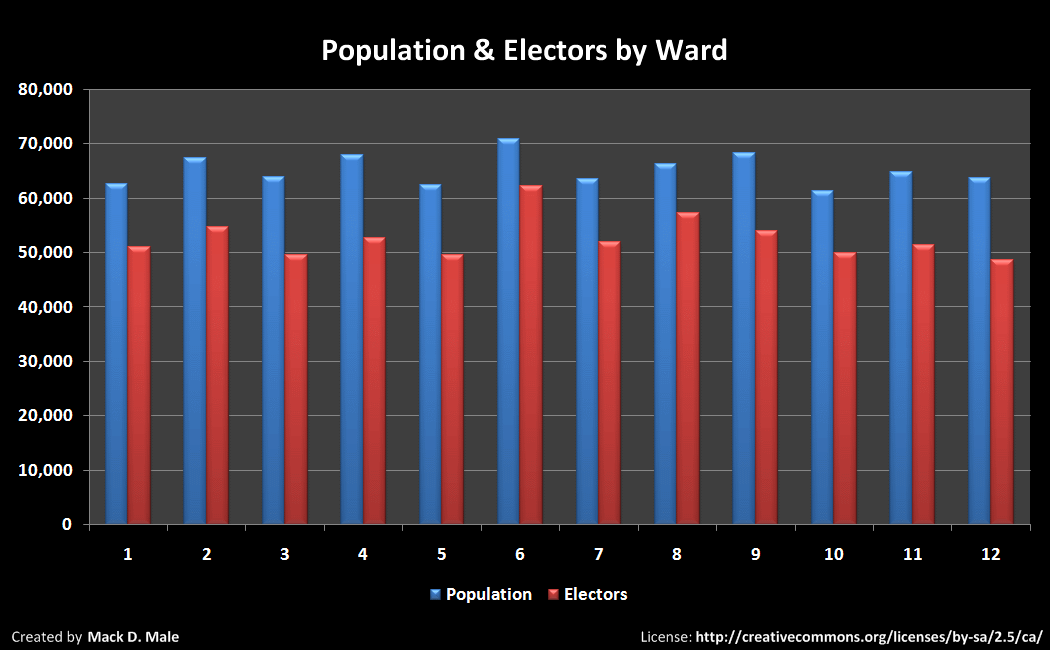
Here are the stats on the new wards:

In a table (download CSV file here):

Ward Population Electors
1 62,625 51,061
2 67,306 54,704
3 63,819 49,465
4 67,811 52,666
5 62,424 49,615
6 70,840 62,152
7 63,549 51,865
8 66,196 57,189
9 68,214 53,889
10 61,276 49,935
11 64,770 51,329
12 63,609 48,529

The average population of each ward is 65,203 and the average number of electors for each ward is 52,700. This data comes from the 2009 Municipal Census.

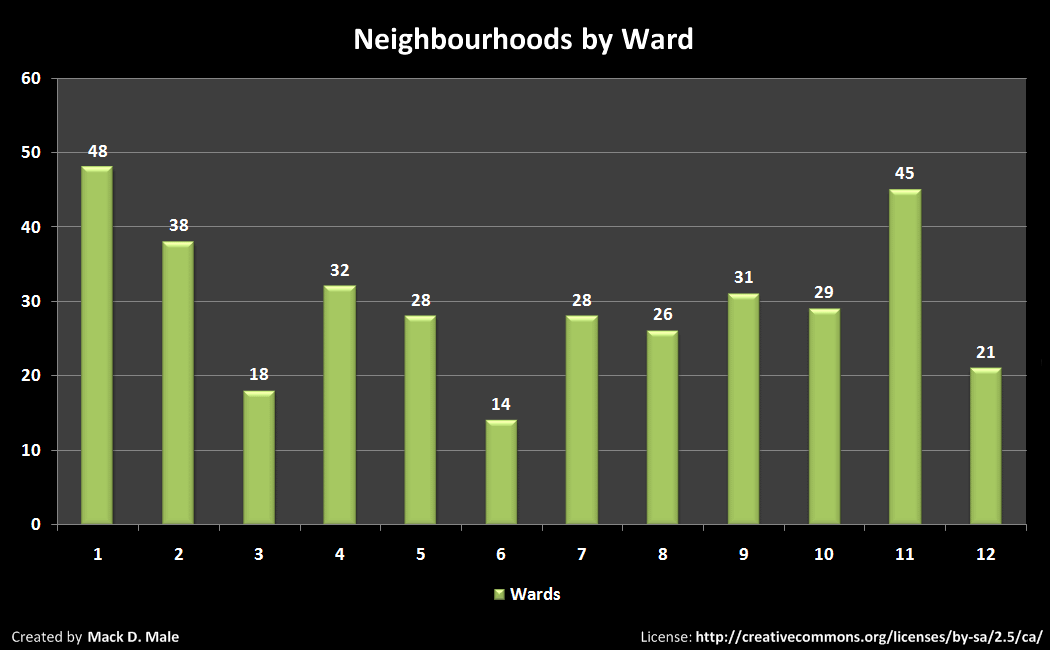
Here are the number of neighbourhoods in each ward:

I’ve also compiled a list of neighbourhoods in each ward which you can download in CSV here. Or if you’d rather just look, you can download the list in PDF here.

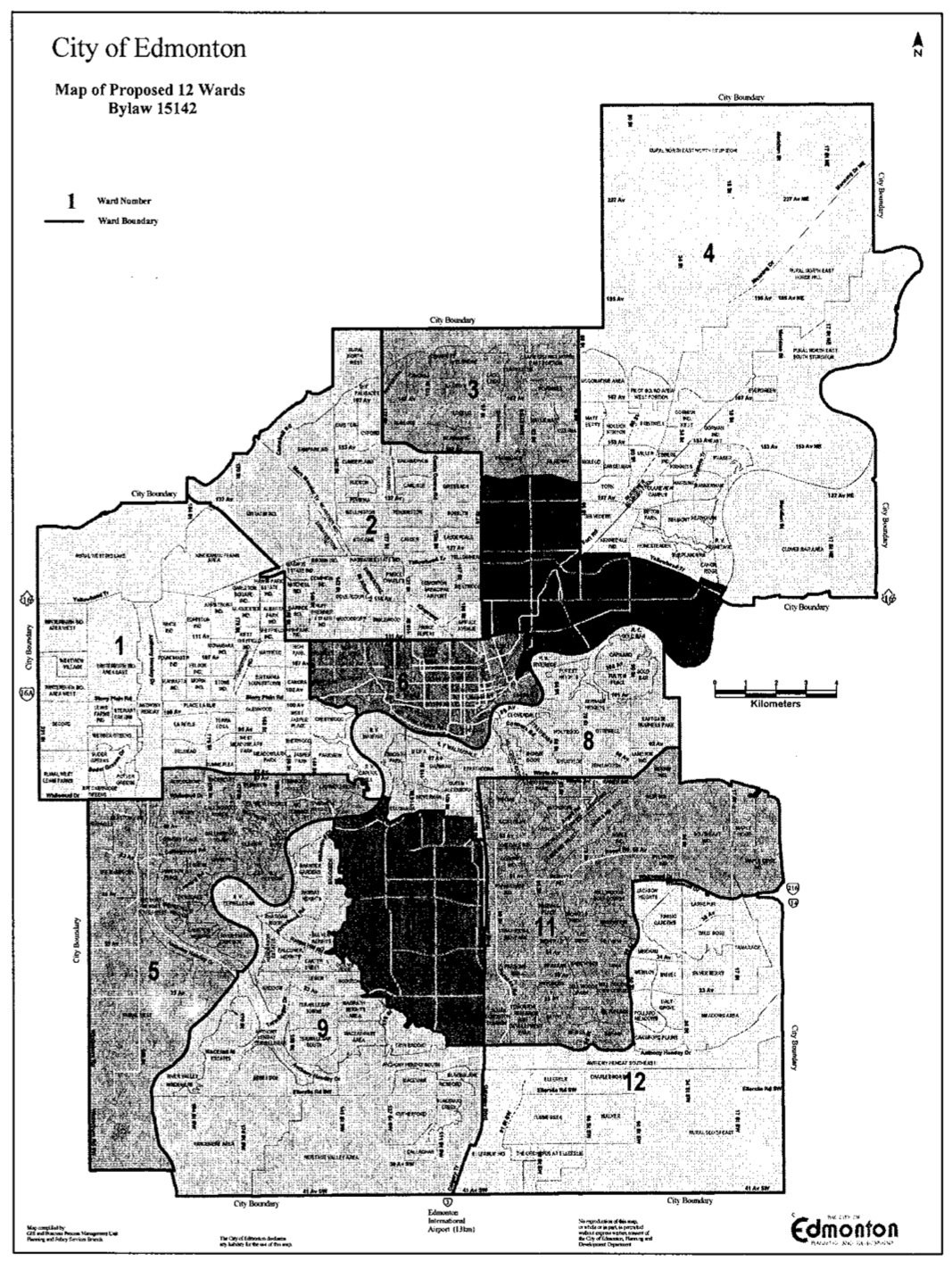
I’m trying to track down or create a good quality map of the 12 wards, but this’ll have to do for now. What I’d really love is lat/long coordinates for each ward. If you have something better than that graphic, let me know!

Go do something useful or interesting with this data, and then tell me about it. I’m looking to collect local examples to strengthen the case for open data at the City of Edmonton!

UPDATE: Here’s a better map in PDF format.

UPDATE2: Here’s an even better color map showing the wards and neighbourhoods in PDF format.

Edmonton Indy Twitter Contest!

If you’re on Twitter, you’ve probably come across the Edmonton Stories Twitter Indy Contest. If you’re not, this is as good a reason as any to join! All you have to do is tweet your Edmonton Story and use the #yegmoment hashtag, and you could win a lap around the track!

Two lucky winners will ride with an Indy Racing League licensed driver as they make a lap around the track, experiencing the speed, thrills, turns and straight-aways firsthand. Each winner will also receive a double guest pass to the Edmonton Indy.

Your tweet should describe a moment that captures why Edmonton is special to you and explain what that moment said to you about our city.

You can see an updated list of entries here. Be creative!

I’m writing about this for two reasons. First, because I’m one of the three judges for the contest, along with iNews880’s Brittney Le Blanc and the Edmonton Journal’s Paula Simons. We have the challenge of going through all the tweets to pick two winners! Second, because I think this is a great use of social media. EdmontonStories.ca has been active on Twitter, tweeting about the city and the stories that citizens have submitted. They could easily have stopped there, but they didn’t. That’s what I like about this contest – they found a way to use Twitter effectively for more than just broadcasting.

The deadline to enter is tonight at 11:59 PM MDT. You can enter as many times as you like, so get tweeting! Full rules and regulations are here in PDF. The Rexall Edmonton Indy starts Friday and runs through Sunday.

Good luck!

UPDATE: The winners have been announced! Congrats to @prairiepaperie and @livingsanctuary!

Calgary takes first steps toward becoming an Open City

A motion will go before Calgary’s City Council next week that outlines the first steps in the process of making Calgary an Open City. Calgary follows in the footsteps of Vancouver, which passed a similar motion back in May. DJ has all the details on the Calgary motion here. I think it’s pretty cool that the news is first announced on a blog!

Calgary’s motion will result in a report from City Administration to be presented to Council no later than December 2009, outlining the overall strategy for making Calgary an open city. In particular, the report will identify “opportunities to make more of The City’s data open and accessible while respecting privacy and security concerns , and ensuring that data is available through use of open standards, interfaces and formats.” Other aspects of the strategy will include increasing online citizen participation, procuring and supporting open source technologies, and increasing the number of City services available online.

This is exciting news for developers and other creative professionals in Calgary and elsewhere. I’ve been pushing for open data in Edmonton recently, and I really hope we’re not too far behind our southern neighbours on this issue. There are a number of advantages to making data available in open standards and formats:

  • Citizens can subscribe to data that is of interest to them
  • Data can be mashed together in new ways, revealing new information
  • Visualization of data can help citizens make better decisions
  • Citizens can work together to organize data
  • Government can learn more about its data from citizen contributions

Additionally, using well-understood, open formats such as XML or CSV helps to “future-proof” the data. You don’t need proprietary technology to read a CSV file – any programming language or software platform will work.

One issue that isn’t mentioned in Calgary’s motion but which is very important, is licensing. It’s important that when Calgary does make data available, that it does so in the least restrictive way possible. Either public domain, or creative commons, or something similar. It would be a shame if they made a ton of data available and then had ridiculous terms of use around it.

Open data is about empowering citizens to work with their governments. I’m encouraged by the recent interest among municipalities in Canada, and I hope the trend continues.