Metro Line LRT delayed again until Spring 2015, maybe, hopefully

The City held a press conference late this afternoon to provide an update on the Metro Line LRT extension to NAIT. They should have waited until February 2, because once again we learned that the opening of the new line has been delayed. The new target date is May 2015, more than a full year after the extension was originally slated to open.

2014-12-07 McEwan Station
MacEwan LRT Station in December 2014, photo by Darren Kirby

Today’s news release thanked Edmontonians for their patience and used much more careful language than previous delay announcements:

“Based on the most recent testing schedule provided by Thales Rail Signalling Solutions Inc., the City of Edmonton is cautiously optimistic the Metro Line LRT will open to public service in spring 2015.”

Cautiously optimistic is a long way from confident. The reason for the delay is the same thing we’ve heard since the project was first delayed – the contractor is having problems with the signaling system:

“Thales appreciates the patience of everyone in Edmonton as we work to complete the signaling system for the Metro Line,” says Thales Vice President Mario Peloquin. “We understand how important this essential transportation infrastructure is for the people of Edmonton, and we remain committed to delivering an outstanding product that is safe, efficient and reliable, and that will serve the city for generations to come.”

The signaling system is responsible for controlling train traffic. It tracks train movements and keeps them on schedule. Part of the challenge is that with the Metro Line, the City is changing the signaling system from a traditional fixed block system to a more modern communications-based train control system, or CBTC. It’s this new signaling system that will enable trains on the Metro and Capital lines to share the same tracks.

Even though construction completed on time and $90 million under budget, the Metro Line still isn’t open. The project has been delayed numerous times over the last year or so:

  • In September 2013, everything seemed on track for an April 2014 opening.
  • In December 2013, the opening was delayed a few months until Spring 2014.
  • In the Spring of 2014, the opening was further delayed until the end of the year. That schedule was reaffirmed over the summer.
  • In October 2014, the opening was delayed again, with February 2015 identified as the earliest possible date.
  • Now, in January 2015, the opening has been delayed until May 2015.

Needless to say, there’s very little confidence in the latest target date.

New Edmonton Arena Construction
MacEwan LRT Station next to the new downtown arena, September 2014

It was in October 2014 that Mayor Iveson called the delays “unacceptable” and asked the City Auditor to review how the project had been managed. Since then, the City has held back $20 million from the $55 million contract with Thales, and the auditor has been investigating.

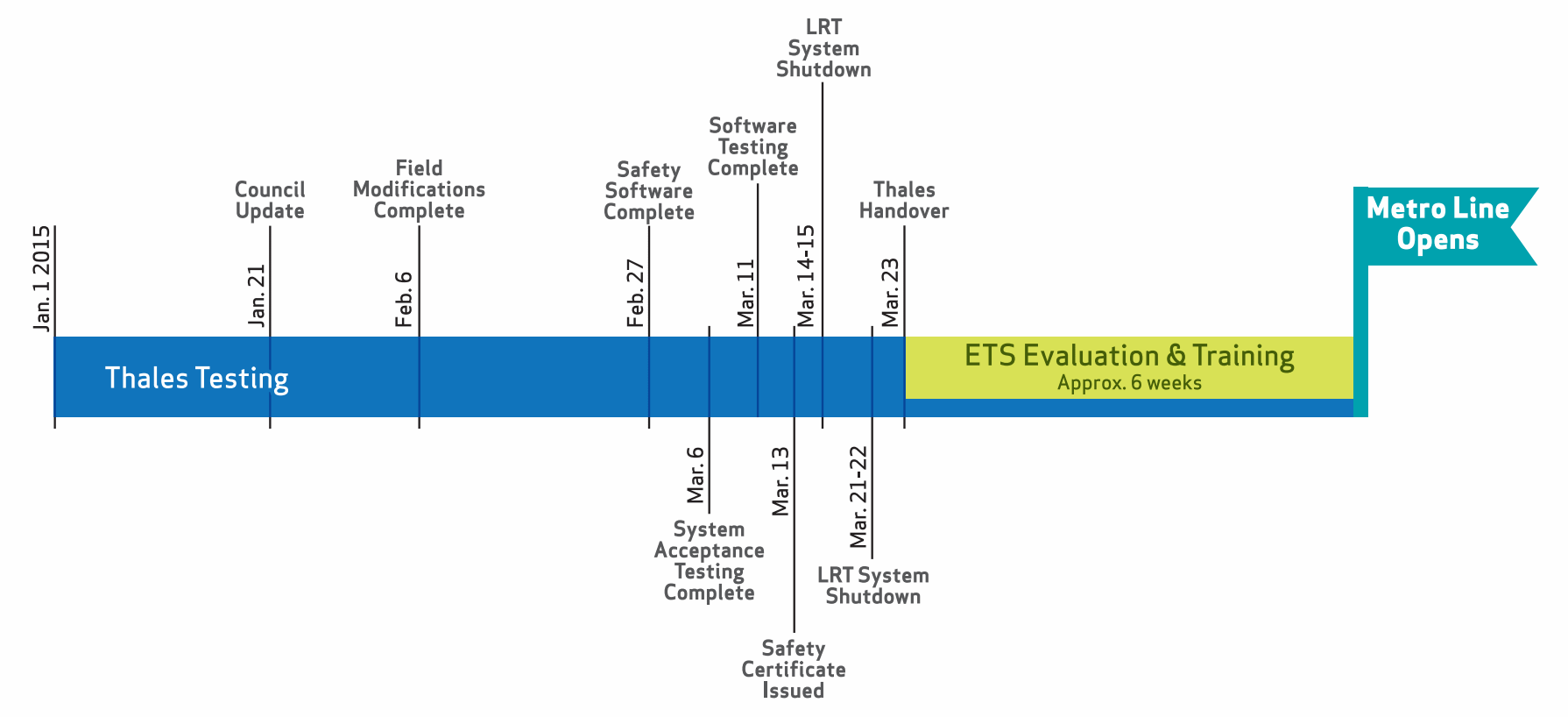
Now the City says that the latest schedule from Thales would have the handover of the signaling system take place by March 23, 2015. If by some miracle Thales is actually able to meet that date, the City would need approximately 6 weeks to evaluate the system and complete staff training.

“We are very concerned with the ongoing delay of the Metro Line and will continue doing everything we can to hold Thales to their new schedule. Our goal remains the same: to open the Metro Line for safe, reliable public service as quickly as possible.”

On the Metro Line LRT site, the City has made available a slide deck and an FAQ, both in PDF.

metro line delayed

The FAQ tries to explain what has happened and attempts to provide some confidence that the City is providing “increased” project oversight to ensure it gets done. After the number of delays this project has experienced, you have to wonder if sticking with Thales is the right approach, but that’s what the City is doing:

“At present, our best option is to continue supporting Thales to deliver the signaling system. Our expectation is that Thales will meet its commitments. The City has strict project oversight to ensure they do so. If they fail to meet a milestone or if testing does not proceed according to schedule, the City will hold Thales to account.”

Let’s hope the sunk cost fallacy isn’t at play here.

The City says they are “tracking milestones on a daily basis” and have increased resources on the project. “We’re working diligently to help Thales deliver the signaling system by March 23, 2015.” The FAQ even says the City has explored the option of using people to manage train movements in an effort to get the new line open more quickly, but they ultimately decided that approach did not meet requirements for cost, safety, reliability, or efficiency.

Curiously, the final question in the FAQ is, “are you feeling badly about the delay, City of Edmonton?” Here’s the answer:

“Everyone involved with the Metro Line project regrets the delay of this exciting transportation project. We ask for your patience and hope you’ll continue to bear with us as we work towards bringing the Metro Line into service in spring 2015.”

So we’ll have to wait until late March before we can be sure the Spring 2015 opening is actually going to happen. In the meantime, we’d better make sure the same problems aren’t going to plague the Valley Line LRT extension.

City Council opens the door for Uber to operate legally in Edmonton

After a marathon meeting that lasted until nearly 10pm, Council eventually decided to look at new regulations that could make Uber legal while enforcing the existing bylaws in the meantime. The motion put forward by Councillor Knack also seeks additional data on the taxi industry and directs Administration to look at issuing additional taxi plates. “The world has evolved and people want choice,” he said.

Here’s the motion that Council passed unanimously this evening:

  1. That Administration work with the Transportation Network Companies and other stakeholders to provide a report, before the end of the third quarter, to include a draft bylaw that would establish public safety rules and regulations for the operation of Transportation Network Companies.
  2. That, in parallel with the work in part 1, Administration work with the Taxi Industry to provide a report, before the end of the third quarter, with a draft bylaw to amend the Vehicle for Hire Bylaw 14700 to provide for improved taxi service standards, and with recommendations for issuance of additional taxi plates.
  3. That, in the meantime, Administration request that UBER temporarily suspend operations in the Edmonton market and if they refuse, Administration take all steps necessary to apply for an injunction against UBER to prevent its unlawful operation in Edmonton until such time as UBER complies with the applicable City of Edmonton bylaws.
  4. That Administration work with the taxi brokers to obtain data from dispatch systems on number of taxis dispatched at given times, wait times for taxis, and other information relevant to allow for determination of appropriate customer service standards and expectations.

With bullet #1, the motion seeks to create rules that would allow companies like Uber to operate legally in Edmonton. With bullet #2, it seeks to address the shortcomings that currently exist in Edmonton’s taxi industry.

“I think this approach makes sense because it leaves the City’s options open,” said Mayor Don Iveson before the motion was voted on. He also reiterated the need to have more data in order to make better decisions in the future. The mayor said it makes sense to ask companies like Uber to abide by the regulations that are in place while the City works to align them with the market.

Uber is currently operating illegally in Edmonton. It launched its service back in December and the City declared that any Uber car caught operating would be considered a “bandit taxi” and face a $1,000 fine. Uber has argued consistently that its technology and business model are fundamentally different and are therefore not explicitly covered by provincial or municipal regulations. Sometimes called a ridesharing app, a more general term for Uber is transportation network company.

Yellow Cab
Photo by Dave Sutherland

The discussion centered around the Vehicle for Hire Bylaw 14700, which “regulates taxi brokers, drivers, and vehicles, but does not regulate passengers.” From the report:

“The number of allowable taxi plates within the city was frozen in 1995 to facilitate a financially viable taxi industry. The taxi rates are controlled by the City of Edmonton to ensure consumer price protection.”

Edmonton caps the number of taxi permits or plates at 1,319. It has increased the number of plates allowed a few times over the years, but the City recognizes there are still too few plates to meet demand. A report from 2007 suggests that Edmonton is 177 plates short. Council mentioned repeatedly that they have heard from constituents that there aren’t enough taxis and that wait times are too long.

At one point, Councillor Scott McKeen asked Edmonton Taxi Group president Phil Strong if the industry has been lobbying for more plates to be issued, but of course they haven’t been. “I wouldn’t know where to go,” he claimed. The issue is that by making more plates available, the value of each declines.

“Almost everybody agrees the status quo doesn’t work,” the mayor said.

There was quite a bit of discussion about the idea that the City create its own app for taxi services. The problem with that in my opinion is that what makes Uber attractive is that it works in hundreds of cities. That’s great for Edmontonians travelling elsewhere, and for visitors to our city too. A local-only app would not benefit from the economies of scale that Uber provides.

There was also a lot of discussion about driver’s licenses and insurance. Most of us have Class 5 licenses, but in order to transport passengers for profit, you need to carry a Class 4 license. You can learn more in the Commercial Drivers Guide PDF. On the topic of insurance, there was some confusion about whether or not Uber’s policy, which only kicks in if a driver’s personal insurance fails to cover an accident, was sufficient. It has not yet been tested in Canada.

Most of the speakers present at the meeting today were from the taxi industry, either drivers or representatives of the brokers. Uber’s sole representative was Chris Schafer, the Public Policy Manager for Uber in Canada. It was a packed house for most of the meeting.

//platform.twitter.com/widgets.js

The reports that the motion seeks will include a draft bylaw, so don’t expect them to return to Council until sometime in the fall. In the meantime you can try to take Uber, but know that they are operating illegally.

Media Monday Edmonton: Update #138

Here’s my latest update on local media stuff:

You can follow Edmonton media news on Twitter using the hashtag #yegmedia. For a great overview of the global media landscape, check out Mediagazer.

So, what have I missed? What’s new and interesting in the world of Edmonton media? Let me know!

You can see past Media Monday Edmonton entries here.

Edmonton Notes for 1/18/2015

Here are my weekly Edmonton notes:

Headlines

2015-01-17 Winter Garden
The Winter Garden under construction, photo by Darren Kirby

Upcoming Events

Edmonton Economic Development Luncheon
Premier Prentice at EEDC’s Impact Luncheon 2015, photo by Chris Schwarz

Coming up at City Council: January 19-23, 2015

The winter break is over and Council is getting back to business next week.

Agendas for upcoming City Council meetings are generally released on Thursday afternoons. I like to take a look to see what Council will be discussing, and I figured I should share that here. Below you’ll find links to the meetings taking place next week, as well as links to and thoughts on some agenda items that caught my eye.
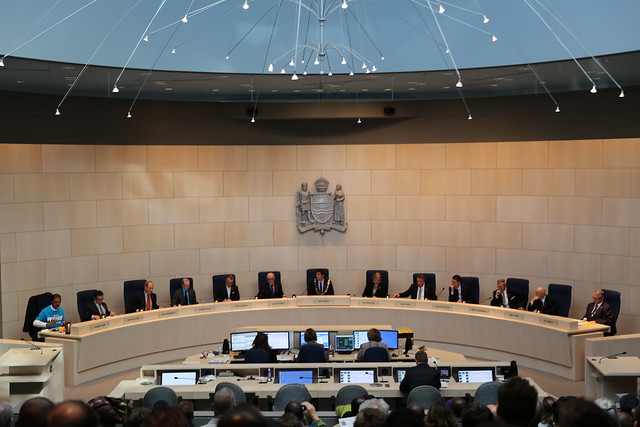
City Council Swearing In 2013-2017

Monday, January 19, 2015

Council starts the week with a Community Services Committee meeting scheduled to take place all day.

Civic Precinct Master Plan – Addressing Current Square Design

The situation here is that back in April 2013, a number of festivals expressed concern with the proposed Civic Precinct Master Plan. The City hired a consultant as a result to work to identify changes. Festival groups had issues with being limited to 99 Street for programming, concern about safety when the LRT opens along 102 Avenue, and concern about additional trees resulting in limited movement between spaces. Businesses around the Square are “largely supportive of the principles of the Civic Precinct Master Plan” the report says. In short, the City is going to move ahead with some aspects of the plan, but focused mainly on programming, operations, and governance. Revising and advancing the entire plan is “not recommended” at the moment and will be revisited once LRT construction is complete and the new line is operational.

Edmonton Arts Council Grant Recommendations

The Edmonton Arts Council has recommended that eight projects receive funding under the Cultural Diversity in the Arts program for a total of $86,700: May Banh, William Belcourt, Sofia Cristanti, Yong Fei Guan, Todd Houseman, Erika Namsechi, Yukari Meldrum, and Elisa Marina Mair Sanchez. They have also recommended $29,500 in Festival Seed Operating Grants for 2015 for the Edmonton Latin Festival, Relish Film Festival, and Sand on Whyte.

Edmonton Heritage Council Grant Recommendations

The Edmonton Heritage Council has recommended a little over $363,000 in their Operational, Project, Seed Project, and Travel grant programs. Operational grants would be going to the Alberta Aviation Museum Association, Alberta Genealogical Society, Alberta Labour History Institute, Alberta Pioneer Railway Association, Edmonton and District Historical Society, Edmonton Radial Railway Society, Edmonton Telephone Historical Information Centre Foundation, Friends of Rutherford House Society, The Olde Towne Beverly Historical Society, and Societe historique francophone de l’Alberta. One of the most interesting projects to receive a grant recommendation is ECVO’s History of Edmonton’s Human Services Sector, to “document the history of the nonprofit human services sector in Edmonton.”

Other

Here are some of the other agenda items that caught my eye:

  • Council will likely approve a recommendation to have Mayor Iveson write to the Premier and Minister of Education to share the Youth Council’s strong opposition to Bill 10 in its current form. The report states that “Bill 10 will adversely affect the lives of some of Edmonton’s most vulnerable youth and undermine the principles of inclusiveness and diversity in Alberta schools.”
  • Canada Post is undertaking the conversion to community mailboxes in Edmonton this year. The City had asked if mail carriers might use the 311 App to report incidents and issues they observe, but Canada Post has come back and basically said no.
  • It doesn’t sound like big changes are underway for recognition of citizens, but the City is considering a digital museum and Wall of Fame in City Hall.

There will also be a response to an inquiry from Mayor Iveson on charitable donations to Community Leagues, but the report for that is not yet available.

A large number of reports have been rescheduled to later dates so if you were looking for those you’ll have to wait:

  • Support to Not-for-Profit Organizations (M. Nickel) – February 23
  • Entrance Signage – March 9
  • Status Update on the New Africa Centre Facility and Strategy for the Involvement of the African Community – March 9
  • Community League Collaboration – March 23
  • Single-use Recreation Fees – April 20
  • Lewis Farms Recreation Centre – Program Statement and Recreation Facility Master Plan Updates – November 9

Tuesday, January 20, 2015

On Tuesday Council will be holding its next Executive Committee meeting, also scheduled to go all day. Here are some agenda items that caught my eye:

Municipal Development Corporation Business Plan

The recommendation here is that Administration proceed with establishing a municipally owned and controlled for-profit land development corporation “to focus on City-building initiatives in addition to earning profits.” The report includes a 73 page business case for the creation of a Municipal Development Corporation (MDC) prepared by Deloitte. Benefits of an MDC include:

  • The MDC could act “more closely like a private company” to benefit from less constraints and capitalize on private sector expertise.
  • The MDC could be a catalyst to bring underutilized sites to market.
  • The MDC could “generate a financial return and also execute on key city-building objectives.”

The City currently has 9,355 land holdings across Edmonton, and estimates suggest nearly 200 could eventually be appropriate for the MDC, though roughly 30 would be appropriate to seed the corporation.

A list of possible properties that could be transferred to the MDC will be presented at the meeting, but is not available under sections 24 and 25 of the FOIPP act. Properties within West Rossdale and the Edmonton Research Park are possible candidates.

If Council approves the recommendation to establish the MDC, Administration will return by the end of Q2 with a more detailed business plan for Council’s consideration. The initiative could require up to $2 million in funding over the next two years for startup costs. The creation of an MDC also requires approval from the Province.

Uber & Vehicle-for-Hire Regulations

The highly anticipated report on vehicle-for-hire regulations and Uber is now available, and while it talks about the regulations and the taxi industry, it doesn’t say much about how the City is going to deal with Uber. The report notes that a 2007 study found that Edmonton should have 17 taxis per 10,000 people, but 2007 was a long time ago and there’s no updated information included. We currently have 15 taxis per 10,000 people, which means we have a shortfall of roughly 177 taxi plates.

The report does talk about some considerations with UberX, including: drivers and vehicles are unregulated, so no background checks are done; drivers with a Class 5 license cannot transport passengers for hire in Alberta; vehicles are not required to obtain a mechanical inspection on a regular basis; and, drivers can carry personal liability insurance rather than commercial insurance.

An attachment called “Options for Edmonton” outlines the following “options that the City of Edmonton could pursue to improve overall taxi services”:

  • Release a close number of night plates
  • Release night plates with no cap
  • Release winter plates
  • Release accessible taxi plates
  • Release regular plates
  • Allow for taxis and drivers from nearby jurisdictions to be licensed to travel from Edmonton to home
  • Encourage executive car services by reducing minimum fares, setting lower pre-booking time frame
  • Ride Share Services (essentially a modified shuttle service)
  • Open system: remove the cap on taxi license plates
  • City of Edmonton to develop its own app

Notably absent from that list? Any mention of updating the regulations to make services like Uber and Lyft legal! Nor is there any discussion of the benefits of services like Uber.

It should be an interesting discussion!

Ballpark Update and State of Baseball in Edmonton

Executive Committee had previously requested information about Telus Field, and this report is the result. “Baseball has been part of Edmonton’s social and sporting scene since the late 1880’s,” the report says. The Edmonton Prospects (a Western Major Baseball League team) played at Telus Field in 2013 and 2014, and are negotiating terms for their 2015 schedule. The report also includes an attachment called The State of Baseball Report, prepared by RC Strategies, which assesses “the current state of professional and high-level amateur baseball in Edmonton.”

Edmonton Capitals

The City owns the ballpark, which it leases to the Oilers Entertainment Group, which in turn subleases it to the Edmonton Prospects. A condition assessment was completed in 2013 and found that an investment of $1.3 million will be required over the next ten years. The report does not recommend any specific action at this time, but suggests that Administration could further explore options including the creation of a business case to make the ballpark more viable, physical changes to the ballpark, and also the implications of removing or replacing it.

River Valley Access Mechanical Lift Options

This report provides an update on the proposal to “advance the Mechanized Access and the Touch the Water Promenade projects.” Council previously approved $34.4 million for the River Valley Alliance Connective Infrastructure, $24 million of which will go to the West Rossdale Mechanized Access Project with the remainder going to the Touch the Water Promenade. Both projects are required to be completed by 2017. The City will return to Executive Committee in Q2 with another project update.

Other

A few of the other reports include:

Here too, a few reports were delayed:

  • Building Canada Fund Projects Yellowhead Trail Improvements – February 3
  • TOD on Coliseum LRT & Northlands – February 3
  • Amendments to Policy C533 – Revolving Industrial Servicing Fund – February 24
  • Designation, Preservation & Restoration of McDougall United Church – February 24
  • 109 Street Corridor ARP – March 24
  • Recreation Lake in Blatchford – March 24
  • Greyhound Main Depot Site Operations – April 21

Wednesday, January 21, 2015

The next Transportation Committee meeting is scheduled to take place on Wednesday afternoon and to run into Thursday if necessary.

Valley Line LRT & Churchill Square

There are two reports here, one that provides information on the Valley Line LRT Churchill Station structure and integration with the Civic Precinct, and one that provides information on the impacts of the Valley Line Stage 1 construction on Churchill Square and its users.

Preliminary Engineering for the Churchill Connection Structure was completed previously, and here’s an aerial rendering of what it might look like:

churchill station

The successful P3 proposal is expected to be selected by the end of the year, with major construction set to begin in 2016. The Valley Line LRT Stage 1 is not expected to be complete until 2020.

It is expected that 102 Avenue will be totally closed for LRT construction starting in 2016 and lasting until the project is done in 2020. Churchill Square itself will remain open, with only temporary partial closures as necessary. Any closures will be limited to the period from October 1, 2016 to April 30, 2018 in an attempt to minimize the impact on festivals (affects just the 2017 summer festival season).

The Valley Line Public Engagement Plan implementation will include opportunities for meetings, updates, and Citizen Working Groups to discuss the construction and its impact.

Metro Line Update

This report has not been made available under FOIPP, but the item is time specific at 3pm. Let’s hope that Council hears the line is ready to open soon, rather than that another delay is necessary.

Other

There’s a response to an inquiry from Councillor Nickel on the Customer Intake Model for DATS. It outlines the current policies and procedures for booking DATS trips and provides an update on the process to determine applicants’ eligibility for the service.

Tons of reports have been delayed here:

  • Installation of Traffic Lights – Criteria and Process – February 25
  • Hotel Street Parking Access – February 25
  • Parking Options 66 Avenue – 88 Street – February 25
  • LRT Funding Strategies for Other Lines – February 25
  • Streetlight Pole Maintenance and Replacement Program – March 11
  • Potholes in Back Alleys – March 25
  • Edmonton Transit System Advisory Board Bylaw – April 22
  • Bike Lane Infrastructure Engagement Plan – May 6
  • North/South Connections to 83 Avenue – October 28

Wednesday, January 21, 2015 – Special Council Meeting

City Council is holding a Special meeting on Wednesday morning to get an update from Administration on public engagement. They will no doubt talk about the Building the Momentum event which is scheduled to take place on Saturday, January 24 at the Shaw Conference Centre. You can learn more about the Council Initiative on Public Engagement and about Open City initiative on the City website.

Wrap-up

Ah, isn’t great to have Council back in session? You can keep track of City Council on Twitter using the #yegcc hashtag, and you can listen to or watch any Council meeting live online.

Recap: Edmonton’s Economic Impact Luncheon 2015

“Never waste a good crisis,” EEDC President & CEO Brad Ferguson told the hundreds of Edmonton business leaders gathered today at the Shaw Conference Centre for EEDC’s annual Impact luncheon. He channeled local business pioneer Frank Spinelli and said “it’s what you do in the good times that determines how well you perform in the bad times.” He argued that Edmonton and EEDC in particular have done a lot of great things over the last two years when times were good and that means the year ahead won’t be as bad as many anticipate.

A short while later, Premier Jim Prentice took to the stage and disagreed. “It is what we are going to do in the bad times that will determine how successful we’re going to be in the good times,” he said. The Premier talked about the need to change both the income and expense side of the equation, and cautioned that all Albertans will have a role to play in making it through a difficult time.

So which is it? Well, it’s probably a little bit of both. The feeling I was left with after today’s luncheon is that Edmonton has been doing the right things and will weather the coming storm better than the province as a whole.

impact 2015

Mayor Don Iveson brought greetings to start the event and offered his two cents on the economic situation, saying “there’s no reason to panic.” He said the Edmonton economy is becoming more resilient as it becomes more diverse and that “our city’s entrepreneurial spirit has never been stronger.”

The mayor also took the opportunity to call upon the Province to keep Edmonton in mind as it tries to address a shortfall in revenue. “City building, I believe, is Province building,” he said. Later, Premier Jim Prentice referred to the comment and said, “I couldn’t agree more with that.”

Before the keynote began, EEDC showed their Build It Here video, highlighting the fact that it can be customized for businesses to use in their own materials.

Keynote

Brad Ferguson delivered the keynote address today, which you can read online. He began by talking about 2014, calling it “a great year”. There was a lot of euphoria in 2013 and throughout most of last year, so EEDC asked itself a key question:

“What should an economic development authority do when it is not in the job creation business? What should we do in the good times that will help us when the economic cycle turns?”

And with that in mind, the organization focused on ten themes throughout 2014 “that would strengthen our economy over the long term.”

  1. Direct Flights
  2. External Marketing
  3. Downtown Density
  4. Entrepreneurial Ecosystem
  5. Foreign Investment
  6. Event Attraction
  7. Regional Collaboration
  8. Unified Voice
  9. National Positioning
  10. Building the team at EEDC

Brad talked about the way EIA and EEDC are working together so effectively now, which resulted in the KLM flight. He discussed the new approach to tourism and marketing. He mentioned the big announcements that were made recently and said “more than anything else, 2014 will be remembered as the year of downtown.” He talked about the importance of event attraction, saying that big events “create a rhythm and a pulse and an energy that builds excitement and confidence.” He praised the mayor’s leadership in the region and on speaking with a unified voice. And he referenced the many newspaper and magazine articles that have been popping up across the country talking about Edmonton’s transformation.

Brad had a lot of praise for his colleagues. “I am extremely proud of the team we have built at EEDC.” He said the organization has reduced the portion of its operating budget that comes from the City, from 43% when Brad took over to 38% today. Brad said they’re on track to reduce that even further to 33% by 2017.

He then talked about oil prices and what they mean for the economy. If you want to understand the roller coaster, read this passage:

“If we look back over the last 7 years: In 2006-2007 this place was on fire, the world economy was expanding, oil prices were high, and everything was rocking. Until in March 2007 Bear Stearns collapsed and in September of that same year Lehman Brothers collapsed, the biggest financial collapse in recent history. The price of oil went from $140 to $40 (a $100 dollar drop) in six months than then settling around $58 which created a population boom scenario in Alberta and in Edmonton starting in 2010, 2011 and 2012 when the WCS (Western Crude Select) pricing traded at a significant discount, now known as the Bitumen Bubble, followed by 2013-2014 where the price rose again to $95-$100 range while the world started to rebound, and then half way through 2014 the price started to dramatically drop as the global economy started to pick up, which has us moving from a budget crunch which can be addressed into a competitiveness crunch that is more structural and tends to last for quite some time.”

He did not mince words, saying “our revenue model at the provincial level continues to fail us.” Brad said he sympathized with the Premier though, as he inherited this problem. Still, he cautioned that unless we make changes now, we’ll be experiencing the same revenue volatility in the 2020s, 2030s, and 2040s. “It’s time to be humble being from Alberta,” Brad said. “And it is time to have a serious conversation about our financial picture and to make incremental changes to our tax structure.”

Brad predicted that in Edmonton, the year ahead will be better than most people are predicting. He said we’ll outperform Calgary, and while the Province’s budget will capture the headlines, “there are many positives in front of us that cannot be forgotten.”

He urged attendees to do more than hope for a return to $100 oil prices. “We’re planning for a very competitive world and we need to operate with more intention than ever before.”

Q&A with Premier Prentice

After the keynote, Premier Jim Prentice joined Brad on stage for a fireside chat, sans fire. “This is a world class city, with world class leadership,” he said. He disagreed with Brad about the good times/bad times point-of-view, then said that “this year will be about leadership and confidence.” Premier Prentice predicted that 2015 will be a challenging year, but also a transformational one.

The Conference Board of Canada has predicted that Alberta will experience a recession in 2015, but Premier Prentice disagrees. “We are tough, we are resilient, we are entrepreneurial, we have the capacity to get through this, and we will get through this.”

At times the Premier seemed to be doing exactly what Brad cautioned against – hoping for a return to $100 oil. “The best solution for low oil prices is low oil prices, they will come back,” he said at one point. At other times, he was very clear that action was necessary. “People have had enough of the roller coaster,” he said. He has struck a new budget committee and confirmed that “everything is on the table.”

The Premier was also very honest about the challenges faced by the Province. “We have not done a good job with our public finances,” he said. “We have been living beyond our means.” He said that needs to change, and that “we are living on resource revenue that properly belongs to our children and our grandchildren.” He said the amount we spend in Alberta on health care “is not sustainable” and added that “we’re going to have to contain expenditures as we move forward.”

Premier Prentice did not shy away from the topic of taxation, either. Asked if the market is ready for a conversation about it, the Premier replied, “I certainly hope so.” He suggested that most Albertans probably don’t support the idea of a provincial sales tax, but did say that now is the time to discuss it. “We welcome the views of all Albertans on taxation,” he said. “Now is the time to speak up about this.”

Perhaps thinking ahead to the budget, Premier Prentice talked about what to expect. “First and foremost we need a fiscal plan than Albertans can look at and have certainty,” he said. And knowing that the roller coaster cannot continue, “it has to be a ten year plan.” He said that oil “may always be the family business” but said that diversification is important.

Given the opportunity to offer some closing thoughts, Premier Prentice said “you don’t win a bigger lottery than to be an Albertan.” He ended on an optimistic, hopeful note. “This is a remarkable province and we have a remarkable future.”

Extra Notes

EEDC Board Chair Barry Travers brought greetings on behalf of the board of directors, and introduced all of his colleagues. The event was hosted by Grant Ainsley and featured a giant Twitter wall powered by Freeman Audio Visual and SAM that received rave reviews from attendees. Everyone received a copy of “Navigating Your Economic Future in Edmonton: A Guide for Business Leaders”. The entire event was livestreamed by the Edmonton Journal, which you can watch here.

For additional context on this story, check out the following posts:

Media Monday Edmonton: Update #137

Here’s my latest update on local media stuff:

You can follow Edmonton media news on Twitter using the hashtag #yegmedia. For a great overview of the global media landscape, check out Mediagazer.

So, what have I missed? What’s new and interesting in the world of Edmonton media? Let me know!

You can see past Media Monday Edmonton entries here.

Edmonton Notes for 1/11/2015

Here are my weekly Edmonton notes:

Headlines

2015-01-08 Kelly-Ramsey
Kelly Ramsey by Darren Kirby

Upcoming Events

Code Blue
Code Blue by Jeff Wallace

An update on the initiative to end poverty in Edmonton

The task force for the elimination of poverty in Edmonton got underway last March. Mayor Iveson spoke about the initiative in his State of the City address, and a week later City Council formally established the task force. A lot has happened since then, and the year ahead looks to be an important one. Here’s an overview of the work that took place in 2014 and a look at what’s to come.

Mayor’s Symposium on Poverty

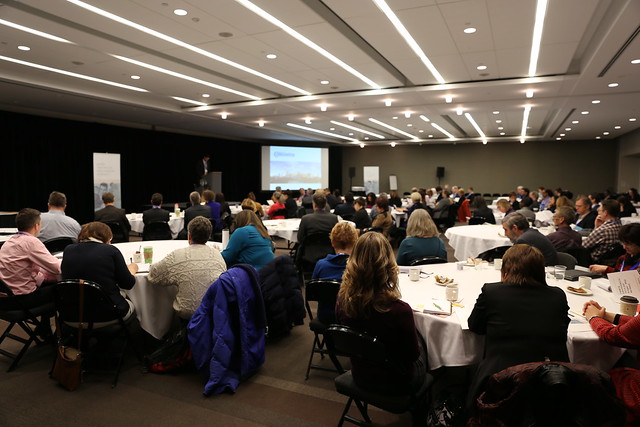
Following the establishment of the task force, the Mayor’s Symposium on Poverty was held on March 20, 2014. Roughly 130 Edmontonians came together at the Shaw Conference Centre to discuss the new task force and to “tap into the wisdom of the community to set the foundation” for its work. Mayor Iveson opened the event, and said “this may be the most extraordinary Make Something Edmonton of all time.”

Guest speaker Dr. John Rook spoke about ‘The City that will End Poverty’, sharing insights and stories from his experience leading the plan to end homelessness in Calgary. He praised the mayor for making poverty elimination a priority, and said “I know with your bold leadership that Edmonton will be a city where poverty is not an enigma.” You can read his full remarks in the symposium report.

Mayor's Symposium on Poverty

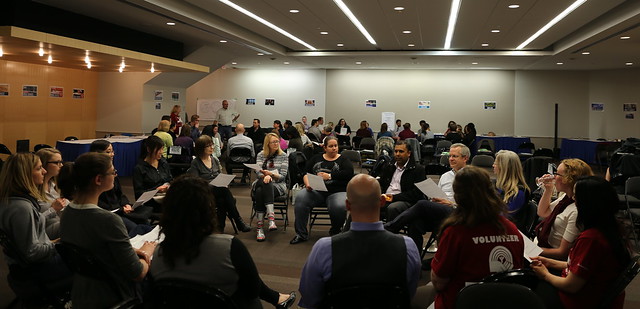
Afterward, the crowd broke into smaller discussion groups to talk about some of the key themes, like health or transit. The report includes a summary of their discussions, as well as some broader conclusions:

“The overarching goal of ending poverty, however, is an ambitious one. The importance of advocacy and lobbying with all orders of government surfaced throughout the discussion groups, because in many cases a wholesale policy shift will be necessary in creating the kind of change that participants talked about.”

I attended and had some great discussions throughout the day. I left feeling optimistic but also very aware of the incredible amount of work ahead.

Task Force & Round Table Meetings

The Mayor’s Task Force to Eliminate Poverty in Edmonton met eight times in 2014 – you can find the meeting agendas and minutes here. They also established two round tables, one focused on Information & Research and one focused on Aboriginal Edmontonians, which met five and six times, respectively. Finally, a Communications and Engagement Committee was established (which I am a member of) and met a few times.

Task Force Working Groups

Over the summer, the task force established working groups as an approach for involving more Edmontonians in the creation of recommendations for eliminating poverty.

“Working Groups will explore, discuss, develop and ultimately bring forward recommendations and associated implementation strategies connected to its focal area that are needed to address and ultimately eliminate poverty in Edmonton. Each Working Group will identify and propose a variety of recommendations for action.”

An orientation event was held on August 26 where community stakeholders were brought up-to-date on the work of the task force and a discussion was held about the focal areas that would form the basis of the working groups. Six were established:

  • Early Childhood Development
  • Education
  • Community Well Being
  • Housing and Transportation
  • Income Security
  • Health and Wellness

In the fall, a 7th working group was formed, focused on Justice and Democratic Participation.

Each working group consists of roughly one to two dozen participants, and they have all met a few times throughout the final part of the year. Their work will continue throughout the early part of 2015, with the goal of finalizing recommendations for the task force by the end of March.

United Way Poverty Simulations

Ever since they brought the program to Edmonton in 2012, the United Way has hosted poverty simulations to help educate Edmontonians about what it’s like to live in poverty. In May, I co-hosted one of the simulations with Omar Mouallem. A few dozen young professionals joined us at the Shaw Conference Centre for the event.

United Way Poverty Simulation

The program has certainly evolved since I first participated in November 2012, but it’s just as eye-opening as ever. Again I was struck by the importance of transportation and the challenges that people living in poverty face as a result. I was also reminded of how hard it can be to live near the poverty line, where you’re just once unfortunate situation from not making ends meet.

I ran into a couple of young women after the event was over, and they admitted that they were skeptical before attending. How could a simulation do justice to those who live in poverty? Fortunately they found the experience educational and positive, and were glad they attended.

For upcoming poverty simulation dates and to learn more, check out the United Way website.

Live Below the Line

The Global Poverty Project held a five-day challenge in late April called Live Below the Line to live on just $1.75 per day for food and drink. Mayor Iveson, members of his staff, Councillor Knack, and Councillor Walters all took part. Together they raised more than $2200 for Raising the Village. The mayor spoke about the challenge on BT Edmonton:

Mayor Iveson wrote about his experience and said “this first-hand understanding of malnourishment has been extremely revealing.” He was glad at the awareness the challenge raised and said his “resolve both as Mayor of Edmonton and as a global citizen is only further strengthened to take action to eliminate poverty.”

EndPoverty Edmonton

In the fall, the task force adopted a new identity and established a presence on social media. EndPoverty Edmonton is the name that was chosen. You can follow @EndPovertyYEG on Twitter, on Facebook, and you can access the website at edmonton.ca/endpoverty.

endpoverty edmonton

The Twitter and Facebook accounts frequently share poverty-related news and links, so they’re slowly becoming great resources for anyone interested in the initiative.

Working Definition of Poverty

In September, the task force adopted its working definition of poverty:

“Edmontonians experience poverty when they lack or are denied economic, social and cultural resources to have a quality of life that sustains and facilitates full and meaningful participation in the community.”

You can read the full document which includes context, assumptions, a discussion on measurement, and an explanation, on the task force website.

What’s next?

The goal of the task force is to bring a draft poverty elimination plan before City Council in June. There’s a lot to do before that can happen.

The Edmonton Social Planning Council was contracted in the fall to develop a profile of poverty in Edmonton. The document will outline facts on poverty and will examine the pattern of poverty in our city. The profile is “also intended to provide benchmarks to monitor progress” of the poverty elimination plan. A draft was circulated toward the end of the year and it should be posted soon.

The working groups will present their recommendations to the task force in March, after which the task force will have to work to develop goals, outcomes, actions, and an implementation strategy. Throughout the spring, the poverty elimination plan will be drafted and a presentation for Council will be prepared. I understand a series of public engagement opportunities will take place along the way to help with that work.

The Communications and Engagement Committee has begun work on a new website for EndPoverty Edmonton. The goal is to be able to provide regular updates on the work of the task force, to engage Edmontonians who want to get involved, and to create a resource that will live on past the creation of the plan.

end poverty roadmap

The task force will also need to consider what happens after the plan is approved by Council. How will the plan be implemented? How will we engage more Edmontonians to join the cause and to take action? These and other important questions will be tackled in the months ahead.

For now, I would encourage you to follow EndPoverty Edmonton on Twitter and Facebook, so that you can find out about opportunities for engagement, the website launch, and more.

Get your digital house in order for 2015

Maybe you make new year’s resolutions, maybe you don’t. Either way, a new year always brings the feeling of starting fresh! That thing you’ve been putting off? Now’s the time to wipe the slate clean and tackle it. With that in mind, here are some tech-related things you might consider starting 2015 with.

Backup your stuff

It’s always a good idea to backup your stuff regularly, and now’s as good a time as any to set this up if you’ve been putting it off. Any backup strategy is better than no backup strategy, but ideally you’d have multiple copies of important data, stored locally and in a remote location. Have some really important stuff? Put it on a USB drive and stick it in a safe deposit box. For most data though, a combination of a local drive and the cloud is probably the way to go.

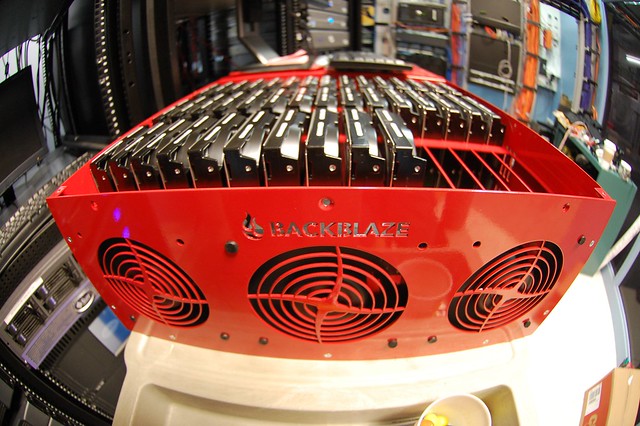
Backblaze 2.0 (fisheye)
Photo by ChrisDag

I have been using Backblaze for a couple of years now. For $5 per month or $50 per year, you get worry-free, unlimited backup. You simply install the software on your computer (Windows or Mac) and Backblaze will send everything up to the cloud automatically. You don’t need to worry about choosing specific folders to backup, and everything is encrypted. If you ever need to restore something, there are three options: you can download a zip file for free, you can pay $99 to get up to 128 GB sent on a USB flash drive, or you can pay $189 to get up to 4 TB sent on a hard drive. If you’ve ever lost something important, I think you’ll agree that Backblaze is totally worth the price.

Store stuff in the cloud

Related to the backup task, now’s a great time to take advantage of cloud storage. If you save stuff to the cloud regularly, I think you can worry about backing it up a little less. Saving data to the cloud is like backing it up immediately! You’ve probably been exposed to Dropbox and that’s a fine service but I’m a big fan of OneDrive.

OneDrive

With Dropbox you only get 2 GB of storage for free, but with OneDrive you get 15 GB and it’s really easy to earn more (and as an Office 365 subscriber I get unlimited storage). OneDrive supports Windows, Mac, Android, iOS, and Xbox. I use it for everything, especially OneNote as I wrote about last year. I can’t recommend it enough!

Another service to keep in mind is Mover. They’re a local company, and their service can help to migrate your data from one cloud storage provider to another. That might be useful if you plan on testing a few out. You could also use Mover’s backup service for $4 per month. Another great addition to your toolkit!

Get organized

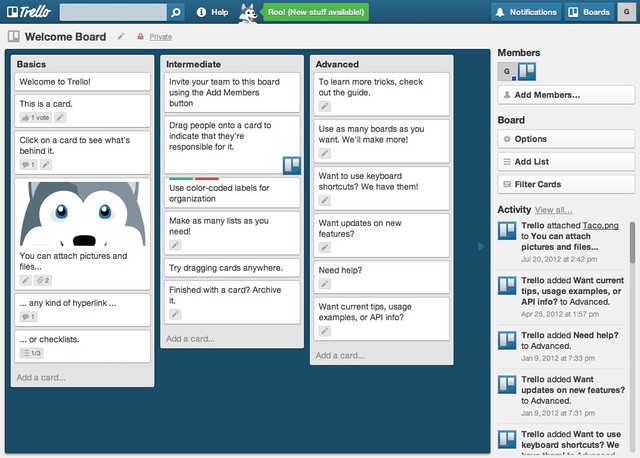
Are you a to-do-list person? Maybe you like sticky notes? Spreadsheets? There are countless ways to organize your tasks and ideas, and I have tried my share of them. But over the past year, I’ve found that Trello works best for me.

Trello

Trello is the right combination of simplicity and power. You can create boards, which contain lists, which contain cards. You can then move cards from list to list. A typical setup will have “To Do”, “Doing”, and “Done” lists. And let me tell you, moving a card into that “Done” list is super satisfying! Trello works across devices and platforms, has a great responsive website, and is free!

A local service that you might use in a similar fashion is Stormboard, which provides a shared, real-time sticky note whiteboard. It’s a great tool, focused mainly on collaborating with others (which Trello can do too). Check out the tour to see all that Stormboard can do.

If more traditional task lists are your thing, then I’d recommend Remember the Milk. The service has been around for 9 years already, which feels like an eternity in the web space, but it’s still here because it is excellent. It too works across devices and services, and has a pretty advanced set of features.

Improve your security

Security was a big topic last year and will continue to be in the headlines this year. It can seem incredibly daunting to try to protect yourself in the post-Snowden world, but here are two really important things you can do.

First, stop using the same password for everything. In the security world people often talk about “attack surface”, and a different password for every website you use really decreases your attack surface. Because if one service is hacked and you use the same password everywhere, then all of your other accounts would be vulnerable too!

If you only use one or two websites, it’s easy to remember a different password for each. But more than likely you use dozens of services. That’s where a tool called a password manager comes in. I use LastPass because it works across devices and uses strong encryption to keep my data safe (I have used Passpack in the past too). When I sign up for a new website or app, I add it to LastPass and use a strong password that it generates for me automatically. If I had to remember every password, I’d be much less likely to use a strong password (random combination of characters), so that’s another benefit of using a service like LastPass (I take it a step further and generate random answers to the very insecure password recovery questions too).

So, what happens if LastPass gets hacked? Good question. Certainly their approach to encryption is one level of protection, but two-factor authentication is another. And that’s my second security tip – enable two-factor authentication wherever possible!

2FA

Two-factor authentication (2FA) makes your accounts more secure by requiring additional information when logging in. Typically this is a code sent to you via text message or generated in a specific app, the idea being that even if someone had your password, they’d also need your phone to login. It takes a few extra seconds when logging into a website or app, but it’s worth it. There’s an excellent list of websites that support 2FA here. For services that support software-based 2FA rather than text messages, you’ll need an app like Google Authenticator on Android or iOS, or Authenticator on Windows Phone.

Maybe you don’t want to enable 2FA on every site, but you should enable it on your email account at minimum (and get a new one if yours doesn’t support 2FA). So much of our identity and security online is tied to our email accounts, so it’s a critical area to focus on. Apple, Google, Microsoft, and Yahoo all support 2FA. I also use it on key social media accounts on Twitter, Facebook, and LinkedIn. Of course I use it on financial services like PayPal wherever possible too.

Backup your data, start using cloud storage, use an online tool to get organized, and take some simple steps to improve your security. All the best in 2015!