Why we love living downtown

Sharon and I decided to collaborate on this post. Enjoy!

Sharon:

When Mack and I first started looking into buying a condo in 2009, we knew what we wanted. It took a bit of time, however, to get my dad (who was also our real estate agent), on board.

For our specified price range, he told us we would be able to purchase a spacious, sparkly new condo on the edge of the city. State of the art fixtures, modern design, and that pull of the pristine is attractive to many for a variety of reasons. But not for us, given our current work situation, lifestyle and values.

Mack:

We made a list of our priorities, and chief among them was location. It was really important for us to live downtown, or at least as close as possible, given that we both work in the downtown area and a significant number of our extracurricular activities take place downtown. We wanted a high-rise condo with two bedrooms (so that one could be my office), plenty of natural light, and a decent sized kitchen. Walking distance to the City Market was also on our list, and being downtown we knew access to public transit would be good.

4th St Promenade

We ended up purchasing a condo last July in The Century, located at 10180 104 Street (right beside Icon 2). Our 12th floor space is on the southeast corner of the building, facing 104 Street. We got the two bedrooms, a great kitchen, tons of natural light, and every Saturday morning the market is on our doorstep.

Walking to work

Sharon:

I have to admit I was a bit gleeful when I typed in our answers to the “commute length” question on the National Household Survey earlier this year. For me: 12 minutes. For Mack: 8 minutes.

I work in Central McDougall, just north of downtown, while Mack works in the core. I recognize that we are both very fortunate to work close to one another (and don’t require vehicles for our jobs), so neither of us has to compromise with commute times. But we also actively chose to situate ourselves in a location where walking to work would be convenient and the natural choice.

I do have the occasional off-site meeting or event to attend, and find it no problem to hop on transit to reach my destination.

City Market Downtown - May 29
104 Street & Jasper Avenue on a rainy day last year

Mack:

When I started at Questionmark, our office was in the northwest by The Brick’s warehouse and I lived in the southeast. Every day I drove the Whitemud there and back. Some days it could take an hour each way. Next I moved to Oliver, close to the old Molson Brewery. That cut my commute down, but I was still driving and depending on weather or traffic it could still take quite a while. When we moved the Questionmark office downtown to the Empire Building on Jasper Avenue and 101 Street, I started taking the bus every day. It took about 15 minutes and I would generally check email and Twitter on the way. Now that we live on 104 Street, I can walk to work in less than ten minutes.

I have a lot of early meetings, so I often work from home until mid morning or lunch and then head into the office for the rest of the day. That’s an option now because of our location. I can’t tell you how transformative that progressively smaller commute has been for me. Not only am I healthier because I’m walking every day, but I have so much more time for other things.

Public transit

Mack:

We’re a one car household and we rarely drive more than one day a week – usually an afternoon on the weekend to shop for things we can’t get at the market or to visit family. The rest of the time we’re either walking or riding the bus or train. We’re less than a block away from the Bay/Enterprise Square LRT station, and with luck we’re just a few years away from being a block or two from a new stop on the Downtown LRT Connector.

4th St Promenade

Of course downtown also has the best bus service in the city, so if we need to go somewhere the LRT can’t yet take us, a major route is not far away (the 1, 2, 7, 8 and 100 are just a few of the major routes that are a block or less from our place).

Front yard farmers’ market

Sharon:

An objection we often hear about not shopping locally is the inconvenience of it – nowhere to park, limited hours, selection that rewards early birds. By choosing to live right on 104 Street – the home of the City Market – that isn’t a problem for us. And in the same way we value public transportation, supporting local farmers is another one of our priorities, so it helps when the barrier of distance is removed.

City Market Opening Day 2011

When we lived in Oliver, we made the 35 minute trek to the City Market most Saturdays. It was a pleasant walk, but was definitely something we had to plan for, and schedule into our weekend. Now, even when we have other commitments on Saturdays, it’s not difficult for one of us to run downstairs, grab the essentials, and go on with our day.

Built for pedestrians

Mack:

Though our street didn’t start life as a pedestrian-friendly roadway, it certainly is now. Every Saturday the street is closed for the market, and while there has been talk of closing it to vehicular traffic permanently, that probably won’t happen. Still, I often remark that 104 Street is the most walkable street in the city.

4th St Promenade

The sidewalks are wide enough that you’ll find benches along the street, and restaurants like Lit and Tzin feature patios. The sidewalks also are level with the road, which reduces the feeling that there are separate pedestrian and vehicle spaces. The single lane of street parking on either side provides a nice safety buffer as you walk. The lights are placed along the sidewalks for pedestrians rather than in the middle for vehicles. And the trees, while not as tall or old as the ones that formed a beautiful canopy on 122 Street where we used to live, add that special something to the streetscape.

The result? Day or night, vehicles drive cautiously down 104 Street and jaywalking is the norm. Pedestrians rule here.

Location, location, location

Sharon:

104th is arguably the most exciting street in Edmonton right now. With two wine bars, a liquor store, a diner, a fantastic cafe, and an artisan bakery, it’s definitely a food lover’s paradise. And with an organic food store on the horizon, who knows what else is in store in the future?

Our street also doubles as a venue for some of Edmonton’s coolest events – the annual Al Fresco Block Party is a great example, or dance performances that transformed the street into a stage.
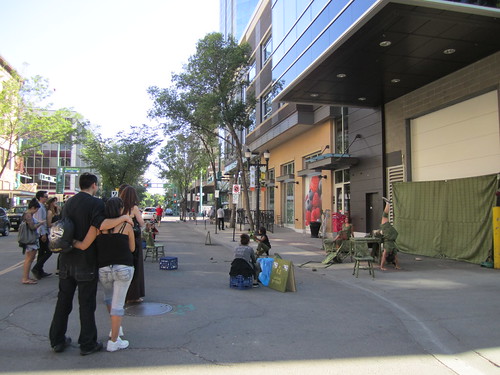
K.O. Dance Project
K.O. Dance Project on 104th

Downtown is often associated with a "lack” of green space, but given our proximity to the river valley, we’ve never really had an issue with that. And better yet, we have Beaver Hills House Park, just down the block from us. With its mature trees and water feature, the park really feels like an oasis, despite its seedy history.

Beaver Hills House Park

Amenities

Mack:

Coffee meetings are a regular part of most weeks for me. Very rarely do I need to meet outside the downtown core and when I do, I find the LRT or the bus works well enough to get me where I need to be. Most often though I can be found at Credo Coffee. The service is great, the vanilla latte is delicious, and it’s close to home – as in 100 steps or so. It’s my neighbourhood office!

Credo Coffee

I’m also a fan of the newest addition to our street, Bubble Buzz. When I need to get my hair cut, I stop in at blunt salon. If Sharon needs to pickup some bread on her way home, she visits Queen of Tarts. When we needed paint to create our red feature wall, we went to Carbon. Lunch or dinner in a pinch? Blue Plate Diner never disappoints. It’s amazing how much more time you have when you don’t have to spend as much of it travelling.

Sharon:

And though it isn’t quite the local food hub that it intended to be, there’s nothing handier than having Sobeys down the street from us. I can’t tell you the number of times it has saved us from having to drive down to a grocery store when we realized we were missing an ingredient for a recipe. It’s our corner store – something that has disappeared from so many of Edmonton’s neighbourhoods.

One year later

We had high expectations for our new place and neighbourhood when we moved in last July. Now a year later, it’s safe to say our expectations have been exceeded. We love living downtown!

Downtown
The view from our balcony

The Katz Group won’t build an Edmonton arena outside of downtown

The Charrette has a good discussion of the recent arena news. You’ve probably heard by now that the Katz Group is now on record saying they would consider alternate locations if the downtown arena doesn’t move ahead:

“We continue to believe that the best solution for the city and the Oilers is a downtown development and we remain committed to those negotiations. However, to the extent that we cannot be certain of the result of those negotiations, we are open to alternatives to find another long-term home for the Oilers in the Edmonton region.”

At this point a statement like that is nothing but political maneuvering. The Katz Group has never indicated they would look to build elsewhere prior to that statement, so I find it hard to believe it’s true. Here’s a look back at what I mean.

The Katz Group issued a press release on March 25, 2008 voicing its support for a new downtown arena complex. John Karvellas, Rexall Sports President, said:

“Rexall Sports shares the Committee’s view that a downtown arena complex can help revitalize Edmonton’s core and become the centrepiece for a number of major developments in the adjoining area, as similar projects have done for other cities.”

On August 31, 2009 the Katz Group appointed Patrick LaForge as its principal point of contact. He said:

“At the end of the day, we envision a vibrant downtown with new housing, retail, office and public space, hotels, residential housing and other amenities, all anchored by a world-class entertainment and sports venue. We envision a neighbourhood that is well-integrated with public transit, livable, walkable, environmentally responsible and a benefit to downtown, surrounding communities and all of Northern Alberta.”

On September 29, 2009 the revitalizedowntown.ca domain name was registered. The website didn’t launch until February 24, 2010. Here’s what I said at the time:

Annoyed with the domain http://www.revitalizedowntown.ca. Katz is certainly not the only person working to revitalize downtown #yeg.

Here’s what Bob Black said in a speech on February 9, 2010:

“In all of the public opinion research we have done, the opportunity to revitalize downtown is what has people most excited about this project. It is also the reason why the mayor and the city have made revitalizing downtown one of their top priorities.”

In a speech to City Council on July 21, 2010, here’s what Daryl Katz had to say:

“I believe we have a once in a generation opportunity — through the Oilers, and through the need for a new arena — to do something transformative for downtown and for our city.”

In December 2010, the answers to questions from Council were released. Councillor Thiele asked the Katz Group: If no new downtown arena district is built in Edmonton and the Oilers will not play in a renovated Rexall Place, where will they play? The response:

“Our singular focus is upon negotiating a mutually satisfactory agreement with the City of Edmonton that will facilitate the construction of a new downtown arena.  We are confident that this can be achieved.”

And here’s what Bob Black said on May 18, 2011 when the Katz Group and the City agreed on an agreement framework:

“From the beginning we have approached this project with the twin objectives of creating a major engine to drive the revitalization of downtown and of creating a model for the long term sustainability of the Oilers in Edmonton.”

So, after all that, they release a simple statement saying they’re exploring alternatives? I call bullshit.

But perhaps, as The Charrette pointed out, the damage is done. Either they’re lying about looking elsewhere, or they’ve been lying to us for three years about how important downtown is.

A better discussion about crime in Edmonton

Today I launched a website at www.everybodyinthiscityisarmed.com that highlights the sensational media coverage we’ve seen lately about homicides in Edmonton in the hopes that we can change the discussion for the better. At 34 and counting, there’s no question that we’re in a bad situation and that if we don’t take action (we already have) we could be on track for a record number of murders this year. I don’t think that is going to happen however, and I wrote about why back in early July. I see the new website as a continuation of that effort. Hopefully it’s a call to action for local media, to go from simply recording what has happened and lamenting the growing number to digging into why it has happened and what we can do about it. I hope it’s also a call to action for Edmontonians, to demand more meaningful coverage of crime in our city.

Over the weekend I saw people like Andy tweeting a link to this Canoe.ca article. The discussion seemed to pick up again yesterday, with Jeff’s discussion in the headlines and more tweeting from people like Adam. Lots of people were mentioning Bill Pitt, a criminologist at Grant MacEwan University. I started copying down some of his quotes and made notes beside them, based on research I had already done. One thing led to another, and after a few hours I had registered the domain and put up the web page. I asked Jeff, Sally, and Adam for their thoughts and ideas, and via email they helped me improve it. Sally did the logo and header, while Jeff and Adam helped me tweak the content and layout.

The page started out very focused on Bill Pitt, for a few reasons. He has said some absolutely outlandish things, perhaps most of all the statement “everybody in this city is armed.” I thought that phrase captured the sensationalism very well, so that’s why I went with it for the domain. I also focused on Pitt because I realized that all of the quotes I had copied down were easily refuted. Over the course of the evening however, the page became a little less focused on Pitt specifically and more on local media coverage in general. As I said in an interview with iNews880’s Brittney LeBlanc today, “it’s not really about Bill Pitt, it’s about going beyond the quote, and the easy number, and the easy stat, and getting into a little more about why.”

I think there are so many questions we could be discussing to get a better understanding of the situation in which we find ourselves. I have included some of them on the website. Why has Montreal’s homicide rate declined so steadily since 1981 and what we can learn from that? How is 2011 similar to 2005/2006, the last time we had a spike in homicides? Why did our homicide rate drop so significantly after 1992? These are questions that take work to start to answer. It takes research, digging into the archives, talking to the right people. I started with the numbers, and I’ll do what I can to go beyond. I hope others will join me in that quest.

It will be obvious to longtime readers, but it’s worth mentioning that I rarely write about crime. I don’t mention it in my weekly notes, nor do I link to crime-related stories on Edmonton Etcetera. Crime is always on the front page of the newspaper and in the first few minutes of the newscast. It doesn’t need any more coverage. So why have I decided to get involved? Because I care about Edmonton. I think the sensational reporting has gotten out of hand, and I think the media’s thoughtfulness about the issue has simply not grown along with the body count.

Even if this outrageous spike – 33 homicides in the first 30 weeks of 2011 compared to 27 at year’s end in both 2009 and 2010 – hasn’t created a climate of fear on Edmonton’s streets, it is establishing an unseemly image of our city that is being broadcast and published the world over and will not be easily shed.

That’s what the Edmonton Journal published today, and they’re absolutely right. I’m not denying the numbers, but I am saying there’s a lot more to crime in Edmonton than 34 homicides in 2011.

I don’t really have any plans for the website, so I’d love to hear your suggestions. Karen asked about comments today, so I added Disqus to the page. How do you think it should evolve? Does it have life beyond today, or is it a single-serving website?

More importantly, what would make the discussion better for you? What’s missing from recent coverage about homicides in Edmonton? And what do you know that others need to know? Let’s have a better discussion about crime in our city.

The problem with Capital Boulevard’s “grand view” of the Alberta Legislature building

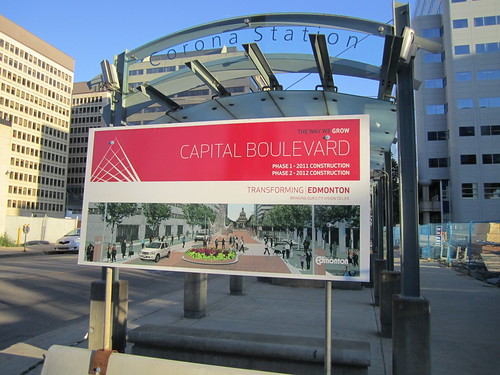
I’m excited about Capital Boulevard, the transformation of 108 Street downtown into a premiere address worthy of a capital city like Edmonton. The City of Edmonton is investing $17.6 million in the project, slated to be finished by the 100th anniversary of the Alberta Legislature building in September 2012.

When completed, Capital Boulevard will feature broad tree-lined sidewalks, enhanced street and sidewalk lighting, mid block pedestrian crossings, bike racks, and street furnishings such as benches.

The project will be completed in two phases. The first is south of Jasper Avenue to 99 Avenue, and the second is north of Jasper Avenue to 104 Avenue.

Capitol Boulevard

The redevelopment plans have drawn inspiration from signature streets and views around the world. Here are a few examples, starting with the U.S. Capitol Building in Washington, D.C.

Another is St. Peter’s Basilica in Rome.

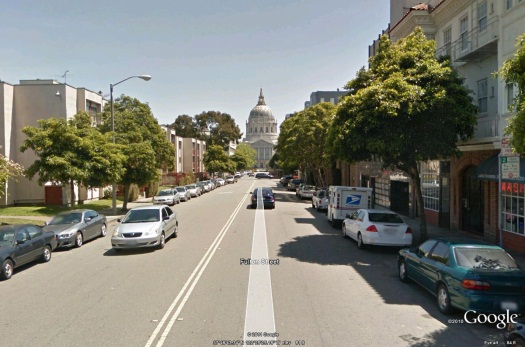
San Francisco’s City Hall is another example (opposite view here).

One of the great things about those examples is a clear line of sight down the street to the focal point. The view of the building is unobstructed. That’s something we have currently on 108 Street.

Capitol Boulevard

And losing that view is what concerns me.

The new ceremonial street will highlight the connection of the provincial legislature to the capital city and celebrate the shared history between Alberta and Edmonton. It will provide a grand view from MacEwan University to the Alberta Legislature.

A grand view perhaps, but no longer of the Legislature building! The plan is to have five sites of public art in the middle of the street between each avenue.

Here’s a rendering of what it would look like:

This rendering is off to the side, and the public art is the white mesh piece in the centre. My guess is the final art installations (which to my knowledge remain unfunded) are not going to be small, which means they’ll definitely obstruct the view of the Legislature building. Part of the problem is that the Legislature building is at an elevation of ~2160 feet and Jasper Avenue is at ~2180 feet. That’s why in my photo above, you can only see the top of the building. Put almost anything in the middle of the street and it becomes taller than the street-level view of the Legislature building.

The street is going to be called “Capital Boulevard” because of the Alberta Legislature building. So why would be obstruct the view of it?

We need to hold downtown parking lots to a higher standard

I’m no fan of surface parking lots downtown, but even if we succeed at getting rid of some of them many will remain. We’ll always have a need for parking downtown, and it won’t always be in a closed structure like a parkade. If you believe the mantra that “as goes your downtown, so goes your city” then you should care about these parking lots. Parking lots take up lots of space and directly impact how clean, safe, and vibrant downtown is or is perceived to be. We need to start holding our parking lots downtown to a higher standard.

Example of a bad parking lot

The parking lot on the west side of 103 Street just south of 103 Avenue is one of the worst parking lots downtown. You can see it on maps.edmonton.ca here. Here it is on Google Street View – it has not changed since the imagery was recorded.

There’s a lot to dislike about this parking lot. It is not paved, resulting in a huge mess whenever there’s rain or snow.

Parking Lot

There is no landscaping around the lot. It looks ugly from every angle. The empty wooden box along the sidewalk has potential but instead is an eyesore. There isn’t a clear separation between the parking lot and the sidewalk.

Parking Lot

Parking Lot

There are no cameras in sight, no theft prevention signs anywhere. You don’t get the sense that someone is looking after this parking lot.

Parking Lot

At night, the lot feels incredibly unsafe. It has very poor lighting – the bulk of the light that does exist is actually from the Pattison advertisement.

Parking Lot

Parking Lot

Example of a good parking lot

The parking lot at Jasper Avenue and 99 Street, beside the World Trade Centre building, is one of the best parking lots downtown (except for the fact that it is located on Jasper Avenue, which I really don’t like). You can see it on maps.edmonton.ca here (plus adjacent plots of land). Here it is on Google Street View, and you can see that it has actually been improved since the imagery was recorded. That itself is a positive thing about this parking lot – someone is looking after it!

There are a bunch of things I like about this parking lot. I like that it is paved and that the parking lines are clearly marked.

Parking Lot

I like that there is some landscaping around the parking lot. It makes it look much more attractive, and the transparent fencing results in a nice blend of vehicles and pedestrians on the sidewalk.

Parking Lot

You’ll note on the far wall, the side of the World Trade Centre building, that there are cameras. Activity in this parking lot is being recorded. There are also signs about preventing theft throughout the lot.

Parking Lot

At night, the parking lot is very well lit. There are no dark corners. You feel safe walking in this parking lot at night.

Parking Lot

Parking Lot

Most of downtown Edmonton’s parking lots are bad

The list of positives might actually be longer than the things I have pointed out above, but I think there are a few things that all good parking lots must have:

  • Paved aisles and entryways (at least)
  • Bright, evenly distributed lighting
  • Landscaping and trash receptacles
  • Some separation between cars and pedestrians (a non-opaque fence, for example)
  • Monitoring, by security camera or guard or both

If you walk around downtown, you’ll quickly realize that there are very few parking lots that meet this criteria. Most are gravel lots, with no landscaping, limited lighting, no fencing, and no sense that anyone is looking after them. They are eyesores, and they contribute to the feeling that downtown is dirty and unsafe.

What can we do about it?

I think we need to start holding land owners accountable. If you want to have a surface parking lot on your land, fine, but you have to look after it! Especially if you’re producing revenue from that parking lot. Obviously we as drivers can choose to avoid parking in lots that are not compliant, but I question how effective that would actually be. I think we need the City to start enforcing these things, to make a statement that we care about downtown and that these ugly and unsafe parking lots are not helping. Give land owners 180 days to get compliant, and put up jersey barriers if they don’t.

You can see more photos of these two parking lots here.

What do you think?

Edmonton SeniorNet

seniorsBack in April, the Seniors Association of Greater Edmonton (Sage) invited me to join the Seniors Social Media Advisory Committee. The committee exists to help plan and develop what we now call Edmonton SeniorNet. Here’s some background that explains how this came about:

The Edmonton Seniors Coordinating Council (ESCC) was formed in 2004 as a mechanism of shared planning, coordination, and collaboration among Edmonton service providers for seniors. One of the ESCC’s objectives has been to develop and maintain a current strategic plan that addresses the needs of seniors and senior serving organizations in Edmonton. The Strategic Plan for Services to Edmonton’s Seniors: Towards 2015 is an initiative that aims to identify a shared strategic direction to meet the needs of seniors in Edmonton. One of the key areas that have been identified in this document is the need for meaningful and affordable social and recreational participation for seniors. A goal of this area, which Sage has taken the process lead on, is to develop and/or facilitate the use of current and emerging technologies to connect seniors.

This is interesting to me for a number of reasons. Obviously we know that the seniors population in Edmonton (and elsewhere) is growing rapidly. And we know that a large number of them are adopting tools like Facebook to keep in touch with friends and family. But there are lots of seniors who are not, for a variety of reasons. For me personally, my grandparents are split when it comes to web usage. My Dad’s mum is an avid email user, she’s on Facebook, and she uses instant messaging and SMS to keep in touch. She’s pretty savvy, and she’ll probably read this right away! On the flip side, my Mom’s parents use the Internet for banking and some very limited email and that’s about it. I often wonder why there’s such a difference in usage between them, and while I have some guesses, I don’t know the answer.

Sage recently received funding from the Government of Canada’s New Horizons for Seniors Program for this project, which was originally known as the “Emerging Social Media” project. Over the last few months we have been discussing how to take the program forward. The idea is to connect interested seniors with mentors to get an introduction to the world of social media, to see if it helps them stay connected.

We’re nearly into August now, and the Edmonton SeniorNet program is very close to launching!

Edmonton SeniorNet is a program that aims to introduce seniors to Internet websites that will help them easily connect and share ideas and stories with friends, family and the community. Edmonton SeniorNet seminars will take place at the Sage computer labs, and will run twice weekly from August to late October. Our hands-on seminars will teach seniors to use email and social-networking websites such as Facebook, Skype and Twitter.

Classes are currently scheduled to take place at Sage downtown (northwest corner of Churchill Square). One option is Monday & Wednesday afternoons from 1pm to 2:30pm (starts August 3), and the other is Tuesday & Thursday mornings from 10am to 11:30am (starts August 4).

We’re still looking for additional participants and mentors. Participants should have some basic computer skills and experience surfing the web is a desirable asset, though not required. Mentors should be enthusiastic but patient, should already use Facebook, Skype, and other tools regularly, and should be eager to share their knowledge with others! If you’re interested in participating either as a participant or a mentor, contact Karolina at Sage (contact info is on the right side).

Check out the Edmonton SeniorNet blog for updates as the project progresses. You can also like the project on Facebook!

Five Years with Twitter

It was five years ago today that Twitter officially launched to the public (the very first ever tweet was sent on March 21, 2006). It was also five years ago today that I signed up for the service. It has become my claim to Twitter fame (such as it is) – I was the 985th person in the world to join! More than 600,000 people joined Twitter yesterday, which is pretty amazing when you consider that it took more than 16 months for the first 600,000 people to join!
When it launched, Twitter was actually Twttr (no vowels). At the time I was busy working on Podcast Spot. We were always paying attention to what our competitors were doing, and one of the biggest names in podcasting at the time was Odeo. I remember reading that they had launched a side-project named Twttr, and I remember thinking “this is dumb” after I checked it out. I mean the idea was neat, without a doubt, but I couldn’t fathom why they would be putting resources into Twttr rather than into Odeo. Anyway, as you know Odeo died and Twitter took off, so obviously they made the right decision!

I’ve written over a hundred Twitter-related blog posts over the last five years. My early entries seemed to be all about Twitter’s infamous fail whale and how the service struggled to stay operational, though I did immediately pick up on the ability to track topics. It was well into 2008 that they were still experiencing issues with reliability. That was also the year that I organized our first ever tweetup here in Edmonton (with help from Melanie and others). In June of 2008, I was down in Calgary for BarCamp and did a presentation on Twitter. After chatting with Wil at the bar afterward, I decided we should borrow the city hashtag idea from Calgary (they were using #yyc). The first #yeg tweet went out on June 20, 2008 (I wrote a bit more about that here). Exactly two years after Twitter launched, it purchased Summize, the search engine that now powers Twitter Search. That was a big deal, as it made the service much more useful. It also made it possible for me to start tracking the Edmonton Twittersphere, and I posted my first look at those statistics in February 2009. That seemed to give the local scene some momentum, and a month later I was at CTV talking to their newsroom about Twitter. That was the turning point in Edmonton, in my opinion. A lot of people joined after they ran the Twitter story, and I think the fact that CTV embraced the service gave it some legitimacy. The local Twittersphere has been growing in size and influence ever since.

I have always been a web user of Twitter. Over the years I have used apps on my mobile phones, text messaging, and I’ve dabbled with apps like TweetDeck and HootSuite, but my primary interface remains the Twitter website. I was particularly happy about #newtwitter, though I know a lot of you didn’t like the redesign (at least initially). It’s kind of incredible to think back to the time when Twitter didn’t have retweets, mentions were just replies, and hashtags were rare. The addition of lists was another thing that changed the way I use Twitter. I’m often asked how I can possibly follow nearly 6000 people and the answer is always “I don’t.” I use a combination of lists and search to pay attention to certain people and/or topics! I rarely, if ever, look at the timeline. It look me a long time to get over that – early on I definitely felt like I didn’t want to miss anything! Twitter is still largely the same as it was in 2006 (at least conceptually), but the changes that have been made have really had an impact.

I don’t know what Twitter will look like five years from now, but it certainly shows no signs of going away. I look forward to its continued evolution, and I hope Twitter continues to have a positive impact here in Edmonton!

Special thanks to Jeff and Sally for the Twitter birthday post today! And yes, I need to get on with updating stats!

Photo Tour: ETS Centennial Garage

About two months ago at the Youth Summit on Sustainable Transportation I had the opportunity to tour Edmonton Transit’s Centennial Garage, located at Ellerslie Road and 156 Street. The name commemorates Edmonton Transit’s 100th anniversary of service. The facility, which officially opened on April 10, 2010, primarily serves neighbourhoods in the west and southwest parts of Edmonton.

ETS Centennial Garage

The garage has space to store and maintain at least 250 buses, but is also home to administration offices as well as dispatch and support. More than 250 fleet services and bus operations staff work at the facility (that includes 200 operators).

ETS Centennial Garage ETS Centennial Garage

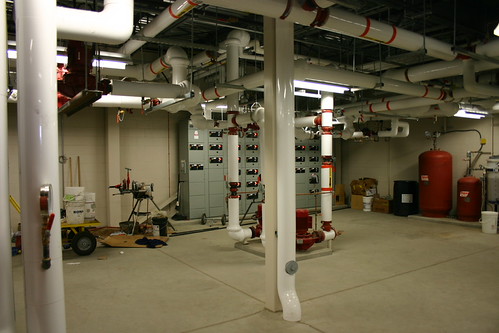
The building is massive, encompassing 7.1 acres (or 313,000 square feet, approximately five football fields). The budget for the garage was $99 million, $89.3 million of which came from the Municipal Sustainability Initiative (MSI). It was designed and built to LEED Silver standards, with features such as a solar wall for heating. Croy D. Yee Architect Ltd, Morrison Hershfield Limited, Earthscape Consultants, and Clark Builders were involved in the design and construction of the building.

ETS Centennial Garage

Some of the building materials used include 31 miles of electrical conduit, 1325 imperial tons of steel (structural steel was made up of 90% recycled content), 11,800 cubic metres of concrete (27.5% was reycled content), 3300 sprinkler heads, and 81 miles of in slab heating pipe.

ETS Centennial Garage

The Centennial Garage is the first garage in Edmonton designed to handle ETS’ 13 articulated buses, with a special hoist that can lift the 20-metre, three-axled vehicles.

ETS Centennial Garage

The storage part of the garage was fairly empty when we visted, as most buses were out on the road. It as neat to see the buses that were present parked nose to tail in long lines.

ETS Centennial Garage

ETS Centennial Garage

The high pressure wash system is what gets the buses nice and clean on the way into the garage. Apparently they had to turn the pressure down from the original setting, because it was causing the decals and advertising on the buses to come right off! In addition to being powerful, the system was specifically designed to cut down on water use by more than half.

ETS Centennial Garage

There are state-of-the-art systems in the building for monitoring carbon monoxide levels and maintaining comfortable heat and humidity. Energy modeling results indicate that the Centennial Garage is 33% more energy efficient than a typical building of its size and type.

ETS Centennial Garage

The ride out to the garage seemed to take forever (it’s really far south west) but it was definitely worth it to get a closer look at one of the facilities that keeps ETS running smoothly!

ETS Centennial Garage

You can see more photos from the tour here.

Edmonton’s Homicide Rate: How much has changed in 30 years?

Reading that we’ve had 28 murders so far this year in Edmonton is disheartening, as others have noted. And without a doubt something needs to be done to understand why this happening and what we can do to stop it. But has the picture really changed all that much from previous years?

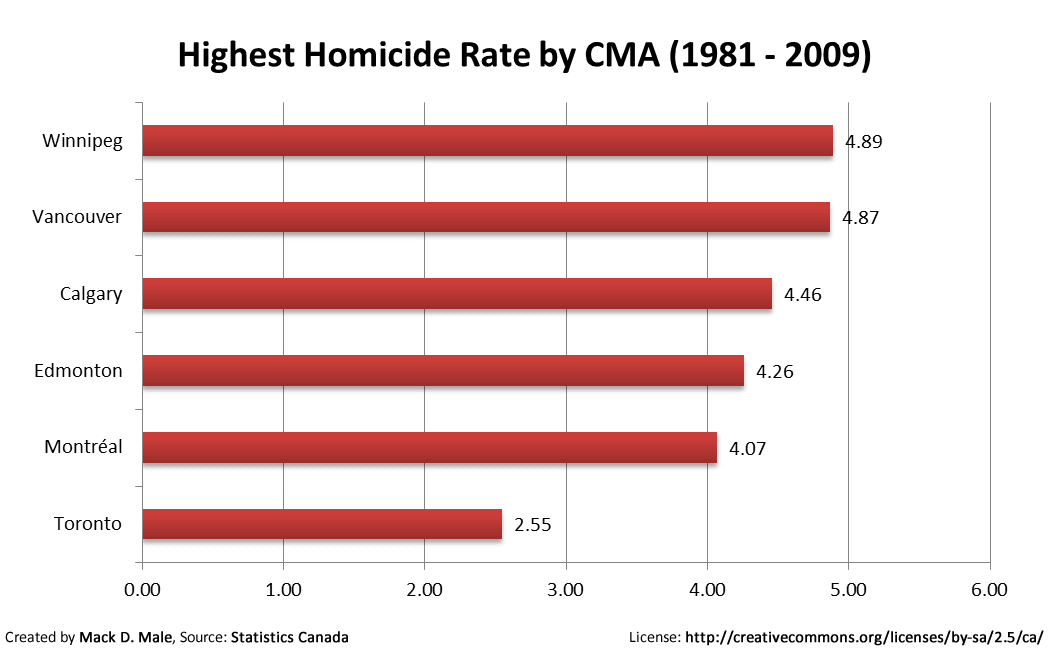
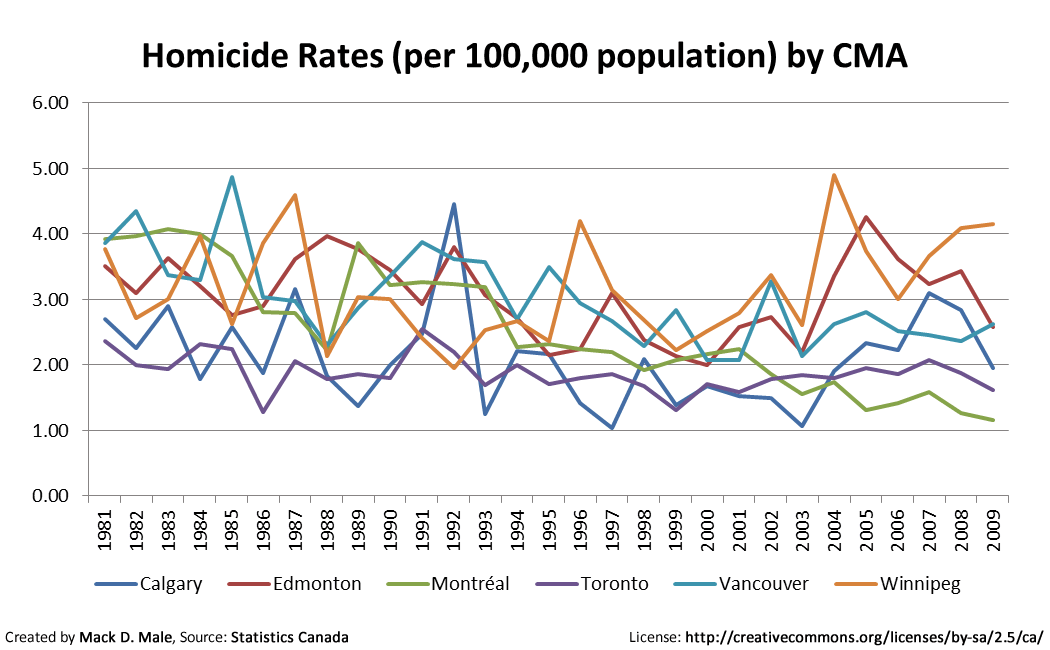
Our homicide rate (the number of homicides per 100,000 people) currently sits at roughly 2.41. That compares to Winnipeg’s 2.08 (they have had 16 murders so far this year). If we extrapolate for the rest of the year, we’d finish with a homicide rate of roughly 4.82. That would indeed be our highest ever. However, a rate that high has only been experienced in large cities twice in the last 30 years:

Given that history, I would be shocked if we finished 2011 with a homicide rate above 4.8 (which would equate to 56 murders).

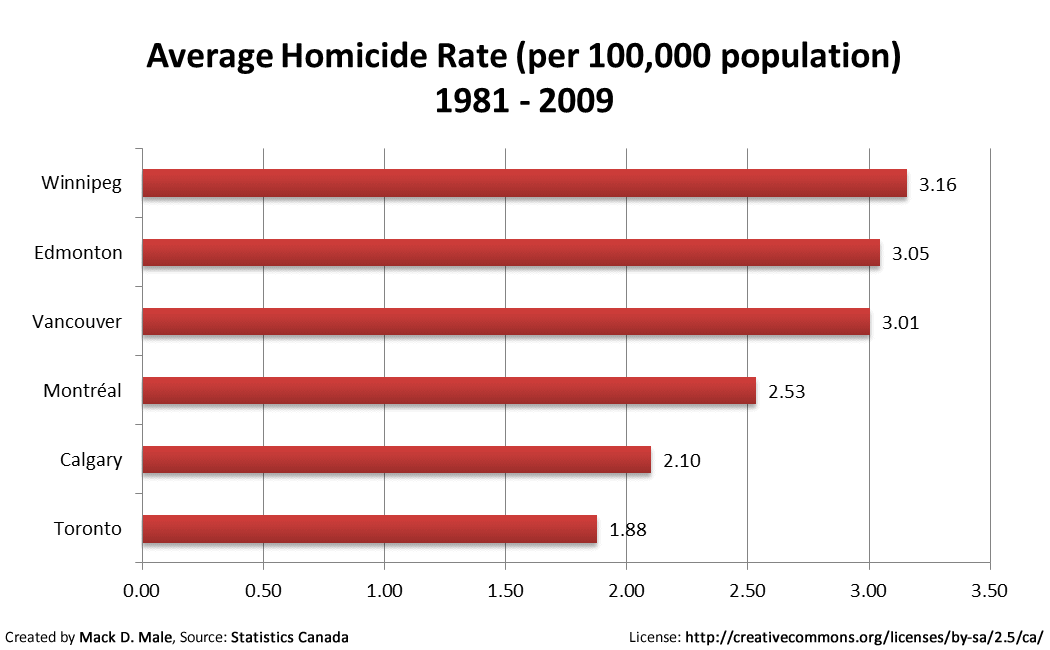
Here’s the average homicide rate for each of those cities:

And here’s what the rate looks like from year to year (it appears Montréal has experienced the most steady decline – we should find out what they did):

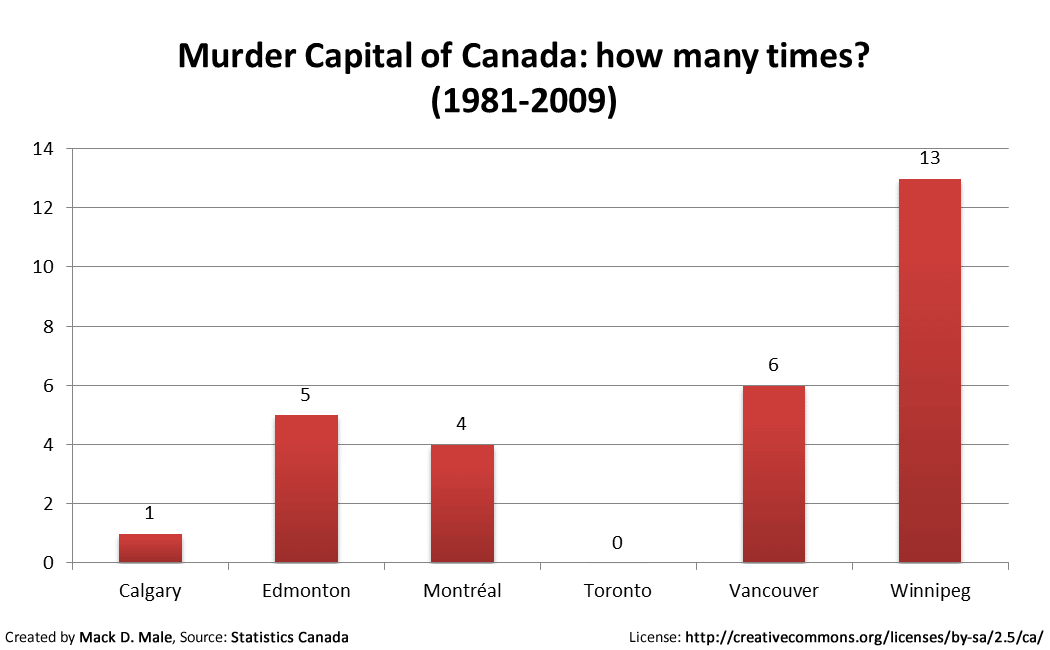
As for the title of Murder Capital of Canada – that distinction clearly goes to Winnipeg. It has led large cities in murders more in the last 30 years than any other:

In recent years, it has generally been Winnipeg #1 and Edmonton #2, or vice versa.

It sounds bad: “we’ve had more murders in the first six months of 2011 than we did all of last year”. That’s the kind of statement that will spur us into action. But I don’t think the situation is really all that different from previous years.

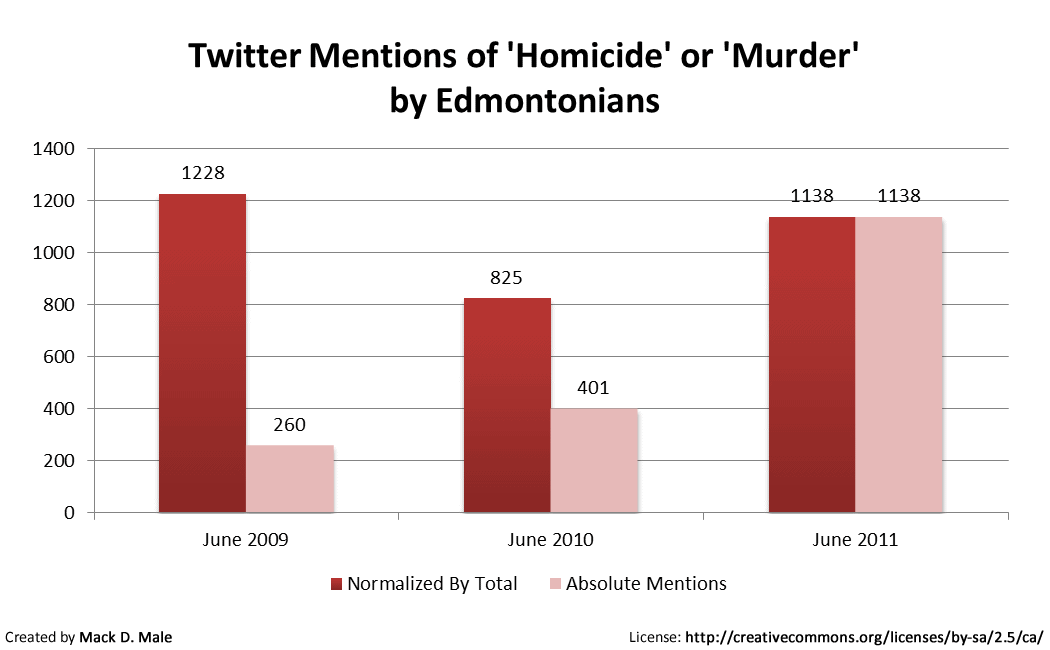
The other negative side effect of all of this is the knock on Edmonton’s image throughout Canada and around the world. Countless stories have been written about our homicide rate. I was interviewed by CTV about this today. I said that the words ‘homicide’ and ‘murder’ have been mentioned by Edmontonians on Twitter about 1200 times in the last month or so. What I didn’t get to do in the interview was compare that to previous years:

The absolute number of mentions is higher this year than it was in the last two years, but so is the total number of tweets overall. So I normalized the data. If the same number of tweets had been posted in June 2009 as were posted in June 2011, the words ‘homicide’ and ‘murder’ would have been mentioned more two years ago than today. All this to say: Edmontonians are talking about this topic, but perhaps not more than they have in the past. I would guess that other Canadians are talking about our homicide rate more than is normal, however.

UPDATE (8/5/2011): I updated the second paragraph to better reflect the way Statistics Canada calculates homicide rates, so that the numbers better align with the rest of the post. I had originally stated that extrapolating for the rest of 2011 would result in a homicide rate above 5.0, when it should have been 4.8. My argument remains the same – statistically speaking, that is very unlikely.

Social Media Milestones

Over the last couple of months I have achieved a few nice-round-numbers with my online activities. I’m not sure why they all happened around the same time, but they have. Some recent milestones include:

  • 3000 blog posts
  • 9000 comments on my blog posts
  • 30,000 tweets
  • 10,000 followers on Twitter
  • 500 lists on Twitter
  • 1000 friends on Facebook
  • 13,000 photos on Flickr
  • 1,000,000 views on Flickr
  • 7500 posts on Tumblr (~2000 are as Edmonton Etc.)

What do these numbers mean? That I spend a lot of time online, I guess! I think they also reflect the length of time I have been blogging (2003), tweeting (2006), and posting photos (2005). A few of these numbers mean a lot to me, not because of the number itself but because of what it represents. I can’t even imagine how much time and energy those 3000 blog posts represent, but I’ve absolutely loved writing them! And I’m honored to be on more than 500 lists on Twitter.

Mostly though, when I think about these numbers, I think about the journey they represent and all of the amazing people I’ve met and things I’ve learned along the way. Roll your eyes if you must, but that’s the truth.

I wonder what this list will look like five years from now!