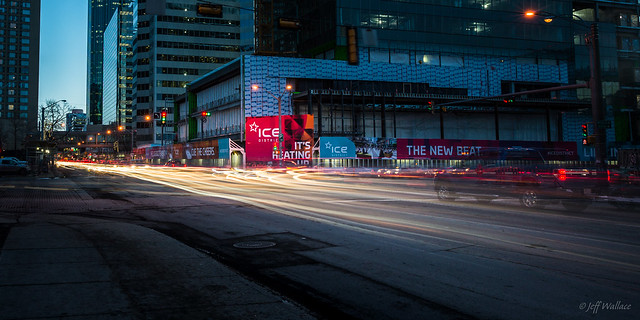
Edmonton Notes for 3/6/2016

Here are my weekly Edmonton notes:

Headlines

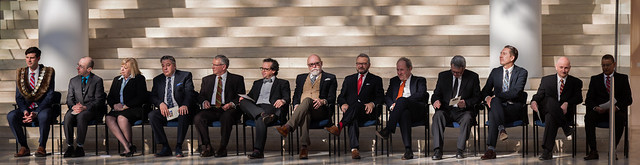
State Funeral for Don Getty 014
State Funeral for Don Getty, photo by Premier of Alberta

Upcoming Events

Stairs closed for Mechanized River Valley Access project

Coming up at City Council: March 7-11, 2016

Council is back to Committee meetings next week!

Edmonton City Council

Here’s my look at what Council will be discussing in the week ahead.

Meetings this week

You can always see the latest City Council meetings on ShareEdmonton.

Urban Hens Pilot Evaluation

Last year after a successful pilot, Council approved the bylaw changes required to support urban beekeeping. Will they do the same for urban hens?

From the 35 citizens that applied to the urban hens pilot, 19 sites were formally accepted across the city. Each had to register provincially and had to receive consent from adjacent neighbours. They were managed by “both experienced and inexperienced hen owners” and they received support from the River City Chickens Collective. Here’s how the pilot went:

  • Each site was inspected at the beginning, midpoint, and end of the pilot.
  • “The majority” of sites were compliant, but a few follow-up inspections were required.
  • One site had concerns over the requirements and withdrew.
  • There were 12 citizen complaints across six sites, but all were “investigated promptly” and resolved amicably.
  • There were no complaints related to coyotes or other predatory wildlife, but there was “an increase in nuisance birds, roaming cats, and mice” for some sites.

A formal Urban Hen Keeping Program does not require any bylaw changes, so the Committee can essentially give the go-ahead if they support the idea. Property owners would be required to abide by the guidelines and would need to obtain a development permit under the new urban outdoor farming class. The requirement for neighbour consent would be removed, but participants would need to complete a training course or workshop before being issued a license.

Chickenses
Chickenses, photo by Dave Sutherland

“While the results of the pilot lean favourably towards supporting a program, several pilot outcomes cause some concern from an enforcement perspective,” the report says. For that reason, Administration is recommending a phased implementation in which the number of sites would be capped at 50 over the next two years.

The Edmonton Insight Community survey that was conducted along with the pilot found that 51% of respondents somewhat or strongly agree that raising hens in the city is good for neighbourhoods.

Park & Ride

A report from the Edmonton Transit System Advisory Board identifies short and medium-term options to address the high demand for Park and Ride stalls. Recall that a previous report on Park & Ride at Century Park found that the lot is 85% full by 7am on weekday mornings and that the average weekday utilization of all park & ride sites is 97% at LRT stations and 60-70% at transit centres. The ETSAB report suggests “there is a clear need for an increase in supply” but it also suggests dealing with the price of stalls too. Roughly 87% of all stalls available are provided free of charge, with reserved stalls priced at $42/month (the same since 2010). The existing Park & Ride policy states that up to 18% of stalls at each location can be reserved for paid parking.

The options identified to deal with this include:

  1. Convert a Greater Proportion of Existing Stalls into Paid Reserved Stalls
  2. Increase the Price to Park in Reserved Stalls
  3. Offer Time-Limited, Unreserved Stalls
  4. Seek Alternatives to Increase the Supply of Park and Ride Stalls

The recommendation is for Administration to prepare a subsequent report on “the feasibility, implications and details of implementing” those options. ETSAB “believes that Park and Ride facilities form a critical part of our transportation system” but they feel customers should pay a greater portion of the costs of parking.

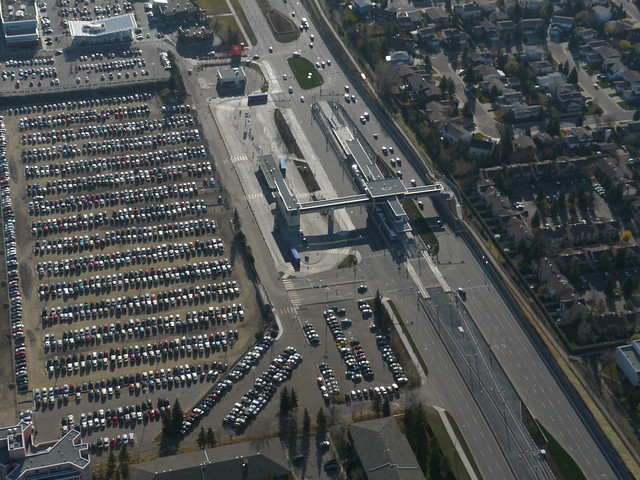
Century Park Station & Park and Ride
Century Park Station & Park and Ride, photo by City of Edmonton

A related report deals with the strategy for Park & Ride locations. The current policy (C554) was approved in 2009 and states that park & ride will be located:

  • at selected LRT stations and transit centres served by LRT, premium bus, or express bus services;
  • in areas along or outside of the Inner Ring Road (Yellowhead Trail, 170 Street, Whitemud Drive, and 75 Street/Wayne Gretzky Drive) and preferably at least eight km from Downtown or University of Alberta North Campus; and
  • at sites where more intensive development is not possible or feasible, such as the Transportation Utility Corridor or other major utility rights of way or where such development is not expected to occur in the immediate future.

Administration feels the policy has limitations and should be updated, just not right away. The new Transit Strategy is slated to be complete in 2017 and “is envisioned to encompass all transit-related issues at a high level, including park and ride.” The recommendation is to revisit the park and ride policy at that time.

Urban Balcony Expropriation

Identified as a part of The Quarters Downtown, the “urban balcony” is a triangular piece of land located between Jasper Avenue, 101 Avenue, and 96 Street atop Grierson Hill. The Quraters plan envisions it “as refuge for public gathering, providing and protecting public access to some of the most beautiful views in the City.” Its inclusion in the plan “recognizes the importance of access to the River Valley both in a physical and visual sense.”

urban balcony

In order to build the urban balcony, the City must acquire four properties. Two of those are vacant and undeveloped, and two contain unoccupied apartment buildings “in poor repair.” One is actually “subject to an Alberta Health Services Health Hazard Notice and is unfit for human habitation.” Administration has been negotiating with the owners the properties, but so far they haven’t been successful. As a result, they are recommending that Council approve the commencement of the expropriation process.

Other interesting items

  • A report on the current tax status of urban farmland identifies that although buildings used for farming operations in Edmonton receive an automatic 50% tax exemption, no such provision exists for urban farmland. Council does have the power to set a differential tax rate for farmland.
  • An update on EPS funding shows that in the latter half of 2015 they spent $266,000 on “component rebuild” for Air 1 and Air 2.
  • About 75% of the funding for the Community Energy Transition Strategy was being withheld pending a report on the provincial climate change strategy. Now that the report is available, there’s a recommendation to release the funds. “The conclusion was that the City’s action plan is consistent with provincial policies and directions.” See also the report on Corporate Environmental Targets.
  • Administration has provided a summary of its engagement to date with stakeholders regarding the Blatchford Project and in particular related to “visitable housing” which is “the concept of designing and building homes with basic accessibility features that provide easy access on the main level for everyone, including persons with limited mobility.” The recommendation is to encourage home builders in Blatchford to incorporate visitability principles.

Wrap-up

You can keep track of City Council on Twitter using the #yegcc hashtag, and you can listen to or watch any Council meeting live online. You can read my previous coverage of the 2013-2017 City Council here.

Uber suspends service, TappCar prepares to launch, Alberta seeks transit strategy input

Here’s the latest entry in my Edmonton Etcetera series, in which I share some thoughts on a few topical items in one post. Less than I’d write in a full post on each, but more than I’d include in Edmonton Notes. Have feedback? Let me know!

Uber suspends service in Edmonton

Today the City’s new Vehicle for Hire Bylaw came into effect. It should have been a great day for Uber and its supporters, but unfortunately the company was forced to suspend operations due to being unable to obtain sufficient insurance to meet Provincial regulations. The Province announced its plan for what it calls “ride-for-hire services” yesterday. There are three key areas in which the Province is taking action:

  • “Insurance: by July 1, an interim insurance product that will provide adequate coverage to Uber drivers and their passengers will be in place. The interim insurance framework has been approved by the Superintendent of Insurance.”
  • “Licensing: all ride-for-hire drivers, including Uber, will continue to require Class 4 Driver Licences or better.”
  • “Police Checks: regulations will be amended to require all ride-for-hire drivers to have a police information check conducted by police.”

It’s the July 1 date for insurance that is the big problem. Brian Mason, Minister of Infrastructure and Transportation, tweeted that Uber “has known all along that insurance wouldn’t be ready til summer.” But Uber said it only learned of the timeline yesterday and apparently neither did City Council.

Uber did say that it would continue operating in surrounding communities like St. Albert where there is no approved regulation, which apparently caught Brian Mason by surprise. “I had not been aware that Uber was going to try and deliberately operate against the law,” he told CBC Edmonton. “That concerns me a great deal and we’ll be having some conversations with our officials.” Umm…where exactly has he been for the last year?

TappCar and other PTPs prepare to launch

According to the City, five regional (Metro Airport, Anytime Taxi, Cowboy Taxi, Dollar Cab and a Private Individual) and one commercial (Tapp Car) Private Transportation Providers (PTP) have been granted licenses under the new bylaw. Not much is known yet about the regional PTPs, but TappCar does look rather interesting and has been featured in the media in recent days.

TappCar
Image courtesy of TappCar

TappCar is a local company that promises “a new standard of service…that is convenient, reliable and safe.” They having been working to sign up drivers for their launch.

“TappCar offers an industry-leading mobile app, in addition to phone and web booking. Vehicles are guaranteed to be of comfortable size and quality. Drivers are properly insured and professionally licensed, and each vehicle has a two way camera installed, ensuring every ride is safe.”

You’ll be able to book a car using their app, website, or by calling the dispatch. TappCar is planning to launch mid-March if all goes well.

Provincial Transit Strategy

Today the Province announced it is looking for input on a new transit strategy for Alberta:

“There will be two streams of engagement – urban and rural – and an online public survey, all of which will inform the development of an overall provincial transit strategy and criteria for future funding for municipal transit initiatives and rural bus service.”

For the purposes of the strategy, urban communities are defined as having more than 10,000 residents with rural communities having fewer than 10,000. Clearly there’s a difference between the transit needs of Wetaskiwin with 13,000 people and Edmonton with more than 870,000, however.

Both Calgary and Edmonton have made it very clear that investing in public transit is a key priority. The big cities face unique transportation challenges, and require financial support from the Province to deal with them. Having said that, there are some common trends happening across Alberta, like the fact that young people are increasingly choosing other methods of transportation besides driving.

“In 2014, 67.2 per cent of Albertans age 18 to 24 held any class of Alberta drivers’ licence, down from 70.9 per cent in 2005.”

You can provide input on the strategy here until April 29, 2016.

Edmonton is in the middle of revamping its own Transit Strategy, a process that is expected to wrap up in the middle of 2017. Initial feedback was that Edmontonians want a fast, frequent, and reliable transit network that connects them to major destinations like work, school, and shopping, and that they place a high value on having a safe & secure, easy to use system.

Media Monday Edmonton: Update #192

Here’s my latest update on local media stuff:

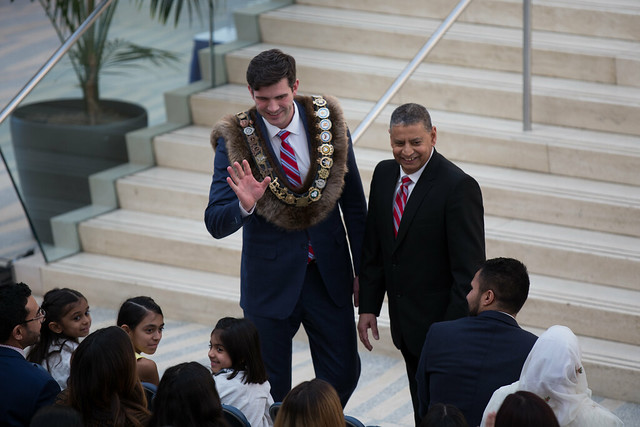
Moe Banga Swearing In Ceremony
Moe Banga doing his first media scrum as Ward 12 Councillor

And here is some slightly less local media stuff:

  • In her latest social media notes, Linda highlights that selfie deaths are now more common than death by shark attack.
  • The CRTC announced on Tuesday that it has “received 12 applications to operate radio stations serving urban Indigenous Canadians in major markets.” Three of those applications are for Edmonton.
  • Sharon and I watched Spotlight on Saturday night and were happy to see it win Best Picture and Best Original Screenplay on Sunday at the Oscars. Definitely one to see!
  • So-called “Skinny” TV packages are here. We’re on Shaw, so I priced out their “Limited TV” plan plus some of the additional packages we’d be interested in. The total came out to be quite a bit less than what we pay currently (and I confirmed with support that for each of the channels in the add-on packages you get both the SD and HD variants, assuming they both exist via Shaw). So it looks like there will be a cost savings for us!
  • “For the first time in more than 40 years, the Stanley Cup playoffs may lack a Canadian team this season.” And that means Rogers Media could be forced to take a hit on advertising revenue.
  • Bloomberg TV Canada has announced the launch of Bloomberg North, a new weekday show featuring Amanda Lang, Pat Kiernan and Rudyard Griffiths.
  • The folks behind FiveThirtyEight say they are here to stay, and won’t end up like ESPN’s Grantland.

You can follow Edmonton media news on Twitter using the hashtag #yegmedia. For a great overview of the global media landscape, check out Mediagazer.

So, what have I missed? What’s new and interesting in the world of Edmonton media? Let me know!

You can see past Media Monday Edmonton entries here.

Edmonton Notes for 2/28/2016

Happy Leap Year! Here are my weekly Edmonton notes:

Headlines

02-27-2016 ARena
Rogers Place, photo by Darren Kirby

Upcoming Events

Moe Banga Swearing In Ceremony
Mayor Iveson, Councillor Nickel, and new Ward 12 Councillor Banga

Coming up at City Council: February 29 – March 4, 2016

Moe Banga was sworn in as the new Councillor for Ward 12 at City Hall yesterday. He handily won Monday’s by-election, earning nearly twice as many votes as his nearest competitor. “City building is a team sport,” said Mayor Iveson at the ceremony. “So it’s very exciting to welcome a new member to our team.” He also offered some advice to the new councillor. “You represent the people of Ward 12, but you serve the entire community.”

Moe Banga Swearing In Ceremony
New Ward 12 Councillor Moe Banga

Here’s my look at what Council will be discussing in the week ahead.

Meetings this week

You can always see the latest City Council meetings on ShareEdmonton.

Stanley Milner Library Renewal

A recent update on the Stanley Milner Library Renewal project says that EPL has already raised $3.7 million, including “a lead gift from a significant donor.” The total cost of the project is estimated to be $62.5 million, and EPL has committed to raising $10 million from community partners by 2020. The City of Edmonton is contributing the rest of the funding. Bylaw 17572 is being considered this week and will authorize the City to borrow $51,498,000 to “undertake, construct and finance” the Stanley Milner Library Renewal project.

epl stanley milner renewal

The new building will be “open and airy, with much more natural light, a larger children’s library and Makerspace, and a two-storey tall interactive video screen” reports Metro Edmonton. Elise Stolte reports that the new building will also feature a daycare space, three new community meeting spaces, and a much larger cafe.

Draft Policy on Enterprise Risk Management

The Audit Committee has recommended that the Enterprise Risk Management Policy C587 be approved, and that Administration report on progress by the end of the year and again in Q2 next year. Here’s the policy statement:

“The management of corporate risks through a formal enterprise risk management framework and process is key to the fulfillment of Edmonton City Council’s goals for the City of Edmonton. City Council and the City Manager share the responsibility for creating a corporate culture and philosophy that encourages identification, evaluation, and reporting of corporate risks and risk mitigation strategies.”

There’s also an Administrative Directive that says the City is “committed to identifying, assessing, managing, and reporting on enterprise risk associated with the City’s business and strategic goals in a systematic, consistent and transparent manner.”

The policy was discussed by Council last June, and is largely based on Calgary and Saskatoon’s enterprise risk management policies. If Council approves the policy, future reports that require a Council decision will include a risk section.

McDougall United Church as a Municipal Historic Resource

If Council approves this bylaw to make the church a Municipal Historic Resource, a total of $500,000 will be allocated from the Heritage Reserve Fund to pay for rehabilitation efforts. The church has also been designated as a Provincial Historic Resource and Alberta Culture has committed $750,000 to help rehabilitate the building. The total estimated cost of restoration and rehabilitation is in the range of $11 million to $16 million.

McDougall Methodist Church, Edmonton, Alberta
McDougall Methodist Church, photo courtesy jasonwoodhead23

Here’s what the Heritage Planner’s Statement of Significance says:

“The heritage value of McDougall United Church rests in its association with the establishment of early religious institutions in Alberta. It is further significant as an example of early twentieth-century ecclesiastical architecture, and for its identity as a landmark cultural facility in Edmonton.”

The earliest church on the site was “a modest wood structure” built in 1873 by Reverend George McDougall. In 1892, a second wood-frame church was built. The current structure was erected in 1910. “Over the course of its history, McDougall United Church has served not only as a place for religious worship, but also as an important social and cultural centre.”

Other interesting items

  • The Hawrelak Park Water Play Feature is in need of $1.8 million from the River Valley Trail and Park Renewal capital profile. The concept that Council supported in 2013 has “undergone significant redesign due to a change in location” and that has caused the budget to grow.
  • Bylaw 17531 will amend the Business License Bylaw to implement three of the recommendations put forward by the Body Rub Centres Task Force: new license application requirements will be added, two employees must be present at all times and one must be a manager, and practitioners may work at more than one location under a single license.
  • Community Services Committee has recommended that the CIOG award recommendations be approved. A total of $3,546,490 is being provided to 225 not-for-profit organizations in Edmonton.
  • At Executive Committee this week, Council reluctantly decided to approve the environmental review for the funicular. That means the project will move forward with a targeted completion date of 2017.
  • The terms of reference for the new Active Transportation Council Initiative are ready for approval, with Councillors Henderson and Knack leading the project.
  • Bylaw 17536 and Bylaw 17274 will allow for a new Stormwater Management Facility at 2403 51 Avenue NW.
  • Council will receive an update on the City Manager Recruitment effort on Wednesday.

Wrap-up

You can keep track of City Council on Twitter using the #yegcc hashtag, and you can listen to or watch any Council meeting live online. You can read my previous coverage of the 2013-2017 City Council here.

Media Monday Edmonton: Update #191

Congratulations to Moe Banga on winning the Ward 12 by-election this evening! You can see the full unofficial results here. The official results should be released later this week, with the swearing-in ceremony taking place Friday afternoon.

Here’s my latest update on local media stuff:

Protection measures in place early to prepare for wildfire season 201
Protection measures in place early to prepare for wildfire season, photo by Premier of Alberta

And here is some slightly less local media stuff:

You can follow Edmonton media news on Twitter using the hashtag #yegmedia. For a great overview of the global media landscape, check out Mediagazer.

So, what have I missed? What’s new and interesting in the world of Edmonton media? Let me know!

You can see past Media Monday Edmonton entries here.

Edmonton Notes for 2/21/2016

Here are my weekly Edmonton notes:

Headlines

The Rush Home
The Rush Home, photo by Jeff Wallace

Upcoming Events

Talus Dome
Talus Dome

Coming up at City Council: February 22-26, 2016

Monday is Election Day in the Ward 12 By-Election, so I’m sure Council will be paying attention like the rest of us to see who their new colleague is. I understand that the Elections Office expects the results to be posted in a large batch, hopefully by 8:30pm, so it shouldn’t take long to find who wins. The Swearing-In Ceremony for the new Councillor will take place on Friday afternoon.

Untitled
Photo by City of Edmonton

But enough about the election for now, there’s work to be done. As I wrote about back in January, a reorganization of the City Administration is slated to take effect on March 1. Mayor Iveson wrote about the reorg yesterday, and highlighted that Council will be changing its committee structure to match:

“On the City Council side of the table, we’ve also begun the process to change Council’s committee structure to support more coherent decision making and build clear lines of accountability into the departments. The new Urban Planning Committee should mean a better alignment of the City’s planning functions; City operations now report to the Citizen Services committee; and all infrastructure work will now report to the Executive Committee.”

Those changes have not yet taken effect but will soon.

Here’s my look at what Council will be discussing in the week ahead.

Meetings this week

You can always see the latest City Council meetings on ShareEdmonton.

MacEwan West Operating Models: Governance & Tenancy

Although Council approved the purchase of the MacEwan University West Campus back in November 2012 for $36 million, the transfer of the facility isn’t expected to take place until the fall of 2017 (just $5 million has been deposited thus far). To prepare, the City has established a Community Stakeholder Committee as well as a cross-departmental Internal Committee. The proposed vision for MacEwan West is “an Intercultural, Interagency Community Hub for arts, recreation, wellness and learning.”

MacEwan West
Photo courtesy of MacEwan University

The building was constructed in 1981 and contains 257,000 square feet of space, about half of which is considered available for programming (the rest is common areas, mechanical, etc). Over 80 groups initially expressed interest in being tenants or offering programs at MacEwan West. In addition to their input, research on governance, operating, and tenancy models has been completed. Three different models have been identified:

  1. Mixed Used Model – accommodates the greatest number of tenants/stakeholders with an anchor tenant occupying 30% of the space
  2. Hybrid Model – anchor tenant would occupy 50% of the space
  3. Predmoninate Single Use Model – anchor tenant would occupy over 70% of the space

Under the first two models, the City would be responsible for ongoing maintenance and renewal costs, estimated at $1.6 million annually. Under the third model, the City would consider selling the facility to the large tenant, but would “would retain the parkade for future LRT development.”

The next steps are to establish a Tenant Selection Committee, finalize a tenant selection process and criteria, report back to Council in Q4 with a “recommended tenancy structure, governance model and operating model,” and complete the MacEwan West Business Plan and budget by early 2017.

Corner Store Pilot Program Update

Back in March 2014, Council approved the Corner Store Pilot Program to “stimulate local small business growth, enhance access to local amenities and contribute to community building.” The pilot began with three sites in Ritchie, Elmwood, and Newton and has been successful enough that the City will be expanding it to five additional sites later this year. More than 100 business owners and residents in Ritche were surveyed about the pilot and they expressed strong support:

  • 88 percent of business owners feel the Corner Store program is important to their business and are confident the program will positively impact their commercial centre
  • 86 percent of community members feel the program is important to their community
  • 77 percent of community members are confident that the program will positively impact their commercial centre

The new sites “will be chosen based on the program criteria and possible alignment with the Neighbourhood Renewal program.” A total of $1.25 million has already been budgeted for “public realm enhancements” for the new sites, so no new funds are required to expand the program.

Measures of Social Return on Investment and Other Community Well-being Indicators

Last year, Council asked for an update on how Edmonton and Calgary measure social return on investment and other community well-being indicators. Both cities are working together to share information, tools, and techniques in this area. “The most common area that captures well-being indicators in both the City of Edmonton and the City of Calgary is through Family and Community Support Services (FCSS).” Edmonton and Calgary (and other municipalities) are mandated to report on outcomes for FCSS funded programs.

The overarching goal of the FCSS Outcomes Model is to enhance “the social well-being of individuals, families, and community through prevention.” In Edmonton and Calgary, three dimensions are evaluated: economic well-being, social well-being, and physical well-being:

community well being indices

Calgary has gone further and has experimented with Social Return on Investment, “an innovative, principles-based methodology and increasingly sought-out approach that assigns a financial value to a social impact that would otherwise be overlooked or misunderstood.” After pilot projects in 2008-2009, Calgary decided to offer grants to agencies that wish to complete a Social Return on Investment evaluation.

Edmonton currently has two Social Return on Investment evaluations underway, one on the “Net Analytics Pilot” and one on “The Youth Transit Access Project”. Both are expected to go to Council in the next month or so.

LRT History and Principles

How are we going to build the next phases of the LRT network? That’s one of the key questions that Council is going to have to address this year, starting with Wednesday’s discussion. “Council has laid the foundation for the next phases of LRT expansion with a principle-based plan,” the report says, highlighting The Way We Move, the Valley Line planning process, and the LRT Network Plan.

“Globally competitive cities recognize the importance of an integrated transportation system that gives people choices of where to live and how to move around the city. LRT is an investment in Edmonton’s future, a critical asset for a modern city with a transportation system and land-use choices that meet the needs of a diverse, dynamic and growing population. LRT is one of the most efficient modes of transportation: a single light rail track can carry up to 20,000 people per hour compared to a freeway capacity of 2,000 vehicles per hour per lane. As demonstrated by cities around the world, modern LRT can help shape cities, communities and neighbourhoods, with LRT often becoming the focal point for new mixed-use development.”

Funding for the southeast leg of the Valley Line LRT has been approved and construction is slated to take place through 2020. But what about the other legs? Based on direction from Council a year ago, Administration has initiated the LRT Prioritization Study to “provide a recommendation for construction staging of the remaining unfunded portions of the LRT network.” One of the first deliverables from that is the LRT Prioritization Evaluation Critera. Will Council be able to agree on an order that makes sense for Edmonton, or will Councillors push their own areas of the city above all?

LRT Network Plan

The report goes on to note that “the cornerstone of the plan is Urban Style LRT” which encourages transit-oriented development, reduces construction costs, and “strengthens the City’s integrated transportation network.” While this report only deals with the prioritization of LRT, it should be noted that other complementary work is already underway, such as the development of a new Transit Strategy.

Active Transportation Council Initiative

City Council already has an expansive list of 24 initiatives but it has decided to add another one. The new Active Transportation initiative is slated to proceed through the end of the current Council term and hopes to achieve “heightened awareness of the Active Transportation options available to Edmonton’s citizens and the benefits of active, healthy living, recreation, and sustainable communities” and “education for users of Edmonton’s transportation systems about their rights and responsibilities, including drivers, cyclists, and pedestrians”, among other things. Currently the initiative lacks both a budget and Councillor sponsors.

Other interesting items

  • The list of CIOG Award Recommendations is now available and totals $3,546,490 that will be provided to 225 non-profit organizations.
  • An update on the Urban Beekeeping Program says that 31 beekeeping sites have been approved and licensed and that no complaints have been received about those sites.
  • Deloitte was contracted in October 2014 to conduct a review of the City’s programs and services for developing or redeveloping community league facilities. They made a number of recommendations that the City is now proposing to action including a draft Tripartite License Amending Agreement “that would reduce the risk to the City and community leagues, as well as support the future sustainability of community league facilities.”
  • One report looks at the impacts of the Provincial Budget on community organizations and says that “although the Province increased funding to the Family and Community Support Services in 2016, the City continues to advocate for further funding increases for 2017-2018.” The report also highlights that “increasing unemployment throughout Alberta is resulting in an increased need for social services, especially in larger urban centres such as Edmonton.”
  • Thus far the Edmonton Public Library has raised $3.7 million for the Milner Library Renewal project. They need to raise a total of $10 million by 2020 to support the revitalization of the downtown branch, which the City is contributing $52.5 million toward. You can learn more about the plans for the library in the Make it Possible! document.
  • An update on efforts to protect and preserve the McDougall United Church says that urgent repairs using provincial funding are underway and that “a bylaw to designate the McDougall United Church as a Municipal Historic Resource is expected to be brought to City Council for consideration on March 1, 2016.” The total cost of restoration and rehabilitation could be up to $16 million “in the immediate to short term.”
  • Council is being asked to approve an Environmental Impact Assessment and Site Location Study to advance the River Valley Mechanized Access project, commonly known as the funicular. An open house and online survey held last year found that “approximately two thirds of the respondents were supportive of the project.” Council has already approved $34.4 million for the project.
  • Proposed amendments to the zoning bylaw would reduce the minimum parking requirements and otherwise increase the flexibility of passenger pick-up/drop-off spaces to facilitate the expansion of child care services.
  • The LRT Governance Board’s fourth semi-annual report is now available and covers the period from July 1, 2015 to December 31, 2015, during which the board convened five times.
  • A detailed report on the Mill Woods Double Barrel Replacement/SESS SA1B project is on the Utility Committee’s agenda. The project is “one of the largest and complex capital drainage projects undertake by the City of Edmonton in over 35 years.” The City has run into challenges though, and the original $56.9 million budget has grown to $91 million. In order to complete the project by August 2017, Admin is recommending another budget adjustment, which would bring the total to $96.5 million. One of the lessons learned here is the same as what came out of the Metro Line debacle: “Regular communication to Council and citizens on the status of the project and more frequent updates when experiencing issues.”
  • Council is being asked to support appointing a City representative to the board of the North Saskatchewan Watershed Alliance. “The City has provided grant funding to the North Saskatchewan Watershed Alliance in the amount of 25 cents per capita.”

Wrap-up

You can keep track of City Council on Twitter using the #yegcc hashtag, and you can listen to or watch any Council meeting live online. You can read my previous coverage of the 2013-2017 City Council here.