Federal Budget 2016, Sprawling Edmonton, Riverview Name Debate

Here’s the latest entry in my Edmonton Etcetera series, in which I share some thoughts on a few topical items in one post. Less than I’d write in a full post on each, but more than I’d include in Edmonton Notes. Have feedback? Let me know!

Federal Budget 2016

The Government of Canada introduced Budget 2016 today, saying it is “a plan that takes important steps to revitalize the Canadian economy, and delivers real change for the middle class and those working hard to join it.” The budget projects a $29.4 billion deficit. Here’s a video titled Restoring Hope for the Middle Class that highlights some of the budget commitments:

The Federation of Canadian Municipalities (FCM) called the budget “a big win for Canadians” and says it will “transform the way we build cities and communities and marks a new era of federal-municipal partnership.” They like the investments the government is making in housing, transit, and green infrastructure, as well as the “new cost-sharing funding model” that will have a shorter-term impact while longer-term funding agreements are worked out.

Mayor Don Iveson is the Chair of FCM’s Big City Mayors’ Caucus. Here’s what he had to say:

“This budget and the new, stronger working relationship between the federal government and municipalities really marks a new way of getting things done for Canadians. This introduces a new era of collaboration which will see us build stronger cities and a stronger Canada.”

The budget outlines a five-year, $11.9 billion infrastructure spending plan. There’s a focus on public transit, with $3.4 billion over three years being invested according to each province’s share of national ridership. For Alberta, with 10.28% of Canada’s public transit ridership, that works out to just over $347 million. There’s also an increase in eligible costs for public transit projects up to 50% which is a big improvement. Another $2.3 billion of the infrastructure plan will go to affordable housing over two years, $739 million of which is for investments in housing for First Nations, Inuit, and Norther Communities. About $112 million of the affordable housing allocation is to help cities tackle homelessness.

Budget 2016 extends EI regular benefits by 5 weeks, but only in three of Alberta’s four EI regions – not in Edmonton. That’s because we did not experience a large enough increase in our unemployment rate between March 2015 and February 2016. Provincially the changes could be worth about $380 million.

Like all cities, Edmonton faces major challenges around the maintenance and replacement of aging infrastructure. Budget 2016 includes funding of $50 million for infrastructure management and measurement, which should help cities collect the data required to inform decision-making. Getting a better handle on the project will be a good thing.

Sprawling Edmonton

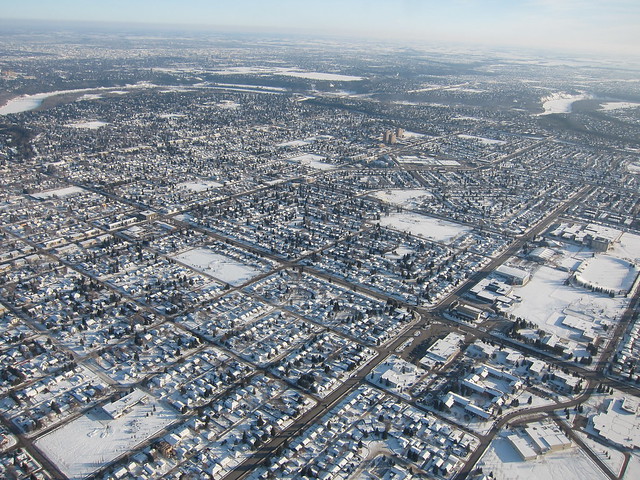
As mentioned a couple of days ago, Council is revisiting the discussion about sprawl in our city thanks to a report that projects the City will face a $1.4 billion shortfall after building out the three Urban Growth Areas. On top of this, another $8.3 billion in non-residential assessment growth is needed to maintain the current ratio of residential to non-residential tax assessment. That’s the real reason the City is pursuing annexation, though you won’t find it in the “three reasons for annexation”.

Edmonton from Above
Edmonton from Above, photo by Dave Cournoyer

In an editorial this week, the Journal wrote:

“Now is not the time to add to chills in the development industry, but the status quo is not a good option either.”

We need to stop worrying about the development industry and worry instead about Edmonton. Mayor Iveson put it like this in a recent blog post:

“This is a critical conversation happening in cities all across Canada; I intentionally use the word ‘critical’ because Edmonton is simply not financially sustainable under our current growth model.”

The word “sprawl” is carefully avoided in both the editorial and the mayor’s post. But that’s what it is.

Riverview Name Debate

One of the three Urban Growth Areas is Riverview, where planning for neighbourhoods is well underway. Names were proposed for five neighbourhoods, and both the developers and the Naming Committee agreed on two: Grandisle and White Birch. The other three names proposed were “The Uplands”, “Red Willow”, and “River’s Edge” but the Naming Committee went with “Balsam Woods”, “Golden Willow”, and “River Alder” instead. The developers appealed, which is how the issue came before Council today.

Paula Simons wrote about the issue with her signature brand of wit:

“If the developer’s chosen names are poor, the city’s aren’t much better. Balsam Wood sounds like something you use to build model airplanes. River Alder doesn’t trip off the tongue and west Edmonton already has an Aldergrove. It’s hard to take sides in this fight when both sets of names are so depressingly bland.”

We already have The Uplands of Mactaggart too.

//platform.twitter.com/widgets.js

Today, after an amusing debate, Council approved the developers’ proposed names. In discussing the importance of names, Councillor Loken said:

“If someone doesn’t like the name of a neighbourhood, they’re probably not going to live there…But Red Willow, Golden Willow? I don’t know.”

Maybe that’s how we can solve our sprawl problem!

Media Monday Edmonton: Update #195

Here’s my latest update on local media stuff:

  • Heather Boyd’s report into accreditation of news media for the Province has been released. You can download the 122 page PDF here. The report recommends that the Province “avoid developing a specific government media policy” and that it should instead “be guided to various degrees by convention, common sense and a desire to keep access to legislative proceedings as open to as large a number of citizens as possible.” In the Executive Summary, the report states: “Most, but by no means all, of the people interviewed for this report felt that there are no circumstances whatsoever under which a government should decide who gets to ask it questions.” The government has accepted all of the report’s recommendations.
  • Andrea Sands is leaving the Edmonton Journal to work as a communications consultant for the Edmonton Public School Board. She tweeted that it’s not all doom and gloom for local journalism though. “There are some great new reporters coming soon to the Journal so I look forward to reading.”
  • The winners of the 67th National Newspaper Awards will be announced at a ceremony here in Edmonton on Friday, May 27. The bad news? There are no Edmonton-based nominees. The Globe and Mail led the way with 19 nominations.
  • Marty Forbes is working on a new podcast with Jungle Jim Jerome. Called “Jungle Talk”, the project is set to debut “in the next month or so.”
  • Marty also notes that Len Theusen is retiring after a long career in local media, at 630 CHED, K-LITE (Capital FM), and most recently as an account rep at The Bear. Here’s a photo from the recent celebration event at MKT.
  • Lots of online news sites have started banning anonymous comments, but should they? Karen Unland and Linda Hoang spoke to CBC Edmonton about the issue this week.
  • Episode 34 of the Seen and Heard in Edmonton podcast features Paul Matwychuk, “a writer, editor and film aficionado who compares and contrasts movies in the most erudite way on Trash, Art, and the Movies.”
  • Twitter turned ten years old today! Lots of people revisited their first tweets to celebrate, including Global Edmonton.
  • Danielle Paradis wrote about “the deluge of abuse against student journalist Kate McInnes” that came in response to a critique published in The Gateway of the 5 Days for the Homelessness campaign. “McInnes is determined not to be silenced. She’s written more than 50 pieces for the Gateway and plans to be an editor next year.”
  • Here’s a guest post at the Meet the Media blog by Debra Kasowski asking if traditional media are worth it. “Media shapes our lives and influences how we think which in turn influences our behaviour and attitudes toward issues and events,” she wrote.
  • Speaking of #MeetTheMedia, you can register for the event taking place on April 15 here. There are already 28 people signed up.
  • Edmontonian Lindsey McNell is a filmmaker, writer, actress, and director and last year she was selected to represent Canada at the Cannes Film Festival. She says Edmonton needs an advocate, like a film commissioner, to bring more attention to the industry.
  • Calgary journalist Andrew Ng, who worked in Edmonton from 2008 through 2013, kept a notebook of “just about every story…and every person” he worked on and talked to over a two-year period in our city. “It sits on my desk now as a journal of my career as a journalist.”
  • The next Edmonton Podcasting Meetup takes place on April 9 at Variant Edition Comics & Culture and will explore making your podcast audience happy.

Gibson-Block & Hyatt
Edmonton Journal on the Gibson-Block

And here is some slightly less local media stuff:

You can follow Edmonton media news on Twitter using the hashtag #yegmedia. For a great overview of the global media landscape, check out Mediagazer.

So, what have I missed? What’s new and interesting in the world of Edmonton media? Let me know!

You can see past Media Monday Edmonton entries here.

Edmonton Notes for March 20, 2016

Here are my weekly Edmonton notes:

Headlines

Above the Blue
Above the Blue, photo by Dave Sutherland

Upcoming Events

Walterdale Bridge
Walterdale Bridge, photo by IQRemix

Coming up at City Council: March 21-25, 2016

Council is back to Committee meetings this week, with a very full agenda and some big ticket items to be discussed.
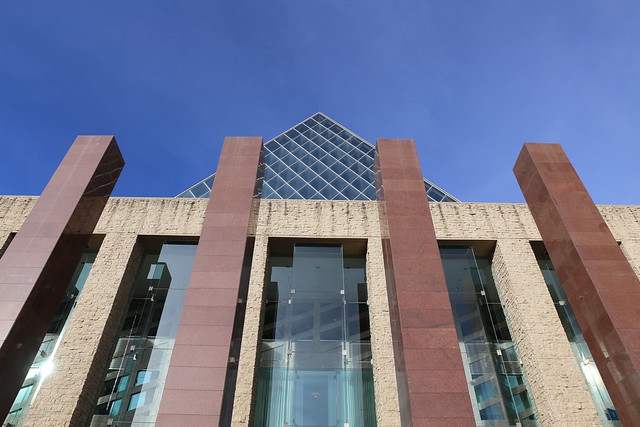
City Council Swearing In 2013-2017

Here’s my look at what Council will be discussing in the week ahead.

Meetings this week

You can always see the latest City Council meetings on ShareEdmonton.

Program & Service Review

Administration has come forward with a project plan for the program & service review that Council has requested. All City services will be reviewed a high-level and some will be identified for a deeper analysis to determine if the service could be reduced or stopped, provided differently or enhanced, or if new services are recommended. The City anticipates evaluating “approximately 30 programs and 200 services, which could be compared with services in other jurisdictions” using the Municipal Reference Model. The evaluation will focus on relevance, effectiveness, and efficiency:

  • “Relevance is why we are doing things.”
  • “Effectiveness is doing the right things.”
  • “Efficiency is doing things well.”

The review will start this year and will take until December 2018 to complete. Costs associated with the work in 2016 are expected to be $600,000 which “will be funded from existing resources leveraging currently planned service reviews.” The City is proposing three pilots in 2016 to “test the approach and identify improvements in the project methodology.” Additional costs for 2017 and 2018 will be determined after the pilot reviews are complete.

Urban Growth Areas: Integrated Infrastructure Management Planning

Edmonton’s three Urban Growth Areas are Decoteau, Horse Hill, and Riverview. When considering a build-out over a 30-40 year time frame starting this year, the highlight is that the three areas “are anticipated to require approximately $1.4 billion in capital investment by the City.” On top of that, “a developer infrastructure investment of approximately $3.8 billion” is required. But we know that new neighbourhoods do not pay for themselves. “The projected cumulative shortfall over the 50 year analysis period for the build-out of the Urban Growth Areas is anticipated to be in the order of $1.4 billion.”

projections

There’s a lot of detail in the report and a good discussion about the balance of residential and non-residential land in Edmonton. We have about three times more residential land than non-residential land, but non-residential taxes are 2.5 to 3 times more than residential, so they each contribute about 50%. Here are some other highlights:

  • “For the City as a whole to maintain the current ratio, there needs to be approximately $5 billion of non-residential assessment for every $20 billion in residential assessment growth.”
  • “It should be noted that the trend in Edmonton over the last few years has been an increasing burden shifting towards the residential tax payer as the residential class takes on a greater proportion of the total assessment base. The residential share of property taxes has increased from 48.7% in 2005 to 50.8% in 2015.”
  • “Based on the analysis completed, in order to maintain 25% non-residential assessment ratio, the Urban Growth Areas would require an additional $8.3 billion in non-residential assessments throughout the City of Edmonton, over and above the commercial and business employment areas planned within the Urban Growth Areas.”
  • “It is uncertain at this point whether this magnitude of non-residential assessments can be achieved within the City’s existing industrial areas and may be largely dependent on the timing and type of development to be constructed in the Edmonton Energy and Technology Park.”
  • “Should this level of non-residential assessment not be achieved over the build-out of the Urban Growth Areas, the City may need to consider changing the current residential to non-residential tax split from an even split to a higher percentage from the residential area, which would increase residential contributions and better reflect the costs of the City’s current built-form.”

As a result of all of this, “the City will need to continue its efforts to promote greater density, more effective utilization of infrastructure, and grow the industrial and commercial sectors in order to balance the City’s overall assessment base.”

Administration is working on a Growth Modelling Framework that would proceed in four phases through 2019. While it may be a useful tool, that seems awfully late to be available considering development of all three areas is already well underway.

Valley Line LRT Updated Tax Levy Requirement

Apparently the winning bid from TransED Partners to build and operate the Valley Line LRT came in at $2.2 billion, about $500 million less than the City was expecting. As a result, the City is recommending the 0.8% tax levy scheduled to start this year should be dropped to 0.6%, which would translate to savings of $4.25 for the typical homeowner. Another option could be to grow the LRT reserve fund faster.

Instead of a rebate to homeowners, the Amalgamated Transit Union would prefer to see the money spent on transit. “It’s capital money that was intended to flow into transit,” ATU President Steve Bradshaw told Metro. “What we’re saying it was intended for transit and it should stay for transit.”

Traffic Shortcutting Pilot Project

Here’s the background on this one:

“In the fall of 2015, a Traffic Shortcutting Pilot Project was undertaken in the communities of Crestwood, Newton, Ottewell and Ormsby Place to develop a streamlined process to address localized shortcutting and speeding concerns. The traffic management measures of the pilot project included speed humps, speed tables (speed hump with a flat top), driver feedback signs, the review of traffic signal timings and the restriction of vehicle access (Ormsby Place only).”

About a third of respondents to a questionnaire felt the measures benefited their community, while a quarter felt the measures improved traffic safety. The report highlights a number of lessons learned, including:

  • “Project Coordination: Projects should be coordinated with other capital projects to minimize construction costs and more efficiently engage the public.”
  • “Community Awareness: Need to first build broad public involvement and engage communities before addressing traffic concerns.”
  • “Roles and Responsibilities: Establish clear roles and responsibilities for Administration, public stakeholder groups, including decision-making at key points in the process.”
  • “Process Flexibility: Every neighbourhood is unique, thus a flexible process can be tailored to the specific needs of a community.”
  • “Project Timelines: The process needs to be responsive to community needs in a timely manner and adequate time must be allocated to properly engage the public and complete comprehensive before and after traffic studies.”

A separate report provides an update on the Community Traffic Management Plan pilot program in the Prince Charles and Pleasantview Communities. Activities are ongoing in Prince Charles, but the trial in Pleasantview was removed in February. The lessons learned through those two pilots were broadly similar to the others noted above.

“Since the mid-1990s, this is the fourth time Pleasantview has been through a Community Traffic Management Plan. This is the second time Prince Charles has been through a Community Traffic Management Plan since 2000.”

In 2003, Council adopted a set of guidelines for the community traffic management process that “established selection criteria to be used as a means of prioritizing communities for traffic management initiatives.” Only Pleasantview and Prince Charles have met the requirement to demonstrate sufficient community support since that time, but citizens in over 30 neighbourhoods have requested the initiation of a community traffic management plan. The City is now reviewing these guidelines. “Establishing criteria for community support and thresholds for traffic volumes, speeds, and shortcutting in an evidence-based approach, provides a means of addressing the growing city-wide demand for community traffic management initiatives in a more planned, efficient, consistent, and equitable manner.”

All of the lessons learned and other input will be considered in the development of a Policy on Traffic Shortcutting and a Community Traffic Management Policy, currently slated to be ready for Council’s review in June.

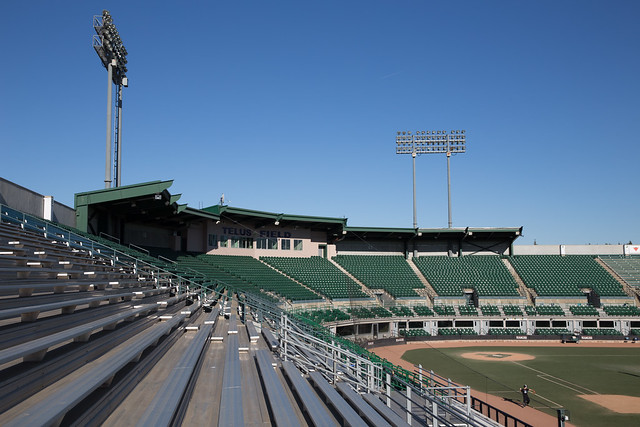
Telus Field

It looks like the uncertainty over the immediate future of Telus Field is coming to an end. The Edmonton Prospects Baseball Club has been selected as the preferred proponent to operate and maintain Telus Field and they’re looking to sign a four-year deal with the City to do just that. They would pay an annual license fee of $20,000 per year, in addition to operating and maintenance costs. The City would still be responsible for preventative maintenance, waterproofing, snow removal and parking lot maintenance, and utility costs related to the City’s office space in the building.

The City is still working on a longer-term vision for Telus Field as part of its plan for the River Crossing area, expected to be delivered in 2018. The River Crossing area encompasses land redevelopment in West Rossdale, repurposing of the Rossdale Generating Station, and other items. “This plan will take an integrated approach to advancing change in this unique and complex area,” the report states.
What the Truck?! at Telus Field

In addition to the agreement to operate Telus Field, the Prospects are requesting permission “to secure a new naming sponsor for the facility.” They need Council’s approval to start looking for a new sponsor, and even once they find a willing partner, the Naming Committee and Historical Board must be consulted and Council will have final approval. The Prospects need the sponsorship revenue to help support the operation of the ballpark.

Other interesting items

  • It is recommended that Council approve a funding agreement with the Argyll Velodrome Association and the Society of the Edmonton Triathlon Academy for the Coronation Community Recreation Centre project. Council had previously approved $112.26 million for the project.
  • A majority of partner facilities, festivals, and events would prefer the City is to mandate the establishment of designated smoking areas rather than mandate smoke-free events and facilities.
  • The Dogs in Open Spaces Strategy “will enhance off-leash sites and provide safe and enjoyable experiences for park users.” A new report outlines recommendations made by the strategy and notes that Administration will now develop an implementation plan.
  • The Naming Committee previously approved five neighbourhood names for the Riverview ASP but Stantec is appealing and has suggested the committee “neglected to consider the wishes of the majority landowners in these neighbourhoods.”
  • A report on zoning options for high quality main streets identifies the following as qualifying main streets: Jasper Avenue, Whyte Avenue, 97 Street, 101 Street, 107 Avenue, 109 Street, 118 Avenue, 124 Street, Stony Plain Road.
  • In an effort to better support residential infill, the City is recommending a new Community Standards Infill Compliance Coordinator, amendments to the Community Standards Bylaw 14600 to inroduce weekday construction restrictions, and amendments to the Traffic Bylaw 5590 to improve current development practices and address community concerns about infill construction.
  • A progress report on joint efforts between the City of Edmonton and the City of St. Albert on the possibility of integrating transit systems considers five models and recommends returning in Q3 2016 with more detail.
  • Edmonton currently classifies roadways as “local”, “collector”, and “arterial” and applies Complete Streets Guidelines on top of that. Administration has reviewed this classification scheme, and after comparing with other cities like Ottawa, Calgary, and Toronto, has recommended the status quo. It further noted “that roadway classification is neither used as a tool nor viewed as a solution to shortcutting and speeding issue.”
  • Council is slated to receive a verbal status update on the Metro Line LRT on Wednesday, and will also receive a private contractual update.

Wrap-up

You can keep track of City Council on Twitter using the #yegcc hashtag, and you can listen to or watch any Council meeting live online. You can read my previous coverage of the 2013-2017 City Council here.

Linda Cochrane is Edmonton’s new City Manager

Mayor Don Iveson announced this morning that City Council has hired Linda Cochrane as Edmonton’s new City Manager. A long-time City employee, Linda has been the Acting City Manager since September when Council decided to fire Simon Farbrother.

Linda Cochrane

Here’s what the mayor had to say on why Linda was selected:

“As you know, Linda had been Acting City Manager since the fall of 2015. In that time she has earned the complete trust of City Council through her continuing work to transform the structure of the corporation and lead a more open and effective local government.

It is important to note that this was an international search with applications from candidates far and wide. The interest of so many talented applicants is a wonderful compliment to our community, our vision, and the work of our administration – things we should all be immensely proud of. More to the point, it is a reflection of the quality of Linda’s tremendous service and inspiring leadership that she was considered best amongst this class of impressive candidates.”

Council has signed Linda to a three year term, with options to renew. Linda was very clear back in January that she wanted to be considered for the role. Today she was elated to have been selected, telling the Journal: “I’m just over the moon. It’s a realization of a lifetime dream. I couldn’t be happier.”

//platform.twitter.com/widgets.js

Linda started her career in aquatics programs, first in Edmonton as a swim instructor and then with Spruce Grove. She returned to the City in 1982 and started climbing the management ladder. She was director of the Kinsmen Sports Centre and in 1990 was asked to take on the role of director at the Valley Zoo. It wasn’t long until she was in charge of the City’s parks and recreation centres. Linda was most recently the general manager of Community Services (now Citizen Services after the reorg she announced in January), a position she took on in 2006.

Linda has worked on a number of high profile projects throughout her career. She defended the Valley Zoo’s care of Lucy the Elephant and refused to bow to pressure from Bob Barker and others who wanted Lucy moved. Linda was one of only four women on the eighteen-person bid committee for the 2001 World Championships in Athletics. She led the charge to build the Terwillegar Rec Centre and led a review of all the City’s facilities. Most recently of course she earned the nickname “cabbie whisperer” for her quick action to restore order during contentious Council discussions on Uber.

//platform.twitter.com/widgets.js

Linda is Edmonton’s first female City Manager. That’s particularly interesting given that she is the only woman on the Corporate Leadership Team (CLT). “Between 2012 and 2015, the percentage of general and branch managers who were woman held steady at 22 per cent. It’s now 16 per cent,” reported the Journal. Of course there’s just one woman – Bev Esslinger – on City Council as well.

I wrote back in November that I didn’t think Linda was likely to get the job. That comment was based not on her abilities, but on what Council had publicly stated they were looking for. Mayor Iveson’s statement back in September said “the scale and complexity of the challenges ahead demand a fresh perspective” and that Council’s goal was to “hire someone who can meet the aspirations of this city head-on and help build the kind of city we can all be proud of.” It seemed as though Council wanted someone from the outside.

I do think Linda is a great choice for City Manager. She is well-known and widely respected at the City has earned a reputation as someone who gets things done. Linda will tell it like it is, and that’s certainly important to Council. She has been supportive of the ongoing culture shift at the City and has talked often of leading through service. Linda is ideally suited to guiding the City through turbulent times.

In just a few short months as Acting City Manager, Linda has really put her stamp on the organization, earning Council’s trust, the public’s admiration, and leading a key reorganization. I can’t wait to see what she accomplishes in her new role.

Media Monday Edmonton: Update #194

Here’s my latest update on local media stuff:

Edmonton Sun & Journal

And here is some slightly less local media stuff:

You can follow Edmonton media news on Twitter using the hashtag #yegmedia. For a great overview of the global media landscape, check out Mediagazer.

So, what have I missed? What’s new and interesting in the world of Edmonton media? Let me know!

You can see past Media Monday Edmonton entries here.

Edmonton Notes for 3/13/2016

Are you feeling robbed of time today? It’s too bad daylight savings isn’t in the mayor’s jurisdiction. Here are my weekly Edmonton notes:

Headlines

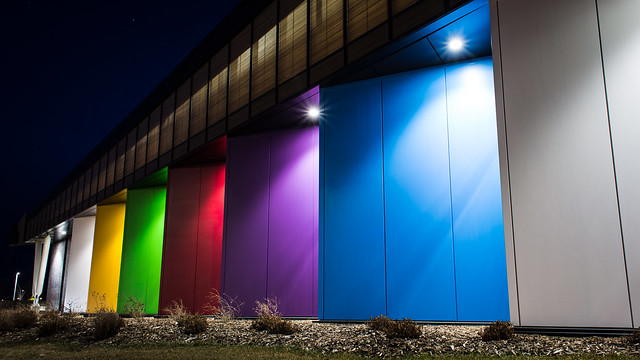
Colourwall
Colourwall, photo by Dave Sutherland

Upcoming Events

High Level in the Fog
High Level in the Fog, photo by Kurt Bauschardt

Coming up at City Council: March 14-18, 2016

It looks like Council has a busy week ahead! They’ll be looking at Northlands and the question of what to do with Rexall Place, a topic that is sure to dominate the headlines early in the week. The other contentious issue on the agenda is the District Energy System for Blatchford. Council is also receiving a big financial update this week.

Moe Banga Swearing In Ceremony

Here’s my look at what Council will be discussing in the week ahead.

Meetings this week

You can always see the latest City Council meetings on ShareEdmonton.

Northlands Vision 2020

The first item of business for Council is to discuss the Northlands Vision 2020 proposal. The plan has been called a fantasy, and it has been suggested that Northlands itself “has no particularly strong reason for carrying on.” But in the absence of an alternative vision for what to do with the site, there’s a real chance that Council will support the plan, at least tentatively. The City hasn’t brought any leadership to the table on this issue (only very minor adjustments have been made to the Coliseum Station ARP that was approved in 1983).

An economic impact assessment conducted by NICHOLS Applied Management suggested that Vision 2020 could result in an overall positive impact to the provincial GDP of between $680 million and just over $1 billion, with about a third of that directed within Edmonton.

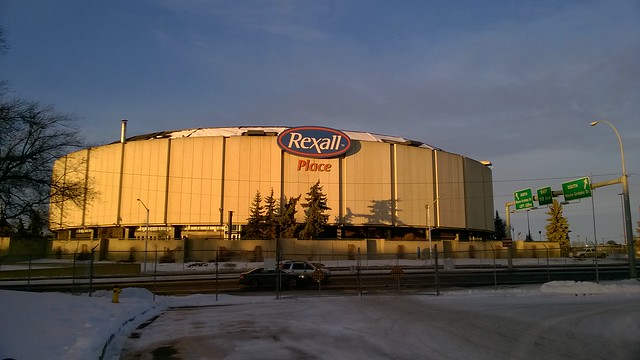
Rexall Place

Does turning Rexall Place into the Ice Coliseum, a facility with seven sheets of ice, at a cost of between $76 million and $94 million make sense? Is there actually a need for the proposed Urban Festival Site that would replace the racetrack? Should we really sink another $40 million into Hall D when Northlands already owes more than $40 million for the last Expo Centre expansion? These are some of the questions that Council will have to explore.

It seems unlikely that anything will happen unless Council agrees to forgive the debt on the Edmonton Expo Centre. And I don’t think Council is likely to do that without seeking some major governance change at Northlands. Could this be the opportunity to redraw the lines between Northlands and EEDC and come up with a more sensible deployment of limited resources?

Council will also be looking at the 2016 Northlands Capital Budget. Northlands is planning to spend $3.8 million this year on capital improvements, including $641,243 in the Edmonton Expo Centre, $880,121 on “technology and telephony”, and $815,358 on asphalt repair.

There is also Bylaw 17607 on the agenda, an amendment to the existing bylaw that allows for a ticket surcharge on all events held at Rexall Place. The new bylaw will be known as the Rexall Place Ticket Surcharge Bylaw, and is required to comply with the Master Agreement between the City and the Edmonton Arena Corporation. It will come into effect on July 1, 2016.

Capital Financial Update

There’s a lot of information available in this report and in the December 2015 Preliminary Year-End Financial Results. Here are some highlights:

  • Including carry-forward from 2014, the total approved capital budget is $7.93 billion.
  • The full year spend for 2015 was $1.03 billion or 16.7% against the 2015-2018 budgeted capital plan of $6.15 billion.
  • There are 466 active profiles with planned expenditures in the 2015-2018 budget cycle, 341 of which are classified as single and 125 as composite in nature.
  • There are 69 projects in the 2015 to 2018 Capital Budget cycle with costs greater than or equal to $20 million. They account for 89.1% ($7.07 billion) of the total approved budget.
  • As of December 2015, 83 projects have been classified as green, 2 as yellow, and 12 have been flagged red.

Those 12 red projects are:

  • Great Neighbourhoods Initiative
  • Milner Library Renewal & Upgrades
  • Northwest Police Campus
  • The Quarters – Phase 1
  • River Valley Alliance Connective Infrastructure
  • Walterdale Bridge
  • 102 Ave over Groat Road
  • Metro Line LRT
  • Westwood Transit Garage Replacement
  • Mill Woods Double Barrel
  • Anaerobic Digestion
  • Parking Control Technology

There’s also some information on economic indicators:

  • Inflation as measured by the Consumer Price Index was down on a year-to-year basis in the Edmonton region from 2.2% in 2014 to 1.2% in 2015.
  • The Municipal Price Index is projected to average 0.4% for 2015 trending upward to 3% in 2019.
  • The costs of delivering municipal services are expected to rise at a faster rate than that of the Consumer Price Index.
  • Interest rates are expected to rise at the end of 2016.

inflation forecast

Edmonton Arena District Update

The latest update on the downtown arena district says that “construction continues to progress on schedule and within the approved budget.” There’s a lot of different work already underway, and “fit-out and finishing” is about to begin. The first seat was installed this month and all seating is expected to be in place in May. That’s also when the scoreboard is set to arrive. The Alex Janvier public artwork in the Winter Garden will be installed in June. As previously discussed, the arena will be a LEED Silver building, the second in the NHL after Pittsburgh. “Through the end of December, 87.2 percent (5,288 tons) of waste has been diverted from the landfill.”

Transforming City
Transforming City, photo by Dave Sutherland

The update also includes a rough schedule for when the various buildings within Ice District will open:

  • September 2016 – Casino
  • September 2016 – Oilers Entertainment Group Offices
  • November 2016 – Edmonton Office Tower
  • Summer 2018 – JW Marriott Hotel
  • Fall 2018 – Stantec Office Tower & Retail Podium
  • Spring 2019 – Legends Residential Tower
  • Summer 2019 – Stantec Residential Units

Through the end of February 2016, total project expenditures are about $441,500,000. The total project budget is $604,950,279.

District Energy Sharing System

A district energy system “centralizes the production of heating or cooling for a geographical area” and was one of the key features of the Blatchford development plan. Council had previously asked for “a comprehensive business case” for implementing the system, which is included in this report. The business case for the system recommends a low (ambient) temperature system operating as a public interest utility. Two scenarios have been modelled:

  • Scenario A requires $20 million per year for the first ten years and represents the full build-out of the system using only renewable energy source for meeting both base and peak demand for thermal energy
  • Scenario B requires $20 million per year for five years and represents the full build-out of the system using renewable energy sources to meet the base demand and transitional natural gas boilers and cooling towers to meet peaking thermal energy demand

Administration says Scenario B is “a pragmatic first step” toward achieving the carbon neutral, 100% renewable energy-based vision for Blatchford, but it “does not achieve the same level of greenhouse gas reductions” as the Scenario A would. In order to move forward, a revised project implementation schedule is required and means that construction may be delayed until 2017. The source of funding has not yet been identified.

The next steps are for Administration to look at options for funding the project, engage in further discussions with EPCOR, and to review the financials and project implementation schedule.

Other interesting items

  • The Deputy Mayor and Acting Mayor roster has been updated as a result of the Ward 12 by-election. Councillor Banga will serve as Deputy Mayor from September 16 to the Organizational Meeting in October, and as Acting Mayor from August 16 to September 15.
  • Transportation Committee has recommended that Council approve funding for the Heritage Valley Park and Ride and adopt a revised Park and Ride strategy.
  • The committee has also recommended that by September 2016, some free Park and Ride stalls be converted to paid stalls, that the price to park in reserved stalls be increased, and that time limits be implemented for unreserved stalls.
  • Bylaw 17571 is ready for first reading and will authorize the City to widen Whitemud Drive from 40 Street to 17 Street at a cost of $14,648,000.
  • Bylaw 17575 would lower the special tax rate for Alley Lighting by nearly 4%, from $1.02 per assessable metre in 2015 to $0.98 per assessable metre in 2016. This is because LED lights use less energy and require less maintenance.

Wrap-up

You can keep track of City Council on Twitter using the #yegcc hashtag, and you can listen to or watch any Council meeting live online. You can read my previous coverage of the 2013-2017 City Council here.

Learning about pulses for #3SkillsYEG

Over the last month, I have been learning about pulses and how to cook with them as part of the #3SkillsYEG challenge. Cooking with pulses seemed like a great topic for me given the suggested theme for February was “Personal Growth & Wellbeing” and that 2016 is the International Year of Pulses.

Pulses

Learning about pulses

It just so happened that the Canadian Association of Foodservice Professionals (CAFP) and the Alberta Pulse Growers (APG) hosted a dinner early in the month called Everything is PULSEible. I was fortunate enough to attend with Sharon, who had been invited to blog about the dinner. It was a great way to both taste and learn more about pulses, though I suppose I didn’t realize just how familiar with them I already was. Here’s an excerpt from Sharon’s post:

“After reading Mark Bittman’s Food Matters more than five years ago (his mission was to encourage more conscious consumption of non-meat proteins), I was inspired to start including more beans and lentils in our diet. In 2011, Julie Van Rosendaal and Sue Duncan’s cookbook, Spilling the Beans, was released, becoming one of our go-to guides for meal inspirations. Now, pulses have just become a part of our regular rotation, both as a meat alternative but also to enhance soups, salads and mains, stretching the meal all while adding nutrients. At this point, our pantry and freezer would feel bare without having some variety of pulses on hand.”

She’s not kidding! Our meals often have beans and I guess I just didn’t think of them as pulses. So what exactly is a pulse? From Pulses.org:

“Pulses are the edible seeds of plants in the legume family. Pulses grow in pods and come in a variety of shapes, sizes and colors. The United Nations Food and Agriculture Organization (FAO) recognizes 11 types of pulses: dry beans, dry broad beans, dry peas, chickpeas, cow peas, pigeon peas, lentils, Bambara beans, vetches, lupins and pulses nes (not elsewhere specified – minor pulses that don’t fall into one of the other categories).”

Canada is one of the leading producers of pulses in the world. In 2011, Canada produced over a third of the world’s lentils and had the largest amount of dry pea production in tonnes. Saskatchewan is the largest pulse producing area in Canada with about 80% of the market, followed by Alberta at 20%, according to Statistics Canada. There are more than 2,300 farms growing pulses here in Alberta, which accounts for about 10% of the province’s crop acres. There’s good reason that the prairies are so good at producing pulses:

“The Canadian prairie soil and climate conditions, research for developing new varieties that resist lodging and disease or have a shorter growing season, agronomic and economic benefits when planted in rotation with other field crops and the growth of processing facilities all contributed.”

Unfortunately it’s not as easy as you might think to locate pulses grown here in Alberta because the packages most often end up with a “product of Canada” label. But as Sharon noted, “Alberta grows a variety of pulses: primarily peas (green, yellow, marrowfat), but also beans (great northern, black, cranberry, pink, small red), lentils (red, green) and chickpeas.”

Cooking with pulses

Pulses are very versatile ingredients and offer some excellent nutritional benefits. Pulses are gluten-free and vegetarian, low in fat and high in protein, and they’re a great source of folate and high in fibre. They’re also relatively cheap, especially when compared with meat. But despite all of those benefits, we don’t eat very many pulses. “A small amount is used by Canadian consumers and has increased over time, but is still relatively low compared to countries where pulses are a dietary staple,” wrote Statistics Canada. Many organizations are working to change that, including the Global Pulse Confederation and of course Alberta Pulse Growers here at home. One of the ways they’re doing that is by developing recipes that show just how easy it is to prepare dishes with pulses.

CAFP Alberta Pulse Dinner

The most surprising dish to me at the Everything is PULSEible dinner was the dessert – Lentil Fudge Pie. “This fudge pie is so delicious, you’ll never guess there’s lentils in it!” They were right. It was very tasty and had I not been told, I’d have never guessed that it contained a red lentil purée. I’m not much of a baker, but I’d be willing to give this a shot.

For a variety of reasons, I ended up doing a lot of the cooking in February. I did my best to use plenty of pulses and I’m happy to report it wasn’t hard! I made dishes in which the recipe called for pulses, like Mushroom Lentil Bourguignon (from Spilling the Beans). I also made some dishes that I simply added pulses to, like Carrot, Spinach and Rice Stew which I added chickpeas to. One of the more interesting dishes I made again tonight so I could take some photos – Curried Lentil Soup.

Curried Lentil Soup

The soup calls for both French green lentils (or dupuy lentils) and chickpeas (garbanzo beans). The lentils are easy to work with – simply rinse them and then add to the pot. I used stock instead of water, and they cooked nicely in about 30 minutes.

Chickpea Butter

The chickpeas take a bit more work as you need to purée them into a butter. I added a can of chickpeas to the food processor along with the garlic, lemon juice, and olive oil and before long I had a nice buttery spread. The last step is to add the chickpea butter to the simmer soup and combine, which gives it a beautiful, rich consistency.

Curried Lentil Soup

The soup is one of Sharon’s favorites, and I have to admit I’m quite fond of it myself. Easy to make, extremely tasty, and pretty healthy too!

Working as Sharon’s sous chef in the past, I don’t think I appreciated just how easy it is to add pulses to a dish. I have a better appreciation for them now, and am happy that our pantry is always stocked with beans and lentils!

Next steps with pulses

To help celebrate the International Year of Pulses, Pulse Canada has teamed up with the American Pulse Association to promote the Pulse Pledge:

“Commit to eating pulses once a week for 10 weeks and join a global food movement! Eating dry peas, lentils, beans and chickpeas helps reduce your carbon footprint – and it’s great for your health. Every 1/2 cup of cooked pulses delivers 9 grams of protein. Get rewarded for eating these miraculous superfoods.”

Pulses once a week? Piece of lentil cake!

I encourage you to give pulses a chance. And as a Learning Champion, I definitely encourage you to check out #3SkillsYEG! The theme for March is Creativity and Expression, and I have decided I will learn how to use my macro camera lens. That’s what I used to take the lentil and soup photos above! You can pick any skill you like, of course, the theme is just to get you going. Be sure to share your learning journey and enter the #3SkillsYEG contest.

I wish you tasty pulses and happy learning!

Media Monday Edmonton: Update #193

Here’s my latest update on local media stuff:

City Glow
City Glow, photo by Dave Sutherland

And here is some slightly less local media stuff:

You can follow Edmonton media news on Twitter using the hashtag #yegmedia. For a great overview of the global media landscape, check out Mediagazer.

So, what have I missed? What’s new and interesting in the world of Edmonton media? Let me know!

You can see past Media Monday Edmonton entries here.