State of the Calgary Twittersphere – November 2009

Welcome to the ninth State of the Calgary Twittersphere, my look at the intersection of Twitter and Calgary. You can see last month’s stats here.

The source of the data this month is the same as last, primarily Twitter Search but also from Twitter directly. If a user has his or her location set to Calgary, Airdrie, Okotoks, Cochrane, Strathmore, or matching lat/long coordinates, they are considered a Calgarian.

For November 2009:

# of local users: 7468 (an increase of 185 from October)

To clarify, that means there were 7468 users who posted at least one tweet in November 2009 with their location set to something that makes them an Calgarian as described above. This number should be treated as a minimum – there are probably many more Calgary users without their location set or that were not captured for some other reason.

Here are the rest of the stats for November 2009:

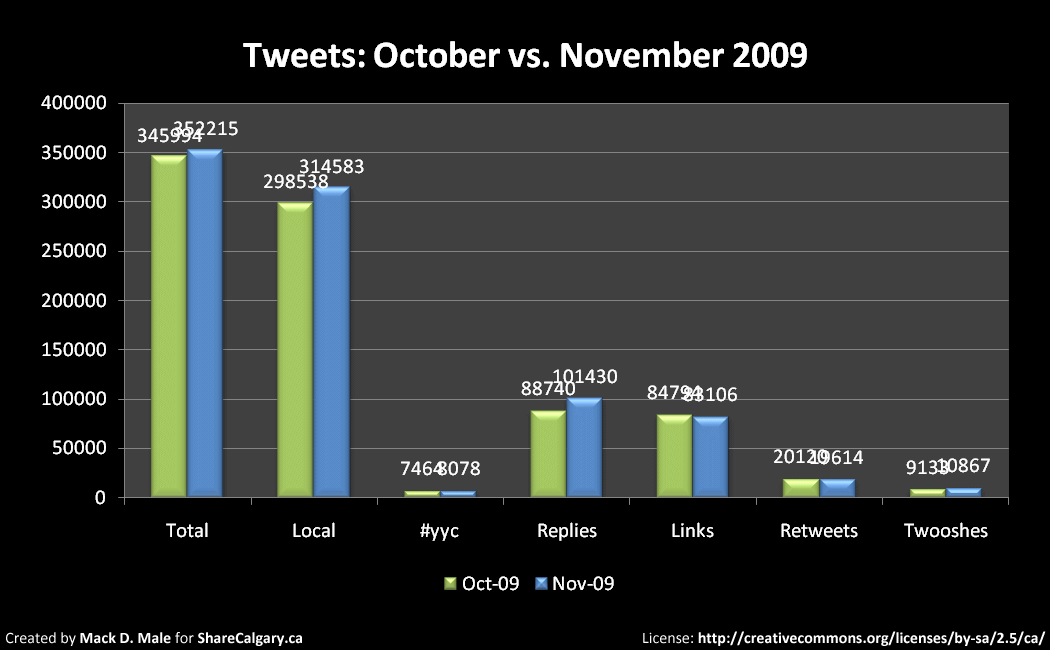
# of tweets by local users: 314583
# of tweets by local users containing #yyc: 8078 (2.6%)
# of tweets by local users that were replies: 101430 (32.2%)
# of tweets by local users containing links: 83106 (26.4%)
# of tweets by local users that were retweets: 19614 (6.2%)
# of tweets by local users that were twooshes: 10867 (3.5%)

I think the retweet number might be a little off, due to the new retweet functionality on Twitter.com, but it’s close. Here are the numbers above in graphic form:
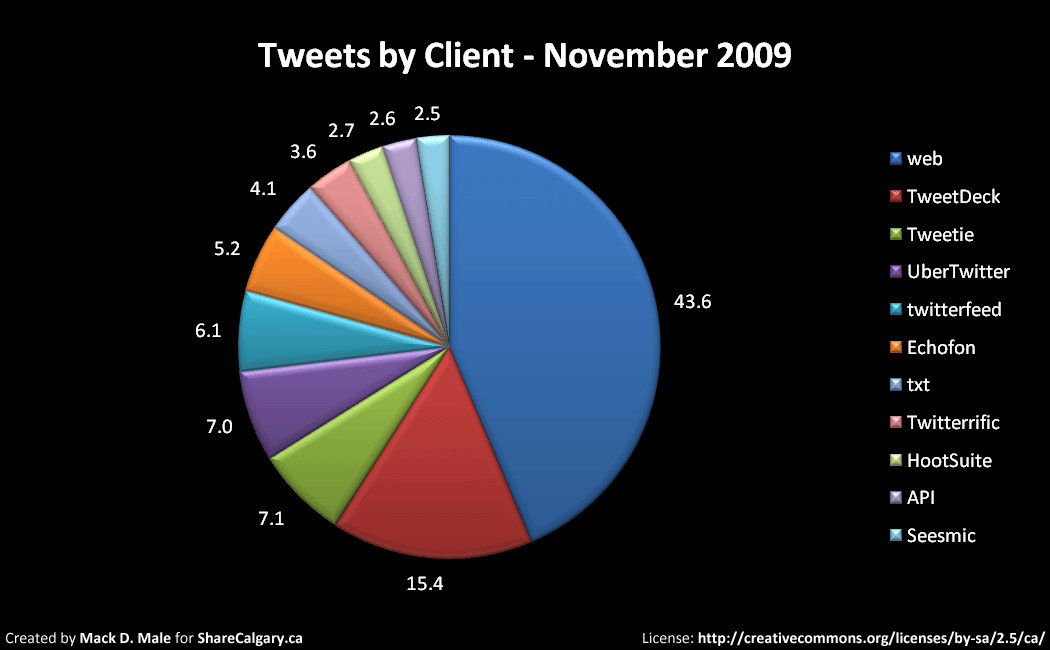
Here are the top clients used by local users for posting updates:
Some other interesting stats for the month:

Final Thoughts

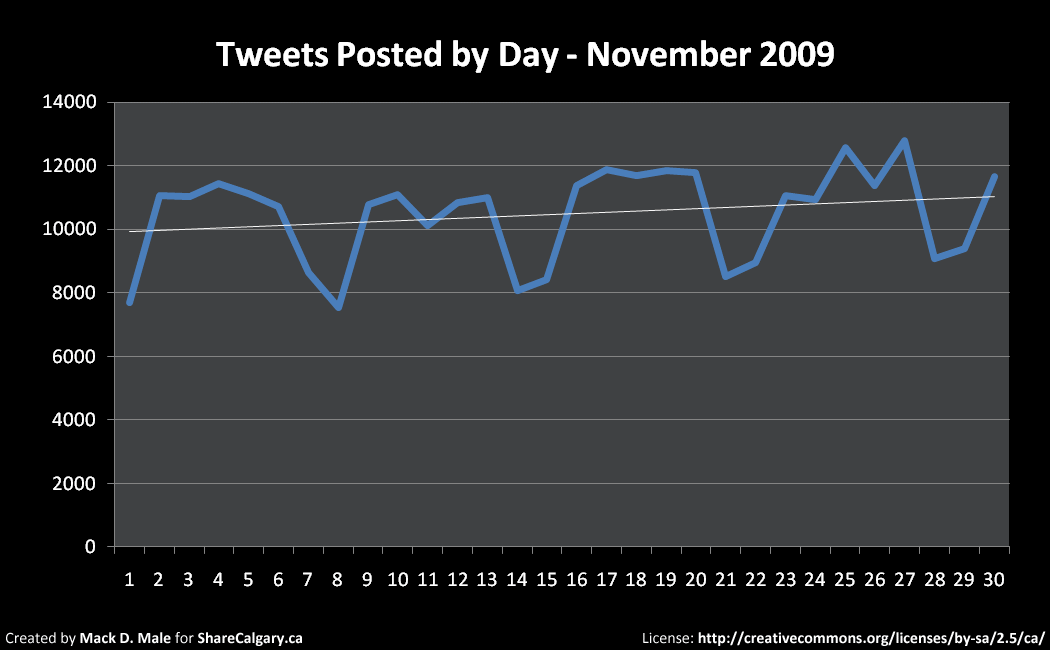
Edmonton is catching up, but Calgary broke the 300,000 tweets in a single month barrier first! There were just 9 days in November with less than 10,000 local tweets posted. This is the second straight month that user growth in Edmonton has been larger too, though not by very much.

Since March, I have identified just over 17,600 local users. The number above, 7468, is how many of them were active in November.

December and 2009 year in review stats are coming soon!
State of the Calgary Twittersphere – October 2009

Welcome to the eighth State of the Calgary Twittersphere, my look at the intersection of Twitter and Calgary. You can see last month’s stats here.

The source of the data this month is the same as last, primarily Twitter Search but also from Twitter directly. If a user has his or her location set to Calgary, Airdrie, Okotoks, Cochrane, Strathmore, or matching lat/long coordinates, they are considered a Calgarian. If a tweet is “about Calgary” it contains either the word Calgary, the #yyc hashtag, or both.

For October 2009:

# of local users: 7283 (an increase of 139 from September)

To clarify, that means there were 7283 users who posted at least one tweet in October 2009 with their location set to something that makes them an Calgarian as described above. This number should be treated as a minimum – there are probably many more Calgary users without their location set or that were not captured for some other reason.

Here are the rest of the stats for October 2009:

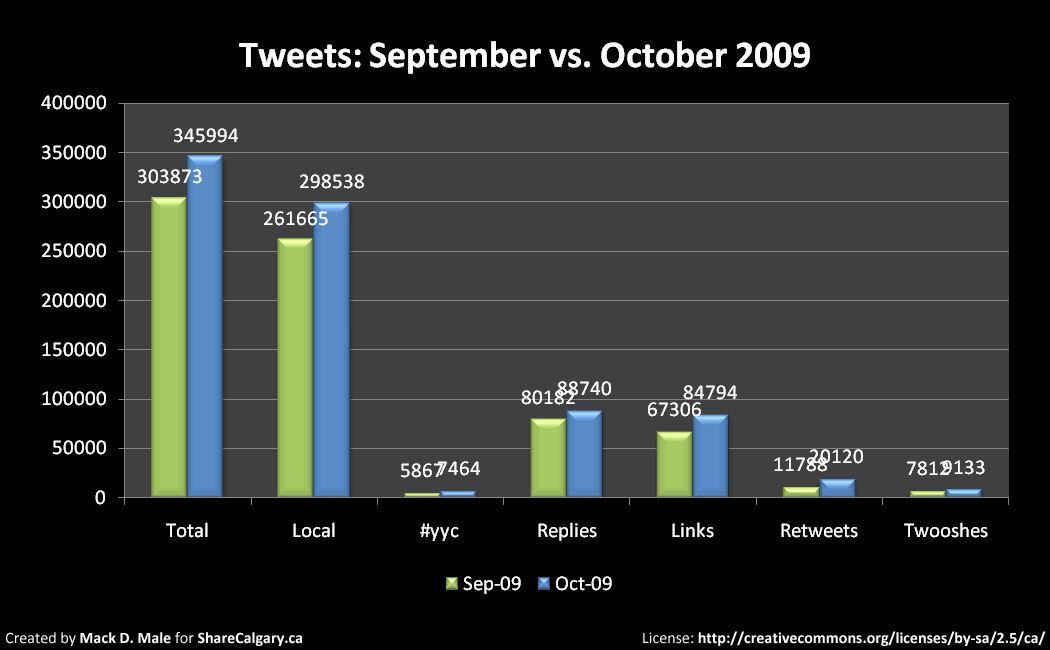
# of tweets by local users: 298538
# of tweets by local users containing #yyc or #calgary: 7464 (2.5%)
# of tweets by local users that were replies: 88740 (29.7%)
# of tweets by local users containing links: 84794 (28.4%)
# of tweets by local users that were retweets: 20120 (6.7%)
# of tweets by local users that were twooshes: 9133 (3.1%)

I’ve heard that some folks in Calgary use #yyc while others use #calgary, so I decided to do the stats for both this month. Of the 7464 total tagged tweets, just 934 of them used #calgary. Of those, just 381 did not also include #yyc.

Here are the numbers above in graphic form:

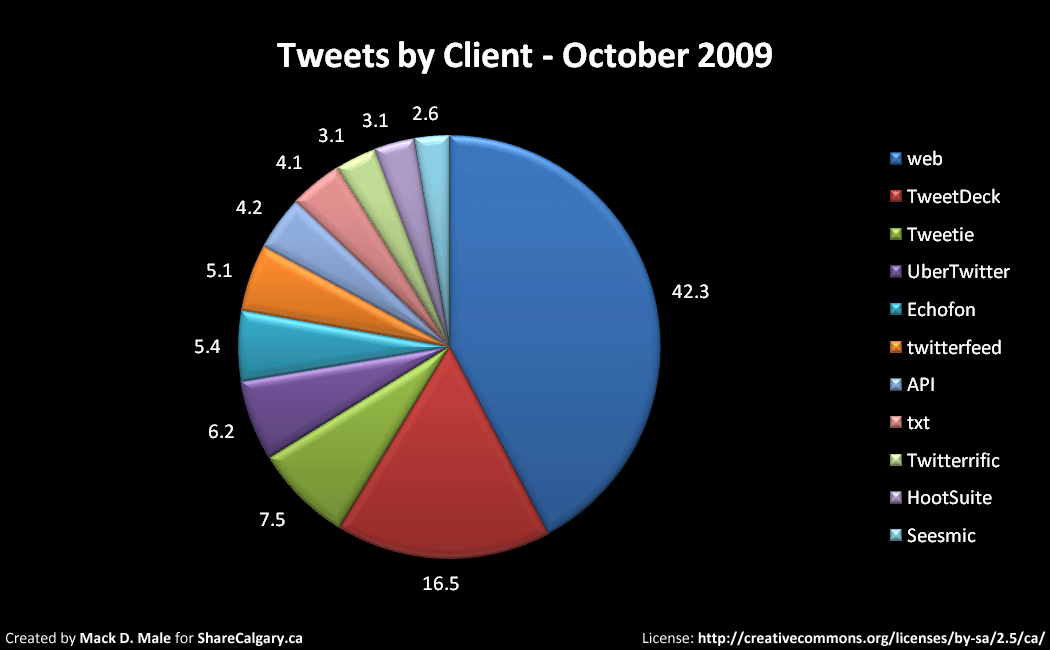
Here are the top clients used by local users for posting updates:

Some other interesting stats for the month:

Final Thoughts

User growth was less than Edmonton this month, which doesn’t happen very often! The number of tweets posted by local users is still on the rise, however. There were 5 days in October with more than 11,000 local tweets posted.

Since March, I have identified just over 16,200 local users. The number above, 7283, is how many of them were active in October.

State of the Calgary Twittersphere – September 2009

Welcome to the seventh State of the Calgary Twittersphere, my look at the intersection of Twitter and Calgary. You can see last month’s stats here.

The source of the data this month is the same as last, primarily Twitter Search but also from Twitter directly. If a user has his or her location set to Calgary, Airdrie, Okotoks, Cochrane, Strathmore, or matching lat/long coordinates, they are considered a Calgarian. If a tweet is “about Calgary” it contains either the word Calgary, the #yyc hashtag, or both.

For September 2009:

# of local users: 7144 (an increase of 292 from August)

To clarify, that means there were 7144 users who posted at least one tweet in September 2009 with their location set to something that makes them an Calgarian as described above. This number should be treated as a minimum – there are probably many more Calgary users without their location set or that were not captured for some other reason.

Here are the rest of the stats for September 2009:

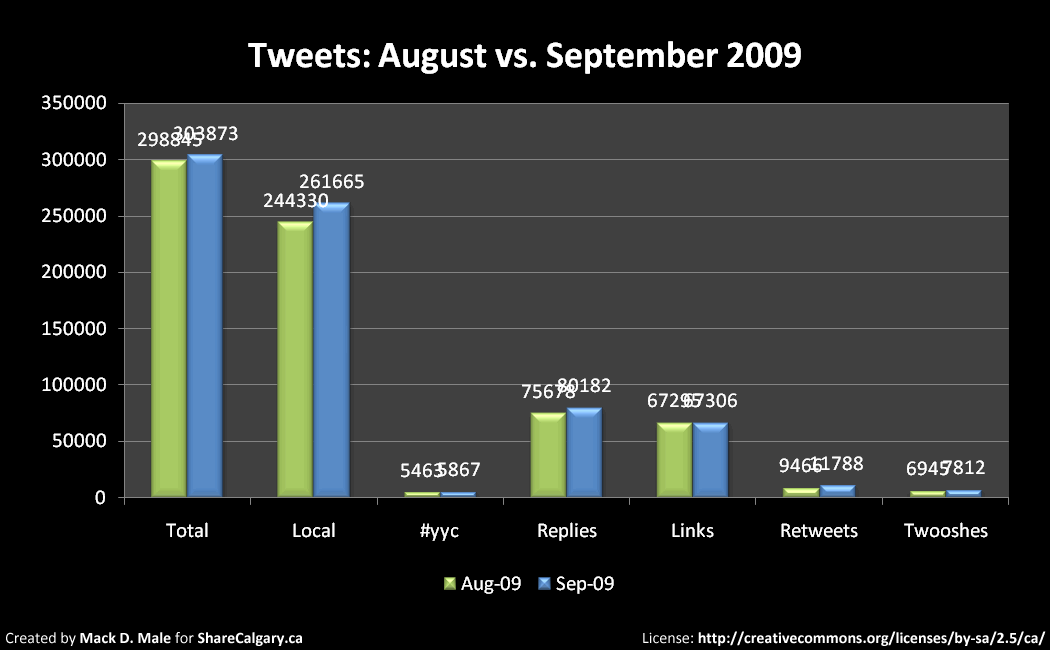
# of tweets by local users: 261665
# of tweets by local users containing #yyc: 5867 (2.2%)
# of tweets by local users that were replies: 80182 (30.6%)
# of tweets by local users containing links: 67306 (25.7%)
# of tweets by local users that were retweets: 11788 (4.5%)
# of tweets by local users that were twooshes: 7812 (3.0%)

Here are the numbers above in graphic form:

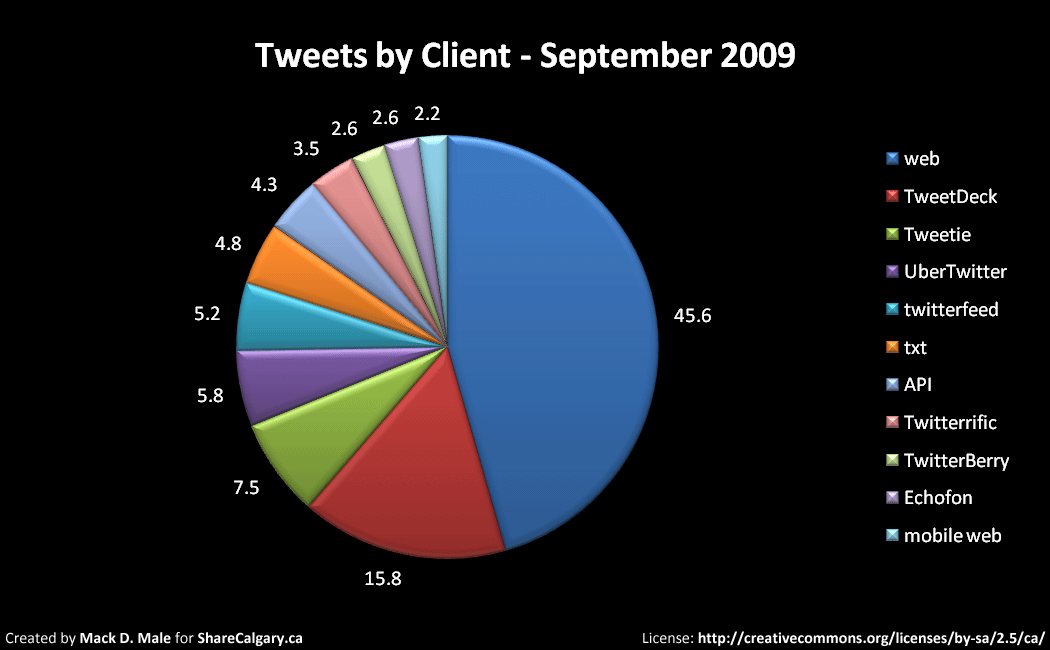
Here are the top clients used by local users for posting updates:

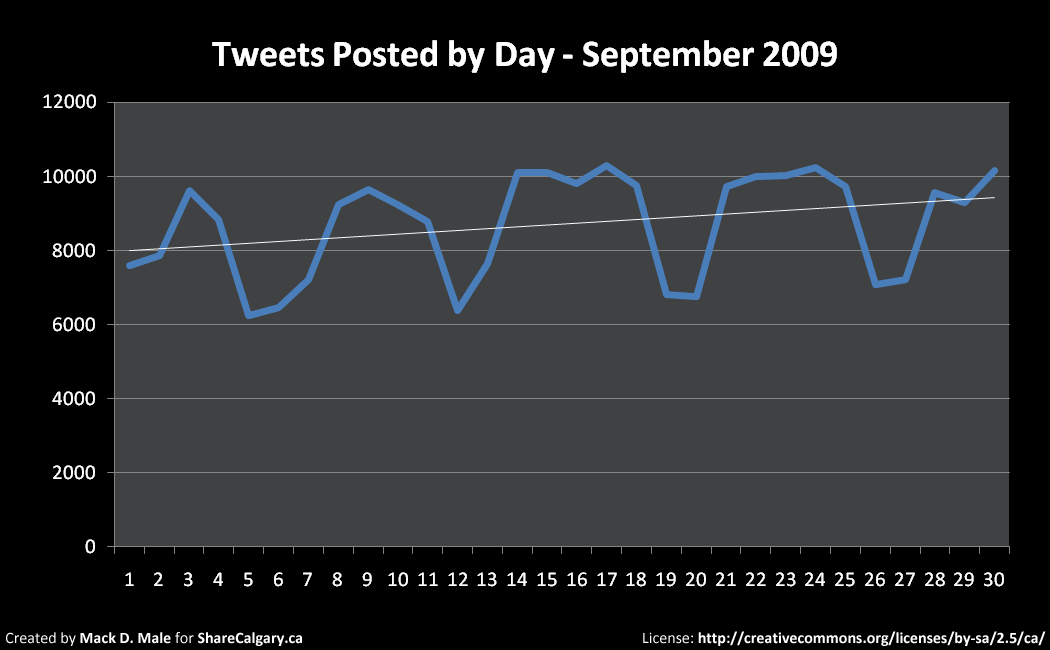
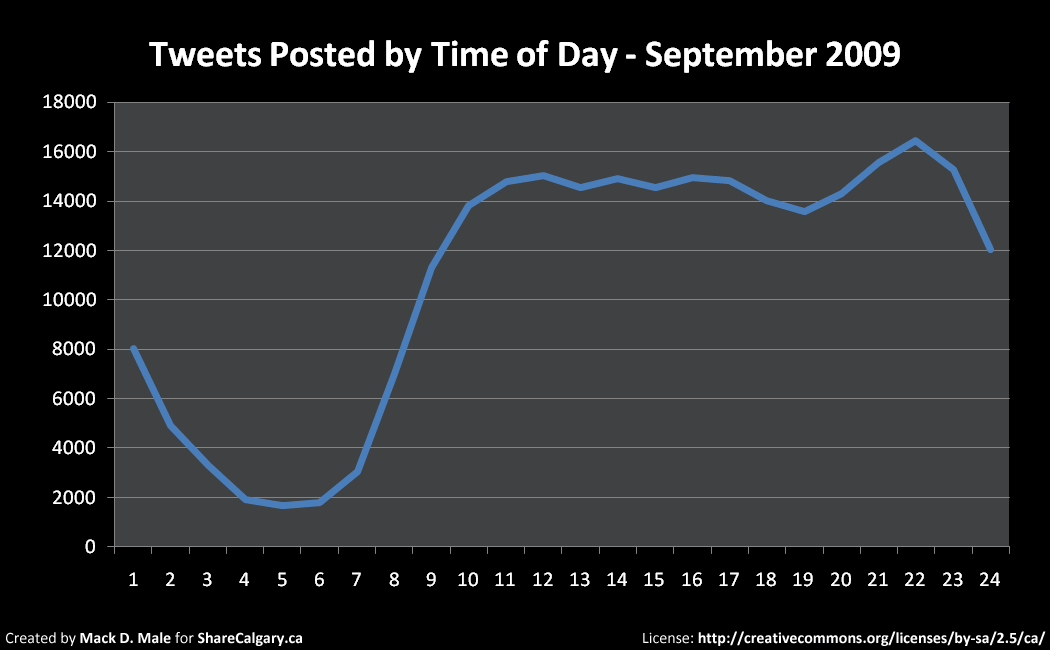
Some other interesting stats for the month:

Final Thoughts

I anticipated the user growth for September would have been larger, but at least it’s still going in the right direction! As with Edmonton, the number of tweets being posted by local users is on the rise – there were seven days this month with over 10000 tweets posted.

Since March, I have identified just over 15,300 local users. The number above, 7144, is how many of them were active in September.

State of the Calgary Twittersphere – August 2009

Welcome to the sixth State of the Calgary Twittersphere, my look at the intersection of Twitter and Calgary. You can see last month’s stats here.

The source of the data this month is the same as last, primarily Twitter Search but also from Twitter directly. If a user has his or her location set to Calgary, Airdrie, Okotoks, Cochrane, Strathmore, or matching lat/long coordinates, they are considered a Calgarian. If a tweet is “about Calgary” it contains either the word Calgary, the #yyc hashtag, or both.

For August 2009:

# of local users: 6852 (an increase of 226 from July)

To clarify, that means there were 6852 users who posted at least one tweet in August 2009 with their location set to something that makes them an Calgarian as described above. This number should be treated as a minimum – there are probably many more Calgary users without their location set or that were not captured for some other reason.

Here are the rest of the stats for August 2009:

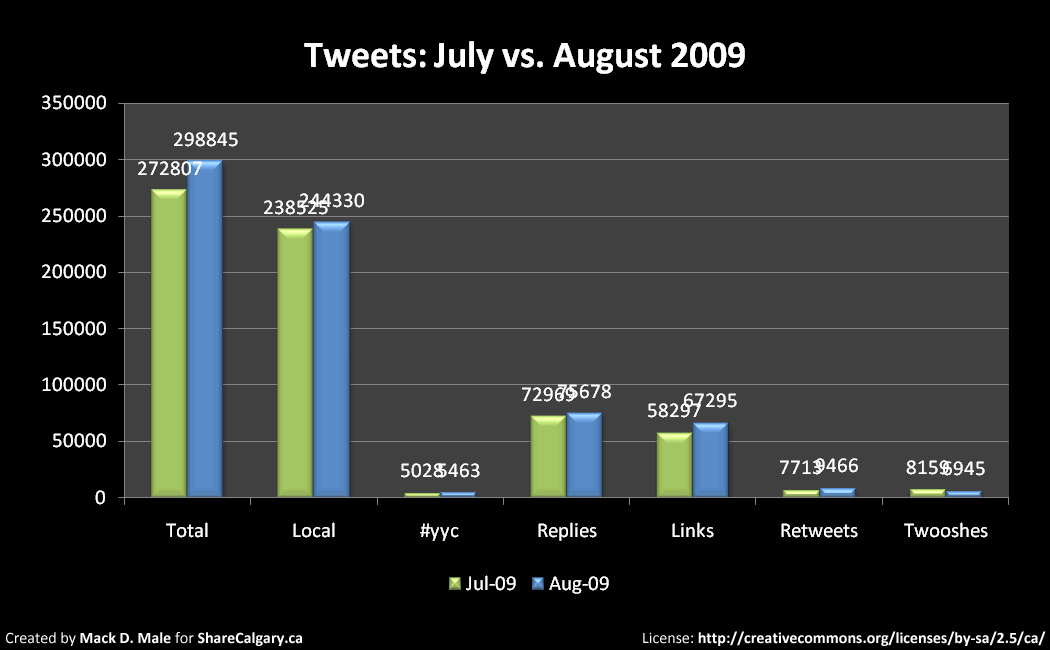
# of tweets by local users: 244330
# of tweets by local users containing #yyc: 5463 (2.2%)
# of tweets by local users that were replies: 75678 (31.0%)
# of tweets by local users containing links: 67295 (27.5%)
# of tweets by local users that were retweets: 9466 (3.9%)
# of tweets by local users that were twooshes: 6945 (2.8%)

Here are the numbers above in graphic form:

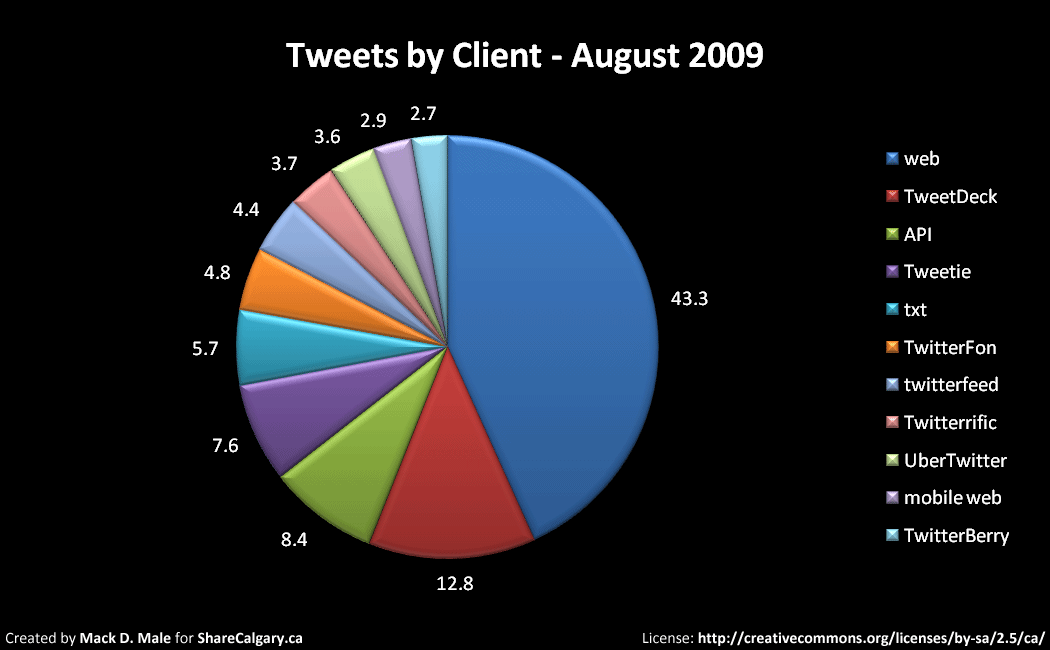
Here are the top clients used by local users for posting updates. UberTwitter doesn’t seem to be as popular in Calgary as it is in Edmonton:

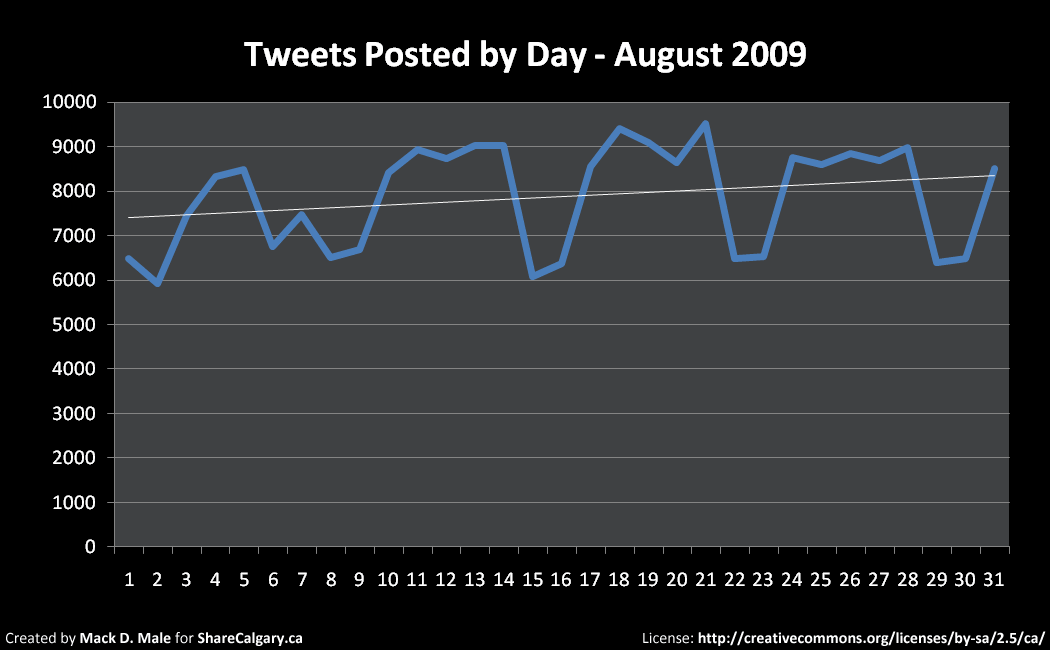
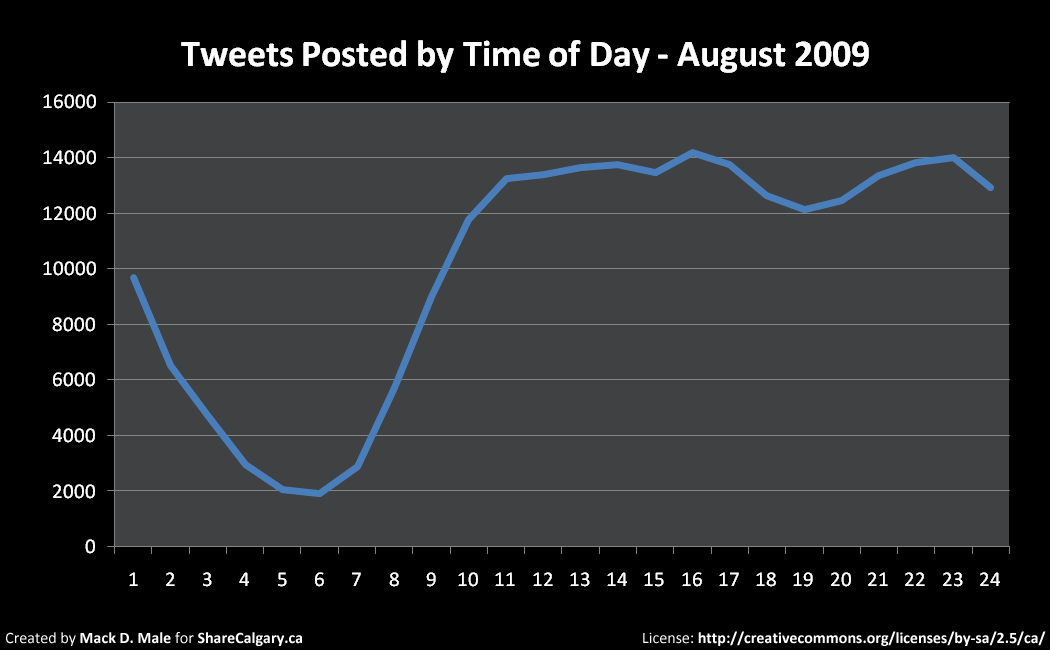
Some other interesting stats for the month:

Final Thoughts

Like the Edmonton numbers, growth in August for Calgary was minimal. It’s the summer, after all! I suspect that growth in September will be higher.

Since March, I have identified just over 13,500 local users. The number above, 6852, is how many of them were active in August.

State of the Calgary Twittersphere – July 2009

Welcome to the fifth State of the Calgary Twittersphere, my look at the intersection of Twitter and Calgary. You can see last month’s stats here.

Apologies for the delay in getting this one posted. The source of the data this month has changed, slightly. In addition to Twitter Search, I added more data directly from Twitter itself. A total of 16,082 tweets were pulled from user timelines directly because they did not exist in Twitter Search.

User identification remains the same. If a user has his or her location set to Calgary, Airdrie, Okotoks, Cochrane, Strathmore, or matching lat/long coordinates, they are considered a Calgarian. If a tweet is “about Calgary” it contains either the word Calgary, the #yyc hashtag, or both.

For July 2009:

# of local users: 6626 (an increase of 980 from June)

To clarify, that means there were 6626 users who posted at least one tweet in July 2009 with their location set to something that makes them an Calgarian as described above. This number should be treated as a minimum – there are probably many more Calgary users without their location set or that were not captured for some other reason.

I’m happy with my previous stats posts existing as point-in-time snapshots. That said, I am continually improving my data set, making it more accurate over time. I am still happy with the numbers I posted for March through May – they are reasonably accurate (within about 100 users). The number I posted for June however, 5646 users, is not accurate. It was actually 6506, which means this month actually increased by 120 users (however I left the 980 above for consistency).

Here are the rest of the stats for July 2009:

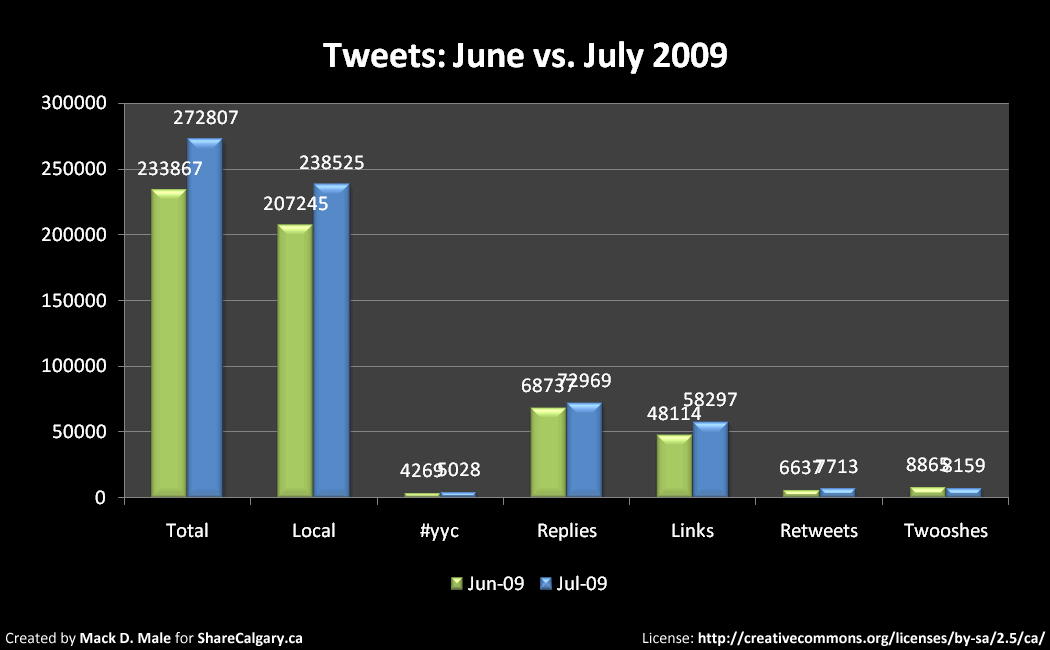
# of tweets by local users: 238525
# of tweets by local users containing #yyc: 5028 (2.1%)
# of tweets by local users that were replies: 72969 (30.6%)
# of tweets by local users containing links: 58297 (24.4%)
# of tweets by local users that were retweets: 7713 (3.2%)
# of tweets by local users that were twooshes: 8159 (3.4%)

Here are the numbers above in graphic form:

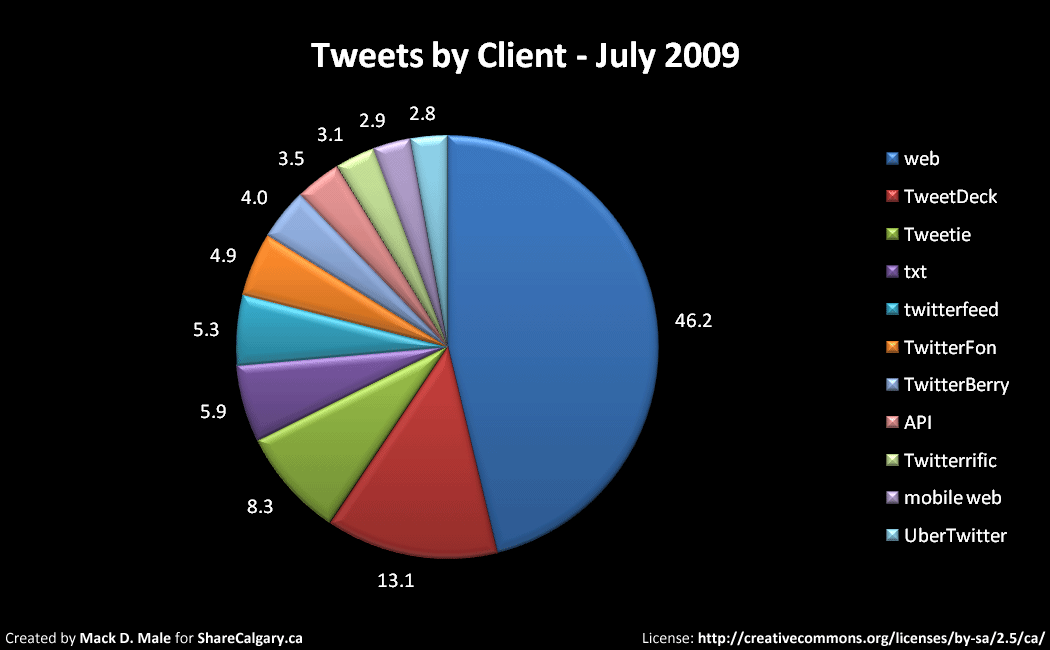
Here are the top clients used by local users for posting updates. You’ll notice that API is now identified separately from web:

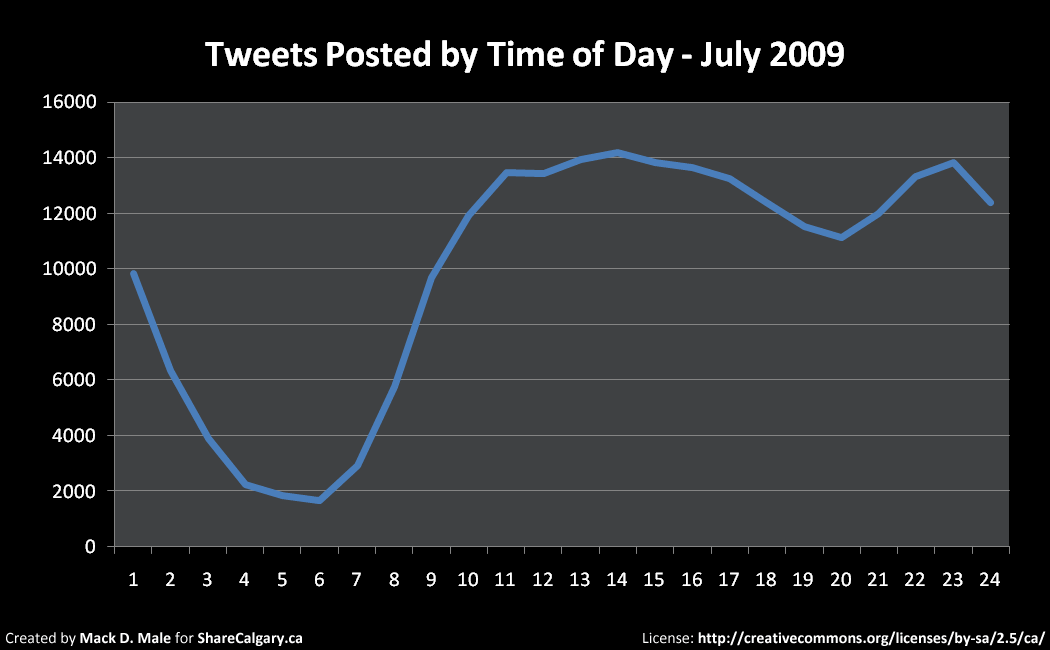
Some other interesting stats for the month:

Analysis

There wasn’t much growth in July, which isn’t altogether surprising considering it’s the summer. I suspect things will pick up again in the fall. I’m still fascinated by the difference in tagged tweets between Calgary and Edmonton (you can see Edmonton’s stats for July here).

Since I started recording the stats for Calgary back in March, I have identified just over 12,500 local users. The number above, 6626, is how many of them were active in July.

Twestival Local is happening in Calgary on September 12th! Click here for more info.

Calgary takes first steps toward becoming an Open City

A motion will go before Calgary’s City Council next week that outlines the first steps in the process of making Calgary an Open City. Calgary follows in the footsteps of Vancouver, which passed a similar motion back in May. DJ has all the details on the Calgary motion here. I think it’s pretty cool that the news is first announced on a blog!
Calgary’s motion will result in a report from City Administration to be presented to Council no later than December 2009, outlining the overall strategy for making Calgary an open city. In particular, the report will identify “opportunities to make more of The City’s data open and accessible while respecting privacy and security concerns , and ensuring that data is available through use of open standards, interfaces and formats.” Other aspects of the strategy will include increasing online citizen participation, procuring and supporting open source technologies, and increasing the number of City services available online.

This is exciting news for developers and other creative professionals in Calgary and elsewhere. I’ve been pushing for open data in Edmonton recently, and I really hope we’re not too far behind our southern neighbours on this issue. There are a number of advantages to making data available in open standards and formats:

  • Citizens can subscribe to data that is of interest to them
  • Data can be mashed together in new ways, revealing new information
  • Visualization of data can help citizens make better decisions
  • Citizens can work together to organize data
  • Government can learn more about its data from citizen contributions

Additionally, using well-understood, open formats such as XML or CSV helps to “future-proof” the data. You don’t need proprietary technology to read a CSV file – any programming language or software platform will work.

One issue that isn’t mentioned in Calgary’s motion but which is very important, is licensing. It’s important that when Calgary does make data available, that it does so in the least restrictive way possible. Either public domain, or creative commons, or something similar. It would be a shame if they made a ton of data available and then had ridiculous terms of use around it.

Open data is about empowering citizens to work with their governments. I’m encouraged by the recent interest among municipalities in Canada, and I hope the trend continues.

State of the Calgary Twittersphere – June 2009

Welcome to the fourth State of the Calgary Twittersphere, my look at the intersection of Twitter and Calgary. You can see last month’s stats here.

The source of the data this month remains the same – Twitter Search. If a user has his or her location set to Calgary, Airdrie, Okotoks, Cochrane, Strathmore, or matching lat/long coordinates, they are considered a Calgarian. If a tweet is “about Calgary” it contains either the word Calgary, the #yyc hashtag, or both.

For June 2009:

# of local users: 5646 (a decrease of 215 from May)

To clarify, that means there were 5646 users who posted at least one tweet in June 2009 with their location set to something that makes them a Calgarian as described above. This number should be treated as a minimum – there are probably many more Calgary users without their location set or that were not captured for some other reason. See additional analysis below.

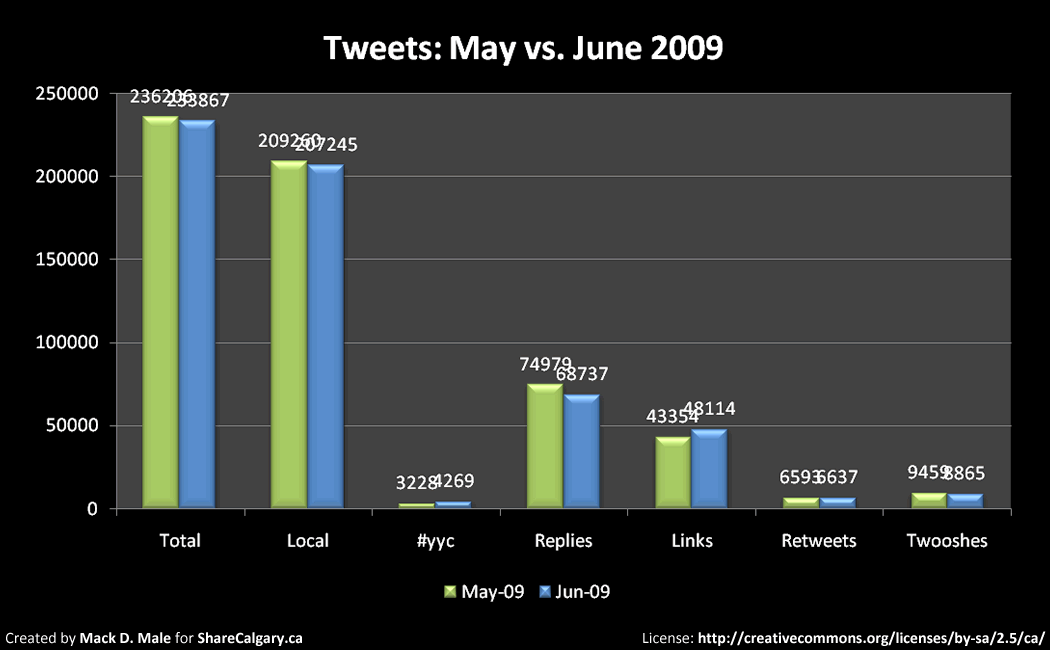
# of tweets by local users: 207245
# of tweets by local users containing #yyc: 4269 (2.1%)
# of tweets by local users that were replies: 68737 (33.2%)
# of tweets by local users containing links: 48114 (23.2%)
# of tweets by local users that were retweets: 6637 (3.2%)
# of tweets by local users that were twooshes: 8865 (4.3%)

Here are the numbers above in graphic form:

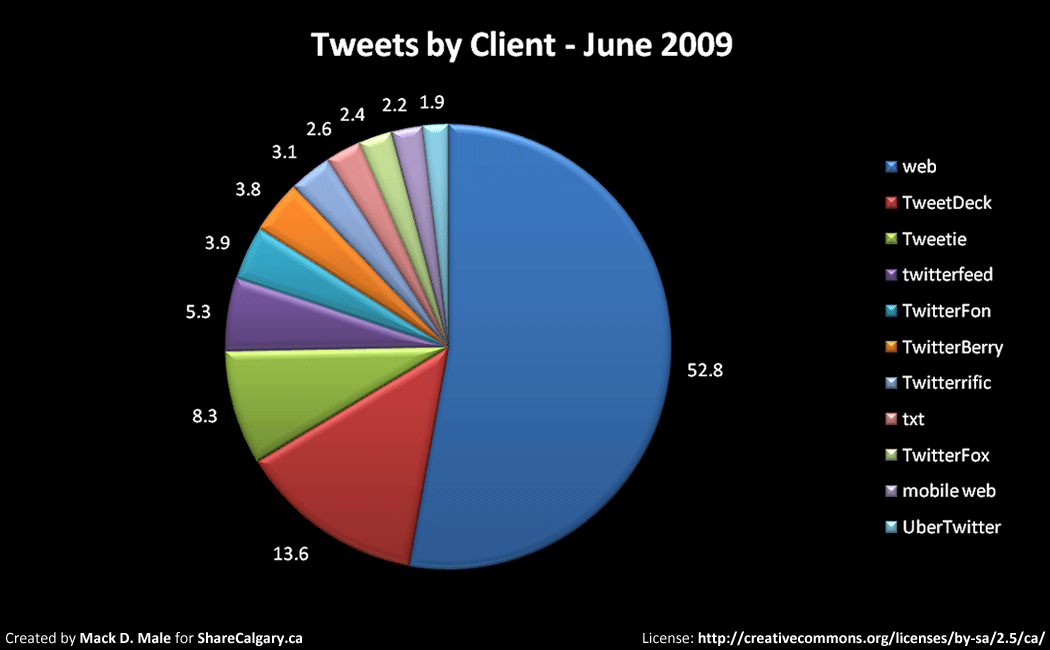
Here are the top clients used by local users for posting updates (remember that web includes all unidentified API calls too). A notable new entry is UberTwitter:

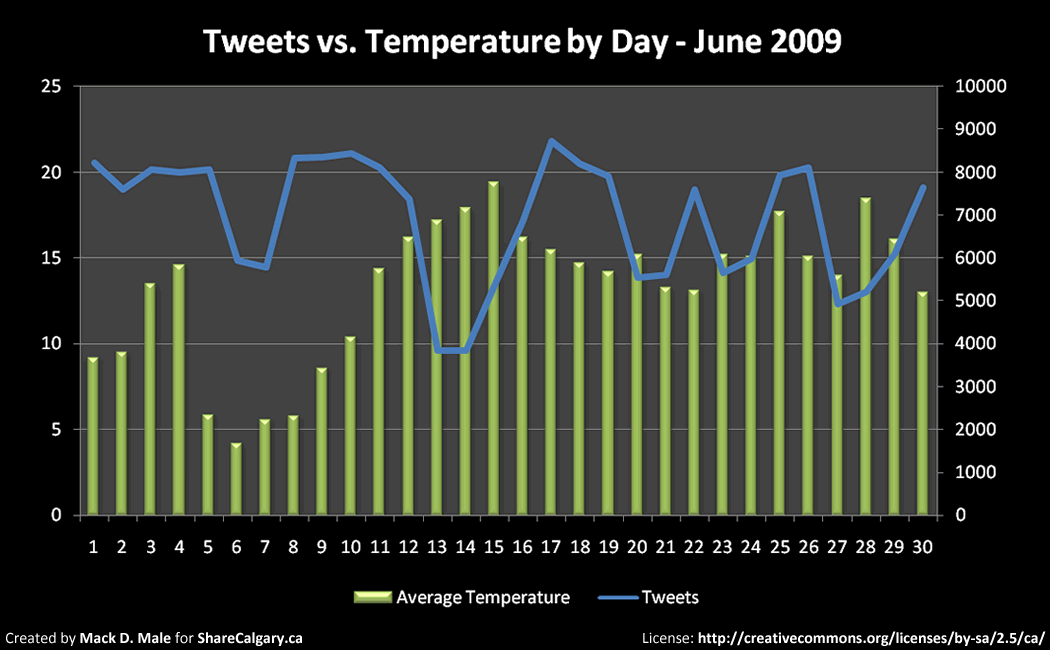
Since I’ve been playing with some temperature data from Environment Canada lately, I decided to plot the average temperature against the number of tweets for each day in June:

Do people tweet more when it’s colder outside? I’m not sure the graph really tells us. What’s clear however is that people tweet less on the weekends!

Some other interesting stats for the month:

Finally, here are the top ten users in Calgary by followers (most followers first): douglasi, OksanaIrwin, ahhhgolf, twitty7x, strategicsense, CrazyMechanic, broatch, nolanmatthias, ThankASoldier, tessaru

Analysis

Like the Edmonton stats for this month, the Calgary stats don’t look that impressive. Some people have abandoned Twitter, it’s the summer, and as was pointed out in the comments on the Edmonton post, the Iran Election probably impacted my stats as some users changed their location to Tehran.

There are some encouraging signs, however. The increase in tagged tweets this month surprised me – maybe #yyc will try to catch up to #yeg! Also, since I started recording the stats for Calgary back in March, I have identified just over 11,000 local users. The number above, 5646, is how many of them were active in June.

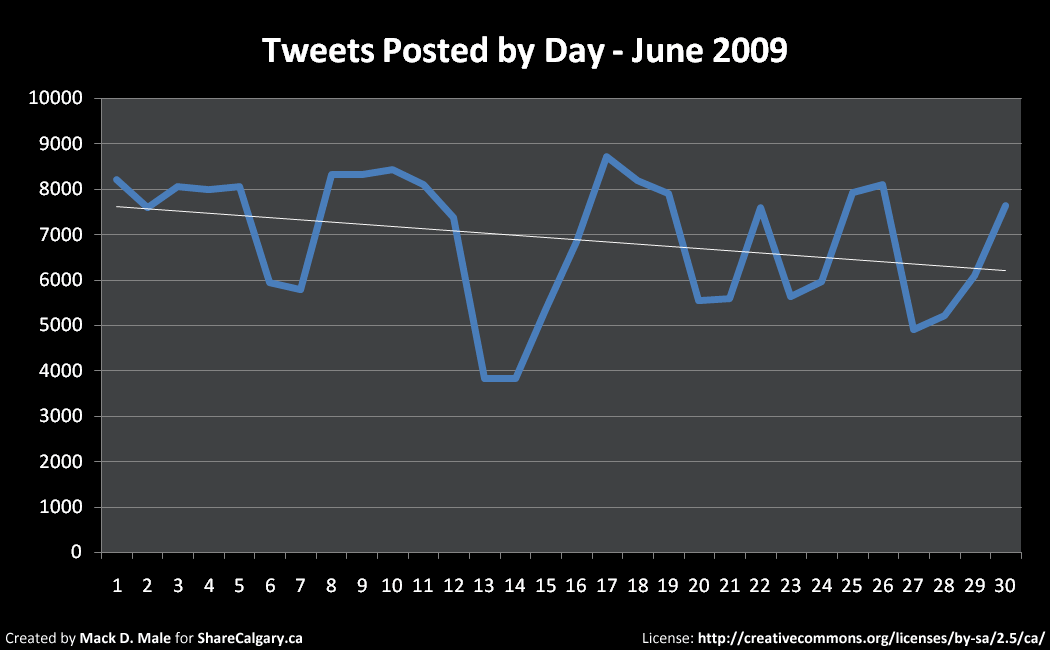
I didn’t monitor things as closely in June as I do normally, so there’s a chance I might not have captured all of the data. In particular, I’m not sure if June 13th/14th was really that low or if there was a data import error of some kind. Either way, I think the data above represents the overall trends accurately.

I’ll be making some changes to hopefully boost the accuracy of the numbers in July.

Highlights from the Alberta High Speed Rail report

Yesterday the Alberta government released a report assessing the potential for high speed rail service in the Calgary-Edmonton corridor. The report, which has been sitting on the shelf for about a year, was commissioned by the province and was prepared by Transportation Economics & Management Systems, Inc. (or TEMS). There are actually three parts to the report, which you can download here:

The press release included a few highlights, but nothing incredibly satisfying:

  • Nearly 10 million passenger trips took place in the Calgary-Edmonton corridor in 2006, with the breakdown as follows: 91% were by automobile, 6% were by air, and 3% were by bus.
  • The faster the high speed train, the greater the ridership and revenues.
  • People said they were willing to pay fares ranging from $56 to $120 for a one-way trip. (To compare: the lowest fare in the next month on WestJet currently is $99, or by car I can make the trip on about $20 of gas.)

I decided to dig into the report a little further. I was struck initially by the numerical nature of it – if numbers and formulas scare you, avoid reading the report. There is some useful, easy-to-understand data as well though.

The diagram above illustrates the Calgary-Edmonton corridor, and the five stations that would be part of the high speed rail system: Downtown Edmonton, Suburban Edmonton, Red Deer, Suburban Calgary, and Downtown Calgary. Each of the three major centres is called a “super zone”, and includes the surrounding communities, at least for the purposes of the report.

The images above illustrate the four types of generic train technologies used to represent various technology classes.

  • Talgo – 125 mph or 200 km/hr – diesel
  • JetTrain – 150 mph or 240 km/hr – turbine electric
  • TGV – 200 mph or 320 km/hr – overhead electric
  • Maglev – 300 mph or 480 km/hr – magnetic levitation

According to Wikipedia, the fastest conventional train in the world is the French TGV which set a speed record of 574.8 km/hr. The fastest non-conventional train in the world is the Japanese JR-Maglev which set a speed record of 581 km/hr.

This table outlines the strategies/predictions for each of the above:

  125 mph 150 mph 200 mph 300 mph
Average travel time (h:min) 2:00 1:45 1:35 1:00
Frequency (roundtrips/day) 8 10 14 17
Fare (in cents/mile) 25 35 40 60
Maximum fare one-way (Calgary-Edmonton) $56 $80 $90 $120
Maximum fare one-way from Red Deer $28 $40 $45 $60
Ridership (in thousands) in 2051 2821 4301 7656 10745
Passenger revenues (in millions of 2006 $) in 2051 137.1 269.0 610.0 1127.9
Market share (2011-2051 is constant) 1.85% 3.10% 4.84% 6.73%

Some other data points:

  • Demand for travel in the corridor is predicted to triple in the time period 2006-2051.
  • Total benefits by super zone are as follows: Calgary (40-45%), Edmonton (30-35%), Red Deer (20-25%)
  • Economic impact from building the system would range from $4.6 billion to $33.4 billion, depending on the type of technology used.
  • Growth in the economy of 0.2 to 0.5 percent, depending on the type of technology used.
  • Between 3400 and 7162 long-term (40 year) jobs would be created across the province.

There’s a lot more data available in the report if you want to take the time to read it.

What’s next? The government says it will continue to look at various options for the province’s future transportation needs, including high speed rail. No decisions have been made at this time, and the report itself makes no recommendations. There doesn’t seem to be a lot of support for the idea at the moment.

I personally think if the province is going to be spending money on transit, it should be on city and regional transit. Both Edmonton and Calgary could use the assistance to improve their respective transit systems – something akin to MoveOntario 2020 and Toronto’s Transit City.

This issue certainly has legs, however. It has been brought up and discussed many times over the years. You can follow along and participate on Twitter using the hashtag #abhsr. For more general Alberta political topics, use #ableg. There’s some great commentary up on the stream already.

Airport Passenger Statistics for Edmonton & Calgary

Earlier this evening I was a guest on The Lesley Primeau Show on 630 CHED. Along with Brittney, we talked about Twitter. That went pretty much as expected – Lesley doesn’t hate social media, but she doesn’t get it either.

While waiting for the show to get started, we were talking about the Edmonton City Centre Airport (ECCA). I’m in favor of closing “the muni” while Lesley very clearly favors the status quo, or perhaps even restoring scheduled service to ECCA. She feels that Edmonton needs an airport downtown to become a great city – I think we need density in the centre, not an airport.

Things got slightly heated when Lesley said that the only growth the Edmonton International Airport (EIA) has seen was from the consolidation back in 1995. She also said that EIA will never rival the Calgary International Airport, and that growth there has been far stronger. I challenged her on both of these assertions (and have heard others make them recently). Lesley said I needed to do my homework, that I was wrong.

So I did my homework. I wasn’t wrong.

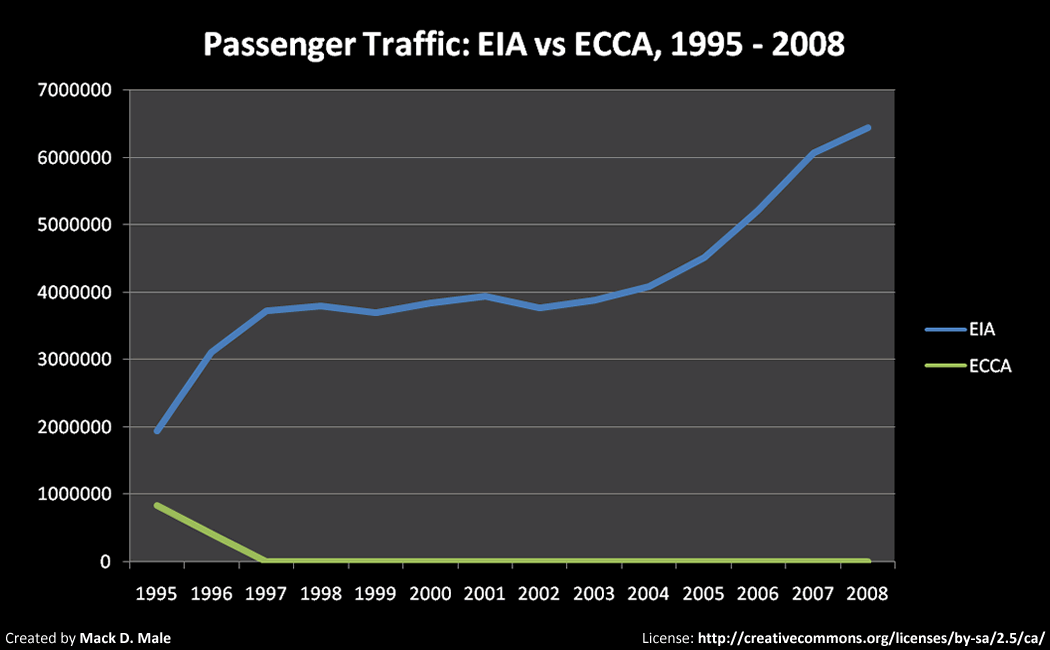
Let’s start with the first myth – that EIA’s growth has only come at the expense of ECCA. Here are the annual passenger numbers for each airport from 1995 to 2008 (I’m going with scheduled passenger numbers, which is why ECCA is 0 after 1996):

Here they are in table format:

YEAR EIA ECCA
1995 1943797 835612
1996 3104322 417002
1997 3720623 0
1998 3791574 0
1999 3700016 0
2000 3843321 0
2001 3940416 0
2002 3773800 0
2003 3882497 0
2004 4081565 0
2005 4511451 0
2006 5213992 0
2007 6065117 0
2008 6437334 0

What can learn from those numbers? The key years are 1995-97, obviously (the plebiscite vote took place on October 16, 1995). Passenger traffic at EIA, which had been stagnant since the early 1980s at about 2 million passengers per year, increased by more than the amount that passenger traffic at ECCA decreased. Passenger traffic at ECCA decreased by 835,612 from 1995 to 1997, while passenger traffic at EIA increased by 1,776,826.

Clearly there was something besides consolidation that caused traffic at EIA to increase. Growth at EIA leveled off from 1998 until 2002, but you’ll recall that was a difficult time for the airline industry – Edmonton was not alone.

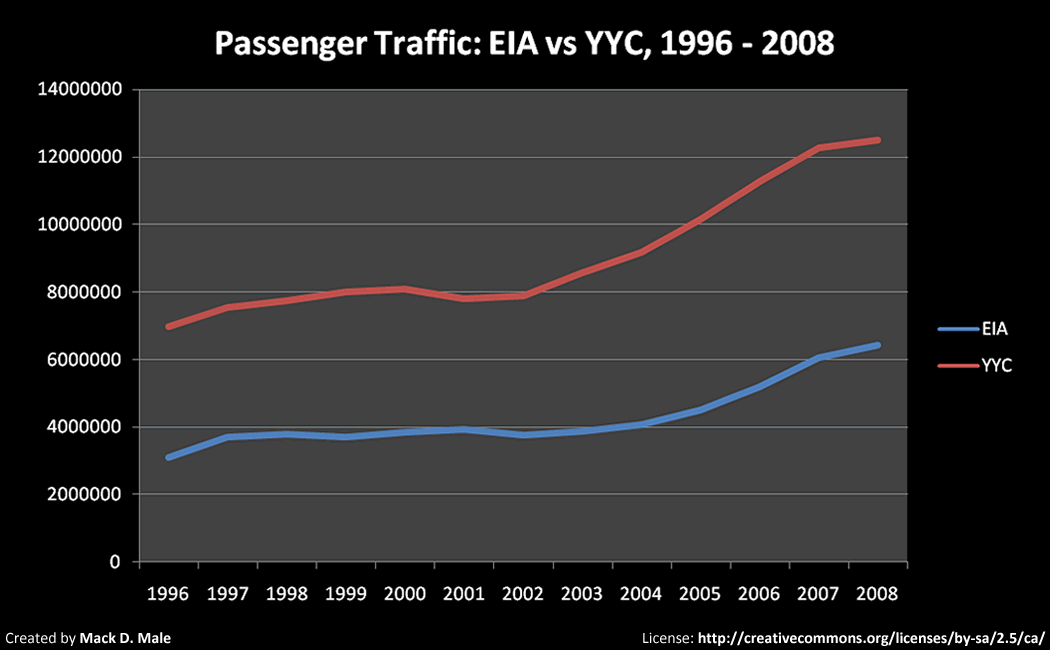
Now let’s look at the second myth – that Edmonton will always be second to Calgary. Here are the annual passenger numbers for EIA and YYC from 1996 to 2008:

Here they are in table format:

YEAR EIA YYC
1996 3104322 6967571
1997 3720623 7547156
1998 3791574 7731034
1999 3700016 8010883
2000 3843321 8090426
2001 3940416 7794519
2002 3773800 7884194
2003 3882497 8576541
2004 4081565 9174039
2005 4511451 10148718
2006 5213992 11279080
2007 6065117 12265754
2008 6437334 12507111

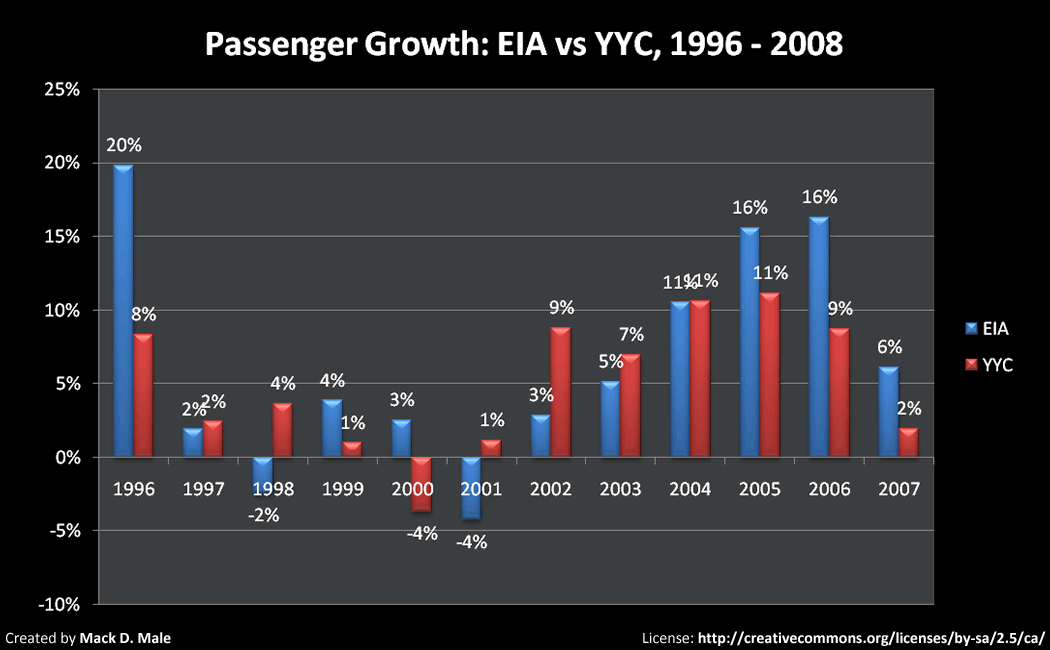
Calgary is definitely busier than Edmonton – nearly twice as busy. Edmonton is in a better position today relative to Calgary than it was in 1996, however. It’s a little difficult to tell from the graph/table above, but Edmonton’s growth overall since 1996 is actually stronger than Calgary’s. Here are the annual percentage increases:

In total, passenger traffic at EIA has increased 107% since 1996, whereas passenger traffic at YYC has increased 80% since 1996.

Is that enough to suggest that Edmonton can emerge from the shadow of Calgary, at least when it comes to their respective airports? Maybe, maybe not. But the data clearly shows that YYC isn’t light years beyond EIA as some would like to suggest.

As an aside, while doing my research I found statistics for EIA for three more years: 394000 in 1962, 755000 in 1973, and 1100000 in 1974.

The public hearing on the City Centre Airport continues tomorrow at City Hall. You can see my resources post here.

Sources: EIA Website, EIA Passenger Statistics, YYC Website, Calgary Airport Statistics, numerous EIA press releases, Wikipedia, Tourism Calgary.

State of the Calgary Twittersphere – May 2009

Welcome to the third State of the Calgary Twittersphere, my look at the intersection of Twitter and Calgary. You can see last month’s stats here. Apologies for posting this so far into June, but my travelling over the last few weeks made it difficult to do. Better late than never!

The source of the data this month remains the same – Twitter Search. If a user has his or her location set to Calgary, Airdrie, Okotoks, Cochrane, Strathmore, or matching lat/long coordinates, they are considered a Calgarian. If a tweet is “about Calgary” it contains either the word Calgary, the #yyc hashtag, or both.

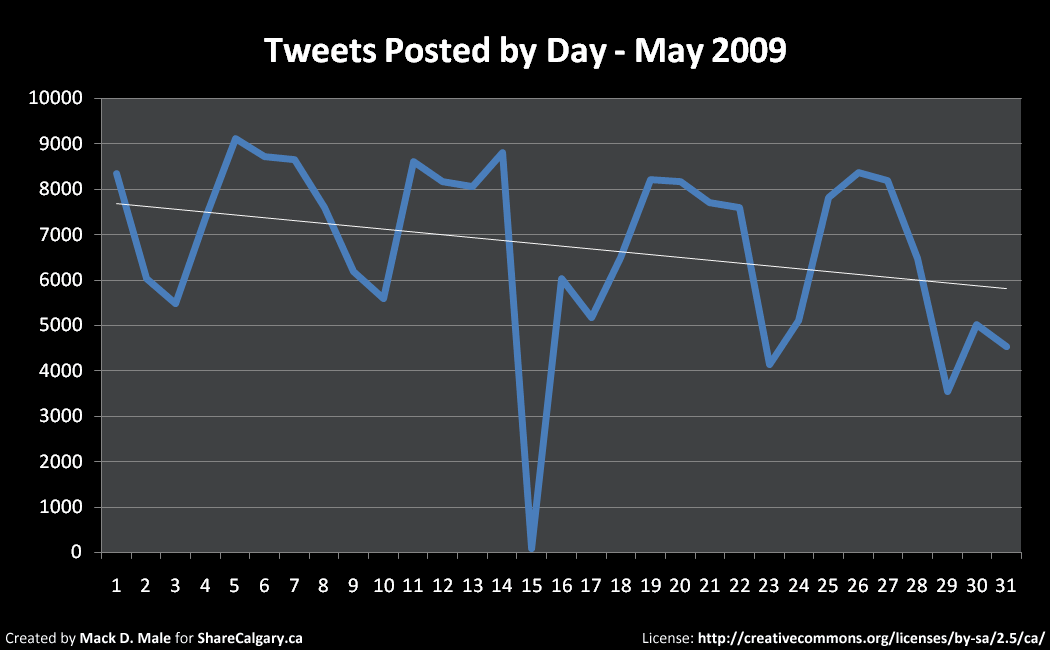
I’m not sure what happened on May 15th, but I seem to be missing data for that day (the same system imports data for both Calgary and Edmonton, and the Edmonton stats were unaffected).

For May 2009:

# of local users: 5861 (an increase of 210 over April)

To clarify, that means there were 5861 users who posted at least one tweet in May 2009 with their location set to something that makes them a Calgarian as described above. This number should be treated as a minimum – there are probably many more Calgary users without their location set or that were not captured for some other reason.

# of tweets by local users: 209260
# of tweets by local users containing #yyc: 3228 (1.5%)
# of tweets by local users that were replies: 74979 (35.8%)
# of tweets by local users containing links: 43354 (20.7%)
# of tweets by local users that were retweets: 6593 (3.2%)
# of tweets by local users that were twooshes: 9459 (4.5%)

Here are the numbers above in graphic form:

Here are the number of local users created per day in May, using the best available data from Twitter (it seems to be really unreliable, I will probably drop this stat next month):

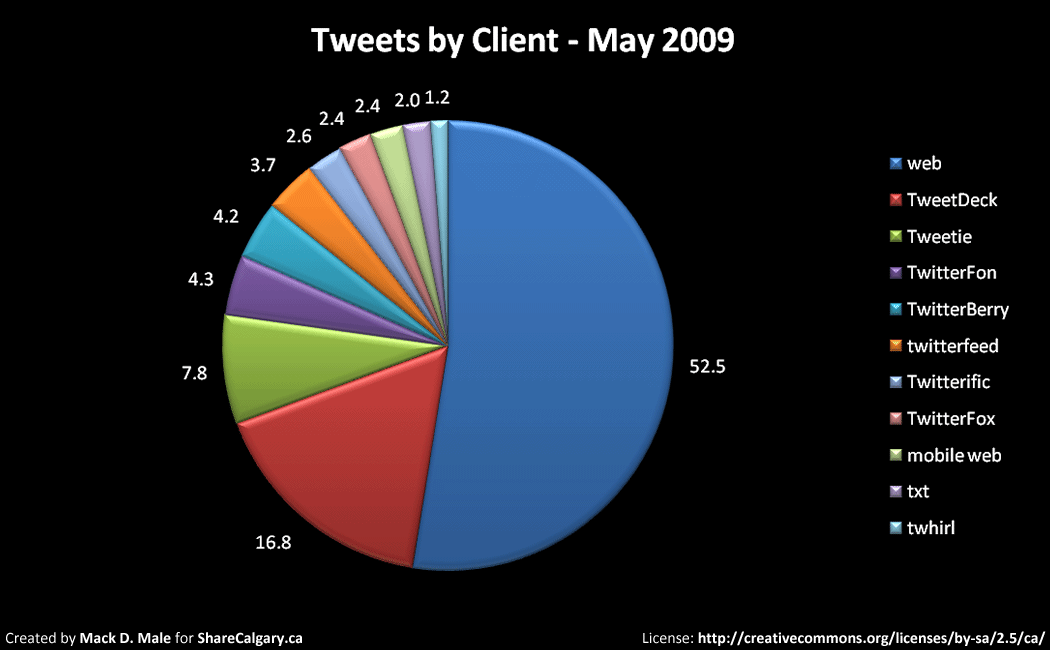
Here are the top clients used by local users for posting updates (remember that web includes all unidentified API calls too):

Some other interesting stats for the month:

  • The ten most active local users (most tweets first): mrrocknroll, burstingenergy, C_DIG, strategicsense, birdalert, wikkiwild1, bish0p, aprilcandy70, SalBarguil, iKasperr
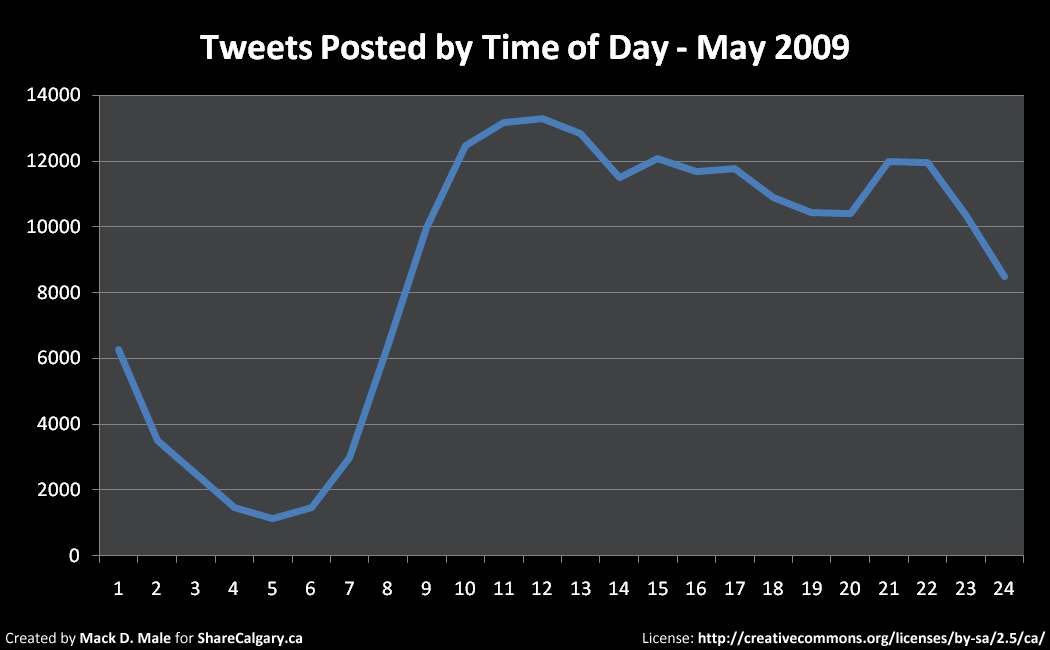
  • Just over 52% of all local tweets were posted between 9 AM and 5 PM.
  • Local users posted roughly 4.7 tweets per minute in May, compared with 4.6 per minute in April.
  • The day with the most local tweets posted was May 5th at 9114. On average, 6824 local tweets were posted each day (compared to 6561 in April).
  • Of the 74979 replies posted by local users this month, 16327 or 22% were to other local users.
  • A total of 847 users posted 50 times or more in May. In comparison, 1085 users posted just once.

Here are the ten most replied to local users for May: C_DIG, mrrocknroll, ubershmoo, caninez, amacisaac, jonincalgary, aNorthernSoul, eviltera, darylcognito, CdnCowgirl

Analysis

Like the Edmonton stats for May, it might appear at first as though Twitter growth in Calgary has stagnated. Instead, I think there’s just some attrition taking place. There were 1879 users who posted at least one tweet in May that did not post a tweet in April (so presumably they are new). Likewise, there were 1635 users who posted at least one tweet in April that did not post a tweet in May (so presumably they abandoned the service).

In total, I have identified just over 8000 local users since March – the number above, 5861, is how many of them are currently active.