Recap: Mayor Iveson’s 2015 State of the City Address

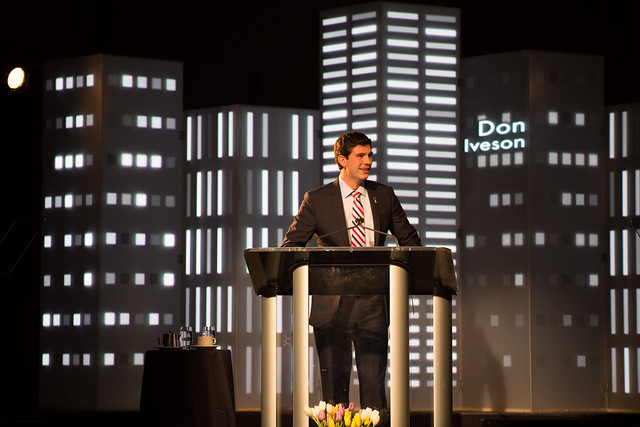
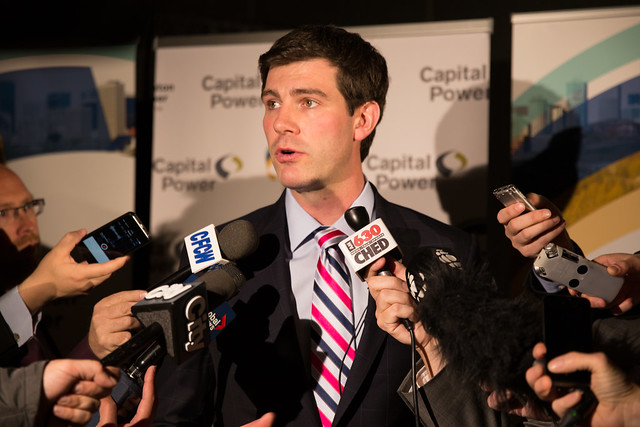
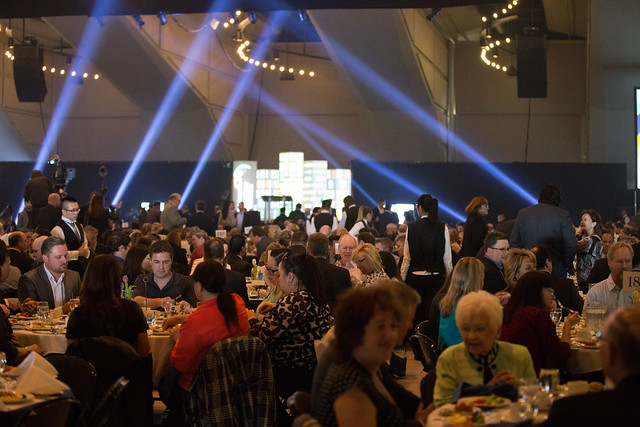
Nobody fills a room like our mayor, Don Iveson. He delivered his second State of the City Address on Monday in front of an absolutely packed house at the Shaw Conference Centre. Roughly 2,200 people attended the annual event hosted by the Edmonton Chamber of Commerce. We’re in the middle of a provincial election of course, so there were plenty of candidates in attendance yesterday and more than a few people wondering what, if anything, Mayor Iveson might say. On the topic of the provincial government, he did not tread lightly.

State of the City Address 2015

“Edmonton is too important to Alberta’s future to be ignored,” he said near the end of his remarks. “That’s why I’m confident that no matter what Albertans decide on May 5, together, you along with our City Council, will not stand for any provincial government ever forgetting about Edmonton again.”

Mayor Iveson spoke for nearly 30 minutes before getting to that point. He spelled out why Edmonton matters, he talked about the opportunities that are before us, and he consistently pointed out that we could do more if only the Province would come to the table as a partner. “I want to be clear about what partnership means to me,” he said. “It means that both parties recognize their mutual interest in achieving something great together.”

Saying that there have been “some important steps” in the city charter talks thus far, Mayor Iveson made it clear that he expects the new government to continue that work. “To abandon or shortchange the charter would be to miss the chance for Edmonton to be a true partner in building this province,” he said. On homelessness, social services, early childhood education, climate change, and infrastructure, Mayor Iveson said that “Edmonton has shown we do deliver results” and challenged the Province to “give us the responsibility and resources necessary to get to the finish line.”

If there was a theme to the mayor’s remarks, it was resiliency. He opened with a compelling story about the great flood of 1915 that left an estimated 2,000 people homeless and which devastated businesses and entire industries. “Other places in similar circumstances might have let all their hope and promise be swept away,” he said. “But not Edmonton.” His message was clear. Just as our 1915 counterparts made smart decisions for the long-term, so must we.

Though the price of oil is down and there are layoffs in Alberta, Edmonton’s economic picture is much rosier he told us. “Edmonton is weathering this downturn,” he said. Citing the “unprecedented” number of cranes in the downtown, Mayor Iveson talked about the continuing confidence here in Edmonton. Last year Edmonton became the fifth largest region in Canada, “a quiet but important milestone.”

If you’re here in Edmonton, you know these things. But others around the country and around the world do not. “It’s never been more important for us to tell a clear and consistent story about Edmonton,” he said. Yes, he mentioned Make Something Edmonton, but I think Mayor Iveson really intended for his remarks on storytelling to be one of those smart decisions for the long-term. He suggested we start talking about “Edmonton Metro” which at 1.3 million people, “will be a force to be reckoned with.” This is an evolution of the “Edmonton Region” term he started using as soon as he was sworn in as mayor. Unlike “region”, the term “metro” is distinctly urban, is cohesive, and highlights the confidence of Edmonton at its core.

State of the City Address 2015

We need more than a great story for Edmonton to continue to prosper, however. “Mass transit has the potential to transform a city in a way that few other infrastructure investments can,” Mayor Iveson said. He highlighted the federal government’s new transit building fund and said it could be great for Edmonton, “but only if our Province steps up and matches this ongoing commitment.”

He also talked about the task force to end poverty and the importance of sharing Edmonton’s prosperity with all Edmontonians. While work is well underway here, the mayor called out the Province for not taking action since unveiling the Social Policy Framework back in 2013. He talked about the Year of Reconciliation and said “we can show the way for a new vision of Canadian city that lives and breathes the treaty spirit.” He spoke about climate change and said our cities “are not prepared to deal with it.” And he said that “Edmonton can play a role in changing a conversation that has, for too long, hurt the way the world sees us.”

Mayor Iveson also had some interesting things to say about cities. “We’re the agents of change in Canada and, today, we matter more than ever,” he said. “Cities are increasingly the places where the work is getting done.” He talked about how cities “are the crossroads where resources and creativity intersect” and said nowhere is that more true than right here in Edmonton.

His core messages of resiliency and working with the Province were his focus though. “If we want to build a strong and resilient Alberta,” he said, “we need a strong and resilient Edmonton.”

State of the City Address 2015

I thought Mayor Iveson carried greater confidence through his remarks this year compared to last. The highlight of his speech last year, when he looked right at Premier Redford and called for provincial funding for the LRT, was not possible this year with the uncertain political future of Alberta so he needed to be strong throughout. He looked and sounded at ease and his delivery was much better.

It’s true that most of the things he said on Monday were similar to things he said last year. The importance of LRT, the opportunity that comes with being an Aboriginal city, the need to end poverty rather than manage it, the baby steps toward a city charter, and even the need to talk about Edmonton as the heart of the region were all things he touched on in 2014’s State of the City address. But it wasn’t the same message. I think there are two key differences. First, while last year was a bit heavy on ideas and what’s coming, this year he talked about accomplishments, like the task force to end poverty which is well underway or the Open City initiative which is already have a positive impact. Second, he focused on Edmonton’s strengths this year rather than its needs. Edmonton is resilient. Edmonton is compassionate. Edmonton gets things done.

Things are uncertain at best in Alberta right now, but Edmonton is well-positioned for now and for tomorrow. I think it was wise to take advantage of the timing, to contrast Edmonton with Alberta, and to make it clear that Edmonton can play a bigger role in helping turn things around for the whole province.

You can see a few more photos from the event here.

Media Monday Edmonton: Update #152

Here’s my latest update on local media stuff:

yeggies

You can follow Edmonton media news on Twitter using the hashtag #yegmedia. For a great overview of the global media landscape, check out Mediagazer.

So, what have I missed? What’s new and interesting in the world of Edmonton media? Let me know!

You can see past Media Monday Edmonton entries here.

Edmonton Notes for 4/26/2015

Here are my weekly Edmonton notes:

Headlines

  • It finally happened! The Oilers have made some big changes to their management team. CEO Bob Nicholson has appointed Peter Chiarelli President of Hockey Operations and General Manager effective immediately. Kevin Lowe remains Vice Chair of the Oilers Entertainment Group but will be transitioning out of hockey operations. No word on what’s next for Craig MacTavish. Also, Patrick LaForge has stepped down as President and COO.
  • The Edmonton Eskimos have extended Ed Hervey’s contract through 2017. Hervey has also added Vice President of Football Operations to his title. The upcoming season will be Hervey’s 17th with the green & gold and his third as General Manager.
  • Pretty much everyone agrees: Rachel Notley won the debate on Thursday evening. Can she bring it home?
  • We’re just over a week away from election day and this weekend I challenged myself to build an election site! The first version is now up which lets you browse candidates, electoral districts, and more. I’ve integrated some of the 2012 results data too and will be launching an update this week to support the 2015 results. My goal is to build the best online results dashboard for election night.
  • From David Staples: all four major parties support heavy investment in city infrastructure, including the LRT. “It makes for a more boring election, but it’s good news for Edmonton.”
  • On a similar note, the federal budget announced on Tuesday includes a transit funding commitment which takes effect in 2017. It’s not clear year how much will come to Edmonton, but it’s a positive sign.
  • If you haven’t already watched the Legislative Assembly of Cards video do it now! It’s an amazing shot-for-shot recreation of the opening credits for House of Cards, but set here in Edmonton. It was created by Calgary cinematographer Alex Robinson.

Edmonton
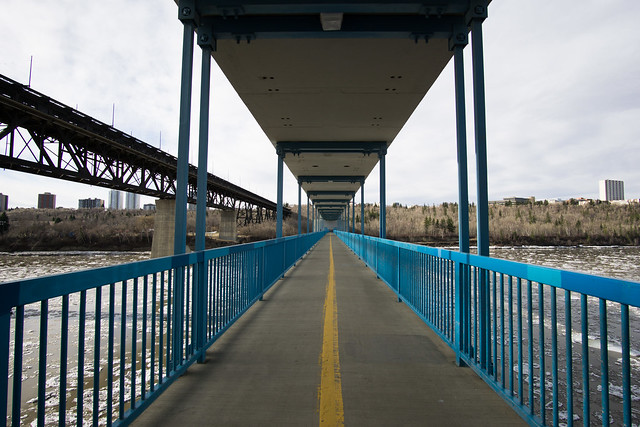
Under the LRT Bridge, photo by Jason Dorn

Upcoming Events

Kelley Ramsey tower April 25 2015
Kelly Ramsey Tower – April 25, 2015, photo by Jason Woodhead

Coming up at City Council: April 27 – May 1, 2015

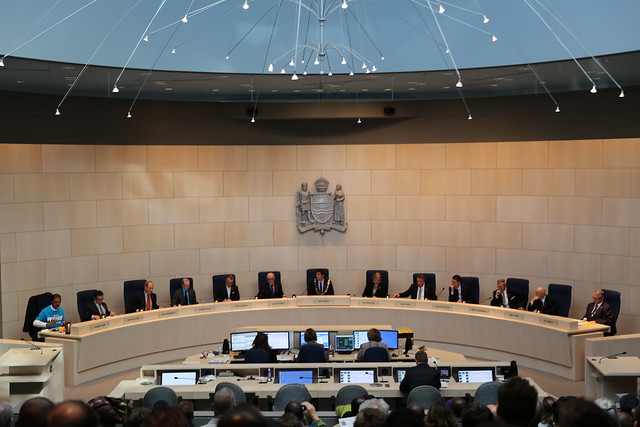
Agendas for upcoming City Council meetings are generally released on Thursday afternoons. I like to take a look to see what Council will be discussing, and I figured I should share that here. Below you’ll find links to the meetings taking place next week, as well as links to and thoughts on some agenda items that caught my eye. You can find my previous roundups here.

City Council Swearing In 2013-2017

Monday, April 27, 2015

Council will start the week with the regularly scheduled public hearing beginning at 1:30pm. There are eight bylaws on the agenda.

Buena Vista Apartment Redevelopment

Bylaws 17177 and 17178 deal with the Buena Vista building east of 124 Street NW and south of 102 Avenue NW in Oliver. Edgar Development Corporation has proposed an 85 meter (approximately 26 storeys) mixed-use residential tower, with commercial/retail uses at street level. The building would contain 240 dwelling units and with four levels of underground parking, approximately 229 parking stalls.

The developer is committed to maintaining the three historic facades on the north, south, and west. Together these two bylaws allow for the dismantling and reassembling of the facades and rezone the site from CB1 to DC1 to enable the development to move ahead.

You can learn more about the history of the Buena Vista Building here.

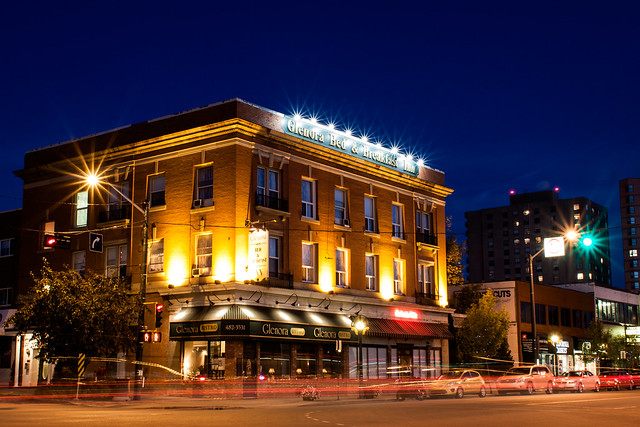
Glenora Blue and Breakfast
Glenora Blue and Breakfast, photo by Dave Sutherland

Here’s a brief overview of the other six bylaws:

  • Bylaws 17173, 17174, and 17175 deal with proposed rezonings in Rosenthal. Some AG-zoned (Agricultural Zone) land is going to be rezoned to RF4/RF5 (semi-detached and row housing) and to RSL (Rsidential Small Lot Zone)
  • Bylaw 17172 would rezone the property at 11312 119 Street NW in Prince Rupert to IB (Industrial Business) from IM (Medium Industrial).
  • Bylaw 17171 would extend the DC2 provisions currently in effect in Griesbach (west of 97 Street NW and south of 153 Avenue NW) until 20125.
  • Bylaw 17139 would rezone the property at 3810 111 Avenue NW in Beverly Heights from RF1 to RF2. The proposed rezoning supports The Way We Grow by “encouraging infill, promoting family oriented housing and walkability, and by optimizing the use of existing infrastructure.”
  • Bylaw 17177 would allow for the development of a mixed-use high rise building east of 124 Street NW and south of 102 Avenue NW in Oliver. This is the Buena Vista building.
  • Bylaw 17178 would rezone the land from CB1 and DC1 and would allow for the dismantling and reassembling of the north, south, and west facades of the Buena Vista building.

Tuesday, April 28, 2015

Next up for Council is a regular City Council Meeting scheduled to take all day Tuesday. There are 10 public reports, 22 bylaws, 2 motions pending, and 4 private reports on the agenda. Looks like a full agenda. Here are a few highlights:

Make Something Edmonton Update

This item was meant to be discussed at the April 14 Council meeting but it was postponed along with Councillor Oshry’s motion on our city’s entrance signs. I wrote a couple weeks ago about the history of Edmonton’s entrance signs and also about the signs & slogans debate. I plan to share some additional thoughts on Make Something Edmonton in the next few days.

Committee Reports

There are 9 Committee reports that were all recently discussed at one of the four committees and have been referred to Council, usually with a recommendation for approval. They are:

Bylaws

There are 22 bylaws on the agenda. Here are a few I wanted to highlight:

  • Bylaw 17103 – 2015 Property Tax and Supplementary Property Tax Bylaw (report not yet available)
  • Bylaw 17129 – This bylaw would designate McKay Avenue School as a Municipal Historic Resource as Council directed back in January.
  • Bylaw 17130 – This would designate the 1881 School as a Municipal Historic Resource as well.
  • Bylaws 17168, 17169, and 17170 deal with the 2015 CRL Rate for the Belvedere, Quarters, and Downtown CRL projects.
  • Bylaw 17196 – This bylaw would amend the Animal Licensing and Control Bylaw to formalize the licensing process for urban beekeeping.

Honey Bee
Honey Bee, photo by Bill Burris

Private Reports

As mentioned there are 4 private reports on the agenda this time. Council will be receiving updates on:

  • Greys Paper Recycling Facility – Follow-up Information
  • Top of Bank Update – Verbal Report
  • Civic Agencies Appointments – Externally-Nominated Representatives
  • Appointment Recommendation – Women’s Advocacy Voice of Edmonton Committee

Motions Pending

There are two motions pending:

  • Amendment to Bylaw 12408 – Non-Profit Community Organizations Exemption Bylaw (Councillor McKeen)
  • Entrance Signs Removal (Councillor Oshry)

One report, The Way We Finance – Electrical Franchise Fee Charges, has been given a revised due date of July 7.

Wednesday, April 29, 2015

On Wednesday Council is holding a special meeting to discuss the Community Energy Transition Strategy, which was postponed from the March 17, 2015 meeting.

The strategy calls energy transition “the golden opportunity of our age” and says that “few places are better positioned than Edmonton in terms of knowledge, experience, and financial capacity to lead and excel in this area.”

There are 11 strategic actions, 7 opportunity areas, 45 focus areas, and 10 community scale programs. Targets include reducing greenhouse gas emissions by 35% by 2035 (compared to 2005 levels), reducing energy consumption by 25% per person by 2035 (compared to 2009 levels), and generating 10% of Edmonton’s energy locally by 2035.

I wrote more about the strategy here and Graham and I discussed it on a recent episode of our podcast too.

Thursday, April 30, 2015

The next Utility Committee meeting will take place on Thursday. There are six reports on the agenda.

Analysis of Ratio of In-House Work to External Consultants

This report seeks to clarify the use of external consultants in the 2015 Utilities budget. Drainage Services allocated $72.092 million for External Services, 12% of which is to be spent on engineering consultants with the remainder spent on contractors and suppliers. The report says that in-house design staff generally work on long-term programs and that external consultants are used “primarily because of their specialized knowledge and to supplement in-house resources during periods of high demand.” Futhermore, the report states that external consultants “are important agents in developing and transferring technology for the use and benefit of society.”

historical expenditures comparison

An average of 43.7% of work, based on actuals from 2010-2014, is performed by in-house resources as the table above shows. The report says that Administration will continue using both in-house resources and external consultants “based on the needs and requirements of the capital programs to ensure effective and efficient delivery.”

2014 Waste Management Utility & Drainage Services Utility Annual Reports

These two reports provide an update on the business and financial performance of the Waste Management and Drainage Services utilities for the year ending December 31, 2014. A couple of highlights:

  • Waste Management collected waste from more than 358,000 residential dwellings, serviced more than 1000 non-residential customers, processed close to 475,000 tonnes of waste and recyclable materials at the Waste Management Centre, and interacted with more than 22,000 residents through tours and presentations at the facility.
  • Drainage Services replaced 7 forcemains and refurbished 6 others, completed 821 home inspections in the Flood Proofing Program, repaired or replaced 6,000 manholes and catch basins, and achieved a 14.4% increase in new service connections.

Other

Wrap-up

You can keep track of City Council on Twitter using the #yegcc hashtag, and you can listen to or watch any Council meeting live online. You can read my previous coverage of the 2013-2017 City Council here.

Recap: The Walrus Talks Aboriginal City in Edmonton

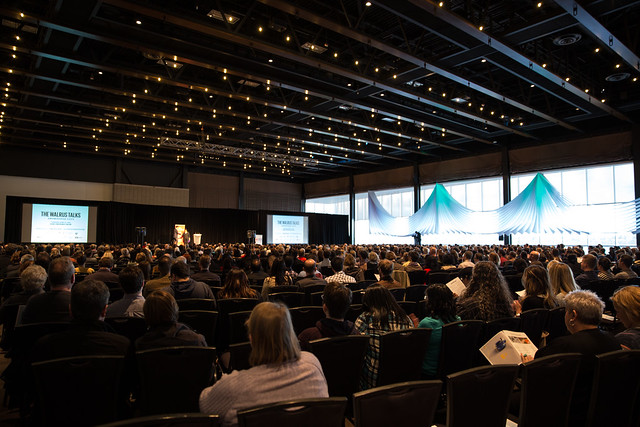
Tonight I joined close to 1,200 others at the Shaw Conference Centre for The Walrus Talks Aboriginal City, “eighty minutes of lively, thought-provoking ideas on Aboriginal life in Canadian cities – from culture, to business, to politics, and more.” I didn’t realize the event was going to be so large but I’m glad it was; some very important ideas and issues were discussed this evening. The event opened with a blessing by Elder Ida Bull, after which Confederacy of Treaty Six First Nations Grand Chief Bernice Martial and Mayor Don Iveson brought greetings.

The Walrus Talks Aboriginal City

After a brief introduction to the format from Shelley Ambrose, publisher of The Walrus, we got right into things. There were nine different speakers this evening (you can read their bios here) and each of them had seven minutes on stage. Here are some the highlights and takeaways from each presentation:

Ginger Gosnell-Myers

Ginger is the Aboriginal planner for Vancouver. She spoke about the misconceptions people have about urban Aboriginals. “Being urban just happens to be a choice about where we live.” She challenged the misconception that Aboriginal people are migratory. “The reality is the majority of Aboriginal people who move to cities end up staying for the long-term,” she said. “The city is our home.” Ginger also tackled the notion that cultural values disappear when Aboriginal people live in the city. “Every day I feel urban and cultural at the same time.”

Douglas Cardinal

Douglas is a renowned Canadian architect and is an officer of the Order of Canada. He spoke about his vision for the future of the city. “I see a thriving, organic, densely-populated metropolis that is a dynamic, living organism.” He took the analogy further and said that everyone has a responsibility to contribute to the health of the organism as we are the nutrients for the city. “We must first change our mindset from a culture of exploitation to a culture that reflects the indigenous values of sharing.”

“We can shape our environment but in turn it shapes us.”

Lewis Cardinal

Lewis is well-known to Edmontonians of course, and I had heard some of what he had to say previously. But that did not diminish my enjoyment of his message and delivery. Lewis spoke about storytelling primarily. “A city cannot truly know itself or reach its full potential until it knows and cherishes its stories,” he told us. “All stories, the good, the bad, sometimes the unbelievable.” He also cautioned that “we are not telling the stories and paying the proper homage to the spirit of this place.” He noted that even the name “Edmonton” carries a story in that “monto” means the divine essence, the power of creation, or as he clarified for Star Wars fans, the force.

Lewis earned a few chuckles when he told us that the Aboriginal population of greater Edmonton is around 100,000. “Yes, you are surrounded by Indians,” he said. “But it’s all good!” He finished with a plea for more storytelling. “I beg all of you, leave no story untold.”

Patti LaBoucane-Benson

Patti is the director of research, training, and communication at the Native Counselling Services of Alberta. She spoke about the over-representation of Aboriginal people in the Canadian justice system. “This is indeed a crisis,” she declared. Patti noted that Aboriginal people make up 43% of admissions to custody in Alberta. The root cause? She says it can be traced to the inter-generational transmission of historic trauma, a topic discussed in the graphic novel The Outside Circle.

Ryan McMahon

Ryan is an Aboriginal comedian and though he took a mostly serious approach with this presentation, he couldn’t help but make people laugh a few times. “I come from a long line of moose hunters,” he told us. “I don’t know much about cities.” In contrast with the “we’re here” message that was repeated a few times throughout the evening, Ryan called upon non-Aboriginals to speak up. “So often we are burdened with the responsibility to talk, to explain, to teach,” he said. “I can’t wait for the time when I get to sit and listen, to learn, to understand what you see.”

He said he knows what he can’t do in the city. “I can’t hang my dead moose from an oak tree, apparently it brings down property values,” he said to laughter. But he also highlighted what he can do. “I can contribute to the conversation. I can listen and I can share. And I can be patient.” He said that Aboriginal people are sometimes “patient to a fault”. He finished by highlighting the importance of the city to him. “It was in a city where I met some of the most influential people in my life.”

Roberta Jamieson

Roberta Jamieson was the first Aboriginal woman to earn a law degree in Canada and she is an officer of the Order of Canada. She shared seven key messages (I have simplified them of course):

  1. Let’s create a two row wampum city
  2. Let’s make the city a home for human beings
  3. Indigenous values offer cities a very important vision
  4. Open spaces in cities so that indigenous peoples can thrive as indigenous peoples
  5. Educate our children to be human beings before anything else
  6. Build relationships, bring together all sectors, to make a better city
  7. All of these messages come in a bundle

She talked a lot about making space for indigenous people in cities. “Make space for us in the city and the city will be richer for it.” She also highlight the fact that many cities take their names from indigenous languages. “This is not a coincidence,” she said.

“The human city, the real city, is built of relationships, not of concrete and steel.”

Clayton Kootenay

Clayton is the MOU team lead of Treaty 6, 7, and 8. He shared a number of statistics about Aboriginal people in Alberta, such as the fact that there are 48 First Nations and 148 reserves in Alberta. Most of his presentation was focused on the importance of treaties and the need for improving education. “Treaties are about relationships and responsibility,” he said. He said Alberta has two systems of education – the provincial one and the band-operated one (there are 58 band-operated schools in Alberta). He spoke about the MOU and their efforts to improve education for Aboriginal youth. “All parties have a collective stake in improving First Nations success,” he said. “Let’s not lose another generation.”

Bob Rae

Bob is the former premier of Ontario and is an officer of the Order of Canada. He spoke about the misunderstanding that is at the heart of Canada. He said it is important to understand the context in which the treaties were signed – the Crown’s perspective was “to draw a line in the sand,” he said. It wasn’t a marriage, it was a divorce – it was about saying what isn’t allowed and about what is lost. “The only way to get to a better place is by understanding from whence we have all come,” he said. For Bob, that better place is a country “that is not based on some people thinking they are better than others.”

He also talked about the fast growing urban Aboriginal population in Canada. “As a country we now face a choice: do we celebrate this and make it work and make it happen or do we continue to see it as a problem, a difficulty, an inconvenience, a nuisance?”

Jessica Bolduc

Jessica is the national youth representative for the Congress of Aboriginal Peoples. She spoke about “edgewalkers”, her term for Aboriginal youth who “have no patience for the status quo” and who have “a hunger to contribute to a better future.” She said that “indigenous issues are Canadian issues.” Jessica pulled no punches, saying “to hell with fitting our round peg in your square hole.”

She also addressed the potential of Aboriginal youth. “Aboriginal people are some of the most innovative leaders coming out of this generation,” she said. “They are the future of our cities.” She urged everyone to go find the edgewalkers in their city. “They are everywhere.”

Closing Remarks

CBC Edmonton’s Mark Connolly closed the evening with some final remarks. He was very open about how much he has learned in the last ten years or so, starting with Treaty 6. “I’m so pleased that now wherever I go, we speak of Treaty 6,” he said. Mark challenged everyone to think about how they could contribute to a broader understanding of the topics discussed during the evening. “It’s Edmonton that came forward here and I think we can make a difference.”

The Walrus Talks Aboriginal City

I really enjoyed the presentations. The Walrus promises that their Talks series “delivers fresh ideas and new ways of looking at big issues” and on that I think the event delivered. We’ve been hearing for years that Edmonton is going to have the largest urban Aboriginal population in Canada soon, but why wait until we achieve that milestone to have a productive conversation about what it means for our city?

Every speaker tonight gave me something to think about. I learned quite a few things and came away with a better understanding of some of the challenges and opportunities. The question now, as always, is what the 1,200 people that heard those presentations will do with that information! Taking Mark’s advice, I will continue to learn and to share.

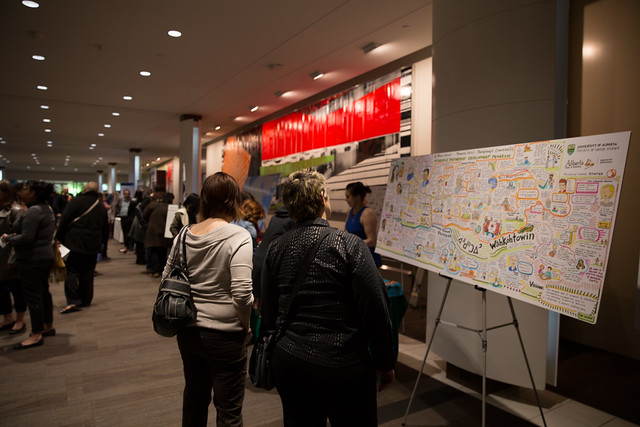
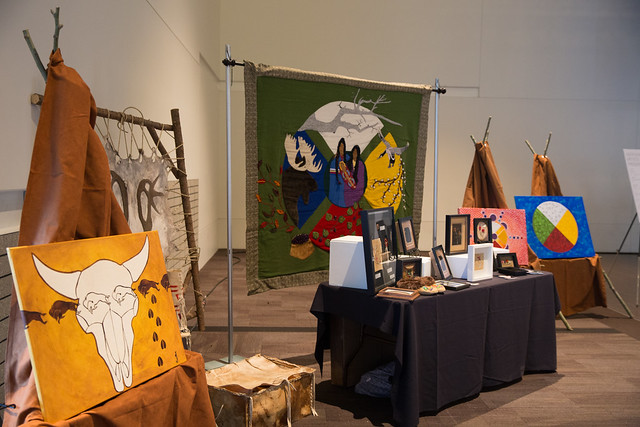
Before and after the presentations, guests were treated to an Aboriginal Art Exhibit in the Hall D lobby and around the edges of the hall itself. Produced by Dawn Marie Marchand and Dawn Saunders Dahl, the exhibit featured the work of ore than 30 Aboriginal artists from Western Canada. It was funded by the Walrus, EEDC, and the Edmonton Arts Council. You can learn about the presenting artists here.

The Walrus Talks Aboriginal City

I considered staying home tonight to watch the Leaders’ Debate but decided I’d miss more by skipping the Walrus event. I’m confident now that I made the right call. Kudos to Lisa Baroldi and her entire team at Enterprise Edmonton for putting on a fantastic event! You can see a few more photos here.

Space for Place: Placemaking in Edmonton

Today I had the opportunity to speak about place and placemaking at City Hall along with Jeff Chase, a Senior Planner at the City of Edmonton working on CITYlab. You may also know him as co-organizer of #yegsnowfight!

The City of Edmonton’s Sustainable Development department has organized a few lunch & learn events for Edmonton’s Business Revitalization Zones (BRZs) and for the April event they wanted to talk about ways to increase vibrancy and create social space. They asked Jeff and I to speak about that.

This was the description for our talk:

“What is placemaking? Placemaking is about animating and using spaces in our cities to connect people. From art installations, to public events and activities, placemaking affords opportunities for people to engage in their cities in new ways.

Join us to learn about placemaking from two passionate Edmontonians who are actively transforming public spaces in our City, and take home lessons you can use to bring life to the shared spaces in your own districts and communities.”

I like the way that Jeff put it: “Space is an empty container. We fill it with memory and time, with feelings and emotions, and with connections. The outcome, on a variety of scales, is place.” Here’s one of the ways we illustrated that:

space vs place

It’s not just about filling a space with people, of course. It’s about connecting people with one another. That’s what turns space into place.

So placemaking is a way to do that, it’s a way to connect people with one another. We considered a spectrum of different placemaking approaches:

placemaking spectrum

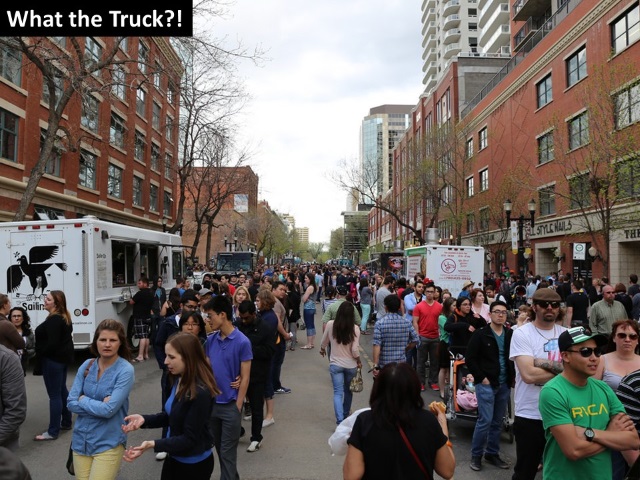
Tactical Urbanism refers to the simple, often temporary things that can be done to create a sense of place. Things like temporary art or adding seating to an empty sidewalk. Events & Activities are a little more involved and tend to be larger initiatives but again are often temporary. Things like What the Truck?! or #yegsnowfight are good examples. Urban Planning is the most permanent form of placemaking, encompassing everything from streetscaping to neighbourhood development. And of course there can be combinations of these things.

Place matters for a variety of reasons. We all crave community and that doesn’t come from space alone. Placemaking can be a useful tool to connect us with our neighbours. It can also help us respond to context, such as crime or weather. Would you rather walk down a dark alley or a well-lit, busy one? In the shoulder season, are you willing to brave the patio on your own or would a blanket and a heater help? These are some examples of the impact that placemaking can have. Another impact of course is on the bottom line – we like to linger and spend time in places that fill us with emotion and connection, and the businesses in those places usually benefit as a result.

Here are some of the examples we showed during the presentation.

What the Truck?! is a series of food truck events that is a good example of the “Events & Activities” approach to placemaking. The events only last 4-5 hours, but they happen in different locations and get people out on the street experiencing their city from a different perspective.

place example

The #yegsnowfight that took place at Kinsmen is a great example of an event that brought people together and got them to experience a space in a completely different way than they would normally. And as a winter city, how fitting is a snowball fight?!

place example

OpenPianoYEG is an awesome example of a public art project. Anyone can sit down at one of the colorful pianos and start playing.

place example

This tire seat was setup near the downtown streetcar station. The note attached to it reads: “Take a seat and enjoy the view. Put your headphones on to drown out the real world and enter the one your mind has sculpted, or take your headphones off and let the world surround you. Either one gets you to a pretty rad place.”

place example

The Winter Market that was held in Churchill Square is another good example of an event approach to placemaking. We talked a bit about some of the other things WinterCity has done too.

place example

Have you seen the construction hoarding art along the Mayfair Village development at Jasper and 109 Street? BGCBigs worked with the developer to make this happen. It turns what could be an unfriendly and even scary space into a welcoming one.

place example

I love the Alley of Light example because over the years it has used all of the placemaking approaches. Tactical projects like painting the roadway got people talking and resulted in more people using the alley. Events brought people into the alley and enlivened the pocket park. And most recently, the pocket park was redeveloped with new surfacing, landscaping, and amenities.

place example

And that’s just a small handful! Jeff and I had a lot of fun putting the presentation together, and we enjoyed hearing about the audience’s favorite places too.

We know there are lots of Edmontonians with ideas about place and we hope that by highlighting even just a few examples we can inspire them to become placemakers. There are lots of organizations and resources out there to help too, like Make Something Edmonton, CITYlab, and many more.

Thanks to Jodi and Stuart for organizing the event today and for having Jeff and I as speakers and thanks to everyone who attended!

What’s your favorite place? Have a placemaking idea of your own? I’d love to hear it!

Recap: 2015 Mayor’s Celebration of the Arts

The 28th annual Mayor’s Celebration of the Arts took place last night at the Winspear Centre. This was the second event under Mayor Don Iveson and he seemed to be having just as much fun this year as last! He got in on the break-dancing to start the evening and also joined The Wet Secrets on stage to close out the show. This was also a big year for the Professional Arts Coalition of Edmonton, which produces the show. PACE has both a new visual identity and for the first time, an Executive Director (Sheiny Satanove).

2015 Mayor's Celebration of the Arts
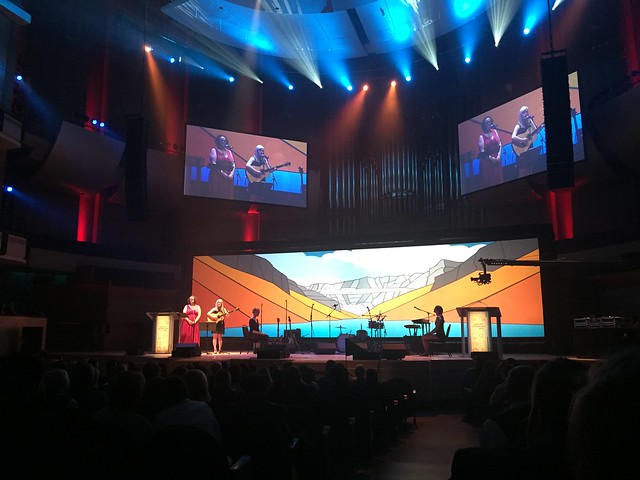
Hey Ladies in front of the Production World screen featuring art by Jason Carter

The evening was hosted by Leona Brausen, Cathleen Rootsaert, and Davina Stewart, the trio behind the comedy show Hey Ladies which “celebrates Edmonton artists, local businesses, and other home-grown phenomenon.” They’ve called the Roxy Theatre on 124 Street home for the past eight years, so it was fitting to have them as emcees given that this year’s event supported Theatre Network. You can find Hey Ladies at the ATB Financial Arts Barns this season. I thought they did a great job as hosts, bringing just the right amount of energy and humor to keep things humming along!

The Awards

The full list of nominees is available at the PACE website. Here are the winners:

Mayor’s Award for Innovative Support by a Business of the Arts
Happy Harbor Comics, nominated by Jeff Martin

Mayor’s Award for Sustained Support of the Arts
Audrey’s Books, nominated by LitFest and the Alberta Book Fair Society

John Poole Award for Promotion of the Arts
Alexis Marie Chute, nominated by Wes Lafortune

ATB Financial Ambassador of the Arts Award
Rapid Fire Theatre, nominated by the Rapid Fire Theatre Board of Directors

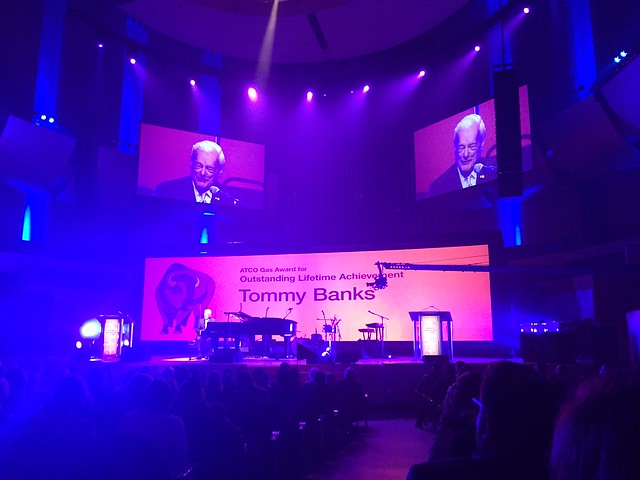
ATCO Gas Award for Outstanding Lifetime Achievement
The Honourable Tommy Banks

CN Award for Youth Artist
Kieran MacDonald, nominated by Victoria School of the Arts

DIALOG Award for Excellence in Artistic Direction
Amy Shostak, nominated by Christopher Samuel

Mile Zero Dance Progressive Artist Award
Paul Freeman, nominated by the Nina Haggerty Centre for the Arts

Northlands Award for an Emerging Artist
Ahmed Knowmadic, nominated by Muna Saleh

The 2015 Robert Kroetch City of Edmonton Book Prize
Rudy Wiebe for Come Back published by Penguin Random House Canada

Syncrude Award for Excellence in Arts Management
Karen Brown-Fournell, nominated by Christine DeWitt

TELUS Courage to Innovate Award
Amber Borotsik, nominated by Ben Sures

Congratulations to all the nominees and winners!

Tommy Banks is of course no stranger to Edmontonians and last night he was recognized for his “outstanding contribution to the arts in Edmonton.” He’s won several awards over his career (including a Juno and a Gemini), is a member of the Edmonton Cultural Hall of Fame, is a recipient of the Alberta Order of Excellence, and is an Officer of the Order of Canada. In addition to a short video about his accomplishments, we were treated to a couple of songs by the man himself.

2015 Mayor's Celebration of the Arts

One of the first things Mayor Iveson said on stage was how honored he was to be in the same building as Tommy Banks. It was fitting then that when Banks took the stage later in the evening to perform, he called out Mayor Iveson as hip and “probably the only mayor in the whole country” who would try to break-dance on stage!

The Entertainment

The evening’s entertainment lineup, sponsored by Qualico Communities, included:

And in the lobby, guests enjoyed art by Jennie Vegt and Jeff Collins, curated by The Works.

2015 Mayor's Celebration of the Arts

All of the performances were great but just like last year, I was particularly impressed by Mary Pinkoski. I thought the addition of Eva Foote and dancers Jeannie and Jodie Vandekerkhove nicely elevated her slam poetry. DJ CreeAsian brought a fun vibe to the evening and, combined with the incredible moves of Rhythm Speaks, opened the show with a lot of energy. I really enjoyed The Wet Secrets and Capital City Burlesque at the end of the night, even though it was probably a bit loud for some in the audience. Le Fuzz are no strangers to the Mayor’s Celebration and this year they provided the entertainment in the lobby after the show.

Other Thoughts

Was it just me or was there a very noticeable Make Something Edmonton undercurrent to the evening? Perhaps undercurrent is the wrong word as the term “maker” was used more than once throughout the event. It was in the speeches and it was in the art too, with Mary Pinkoski and Eva Foote’s performance and the snippet of Birdie on the Wrong Bus being the most overt. I’m not complaining – I love the newfound confidence that seems to be permeating Edmonton lately. Last night was just another example.

This was the second year for Catch the Keys Productions and they continue to take the event in new and interesting directions. Congrats to Megan and Beth on another excellent evening! The program had a good consistent pace even though more time was given this year to talk about the nominees (which I really appreciated). Elm Cafe was again brought in to cater snacks in the lobby (the fennel brown butter and garam masala popcorn was amazing) along with macarons from Duchess Bake Shop. I’m not sure the attendance was as strong as past years, and that’s too bad because it really was a great show!

For more photos from the evening, check out Diversity Magazine. You can read last year’s recap here.

See you at the 2016 Mayor’s Celebration of the Arts!

Media Monday Edmonton: Update #151

Here’s my latest update on local media stuff:

connor mcmuffin
The “Connor McMuffin”, photo courtesy of HOT 107 Edmonton

You can follow Edmonton media news on Twitter using the hashtag #yegmedia. For a great overview of the global media landscape, check out Mediagazer.

So, what have I missed? What’s new and interesting in the world of Edmonton media? Let me know!

You can see past Media Monday Edmonton entries here.

Edmonton Notes for 4/19/2015

Here are my weekly Edmonton notes:

Headlines

River Valley Sunset
River Valley Sunset, photo by Jordan Vollrath

Upcoming Events

Federal Building
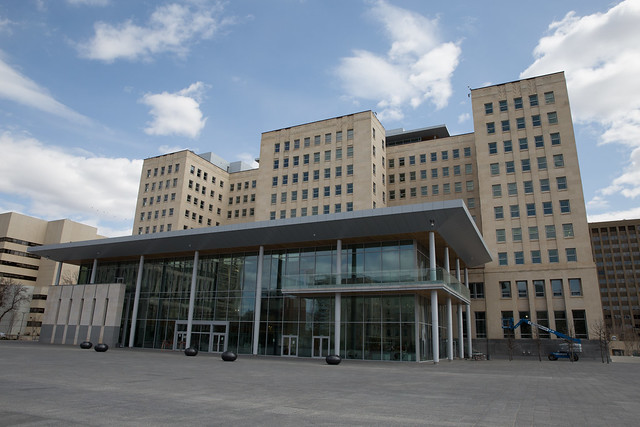
The Federal Building

Coming up at City Council: April 20-24, 2015

If you haven’t watched or listened to Council on the Web recently, you’ll be happy to know they have made some improvements! They are no longer using Windows Media Player. I’m not really sure why they decided to replace it with Flash though. Oh well, they have mobile-friendly (HTML5) streams too.

Agendas for upcoming City Council meetings are generally released on Thursday afternoons. I like to take a look to see what Council will be discussing, and I figured I should share that here. Below you’ll find links to the meetings taking place next week, as well as links to and thoughts on some agenda items that caught my eye.
City Council Swearing In 2013-2017

Monday, April 20, 2015

The week begins on Monday with a Community Services Committee meeting scheduled from 9:30am until 5:30pm. There are eight reports on the agenda, plus one response to an inquiry from Councillor Esslinger. Here’s what caught my eye:

Comparison of Policing Costs

Comparing the cost of policing across municipalities is difficult because they all have different services, funding sources, and reporting approaches. Still, EPS has attempted to provide some comparison in this report. They surveyed Vancouver, Calgary, Saskatoon, Regina, Winnipeg, Toronto, Ottawa, and Montreal and received responses from Calgary, Regina, Winnipeg, and Toronto. Here’s what they found after trying to account for differences between the agencies:

Comparison Cost Per Capita – Tax Levy Cost Per Capita – Gross Expenditures
Edmonton vs. Regina (2015) $317 vs. $352 $405 vs. $398
Edmonton vs. Winnipeg (2014) $314 vs. $305 $387 vs. $367
Edmonton vs. Calgary (2015) $317 vs. $291 $396 vs. $365
Edmonton vs. Toronto (2015) $317 vs. $366 $413 vs. $407

Gross Expenditures refers to the annual Operating Budget before applying Revenues. Tax Levy refers to the Operating Budget after the application of Revenues.

They also compared the Cost per Authorized Employee:

eps comparison

Here’s a comparison of Staff per 100,000 Population Ratio:

eps comparison

And here’s a comparison of the percentage of budget spent on support services:

eps comparison

There is no summary or concluding remarks in the report. Just the data.

Winspear Centre Staged Funding Agreement & Parking Solution

The current Winspear Centre was built in 1997 and they’re ready for expansion. Plans call for two main components:

  1. $53 million towards a new 540 seat acoustic hall theatre, six multipurpose rooms, and commercial space
  2. $25 million towards a new 380-stall automated robotic parking system

If funded, the expansion would be complete by 2019. Here’s where they expect the funding to come from:

  • $13 million from each of the three orders of government for a total of $39 million
  • $14 million from fundraising
  • $25 million for the parking system in debt financing

So far the City has already approved $3.75 million for the project. The additional $9.25 million will still need to be approved, and could come from the Downtown CRL, the 2015-2018 Spring Capital Budget Update, or the Community Facility Partner Capital Grant Program.

The City anticipates bringing forward a capital budget profile in June.

Single-Use Recreation Fees

The City’s current recreation membership fees are organized into three tiers: facility (access to 13 smaller facilities), facility plus (access to the 13 smaller facilities plus Kinsmen and Commonwealth), and all facility. If you want to get access to the newest facilities, like Terwillegar, Clareview, or The Meadows, you either pay per use or you need to pay for the highest tier. Now the City is looking at the possibility of introducing a membership fee for use at a single facility.

A single-use pass would reduce revenue for the City but could make it more affordable for some citizens to access recreation facilities, which would be positive for health and wellness outcomes. I’m not sure if Council will take any action on this (there’s no recommendation) but my guess is that the fee structure will remain the same.

Other

Councillor Esslinger’s inquiry was made in January and is about the review of off-leash dog parks. Administration is doing that review now and expects public consultation to begin in May.

Here are some of the other reports on the agenda:

One report, on options for prohibiting smoking at all outdoor City-owned recreation facilities, parks, and attractions, has been given a revised date of June 29.

Tuesday, April 21, 2015

On Tuesday, the next Executive Committee meeting is scheduled to take place from 9:30am until 5:30pm. There are ten public reports on the agenda, plus three private reports. Here’s what caught my eye:

IT Composite Profiles

This report provides an overview of the 2015-2018 IT composite profiles and funded IT investment initiatives. Here are some of the highlights:

  • For 2015-2018, $73.2 million has been allocated to IT in five profiles, three for renewal and two for growth. This represents approximately 1.6% of the total approved capital budget.
  • Additionally, IT funding of $31.6 million was approved for the Edmonton Police Service and $5.6 million was approved for the Edmonton Public Library.
  • The IT Infrastructure Renewal profile “maintains over 15,000 devices, two petabytes of storage and 100 kilometers of network cable.”
  • The total replacement value of IT infrastructure assets is $55 million.
  • There are five key Enterprise Applications utilized across the City: POSSE, PeopleSoft, SAP, TACS, and Geospatial (SLIM and Microstation).
  • The total replacement value of Enterprise Applications is $189 million.
  • The City has a current inventory of 145 business unit applications with a replacement value of $132 million.

Progress updates will now be included in quarterly capital financial reports, the next of which will be presented to Council in June/July.

2016-2018 Financial Services and Utilities Department & Branch Business Plan

You may recall that all City branches and departments are going to be submitting updated business plans as part of the implementation plan for The Way Ahead. This one is for the Financial Services and Utilities branch which consists of five departments: Assessment and Taxation, Corporate Strategic Planning, Financial Services, Drainage Services, and Waste Management Services (business plans for the latter two will be presented at a future Utility Committee meeting).

The business plan serves three objectives, according to the report:

  1. it is a decision-making tool to aid City Council during the 2016-2018 operating budget deliberations for the City of Edmonton
  2. it is a tactical business planning tool for Administration to remain focused through future resource planning and allocation
  3. the business plans set out the work each branch will carry out over the next three years showing the relationships to strategic priorities and expectations including performance measures

Based on feedback from Council, the City will further refine and finalize the business plans. The final plans will help in the development of the 2016-2018 Operating Budget.

Pattison Outdoor Advertising Outline Agreement

Last year, following an open RFP process, the City entered into a 10 year agreement (January 1, 2015 to December 31, 2024) with Pattison Outdoor Advertising for advertising space on the transit system. The agreement provides Pattison with the exclusive right to sell ad space on buses, LRTs, and transit centres.

The City needs to buy space for its own ads, and that has averaged $580,000 per year over the last three years. Administration intends to spend about $500,000 per year going forward, and the outline agreement is intended to provide “an efficient approach” that allows the City to negotiate for the best possible advertising rates.

Other

Here are a few notes on some of the other reports:

The two private reports are a verbal update on the purchase and sale of land in the Quarters, the settlement of expropriation claims in Blatchford, and an update on the Vehicle for Hire program.

The following reports have been given revised due dates:

Wednesday, April 22, 2015

The next Transportation Committee meeting takes place on Wednesday from 9:30am until 5:30pm. There are nine reports on the agenda, plus two responses to Councillor inquiries. This one is going to be interesting!

102 Avenue Bridge Replacement Project Update

Missed opportunity here, they should have called this report “Update on GirderGate!” There’s a lot of other information here, but that’s really want Council will want an update on.

Here’s where the project is at:

“The current status of the 102 Avenue project is that the girders now in place are currently being assessed. Until this review is complete the impacts to the project completion timeline are not fully known. The 3 week delay for stabilization of the girders to the project will impact the planned opening date however the exact delay is currently not known until completion of the girder assessments.”

The City has looked at some options to try to minimize the impact of project delays on commuting traffic and businesses:

  • They considered a temporary lane reversal system along Stony Plain Road (3 lanes in direction of peak flow, 1 in the opposite direction) but as it would cost between $500,000 and $1 million, it is not being recommended.
  • They are considering dedicated tow truck operations for the area, which could cost $500 to $1000 per day.
  • Vacant lots west of 124 Street and north of Stony Plain Road could be leased by the City to offset parking meter bans. They applied for this, but a local business owner successfully filed an appeal, so this is on hold until at least August 2015.

We’ll have to wait for future updates to understand just how far back the opening date has to be pushed.

Low Income Transit Pass Pilot

This report provides an update on the potential for a low income transit pass. The Edmonton Transit Advisory Board recommended a $35.00 per month pass, which would replace the existing AISH pass. Here are the details of the City’s report:

  • Applicants would need to be residents of Edmonton and would need to meet one of the following criteria: household income below the LICO figures, recent immigrants to Canada who have lived here for less than a year, children under government care, recipients of AISH.
  • ETS estimates that a low income transit pass would result in sales of 19,000 and 20,000 per month, which includes the 4,800 AISH passes currently sold per month.
  • ETS also estimates that total ridership would increase by 1 to 1.3 million trips per year. In total, low income pass purchasers are expected to make 9.5 million trips per year.
  • Although revenue generated from new ridership is anticipated to be between $1.1 million and $1.4 million, it is offset by anticipated losses in revenue from existing riders paying less than they do now of between $3 million and $7.5 million, depending on the price of the low income pass.
  • Full implementation of a pilot project would cost $1 million annually.
  • At a 35% discount, the estimated tax levy impact would be $3.7 million. At a 50% discount, it would be $6.4 million. And at a 60% discount, it would be $8.5 million.

The report also touches on the work of EndPovertyEdmonton, and notes that it recognizes that “accessible, affordable transit plays a key role in ensuring all Edmontonians have equal access and opportunity to jobs, services and travel in our city.”

West Edmonton Mall Transit Centre Options

This report outlines options for temporary enhancement, refurbishment, or replacement of the West Edmonton Mall Transit Centre taking into consideration the Valley Line LRT expansion. Built in the early 1980s, the current transit centre building is “nearing the end of its useful life” and is “no longer able to adequately support the operational needs” of the transit centre.

Here’s an overview of the four options:

  1. Temporary Enhancement – This option would include repairs and some replacements for things like doors, but would not change the look of the building. It would cost between $300,000 and $500,000 for the next four years, after which the building would need to be refurbished or replaced.
  2. Refurbishment – This option would basically retain the bones but would give the building a modern look, complete with upgrades to major systems. This should extend the life of the building by 10-15 years but at a cost of $3 million.
  3. Full Renewal – This option would demolish the existing building and replace it with a new one. The risk is that the Valley Line LRT is only in the preliminary design stages so things could change. The cost would be $4.4 million.
  4. Modular Shelter – This option would demolish the existing building and replace it with a shelter similar to what is currently at the Jasper Place Transit Centre. The estimated life of the shelter would be 20-25 years and it could cost around $3 million.

The recommendation is to go with the Refurbishment option which the report says will provide better value than the full rebuild.

Other

The two responses to Councillor inquiries are as follows:

  • Councillor Nickel made an inquiry in October 2014 about the 97 Street on-street bike route between 34 Avenue and 63 Avenue. The report states that since 2009, “73 kilometers of on-street bike routes have been constructed in Edmonton” which brings the total on-street network to 79 km. The report provides history and context, and also costs involved with relocating the 97 Street bike route.
  • Councillor Gibbons made an inquiry in August 2013 about the potential of having bike lanes along utility corridors (power lines and pipelines). The report says that shared-use paths “are an important part of an integrated bicycle network along with on-street routes.”

Some of the other reports include:

And a bunch of reports have been given revised due dates:

Wrap-up

You can keep track of City Council on Twitter using the #yegcc hashtag, and you can listen to or watch any Council meeting live online.