Media Monday Edmonton: Update #143

Here’s my latest update on local media stuff:

2013 Yeggies

You can follow Edmonton media news on Twitter using the hashtag #yegmedia. For a great overview of the global media landscape, check out Mediagazer.

So, what have I missed? What’s new and interesting in the world of Edmonton media? Let me know!

You can see past Media Monday Edmonton entries here.

Edmonton Notes for 2/22/2015

Here are my weekly Edmonton notes:

Headlines

EDMONTON ARNEA
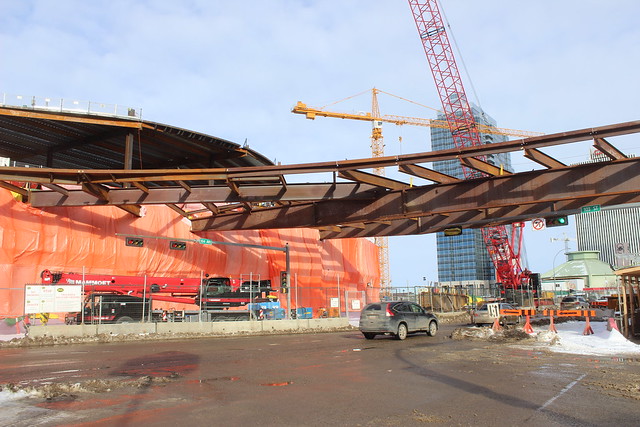
Arena construction has crossed 104 Avenue, photo by Jason Woodhead

Upcoming Events

Lions
Lions, photo by Dave Sutherland

Coming up at City Council: February 23-27, 2015

Council is back next week with Committee meetings.

Agendas for upcoming City Council meetings are generally released on Thursday afternoons. I like to take a look to see what Council will be discussing, and I figured I should share that here. Below you’ll find links to the meetings taking place next week, as well as links to and thoughts on some agenda items that caught my eye.
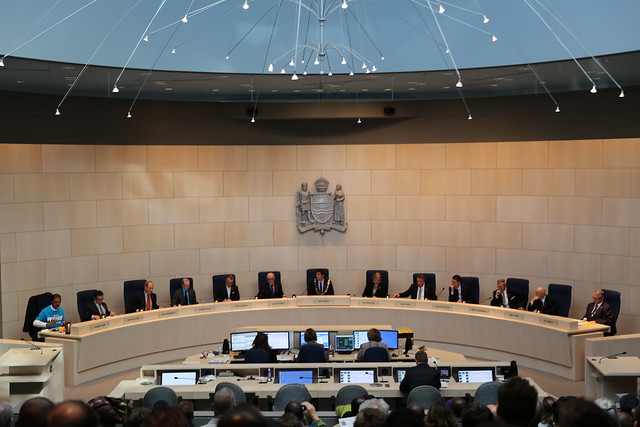
City Council Swearing In 2013-2017

Monday, February 23, 2015

Council starts the week with a Community Services Committee Meeting scheduled to take place from 9:30am until 5:30pm. There are four reports on the agenda, two of which require approval by Council. Here are some things I wanted to highlight:

CSAB 2015 Community Investment Operating Grant (CIOG) Recommendations

The Community Investment Operating Grant program is for non-profit organizations whose mandate falls under Social Services, Multicultural, or Recreation/Amateur Sport. As you can imagine, there’s a large number of eligible organizations. The maximum amount an organization can receive is $17,000 and organizations with operating expenses greater than $2 million are not eligible. Organizations can only receive one operating grant per year from the City of Edmonton.

The CIOG recommendations for 2015 total $3,486,180 to 251 non-profit organizations in Edmonton. There were 268 applications received. The report includes the full list of successful applicants.

EFCL Strategic Plan and Growth Strategy

The Edmonton Federation of Community Leagues (EFCL) Board of Directors has identified six key strategic priorities for 2014-2018:

  • Vision – The EFCL Board further develops and articulates a strong, long-term vision for its future based on understanding the components of complete communities, and the complementary functions of EFCL and the Community Leagues.
  • Advocacy & Engagement – The EFCL Board advocates for positive change by engaging leagues and equipping them to engage their communities and advocate for neighbourhood issues, and advocating itself on behalf of all leagues when the issue is city-wide.
  • Broadening Our Reach and Diversity – The EFCL works with Leagues to create better opportunities for social inclusion in their membership and programs.
  • Supporting League Leadership and Capacity – The EFCL focuses on building leadership and capacity in leagues.
  • Building an Efficient Operations Model – As a member agency, EFCL provides effective, efficient and innovative business supports to all leagues, and regularly assesses its effectiveness and benefit.
  • Championing Leagues – EFCL actively and intentionally raises the profile of community leagues and recognizes their contributions and accomplishments.

The organization is now working on its 2015-2019 Business Plan to outline activities and projects, timelines, resources, and budget implications for each of those priorities.

The Growth Strategy is an $80,000 funding package to help EFCL implement “a sustainable, efficient, and effective approach to realizing the vision” outlined in its Strategic Plan. EFCL is looking for a $40,000 contribution from the City of Edmonton for this project to hire a half-time, temporary contractor.

NextGen Community Challenge
Community Challenge, photo by Edmonton NextGen

The City has a Partnership Agreement with EFCL and discussions have begun about renewing it. Watch for a report in the second quarter of 2015 on that topic.

Non-Profit Organizations in Edmonton

Councillor Nickel made an inquiry back in September to learn about how non-profit organizations in Edmonton manage financial reporting, HR, and IT. The report provides an overview of the current situation, outlines how the City of Edmonton supports non-profit organizations, and identifies some challenges for the second. Here are some of the highlights:

  • “Edmonton has approximately 4,000 not-for-profit organizations providing a wide range of programs and services.”
  • “Many not-for-profit organizations are having to adapt to on-line staff recruitment processes. This requires expertise in both human resources and information technology applications.”
  • The primary way the City supports non-profits is through funding, but it works with other organizations that deliver programs and services too.
  • The City says that over the last three years, “fewer organizations are seeking assistance with financial reporting.” They say these organizations are building financial capacity through the resources that are available.
  • Under HR, the highlight is the Shared Services model that was piloted from 2010 to 2013. A group of non-profits are still using that approach to help reduce costs and increase efficiency. The report doesn’t say why the model hasn’t been deployed more widely.
  • There’s not much to take away under IT, aside from the SpaceFinder application that was jointly developed by the City, Arts Habitat, ECVO, and the Multicultural Coalition.

Challenges identified include increasing demand for services from the sector, a general shift toward project-based funding which reduces the amount of core funding available, and high turnover on boards.

I’m not sure what Councillor Nickel was looking for aside from information on the sector, but I find the report to be lacking in detail, frankly. A couple of Google searches probably would have turned up just as much information.

Other

The two other reports on the agenda are:

Tuesday, February 24, 2015

Council will hold its next Executive Committee Meeting on Tuesday, scheduled to run from 9:30am until 5:30pm. There are eight reports on the agenda, three of which require Council approval. There are also two responses to Councillor inquiries. Here are some things I wanted to highlight:

Corporate Measures and Targets

This report is an update on the previous work that Council has done on measuring outcomes for The Way Ahead. The key update is why using genuine progress indicators in tandem with gross domestic product is a good way to measure progress.

“A Genuine Progress Indicator (or Index) measures economic well-being. It is designed to replace gross domestic product as the standard economic indicator. Genuine Progress Indicators attempt to go beyond measuring the market value of goods in an economy and provide an approximation of sustainable economic well-being by subtracting the negative by-products of the economy.”

There’s no one single Genuine Progress Indicator and they are complex to develop. There are also questions about how valid or reliable they are. There are benefits to using them in tandem with other indicators though. “For example, while Gross Domestic Product may rise over time, a Genuine Progress Indicator may not rise as quickly or may even fall over the same time period.”

Over the year, the City is going to be developing a corporate performance measurement registry to house the strategic and key operational measures throughout the organization. There’s a bunch more discussion on the difference between performance measures and indicators, and on genuine progress indicators, in the report.

What will happen to McDougall United Church?

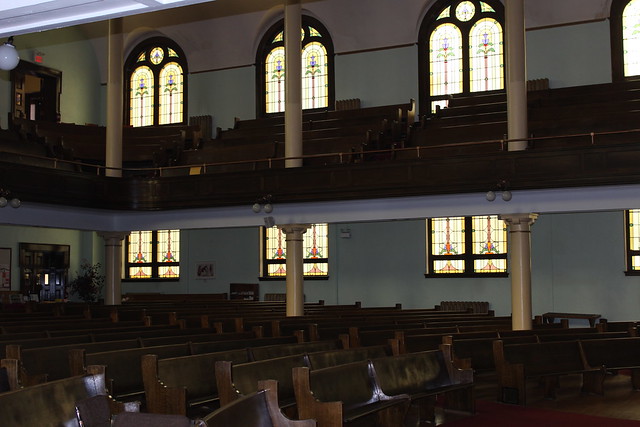
There’s a fairly extensive report on the work the City has undertaken alongside the McDougall United Church Council regarding the future of the church buildings and land. The report calls restoration of the church “unlikely” and says that to avoid demolition, a compromise may be to restore some of the building’s architectural features into a new facility. Here’s the key conclusion:

“Administration has investigated the options for preservation and restoration of McDougall United Church. At this time, Administration has completed its mandate unless otherwise directed to undertake additional work. The Church Council needs to determine the future of its building and congregation. If City Council elects to provide the required funds to the McDougall United Church, it will require reprioritizing Council’s initiatives in order to find funding. Such a decision could set a precedent for other organizations.”
MCDOUGALL UNITED CHURCH
Inside McDougall United Church, photo by Jason Woodhead

The total cost to maintain the church over the next seven years ranges from $18.4 million to $25.4 million. If Council wants to direct some funding to save the church, it won’t be cheap, and it could set a precedent they’d rather avoid.

Current Planning Reserve Fund

This report is in response to an inquiry that Councillor Nickel made back in September about how the current planning reserve fund is operated. Back in 2010 the Current Planning Reserve Fund was established to “ensure full cost recovery and long-term financial sustainability of revenue generating planning, development, building, and mechanical services.”

Here’s what the City targets:

“The target balance of the Current Planning Reserve Fund, as outlined in City Policy C570 – Current Planning Reserve, is 75% of Current Planning budgeted annual operational expenditures.”

The fund balance currently sits at just half the target value, at $26.4 million as of the end of 2014.

The report goes on to say that in fact, a balance of 100% of annual operating expenditures is “likely required to maintain operations and cover costs during a typical economic recession.” Cities like Calgary, Hamilton, Ottawa, and Waterloo all target a reserve fund balance of between 100% and 150% of annual operating expenditures.

Online Voting

In November, Councillor Knack asked for an overview of the Internet voting test conducted in 2012 and an update on any new information that has been learned since that time. The report provides a summary and includes these observations:

“In order for internet voting to be successful, an extensive auditing process, security system, clear communication plan and thorough testing should be completed prior to implementation. The multi-layered authentication sign on system utilized in internet voting has provided electors a secure online voting option. Internet voting has been successfully implemented in a number of municipalities as an additional voting option and tool to help reduce barriers for voters.”

If the City were to move ahead with Internet voting, legislative changes would be required. These changes “have been raised in discussions on the proposed City Charter and revisions to the Municipal Government Act.”

At this time, the City has not developed cost estimates for Internet voting.

I still think the City should adopt online voting as an option. The last time this came up at Council, they voted against it citing security concerns. They had a good discussion about the issue, but my much more cynical take on it was at the end of the day, mayoral candidates were afraid that Don Iveson would use his connections and tech savvy to take advantage of online voting to win the election. Clearly that won’t be a concern in 2017 because, well, he handily won the last offline election didn’t he?

Other

Wednesday, February 25, 2015

The next Transportation Committee Meeting will take place on Wednesday from 9:30am until 5:30pm. There are seven reports on the agenda, plus four responses to Councillor inquiries. Here are some items I wanted to highlight:

Funding Strategies for Future LRT Lines

The total length of the long-term LRT Network Plan is 69.7 km, of which 24.3 km is either in service or will be soon, with another 13 km that has funding approved. That leaves about 32 km still to be funded and constructed. The City has identified the following options for funding future LRT:

  • Tax-Supported Debt Service Room that becomes available in future years
  • Gas Tax Fund that becomes available as South LRT Debt is fully repaid
  • Additional Transit Fare Surcharge
  • Pay-As-You-Go and other traditional Capital Budget Grant sources
  • Additional Tax Levy Directed to LRT Reserve

How much money would we have to spend?

“The total currently identified nominal dollars becoming available between the years 2019 and 2034 total $658 million. This would mean that in order to contribute $658 million towards future LRT as a direct funding source, it would take until 2034 to generate this amount of funds, without considering any additional tax levy impact.”

If that were applied to debt servicing costs, that would translate into about $1 billion in capital funding.

Of course, any future construction is realistically going to require assistance from the provincial and federal governments and for that reason, “an advocacy and lobbying strategy would be required.”

In order to fund future LRT expansion, Council will need to have either an appetite for more debt, the desire to increase taxes, the ability to get more money from other orders of government, or more likely, a combination of all three.

Escalators at LRT Stations

Transit riders complain about escalators being out of service all the time at LRT stations, and this report summarizes the current status and way forward.

  • There are currently 37 escalators in the LRT system.
  • In 2014 (to the end of October), reliability for escalators was 83%. Total impact of major interruptions was 990 days.
  • The life expectancy of an escalator is 30 years. The oldest one of ours is 36 years.
  • Escalators break down because of age, vandalism, power outages, and of course sand, snow, and other debris that requires regular maintenance.
  • The current elevator and escalator maintenance contract expires this year, so the City will be refining the proposed contract before renewing in an attempt to improve service.
  • ETS has a target reliability figure of 90% based on an average of 36 days out of service for preventative maintenance.

The 2015-2018 Capital Budget included $11.874 million for the end of life escalator replacement program. Six escalators are scheduled to be replaced using that money: three at Central, one at Coliseum, one at Stadium, and one at either Bay or Corona.

TIL there’s an organization called the Alberta Elevating Devices & Amusement Rides Safety Association. Who knew!

EPark: Brought to you by the City of Calgary

The City is progressing with plans to replace parking meters with pay-by-plate technology, with implementation set to begin in May. They want to contract the City of Calgary to make it happen, noting that its ParkPlus system is “the only fully automated pay-by-plate parking management solution operational in Canada.” The particulars of the agreement are still being negotiated, but the City is looking for a four-year deal that would include all software and services, plus training.

The report also talks about the need to approve a name and design for the system. I don’t think the logo is going to win any design awards, but I do agree that having a consistent name and look is important. Here’s what the City is proposing for Council’s approval:

epark

Like I said, it’s not pretty.

Other

Thursday, February 26, 2015

The final committee meeting of the week will be the Utility Committee Meeting on Thursday from 9:30am until 5:30pm. There are three reports on the agenda:

There’s also one verbal report, on waste management, that is private under sections 16, 24, and 25 of the FOIPP act.

Wrap-up

You can keep track of City Council on Twitter using the #yegcc hashtag, and you can listen to or watch any Council meeting live online.


Coffee Bureau and Lock Stock Coffee have revived Edmonton’s coffee district

There’s a buzz downtown and it’s not just because of all the construction taking place. It feels like Edmonton’s coffee district is back now that two new independent coffee shops have opened! Coffee Bureau and Lock Stock Coffee are now open on opposite sides of Jasper Avenue just west of 105 Street. I checked out both locations this week.

Coffee Bureau

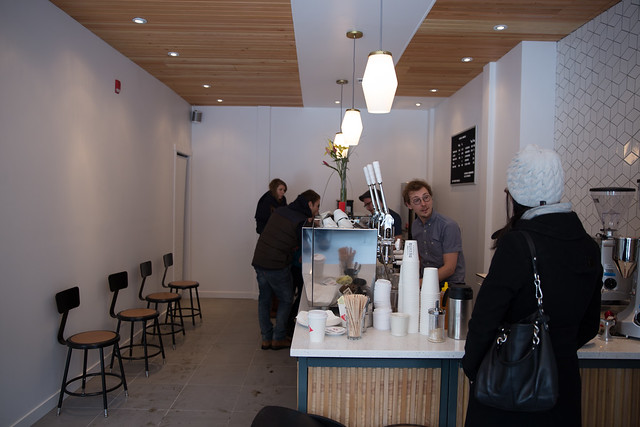
Coffee Bureau is located on the southwest corner of Jasper Avenue and 105 Street in the Dental Building. It’s a small cafe with minimal seating and big windows.

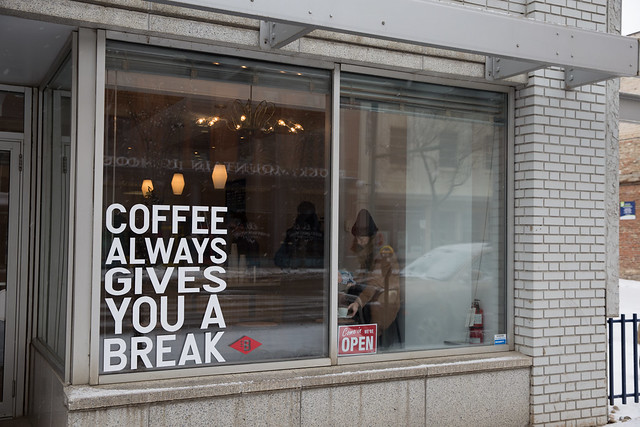
Coffee Bureau

They serve ACE Coffee (Twitter, Instagram), a new local roaster from the folks behind LEVA Cafe. You’ll find a small selection of pastries too, like carrot-pineapple muffins and butter tarts.

Coffee Bureau

Couple Peter and Criss are the duo behind Coffee Bureau. Peter was formerly a barista at LEVA Cafe.

Coffee Bureau’s hours are subject to change, but currently they’re planning to be open from 7 AM until 5:30 PM during the week, and 9 AM until 3:30 PM on Saturday. Follow Coffee Bureau on Instagram and on Twitter.

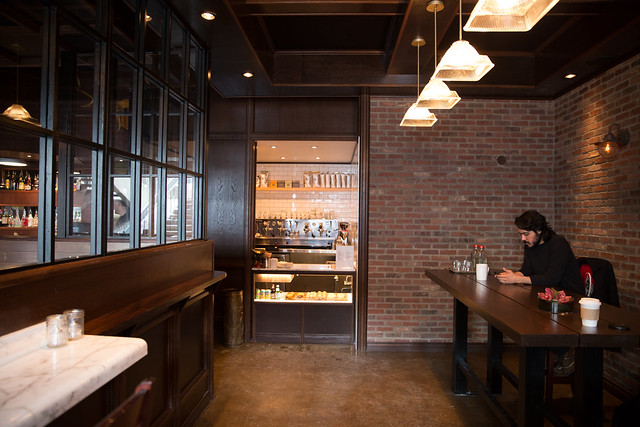
Lock Stock Coffee

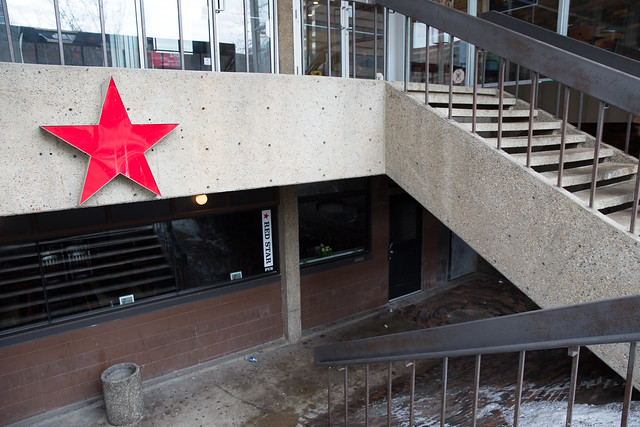
Almost directly across the street from Coffee Bureau is where you’ll find Lock Stock, nestled in-between Bower and Red Star Pub (which it is technically a part of). There’s a separate door though; it’s the dark one under the stairs to the right.

Lock Stock Coffee

Lock Stock serves Danesi coffee, which is an Italian roast that began in Rome in 1905. They also have pastries, baked in-house by Jesse who doubles as the barista (I hear the carrot cake is delicious).

Lock Stock Coffee

Red Star’s Sal Di Maio is the man behind Lock Stock. He told me they soft-launched a couple weeks ago and wanted to build up quietly. Now they’ve decided on the name and will be making themselves more known (they just started tweeting today).

Lock Stock will be open from 8 AM until 3 PM during the week, with Red Star opening at 4 PM. Follow Lock Stock Coffee on Twitter.

Edmonton’s Coffee District

It was just last fall that Burrow opened in Central LRT Station, and Transcend opened in the Mercer Warehouse on 104 Street, so it has been a great few months for Edmontonians looking for a caffeine fix downtown. I used to call the area around 104 Street the coffee district back when we had Roast and Transcend, but when they closed I figured it was no longer an appropriate title. Fast forward to today, and I think we can safely say the coffee district is back!

Here are the cafes you’ll find in the few blocks surrounding 104 Street:

  • Credo Coffee on 104 Street – the heart of the district, in my opinion
  • Transcend Mercer at 104 Street & 104 Avenue
  • Second Cup on Jasper Avenue between 103 Street and 104 Street
  • Remedy Cafe on Jasper Avenue at 103 Street
  • Coffee Bureau on Jasper Avenue at 105 Street
  • Lock Stock Coffee on Jasper Avenue between 105 and 106 Street

Also on 104 Street you’ll find Cavern and Dauphine, a cheese shop and bakery, which both serve a great cup of coffee.

Venture just a tiny bit further and you’ll find even more cafes. I suppose you could consider all of downtown the coffee district, from 101 Street to 109 Street, as Sharon does.

On the east side you’ll find Starbucks at the Empire Building, HSBC Bank Place, and City Centre on 101 Street, and of course there’s Second Cup, Good Earth, and two Tim Horton’s at City Centre too. Underground you’ll find Burrow and another Second Cup at Telus Plaza. There’s another Good Earth in Scotia Place. On 102 Street inside Commerce Place you’ll find Tim Horton’s, Starbucks, and McDonald’s (which has a separate McCafe counter).

On the west side, you’ll find Tim Horton’s and Starbucks on 107 Street, Good Earth on 108 Street, Second Cup on Jasper Avenue just west of 108 Street, and of course District on 109 Street.

And who knows what’ll come to the Edmonton Arena District in 2016! Good Earth has already listed a location opportunity for that area.

Lock Stock Coffee

A couple of other coffee-related items worth mentioning:

And with that, I’m off to drink another coffee!

Media Monday Edmonton: Update #142

What a week in the world of media, both local and elsewhere. Let’s start with some local stuff before moving on to the broader mediaverse:

And here are some non-local headlines that I wanted to share:

You can follow Edmonton media news on Twitter using the hashtag #yegmedia. For a great overview of the global media landscape, check out Mediagazer.

So, what have I missed? What’s new and interesting in the world of Edmonton media? Let me know!

You can see past Media Monday Edmonton entries here.

Edmonton Notes for 2/15/2015

Heads up! A parking ban has been declared and takes effect at 11pm tonight. Here are my weekly Edmonton notes:

Headlines

Talus Dome
Talus Dome, photo by Kurt Bauschardt

Upcoming Events

Edmonton By Night
Edmonton By Night, photo by Danny Roberts

City Council Update: February 13, 2015

There are no Council meetings scheduled for next week. The next Committee meetings will take place during the week of February 23-27, with the next Public Hearing scheduled for March 2.

City Council Swearing In 2013-2017

Here’s what happened at the Public Hearing that took place on Monday.

  • Bylaw 17062 was referred back to Administration for further consultation, to return to Executive Committee on March 10.
  • All other bylaws (except one) unanimously passed third reading (Councillor Loken was absent).

There was one contentious issue though, and that was with Bylaw 17011 which was the adoption of The Decoteau Area Structure Plan (which I wrote about here). With a 6-5 vote (as both Councillor Loken and Councillor Henderson were absent for this one) the following motion was carried:

That Bylaw 17011 be referred back to Administration to work with the proponents outlining the following:

  1. Density: review increasing the net residential density of the proposed Area Structure Plan
  2. Business Employment: review increasing the Business Employment designation within the Area Structure Plan area as it gives direction to the intensity of use in the future Neighbourhood Structure Plan’s
  3. Wetland and Natural Areas: review the mapping and wording within the Area Structure Plan as it gives direction to the next stage of planning for Neighbourhood Structure Plan’s

and return to the March 16, 2015, City Council Public Hearing.

Here’s what the proposed ASP says about net residential density currently:

Residential densities within the Decoteau ASP range from 25 units per net residential hectare (upnrh) to 225 upnrh. The lower range of 25 upnrh will be developed as single/semi-detached housing. The higher range of 225 upnrh will be developed as high density residential, also referred to as medium to high rise units.

And it does make mention of the Capital Region Board targets:

Decoteau is located in the Capital Region Board’s Priority Growth Areas “CE” and “B”. These areas require a minimum net residential density target of 30 units per net residential hectare. The ASP exceeds this density target.

Council is looking for more, however.

Council Services Committee Meeting: February 9

One thing I missed in my last update was the Council Services Committee meeting that took place this week. Here are the draft minutes.

2014 Councillor’s Budget Update – Budget and Actual

This report provides preliminary numbers for the year ending December 31, 2014. There are two budgets to consider:

  • The common budget consists of salaries for Councillors’ and Administrative Assistants; benefits for Councillors and all office staff; and transition, severance, retirement and vehicle allowances for Councillors. It also includes common travel, parking, furniture, telephone expenses, stationery, postage and meeting supplies.
  • The ward budgets consist of personnel and expenses categories. The personnel category reflects Executive and Council Assistants’ salaries, vacation/staff replacement, transportation, and research projects. The expenses category reflects Councillors’ individual travel, training, promotional items, hosting and tickets, communications, and Edmonton Salutes.

What the report shows is that slightly less was spent than was budgeted for both the Common Budget and the Ward Budget. Nearly $70,000 was saved on the Common Budget and nearly $200,000 was saved on the Ward Budget. That means the total Councillors Office spend was $3,578,296, which is $267,383 less than the $3,845,679 that was budgeted.

2015 Common Travel Plans – Office of the Councillors

The 2015 budget for Common Travel and Training remains the same as 2014 at $79,502. This includes:

  • $19,350 for Civic Agency Travel
  • $14,680 for the annual AUMA Conference in Calgary
  • $8,541 for the annual FCM Conference in Edmonton

The report includes some detail about which Councillors are travelling when.

On this report, the Committee made two decisions:

  • First, they voted to allow Councillor Gibbons to submit mileage expense claims for his travel as Chair of the Alberta Industrial Heartland Committee.
  • Second, they voted to allow Councillors representing the City at meetings of intergovernmental bodies to submit “reasonable expense claims” and requested that Administration prepare an amendment to the policy to account for this.

2015 Furniture Plan – Office of the Councillors

If you’ve ever wondered how much Councillors spend on furniture, then this is the report for you! The budget for furniture in 2014 was $11,278, of which just over $9,200 was spent. The budget for 2015 is the same, and so far just $2,108 in requests have been made.

There’s a bit of IKEA in there, and there are lots of ergocentric desk chairs. I’m not sure if they mean ergonomic or if they actually mean the company ergoCentric. In 2014, the big spender was Councillor Sohi, as he installed an adjustable desk. So far in 2015, the biggest request is for two armchairs for Councillor Walters’ office. UPDATE: That request has been withdrawn!

Wrap-up

You can keep track of City Council on Twitter using the #yegcc hashtag, and you can listen to or watch any Council meeting live online.

Recap: DemoCamp Edmonton 27

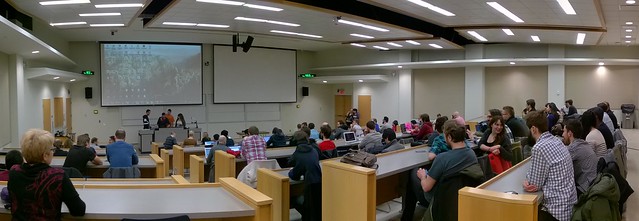
Edmonton’s 27th DemoCamp took place tonight at the Centennial Centre for Interdisciplinary Sciences (CCIS) on the University of Alberta campus. It was hackathon night at DemoCamp, as more than half the projects demoed were created at a hackathon of some sort.

DemoCamp Edmonton 27

Teams from two local hackathons that took place recently were on hand to demo tonight. First was the MADJAM Global Game Jam hackathon that took place over the January 23 weekend. It had 72 participants and 15 teams that took part.

“MADJAM is an Edmonton-based, year-long event that is made up of quarterly game jams, each associated to a global or local event. At the end of each jam, the games will be judged by our panel of experts and voted on by the public. The developers of the best games will be awarded points. These points accumulate and the developers with the most points by the end of the year will win totally rad rewards!”

Their next event is coming up the week of April 26 – May 3, called GDX Super Jam.

The other hackathon was the HackED Computer Engineering Club Hackathon, which took place on January 31. About half the participants in that hackathon were software based, the other half were hardware based. The hackathon offered $2,000 in prizes and just 24 hours to build something cool.

In order of appearance, tonight’s demos included:

DemoCamp Edmonton 27

The Bees is a game that has you controlling a swarm of bees after the hive has died. “The bee colony must forge on, in hope of escaping a terrible fate,” the description reads. The team used an iPhone to compose the music, and built their game using the Unity engine. The bees swarm because the emit pheromones, and to keep the game interesting, the team made the seasons change. They focused on what could be done in just 48 hours. Wondering how the game ends? Well no matter what you do, the bees die! In a future version, they’ve talked about maybe having nanobots instead of bees.

DemoCamp Edmonton 27

After Hours was also powered by Unity, and is a side-scroller not unlike Super Mario Bros. The team wanted the game “to be tough but fair” and also wanted it to be complete. They decided to do pixel art, because it went well with the music. They added a multiplayer mode too. The goal of the game is basically to make it through the level before the time runs out. If you do, you get to go for a drink!

DemoCamp Edmonton 27

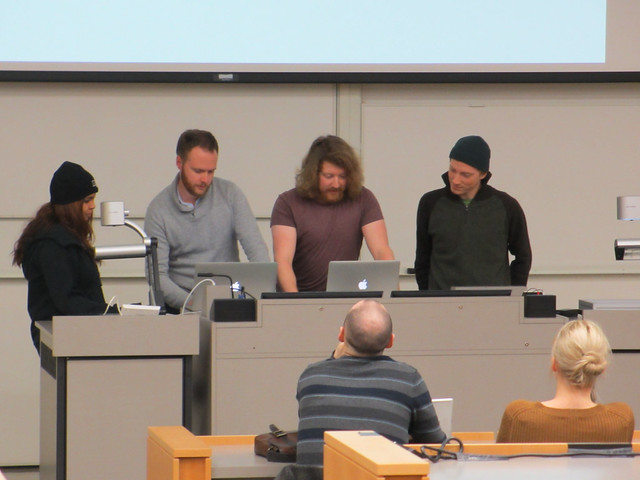
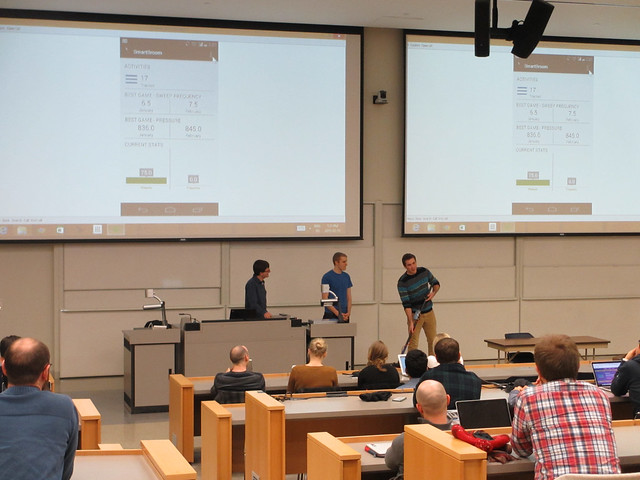
The third demo was my favorite of the night – Broom Blaster. It won second place in the HackED hackathon and is essentially a tracker for curling brooms. Inspired by the Fitbit, Jacob, Jared, Stephen, and their fourth teammate decided to add pressure and motion sensors to a broom that could be paired with a smartphone over Bluetooth low energy. The system tracks both frequency (how many times you sweep) and pressure (how hard you sweep). The team wanted hardware that could be added to an ordinary broom, to make it more cost effective. The app collects the data, and can give training and coaching information. A possible future upgrade? A speaker, so the broom can yell “hurry hard!” at you.

DemoCamp Edmonton 27

Fourth was SafetyNet by Jobber. Ben demoed his app, which is essentially an online utility to backup your data from QuickBooks Online. He built it at a recent Intuit conference that featured a hackathon and took home the $15,000 prize in the new app category. For some reason QuickBooks Online doesn’t already have a backup feature, so Ben used the REST API to create one. He had just 36 hours to build it, but was able to come up with a simple-to-use but efficient tool. Built in Rails with Bootstrap on the frontend, the app encrypts the data and offers one click to save and one click to restore.

DemoCamp Edmonton 27

Our fifth demo was WANDA. Built by Visionstate (with some help from Dark Horse Analytics), WANDA is an interactive touchscreen for washroom management. Carolyn showed us how it can be used to give patrons an easy way to submit a request for cleaning or to alert staff that a resource (like toilet paper) is low. When staff go to clean the washroom, they use WANDA to record what they did and when they did it. You’d probably think twice about touch a screen in a washroom, but WANDA features an antimicrobial overlay on the displays. The backend dashboard by Dark Horse lets you make sense of the data, such as determining optimal cleaning times.

DemoCamp Edmonton 27

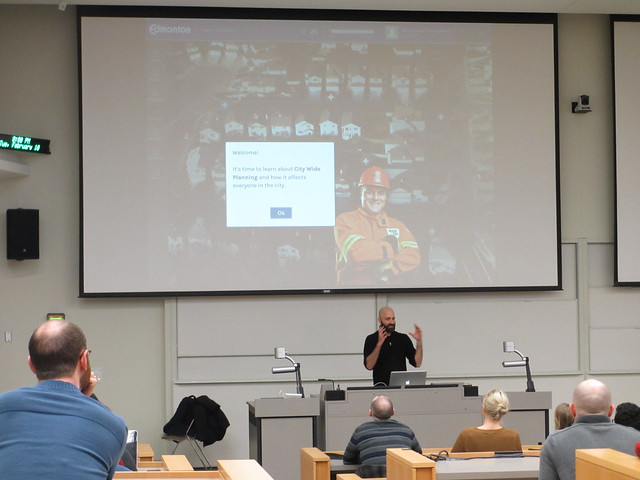
Our final demo of the evening was Trajectory from Rocketfuel Games. Matthew showed us a few examples of how Trajectory can make training and certification much more enjoyable and effective. Instead of just embedding a PDF on a web page and telling new recruits to go read it, Trajectory can make the experience much more interactive. Everything a user does is tracked, including how they take to do it, but that data isn’t visualized just yet – that’s coming next.

DemoCamp Edmonton 27

A few upcoming events were mentioned. Startup Weekend EDU Edmonton is taking place at NAIT from March 6-8, and will be a great opportunity for transforming your idea for improving education into reality. The first ever Polyglot Alberta Unconference is taking place in Calgary on March 28 (and will alternate between Edmonton and Calgary). Preflight Beta is taking place at Startup Edmonton again on February 19, and is a great opportunity to learn about the Lean Canvas Model. And finally, on March 21, Startup Edmonton is hosting the Student DevCon at the Shaw Conference Centre.

DemoCamp Edmonton 27

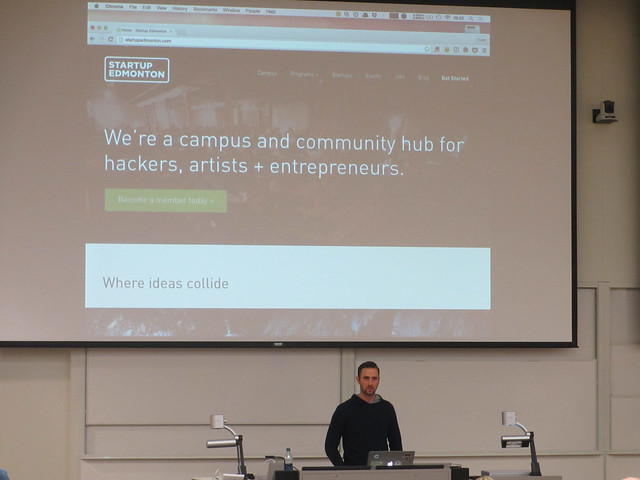
Over 150 meetup events took place at Startup Edmonton last year! Keep an eye on the Startup Edmonton Meetup group for more upcoming events. They have also added a listing of all the meetups taking place at Startup to the website. You can also follow them on Twitter.

You can see more photos from the event here. See you at DemoCamp Edmonton 28!

Media Monday Edmonton: Update #141

Here’s my latest update on local media stuff:

AE3R4478
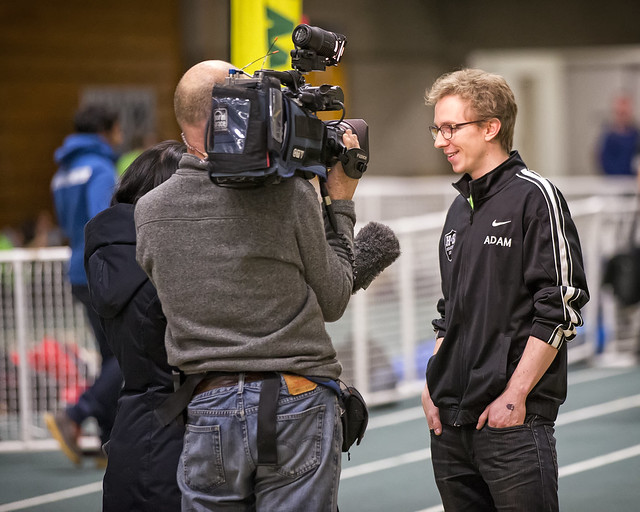
CTV interviews someone at an attempt to hold the World’s Largest Game of Hide and Seek, by Don Voaklander

You can follow Edmonton media news on Twitter using the hashtag #yegmedia. For a great overview of the global media landscape, check out Mediagazer.

So, what have I missed? What’s new and interesting in the world of Edmonton media? Let me know!

You can see past Media Monday Edmonton entries here.