Recap: Jasper in January 2016

A few weeks ago I spent a couple of days in Jasper with Sharon. We were invited by Tourism Jasper to experience Jasper in January, the 27th annual festival that aims to showcase everything Jasper has to offer. Guests are encouraged to “stave off the urge to hibernate” and to “embrace winter”. The weekend getaway came at the perfect time for us, as we needed a couple of days to unwind.
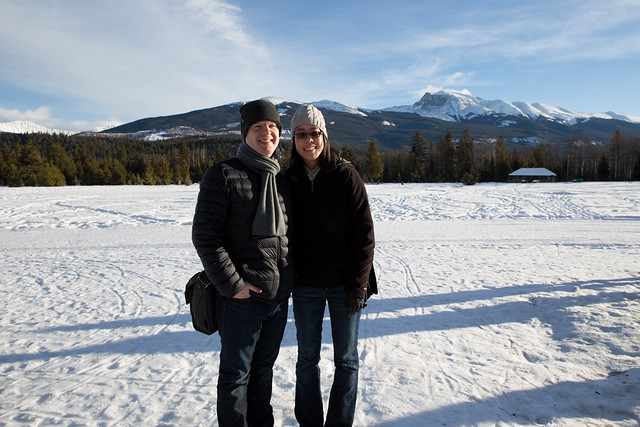
Mack & Sharon

Tourism Jasper put us up in the Crimson Hotel, a part of the Mountain Park Lodges family, and covered our transportation and event tickets for the culinary events we visited during our stay. They also arranged for our travel to Jasper, via the SunDog Tour shuttle that regularly travels between Edmonton and Jasper, with stops at Edson and Hinton along the way. We simply took ETS to West Edmonton Mall where we met the shuttle outside the Fantasyland Hotel (their other local stop is the Edmonton International Airport). The only downside of taking the shuttle is that we were on their schedule of course, so we didn’t arrive in Jasper until nearly 8pm.
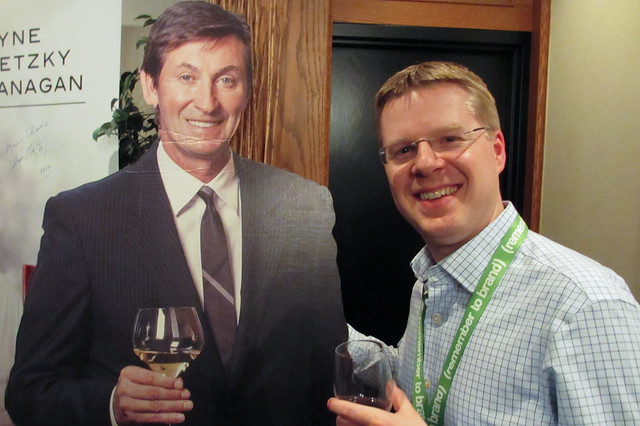
Wayne & Mack
Had to take a pic with Wayne Gretzky!

Our weekend was themed “appetites”, sandwiched between the “adventure” and “arts” weekends. First on the agenda was the Wine in Winter Welcome Reception. After checking into the hotel, we made the short walk over to the Chateau Jasper and found the event well underway. The reception featured wines from around the world, plus a small selection of cheeses and appetizers. The food was not very memorable, but we had fun with Linda & Mike trying to figure out who was giving the largest pours of wine!

Wicked Cup
My breakfast at Wicked Cup

Our first stop in the morning was at Wicked Cup. It was a beautiful day, sunny and warm, and our coffee and breakfast was delicious. I think most people in our group were surprised at the portion sizes!
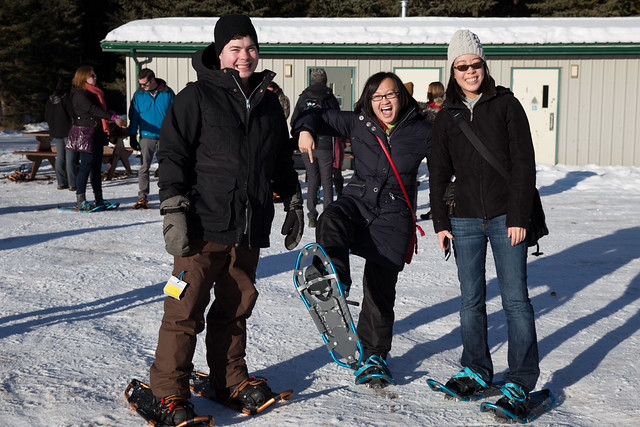
Mike, Linda, Sharon
Mike, Linda, and Sharon getting ready for snowshoeing

After breakfast a shuttle took us out to Marmot Meadows where we had the opportunity to do some snowshowing! The area features 9km of cross country ski trails and a new winterized warming shelter. It’s also part of the Jasper Dark Sky Preserve, the second largest dark sky preserve in the world.
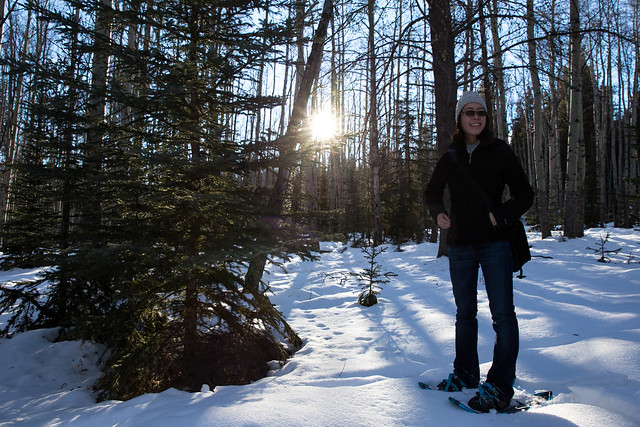
Sharon
Sharon snowshoeing

We had fun snowshowing, especially as we got to use the new, modern, aluminum style snowshoes!
Linda & Sharon
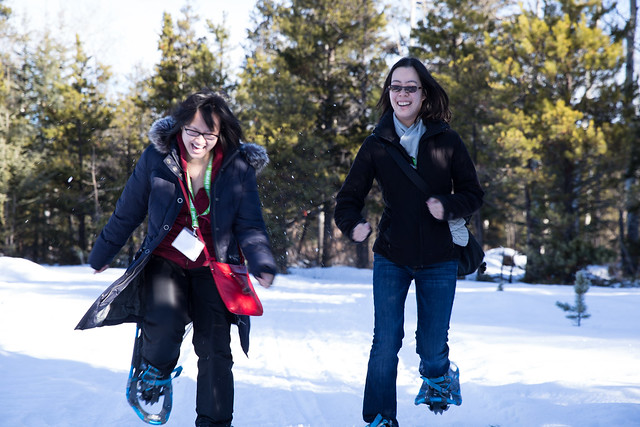
Linda and Sharon racing

We walked through some of the grounds as a group, then had some free time to explore on our own. Linda and Sharon used the opportunity to race! It was close, but I think Sharon won, mainly because Linda stumbled and fell!
Jasper Brewing Co
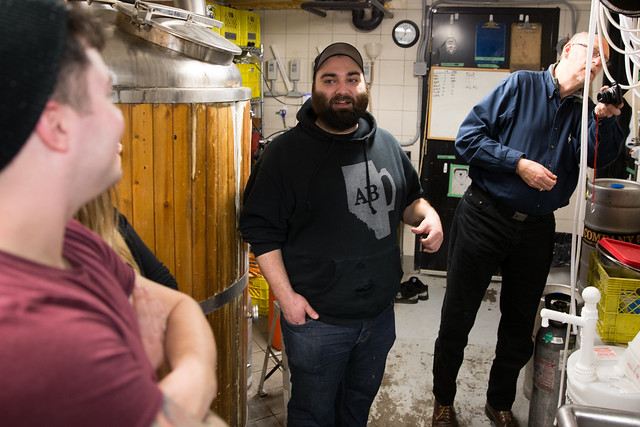
Behind-the-scenes at the Jasper Brewing Company

For lunch the shuttle took the group to the Jasper Brewing Company. It opened in 2005 and was Canada’s first National Park brewery. They brought us all a ton of appetizers, and I ordered the beer sampler to try their six brews. It sounds like their Jasper the Bear Ale is the most popular, but I preferred the Liftline Cream Ale. After lunch, we got a quick tour of the (surprisingly small) brewery downstairs, where we learned that they don’t do anything to the water except remove the chlorine added to it. Makes sense considering they have natural mountain water from the Rockies!
Jasper in January
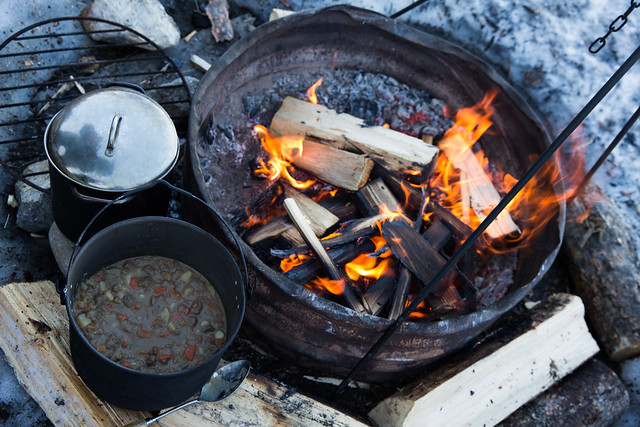
Learning about backcountry cooking

After lunch the shuttle took us back out to Marmot Meadows where we were slated to learn about backcountry cooking. We had the opportunity to sample the stew and look at some of the backpacking cooking gear. We didn’t end up spending very long though, so that meant we had a couple of free hours to explore the town.
Linda
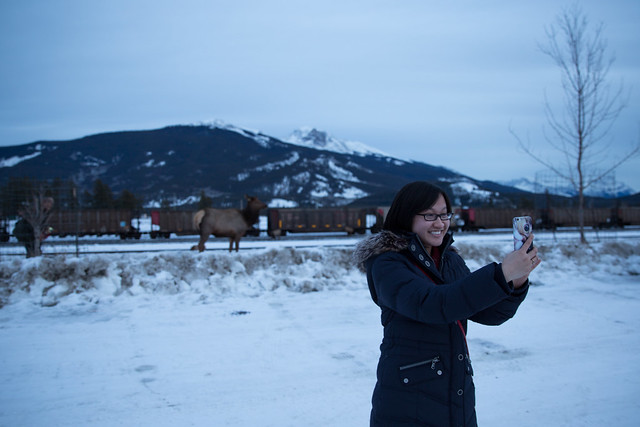
Linda taking an #elkie

Sharon and I walked around and did a bit of shopping, then we met up with Linda and Mike for a beer. It was nice to just relax for a bit! On the way back to the hotel we encountered a group of elk near the train tracks, and Linda couldn’t resist taking an “elkie”. Eventually a train went by and the elk were completely unphased, they must be used to it.
Jasper in January
Dinner at the JPL

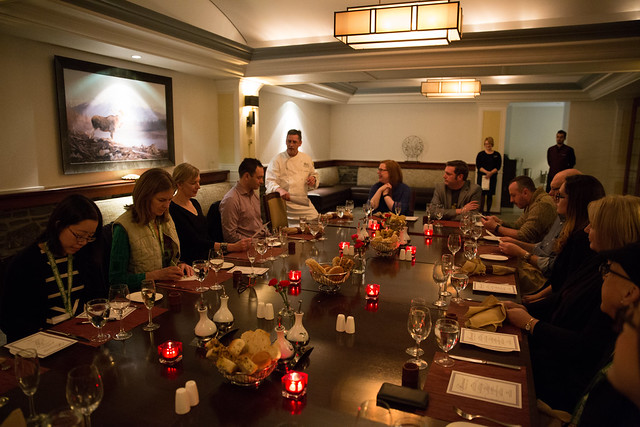
That evening we took a shuttle out to the Fairmont Jasper Park Lodge for dinner. We were supposed to be having an “Orso Italian” dinner, but for whatever reason it was cancelled. They still put together an interesting menu for our media group though! Unfortunately the meal was rather inconsistent. My lobster pasta dish was great, with enough liquid and flavor, but others found theirs dry and a bit bland. Similarly the entrees were a mixed bag – it sounds like the ravioli prima vera was the best of the bunch.

After getting back to the hotel, Mike and I decided to head down to the Atha-B at the Athabasca Hotel where Tupelo Honey was playing. It made for a late night, but we had fun!
Athabasca Falls
Athabasca Falls

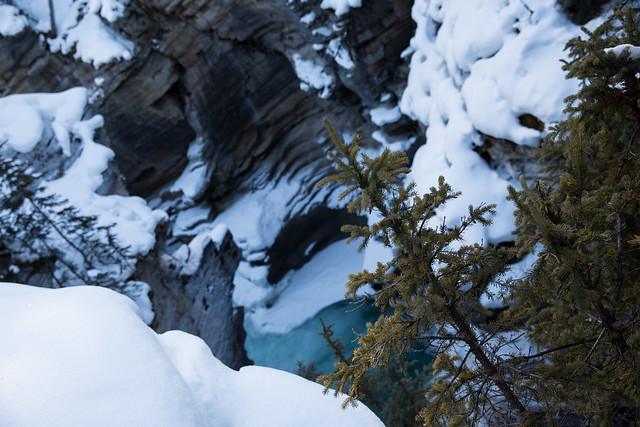
Had we gone home on the same bus that took us to Jasper, Sharon and I would have left bright and early Sunday morning. But lucky for us, Phil and Robyn offered to let us catch a ride back with them. That meant we had a bit more time to explore Jasper! We started at Athabasca Falls, beautifully covered in snow and ice. It was a little tricky to find, but I’m so glad we did. Athabasca Falls “is not the highest or the widest waterfall in the Canadian Rockies but it is the most powerful.”

Pyramid Lake
Possibly the most Canadian scene ever

After the falls, we made our way to Pyramid Lake. Ice skating, hockey, curling, skiing, sleigh rides – it was a winter wonderland!
Sharon
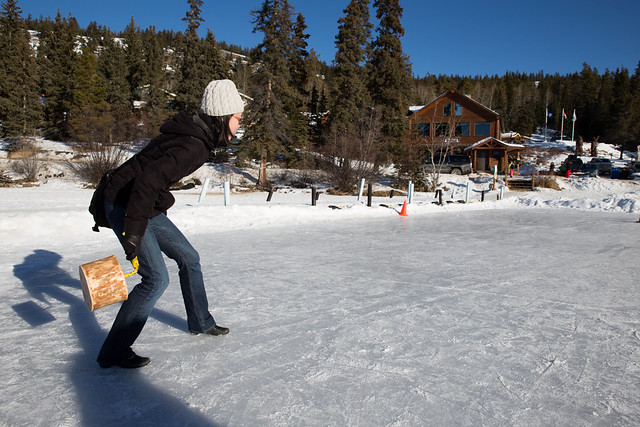
Sharon curling at Pyramid Lake

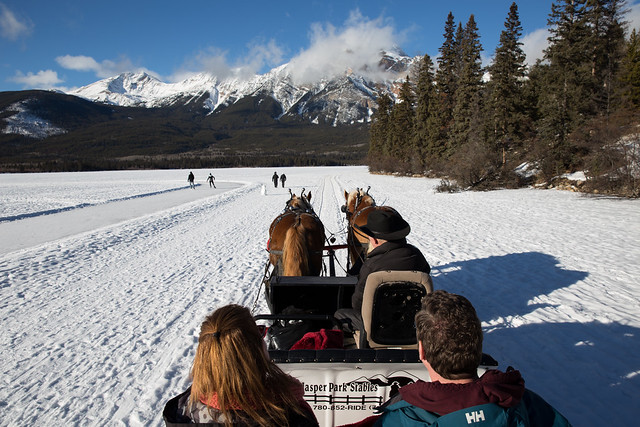
We had lunch inside the lodge, then took the 40 minute sleigh ride along the shore. We also stopped to do a bit of curling on the lake! It was a very picturesque place to spend our final hours in Jasper. Thanks to Phil & Robyn for letting us tag along!
Jasper in January
A real sleigh ride at Pyramid Lake

Here are a few clips from our trip:

Thanks to Tourism Jasper for a great weekend! You can see more of my photos from the weekend here. Also be sure to check out Linda’s recap here.
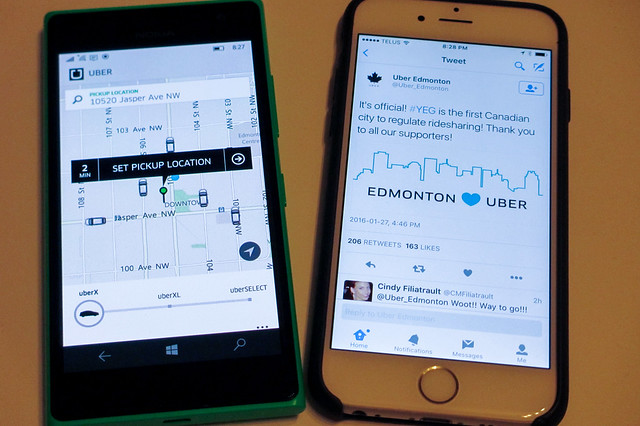
Why City Council’s approval of ridesharing in Edmonton matters

Edmonton became the first Canadian city to legalize ridesharing services like Uber with Council’s approval today of a new vehicle for hire bylaw.

“The regulatory framework in the new bylaw helps to answer citizen and business demand for more choice in the vehicle for hire industry,” says Mayor Don Iveson. “It represents a significant evolution of the industry and creates a model that will enable the taxi business and private transportation providers to co-exist.”

You can read more about today’s news in Elise Stolte’s story here. As she noted (and tweeted), “the bylaw passed 8-4 with councillors Dave Loken, Bryan Anderson, Mike Nickel and Tony Caterina against.”

Uber in Edmonton

Here is Uber’s statement on the new bylaw:

“Uber applauds the City of Edmonton for its leadership in being the first Canadian jurisdiction to adopt progressive regulations that embrace ridesharing. We thank Mayor Iveson, Councillors and City staff for supporting Edmontonian riders and drivers who want more affordable and reliable transportation options.

While these newly adopted regulations contain concessions for ridesharing service providers, the rules put in place a workable regulatory approach.

The spirit of collaboration and willpower demonstrated by the City of Edmonton to modernize its transportation laws can serve as a model for all Canadian regulators and elected officials.”

They were pretty happy on Twitter too:

//platform.twitter.com/widgets.js

The new bylaw will come into effect on March 1, 2016. Uber will be able to operate under a new class called Private Transportation Providers (PTPs). As they operate more than 200 vehicles, Uber will pay a license fee of $50,000/year plus $0.06/trip, with a $20,000/year accessibility surcharge on top of that. Only taxis will be able to pick up street hails or use taxi stands, but both taxis and PTPs will be required to charge a minimum of $3.25 for any trip. Drivers will be required to carry the appropriate insurance as outlined under provincial law, something Uber is working to acquire.

The new bylaw supports The Way We Move

I think the new bylaw supports Council’s transportation goals as outlined in The Way We Move, Edmonton’s transportation master plan. Here’s what I wrote back in September:

“The discussion about Uber in Edmonton lately has focused primarily on the fight between taxis and Uber, understandably. Lots of Edmontonians have horror stories to share about taxis, and there’s no question that competition from Uber will have a positive impact on the industry. But let’s not lose sight of the bigger picture. Uber and other transportation network companies can positively contribute to Edmonton’s transportation mix. We should do what we can to allow them to operate here legally.”

Councillor Knack spoke about this today, highlighting that ridesharing is an important way to help shift away from private vehicles to more sustainable options. “The status quo can no longer exist and change has to happen,” he said.

Council did what it was supposed to

Back in the summer of 2011, Council was already investigating ways to “provide increased capacity in the City of Edmonton taxi market.” The reality was already that Edmonton’s population had grown faster than its supply of taxis, and quality of service was suffering as a result. In 2012 Council wanted to issue 100 new licenses, but the Vehicle for Hire Commission refused to go along with the plan. So Council amended the bylaw to allow Administration to issue the licenses.

Something had to change, so it’s no surprise that when Uber showed up back in December 2014 Edmontonians embraced the service. All of a sudden at the touch of a button a ride could quickly and reliably be found. Ultimately Council’s role in this debate had very little to do with supporting taxis or welcoming Uber. Instead, it was about ensuring Edmontonians could move around the city efficiently.

I think Councillor Walters said this well in his post today:

“So equality is not the goal here, but rather equity – fairness – for our public. This is not about a big, bad, sophisticated multinational giving away free cupcakes, or the local taxi companies who come in to Council and scream and shout and take their shirts off. This about the kind of vehicle for hire service we want to facilitate with our bylaw. It is about Council’s role as a maker of public policy, not as a referee in an on-going battle between two different companies.”

Perhaps City Council’s most important job is to ensure that all taxpayer dollars spent result in the best possible value for citizens. They are charged with defining a vision for Edmonton and for making sure the City is operating effectively and efficiently toward it. I think their decision today is a reflection of that commitment.

The new bylaw supports innovation & choice

Nearly every Councillor spoke today about the importance of offering choice to Edmontonians by passing the bylaw. “We have to recognize there’s a huge part of our citizenry that want something different than we’re offering them,” said Councillor Henderson. Even Councillor Oshry, who had reservations about the bylaw despite voting in favor of it, said the taxi industry had become complacent. “They have to provide a better service than in the past,” he said.

Although a few Councillors tried to include more restrictions in the bylaw, I think an appropriate balance was ultimately struck. “This bylaw enables innovation and competition, rather than constraining them,” Mayor Iveson said. Too much regulation could have hampered the rapid innovation that is taking place in the industry. Making the Uber of today legal is a great outcome, but the bylaw also opens the door to additional services in the future. For instance, UberPool is a great twist on the Uber service that could have been restricted by overly aggressive minimum fare regulations.

The new bylaw actually specifies two levels of PTPs – commercial for providers with more than 200 vehicles, and regional for those with fewer than 200 vehicles. The license fees for regional PTPs are the same as taxis at $1000/year for dispatch plus $400/year per vehicle and $60/year for drivers. That’s much lower than the $50,000/year for commercial PTPs and means we may even see a homegrown alternative to Uber.

I’m hopeful that making ridesharing legal in Edmonton will entice competitors to Uber such as Lyft to enter the market also. It would be great to have some competition and choice in the ridesharing market.

Edmonton leads the way on ridesharing in Canada

It may have been painful to get there, but Edmonton has provided a way forward for other municipalities in Canada to adopt regulations that enable ridesharing for their citizens as well. I think it’s great that Council (most of them anyway) did not shy away from this challenge and instead chose to provide leadership on the issue. And as Mayor Iveson said today, there’s an opportunity for the City to work with other municipalities in Canada as well as the Competition Bureau to ensure that citizens are getting the best possible value from big organizations like Uber.

Postmedia merges Edmonton Journal & Edmonton Sun newsrooms, lays off 35 including senior editors

Postmedia today announced it is merging newsrooms and cutting about 90 staff across the country. Here in Edmonton, the Journal and the Sun newsrooms have merged and 35 people have been laid off as a result, including Journal editor-in-chief Margo Goodhand.

The Journal
The Journal, photo by Channing McRae

When today started, there were about 90 people in the two newsrooms. That was already down signficantly from peak newsroom sizes – Terry McConnell suggested the Journal newsroom alone had 165 people ten years ago. Losing 35 people in a single day is devastating.

Here are the impacted folks we know about (alphabetically by surname, with links to sources):

You can read the memo that went along with these cuts from Postmedia CEO Paul Godfrey here. Here’s an excerpt:

“What this means is that today we say goodbye to approximately 90 of our talented journalists, colleagues and friends. We will be working closely with those affected to ensure as smooth a transition as possible.”

Postmedia has decided to form “a national sports writing team under the leadership of Bev Wake, Senior Executive Producer, Sports.” While there will be “writers in each of our markets” according to Godfrey, it’s no surprise that the local sports reporters were significantly affected by today’s cuts.

This was obviously a difficult and painful day for many talented journalists here in Edmonton. Jana Pruden, who fortunately remains at the Journal for now, live-tweeted the agony of waiting for the news today.

Why is this happening?

When Postmedia purchased the Sun and other properties from Quebecor last year, it promised to keep the competing papers separate. That strategy has obviously changed. Here’s what Godfrey wrote in his memo today:

“Since the acquisition of the Sun Media brands, we have been working to move our teams together in order to leverage strengths and also to find synergies and savings. We have made progress across our Sales, Marketing, HR, Finance, IT and other administrative functions. The next step is our newsrooms.”

The reason is money. Or as Todd Babiak put it, “Postmedia isn’t a media company in any traditional way, it’s a debt-servicing entity.” From Postmedia’s latest quarterly shareholders’ report:

“Print advertising revenue increased $49.0 million to $142.1 million for the three months ended November 30, 2015 as compared to the same period in prior year. Excluding the impact of the Sun Acquisition, print advertising revenue decreased $16.4 million, or 17.6%, and declines were experienced across all of our major categories including decreases from local advertising of 17.1%, national advertising of 23.4%, and insert advertising of 7.2%. The decreases were due to declines in both volume and rate with the total print advertising linage and average line rate decreasing 11.4% and 9.8%, respectively, during the three months ended November 30, 2015, as compared to the same period in the prior year.”

Print circulation isn’t doing much better:

“Print circulation revenue increased $20.5 million to $67.9 million for the three months ended November 30, 2015 as compared to the same period in the prior year. Excluding the impact of the Sun Acquisition, print circulation revenue decreased $3.2 million, or 6.7%, as a result of paid circulation volume decreasing 7.2%, partially offset by price increases.”

And perhaps most concerning of all, digital revenue is also decreasing:

“Digital revenue increased $5.9 million to $30.2 million for the three months ended November 30, 2015, as compared to the same period in the prior year. Excluding the impact of the Sun Acquisition, digital revenue decreased $1.4 million, or 5.7%, as a result of decreases in local digital advertising revenue of $1.8 million and digital classified revenue of $0.6 million, partially offset by an increase in digital subscription revenue of $0.2 million and other digital revenue of $0.7 million.”

Postmedia is now targeting $80 million in cuts by mid-2017. Some are even suggesting that bankruptcy could be in the cards.

On losing our local editors

You might snicker at the thought that Edmonton had any independence from the mothership in Toronto, but now it’s official that we lack local editors:

“Jose Rodriguez, the Calgary Sun’s editor-in-chief, will oversee both Calgary papers, while current Herald editor Lorne Motley moves to Edmonton to steer the Journal and Sun there.”

It seems that Lorne will actually be moving to Edmonton, but it’s still highly suspect that a perfectly capable editor in Margo is being replaced with someone from our southern neighbour. I know that Margo spoke out about Postmedia’s endorsement of the Conservatives, but I can’t see that as the reason she was let go as some have suggested. If it was, I think we should be surprised to see Paula Simons remain at the Journal, as she heavily criticized the endorsements.

I think it’s an incredible shame to see Margo, Stephanie, and Donna go. Edmonton’s newspapers have lost some experienced editorial leadership and that will have an impact.

On keeping both papers

It’s no surprise to me that both papers will remain, even if they’ll be run entirely by the same folks on both the business and editorial sides of the fence. Here’s what I wrote back in November:

“While there’s a lot of wisdom in combining the sales and business teams from each paper (which has happened) and even sharing physical office space (which is happening) it makes much less sense to combine the editorial teams or otherwise merge the two papers. There’s little overlap between their audiences and a lot of lucrative ad inventory to lose by getting rid of one of the papers. Postmedia has made some surprising decisions in the past so I guess I wouldn’t be completely shocked if it happened, but I also wouldn’t put any money on it.”

So it’s a good thing I didn’t put money on it, because they did go ahead and merge the newsrooms. The papers are separate in name only now.

What does this mean for Edmonton?

While today’s news doesn’t destory journalism in our city, it certainly isn’t good for it. As Paula Simons wrote:

“We’re going to lose many other great reporters, photographers, and editors too. And it will be a loss, not just for us, but for the city they covered so passionately.”

I’m hopeful that many of the individuals impacted today will find new jobs here in Edmonton, but given the state of our economy, I don’t know how realistic that is. And that means we’re potentially losing some key insight, perspectives, and talent to other locations.

//platform.twitter.com/widgets.js On the other hand, innovation often arises out of difficulty. With a poor economy and a sudden increase in free agents with unique skills and experience in the media industry, perhaps we’ll see Edmonton make something new again.

Rogers Place Sneak Peek (January 2016)

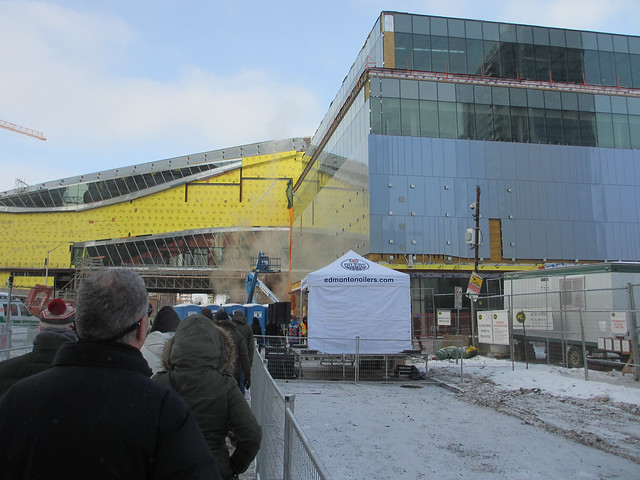
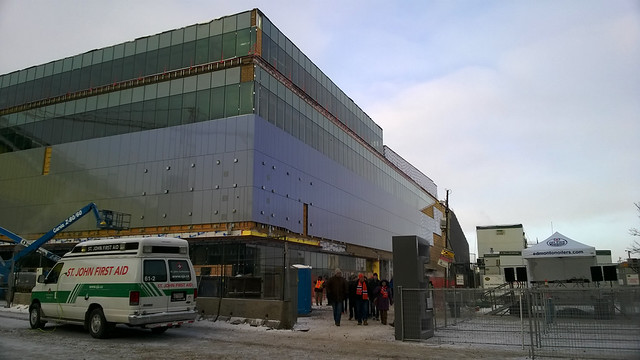
Today the City of Edmonton offered a sneak peek at Rogers Place, Edmonton’s new downtown arena slated to open in time for the 2016-2017 NHL season (there are 228 days until project completion according to the website). The $606 million project, which includes the arena, winter garden, community rink, LRT connection, and other amenities, has been under construction since March 2014. Today was the first time the public was allowed inside.

Rogers Place Sneak Peek
The Oilers flag at centre ice

I live just a few blocks away so have had an upfront view of all of the construction, but it was neat to get a look inside the building today.

Rogers Place Sneak Peek

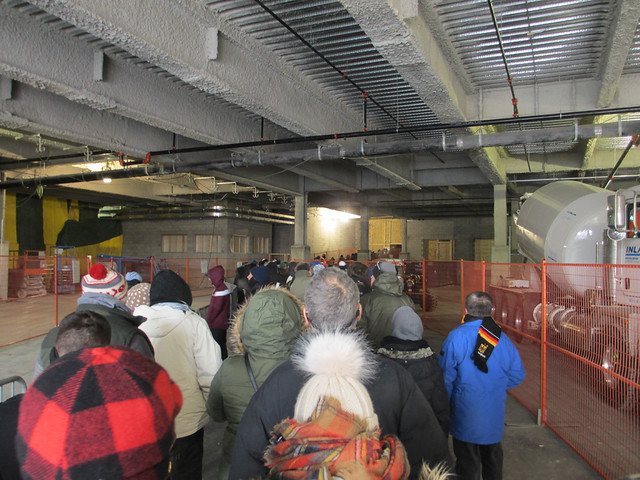
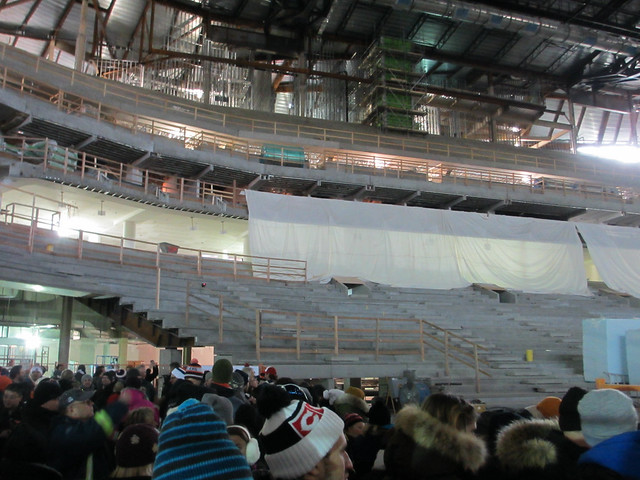
I think they were very well prepared to handle a lot of people today, but the cold temperatures probably resulted in a smaller turnout than originally anticipated. I arrived just before 11am and there were a few hundred people in line. When I left about 45 minutes later, there was no line outside.

Rogers Place Sneak Peek

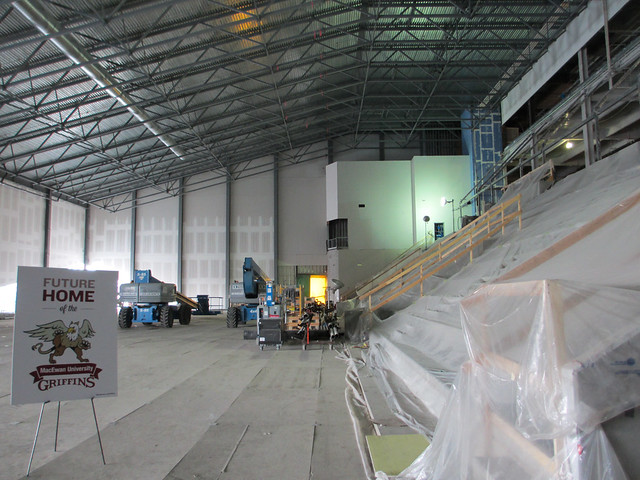
The project is being constructed on 9.5 acres of land right downtown and today we got to look at two elements of it. First, the community rink which will be home to the MacEwan University hockey teams. The rink will feature 1,000 seats for fans, and will be owned and operated by the City of Edmonton.

Rogers Place Sneak Peek

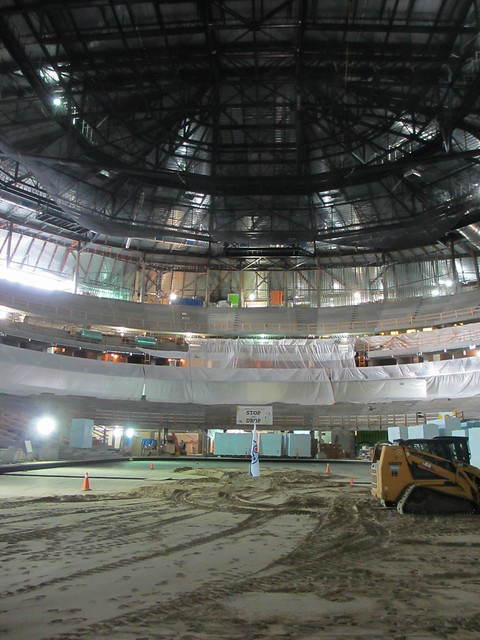
And of course, we got to step inside the main arena itself. Here’s a quick video of the view we had:

The building is 141 feet high, and I really felt that sense of scale today. The bowl feels rounder and more intimate than the current one at Rexall Place, even though the square footage inside the arena is 819,200 square feet compared to Rexall’s 497,700 square feet.

Rogers Place Sneak Peek

The capacity for hockey games is 18,641 but it can stretch to 20,734 in a centre stage concert setup or it can shrink down to about 4,500 for a small concert. Roughly 52% of the seats are in the lower bowl, compared to just 37% at Rexall Place, so more fans will be closer to the action.

Rogers Place Sneak Peek

There will be 56 suites and 24 mini suites in the new arena, plus 4,100 club seats and 1,116 loge seats. Oh, and those seats are all generally wider than the ones you’ll find at Rexall Place.

Rogers Place Sneak Peek
Bob Black explaining some of the features of the arena

Rogers Place is being constructed to the LEED Silver standard, as mandated by the City of Edmonton. There’s about 9,000 tonnes of structural steel and 24,000 cubic metres of structural concrete being used to bring it to life.

Rogers Place Sneak Peek

You can follow the construction at the Rogers Place website, and you can get all the facts on the project here. You can see more photos here.

Recap: Edmonton’s Economic Impact Luncheon 2016

EEDC hosted its annual Impact Luncheon at the Shaw Conference Centre on Tuesday. Last year’s event featured Premier Jim Prentice and took place during a more positive time for Alberta’s economy – looking back now it seems like so long ago. A lot has happened over the last year, and to say the landscape in Alberta today is different would be a major understatement.

I think EEDC CEO Brad Ferguson showed great leadership during Council’s budget deliberations a couple months ago, requesting a 2% cut to EEDC’s budget. “Going into 2016, it could be one of the hardest years in Edmonton’s history,” he said at the time. No City-owned organization or branch had ever requested a decrease.


Photo by Brad Ferguson

Board Chair Barry Travers welcomed everyone to the event, and said that EEDC is “committed to doing more with less.” He reiterated that EEDC is focused on achieving $175 million in economic impact. After lunch, emcee Carrie Doll read a story about Edmonton. “Amidst a year of economic headwinds, this resilient city pushed forward once again,” she read. The story was full of feel-good statements like “this is a city of beauty, a city that’s engaged, a city that is alive 52 weeks a year.” I think many in the room felt it was inspirational, but it was perplexing to me. “It’s time to say goodbye to the Edmonton that once was, and hello to the Edmonton that now is.” What does that even mean?

In delivering his keynote address, I thought Brad did a great job of balancing the necessary realism of the current economic situation with the upbeat cheerleading that goes along with being CEO of the City’s economic development organization. He acknowledged that the next 2-3 years are going to be difficult for everyone, then continued:

“But in three years, if we are united and do this properly, this city and province will emerge even stronger than it’s been in the past, an economic powerhouse for our country, an incredible place for the next generation of Albertans to be born into, and a place where everyone will again want to come in search of an abundance of opportunity.”

Brad started globally and worked his way to the local context. “The world around us has lost its compass,” Brad said, explaining that the current period of time is unique because of high debt levels, the fast pace of technological change, and geopolitical tensions. He noted that “using debt to stimulate growth is incredibly addictive for politicians” but that it is citizens who end up paying the price. Global growth has stalled, he said, and that means “demand for commodities grinds to a halt.” He touched on oil, saying that the supply at the moment seems endless. And he talked about “an incredible time of volatility and anxiety, all around the world.”

Next Brad turned his attention to Canada. Though he again scolded politicians for being addicted to debt, he talked about how personal debt has escalated in recent years, despite the fact that middle income wages “have been relatively stagnant since 1995.” This has led to the “Age of Anxiety” as Brad called it, in which “people and families are doing everything possible and are still unable to make ends meet.”

Although he criticized some of the Province’s recent decisions, including “a delayed royalty review and a substantial amount of new provincial debt and new interest payments”, Brad said he wasn’t blaming Rachel Notley or her government. “They inherited 10 years of drunken-sailor euphoria that came after the Klein years,” he said, “which was the last time we made hard decisions about size of government, debt repayment and government program spending.”

More importantly, Brad placed blame on himself and everyone in the room, “We…didn’t do our job over the past 10 years of euphoria and we didn’t hold our government to account.” Regardless of who’s in power, Albertans need to question their political leaders and get more involved. But he didn’t let the current government completely off the hook. “It doesn’t matter what political ideology was campaigned on, our government has a responsibility to steward this province forward for the best interest of Albertans and future Albertans.”


Photo by Carrie Doll

Last year, Brad highlighted ten themes “that would strengthen our economy over the long term.” This year, he highlighted five calls to action:

  1. Entrepreneurship
  2. Export & Trade
  3. Energy Innovation
  4. Tourism, Conferences, and Major Events
  5. Leadership in Public Service

On entrepreneurship, Brad said “the most important thing we can do is continue to invest in talent.” He said the entrepreneurial ecosystem in Edmonton is “working exceptionally well” but noted that health innovation, agrifood, and a shared maker space are all areas that we could improve upon.

“Export & Trade are essential parts of the wealth creation formula,” Brad said. He encouraged local business leaders to speak up about the TPP, saying “we generate about $50 billion per year from TPP countries.” He also talked about pipelines and logistics and said “everyone has a role in making these opportunities come to life.”

“Our energy future is all about innovation,” Brad said, highlighting five challenges that we should be focusing on: CO2-Free Emissions, Enhanced Oil Recovery, Carbon Capture & Storage, Clean Coal, Safest Pipelines in the World. He said it doesn’t make sense to shut down or phase out one of our competitive strengths in exchange for “making green infrastructure investments in which we have no competitive advantage.”

Though he noted that EEDC has been working with Northlands to “end the 30-year old discussion of how we can best market the city under one banner,” most of what Brad said about major events and tourism was a repeat of last year. “Major events create an energy, rhythm and pulse in a city” he said, repeating last year’s message nearly word-for-word. It seems to be that civic leaders love to talk about Edmonton’s major events strategy, yet I have never seen one articulated.

“In this country we have three levels of government with the risk of introducing a fourth at the regional level,” he said. I assume he’s talking about regional government, and he argued effectively against it. “We can barely afford the multi-tiered system that we have, and we certainly cannot afford it becoming more engorged.” He talked about government becoming more efficient and less bureaucratic.

My favorite part of his remarks came when Brad talked about the complicated system of economic development and innovation organizations, saying “the level of duplication and inefficiencies is astonishing, with no overall leadership, coordination in planning or true accountability for results.” He called for an overhaul of the system, and extended an invitation to work with the other organizations to “reshape the economic development and innovation system to what is needed for our future, and leave behind the ineffective systems and structures of our past.” I hope Brad’s colleagues take him up on the offer.

Brad finished with this: “I believe this province will regain its potential, and out of this extended period of darkness, better days will come.”

Overall I think he delivered a thoughtful speech. With clear calls to action, some thought-provoking statements, and a personal touch, I think Brad had a big impact on everyone who listened. Let’s hope that other civic leaders follow his lead and do their part to help Edmonton emerge stronger from the downturn that is ahead.

LRT is about more than speed

If you’re angry about the Metro Line LRT, then you’ll love Tristin Hopper’s article in today’s National Post. He’s a self-described “fervent – almost fanatical – supporter of public transit” and he doesn’t hold back on eviscerating Edmonton’s latest addition to the LRT network:

“In short, it fails on every single possible justification for why cities should build light rail.”

It’s a colorful piece, complete with a comparison to “a candy company releasing a new chocolate bar called Herpes Al-Qaeda.” But while it’s clear the City of Edmonton made some mistakes and that it would indeed be bad to see them repeated elsewhere, Hopper’s arguments are clearly coming from a place of frustration rather than fact, and he comes off sounding more like a supporter of car culture than the transit booster he claims to be.

Before I get into that, let me say that I’m just as frustrated and disappointed as many of you are with how the Metro Line LRT was handled and how it is still not fully operational as promised. I’ve written a lot about it over the last year, and I’m sure there will be much more to come in the year ahead. There’s no question that the City of Edmonton screwed up on the Metro Line LRT, but Council didn’t do itself any favors by ignoring the project until it was too late either. People have been fired, lessons have been learned, and there’s undoubtedly more fallout to come.

But, let’s not make a mountain out of a molehill, mmkay?

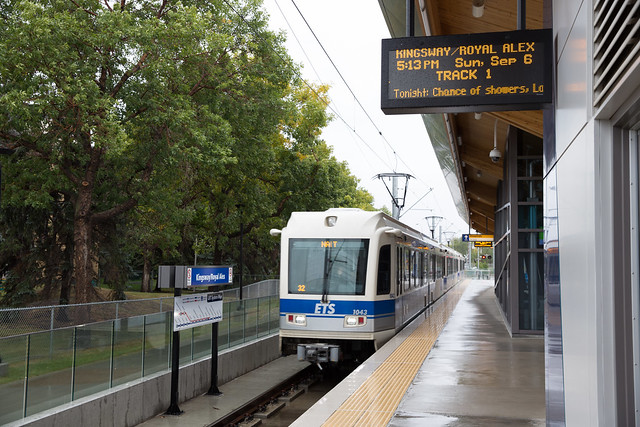
Kingsway/Royal Alex LRT Station

Hopper is right to point out how unacceptable it is that the line breaks down so regularly. And he’s right that due to the signalling system issues, the trains aren’t running as fast as planned. But his article also makes some pretty specious arguments about emissions1 and the impact on ambulances2. Hopper has some nerve adding up the amount of time wasted by drivers waiting for the Metro Line LRT trains to go by, as if those drivers had never before run into rush hour and gridlock. How much “human existence” has commuting by car, a much more dangerous, stressful, and expensive mode of transporation, extinguished? Easier to pick on LRT, I guess.

“The chief problem is that the train was built at grade and cleaves through several major intersections,” Hopper writes. This leads to delays for passengers and a “traffic apocalypse” for everyone else. “I’ve personally clocked a six-minute wait,” he complains. I get it, I hate being made to wait as much as anyone (thank goodness Sharon is a much more patient person than I am). But this is just as silly to highlight now as it was four months ago when the Metro Line LRT opened.

The only reason this extra-six-minutes argument has any appeal at all is that there’s something to blame. Probably every driver has spent far longer than six minutes stuck in traffic on many occasions, but without a train to complain about, those delays are just chalked up to the realities of driving. Over time drivers become oblivious to them. Sure people complain about traffic from time-to-time, but no one is crucifying the City over it like they are with the Metro Line LRT.

Also wrong is complaining about how slow the train ride itself is, especially given that the Metro Line LRT isn’t operating at full-speed yet. Even if it were, LRT isn’t supposed to be faster than other modes of transportation. It can be, in some cases, but it doesn’t have to be and that isn’t the reason to build it in the first place. LRT is primarily about capacity, not speed. And transit is about the network, not a single line.

It’s not the speed that matters

We need not look any further than the existing Capital Line LRT to see that speed isn’t why it has been successful. What if I wanted to get from my house on 104 Street downtown to Southgate Centre? Here’s a look at the trip by mode at three different times for today, according to the fastest option suggested by Google Maps:

7:00 AM 12:00 PM 5:00 PM
Cycling 30-34 minutes 30-34 minutes 30-34 minutes
Vehicle 16-20 minutes 16-22 minutes 16-40 minutes
Bus 38 minutes 38 minutes 41 minutes
LRT 24 minutes 24 minutes 24 minutes

And here’s the reverse trip, going back downtown from Southgate:

7:00 AM 12:00 PM 5:00 PM
Cycling 29-33 minutes 29-33 minutes 29-33 minutes
Vehicle 14-20 minutes 14-20 minutes 14-24 minutes
Bus 37 minutes 37 minutes 37 minutes
LRT 21 minutes 21 minutes 21 minutes

Depending on the time of day, direction of travel, your speed, and lots of other conditions that you have no control over (traffic, weather, etc.), driving is actually the fastest mode of transportation. LRT is pretty quick, but more importantly is consistent and predictable. My travel time in the real world is far more likely to match the prediction for LRT than it is for a vehicle. Not to mention taking the LRT means you can do something productive or enjoyable while you ride, and you don’t have to pay for parking.

That particular example, downtown to Southgate, makes the time to take the bus seem quite unappealing. Again, that’s to be expected given ETS’ approach of having buses feed into the LRT network, something that will also happen with the Metro Line LRT once it is fully operational. If we look instead at an example where there isn’t LRT, we see that the bus can actually be competitive and maybe even faster than travelling by vehicle. Here’s my place to West Edmonton Mall:

7:00 AM 12:00 PM 5:00 PM
Cycling 37 minutes 37 minutes 37 minutes
Vehicle 18-24 minutes 18-26 minutes 20-45 minutes
Bus 29 minutes 27 minutes 33 minutes

And here’s the reverse trip, going from WEM to downtown:

7:00 AM 12:00 PM 5:00 PM
Cycling 36 minutes 36 minutes 36 minutes
Vehicle 18-26 minutes 20-28 minutes 20-35 minutes
Bus 29 minutes 25 minutes 29 minutes

In this example there’s an express bus that travels between WEM and downtown. Again travelling by vehicle could be faster, but it depends greatly on time of day, direction, and unforeseen circumstances like accidents and weather conditions. The bus would also be subject to some of these considerations, so it’s not as reliable as LRT, but it is still a much more viable option in this example. And you can see how an express bus could potentially be a better way than LRT to achieve a fast trip, especially if it were afforded some of the right-of-way and separation advantages of the LRT (the express bus to WEM shares the road with vehicles and follows all existing signals).

This is all just to show that speed isn’t the driving factor behind LRT. If it were, we’d look at those times above and be complaining that it wasn’t always the fastest option. The negative impacts of LRT on traffic are easy to see, at some point vehicles have to wait for trains. But there are positive impacts of LRT on traffic too. More people riding the train means fewer people driving which means (in theory) less traffic than there would otherwise be. That speeds up commute times for everyone.

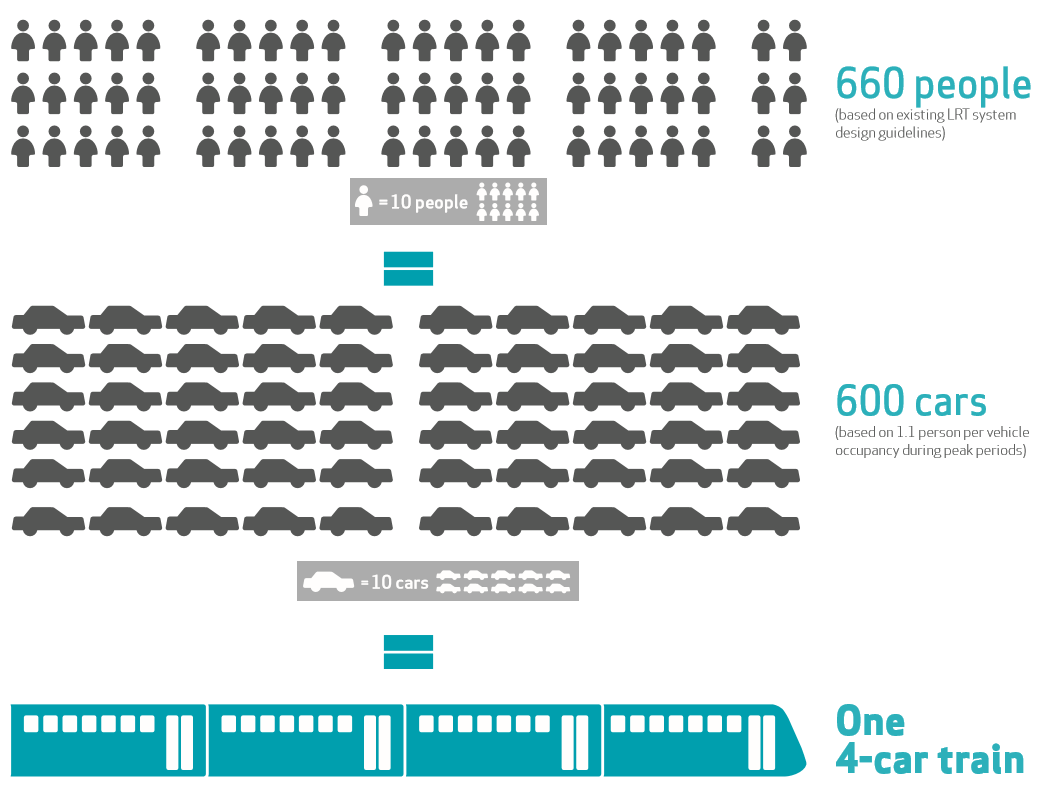
But the real reason you build LRT is for the capacity. Here’s what the City of Edmonton’s LRT for Everyone PDF highlights:

rails vs roads

One four-car train can move as many people as 600 typical cars. And let’s be honest, you could probably cram even more people onto those trains if you really wanted to. That potential capacity has a real, positive impact on the transportation network as a whole. It makes getting around the city better for everyone.

There are other reasons to build LRT of course. Accessibility, convenience, transit-oriented development, more efficient use of infrastructure, reduced energy use and environmental impact, and much more. But enabling more people to travel more efficiently throughout the city is the big benefit of LRT.

And when you consider it as part of the overall network, with a mix of bicycles, vehicles, buses, and trains, the capacity benefits of buses and trains make an even bigger difference. That’s why shifting Edmonton’s transportation mix to rely less on vehicles is such an important part of The Way We Move.

Set the right expectations

Hopper seems to suggest that fast LRT that doesn’t impact traffic is the only kind of LRT to pursue and that “don’t let idiots build your transit” is the only lesson to be learned from the Metro Line LRT project. But both of these things are off the mark. You don’t build LRT for speed and you can’t avoid idiots, they’re everywhere.

So yes policymakers of Canada, come to Edmonton and learn from the Metro Line LRT. There are clearly things you can do better and a real-world example to examine is better than a theoretical one. But don’t follow Hopper’s lead in setting the wrong expectations for the “decent, right-thinking people” in your cities. LRT is about much more than speed.


  1. For instance, he says the Metro Line LRT “is almost certainly increasing Edmonton’s net amount of carbon emissions.” I guess we’ll have to take his word for it, as he doesn’t provide any evidence to back the claim up. 

  2. Noting that the Metro Line is next to the Royal Alexandra Hospital, he suggests that “any Edmontonian unlucky enough to have a heart attack in one of the northwestern quadrants of the city must wait as paramedics wend a circuitous route through downtown.” This smacks of fearmongering to me, and we’ve already been-there-done-that-tyvm with medevac and the closing of the City Centre Airport. Although he expressed concern with the delays associated with the partial Metro Line operation, AHS’ chief paramedic said that dealing with traffic is not a new problem for paramedics. “We run into these situations all the time,” he told CBC. And as Transportation GM Dorian Wandzura noted in that same article, presumably AHS had already made some operational adjustments, given that the plan was approved and the route defined way back in 2008. 

Edmonton in 2015

In last year’s recap, I wrote:

“I would like for Edmonton in 2015 to capitalize on the energy and momentum that we all can sense in our city. Maybe it needs a bit of structure, maybe it needs a bit of shepherding, or maybe we simply need to better define what “it” is, but whatever approach we take, we cannot let this opportunity pass us by!”

Looking back, I don’t think we succeeded in that. To me at least, 2015 very much felt like an “under construction” year and our city’s story may even be less clear and coherent than it was. The cranes mostly went up in 2014 or earlier and they’re nearly all still up, busily working to complete a growing list of projects. And while lots of energy was spent on defining what Edmonton is all about (or not about), it doesn’t feel like that work is over (maybe it never will be). I think there’s still a sense of optimism present in Edmonton, but it has certainly diminished compared with the past couple of years.

One Chance
One Chance, photo by Jeff Wallace

I generally dislike when commentators wrap Edmonton’s transformation up with the Oilers, yet I find myself thinking along similar lines. For most, Rogers Place is a proxy for all of the physical change taking place in Edmonton while Connor McDavid represents youth and opportunity for the future. If all goes well, both will be unleashed in 2016. Will Edmonton?

I think 2016 will feel similar to this year, thanks in no small part to the economic downturn. But hopefully at least a few projects get completed successfully and perhaps we’ll even see a shift in our thinking.

For my recap this year I’ve decided to share some brief highlights and photos from 2015. Below that you’ll find a list of year-in-review articles and posts from around the web. I’ll keep adding to the list as I find more. Enjoy!

2015 in Review

Tonight’s fireworks will again be launched from the roof of the Stanley Milner library, so be sure to get to Churchill Square early to get a good view. Remember that ETS is free from 6pm to 3:30am tonight!

Happy New Year 2015!

The year started off with some sad news, as the historic Roxy Theatre was destroyed by fire on January 13. Later in the month, Edmonton took another step forward in embracing winter by hosting the Winter Cities Shake-up Conference and Festival.

Winter Shake Up

In February we dropped out of the running to host the Commonwealth Games in 2022. There’s some speculation that we’ll put in a bid for 2026 instead.

In early March we successful hosted the Red Bull Crashed Ice finals which saw roughly 70,000 people downtown to take in the festivities. It was a big, flashy, confidence-boosting event for our city. Before the month was over though, #girdergate happened resulting in additional delays for the 102 Avenue Bridge over Groat Road. The project is now expected to be completed in 2016, assuming nothing else goes wrong.

Red Bull Crashed Ice
Photo by Al Girard

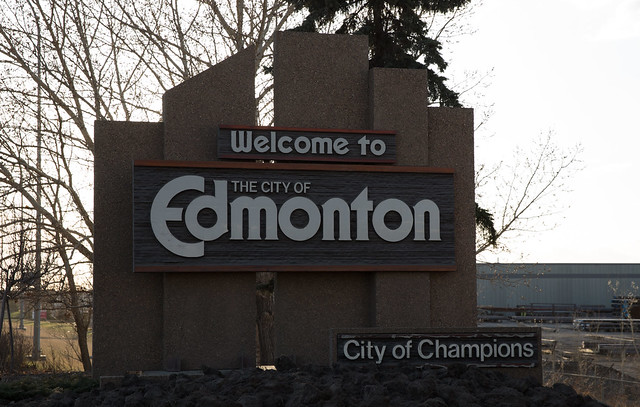
Things got worse for the City in April when it announced that the Walterdale Bridge project would also be delayed until late 2016. When we weren’t talking about the provincial election in April, we were talking about Edmonton’s entrance signs. At the end of the month, the “City of Champions” slogan was removed, but a redesign was put off to another day.

Edmonton Entrance Sign

On the sports front in April, the Oilers finally cleaned house with new CEO Bob Nicholson appointing Peter Chiarelli as President & GM. The Oilers also won the first overall pick in the NHL Draft Lottery, the fourth #1 pick in six years.

Of course the big story in May was the NDP victory and Rachel Notley becoming the 17th Premier of Alberta.

SwearingIn23
Rachel Notley being sworn in, photo by Premier of Alberta

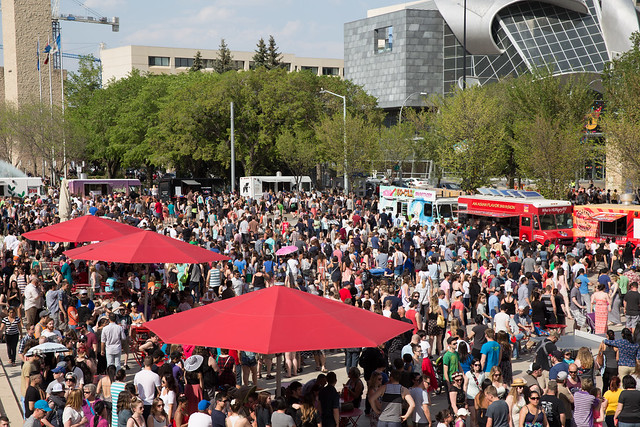
On May 23, we had our first What the Truck?! event of the season, and it was bananas! So many people came out to enjoy the fantastic weather and unofficial kick-off to summer!

What the Truck?! at Churchill Square

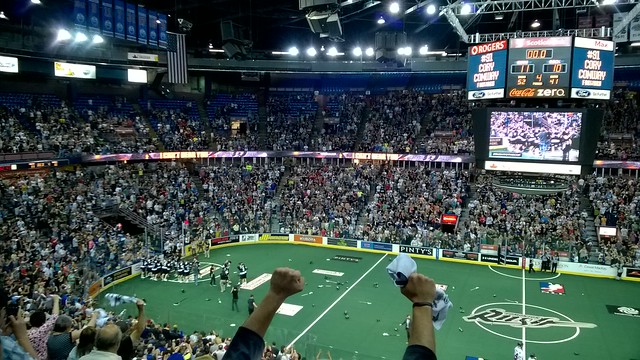
On June 5, the Edmonton Rush capped off an amazing tenth year in the NLL by winning the Champions Cup. Then in July, the team announced it was moving to Saskatoon. I’m still disappointed they couldn’t find a way to stay in Edmonton.

Edmonton Rush win NLL Champions Cup

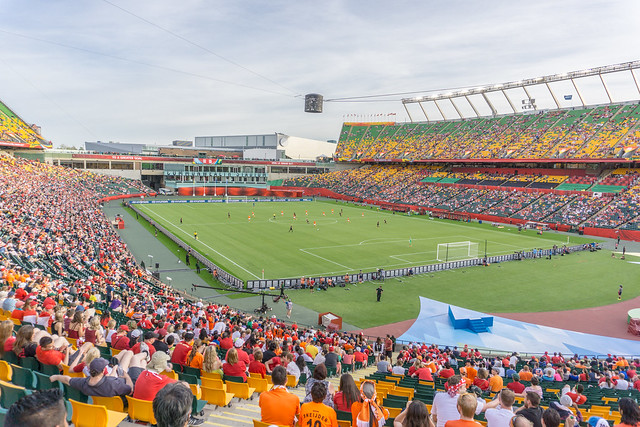
Sports fans also celebrated the kickoff to the FIFA Women’s World Cup 2015 in June. Just over 53,000 fans packed Commonwealth Stadium to take in the opening match featuring Canada vs. China. And no surprise here – the Oilers selected Connor McDavid first overall in the NHL Draft at the end of the month.

FIFA Women's World Cup Canada 2015 - Edmonton
Photo by IQRemix

There was sad news in June too. On June 8, Constable Daniel Woodall was shot and killed while executing an arrest warrant in the west end. He was the first EPS officer killed since Constable Ezio Faraone was shot on June 25, 1990.

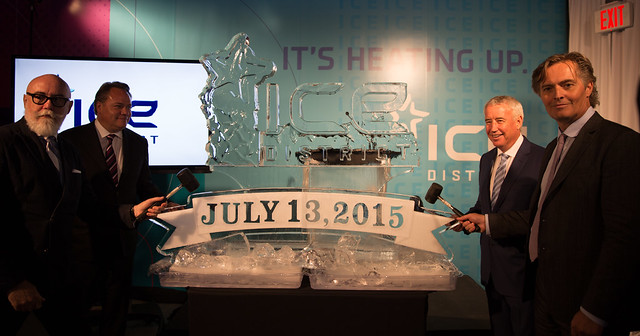
In July, the Oilers unveiled the name of the area surrounding Rogers Place: Ice District, drop the “the”.

Scott McKeen, Darren Durstling, Bob Nicholson, Glen Scott

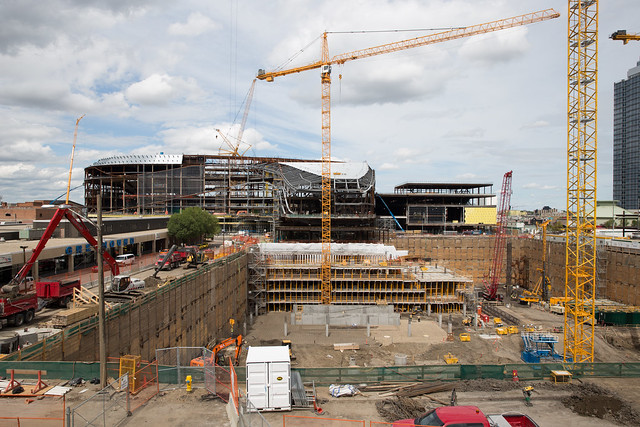
They also opened a presentation centre so that fans could get a look at what the inside of Rogers Place will be like when it opens in time for the 2016-2017 NHL season.

Rogers Place

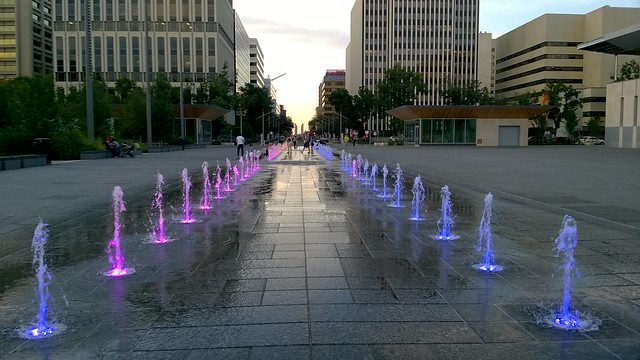
Lots of Edmontonians enjoyed the new Centennial Plaza at the redeveloped Federal Building throughout the summer, thanks in large part to the colorful fountains. It’s just too bad the space isn’t more winter-friendly. Maybe in 2016?

Federal Building Plaza Fountains

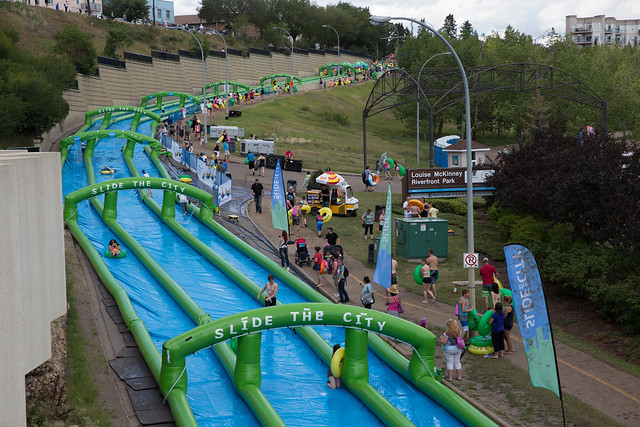
We also had some water activities with Slide the City on the weekend of July 18-19. Look what fun can be had when you close down a street!

Slide the City

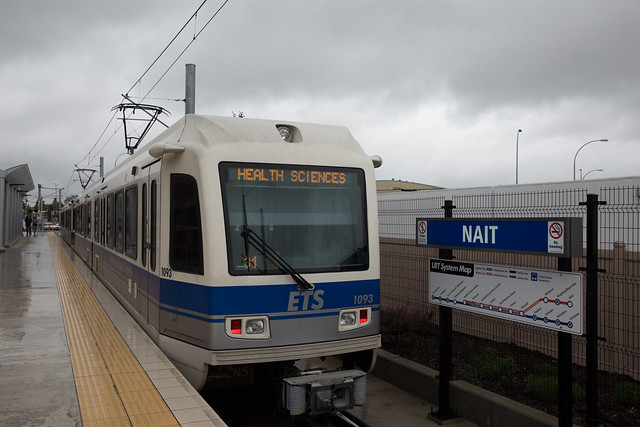
The Metro Line LRT dominated the discussion in August, and it finally opened on September 6! It still isn’t working completely as planned, but it’s better than not running at all.

NAIT LRT Station

In early September, Mayor Iveson and City Council made the decision to fire City Manager Simon Farbrother. They said it wasn’t because of the bridge and LRT debacles, but that had to be a key factor. Change at the City continued throughout the fall, and there’s more to come in 2016.

Simon Farbrother

We wrapped up our successful year of food truck festivals on September 11 with the final What the Truck?! event of the season. That day was also proclaimed food truck day in Edmonton to celebrate!

What the Truck?! at Churchill Square

Also in September, our city came together to support Spider-Mable, probably the feel-good story of the year.

Justin Trudeau became our new Prime Minister in October, and in early November Amarjeet Sohi was named Minister of Infrastructure & Communities. It was a big loss for Council, but great news for municipal representation in the federal government.

The new 41st Avenue SW interchange will help grow exports and benefit the local economy 185
Photo by Premier of Alberta

At the end of November, the Edmonton Eskimos won their 14th Grey Cup, defeating the Ottawa RedBlacks. Just over a week later, head coach Chris Jones jumped ship for Saskatchewan.

Eskimos win the Grey Cup
Photo by Edmonton Eskimos

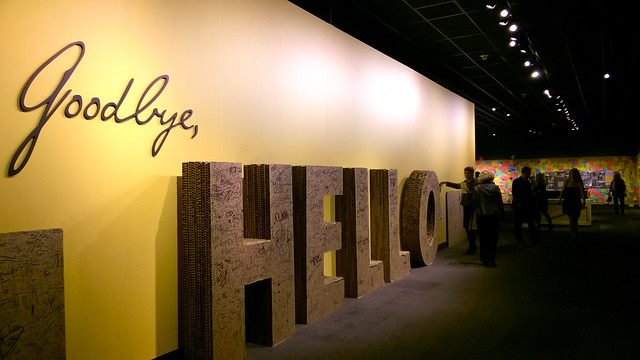
Edmonton said goodbye to the current Royal Alberta Museum on December 7. The new building isn’t expected to open until late 2017, though construction seemed to progress swiftly this year.

Goobye, Hello RAM

And just a couple weeks ago, the EndPoverty Edmonton strategy was unanimously approved by City Council. There’s a lot of work still to do, but this is a positive step forward.

Other 2015 Recaps

Here are some other 2015 recaps I’ve found:

Have a link to add? Let me know! You can check out my 2014 recap here.
I’ve been thinking about the year ahead for Edmonton and what it might look like. I’ll have more on that in an upcoming post. For now, let me say Happy New Year and all the best in 2016! Thanks for reading!

Goodbye, Hello at the Royal Alberta Museum

More than 35,000 Edmontonians visited the Royal Alberta Museum over the weekend to say goodbye to the building that has seen more than 14 million visits since it opened back on December 6, 1967. The numbers from this weekend speak to the impact the museum has had on the community:

“The museum saw 16,290 people in the first 24-hours alone, eclipsing the previous single-day attendance record of 13,212, which was set in 1974 with gear from the Apollo moon landings on display.”

Goobye, Hello RAM

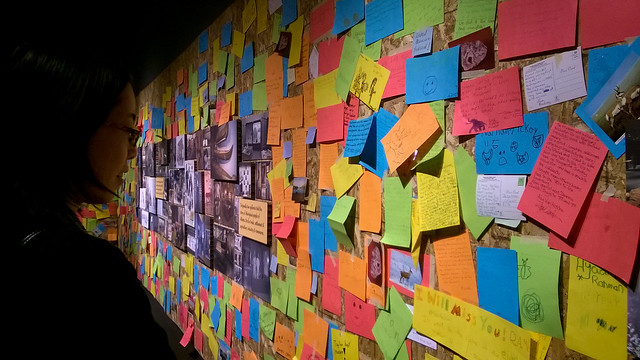
In addition to one last look at the bug room, visitors had the opportunity to visit the “Goodbye, Hello” exhibit in the feature gallery where they could share a memory or write a message for the new building. They could also see a video overview of the new building that is currently under construction downtown.

The new building will be roughly twice the size, with more than 82,000 square feet of exhibition space. It is being built to the LEED Silver standard at a cost of $375.5 million, $253 million of which is coming from the Province with the rest coming from the Federal government. Construction began on February 7, 2014 and is expected to finish in mid-2016. The goal is to open the new museum to the public in late 2017.

Goobye, Hello RAM

While the new building will certainly be an exciting addition to the downtown arts district, it does raise the question of what will happen to the current building. There’s nothing wrong with it, aside from being too small to share the museum’s growing collection. Here’s what the FAQ says:

“There has been no decision on the future of the Royal Alberta Museum building when the existing museum closes. When determining the future use the general process is to first see if government still has a use for the building/property. If government doesn’t require the property then the municipality is consulted to see if they have a use for it. The building is offered to the public if neither levels of government have a use for the property. Although the museum will be closing its doors in December 2015, the building will still be occupied with staff and collections until likely Fall 2019, as it makes the massive move to its new location.”

So while there’s still time to determine its fate, it’s an issue we’ll have to address as a community soon. To learn more about the history of the museum, have a look at Then & Now feature and check out this article by Janet Vlieg:

“The first two decades of the museum’s existence saw new exhibits added in keeping with the original goals of preserving Alberta history. No admission fees were charged and the museum relied almost completely on provincial funding. Help for extras came in 1982 with a new fundraising support group, now known as Friends of Royal Alberta Museum.”

On Monday evening, the final day the museum was open, Sharon and I were able to attend the RAM: A Moving Tribute event as guests of the Friends of Royal Alberta Museum Society (FRAMS). It was an “evening of fond farewells to a beautiful building.” A well-dressed crowd gathered to hear some speeches, visit the galleries, and reminisce about their previous visits to the building.

Lieutenant Governor Lois Mitchell, Minister of Culture & Tourism David Eggen, and City Councillor Scott McKeen were among those who brought greetings and reflected on their experiences in the museum. Guests could then explore the museum one last time, stopping perhaps to learn from the experts that were stationed throughout.

Goobye, Hello RAM

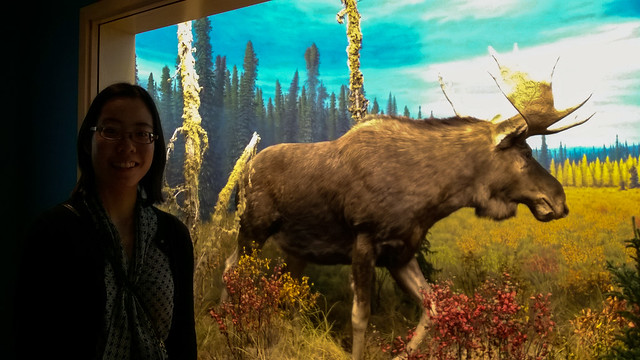
I didn’t grow up in Edmonton, so I don’t have the same memories of visiting as a kid. But I have enjoyed visiting in recent years and look forward to spend lots of time at the new building. Sharon does remember visiting as a child and was quite eager to visit the Wild Alberta Gallery one last time! We had fun exploring and adding our own messages to the wall in the feature gallery.

Goobye, Hello RAM

Thanks to FRAMS for having us! We look forward to visting the new museum when it opens on (or around) December 7, 2017. Can’t wait!

Recap: DemoCamp Edmonton 29

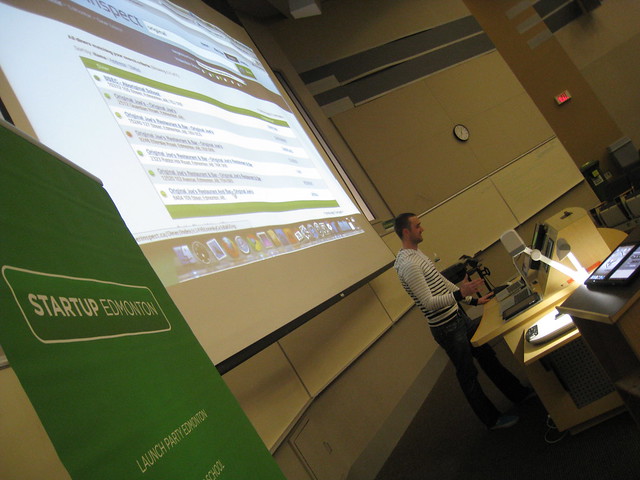
Edmonton’s 29th DemoCamp took place tonight at the Centennial Centre for Interdisciplinary Sciences (CCIS) on the University of Alberta campus. I wasn’t able to make it unfortunately, but I did follow along with each of the demos via Twitter (thanks to Karen Unland). In the spirit of continuing to document the startup scene in Edmonton, I wanted to do a quick write-up. You can read my recap of our last DemoCamp here.
DemoCamp Edmonton 12

If you’re new to DemoCamp, here’s what it’s all about:

“DemoCamp brings together developers, creatives, entrepreneurs and investors to share what they’ve been working on and to find others in the community interested in similar topics. For presenters, it’s a great way to get feedback on what you’re building from peers and the community, all in an informal setting. The rules for DemoCamp are simple: 7 minutes to demo real, working products, followed by a few minutes for questions, and no slides allowed.”

In order of appearance, tonight’s demos included:

Home Tribe debuted back in October at Launch Party Edmonton 6. It’s a new way to explore real estate. They have a feature called Home Tribe Match which Karen described as “sort of like a dating site for you and your future home”. I saw the demo back at Launch Party and found it to be a clever way to sort through MLS data. Instead of just looking by location, you fill out a questionnaire of preferences and Home Tribe uses MLS and other datasets to narrow down to the best matches for you.

Shelfie is a project of some Jobber employees. It’s a “small library management” tool. You can scan books to add them, you can rent books with a single-click, and you can keep track of what you’ve read. Sounds a little like GoodReads but for libraries. The application won fourth place in the 2015 Rails Rumble hackathon, which is a distributed programming competition with participants from all over the world. Great to see an Edmonton team take part and do so well!

Run-WithIT strikes me as one of those things you have to see to get, but I’ll try. The website says they “create a continuous simulation of your future field conditions complete with real data and millions of metrics so you can have IT all figured out before release.” I gather it is a tool for planning through simulations, and those simulations are really about the performance and scalability of web applications. Karen wrote: “The field is the greatest teacher, so Run WithIT simulates the field so IT pros can learn.”

FitCoins sounds like a wonderful idea, though there’s nothing on the website to explore yet. Just an explanation that “Fitcoins are an activity based point system that allows kids to earn screen time.” It’s a smart way to tackle the challenge of getting kids to be physically active when all they want is to message their friends or whatever it is kids do these days on their devices. Sounds like FitCoins is still at a very early stage, as Karen noted: “Really neat to see a demo at the stage that FitCoins is at. It’s Arduinos in a box, but it works.”

The final demo was from CareNetwork, which also presented at Launch Party 6. It’s an app and service that “helps acute-care medical teams stay in sync without breaching privacy,” Karen wrote. It has a very clean and modern design with features like a newsfeed on each patient. I talked with the team at Launch Party and learned they have had difficulties piloting in Canada, which is why they’re focusing on the US to start. There’s huge potential for a service like this, so I hope they find success abroad and here at home.

Karen tells me every demo tonight was impressive but highlighted how interesting FitCoins was. I think there’s a certain appeal to the straight-from-the-garage projects, which is not meant to be a negative comment. But everyone can rally behind that “yay it works!” feeling that you get from seeing something early and rough and full of opportunity.

Some upcoming events to note:

Over 150 meetup events took place at Startup Edmonton last year! Keep an eye on the Startup Edmonton Meetup group for more upcoming events. They have also added a listing of all the meetups taking place at Startup to the website. You can also follow them on Twitter.

Want to work with a local startup? Jobber, Home Tribe, Granify, Drivewyze, and Invidi Technologies are all hiring, so get in touch with them!

See you at DemoCamp Edmonton 30! (hopefully)

Celebrating mediocrity: the new Centennial Plaza wins an Urban Design Award

Edmonton’s 2015 Urban Design Awards recognized “the memorable urban places that make up a great city” on Friday. Among the winners was the new Centennial Plaza1, the large open square that was built alongside the redeveloped Federal Building. The plaza was recognized for Excellence in the Civic Design Projects category.

Federal Building Centennial Plaza

You’ve probably spent some time visiting the plaza this year, perhaps to admire the colorfully lit fountains in person. I like the fountains as much as anyone, but there’s no way this project should be winning awards. Here’s why.

Over-promised, under-delivered

I’m sure you’re aware that the Province “saved” $10 million on the Federal Building renovations, a project which ballooned to $375 million anyway. They did that by quietly scrapping a number of planned features, including what was meant to be the primary attraction for the plaza – an outdoor skating rink. They also cancelled the planned Zamboni purchase, but decided to keep the garage as a storage facility. Also removed was planned landscaping, some of the fountains, and other features. This was all decided back in April 2013 without any public consultation or even communication.

As Dave wrote back in January:

“It is a shame the PC Government chose to, more than a year ago and in secret, axe the elements of the renovated Federal Building and the Legislature Grounds that could have become a destination for the general public and an important part of the revitalization that is happening in downtown Edmonton. Hopefully they will see the error of this short-sighted decision and re-introduce the public elements in future renovations. Our Legislature Grounds are beautiful and we should be striving to create new ways to make it a more vibrant gathering spot for Albertans.”

As it stands, the plaza is little more than an open space to walk through.

Not event friendly

Though I think Edmonton has more than enough large open squares as it is, with one more under construction at Rogers Place and another under consideration with the Galleria project, the Federal Building plaza could have been a great venue for events. We thought it could have been a great location for What the Truck?! but had to settle for the streets adjacent to the square instead. There are two reasons for that.

First, the Province has historically been extremely reluctant to open the Legislature grounds to outside events. You can show up to protest, but not to enjoy the grounds as part of another event. Unless of course the Province organizes it themselves, as with the Canada Day celebrations. There are signs this is changing and we did have some productive conversations this summer that make me optimistic that the rules will change, but I’ll believe it when I see it.

Second, whether it’s true or not, I keep hearing repeatedly that the porous granite in the plaza is a problem that prevents vehicles, food trucks, and some other types of activities from taking place in the square. Churchill Square is going to be closed for the summer of 2017 (at least) due to LRT construction, so events like Taste of Edmonton are going to need to find a new home. The new Centennial Plaza seemed like a great location to fill the gap, and to keep those events downtown, but that may not be possible.
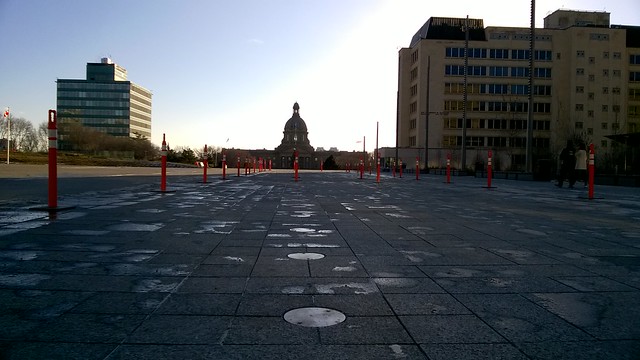
It’s like they intentionally designed the plaza so that it couldn’t be used for events. Issues like a surface that is too porous or difficult to clean should have been considered – the City has been dealing with similar issues in Churchill Square ever since it was redesigned into its current form. There’s a lot of experience and knowledge about squares locally that could have been tapped into for the design of the new Centennial Plaza.

On top of all that, the plaza is not even done! The public washrooms remain locked, taunting everyone who walks by.

Edmonton is a Winter City

But the biggest issue I have with the new Centennial Plaza winning an Urban Design Award in Edmonton is that it clearly was not designed with winter in mind. At least not since the skating rink was scrapped. That’s just inexcusable in a Winter City.

Federal Building Centennial Plaza

The fountains have long since been capped with metal covers, blocking not only the water but also the lights. The large open space offers little shelter from the wind or snow (and if they’re worried about vehicles damaging the surface, are they even going to keep it cleared?). And these are just the basics. Forget “experimentation with innovative, climate-oriented urban design” as Edmonton’s WinterCity Strategy calls for. Here’s what the strategy outlines as a possible way to design a winter-friendly space:

wintercity design

Doesn’t that picture look suspiciously similar to the plaza in terms of layout? Yet it’s so different in every other way. There’s such potential in the plaza for some of those winter design elements! Instead, we get pylons.

“It’s as much about attitude as it is about latitude. Winter cities have found ways of embracing and falling in love with winter. They use winter as an inspiration for designing public spaces and buildings, as a motivation for recreation and celebrations; they’re cities that share the wonders of winter with the world.” – Carol Neuman

It’s a shame. Where’s the winter equivalent of the illuminated fountains that caused such a stir over the summer?

Urban Design Awards

The Urban Design Awards take place every two years. As mentioned, the new Centennial Plaza won in the Civic Design Projects category:

“This category of award will recognize a civic improvement project such as a park, a public space, civil engineering or environmental infrastructure, street furniture and lighting elements, etc., which have been implemented as the result of an urban design plan or initiative.”

The “primary criteria for assessing the merit of the plan” included:

  • Compatibility with the urban plan
  • Positive contribution to the public realm
  • Design excellence
  • Demonstration of the value of urban design by showing how the urban design plan/initiative directed and influenced the space or the objects

That’s it. Nothing about how it might be used or importantly, when it might be used. Should there be criteria for winter? In Edmonton, probably yes. Let’s hope this can be considered for 2017.

Better, but still room for improvement

It’s true that Edmonton’s urban design has made great strides in recent years. I’m thrilled that the Borden Park Pavilion and Vaulted Willow both won awards on Friday, for instance. But we still have a long way to go, especially when it comes to winter. We shouldn’t be celebrating mediocrity along the way.


  1. Will the real Centennial Plaza please stand up? I guess it’s a small thing, but I’ve always been annoyed that they called the new square Centennial Plaza. We already have a Centennial Plaza – the small square between the Stanley Milner library and the Westin Edmonton. It’s far from perfect and suffers from some poor historical design decisions, but it could soon see a renovation of its own when the Stanley Milner library gets an overhaul.